Myxocyprinus asiaticus
15.5–21°C · pH 6–8
£29.99

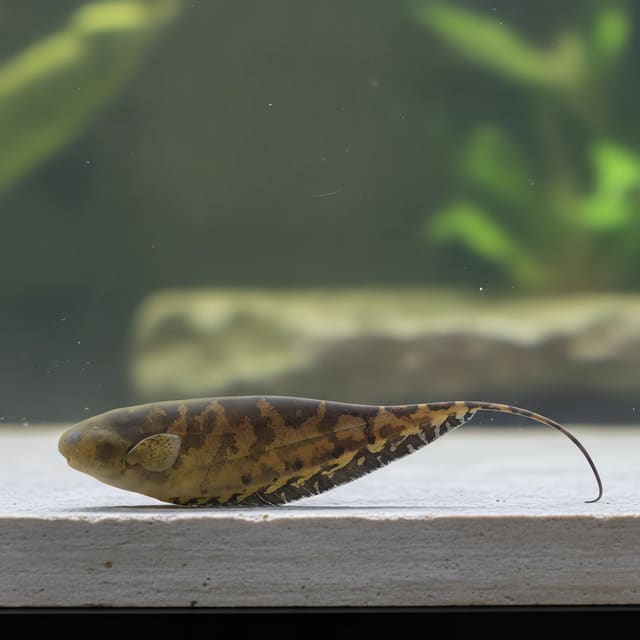
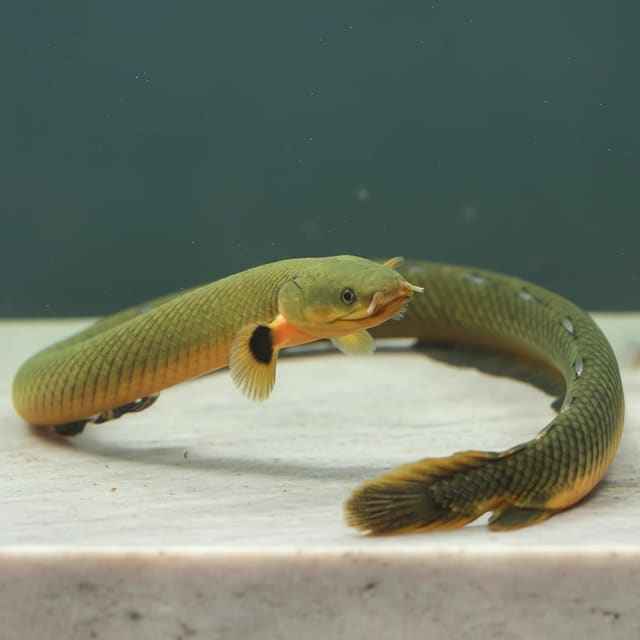
The ornate bichir (Polypterus ornatipinnis) is a bony fish of the family Polypteridae from Lake Tanganyika and the Congo River basin that reaches 60 cm. It suits advanced keepers planning for one solitary predator, a very large aquarium and 26–28°C water. Sold individually in dispatch sizes from 5–7 cm to 13–15 cm.
Adult size is the maximum length this species reaches at full maturity (scientific sources). The livestock you receive will be younger and smaller — pick a size above for the actual shipping size. Product-photo provenance and any image-specific limitations are stated on the listing.
Polypterus ornatipinnis
The ornate bichir (Polypterus ornatipinnis) is a bony fish of the family Polypteridae from Lake Tanganyika and the Congo River basin that reaches 60 cm. It suits advanced keepers planning for one solitary predator, a very large aquarium and 26–28°C water. Sold individually in dispatch sizes from 5–7 cm to 13–15 cm.
Adult size is the maximum length this species reaches at full maturity (scientific sources). The livestock you receive will be younger and smaller — pick a size above for the actual shipping size. Product-photo provenance and any image-specific limitations are stated on the listing.
Maintain these water conditions for optimal health and vibrant colors
The ornate bichir (Polypterus ornatipinnis) is a freshwater, demersal bony fish of the family Polypteridae from Central and East Africa. It reaches 60 cm total length and suits advanced keepers who can plan a very large aquarium around its adult body, predatory feeding and substantial filtration needs. This is a solitary rather than schooling fish, so it should not be bought to complete a shoal.
FishBase records the species from the Congo River basin, Lake Rukwa drainage and Lake Tanganyika basin, including locations in Cameroon, the Democratic Republic of the Congo, Angola and the Republic of Congo. It inhabits calm swamp and river waters, mainly hunts at night and can breathe atmospheric air. A rise to the surface can therefore be part of its normal biology, although any change in breathing rate or general behaviour still calls for a water-quality check.
The name ornate bichir is also used in the Wikipedia overview of the species, which places this member of Polypteridae in Lake Tanganyika and the Congo River basin and records it from the Central African Republic, the Democratic Republic of the Congo and Tanzania. These natural-history details explain why this fish should be treated as a large African predator rather than as an ordinary community fish.
A small dispatch fish still has the same 60 cm recorded adult maximum. Decide where the mature aquarium will stand, how its water will be maintained and how its filters will be serviced before choosing a dispatch size. The long-term system, not the size on arrival, determines whether the plan is suitable.
We rate Polypterus ornatipinnis as advanced care. Its 60 cm adult size, carnivorous feeding, solitary hunting behaviour and demand for a very large, efficiently filtered aquarium make it a significant commitment. The rating reflects the complete husbandry plan rather than a claim that routine tasks are complicated.
OATA’s tankbuster guidance says exceptionally large aquariums are required, often in excess of 500 litres, and that an off-the-shelf aquarium is unlikely to be large enough in the long term. This is group guidance, not a species-specific minimum. Use it as a scale warning, then assess the complete adult space, activity, water volume, filtration and maintenance plan.
| Suits | Not suited to |
|---|---|
| An advanced keeper planning around a 60 cm fish | A temporary small aquarium without a complete adult plan |
| A very large, mature and efficiently filtered system | An unfiltered or newly established aquarium |
| A solitary-predator plan | A display that depends on schooling behaviour |
| Freshwater maintained at 26–28°C | Water outside the assessed species range |
| A carefully screened companion plan | Mixing with much smaller fish |
Do not treat the “often in excess of 500 litres” category as an automatic answer for every aquarium shape or stocking plan. A water volume can look substantial while still leaving too little usable room once the full adult fish and any other inhabitants are considered. Likewise, a large empty volume is not enough without mature biological filtration and a realistic weekly maintenance routine.
One purchase supplies one fish of the size selected on the live size selector. The labels are 5–7 cm, 7–8 cm, 8–13 cm and 13–15 cm. Use the selector for the dispatch measurement that suits your prepared aquarium and introduction plan; do not use it as a prediction of the fish’s final length.
The size you select is the size supplied, not the adult size. Every label belongs to the same species, whose recorded maximum is 60 cm total length. A smaller dispatch fish may be easier to mistake for a conventional community-fish commitment, but its eventual space and filtration requirements remain those of a very large fish.
Sex is guaranteed only when the selected option explicitly states male or female. This Polypterus ornatipinnis listing has no sex-guaranteed option.
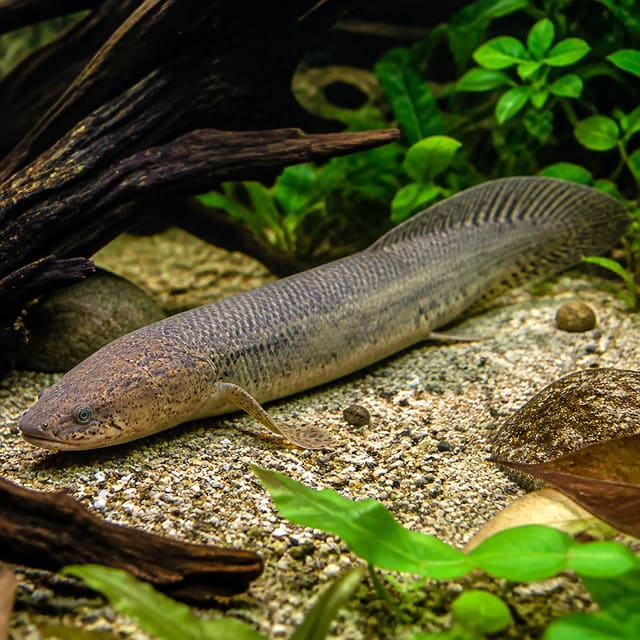
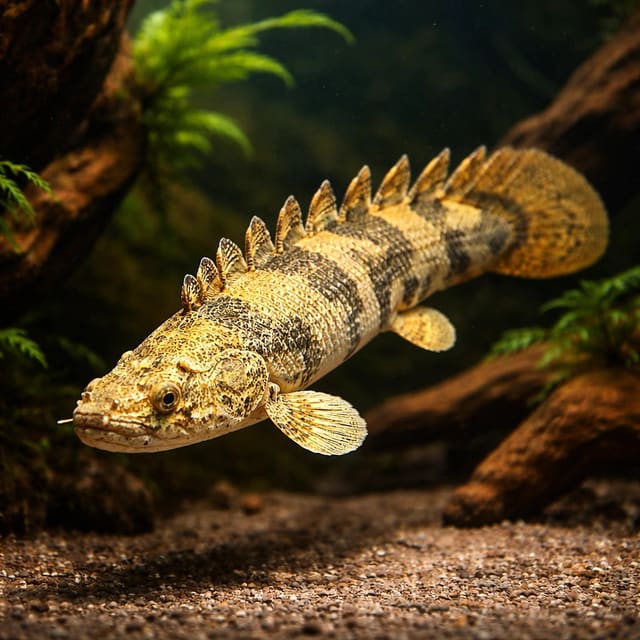
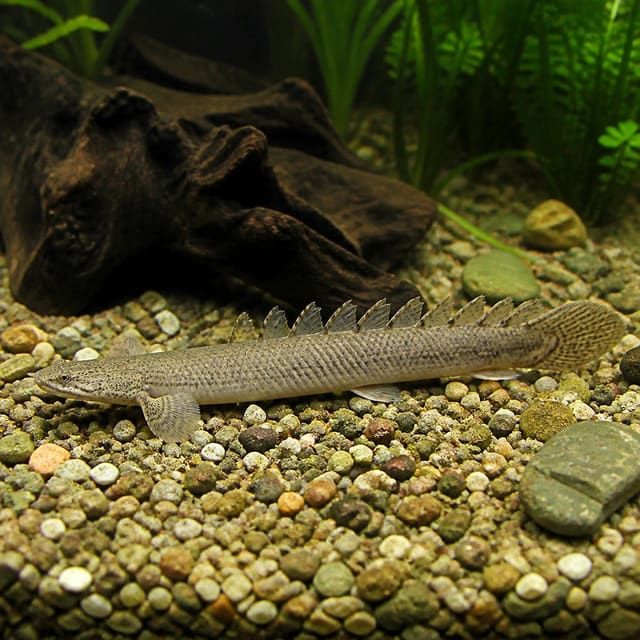
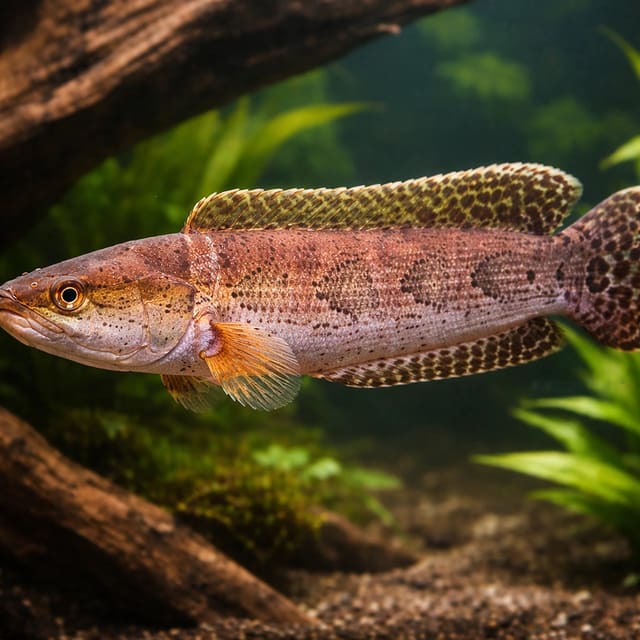
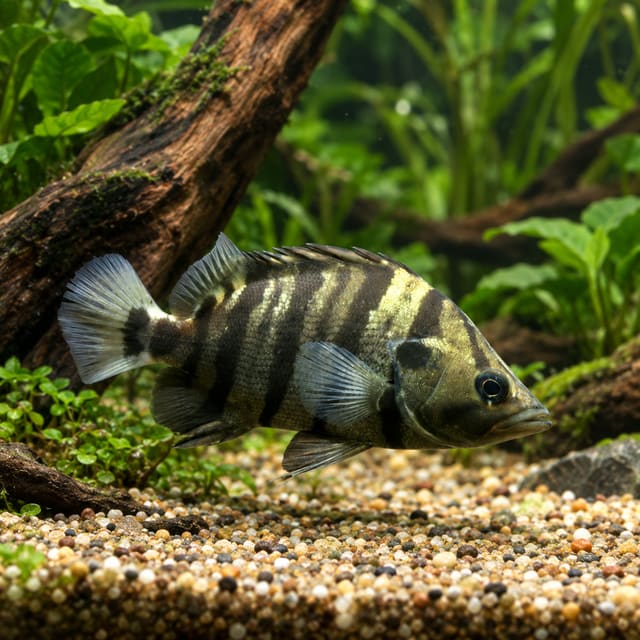
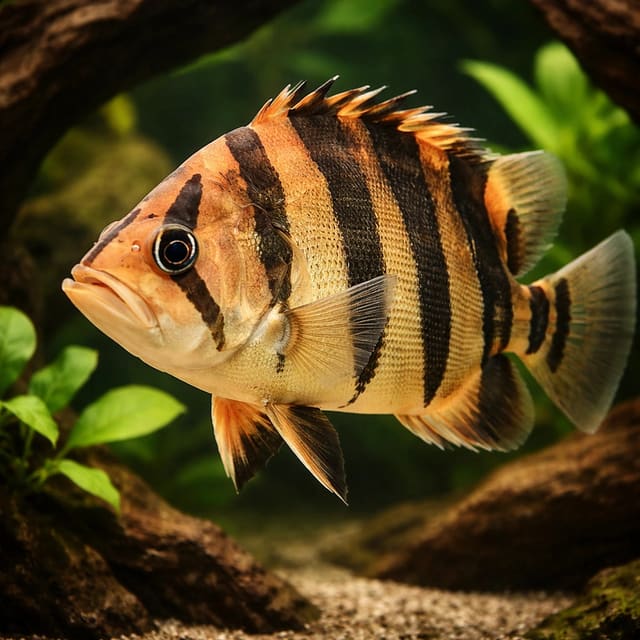
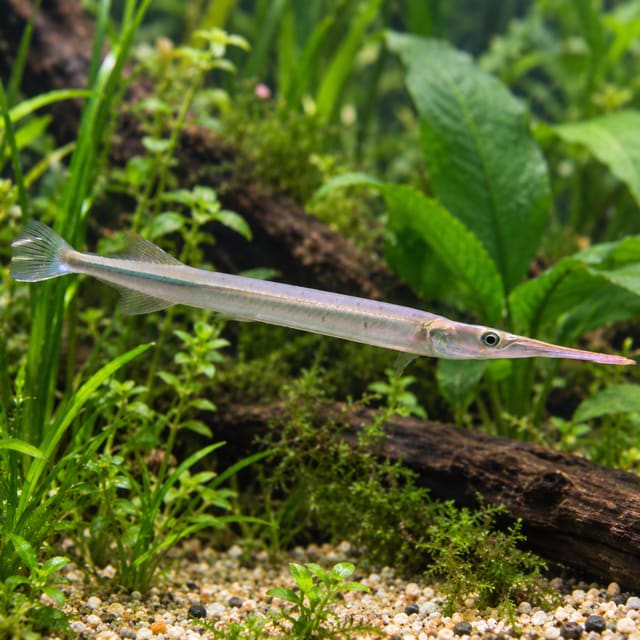
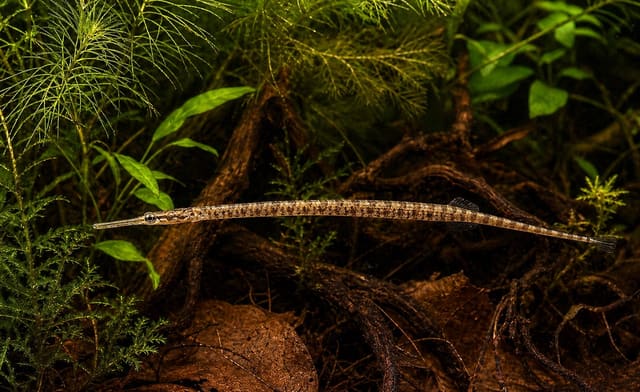
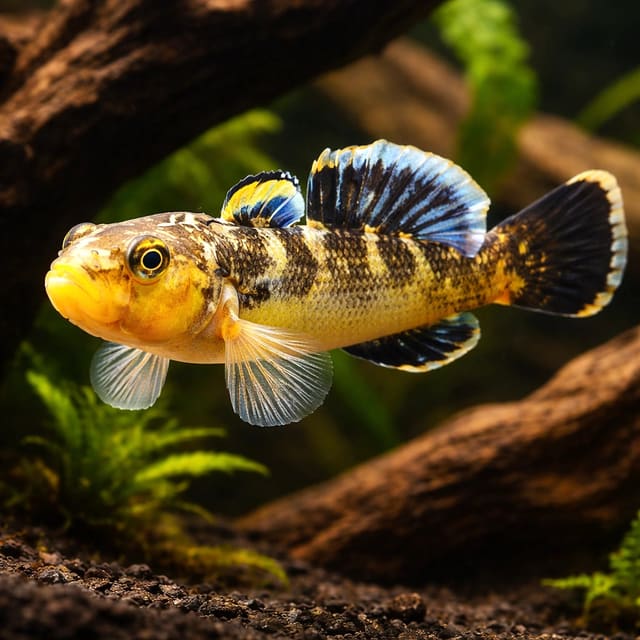
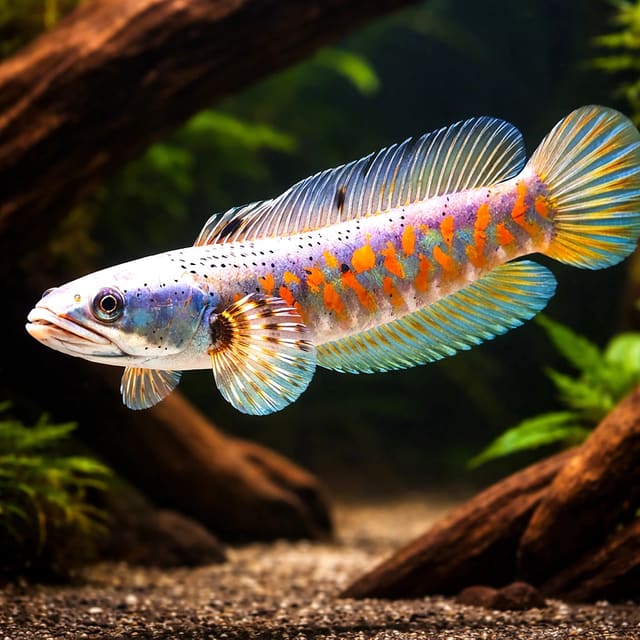
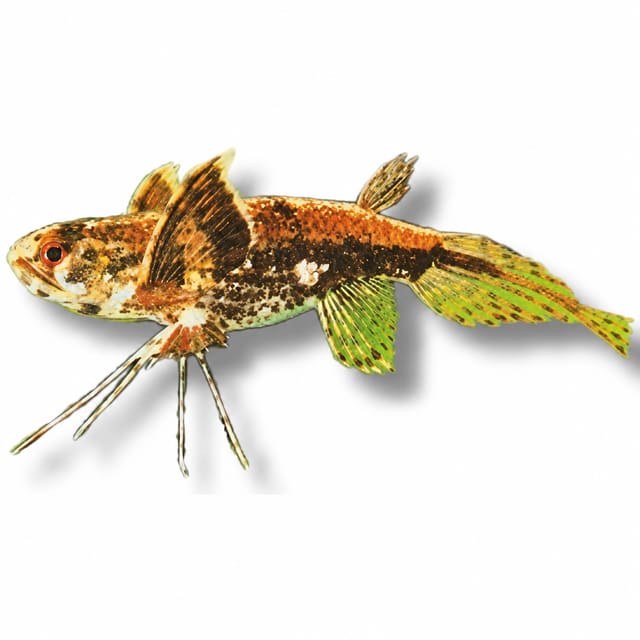
Some gallery images have been digitally enhanced to improve image quality. They show the listed type of animal rather than guaranteeing the exact markings of the individual supplied, so natural colour and pattern can vary. The scenes are representative illustrations and do not identify the sex or exact appearance of the individual supplied.
Before choosing, compare the complete plan with other fish in our loaches and oddballs collection. Compare adult size and care demands rather than the dispatch measurements alone. The correct decision is the fish whose mature requirements fit the aquarium you can maintain for its whole time in your care.
Plan for a fish reaching 60 cm total length. FishBase records that maximum for male or unsexed Polypterus ornatipinnis, and it is the adult figure used throughout this care plan. Dispatch measurements between 5–7 cm and 13–15 cm describe only the fish at supply.
Start with the adult commitment rather than a temporary aquarium. OATA warns that very large fish commonly need exceptionally large systems, often in excess of 500 litres, and may outgrow standard retail aquariums. It also notes that activity affects the required space: a sedentary fish may need substantial stable water volume even when it does not move like an active open-water swimmer.
Indoor heated ponds are identified by OATA as another way of housing very large fish. That route still requires controlled freshwater conditions, filtration and routine testing; a pond is not a substitute for husbandry. Whether the plan uses an aquarium or an indoor heated pond, the system must be ready before the fish is introduced.
Do not plan to solve an undersized adult system later. A smaller fish can grow while biological load also rises, so both swimming space and filtration capacity have to be addressed from the beginning. The safest purchasing decision is one backed by a realistic mature system rather than an intended upgrade with no fixed provision.
Keep Polypterus ornatipinnis at 26–28°C. FishBase records 26–28°C as the species’ wild environmental range, so this is the aquarium planning target rather than a broader tankbuster value. Check the thermometer as part of the normal observation routine and investigate an unexpected change instead of allowing repeated movement outside the range.
Measure pH and hardness before committing to the fish and record the results alongside temperature. Use our water chemistry guide to understand the values being measured, then compare the readings with the care plan using the water matcher. Keeping a written baseline makes gradual changes easier to recognise and gives a clearer basis for assessing the aquarium.
Maintain ammonia at zero mg per litre and nitrite at zero mg per litre. Keep nitrate from exceeding 20 mg per litre above the normal tap-water level. These are OATA’s maintenance limits for the very-large-fish group and are especially important where a large animal and meaty food can place a heavy load on filtration.
| Reading | Action |
|---|---|
| Temperature outside 26–28°C | Check the heater, thermometer and recent changes before feeding or adding fish |
| Ammonia above zero | Stop further stocking, test again and address filtration and waste immediately |
| Nitrite above zero | Treat it as a filtration warning and address the cause immediately |
| Nitrate over the stated limit | Review water changes, feeding and accumulated waste |
Use conditioned replacement water during water changes so chlorine or chloramine does not enter the aquarium. Stability depends on the interaction of water source, biological filtration, feeding and maintenance; a temperature reading alone cannot show whether the system is ready for a large fish.
Use a well-established and maintained filter from the start. The RSPCA’s aquarium guidance explains that fish release toxic ammonia, which biological filtration converts first to nitrite and then to the safer nitrate. Both ammonia and nitrite still need to read zero before this fish is added.
OATA notes that very large fish may require several large aquarium filters or even pond filtration. Mechanical capacity must remove solid waste, while biological media supports the bacteria that process dissolved nitrogen waste. Check both functions: clear-looking water can still contain ammonia or nitrite, and biologically safe readings do not mean settled debris should be ignored.
Our first tropical aquarium guide explains the preparation and maturation process. This work belongs before purchase because adding fish faster than the bacterial population can adapt can lead to new tank syndrome, unhealthy ammonia or nitrite and serious illness or death.
Air-breathing ability does not replace filtration. FishBase describes the ornate bichir as a facultative air-breather, but the aquarium still has to process waste continuously. Treat surface breathing as part of the animal’s biology while using tests and behavioural observation to distinguish routine movement from a broader change in breathing, appetite or activity.
Feed this fish as a carnivore. FishBase records worms and insect larvae in the diet of young ornate bichirs, while adults take larger food, mainly fish. Choose appropriately sized foods that follow that shift rather than assuming every large-fish food suits this predator.
For smaller specimens, suitable choices include appropriately sized worms, insect-larva foods and carnivore preparations they can consume safely. As the fish grows, use appropriately sized fish-based carnivore foods and the larger frozen foods named by OATA for carnivorous tankbusters, including frozen mussel, shrimp or lance fish. Large carnivore pellets may also be offered where the fish accepts them.
Offer only what the fish can eat within a few minutes once a day. Remove uneaten material rather than allowing it to break down in the aquarium. This portion rule connects feeding directly to water quality: excess meaty food adds solid waste and increases the burden placed on biological filtration.
The species mainly hunts at night in the wild. Time feeding so the fish can respond during its active period, then observe whether the food is found and eaten within the portion window. Do not keep adding food because the response is slower than that of an active daytime feeder.
Match every food item to the fish’s present mouth size without treating that size as an adult-care measure. The selected dispatch grade determines the practical food size on arrival; the species’ recorded diet determines the type of food offered.
Expect a solitary fish that mainly hunts at night. FishBase says ornate bichirs are generally more or less solitary and do not form schools. That means a lone fish is not missing a required shoal, and buying several simply to create a group is not a welfare requirement.
Judge behaviour against the individual fish’s established routine. A nocturnal hunter may show more activity during darker periods, while surface visits can reflect its facultative air-breathing biology. Neither fact makes every behavioural change harmless. A sudden change in surface use, appetite, breathing rate, colour or swimming still warrants immediate water testing.
| Observation | Response |
|---|---|
| Regular surface visits with otherwise stable behaviour | Continue observation and routine testing |
| More night-time activity than daytime activity | Use its active period to check movement and feeding response |
| Sudden erratic swimming or unusual inactivity | Test ammonia, nitrite, nitrate and temperature |
| Reduced food intake | Remove leftovers and check water and general condition |
| New aggression or persistent hiding | Review companions, usable space and recent changes |
Do not label solitary behaviour as aggression without looking at context. The decisive compatibility concern supported for this fish is predation: adults feed mainly on fish, and very-large-fish guidance says much smaller companions should be avoided. A separate question is whether a proposed companion competes for space, creates an excessive waste load or changes the fish’s usual behaviour.
Keep short notes during the first month so that “normal” refers to this individual rather than a general expectation. Record feeding response, surface visits, active periods and any interaction with other inhabitants alongside the latest water results.
At least once every week, carry out a partial water change of 25%. OATA recommends using a siphon to remove solid waste from the substrate and testing the water at least weekly so ammonia and nitrite do not build up. Test more promptly whenever appetite, breathing, colour or swimming changes.
Treat replacement water with tap-water conditioner before adding it to remove harmful chlorine or chloramine. Check filters for blockages during the same maintenance session. If filter media needs cleaning, do not run it under the tap. Rinse it lightly in aquarium water removed during the partial change so fewer beneficial bacteria are lost.
Watch for hanging at the surface, unusual bottom-sitting, erratic swimming, colour becoming darker or paler, changed aggression, increased hiding, faster or slower gill movement, white spots, fluffy growths, lost fins or scales, altered body condition and reduced feeding. These signs call for action rather than diagnosis by appearance alone.
If any health change concerns you, test the water first and contact us for guidance. Give the latest temperature, ammonia, nitrite and nitrate readings, describe recent feeding and maintenance, and explain what changed. Concrete observations make the next decision clearer than a general description that the fish looks unwell.
Prepare the mature aquarium and confirm the water readings before the parcel is received. Someone must be at the delivery address to receive live fish, and the parcel must be opened and inspected on the same day it arrives.
Keep the continuous video with your order number. The sealed parcel, opening and fish inside the sealed bag must all appear before release. Read the current delivery and Live Arrival Guarantee policy before the delivery day so the procedure is familiar.
The fish is packed in pure oxygen inside an insulated poly box, with a heat pack when weather conditions call for it, and carried by a licensed live-animal courier. Packing supports the journey; it does not replace a prepared aquarium at the destination.
After release, observe breathing, swimming and general condition without adding more livestock. Recheck temperature, ammonia and nitrite if behaviour changes. Feed according to the once-daily, few-minutes portion rule, and remove anything left uneaten. Keep the first water results and observations as the starting point for later comparison.
Avoid mixing Polypterus ornatipinnis with much smaller fish. FishBase records that adults take larger food, mainly fish, while OATA’s compatibility guidance says mixing very large fish with much smaller fish should be avoided because of their size and large mouths. Treat this as an unconditional predation rule.
No universal companion list is appropriate for this predator. Screen every proposed fish or invertebrate individually for predation risk, adult space, water requirements, activity and the additional load placed on filtration. Passing one part of that screen is not enough: a fish that is not much smaller can still make the complete aquarium plan unsuitable through space, water or waste demands.
Ask us for one stocking and compatibility assessment before combining this fish with another animal. Include aquarium volume and dimensions, filtration, current occupants with adult sizes, temperature, pH, hardness, ammonia, nitrite and nitrate. That allows the complete proposal to be assessed rather than approving a species name in isolation.
Do not use the calm-water habitat or solitary behaviour as a promise of peaceful community conduct. The firm facts are that this fish is solitary, hunts mainly at night and becomes mainly fish-eating as an adult. Build the decision around those facts and the available adult space.
Start with a one-fish plan. FishBase describes ornate bichirs as more or less solitary and says they do not form schools, so there is no schooling number to meet. This is permission to keep one fish without adding companions, not a claim that every pair or group will fail.
A plan for more than one bichir must be reassessed from the beginning. Multiply the adult-space demand, expected feeding and filtration load rather than relying on how several small dispatch fish look together. OATA warns that stocking too quickly can exceed the capacity of established nitrifying bacteria and lead to new tank syndrome.
Increase stocking slowly after filtration has matured. Adding another large carnivorous fish also increases feeding, solid waste and biological demand, so stable readings before an addition do not remove the need for close testing afterwards.
Keep the decision reversible at the planning stage, not after predation or water-quality deterioration occurs. If the aquarium only works when every individual remains at dispatch size or when maintenance goes perfectly, it is not an adult plan. One properly housed solitary fish is the sounder choice than a group assembled to create a social display the species does not require.
It reaches 60 cm total length. FishBase records that maximum for male or unsexed fish, so plan all adult space and filtration around 60 cm rather than the selected dispatch size.
Plan an exceptionally large adult system. OATA’s tankbuster guidance says very large fish often need in excess of 500 litres, but this group figure is not a species-specific minimum; assess the aquarium around the 60 cm fish, usable space, activity and filtration.
Start with one. FishBase describes them as more or less solitary and says they do not form schools, so there is no shoal size to meet. Any multi-fish plan needs a fresh adult-space and filtration assessment.
We rate it as advanced because it reaches 60 cm, needs a very large mature system, eats a carnivorous diet and requires careful companion screening and substantial filtration.
Young fish eat worms and insect larvae, while adults take larger food, mainly fish. Offer appropriately sized carnivore foods once daily, only in a portion eaten within a few minutes, and remove leftovers.
Keep it at 26–28°C; FishBase records that species range. Measure pH before purchase and ask us to assess whether your aquarium is a suitable match before you commit.
Treat it as a solitary predator. Its fin-nipping behaviour remains uncertain, so do not assume ordinary community behaviour; adults feed mainly on fish, and much smaller fish must be avoided.
Avoid much smaller fish. Screen every other fish or invertebrate individually for predation risk, adult space, matching water requirements, activity and the combined filtration load.
Start filming the sealed parcel before opening it, then keep one continuous take showing the fish inside the sealed bag. It travels in pure oxygen in an insulated poly box, with a heat pack when weather calls for it; float the bag for 20–30 minutes before release.
No reviews for this item yet. Bought one? Honest reviews only, good or bad.
What customers say about ordering from us
I have a small group of long finned mountain minnows. So was delighted to be able to order ten of this variety to increase the genetics in my tank . The ones I recieved are healthy but it’s to early to give a verdict on wether they are of a long finned type since they are small currently.
Gordon Walker · 23 Sept 2026
100% success travel and "installation". Pleased with quality of purchase. The Siamese fighter a bit "shy" so have not yet seen him at his best yet but looking good. Happy customer. GG
George E Garratt · 21 Sept 2026
Reviews of our shop, collected by Judge.me, an independent third-party review collector. Newest first.