Advanced
Saddled Bichir (Polypterus endlicherii) – 5–25cm Size Grades
From £17.99Some sizes on sale

Large West African Lapradei Bichir in two approximate juvenile size bands, for advanced keepers with a secure 240 x 90 cm adult footprint and surface-air access.
Polypterus bichir
Large West African Lapradei Bichir in two approximate juvenile size bands, for advanced keepers with a secure 240 x 90 cm adult footprint and surface-air access.
Maintain these water conditions for optimal health and vibrant colors
Lapradei Bichir is the aquarium-trade name used for the West African form commonly written as Polypterus bichir lapradei or Polypterus lapradei. Current taxonomic catalogues place it within Polypterus bichir, so this page uses Polypterus bichir "Lapradei": a clear way to preserve the familiar trade identity without confusing it with the separate Senegal Bichir, Polypterus senegalus.
This is a large, predatory, air-breathing freshwater fish for an experienced keeper with a genuinely large aquarium. It is not a beginner fish and it is not a permanent choice for a typical community tank. FishBase records a maximum total length of 74 cm for P. bichir, while specialist aquarium sources describe Lapradei fish as suitable mainly for dedicated predatory-fish keepers or public displays. A responsible purchase begins with the adult enclosure, filtration, cover and long-term budget already planned.
Two approximate purchase-size options may be shown in the selector: 5-6 cm and 6-10 cm. One selected quantity means one live fish in the selected approximate size band. It does not mean a pair, group, sexed animal or exact measured length. Choose the size in the live selector and check current availability there; the page body deliberately avoids hard-coding prices or stock.
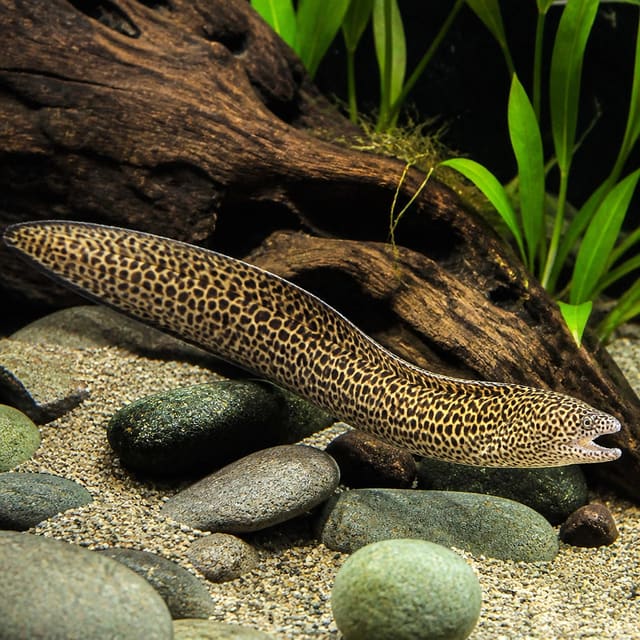
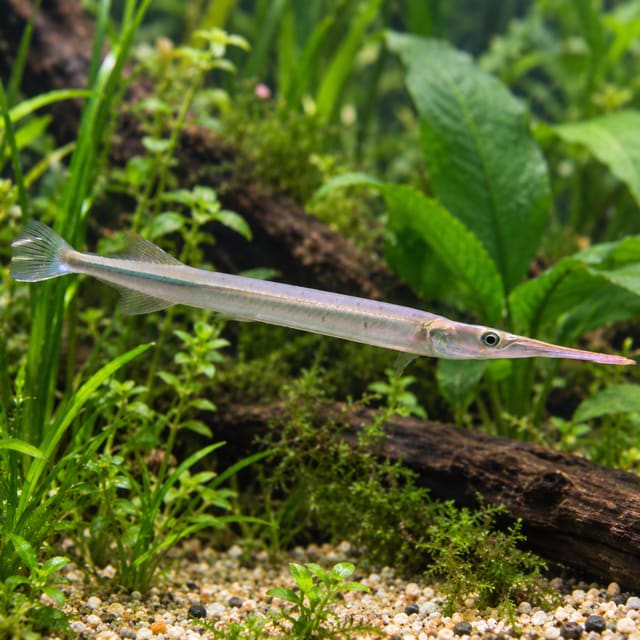
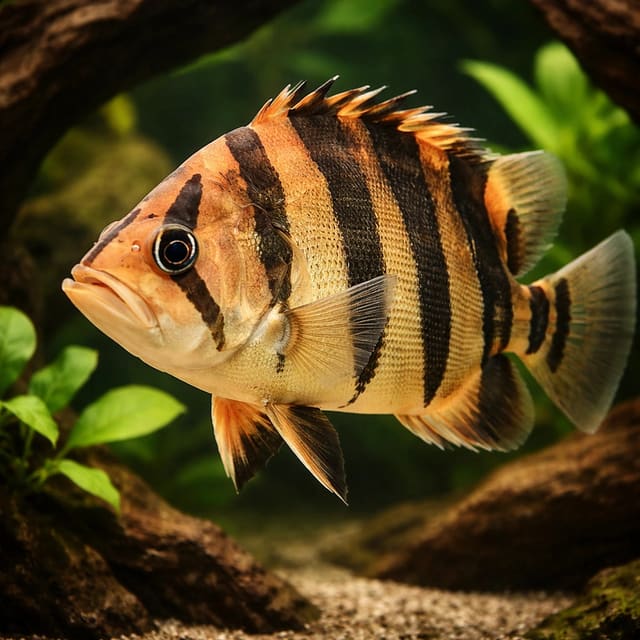
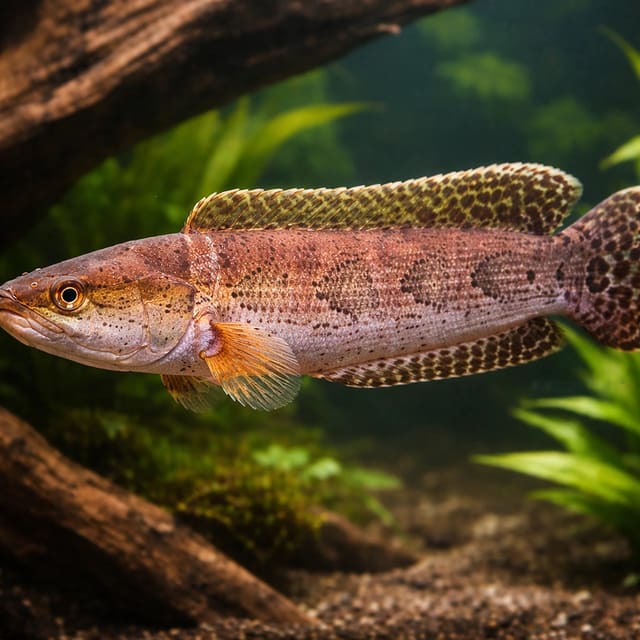
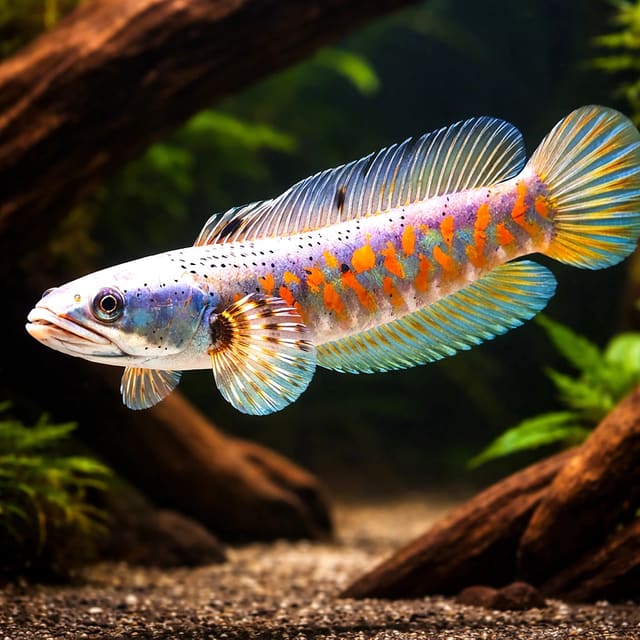
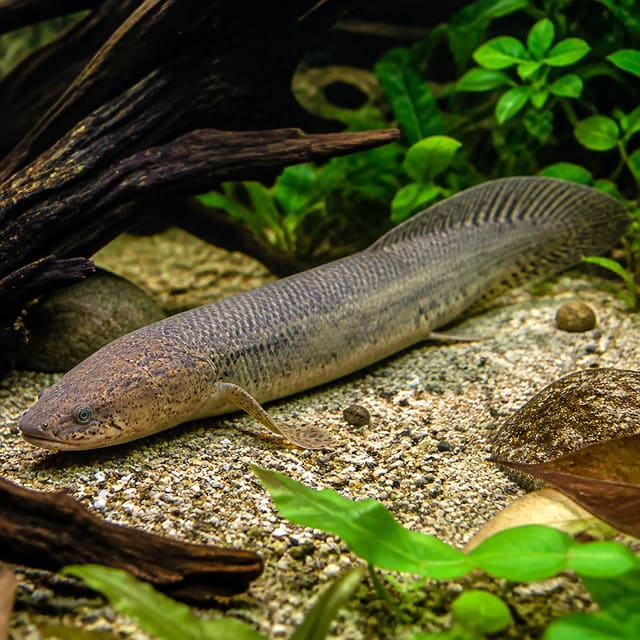
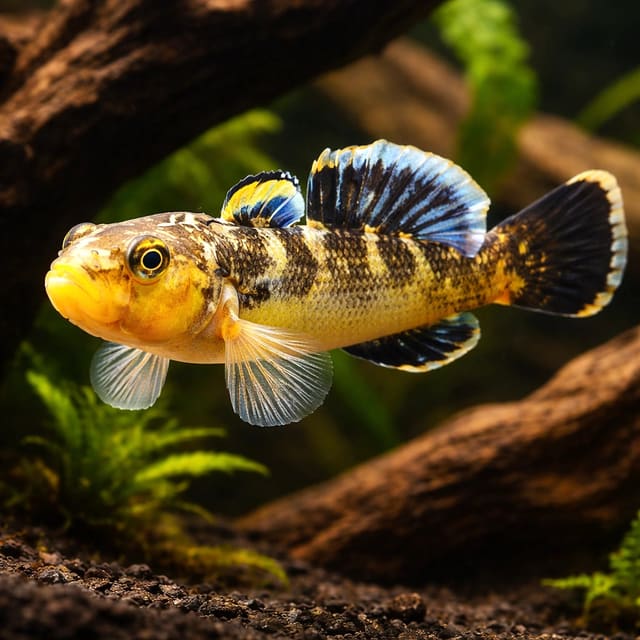
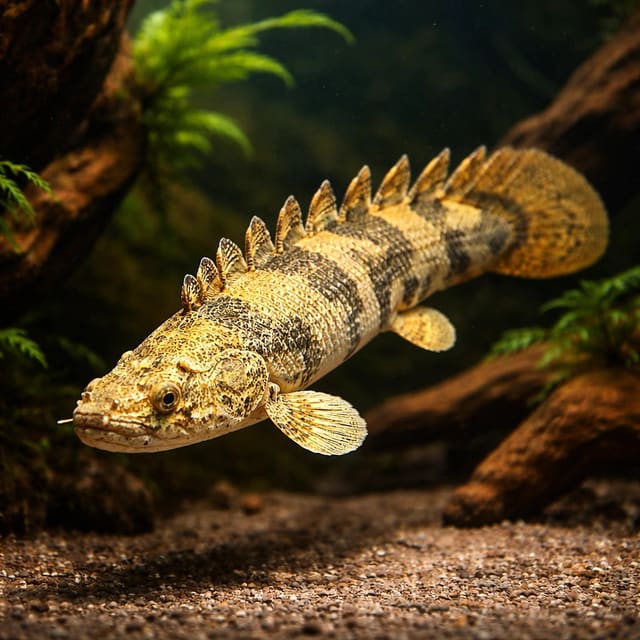
The one existing gallery image is an aquarium reference. It is useful for showing the long-bodied, many-finlet outline associated with this trade fish, but it is not a photograph of the exact animal dispatched and it must not be used to judge guaranteed pattern, colour, size, sex or adult proportions. Live individuals vary, and juveniles can change considerably as they mature.
Lapradei is a familiar name in the specialist fish trade, but the scientific wording has changed over time. The fish was described as Polypterus lapradei by Steindachner in 1869. It was later treated as the West African subspecies Polypterus bichir lapradei. A modern revision of living polypterids considers the name a junior synonym of Polypterus bichir, while databases such as NCBI still retain the subspecies entry for sequence and literature indexing.
That history explains why reputable pages may use several different labels for the same trade form. It does not make P. senegalus an alternative scientific name. Senegal Bichir is a separate, generally smaller species and should never be substituted in care planning simply because both occur in West Africa. On this listing, "Lapradei" identifies the supplied aquarium trade form and not a verified wild locality, genetic certificate or museum-level identification.
Scientific revisions and aquarium commerce answer different questions. A revision asks which named populations can be diagnosed as separate species; a stock list needs a stable label that lets a keeper distinguish one offered form from another. Keeping both layers visible is more useful than silently replacing every familiar name. Searchers can recognise the Lapradei label, while the accepted-species note prevents that recognition from turning into false certainty.
Colour and banding are not reliable enough for a buyer to authenticate every juvenile from one photograph. Substrate, light, stress and age can change how markings appear, and related lower-jaw forms can be confused in trade. If locality or genetic history is essential to a breeding programme, request documented provenance for an individually identified fish before purchase; this normal retail listing does not provide it.
| Name seen in trade or references | How this page treats it | Important boundary |
|---|---|---|
| Lapradei Bichir | Preferred customer-facing common name | A trade identity, not a promise of wild collection locality |
| Polypterus lapradei | Historic scientific name and current search term | Listed as a synonym of P. bichir by the current Catalog of Fishes |
| Polypterus bichir lapradei | Familiar subspecies treatment retained by FishBase and NCBI | Useful for literature and search, but taxonomic treatments differ |
| Polypterus bichir | Current accepted species treatment used here | Includes a wider species concept than the aquarium trade label alone |
| Polypterus senegalus | A different species | Not a synonym and not the identity of this product |
Each quantity adds one live, unsexed fish in the size band selected at checkout. The two variants are not separate care species: they are different purchase sizes within the same listing. The centimetre ranges are practical live-trade bands, not a guarantee that every moving animal will measure to the millimetre when packed.
Neither size option guarantees sex, pattern intensity, body shade, finlet count, maturity or a particular temperament. Young fish may look slimmer and less strongly marked than older examples. A larger purchase size can reduce the period spent in a juvenile grow-out setup, but it does not reduce the adult enclosure required.
| Selector option | What it means | What it does not mean |
|---|---|---|
| Approximately 5-6 cm | One smaller juvenile in that approximate live band | Not a dwarf form and not suitable for a small lifetime aquarium |
| Approximately 6-10 cm | One larger juvenile in that approximate live band | Not a sexed adult and not close to maximum size |
| Quantity of two or more | That number of individual fish | Not a bonded pair, compatible group or guaranteed sex ratio |
Do not buy this fish on the assumption that its current juvenile size makes a modest aquarium adequate. Have the permanent enclosure, floor loading, filtration capacity and escape-proof cover planned before ordering. Rehoming a 50-70 cm predatory fish is difficult and should not be the default growth plan.
FishBase records 74 cm maximum total length for Polypterus bichir. Aquarium individuals do not all reach that figure, and no seller can promise an exact final length, but responsible housing should be based on credible maximum potential rather than on a smaller average quoted for convenience. Body depth, turning radius and heavy build matter as much as nose-to-tail length.
Growth rate varies with genetics, age, feeding, temperature, water quality and available space. Keeping a fish in a short or narrow aquarium does not safely "limit" its adult size. It restricts normal movement and can create water-quality and welfare problems. The aim is steady, proportional growth rather than rapid weight gain from excessive rich food.
Measure the planned aquarium internally after background, rock and wood are installed. An external 240 cm cabinet does not guarantee the same usable swimming length, and a decorative structure can reduce turning width dramatically. Check doorway access, service space, electrical load and the route for moving a heavy adult before the system is commissioned. These practical constraints are part of animal care, not separate interior-design details.
| Life stage | Planning focus | Common mistake to avoid |
|---|---|---|
| 5-10 cm juvenile | Protected intake, small suitable foods, no swallowing risk from tank mates | Buying before the adult enclosure is secured |
| Growing fish | Increasing floor area, filtration and food size while monitoring body condition | Waiting until turning is already restricted before upgrading |
| Large adult | Wide permanent footprint, strong biological capacity, secure lid and safe access for maintenance | Judging adequacy by litres alone |
FishBase associates the West African Lapradei form with the Senegal, Gambia, Geba, Volta and Niger river systems. These are not one uniform aquarium recipe: they include river channels, floodplain habitats, backwaters and seasonal margins with changing depth, flow and turbidity. The useful captive lesson is to provide a broad, structured lower-water environment rather than trying to reproduce a single invented "West Africa" scene.
This fish is demersal, spending much of its time near the bottom and moving around cover. Its elongated body, robust ganoid scales, fleshy pectoral fins and row of separate dorsal finlets give the characteristic polypterid outline. The lower jaw projects slightly beyond the upper jaw in P. bichir, one reason specialist keepers call it a lower-jaw form.
Wild range information does not prove the geographic origin of an individual aquarium fish. Unless documented collection data accompanies a specific animal, the honest claim is the supplied trade identity. This listing does not certify a river locality, wild-caught status, genetic purity or collection generation.
Polypterids breathe through gills and paired lungs, and published research shows that they can draw air through spiracular openings on the head as well as through the mouth. Surface visits are normal biology. The aquarium must therefore provide unobstructed surface air and leave an accessible air space between the water and the secure cover; filling a sealed tank to the brim can deny the fish the route it needs.
Air-breathing ability is not permission to accept poor water. Ammonia, nitrite, high organic load and low hygiene still damage skin, gills and overall health. The correct setup combines clean, oxygenated water with uninterrupted surface access. Sudden or frantic surface activity, unusual resting, appetite loss or rapid breathing should prompt an immediate water and equipment check.
These fish are also capable escape artists. Use a rigid secured cover with a well-fitted lid, and close cable, pipe and feeding gaps with safe material. A heavy fish can move a loose cover. Check the full perimeter after every maintenance session and keep the external area free from sharp or hot equipment.
For one fish, use a permanent planning minimum of approximately 240 cm long by 90 cm front-to-back and around 900 litres, with greater width and volume preferred. This is a welfare-led planning figure, not a claim that a particular litre total makes every shape suitable. A long, wide footprint that permits an adult to turn without folding its body is more important than excessive height.
Multiple large fish need substantially more floor area, filtration and separated refuges. Do not calculate a group by simply adding a fixed number of litres per fish. Adult dimensions, individual behaviour, feeding access and escape routes must be evaluated together. The weight of a large filled aquarium also requires a suitable floor, stand and safe maintenance plan.
A temporary juvenile grow-out aquarium may be used by a skilled keeper when the permanent home already exists or has a fixed installation date. It should still be cycled, covered, wide enough for unrestricted turning, and upgraded before behaviour or body position becomes constrained. "Upgrade later" without a purchased tank, measured room and budget is not a plan.
Large-system planning also includes redundancy. A spare heater strategy, battery air support, leak response, safe water-change hose and a container long enough for emergency movement are worth arranging before they are needed. Confirm that another experienced person can feed and inspect the fish when the main keeper is away. An animal that may outgrow standard nets, buckets and shop holding tanks needs a realistic contingency plan.
| Dimension or system | Permanent planning target | Why it matters |
|---|---|---|
| Length | Approximately 240 cm or more | Supports normal travel and reduces repeated tight turns |
| Front-to-back width | Approximately 90 cm or more | Allows a large, heavy-bodied adult to turn comfortably |
| Volume | Roughly 900 litres or more for one | Provides dilution and biological stability, but does not replace footprint |
| Cover | Rigid, fitted and secured | Prevents escape while preserving surface-air access |
| Filtration | High biological capacity with distributed, non-blasting flow | Manages a carnivore's waste without making the bottom a current tunnel |
A practical captive target is 23-28 C, pH 6.5-7.5 and approximately 6-16 dGH. Choose a stable point within those ranges that also suits any carefully selected tank mates. Avoid chasing numbers with rapid chemical corrections. Consistent temperature, pH and mineral content are safer than repeated swings between "perfect" readings.
Ammonia and nitrite must remain at zero. Keep nitrate controlled through suitable stocking, feeding, plant growth where practical and regular water changes; aim below 20 mg/L when source water and system conditions allow. Measure the tap-water baseline so that the aquarium trend is interpreted honestly.
| Parameter | Practical target | Action point |
|---|---|---|
| Temperature | 23-28 C | Investigate heater faults and avoid abrupt changes |
| pH | 6.5-7.5 | Prioritise stability and check carbonate hardness before adjustment |
| General hardness | Approximately 6-16 dGH | Match source water gradually; do not create sudden mineral swings |
| Ammonia | 0 mg/L | Any reading requires immediate investigation and corrective action |
| Nitrite | 0 mg/L | Any reading requires immediate investigation and corrective action |
| Nitrate | Controlled; ideally below 20 mg/L where practical | Review feeding, stocking, maintenance and source-water baseline |
Use our Water Parameter Matcher to compare your source water with the practical target before ordering. The tool supports planning; it does not replace liquid testing, calibration or observation of the actual aquarium.
A large carnivore produces substantial solid and dissolved waste. Use mature filtration with generous biological capacity and accessible mechanical stages. Position returns so that debris reaches the intake without turning the bottom into a high-velocity channel. Protect every intake that could trap a small juvenile, fin or food item.
Remove visible waste and uneaten food promptly. A weekly 20-30% water change is a sensible starting schedule, but testing and bioload must set the final routine. Some systems need more frequent changes; a lightly fed mature display may need less. Match replacement-water temperature and chemistry closely, and never clean all biological media at once under chlorinated tap water.
Design the filter for service without opening a dangerous escape route. Shut valves and isolate equipment in a consistent order, keep the cover over the animal whenever possible, and count every intake guard after reassembly. Record normal flow and heater behaviour so a gradual decline is noticed before water quality follows it. A large volume delays some changes, but it can also hide a problem until a considerable waste load has accumulated.
| Routine | Starting frequency | What to record |
|---|---|---|
| Visual health and equipment check | Daily | Breathing, appetite, body condition, heater, cover and flow |
| Remove leftovers and obvious waste | After feeding and as seen | Amount uneaten and any change in feeding response |
| Ammonia, nitrite, nitrate and pH test | Weekly at first; increase after change or concern | Result, time, maintenance and source-water comparison |
| Partial water change | About 20-30% weekly as a starting point | Volume, temperatures, conditioner and post-change behaviour |
| Mechanical filter service | As flow or debris indicates | Reduced flow, waste removed and media condition |
Use smooth sand or another substrate that is easy to keep clean and unlikely to cause injury during bottom feeding. Avoid sharp rock edges and unstable piles. Large pieces of rounded wood, broad caves and shaded zones should be secured so that a growing fish cannot undermine or topple them.
Leave open floor and turning space between refuges. Plants can be used, but robust attached species and protected roots are more practical than a delicate carpet. Moderate or subdued light suits a fish that often rests under cover and becomes more active when the tank is quiet. A predictable day-night schedule is better than continuous dimness.
The gallery scene shows coarse gravel and should not be copied as an exact husbandry diagram. Base the real aquarium on cleanability, turning room, secure structures and surface access. Decoration must serve the fish rather than reducing an already demanding footprint.
FishBase describes P. bichir as essentially piscivorous in nature, but a captive fish does not need routine live feeder fish. Offer varied aquatic meaty foods and a quality sinking carnivore feed if accepted. Suitable items can include earthworms from a safe pesticide-free source, chopped prawn, mussel, krill, appropriate frozen foods and species-appropriate sinking pellets.
Feed at or near the bottom and allow time for scent-led foraging. Smaller juveniles need modest pieces they can swallow safely; adults need proportionate portions, not oversized meals. Watch the fish eat rather than assuming food reached it. Fast midwater tank mates can consume everything first.
Avoid mammal or bird meat as a staple, because its fat profile and connective tissue are not designed for an aquatic predator. Avoid wild-caught feeder fish and unquarantined shop feeders because they can introduce parasites and create an unbalanced diet. Variety, controlled portions and clean water are more useful than trying to provoke hunting behaviour at every meal.
| Food type | Role | Use notes |
|---|---|---|
| Quality sinking carnivore pellet | Convenient nutritionally complete base if accepted | Choose a size the fish can swallow; introduce gradually |
| Earthworm | Useful varied meaty food | Use a safe pesticide-free source and suitable pieces |
| Prawn, mussel or krill | Rotational aquatic protein | Plain, unseasoned and chopped to fit |
| Frozen aquatic foods | Juvenile or supplementary rotation | Choose size and amount carefully; remove leftovers |
| Live feeder fish | Not required | Pathogen, injury and nutritional-balance risks make routine use unsuitable |
| Mammal or bird meat | Not a staple | Use an aquatic-food plan instead |
This is a bottom-oriented ambush predator rather than a relentlessly aggressive fish. It may rest for long periods under wood or in a shaded refuge, then investigate the aquarium during quiet periods and feeding. Regular trips to the surface for air are normal. A sudden change in frequency, posture or effort should still be checked against water quality and equipment.
Individuals differ. Some become confident at feeding time; others remain cautious. Do not interpret daytime hiding as proof that the tank is too large or that more food is always needed. First assess cover, light, tank-mate pressure, water, recent disturbance and the normal daily rhythm.
Predatory capacity increases with growth. A companion that is safe beside a juvenile may become swallowable later. Review the whole stock list repeatedly rather than making a one-time compatibility decision at purchase size.
Learn the difference between a controlled surface breath and an attempted escape. A normal breath is usually a direct rise, air intake and return to cover. Persistent pushing at corners, repeated climbing along equipment or resting with much of the body out of water demands an immediate review of water, temperature, aggression, available refuges and lid security. Never leave an investigation until the next routine maintenance day.
The safest option is one fish in a dedicated, very large display. In a community, companions must be too large to swallow, too calm to harass it, and not so fast that the lower-water predator misses every meal. They must also share temperature and water requirements and fit within the adult footprint after all fish are fully grown.
Large size does not automatically mean compatible. Territorial cichlids, fin-biters, aggressive catfish and fish that attach to or rasp other animals can injure a resting specimen. Equally, a placid-looking small fish can become prey overnight. Always keep a mature separation option for a combination that stops working.
Feed the lower-water fish directly and watch it swallow. Tongs can help place food but should not be used to tease or make the fish strike near hands. If several predators share the aquarium, use separated feeding stations and record which animal ate. A full-looking companion and an untouched food dish do not prove that this fish received its share.
| Potential companion | Risk level | Decision rule |
|---|---|---|
| Similar-size peaceful large fish | Caution | Only with matching water, adequate adult space and monitored feeding |
| Other polypterids of comparable size | Caution | Needs a much larger footprint, several refuges and individual observation |
| Small community fish | Avoid | Likely prey as mouth size increases |
| Persistent fin nippers or territorial attackers | Avoid | Risk of repeated wounds and feeding stress |
| Very fast competitive feeders | Usually avoid | The bottom fish may lose condition even when food is added |
| Shrimp, snails and other small invertebrates | Do not rely on compatibility | May be eaten or injured |
Choosing the correct species is more important than choosing the most dramatic name. The Senegal Bichir is a separate species and generally a smaller adult commitment, though it still requires a large covered aquarium. The Saddled Bichir is another substantial lower-jaw species with its own pattern and adult-space needs.
The Ornate Bichir and Delhezi Bichir differ in adult size, markings and accepted taxonomy. The very elongate Reedfish belongs to the related genus Erpetoichthys, not Polypterus. Compare their current availability and complete adult care rather than treating them as interchangeable "dinosaur fish."
For wider browsing, use the freshwater fish collection, but return to a species-level source before ordering any large oddball. Broad category descriptions cannot replace the exact adult size and feeding risk of the selected fish.
| Fish | Identity | Planning distinction |
|---|---|---|
| Lapradei Bichir | Polypterus bichir "Lapradei" | Very large lower-jaw form; specialist adult footprint |
| Senegal Bichir | Polypterus senegalus | Separate generally smaller species; not a synonym |
| Saddled Bichir | Polypterus endlicherii | Large lower-jaw species with different markings |
| Ornate Bichir | Polypterus ornatipinnis | Large patterned species; plan its own adult requirements |
| Delhezi Bichir | Polypterus delhezi | Barred upper-jaw species with a smaller published maximum |
| Reedfish | Erpetoichthys calabaricus | Different genus and more eel-like body; equally serious escape risk |
A healthy individual should maintain an even body line and appropriate muscle behind the head, show controlled movement, breathe without continuous distress, and respond to suitable food after settling. Pattern and activity vary, so compare the fish with its own established baseline rather than with an edited online photograph.
Warning signs include sudden refusal of food, hollowing behind the head, swelling, ulcers, fuzzy patches, reddened areas, repeated rubbing, damaged fins, loss of balance, continuous frantic surface activity or a major change in resting position. Test water and verify temperature immediately, then seek advice from an aquatic veterinarian or experienced fish-health professional. Do not medicate this fish by guesswork; treatment tolerance and diagnosis matter.
New arrivals should be observed closely in an appropriate mature system. This listing does not claim that every fish has followed a fixed seller quarantine duration or treatment protocol. Your biosecurity plan should be based on your collection, equipment and professional advice, not on an unsupported sentence in marketing copy.
| Observation | First checks | Escalation |
|---|---|---|
| Missed meal after arrival | Light, cover, temperature, water, food size and disturbance | Act if refusal persists or body condition declines |
| More surface visits than normal | Ammonia, nitrite, temperature, oxygenation and filter operation | Urgent action for distress, loss of balance or abnormal effort |
| Scrape or damaged fin | Sharp decor, unstable rock, lid gap and tank-mate aggression | Professional advice for worsening redness, swelling or tissue loss |
| Weight loss despite feeding | Actual food access, portion, faeces and competition | Fish-health assessment for persistent loss or suspected parasites |
Prepare and test the aquarium before dispatch. Dim the lights, secure the lid, turn off room hazards and have a net or container sized for a long-bodied fish. Follow the instructions supplied with the order rather than leaving a sealed transport bag floating for an extended period.
After transfer, restore normal filtration and surface access, then keep the environment quiet. Offer a modest suitable meal only after the fish has settled; do not pollute the tank trying many foods at once. Record temperature, water results, breathing and any visible marks so that a concern can be reported accurately.
Eligible livestock orders are covered by the current Live Arrival Guarantee under its published terms. Read the live-fish delivery and acclimation guidance before choosing a delivery day, and make sure someone can receive the parcel promptly.
Breeding is an advanced project and should not be the reason an unsexed juvenile is bought without adult facilities. Polypterids use a specialised spawning embrace in which the male's enlarged anal fin forms a cup around released eggs. Eggs are then dispersed among fine structure or vegetation, and adults provide no dependable nursery care in an aquarium.
Sex becomes easier to assess in mature fish, especially from anal-fin shape, but this product is not sexed and no ratio is promised. A genuine project needs very large adult quarters, separate conditioning and rearing capacity, suitable first foods, and homes for potentially numerous juveniles. Breeding outcome is never guaranteed.
No. Reference images are not the individual fish received. Markings, colour and proportions change with maturity and conditions; use the selected grade and adult care plan when ordering.
A reference scene is not a substrate or enclosure plan. Give the live fish clean lower-water space, secure cover and uninterrupted surface-air access.
Confirm the selected size, current availability, adult enclosure dimensions, safe floor loading, mature filtration, lid, air gap, feeding plan and long-term care budget. Check every existing tank mate at adult size and mouth size. If any of those answers depends on an uncertain future upgrade, wait until the permanent home is real.
Photograph the completed aquarium and record its internal dimensions, water results and equipment model numbers before dispatch. That simple record makes troubleshooting faster and helps another keeper understand the system in an emergency. Keep the order confirmation and current guarantee terms together, and review the delivery forecast before the fish leaves rather than after a delay occurs.
This product best suits an experienced keeper who deliberately wants one very large West African polypterid, has at least a 240 x 90 cm adult footprint available, understands predatory compatibility and can maintain a secure air-access cover for the full life of the fish.
The taxonomic and biological claims on this page were checked against accessible specialist and scientific sources:
Scientific names and aquarium guidance can change as new revisions and husbandry evidence appear. The current live selector controls size, availability and price; the written profile controls identity and care; neither replaces professional veterinary advice for an ill fish.
No reviews for this item yet. Bought one? Honest reviews only, good or bad.
What customers say about ordering from us
I have a small group of long finned mountain minnows. So was delighted to be able to order ten of this variety to increase the genetics in my tank . The ones I recieved are healthy but it’s to early to give a verdict on wether they are of a long finned type since they are small currently.
Gordon Walker · 23 Sept 2026
100% success travel and "installation". Pleased with quality of purchase. The Siamese fighter a bit "shy" so have not yet seen him at his best yet but looking good. Happy customer. GG
George E Garratt · 21 Sept 2026
Reviews of our shop, collected by Judge.me, an independent third-party review collector. Newest first.