Advanced
Saddled Bichir (Polypterus endlicherii) – 5–25cm Size Grades
From £17.99Some sizes on sale

Freshwater Moray (Gymnothorax polyuranodon) is a true moray eel for advanced keepers planning exceptional long-term space and filtration. One purchase supplies one 20–25 cm fish without a sex guarantee; FishBase records a maximum 150 cm total length for male/unsexed fish, so the adult system must be considered before purchase.
Adult size is the maximum length this species reaches at full maturity (scientific sources). The livestock you receive will be younger and smaller. Product-photo provenance and any image-specific limitations are stated on the listing.
Gymnothorax polyuranodon
Freshwater Moray (Gymnothorax polyuranodon) is a true moray eel for advanced keepers planning exceptional long-term space and filtration. One purchase supplies one 20–25 cm fish without a sex guarantee; FishBase records a maximum 150 cm total length for male/unsexed fish, so the adult system must be considered before purchase.
Adult size is the maximum length this species reaches at full maturity (scientific sources). The livestock you receive will be younger and smaller. Product-photo provenance and any image-specific limitations are stated on the listing.
The Freshwater Moray is a true moray eel, not a spiny eel with a similar body shape. FishBase places Gymnothorax polyuranodon in the moray family Muraenidae and records the species in freshwater, brackish and marine environments. That habitat breadth makes the common name useful but incomplete: buying a fish called freshwater does not remove the need to agree its temperature, pH, hardness and any salinity plan before it moves into a home aquarium.
This is an advanced-care animal because the long-term commitment is substantial. FishBase records a maximum length of 150 cm TL for male/unsexed fish. TL means total length, measured to the end of the tail. That is a different measurement from standard length and must remain attached to the record. It is also entirely separate from the animal's dispatch grade.
One purchase supplies one live fish at a dispatch size of 20–25 cm. That is the size supplied, not a prediction of final size. The listing carries a single offer rather than a customer choice of size or sex. Male or female is not guaranteed, and no conclusion about sex should be drawn from colour, dimensions or the gallery.
The contrast between a 20–25 cm arrival and a 150 cm TL maximum record is the central buying decision. A juvenile or smaller specimen can fit physically into a temporary aquarium while still requiring a credible route to very large adult accommodation. Planning should start with the mature animal, filtration load, safe servicing space and the keeper's ability to sustain the system, not with how roomy the dispatch fish looks on day one.
The FishBase species profile records an Indo-Pacific distribution including Sri Lanka, Indonesia, Borneo, New Guinea, the Philippines and Fiji, with reports from Palau, Australia, New Caledonia and Vanuatu. It describes the species as demersal and catadromous, occurring in still and flowing freshwater as well as estuarine and marine habitats. Records are usually within 20–30 km of the sea, at elevations up to about 30–40 m, with a depth range of 0–10 m.
These are wild habitat records, not a ready-made aquarium recipe. They show why one casual set of generic freshwater values is a poor foundation for the purchase. The keeper needs the current animal's established routine, a receiving system matched to it, and a gradual, documented approach to any later change.
Choose this moray only if exceptional adult space is realistic, not aspirational. OATA's broad guidance for very large fish says aquariums often need to exceed 500 litres and that an off-the-shelf tank may not be enough. The final dimensions and engineering still need to reflect this species, the individual animal and its activity; 500 litres is a large-fish planning signal, not a species-specific guarantee.
The keeper should already be comfortable with mature biological filtration, testing, substantial water changes and equipment sized for heavy waste. There also needs to be a plan for growth, servicing and any emergency separation. If those pieces are not in place, use the loaches and oddballs collection to compare animals whose adult scale better fits the available aquarium.
| Identity | Freshwater Moray, Gymnothorax polyuranodon |
|---|---|
| Family | Muraenidae, the true moray eels |
| Sold unit | One live fish per purchase |
| Dispatch size | 20–25 cm; supplied size, not adult size |
| Maximum record | 150 cm TL, male/unsexed, from FishBase |
| Sex | No male or female guarantee |
| Care level | Advanced store assessment |
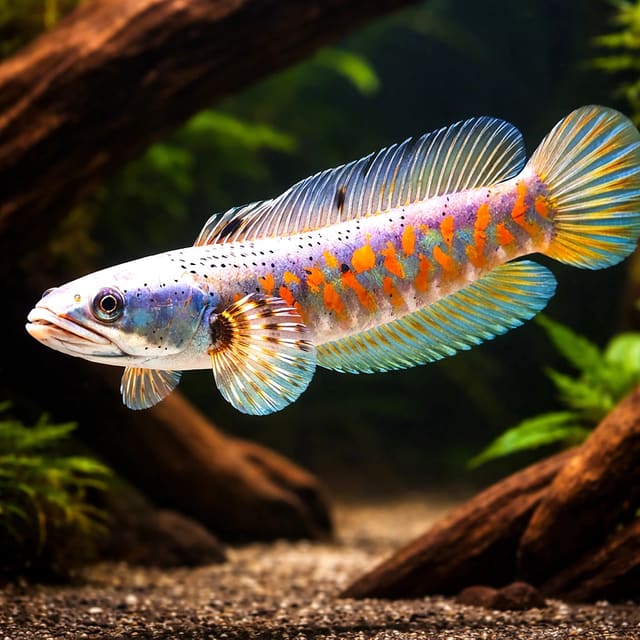
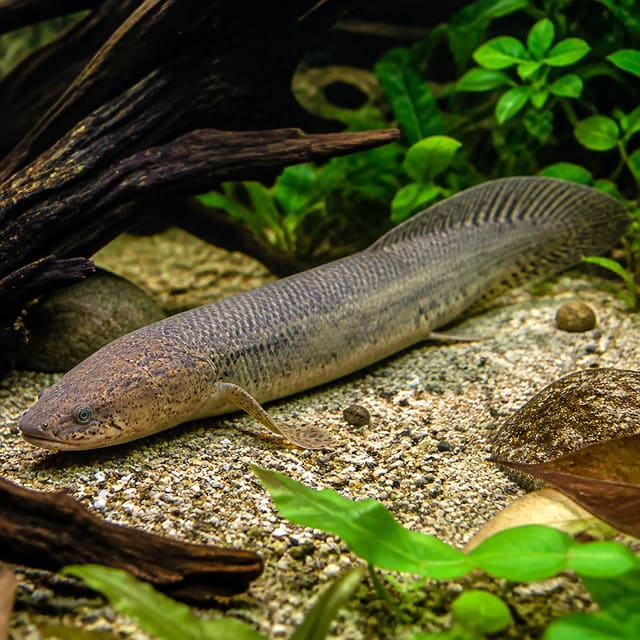
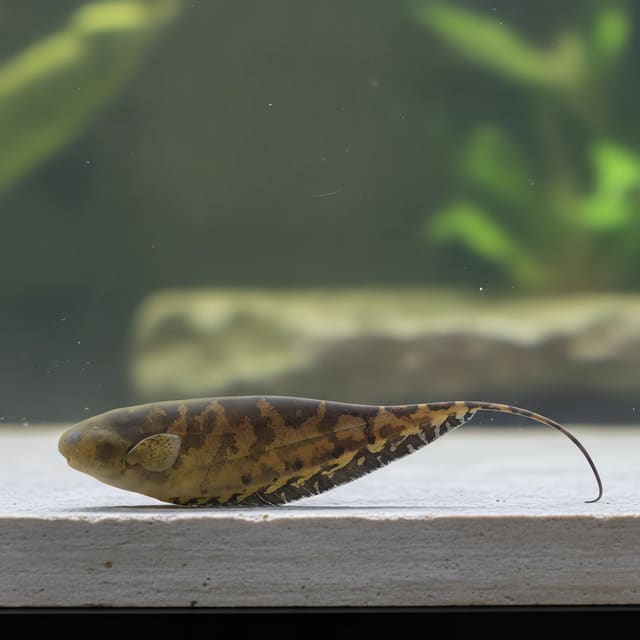
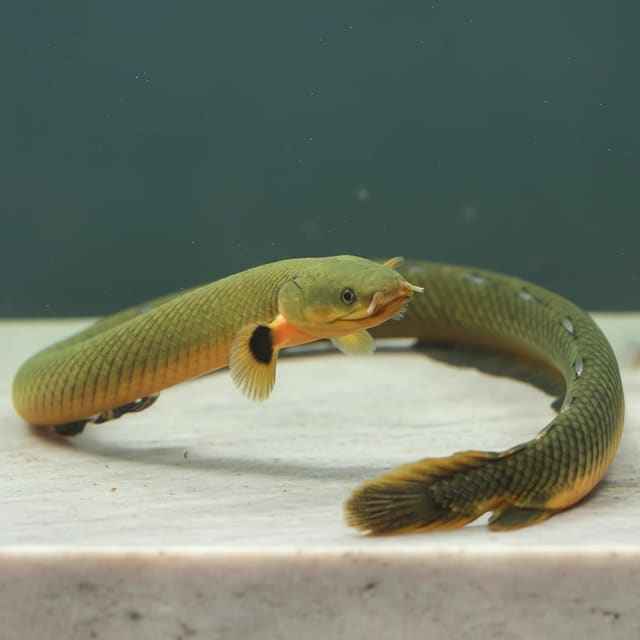
Gallery images have been digitally enhanced to improve image quality. Natural colour, pattern, size and maturity can vary between live animals.
Before ordering, identify the adult housing location, maximum practical footprint, floor loading, access for water changes and the route by which a large aquarium or indoor heated pond will be installed and maintained. OATA notes that indoor heated ponds can be used for very large fish; that possibility still requires appropriate filtration, temperature control, safe access and a realistic maintenance schedule.
Write down who will care for the animal during holidays, how equipment failure will be handled and where the fish can be separated if compatibility fails. Large-fish welfare depends on routine capacity as much as the initial purchase. A system that can be filled once but cannot be tested, siphoned and serviced week after week is not a complete plan.
Confirm the current feeding routine and receiving-water values before arranging dispatch. The name Freshwater Moray describes one part of the species' ecology, while FishBase documents freshwater, brackish and marine habitat use. Match the animal you are receiving rather than choosing values from the common name.
Sex is guaranteed only when the selected option explicitly states male or female. This Freshwater Moray listing has no sex-guaranteed option.
Care begins with a system designed for an exceptionally large fish and a routine that can be sustained as the animal grows. The dispatch fish may be manageable in a smaller temporary space, but OATA warns that many very large fish grow quickly and must not be purchased without adult accommodation in view. Use the 150 cm TL record as the conservative scale for planning while keeping its male/unsexed scope visible.
OATA's very-large-fish guidance says an exceptionally large aquarium is required, often in excess of 500 litres, and that an ordinary off-the-shelf tank may be inadequate. Some sedentary large species may need less swimming volume than active ones, but still require sufficient stable water volume and room to turn, rest and use the enclosure normally. Apply those principles as broad guidance and have the final design assessed for this moray rather than treating one litre figure as a complete specification.
Dimensions matter alongside volume. A tall but narrow aquarium can contain many litres while offering poor usable space for an elongated fish. Plan length, width, unobstructed turning room, stable furniture and access for maintenance around the projected adult, then consider where filters, heaters and service pipes will sit. The system should remain practical to clean without dismantling the animal's entire environment.
Indoor heated ponds are one route named by OATA for some very large fish. They are not a shortcut: temperature control, filtration, visibility, safe servicing and water testing still matter. Choose an enclosure type because it meets the animal's long-term needs and the keeper can operate it reliably.
The RSPCA's aquarium environment guidance explains why filtration is essential. Fish release ammonia, which is toxic; a mature biological filter supports bacteria that convert ammonia to nitrite and then to nitrate. For a very large fish, the amount of food and waste can demand several substantial aquarium filters or even pond-style filtration, as OATA notes.
Choose filtration for the future waste load, not merely the 20–25 cm dispatch animal. Build in access for checking flow and removing solids. A pump that still runs can nevertheless have blocked mechanical media or reduced circulation, so inspect performance during maintenance. Keep enough biological capacity that routine cleaning does not strip the system of the bacteria on which it depends.
If the aquarium is new, follow the cycling principles in the first tropical aquarium guide, but do not mistake a beginner setup guide for a complete moray design. The relevant lesson is that the filter must be established before the fish arrives and must demonstrate zero ammonia and zero nitrite under an appropriate load.
FishBase documents this species in freshwater, brackish, estuarine and marine habitats. It does not turn those environments into one interchangeable home-aquarium range. Before purchase, obtain the exact temperature, pH, hardness and salinity routine used for the current animal. Measure the receiving system and match it to that routine before dispatch.
Use the water-chemistry guide to understand each measurement and the water matcher to organise the comparison. Record the agreed values in the aquarium log. If a later change is considered, make it gradually and for a clear husbandry reason; the fact that the species uses several habitat types in nature is not permission for abrupt swings in captivity.
Keep ammonia at 0 mg/l and nitrite at 0 mg/l. OATA's broad guidance for very large fish sets nitrate at no more than 20 mg/l above the normal tap-water level. That wording matters because the benchmark is relative to the incoming water. Test the tap supply as well as the aquarium so the difference is known rather than guessed.
OATA strongly recommends a 25% partial water change at least weekly for very large fish. At this scale, the routine needs equipment that makes the work safe and repeatable: suitable hoses or pumps, a method for conditioning replacement water, and enough time to match the agreed temperature and chemistry. Plan where removed water goes and how replacement water enters without a sudden disturbance.
Use a siphon or appropriate waste-removal method to lift solid material from accessible areas. Test water at least weekly and more often after changes in feeding, stocking, equipment or behaviour. A trend is more useful than an isolated result, so record ammonia, nitrite, nitrate, temperature, pH, hardness and salinity where applicable.
Check filters for blockage. When media needs cleaning, do not run it under the tap; rinse it lightly in water taken from the aquarium during the partial change. Conditioner should be used on replacement tap water to neutralise chlorine or chloramine. These simple disciplines preserve the bacterial population and reduce the risk of a large system failing quietly.
Evaporation and water changes are different tasks. Topping up restores water volume but does not remove nitrate or accumulated dissolved material. A measured partial change exports waste. Keep both in the schedule and do not let a large surface area make frequent topping-up look like completed maintenance.
OATA states that diets vary among very large fish. It advises appropriately sized foods and notes that carnivorous large species may take frozen mussel, shrimp or lance fish. For this moray, begin with the food and presentation the current animal is already accepting. Confirm that routine before dispatch and preserve it during the first settling period instead of changing food, water and surroundings at once.
Feed only what the fish can eat within a few minutes, once a day, following the broad large-fish sheet. Portion food deliberately and watch it being taken. Remove leftovers because large pieces can decay and increase the load on filtration. A larger animal does not make overfeeding harmless; it makes the resulting waste more demanding.
When using a conditional OATA menu, keep the condition attached. Frozen mussel, shrimp or lance fish are examples for carnivorous very large fish, not proof that every item is appropriate for every individual. Do not improvise a varied menu until the present diet and response are understood. Appetite, body condition and water results should be considered together.
Learn the fish's normal position, breathing, movement, colour and feeding response. OATA lists hanging at the surface, unusual bottom-sitting, erratic swimming, darker or paler colour, changing aggression, increased hiding, faster or slower gill movement, white spots, fluffy growths, damaged fins or scales, weight change and loss of appetite as signs worth investigating across large fish.
When something changes, test the water immediately and contact Tropical Fish Co with the results and a concise description. Do not assume that a large fish is robust enough to wait through detectable ammonia or nitrite. Equally, avoid random changes to several parameters at once, because that makes the response harder to interpret.
Prepare the enclosure, test kit and known food before the parcel arrives. The store policy says to float the sealed bag for 20–30 minutes before release and not to pour transport water into the aquarium. Once transferred, keep observation calm and confirm breathing and posture before offering a large meal.
Check water and appetite closely through the first week. Maintain the matched receiving-water routine and avoid adding other livestock while the fish settles. If food is refused, verify temperature and nitrogen-cycle results first, then seek advice using the exact food offered and the animal's response rather than repeatedly increasing the portion.
OATA recognises that a smaller specimen may initially be kept in a smaller aquarium, but its adult size must already be accommodated in the keeper's plan. For this species, that means keeping the 150 cm TL maximum record visible whenever temporary housing is discussed. A short-term aquarium is a defined stage with a prepared next enclosure, not an open-ended promise to upgrade someday.
Record the fish's length periodically using one consistent method that does not require repeated handling. The purpose is to notice direction and review capacity, not to predict a guaranteed growth date. At each review, ask whether turning space, resting space, filtration, waste removal and safe service access are still adequate. Arrange the next stage before any one of those becomes restrictive.
Large-system filtration is not chosen by water volume alone. Feeding quantity, the form of the food, solid waste and how readily debris can be removed all affect the load. OATA notes that several large aquarium filters or a pond filter may be required. Mechanical capture and biological processing both need access for cleaning without leaving the system unmanaged.
Watch how quickly filter flow falls between services and how nitrate changes between water tests. If the interval shortens as the fish grows, that is a capacity signal. Respond by reviewing filtration and maintenance rather than accepting a progressively dirtier baseline. Zero ammonia and zero nitrite remain requirements, not goals that can be relaxed for a large animal.
A weekly 25% water change on a very large enclosure moves a substantial amount of water. Choose equipment and a layout that let the keeper do this calmly and consistently. Hoses, pumps and drains should be suitable for the job, while replacement water still needs conditioner and matching to the agreed routine. The system should allow substrate waste and filter intakes to be reached without unsafe lifting or dismantling.
Plan routine work around the animal's space. Keep tools ready, avoid leaving loose equipment where it interferes with normal movement, and check the enclosure again after servicing. Large volume brings stability only when maintenance is completed; it does not eliminate the need to export waste or inspect equipment.
A concise log can include test results, water-change volume, foods offered, appetite, visible body condition, filter flow and any change in behaviour. Review the pattern rather than reacting to one ordinary variation. Repeated loss of appetite beside rising nitrate points to a different investigation from one missed meal with stable water.
Include the tap-water nitrate reading because OATA's broad ceiling is expressed relative to the normal supply. Recheck the supply periodically, especially if the water company changes sources or the aquarium result shifts unexpectedly. Keeping the comparison current prevents an old tap result becoming the basis for a new decision.
Very large fish can outlast changing homes, work patterns and holidays even though no lifespan figure is claimed here. Make sure another competent person can test water, complete essential maintenance and recognise an urgent change. Leave the animal's established water and food routine in plain written form so care does not depend on memory.
Before committing, consider how the enclosure and fish would be managed if the property changes or the primary keeper becomes unavailable. This is part of responsible capacity planning, not a prediction about the animal's lifespan. The key point is that a 150 cm TL maximum record creates practical obligations well beyond the day of purchase.
Add an extra check after a feeding change, equipment fault, power interruption or unusual behaviour. For a very large fish, a developing problem can create a substantial waste load, so early measurement is more useful than waiting for obvious distress.
Review the long-term plan at regular intervals. The important question is not whether the fish still fits somewhere, but whether it can move normally, whether water remains stable, whether maintenance is still achievable and whether the next growth stage is already accommodated. The 150 cm TL record keeps that review anchored to the species' documented potential.
Compatibility must be revisited as the moray and any companions grow. Repeat the five-part decision test after a significant size change, altered feeding routine or new filter arrangement. The relevant comparison is the adult system, not a snapshot taken when every animal is smaller.
Watch meals closely. One animal taking food does not show that all are feeding appropriately, and adding extra food to solve competition can overload filtration. Use deliberate portions and observe each large fish. If a companion consistently misses food or the moray is disturbed during feeding, the combination needs adjustment or separation.
Review resting and movement space at quiet times as well as during activity. Repeated displacement, increased hiding, colour change or damaged fins should not be dismissed because obvious chasing is rare. OATA lists those changes as health or welfare warnings across very large fish.
Water compatibility can also change operationally even when preferred ranges overlap. An additional large fish may require more feeding and maintenance than the system can deliver while keeping ammonia and nitrite at zero. Treat filter capacity and the keeper's weekly workload as part of compatibility, not as separate equipment questions.
There is no universal companion list for this fish. OATA's broad very-large-fish guidance says mixing with much smaller fish should be avoided because many large species have large mouths, and some can be aggressive or predatory. Apply that caution conservatively while assessing this individual moray, its adult scale and the proposed system.
Compare companions with the 150 cm TL maximum record, not just the 20–25 cm dispatch fish. A tank mate that looks substantial beside a newly arrived animal may become relatively small later. Stocking decisions also have to account for the extra food, waste and filtration demand created by every additional large fish.
Avoid much smaller fish. Do not rely on a present size ratio as a permanent safeguard when either species will grow. Ornamental invertebrates and delicate small animals are not named as safe companions here; plan conservatively around the moray's adult scale.
Every proposed companion must share the exact temperature, pH, hardness and salinity routine agreed for the moray. Similar words such as tropical or freshwater do not prove compatibility. Compare the numbers and the way each species uses the enclosure, then choose the tighter safe plan only when the ranges genuinely overlap.
Filtration must support the combined adult biomass and feeding. OATA notes that several large filters or pond filtration may be required for very large fish. A companion that doubles the waste load can make an otherwise stable design inadequate even if aggression is absent.
Some very large fish are aggressive or predatory, while others are not; the group sheet does not assign one temperament to this species. Observe the actual animal. Repeated chasing, a companion being displaced from resting space, injuries, reduced feeding, colour change or unusual hiding are all reasons to intervene.
A species-focused system is the clearest starting point because it avoids forcing a compatibility experiment into an already demanding growth and filtration plan. If a mixed display is considered, arrange adult-scale space and a real separation route first. Do not wait for a conflict before deciding how a very large fish could be moved safely.
A no or uncertain answer to any point is a reason to pause the combination. Related products are deliberately left empty for this listing because a different unusual fish is not automatically a meaningful alternative or a suitable companion.
FishBase records a maximum of 150 cm total length for male/unsexed Gymnothorax polyuranodon. Total length includes the tail. The 20–25 cm dispatch grade is the size supplied and must not be used as the adult figure.
Plan from the 150 cm TL adult record and a custom assessment of usable dimensions. OATA says exceptionally large fish often require aquariums over 500 litres and that an off-the-shelf tank may be inadequate; this is broad large-fish guidance rather than a species-specific minimum.
One purchase supplies one fish. Treat a multi-moray setup as a bespoke large-system project rather than assuming a pair or group, because this offer has no sex guarantee and every additional animal changes adult space, filtration, feeding and separation needs.
No. Tropical Fish Co rates it advanced because FishBase records 150 cm TL, long-term housing can exceed standard aquarium sizes, filtration and maintenance are substantial, and the receiving-water routine must be matched to the current animal.
Continue the current animal's accepted food when it arrives. OATA says diets vary among very large fish and names frozen mussel, shrimp or lance fish for carnivorous species. Use those only when they match this fish's established diet, feed once daily within a few minutes and remove leftovers.
Use the exact temperature, pH, hardness and salinity routine agreed for the animal before dispatch. Do not choose numbers from the word freshwater alone: FishBase records Gymnothorax polyuranodon in freshwater, brackish, estuarine and marine habitats.
Do not use a generic temperament promise. OATA notes that some very large fish can be aggressive or predatory, while the applicable sources here do not assign that behaviour to every individual of this species. Plan separation and judge the actual fish's feeding and behaviour.
Avoid much smaller fish under OATA's broad large-fish guidance. Consider any other companion only when adult size, water and salinity needs, usable space, feeding, behaviour and filtration all align, with a practical route to separate the animals.
Tropical Fish Co hand-packs live fish in pure oxygen, uses an insulated box and adds a heat pack when conditions call for it, then sends the parcel with a licensed live-animal courier. For a Live Arrival Guarantee claim, record one continuous unboxing video before opening the sealed parcel, keep the fish in the sealed bag on camera and contact the store the same day with your order number.
Species: FishBase: Gymnothorax polyuranodon supplies the accepted identity, family, distribution, habitat breadth and 150 cm TL male/unsexed maximum record. The Freshwater Moray overview supplies additional common-name and distribution context.
Large-fish care: OATA's very large fish care sheet supports broad enclosure, filtration, water-quality, maintenance, feeding and compatibility guidance. It covers very large fish as a group rather than a species-specific aquarium optimum. The RSPCA aquarium environment guidance supports the biological-filtration explanation.
Delivery: The current delivery and Live Arrival Guarantee policy gives packing, receiving and claim steps.
No reviews for this item yet. Bought one? Honest reviews only, good or bad.
What customers say about ordering from us
I have a small group of long finned mountain minnows. So was delighted to be able to order ten of this variety to increase the genetics in my tank . The ones I recieved are healthy but it’s to early to give a verdict on wether they are of a long finned type since they are small currently.
Gordon Walker · 23 Sept 2026
100% success travel and "installation". Pleased with quality of purchase. The Siamese fighter a bit "shy" so have not yet seen him at his best yet but looking good. Happy customer. GG
George E Garratt · 21 Sept 2026
Reviews of our shop, collected by Judge.me, an independent third-party review collector. Newest first.