Moderate
Hymenochirus curtipes
22–25°C · pH 7–8
£5.99

The African Dwarf Frog (Hymenochirus sp.) is a fully aquatic frog from parts of Equatorial Africa. It suits keepers prepared for a special species-only set-up; OATA’s aquatic-frog guidance gives at least 50 litres for a small group, 22–25°C, pH 7.0–8.0 and 8–18°dH. Sold individually in 2–2.5 cm or 3–4 cm dispatch sizes.
Hymenochirus sp.
The African Dwarf Frog (Hymenochirus sp.) is a fully aquatic frog from parts of Equatorial Africa. It suits keepers prepared for a special species-only set-up; OATA’s aquatic-frog guidance gives at least 50 litres for a small group, 22–25°C, pH 7.0–8.0 and 8–18°dH. Sold individually in 2–2.5 cm or 3–4 cm dispatch sizes.
Maintain these water conditions for optimal health and vibrant colors
The African Dwarf Frog (Hymenochirus sp.) is a fully aquatic frog from a genus native to parts of Equatorial Africa, as described in the African dwarf frog genus overview. It suits a keeper prepared to provide a special species-only set-up with gentle filtration and carefully maintained water. OATA’s aquatic-frog guidance recommends at least 50 litres for a small group and gives 22–25°C, pH 7.0–8.0 and general hardness of 8–18°dH for aquatic frogs. These amphibians remain submerged throughout their lives, so prepare an aquarium rather than a divided water-and-land enclosure.
The genus-level identity matters when comparing care claims or similarly named animals: do not attach the characteristics of one named Hymenochirus species to every frog sold under the broader label.
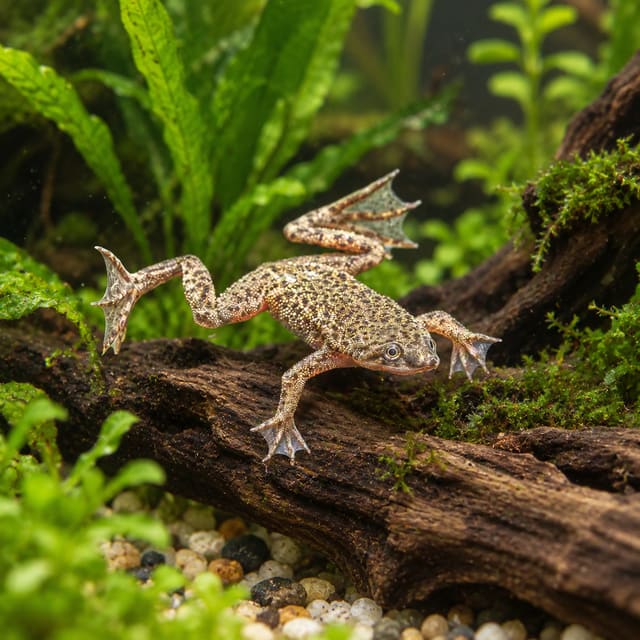
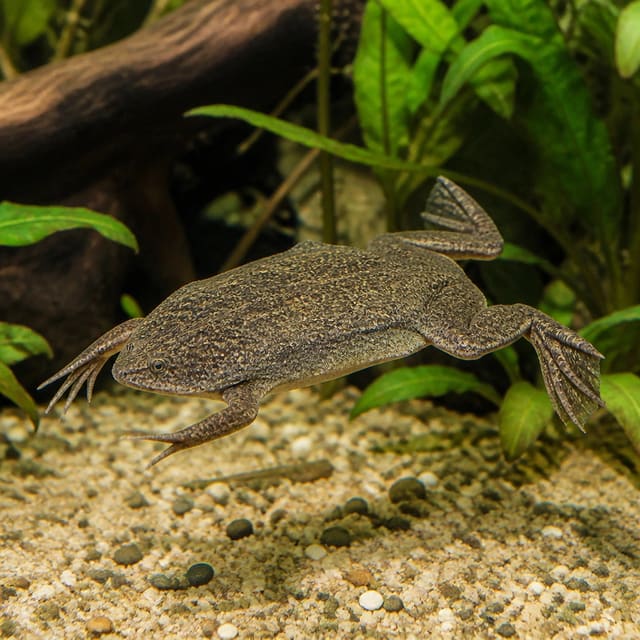
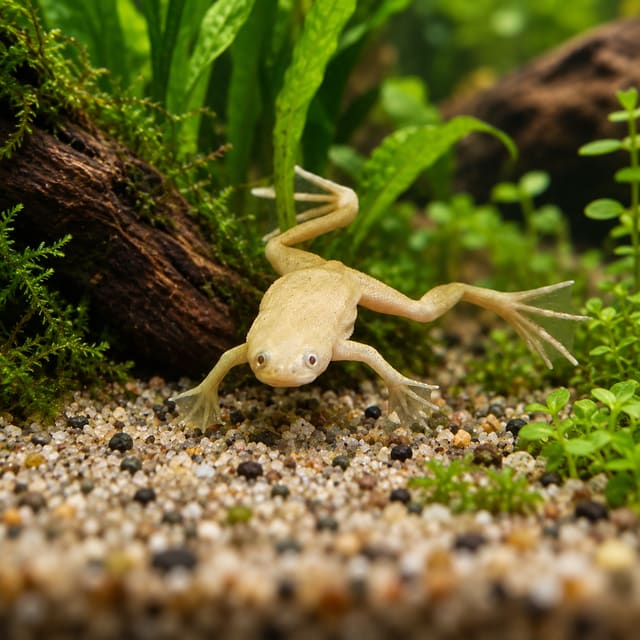
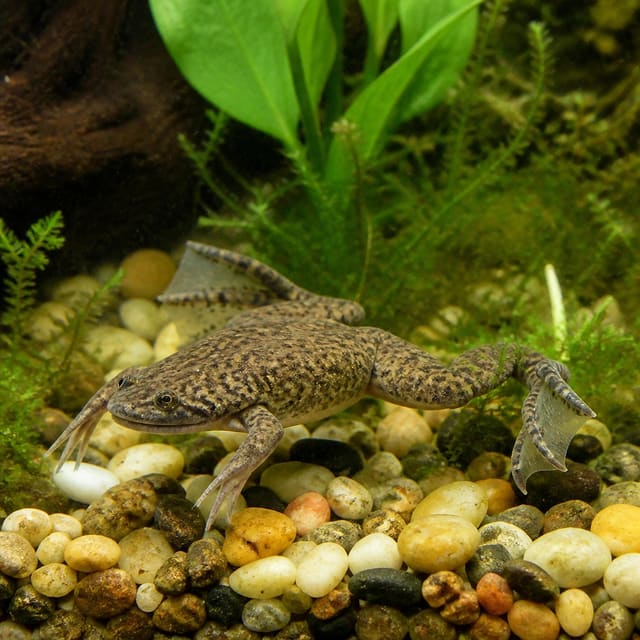
African Dwarf Frogs are often mistaken for African Clawed Frogs. OATA gives two useful distinctions: dwarf frogs have four webbed feet and eyes at the sides of the head, while African Clawed Frogs have two webbed feet and eyes on top of the head.
Use the live selector to choose between the labelled dispatch sizes, 2–2.5 cm and 3–4 cm. One purchase quantity supplies one animal of the selected option. The size you select is the size supplied, not the adult size. Plan the permanent aquarium around the at-least-50-litre benchmark for a small group rather than choosing equipment around the measurement shown on the selector.
The exact species has not been identified, so the care advice here follows the genus Hymenochirus and its care group.
Sex is guaranteed only when the selected option explicitly states male or female. This African Dwarf Frog listing has no sex-guaranteed option. Size, colour and gallery appearance must not be used to infer the sex of the animal supplied.
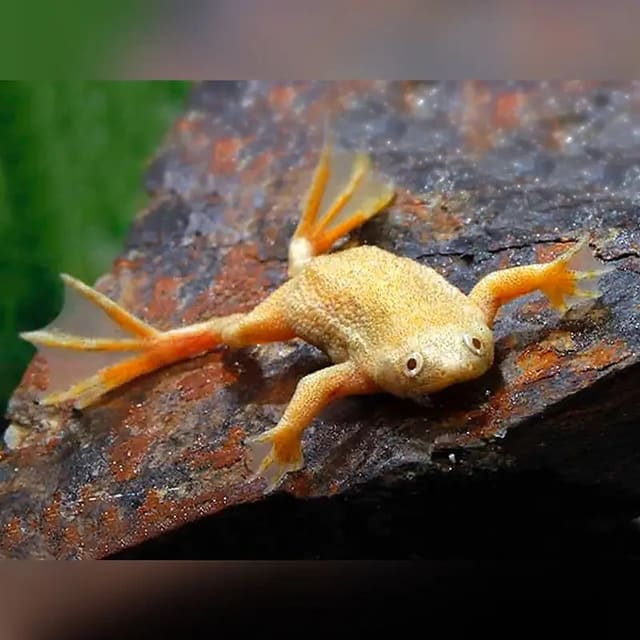
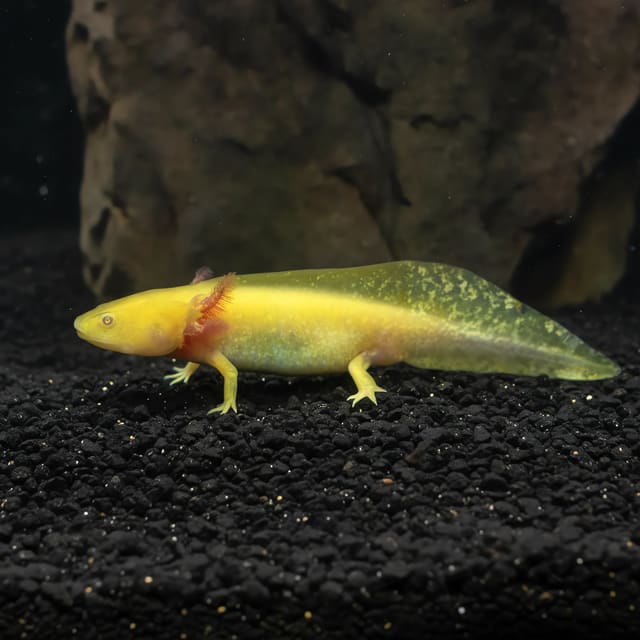
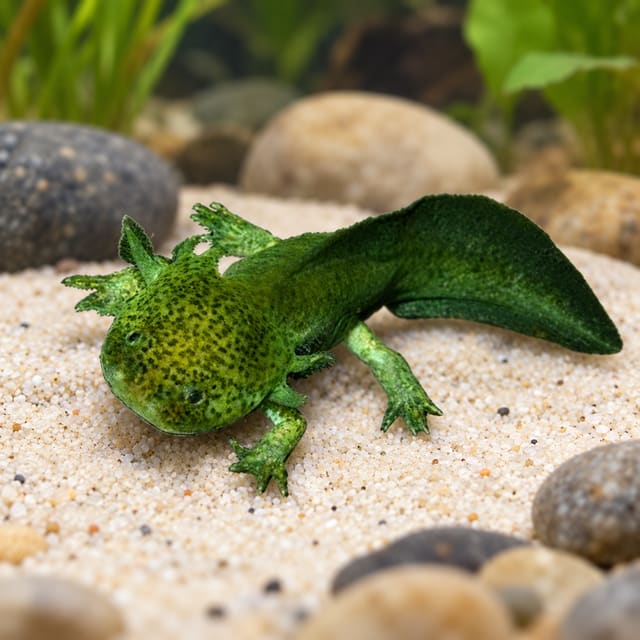
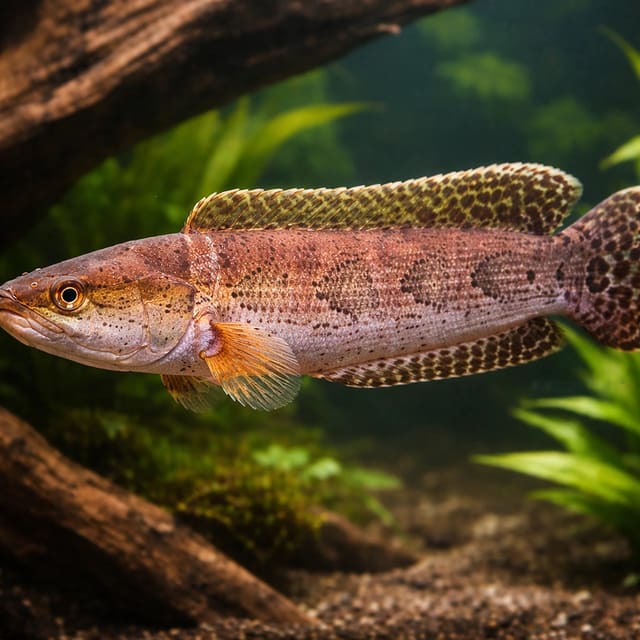
Some gallery images are representative, based on reference photographs of this kind of animal, and none shows the exact animal supplied, so colours can look slightly different from the live animal. The gallery can help you recognise the flattened, mottled form and webbed feet, but use the written setup guidance for aquarium planning.
For dispatch arrangements and the conditions attached to livestock claims, read our current delivery and Live Arrival Guarantee policy. Other unusual aquarium animals can be explored through the loaches and oddballs collection.
For a small group, use an aquarium of at least 50 litres and favour a long, wide footprint. A larger aquarium gives the group more usable area and makes temperature and water quality more stable. Keep the permanent aquarium plan separate from the 2–2.5 cm and 3–4 cm dispatch choices when assessing the space required.
OATA’s aquatic-frog sheet gives 22–25°C, pH 7.0–8.0, general hardness of 8–18°dH and carbonate hardness of 10–15°dKH as group guidance rather than a species-specific optimum. Use those values together instead of selecting one convenient number while overlooking the rest of the water profile.
| Planning point | Working value |
|---|---|
| Small-group aquarium | At least 50 litres |
| Temperature | 22–25°C |
| pH | 7.0–8.0 |
| General hardness | 8–18°dH |
| Carbonate hardness | 10–15°dKH |
| Ammonia and nitrite | Zero mg per litre |
| Suits | Not suited to |
|---|---|
| A small species-only group in at least 50 litres | An aquarium with strong water flow |
| A long, wide aquarium with gentle filtration | Fish small enough to be eaten |
| A keeper prepared to test and maintain the water | Fish that are too large, nippy or predatory |
Species-only keeping is the clearest starting plan. Aquatic frogs are rarely mixed with fish, and a dedicated aquarium removes the need to balance the frog’s needs against unsuitable fish size or behaviour.
Use an aquarium of at least 50 litres for a small African Dwarf Frog group. Choose a long and wide shape within that volume because OATA recommends maximising surface area for aquatic frogs. Do not reduce the aquarium around a dispatch-size animal: the permanent plan must accommodate the intended group and allow water conditions to remain stable.
A larger aquarium gives you more water volume over which waste and temperature changes are distributed. That does not replace maintenance, but it gives the filter and keeper a more stable system to manage. Decide the intended group before buying equipment so the aquarium, filter and maintenance routine all reflect the eventual livestock load.
Keep the base bare or use sand. This follows the aquatic-frog recommendation intended to protect delicate skin. If changing an established aquarium, inspect the whole base rather than covering only the most visible area; every part used by the frogs should follow the same safe plan.
A filter is essential, but it must not create a strong flow. Select or adjust filtration so it can process the waste produced while keeping water movement gentle. Observe the whole aquarium after installation: an outlet that seems mild beside the filter may create a forceful current at the opposite wall.
| Setup decision | Action |
|---|---|
| Volume | Use at least 50 litres for a small group |
| Shape | Prefer a long, wide footprint |
| Base | Use sand or leave it bare |
| Filtration | Provide efficient filtration without strong flow |
Judge filtration by both waste processing and water movement. Check the outlet after installation, after clearing a blockage and after returning cleaned media, because each change can alter the current. Confirm that water still circulates through the filter while no part of the aquarium is dominated by strong flow. If maintenance restores a forceful outlet, adjust the equipment before treating the job as complete.
Keep the long-term group plan in view when choosing the filter. Adding animals and increasing food both raise the waste load, so filtration must remain efficient as the planned group develops. Increase livestock slowly, test ammonia and nitrite, and let measured water quality show whether the biological filter is coping rather than compensating with stronger current.
Reassess flow whenever equipment is moved, cleaned or replaced. The correct decision is not a particular filter label; it is an efficiently filtered aquarium in which the outlet does not subject the frogs to a strong current.
Prepare the aquarium and establish its biological filter before adding an African Dwarf Frog. Our first tropical aquarium guide explains the practical preparation sequence. The decisive introduction test is water quality: ammonia and nitrite must both measure zero mg per litre before livestock enters the aquarium.
The RSPCA’s filtration guidance explains why biological filtration matters. Beneficial bacteria process toxic ammonia into nitrite and then into the safer end product nitrate. OATA applies the same biological-filter principle to aquatic frogs and warns that adding livestock faster than the bacterial population can grow may cause new tank syndrome.
A filter running for a period is not enough by itself; use the zero readings as the practical decision point. If either ammonia or nitrite is detectable, pause further introductions and address water quality before increasing the load.
Keep the livestock plan steady while the filter responds to its new load. Feed once daily, remove uneaten food after about 15 minutes and test at least weekly. Extra animals and extra food both increase the waste reaching the biological filter, so do not make another addition merely because the first frog appears settled.
This sequence turns gradual stocking into measurable decisions. It also separates two questions that can otherwise be confused: whether an animal appears settled and whether the filter is processing the increased waste load.
Preserve the established bacteria during routine care. If the filter needs cleaning, do not run it under the tap because chlorine or chloramine may kill the bacterial population. Rinse the media lightly in aquarium water removed during a partial water change. This removes loose waste while reducing bacterial loss.
Maintain 22–25°C, pH 7.0–8.0, general hardness of 8–18°dH and carbonate hardness of 10–15°dKH. Test the aquarium rather than relying on the heater setting or an assumption about tap water. Our water chemistry guide explains what the principal readings mean, while the water matcher helps compare measured values with the working ranges.
Ammonia and nitrite must remain at zero mg per litre. Test both at least once each week and also after a change that increases the biological load. Nitrate must not exceed 20 mg per litre above its normal tap-water level, so establish the tap-water baseline instead of treating 20 mg per litre as a universal aquarium ceiling.
| Test result | Decision |
|---|---|
| Ammonia above zero | Stop further livestock additions and correct water quality |
| Nitrite above zero | Stop further livestock additions and correct water quality |
| Nitrate rising | Compare it with the normal tap-water baseline |
| pH outside 7.0–8.0 | Resolve the cause before adding more frogs |
| Temperature outside 22–25°C | Return it to the working range without neglecting the other tests |
If the normal tap-water nitrate result is 10 mg per litre, the aquarium should not exceed 30 mg per litre: the 10 mg per litre baseline plus no more than 20 mg per litre. If the tap result is 20 mg per litre, the corresponding ceiling is 40 mg per litre. Retest the tap periodically so the comparison uses a current normal value.
Keep each dated result so you can compare one maintenance cycle with the next. A value inside its range still deserves attention when it is moving steadily towards a limit. For example, nitrate readings of 15, 20 and 25 mg per litre against a 10 mg per litre tap baseline remain below the 30 mg per litre ceiling, but the upward pattern shows that waste is accumulating and should be addressed through the established maintenance cycle.
Give ammonia and nitrite immediate priority because their required value is zero. Do not average a detectable reading with earlier zero results or wait for several tests to confirm it. Pause livestock additions, review the recent increase in animals or feeding and restore suitable water quality before placing another demand on the filter.
Read the values as a connected picture. Zero ammonia with detectable nitrite still requires action, and a temperature inside range does not compensate for unsuitable pH or hardness. Write down results with their dates so a gradual change is easier to see than it would be from memory.
At least once every week, change 25% of the aquarium water. Use a siphon to remove solid waste from sand, and treat replacement tap water with conditioner before it enters the aquarium so chlorine or chloramine is removed. Pair the water change with testing rather than treating the two jobs as unrelated chores.
The 25% change at least once every week is not a reason to ignore an unexpected water-quality problem between scheduled changes. If a frog’s behaviour, colour, condition or appetite changes, test the water promptly rather than waiting for the normal maintenance day.
A clean-looking filter is not the aim if cleaning destroys the bacteria that process waste. Avoid replacing or aggressively washing all biological media as part of routine maintenance. A light rinse in removed aquarium water preserves more of the established population while clearing loose material and blockages.
| Weekly checkpoint | Required outcome |
|---|---|
| Water change | 25% at least once every week |
| Ammonia | Zero mg per litre |
| Nitrite | Zero mg per litre |
| Nitrate | No more than 20 mg per litre above tap level |
| Filter | Unblocked, efficient and gentle-flowing |
Consistency makes changes easier to recognise. Carry out the same checks in the same order, record the results and respond to measured movement before it becomes a larger water-quality problem.
Aquatic frogs are carnivores and should receive food matched to the size of the individual. Feed African Dwarf Frogs once a day. Allow about 15 minutes for feeding, then remove uneaten food so it does not remain in the aquarium and add to the waste handled by the filter.
For smaller frogs, OATA recommends brine shrimp, bloodworm and other insect larvae. These are examples of suitably sized frozen meaty foods, not a reason to offer pieces too large for the individual. Judge the food by the frog’s size and ability to take it rather than by the package description alone.
Supplement the meaty items with a specialist prepared pellet to help provide a balanced diet with added vitamins. A frog that is not accustomed to prepared food may take time to recognise it as edible and is unlikely simply to scavenge it from the bottom. Continue offering appropriate frozen or live food alongside the prepared feed while it learns to accept the pellet.
| Feeding decision | Instruction |
|---|---|
| Frequency | Once a day |
| Food size | Match it to the individual frog |
| Meaty choices | Brine shrimp, bloodworm and other insect larvae |
| Prepared feed | Use a specialist pellet as a supplement |
| Feeding window | Allow about 15 minutes |
| After feeding | Remove uneaten food |
Treat acceptance as something to observe rather than assume. Offer the specialist prepared pellet with an appropriate frozen or live food while the frog learns that the pellet is edible. Watch the full feeding period and distinguish food that is consumed from food that merely disappears into the aquarium base.
If the pellet remains after about 15 minutes, remove it with the other leftovers. Continue the mixed approach at later daily feeds instead of leaving uneaten prepared food in place. Once the frog is clearly taking the pellet, keep it as a supplement to the suitably sized carnivorous diet rather than replacing every meaty item at once.
Watch whether the frog approaches and consumes food during the feeding window. Reduced intake or a lack of interest is a health warning that should prompt a water test. Also watch body condition over time: an increase or decrease in weight and condition can reveal a developing problem more clearly than a single meal.
Do not increase the portion merely because food disappears from view. Observe consumption for the full 15 minutes, remove what remains and adjust the next portion from what the frog actually ate. This keeps feeding tied to the animal’s response while limiting waste.
Learn the normal appearance and behaviour of each frog through regular observation. Individual animals vary, so the useful warning is a change from that animal’s usual pattern. Check swimming, position in the aquarium, colour, hiding behaviour, external appearance, body condition and interest in food.
| If you see this change | Do this first |
|---|---|
| Erratic swimming | Test water quality promptly |
| More hiding than usual | Check water and review recent aquarium changes |
| Darker or paler colour | Test water and continue close observation |
| White spots or fluffy growths | Test water and seek health guidance |
| Loss of body condition | Review observed food intake and test water |
| Reduced interest in food | Remove leftovers and test water |
Water quality is the first practical check because even small amounts of ammonia or nitrite may stress aquatic frogs. Confirm both are zero mg per litre, compare nitrate with the tap-water baseline and check that temperature, pH and hardness remain within the working ranges.
Do not choose a treatment from appearance alone. Begin with measured water results and a clear description of the change. If you remain concerned after testing, contact us for health guidance.
Aquatic frogs are best kept in species-only aquariums. This removes the principal mixed-aquarium risks identified by OATA: frogs may prey on fish small enough to fit in their mouths, while fish that are too large, nippy or predatory may stress the frogs.
| Question | Decision |
|---|---|
| Could the fish fit in the frog’s mouth? | Avoid that combination |
| Is the fish too large for the frog? | Avoid that combination |
| Is the fish nippy? | Avoid that combination |
| Is the fish predatory? | Avoid that combination |
| Do size and behaviour remain uncertain? | Use a species-only aquarium |
African Dwarf Frogs may be kept with some fish only when the fish are neither small enough to be eaten nor too large, nippy or predatory. That is a screening rule, not a universal tank-mate list. Assess the adult size and usual behaviour of every proposed fish rather than relying on labels such as “community” or “peaceful”.
Apply the rule to every individual already in the aquarium and to its adult size. A fish that passes one question can still fail another: being too large is a concern even when it is not predatory, and a fish outside the frog’s mouth-size range may still be unsuitable if it is nippy.
Start with the frog’s at-least-50-litre group aquarium, gentle filtration, sand or bare base and established water conditions. Do not redesign those fundamentals around a fish candidate. If a mixed plan would require a strong current or another departure from the aquatic-frog setup, keep the aquarium species-only.
Make compatibility a decision made before introduction, not an experiment conducted with live animals. Write down the candidate’s adult size and whether it is nippy or predatory, then decide whether it could fit in the frog’s mouth or would be too large for the frog.
Do not use the gallery, dispatch grade or a young animal’s present size as the whole comparison. The selected 2–2.5 cm or 3–4 cm measurement is a dispatch size, while permanent compatibility planning must consider the proposed fish at its adult size.
Use a short two-part check before any proposed introduction. First compare sizes in both directions: decide whether the fish could be eaten and whether it would be too large for the frog. Then assess behaviour separately for nipping and predation. Passing the size check does not cancel a behavioural concern, and calm behaviour does not make an unsuitable size relationship safe.
| Candidate result | Next step |
|---|---|
| Fails any screen | Keep it separate |
| Adult size is unclear | Keep the aquarium species-only |
| Behaviour is unclear | Keep the aquarium species-only |
| Passes every screen | Review the full aquarium population before introduction |
Repeat the process for every inhabitant rather than assessing only the newest candidate. The result depends on the complete population, and the addition must still preserve the frog aquarium’s gentle flow, established water conditions and available group space.
If a candidate passes the screen, introduce livestock slowly. Each additional animal and the associated increase in feeding raises the amount of waste the biological filter must process. Check ammonia and nitrite are zero before the addition, then continue regular testing as the bacterial population adjusts.
A compatibility decision remains conditional because individual behaviour and the complete aquarium population matter. For a stocking and compatibility assessment, ask us with the aquarium volume, current inhabitants, measured water values and the adult identity of the proposed companion. Where those details leave doubt, a species-only group is the safer plan.
Use the labelled 2–2.5 cm or 3–4 cm measurement only as the dispatch size. For permanent housing, OATA’s guidance for aquatic frogs recommends an aquarium of at least 50 litres for a small group.
OATA’s guidance for aquatic frogs recommends at least 50 litres for a small group. Favour a long, wide footprint, provide an essential filter without strong flow and use sand or a bare base.
Plan a small species-only group in at least 50 litres, following OATA’s guidance for aquatic frogs. Increase the number slowly so the biological filter can adjust to the extra livestock and feeding.
It requires a special set-up with gentle filtration, sand or a bare base, stable water and regular testing. Choose it only if you can keep ammonia and nitrite at zero mg per litre and complete the required maintenance.
Feed once daily with suitably sized brine shrimp, bloodworm or other insect larvae alongside a specialist prepared pellet. Allow about 15 minutes for feeding and remove uneaten food.
OATA’s guidance for aquatic frogs gives 22–25°C, pH 7.0–8.0 and general hardness of 8–18°dH. Keep ammonia and nitrite at zero mg per litre.
Use a species-only aquarium as the default because aquatic frogs may prey on fish small enough to fit in their mouths. Avoid fish that are too large, nippy or predatory because they may stress the frog.
Some fish may be considered only when they are neither small enough to be eaten nor too large, nippy or predatory. Keep uncertain combinations separate and prefer a species-only aquarium.
Start filming before the sealed parcel is opened, with someone present to receive it, and record continuously as the parcel is opened with the animal still inside the sealed bag. Float the bag for 20–30 minutes, never pour the bag water into the aquarium, then release the animal.
No reviews for this item yet. Bought one? Honest reviews only, good or bad.
What customers say about ordering from us
I have a small group of long finned mountain minnows. So was delighted to be able to order ten of this variety to increase the genetics in my tank . The ones I recieved are healthy but it’s to early to give a verdict on wether they are of a long finned type since they are small currently.
Gordon Walker · 23 Sept 2026
100% success travel and "installation". Pleased with quality of purchase. The Siamese fighter a bit "shy" so have not yet seen him at his best yet but looking good. Happy customer. GG
George E Garratt · 21 Sept 2026
Reviews of our shop, collected by Judge.me, an independent third-party review collector. Newest first.