Moderate
Hymenochirus curtipes gold - Aquarium Frogs
22–26°C · pH 6.5–7.5 · 40L
£5.99
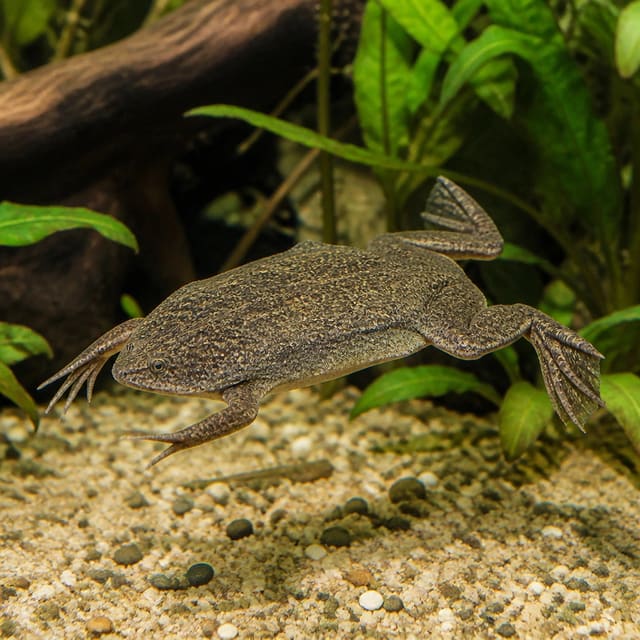
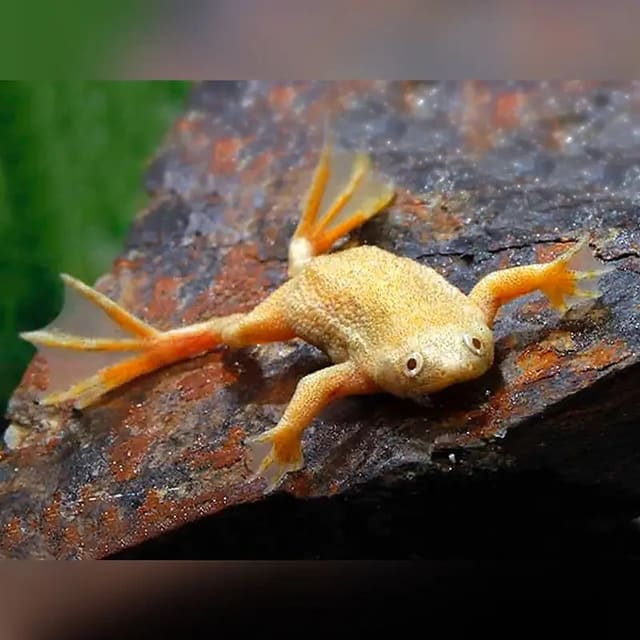
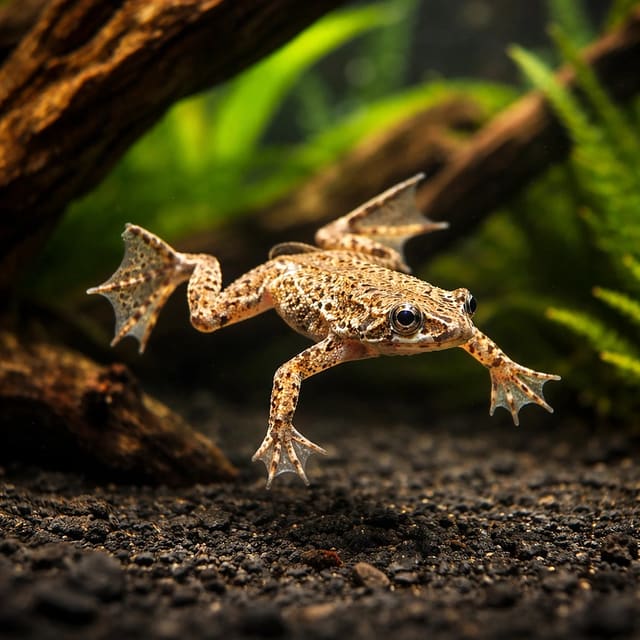
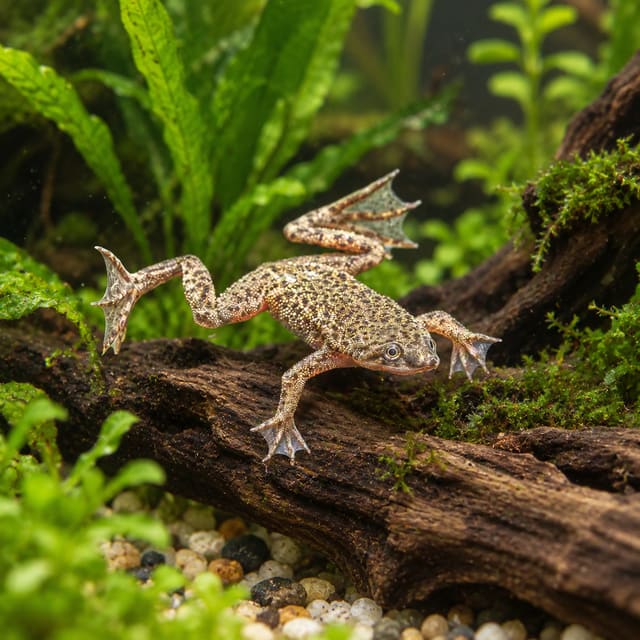
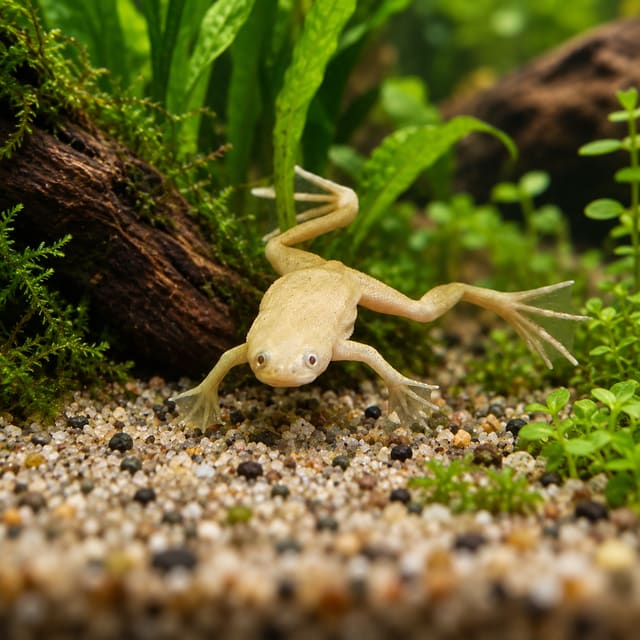
Hymenochirus curtipes is a fully aquatic African dwarf frog for a mature, low-flow aquarium. One purchase supplies one unsexed frog at a 2–3 cm dispatch grade; broad OATA guidance favours a small group, a species-only setup and careful access to meaty food.
Hymenochirus curtipes
Hymenochirus curtipes is a fully aquatic African dwarf frog for a mature, low-flow aquarium. One purchase supplies one unsexed frog at a 2–3 cm dispatch grade; broad OATA guidance favours a small group, a species-only setup and careful access to meaty food.
Maintain these water conditions for optimal health and vibrant colors
Hymenochirus curtipes is sold here as a fully aquatic African dwarf frog. OATA groups African dwarf or Congo frogs within Hymenochirus and distinguishes them from the much larger African clawed frog, Xenopus laevis. This matters because a small dwarf frog needs a different scale of home, food and companion plan from a 15 cm clawed frog. It is an amphibian that lives submerged, not a fish and not a semi-aquatic frog that needs a land area.
One purchase supplies one live frog at the supplier's 2–3 cm dispatch grade. That measurement describes the animal supplied, not a species-specific adult-size promise. OATA's broad group sheet says African dwarf frogs in the genus Hymenochirus grow to 5 cm; use that as group-level planning context rather than a verified maximum for this exact species. Sex is guaranteed only when the selected option explicitly states male or female. This Hymenochirus curtipes listing has no sex-guaranteed option.
| Scientific name | Hymenochirus curtipes |
|---|---|
| Animal supplied | One live, unsexed aquatic frog per purchase |
| Dispatch grade | 2–3 cm |
| Group planning | OATA recommends at least 50 litres for a small group of African dwarf frogs |
| Broad frog water guide | 22–25°C, pH 7.0–8.0 and 8–18°dH; not a species-specific optimum |
| Safest community plan | Species-only; some fish may work only after careful size, feeding and behaviour checks |
| Suits | A keeper prepared to maintain mature water, low flow, sand or a bare base and deliberate meaty feeding |
This frog suits an aquarist who wants an unusual fully aquatic animal and will design the aquarium around amphibian needs rather than treating it as a decorative extra in a fish community. Its care is not technically complicated, but the details matter: a mature biological filter, gentle current, a long and wide footprint, safe substrate, measured water, access to appropriately sized carnivorous food and enough time to feed without competition. The intermediate store label reflects that practical attention.
The loaches and oddballs collection offers other unusual aquatic animals to compare, but a shared collection does not make those animals compatible. Compare every candidate's adult scale, food, water and behaviour before planning a mixed aquarium.
The exact offer establishes the name, single-animal retail unit and 2–3 cm dispatch grade. The practical husbandry figures come from OATA's broad sheet for aquatic frogs and axolotls, with frog-specific values used where the source separates frogs from axolotls. The 22–25°C temperature is for frogs, for example, while the 50-litre recommendation is specifically for a small group of African dwarf frogs. Other points cover aquatic frogs more generally. Keeping that scope visible avoids turning a useful group guide into false precision about H. curtipes.
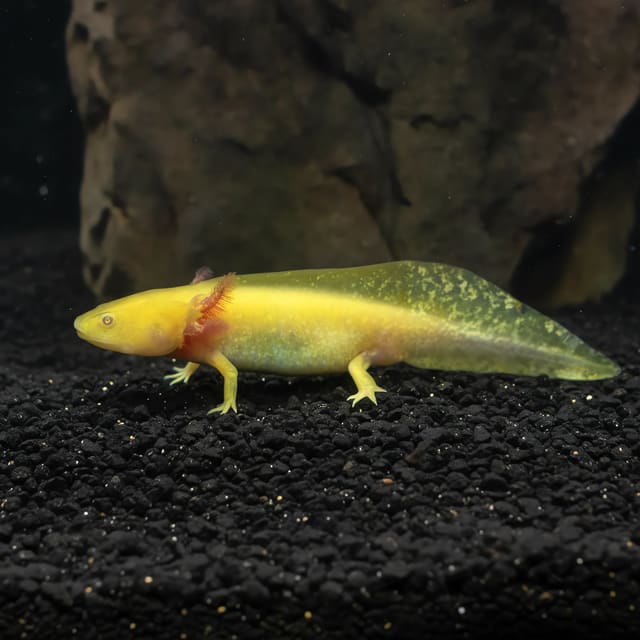
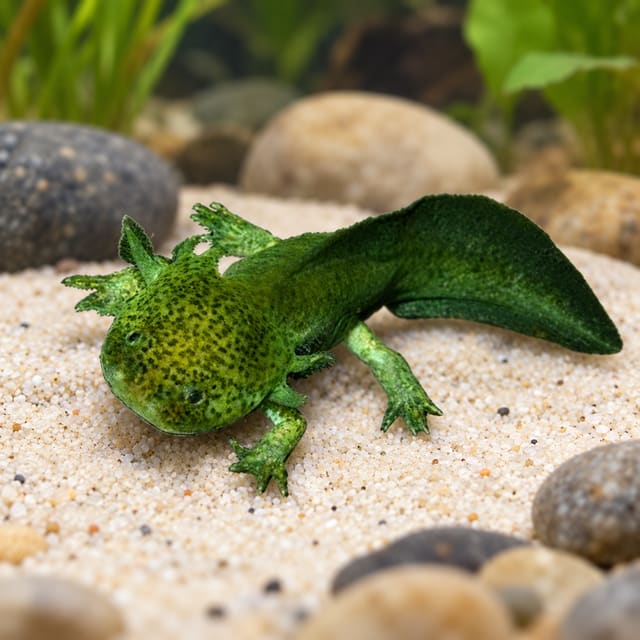
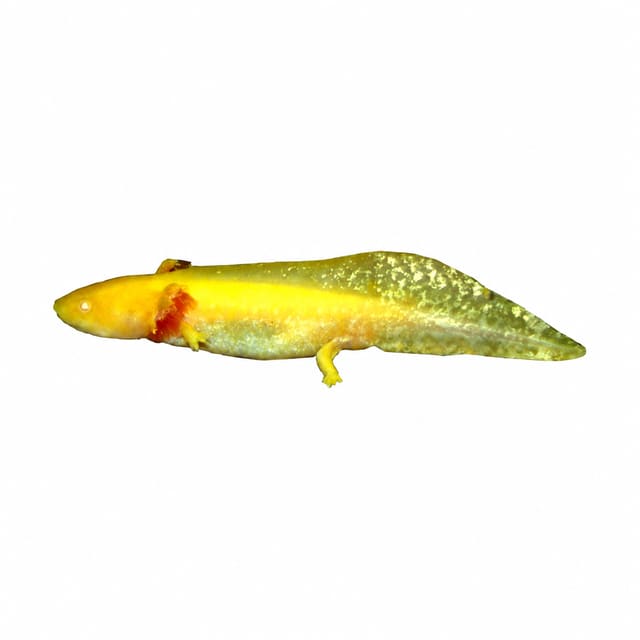
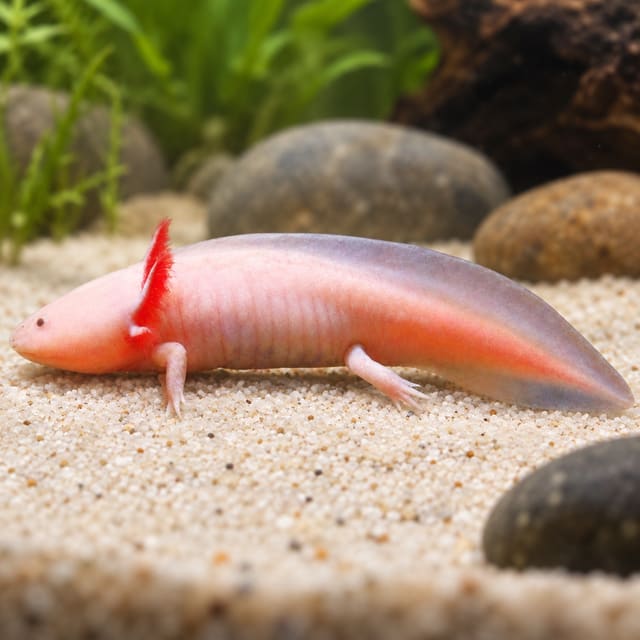
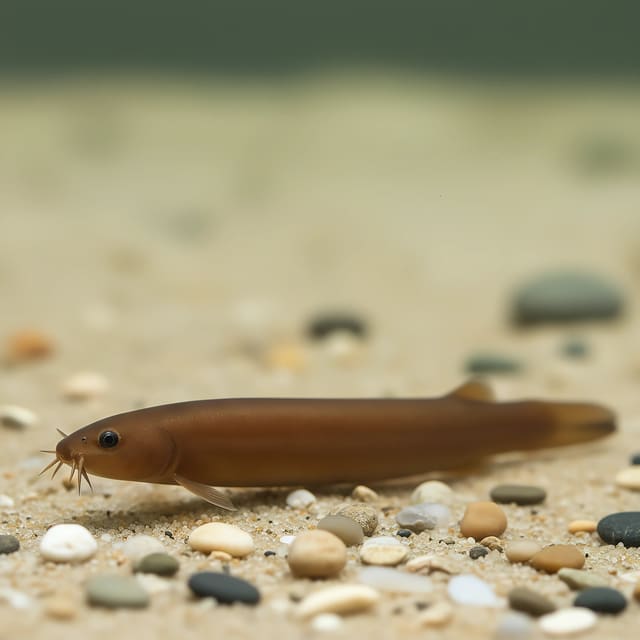
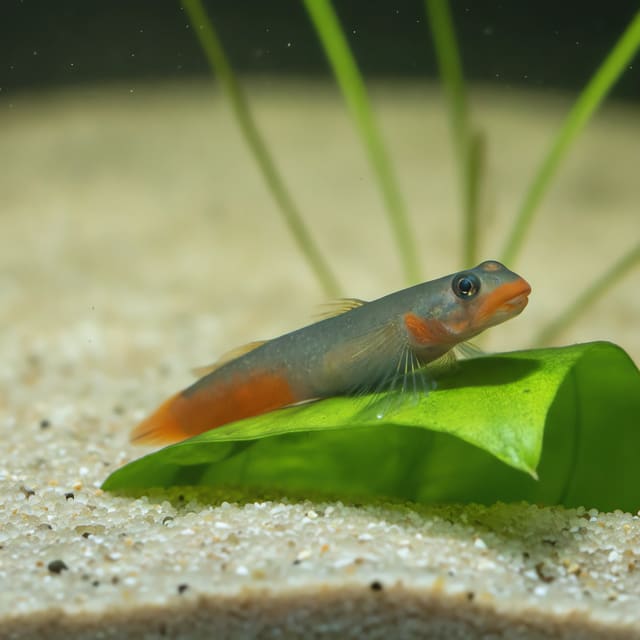
Gallery images have been digitally enhanced to improve image quality. Natural colour, pattern, size and maturity can vary between live animals.
Use a mature aquarium with a working biological filter. The RSPCA explains why filtration matters: animals produce ammonia, beneficial bacteria convert it to nitrite and then nitrate, and both ammonia and nitrite are toxic. A newly filled aquarium may look clear while lacking the bacterial population needed to process waste. Prepare and cycle the system, confirm ammonia and nitrite at zero and make sure the filter and heater operate consistently before adding livestock. The first tropical tank guide helps organise that preparation.
OATA recommends at least 50 litres for a small group of African dwarf frogs. This is broad group guidance rather than a species-specific minimum for H. curtipes. A longer, wider aquarium is preferable to a tall narrow shape because OATA emphasises surface area for aquatic frogs and axolotls. Allow extra room when the group is larger or when other livestock is present. Volume provides stability, but usable floor area, feeding access and a safe layout decide how well the space functions.
Add animals gradually so the biological filter can adapt as waste and feeding increase. A 50-litre headline is not permission to stock quickly or ignore the filter's capacity. Test after additions, watch for changes in feeding and behaviour, and keep maintenance predictable. A group aquarium should offer enough room for every frog to rest and feed without one animal occupying the only useful spot.
OATA recommends either a bare base or sand for aquatic frogs and axolotls because their skin and gills can be damaged by unsuitable substrate. For this frog, use clean aquarium sand or a bare floor that can be kept hygienic. Avoid sharp gravel, rough rocks and décor with cutting edges. Check pipes, ornaments and gaps for places where a small 2–3 cm arrival could become trapped.
The filter must cope with waste without producing a strong current. Choose or adjust filtration so water circulates and the surface moves while the frogs are not pushed continually around the aquarium. A broad, gentle return is usually easier to live with than a concentrated jet. Do not solve excessive flow by switching filtration off for long periods; select equipment and positioning that provide biological filtration at an appropriate current.
Décor can provide shelter and divide the open space, but keep the layout easy to inspect and clean. OATA's sheet mentions pipes as part of suitable décor. Use aquarium-safe pieces of a scale that cannot trap the animal. Leave clear feeding areas so uneaten food can be seen and removed. A beautiful layout is useful only when it also allows each frog to move, rest and eat safely.
For aquatic frogs, OATA gives a temperature of 22–25°C, pH 7.0–8.0, general hardness of 8–18°dH and carbonate hardness of 10–15°dKH. Ammonia and nitrite should be zero mg/l, and nitrate should not exceed 20 mg/l above the normal tap-water level. These ranges apply broadly to the group and are not a measured species-specific optimum for H. curtipes. Use them as a conservative starting frame and prioritise stable, clean water.
| Measure | How to apply the broad guide |
|---|---|
| Temperature | 22–25°C for frogs; hold a steady value rather than allowing daily swings. |
| pH | 7.0–8.0 as group guidance; understand the tap-water baseline before altering it. |
| General hardness | 8–18°dH, described by OATA as medium-hard. |
| Carbonate hardness | 10–15°dKH as broad group guidance. |
| Ammonia and nitrite | Zero mg/l in the occupied aquarium. |
| Nitrate | No more than 20 mg/l above the normal tap-water level. |
The water chemistry guide explains what the main tests mean. Record real results rather than relying on appearance or assuming clear water is safe. The water matcher can help compare measured values with the broad guide. Avoid repeated chemical adjustments to chase a perfect decimal; investigate unsafe readings promptly, while allowing suitable water to remain stable.
OATA strongly recommends a 25% partial water change at least once every week. Siphon waste from sand or a bare base, remove uneaten food and treat replacement tap water with conditioner to neutralise chlorine or chloramine. Match replacement temperature reasonably closely so maintenance does not create an abrupt change. Regular smaller work is easier on the animals and biological filter than waiting for visible dirt to accumulate.
Check the filter for blockages and reduced flow. When media needs cleaning, rinse it lightly in water removed from the aquarium, not under the tap, because chlorine or chloramine may kill beneficial bacteria. Avoid replacing all mature filter media together. Inspect the heater, thermometer and equipment at the same time. After maintenance, confirm normal flow and watch the frogs for their usual movement and feeding response.
OATA describes aquatic frogs and axolotls as carnivores. For smaller frogs it names brine shrimp, bloodworm and other insect larvae. Specialist prepared pellets can add balance, although an animal unfamiliar with prepared food may take time to recognise it. Frozen or live foods may need to accompany pellets during that transition. Choose food pieces that suit the frog's size and remove anything too large or hard to handle safely.
The group guide advises feeding aquatic frogs once a day and allowing about 15 minutes for them to eat. Remove uneaten food after that window to protect water quality. Spread food so every frog has a fair opportunity, and watch rather than assuming disappearance means equal feeding. In a mixed aquarium, fish may intercept food first; this is one reason species-only housing is the safer default.
A feeding dish or deliberate placement can make leftovers easier to monitor, but it does not replace observation. A frog that repeatedly misses meals may need the community, flow or feeding location changed. Do not add large quantities to compensate, because excess meaty food can quickly foul water. Condition and a reliable feeding response are more useful than trying to accelerate growth.
Make sure someone is present at the delivery address and the aquarium is ready. If anything appears wrong, the Tropical Fish Co Live Arrival Guarantee policy asks for a continuous unboxing video beginning with the sealed parcel, showing the outer box, the opening and the animal still in the sealed bag before anything is disturbed. Keep the order number ready and contact the shop the same day. Read the full delivery and Live Arrival Guarantee policy before arrival.
Do not add an unlisted chemical treatment or create a complicated timed mixing routine. The policy supports careful temperature equalisation and transfer without bag water. After release, keep disturbance modest and verify that the frog is moving normally in the prepared low-flow environment. Test the aquarium if behaviour causes concern.
Meaty foods are nutritious but can pollute the aquarium quickly when leftovers remain. Prepare a modest portion before feeding, distribute it where the frogs can reach it and begin the 15-minute window once food enters the water. At the end, remove visible remains rather than leaving them for later. This routine protects water quality and makes appetite changes easier to notice.
Review the portion after several feeds. If food always remains, reduce the amount; if every piece disappears immediately, check that each frog actually ate before increasing it. In a group, one confident animal can take more than its share. Feeding at more than one accessible point may help, provided all locations can be inspected and cleaned. The aim is consistent condition across the group, not the fastest possible consumption.
Maintenance and feeding should support one another. A blocked filter, accumulating waste or detectable ammonia cannot be solved by skipping one meal alone. Test the water, restore filtration safely and complete the appropriate water change. Conversely, clean readings do not excuse oversized daily portions. Keep both the biological system and the feeding routine within predictable limits.
Regular observation makes it easier to recognise a genuine change. OATA advises watching swimming behaviour, colour, temperament, breathing, appearance, body condition and food intake across aquarium livestock. For an aquatic frog, pay particular attention to repeated food refusal, difficulty moving against the current, new skin damage or a consistent change from its normal behaviour. Test water first and seek appropriate professional help when a health concern persists; do not guess a disease treatment from one sign.
OATA says aquatic frogs and axolotls are best kept in species-only aquariums. For African dwarf frogs, some fish can be considered, but only when the fish are not small enough to be eaten and are not large, nippy or predatory enough to stress the frogs. That makes species-only housing the clearest plan for feeding, observation and risk control. It removes the guesswork of whether fish will take every meal or harass a slow amphibian.
A small group of African dwarf frogs also gives the aquarium a coherent purpose. OATA pairs that social plan with a broad minimum of 50 litres. Choose a modest group that the aquarium's footprint, filtration and feeding layout can support, then confirm that every frog has space and food. Add gradually and confirm that each frog obtains food during the daily feeding window.
African dwarf frogs can predate on fish that fit in their mouths. A very small fish may therefore be at risk even if it looks calm and shares similar water. Newly hatched or very small invertebrates deserve the same caution. Compatibility is not just about whether the fish attacks the frog; it also includes what the frog may attempt to eat.
At the other extreme, large, nippy or predatory fish can stress or injure the frog. Strongly competitive feeders may create a quieter but equally serious failure: the frog remains uninjured yet repeatedly receives too little food. A community that appears peaceful from across the room may still be unsuitable at feeding time.
| Companion type | Decision guide |
|---|---|
| Fish small enough to swallow | Avoid; African dwarf frogs may treat them as prey. |
| Large, nippy or predatory fish | Avoid; OATA identifies these as stress risks for African dwarf frogs. |
| Very fast feeders | Use strong caution because the frog may be excluded from food. |
| Calm fish outside prey size | Potentially possible only after water, space, feeding and behaviour all align. |
| Other African dwarf frogs | The most straightforward group plan when the aquarium supports a small group. |
Offer appropriately sized meaty food where the frog can find it and watch the full 15-minute feeding period. If companions consistently take everything first, the theoretical compatibility has failed. A dish or more deliberate placement may help, but persistent exclusion is a reason to change the housing plan rather than continually overfeed the aquarium.
Check the community across resting and active periods. Repeated pursuit, nipping, cornering, food theft or skin damage requires action. A frog that can physically survive alongside a fish is not necessarily thriving. The safest response to persistent conflict is appropriate separation into established aquariums, not waiting for visible injury to worsen.
After adding a frog or changing companions, continue observation beyond the first moments. Compare feeding access, resting locations and movement over several daily routines. An individual that repeatedly stays away from food, struggles against the current or receives attention from fish needs a prompt housing review. The absence of an obvious bite does not prove the arrangement is working.
Body condition is especially useful in a mixed community. A frog may lose condition gradually while fast fish appear healthy. Regular observation at feeding time helps distinguish a frog that is slow but eating from one that is continually excluded. If targeted placement and layout changes fail, move the animals to suitable established housing rather than adding extra food for the whole aquarium.
Related amphibian products are useful for comparison, not automatic tank-mate recommendations. Different frogs and toads can vary greatly in adult size, feeding behaviour and environmental needs. Likewise, a collection label such as oddballs describes merchandising rather than a shared aquarium recipe. Use the animal's own care evidence for every stocking choice.
Start from species-only housing and demand a positive reason for every exception. That approach follows the source while leaving room for carefully assessed fish companions under its stated conditions. It is more useful than calling this frog universally peaceful, because peacefulness alone says nothing about predation, food competition or the behaviour of the other animal.
OATA says African dwarf frogs in the genus Hymenochirus grow to 5 cm. Use that as broad group-level planning context rather than a verified species-specific maximum for Hymenochirus curtipes. The frog supplied on this listing has a 2–3 cm dispatch grade, which describes its size when supplied and remains separate from any final adult length.
OATA recommends at least 50 litres for a small group of African dwarf frogs and advises an aquarium that is long and wide enough to provide useful surface area. Treat 50 litres as broad group guidance, then allow more room when stocking or layout requires it. Use a mature biological filter with efficient but gentle flow.
Plan a small group under OATA's African dwarf frog guidance, with at least 50 litres as the broad starting aquarium size. Hymenochirus curtipes should not be added rapidly simply to reach a number: choose the group only after considering floor area, filtration and feeding access, then add livestock gradually so the biological filter can adapt.
It can suit a prepared newer keeper, but it is not a place-and-forget community animal. The aquarium must be mature, low-flow and safely furnished; water needs testing; carnivorous food must reach every frog; and species-only housing is the safest plan. The intermediate store label reflects those practical duties rather than a scientific rating.
OATA describes aquatic frogs as carnivores. For smaller frogs it recommends brine shrimp, bloodworm and other insect larvae, with suitable prepared pellets helping to balance the diet. Feed once daily under the broad group guide, allow about 15 minutes for eating and remove leftovers. Watch each Hymenochirus curtipes rather than assuming all members fed equally.
Use OATA's broad aquatic-frog guidance of 22–25°C and pH 7.0–8.0, with 8–18°dH general hardness. These are group-level starting values, not a measured optimum for this exact species. Keep ammonia and nitrite at zero, monitor nitrate and favour stability over repeated chemical adjustment.
The more useful concern is size and feeding interaction. OATA says aquatic frogs may eat fish they can fit in their mouths, while large, nippy or predatory fish may stress African dwarf frogs. Species-only housing avoids both problems. If fish are considered, observe feeding and behaviour closely rather than relying on a general peaceful label.
OATA allows some fish with African dwarf frogs only when the fish are not small enough to be eaten and are not large, nippy or predatory. Calm fish outside prey size may be possible when water and feeding also match, but species-only housing remains the safest default for Hymenochirus curtipes. Product alternatives are not compatibility recommendations.
Tropical Fish Co hand-bags live animals in oxygen, uses an insulated box and adds a heat pack when weather calls for it, then uses a licensed live-animal courier. Someone must be present to receive the parcel. For a Live Arrival Guarantee concern, record one continuous unboxing video from the sealed parcel to the frog still in the sealed bag and contact the shop the same day.
The shop offer supplies one live animal at a 2–3 cm dispatch grade and provides no sex selection. The accepted customer title follows the exact matched trade identity. Adult length, water values, aquarium volume, social planning and compatibility are presented only at the broader Hymenochirus, African dwarf frog or aquatic-frog scope stated by OATA. Delivery and claim steps come only from the Tropical Fish Co policy linked in the care section.
No reviews for this item yet. Bought one? Honest reviews only, good or bad.
What customers say about ordering from us
Easy website plenty of info on fish your buying great to pick a time slot
TRACEY DURRANT · 7 Oct 2026
Got some lovely fish thank you
Kevin Mackie · 7 Oct 2026
Reviews of our shop, collected by Judge.me, an independent third-party review collector. Newest first.