Advanced
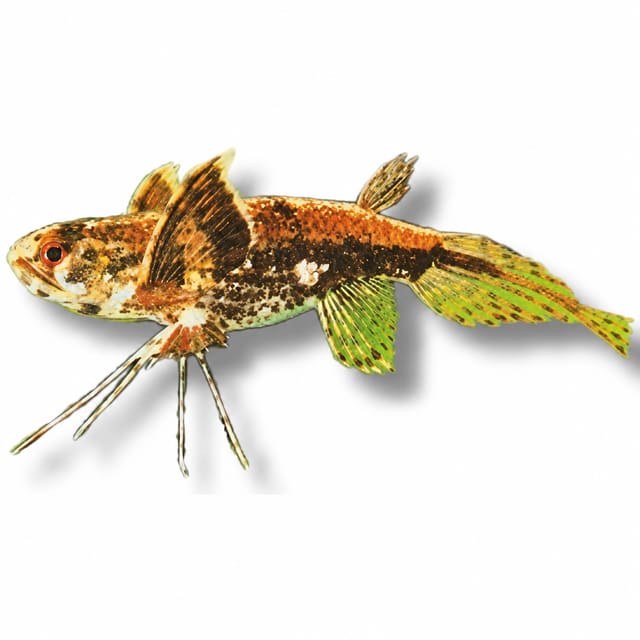
Saddled Bichir (Polypterus endlicherii) – 5–25cm Size Grades
From £17.99Some sizes on sale

One unsexed Dusky Snakehead (Parachanna obscura) in the selected size. An advanced African air-breathing predator needing a secure species-led aquarium, a large adult footprint and carefully managed water and feeding.
Adult size is the maximum length this species reaches at full maturity (scientific sources). The livestock you receive will be younger and smaller — pick a size above for the actual shipping size. Product-photo provenance and any image-specific limitations are stated on the listing.
Parachanna obscura
One unsexed Dusky Snakehead (Parachanna obscura) in the selected size. An advanced African air-breathing predator needing a secure species-led aquarium, a large adult footprint and carefully managed water and feeding.
Adult size is the maximum length this species reaches at full maturity (scientific sources). The livestock you receive will be younger and smaller — pick a size above for the actual shipping size. Product-photo provenance and any image-specific limitations are stated on the listing.
Maintain these water conditions for optimal health and vibrant colors
Dusky Snakehead (Parachanna obscura) is a large African air-breathing predator for a secure, species-led aquarium. It is also called the African Obscure Snakehead. This is a specialist fish for experienced keepers. Its published maximum is 50 cm standard length, so choose the aquarium, lid and long-term budget for a large adult rather than the juvenile size selected today.
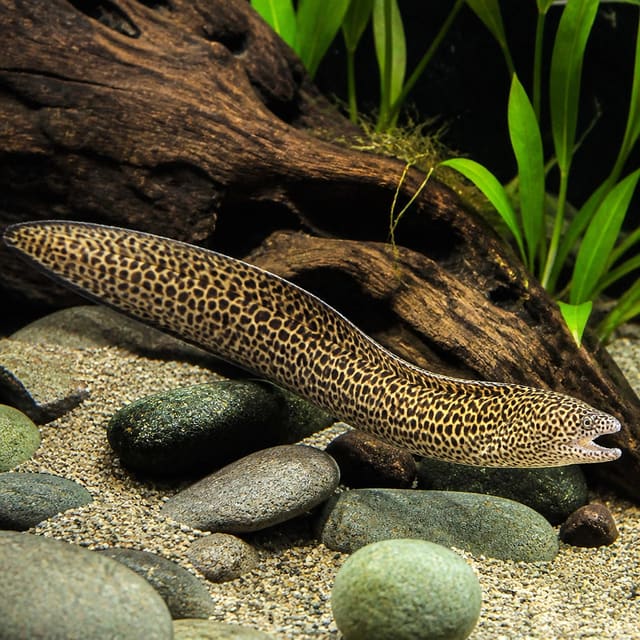
Each quantity is one unsexed fish in the selected size band. The four options are approximately 1-3 cm, 4-6 cm, 7-8 cm and 10-15 cm. They are size grades, not different species or colour forms. Sex is not selectable. The gallery images are illustrative views, and the two-fish scene does not mean that a pair is included.
An experienced keeper who can provide a mature, escape-proof aquarium with a large footprint, an unobstructed surface and humid air gap, powerful but not turbulent filtration, a varied predator diet and a separation plan. If the adult enclosure is not already available or firmly planned, wait before ordering.
| Planning point | Practical guidance | Why it matters |
|---|---|---|
| Identity | Parachanna obscura (Günther, 1861) | Parachanna is the African snakehead genus; generic Channa pages may describe different Asian species. |
| Adult size | Plan around the published 50 cm standard-length maximum | Plan the enclosure for the adult; a juvenile fitting comfortably does not establish enough space for its lifetime. |
| Adult aquarium | Begin around 180 x 60 cm floor area and approximately 650 litres; 200 x 75 cm or larger is preferable | This is our welfare planning recommendation, not a claimed scientific threshold. Turning room and surface area matter more than a litre label. |
| Temperature | Keep a stable 24-27°C working target | The wider reference range is 23-28°C; its endpoints are not everyday targets. |
| Water | Reference range pH 6.0-7.8 and 0-20 dGH; prioritise stability and clean water | Air breathing does not protect the fish from ammonia, nitrite or chronic waste. |
| Social plan | Species-only, one fish, unless an expert has a tested alternative and a spare enclosure | Predation, territorial aggression and pair incompatibility can appear after growth or maturity. |
| Sale unit | One unsexed fish in the selected size | A pair illustration, a pair experiment or ordering two fish never guarantees a bonded pair. |
FishBase records the 50 cm maximum, African distribution, marginal-vegetation and floodplain habitat, obligate air breathing and an animal-led diet. The aquarium footprint above is a conservative planning recommendation for that adult size and body form, rather than a fixed biological threshold.
Choose the size option that suits your prepared aquarium and the food size you can provide. One quantity adds one live, unsexed Dusky Snakehead. The listed bands are approximate dispatch sizes, and individual fish may sit close to a band edge.
| Option | What it means | Immediate planning |
|---|---|---|
| 1-3 cm | Very small juvenile grade | Fine, frequent meals, shielded intakes and no edible tank mates; the adult enclosure is still the destination. |
| 4-6 cm | Small juvenile grade | Appropriately sized frozen or prepared foods, numerous secure retreats and careful intake protection. |
| 7-8 cm | Larger juvenile grade | More substantial portions, stronger waste processing and early transfer planning if using a temporary grow-out. |
| 10-15 cm | Established juvenile or subadult grade | A large mature aquarium should already be available; do not rely on a short-lived small holding tank. |
Origin and captive-bred status are not specified. Individual fish can vary in colour, temperament and willingness to accept prepared foods; the gallery does not show the animal allocated to your order.
A juvenile can physically fit in a smaller grow-out, but that does not reduce the adult commitment. Secure the adult footprint, structural support, filtration capacity and escape-proof cover before choosing the fish. Rehoming a large predator can be difficult and should not be the default plan.
Parachanna obscura is a member of Channidae, the snakehead family. Parachanna contains African species, whereas Channa is the familiar Asian genus. Search results often mix the two and then copy care from Rainbow, Giant, Northern or Dwarf Snakeheads into an African product page. That can distort adult size, seasonality, water temperature, law and behaviour.
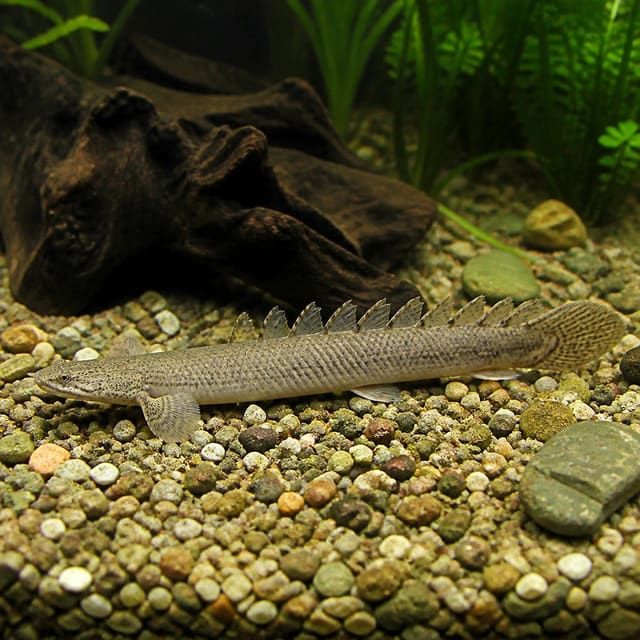
FishBase describes an elongated body, a depressed head, a slightly projecting lower jaw, developed canine teeth and a series of dark flank blotches. Those are useful species-level orientation points, but the retail images are not diagnostic specimens. Exact identification in closely related material can require counts, measurements and provenance beyond a side photograph.
Dusky Snakehead, African Snakehead and African Obscure Snakehead are common names used for Parachanna obscura. Choose care information for this African species rather than applying advice for a different snakehead.
FishBase reports a maximum of 50 cm standard length. Standard length excludes the tail fin, so the total space occupied by a full-grown fish can be greater. Not every captive animal reaches the maximum, but an ethical enclosure plan cannot depend on an individual staying smaller than the published record.
The documented range is broad. FishBase records the species from the Senegal River to the Chad system, including the Volta and Niger basins, West African coastal basins, and records extending towards Nile and Congo systems. That distribution does not identify the origin of an individual retail fish; no collection locality is specified for this offer.
Natural-history sources associate the species with quiet freshwater, muddy areas, floodplains and marginal vegetation. This is an ambush-predator setting: shaded edges, submerged wood, plant roots and broken sightlines are more relevant than a bright open racing lane. In the aquarium, translate function rather than trying to reproduce a continent in miniature. Give the fish secure cover, open turning room, a calm surface and places to rest without being wedged.
Parachanna obscura is recorded as an obligate air-breather. Its accessory respiratory structures allow it to use atmospheric oxygen at the surface, an adaptation to oxygen-poor habitats. The practical consequence is not that aeration is optional. The fish must be able to reach a clean, unobstructed surface, and the air trapped beneath the lid should not be cold or desiccating relative to the water.
Never fill the tank so tightly to a sealed cover that the fish cannot take air. At the same time, never leave an escape gap to create an air space. Lower the water line enough to form a humid chamber beneath a rigid, close-fitting lid. Route cables and pipes through secured openings, and inspect them after every maintenance session.
A fish that can breathe at the surface can still be injured by ammonia, nitrite, high nitrate, unstable pH, organic pollution, low dissolved oxygen and overheated water. Treat surface access and water quality as two simultaneous requirements.
There is no single published aquarium minimum that becomes correct merely because it appears on several shops. A 400-litre tall tank and a 400-litre long tank offer very different movement space. For a fish that may reach 50 cm standard length, floor dimensions, turning width and surface access are the useful first questions.
Our conservative starting recommendation for one adult is a tank around 180 cm long by 60 cm front-to-back, roughly the 650-litre class depending on height. A footprint around 200 x 75 cm or larger is preferable for a full-grown individual, heavy hardscape and easier maintenance. These dimensions are planning guidance, not a promise that any volume makes cohabitation safe.
Use the tank volume calculator to check actual water volume after allowing for the lowered water line, substrate, wood and rock. Then confirm that the floor and stand can carry the filled system. Water alone weighs roughly one kilogram per litre; glass, cabinet and hardscape add considerably more.
A temporary grow-out can make feeding a tiny juvenile easier, but it should be secure, cycled and large enough for normal movement. Set a transfer trigger before the fish arrives, such as a body length or turning-clearance threshold. Delaying a move until the animal visibly struggles is poor planning.
| Question | Good planning answer | Warning sign |
|---|---|---|
| Can the fish turn without folding around decor? | Clear turning width remains after wood and equipment are installed. | The nominal tank width is close to the fish's expected body length. |
| Can it reach air everywhere? | The surface is largely open and the flow does not pin floating cover into a barrier. | Dense plants, mesh or pipework block the only calm surfacing point. |
| Is the lid truly secure? | Rigid cover, fixed access panels and locked cable gaps. | Loose condensation trays, feeding flaps or weighted mesh. |
| Can the filter process predator waste? | Mature biological capacity, accessible mechanical media and a measured maintenance routine. | A new filter sized only to the tank's marketing volume. |
| Is there a separation option? | A second secure heated system or an established emergency plan. | No place to move an injured or incompatible fish. |
A snakehead aquarium must be covered. A powerful fish can exploit surprisingly small openings, especially around external-filter hoses, automatic feeders and loosely seated corners. Use a rigid lid that cannot be displaced by a jump. If mesh is part of the cover, it must be fixed, fine enough to prevent passage and arranged so exposed edges cannot injure the fish.
Keep a humid air gap beneath the lid and avoid a cold draught over the surface. This is particularly important in a heated UK aquarium during winter, when room air can be much cooler than the water. A cover helps retain warm moist air, but ventilation still has to prevent stale condensation and excessive heat. Measure water temperature; do not infer it from the room thermostat.
Surface plants can provide shade, but they must not create a continuous mat. Maintain several clear breathing lanes and check them as plants reproduce. Baffle violent surface flow rather than eliminating circulation. A calm breathing area can coexist with good oxygen exchange and strong filtration.
Close the room door, remove pets and children, prepare tools and food first, and open only the section you need. Never walk away from an uncovered aquarium. Re-seat and test every lid panel before leaving the room.
The broader reference ranges are 23-28°C, pH 6.0-7.8 and 0-20 dGH. FishBase associates the species with tropical water around 26-28°C, while current UK animal-selling guidance gives 22-27°C as a broad retail band for snakeheads. For a home aquarium, a stable 24-27°C working target is a cautious overlap. Avoid bouncing between the limits.
The pH and hardness ranges are broad because the species occurs across multiple basins; they do not identify the water chemistry of a particular collection locality. Test the water in the prepared aquarium and ask for current holding-water information when acclimation differences are a concern. If source and destination chemistry differ, make changes gradually. Do not chase a fashionable pH with unmeasured acids, buffers or large mineral additions.
Ammonia and nitrite should be zero on a normal aquarium test. Nitrate should be kept controlled through feeding discipline, mature filtration and water changes. The exact acceptable nitrate value depends on test method, source water and cumulative husbandry, so use a consistent test and watch the trend rather than relying on one isolated reading.
Our aquarium water chemistry guide explains the nitrogen cycle, pH, hardness and testing in more detail. The tropical fish temperature guide covers heater selection and UK seasonal stability. Apply those principles to this species instead of assuming air breathing corrects poor water.
Temperature 24-27°C; ammonia 0; nitrite 0; stable pH within the 6.0-7.8 reference range; hardness changed only with a measured reason. Record results before and after maintenance so a gradual drift is visible before it becomes an emergency.
A carnivorous fish can create concentrated solid waste and oily food residue. Size filtration for the expected adult and feeding pattern, not for the juvenile arriving today. A large external canister, sump or similarly capable system can work when it combines mature biological media with mechanical stages that are easy to clean. Protect intakes so a small size grade cannot enter or become pinned.
High capacity does not mean high velocity. Distribute return flow with a spray bar, broad outlet or baffled return so waste reaches the filter without turning the aquarium into a narrow jet. Retain a quiet surface area where the fish can breathe. Watch the animal: repeated fighting against current, inability to rest and avoidance of most of the tank suggest that flow distribution needs revision.
Rinse mechanical media in removed aquarium water as needed; clean biological media gently and in stages. Never sterilise every filter stage at once. Siphon uneaten food and trapped detritus before it decomposes. A clear tank can still carry dissolved waste, so appearance does not replace testing.
Plan power-cut resilience. The fish's air-breathing ability is helpful but does not keep a stalled filter biologically healthy. Know how long the system can remain safe, keep battery aeration where appropriate and understand how to restart a canister or sump without flushing stagnant water into the aquarium.
Use smooth, stable structures that create shade without stealing turning room. Large wood, rounded stone and robust planted margins can evoke the marginal-vegetation habitat described for the species. Anchor every heavy object from the base; a powerful fish should not be able to collapse a cave or trap itself behind a loose panel.
A dark substrate and subdued light can reduce exposure. The fish does not need a black box, but it should be able to leave the brightest area. Floating plants, branches and a background can create visual security. Keep the main surface lanes open and avoid thorny, sharp or narrow ornaments that can injure the head during a sudden feeding strike.
Plants may be uprooted as the fish grows. Choose robust attached plants or protected root zones, and expect to redesign. The goal is cover, not a fragile display that prevents cleaning. Leave enough open area to inspect the body, count food and siphon waste. If a hide makes the fish impossible to recover safely during an emergency, it needs another access route.
Provide a shaded resting route along the back and a clear turning/feeding area towards the front. The fish can choose cover, while the keeper can still observe posture, appetite and skin condition without dismantling the aquarium.
Scientific summaries describe an animal-led diet including insects and small fish, while the broader review records fish remains, insects, other invertebrates and some detrital material. In captivity, this supports a varied predator menu rather than a constant supply of live feeder fish. Suitable foods can include earthworms from a safe source, prawns, mussel, suitable fish flesh, frozen aquatic foods and a quality predator pellet if the individual accepts it.
Use foods appropriate to mouth size. A 1-3 cm juvenile needs tiny items and close observation; a large chunk can be ignored or become trapped. As the fish grows, increase item size gradually rather than simply increasing meal count. Remove leftovers promptly, especially seafood and oily fragments that can degrade water quickly.
Do not make one food the entire diet. Different prey tissues have different nutrient profiles, and repeated use of an unbalanced item can create avoidable deficiencies or excesses. A prepared complete predator food is useful when accepted, but acceptance is individual and is not guaranteed by this listing. Transition patiently by offering familiar-smelling items near feeding time and avoiding long starvation tactics.
Live feeder fish are not required. They can introduce parasites or pathogens, may be nutritionally unsuitable and can injure a predator. If a newly arrived fish refuses food, first check temperature, cover, water quality and disturbance. Offer a familiar invertebrate food in a quiet period rather than immediately adding live fish. Do not use wild-caught vertebrate prey.
| Life stage | Useful foods | Typical rhythm | Adjustment signal |
|---|---|---|---|
| Very small juvenile | Fine frozen aquatic foods, chopped worm or tiny suitable prepared food | Small measured feeds once or twice daily while growth and body condition are monitored | Food remains, belly stays distended or water tests worsen |
| Growing juvenile | Earthworm pieces, prawn, mussel, suitable fish flesh and accepted pellets | One measured daily feed, with fasting adjusted to condition | Rapid fat gain, reduced interest or rising waste load |
| Large juvenile/subadult | Larger varied aquatic and invertebrate items | Several substantial but controlled meals per week rather than constant feeding | Persistent leftovers or a visibly overfull body |
| Adult | Rotated whole or minimally processed aquatic/invertebrate foods plus suitable prepared food | Fewer meals, adjusted to temperature, activity and body condition | Weight loss, repeated regurgitation, refusal or deteriorating water |
These rhythms are starting points, not a clock. Water temperature, food energy, growth stage and individual condition alter demand. Record what was offered and eaten. The frozen food selection can help build variety, but every item still needs to match the fish's size and nutrition plan.
Predators can respond strongly whenever the keeper approaches. That behaviour is not proof that another meal is needed. Judge feeding by body condition, growth, waste and the previous meal, not by the intensity of the display.
Parachanna obscura is predatory and can be territorial. The safest default is one fish in a species-led aquarium. A small tank mate may be swallowed; a large tank mate may compete, attack or be attacked. Similar adult size is not a compatibility guarantee, and a fish that coexists as a juvenile can become dangerous after growth or maturity.
We do not recommend a list of companion species for this fish. Each combination adds different adult sizes, waste loads, feeding styles and injury risks. A 650-litre aquarium planned for one adult Dusky Snakehead does not automatically have capacity for another large fish.
Two Dusky Snakeheads are also not automatically compatible. Ordering two adds two unsexed fish; it does not create a pair. Pair formation reported in specialist keeping and reproductive biology cannot predict how two retail juveniles will behave. A fish may be tolerated for months and then excluded rapidly.
If an expert attempts cohabitation, the aquarium must be much larger, sightlines broken, feeding controlled and a second full enclosure ready before introduction. Watch for persistent tracking, cornering, torn fins, missing scales, loss of appetite and one fish monopolising the surface. Separation should happen before severe injury, not after.
Species-only is the responsible plan. Any alternative is an advanced, individual experiment with no guarantee and a ready separation system.
Have the aquarium cycled, heated, covered and tested before dispatch. Read the current livestock delivery information, choose a day when someone can receive the parcel and prepare a dim room for transfer. If there is an arrival concern, photograph the sealed bag and packaging promptly and follow the timing and evidence requirements in the Live Arrival Guarantee.
Compare bag water and aquarium temperature without leaving the fish in a bright open container. Follow the supplied acclimation instructions and avoid pouring transport water into the aquarium. Never leave an open bag or transfer tub unattended; even a small snakehead can jump.
Dim the aquarium lights and let the fish find cover. Do not chase it for photographs or offer a large meal immediately. A small, suitable food can be tried after it has settled, but refusal during the first day is not automatically disease. Confirm water quality and minimise traffic around the tank.
During the first week, record surfacing, resting location, response to food, waste and skin/fins. Test ammonia and nitrite more frequently because a new predator and new food load can expose insufficient filter capacity. Use the new-fish acclimation guide for the general sequence, then apply the secure-lid and air-gap requirements specific to this species.
| Observation | May be expected briefly | Needs investigation |
|---|---|---|
| Hiding | Remaining under cover after transport | Inability to leave a trap, loss of balance or worsening response |
| Food refusal | Skipping the first offered meal | Continued refusal with weight loss, poor water or visible lesions |
| Surfacing | Regular deliberate air breaths | Panicked repeated attempts, inability to reach air or collision with the lid |
| Colour | Temporary dull or contrasting transport pattern | Persistent pallor with mucus, sores, clamped fins or abnormal posture |
| Activity | Quiet resting with alert eye movement | Rolling, uncontrolled dashing or lying unable to right itself |
Set a repeatable schedule rather than waiting for visible dirt. Test water, remove uneaten food, inspect lid gaps and observe the fish every week. Change enough water to keep the measured nitrate and dissolved waste trend controlled, matching temperature and avoiding abrupt pH or hardness changes. The percentage may vary with the aquarium and source water; the result is what matters.
Clean mechanical filtration when flow declines or trapped waste accumulates. Preserve biological media and never combine a complete filter clean with a major substrate disturbance. Siphon accessible detritus, but keep some shaded structure so maintenance does not strip all security at once.
Inspect heaters, guards, cable entries, braces and lid clips. A loose hose after maintenance can become an escape opening. Check the air gap for excessive condensation or cold draughts. Trim surface plants before they close breathing lanes.
Weigh feeding against maintenance. If every meal produces a surface film, cloudy water or rapidly blocked media, revise food type, portion or filter access. Adding another filter does not make chronic overfeeding harmless.
A healthy fish should maintain balance, breathe air deliberately, respond to its surroundings and carry an even body condition. Examine the skin, mouth, eyes and fin edges during normal observation. Because the fish may rest quietly, compare changes with its established pattern rather than expecting constant swimming.
Warning signs include persistent food refusal with weight loss, repeated uncontrolled surfacing, rubbing, excess mucus, ulcers, cloudy eyes, swollen areas, frayed fins, abnormal buoyancy or a sudden loss of coordination. First test ammonia, nitrite, nitrate, pH and temperature. Check for equipment failure, aggression, recent additions and contaminated food.
Quarantine is valuable for a large predator but must meet the same fundamental needs: secure lid, warm humid air gap, surface access, stable heat, mature biofiltration and enough turning room. A bare container with an improvised cover is not a safe long-term hospital tank.
Do not add salt, antibiotics or broad fish medication without a diagnosis and a check of the label. Dose to actual water volume, not the tank's advertised volume. Seek an aquatic veterinarian or experienced fish-health professional for serious injury, persistent symptoms or uncertain treatment, and provide water-test records and clear images.
Normal surfacing is part of the species' biology. Frantic surfacing combined with loss of balance, poor water tests or repeated jumping is not normal simply because the fish breathes air.
Growth rate is not guaranteed. Temperature, food, genetics, health and origin all contribute. A small juvenile may grow quickly under warm, heavy feeding, but forcing growth with excessive food compromises water quality and body condition. Aim for steady development and proportional shape rather than the fastest possible length gain.
Measure progress from a photograph against a fixed reference outside the glass or by recording the fish beside known decor. Do not repeatedly net it for a ruler. Use the trend to advance food size, widen intake guards and trigger the move to the adult aquarium before turning room becomes restricted.
Treat Dusky Snakehead as a long-term commitment and plan for many years of care. A fixed lifespan is not promised.
Think beyond the tank: reliable food supply, replacement heater, filter parts, holiday care, power interruption and emergency transport all become more demanding with a 50 cm predator. Anyone caring for the aquarium must know that the lid cannot be left open and that the fish must never be released.
Body fullness, colour and head shape can be influenced by age, feeding and individual variation. This product is therefore unsexed. We do not promise that two sizes or quantities will produce one male and one female.
A scientific study has examined reproductive biology in wild Parachanna obscura, but field gonads, seasonal samples and population sex ratios are not a home-aquarium pairing method. Likewise, accounts of floating eggs, parental defence or group-raised juveniles should not be converted into a guaranteed breeding recipe for two unknown retail fish.
Pair attempts can involve serious aggression. An advanced breeder needs multiple full-sized secure systems, barriers, careful observation and a way to remove a fish without leaving the main aquarium open. This page deliberately avoids a step-by-step breeding section that could encourage buyers to place two unsexed predators together without those resources.
If breeding is the goal, ask what current origin and size evidence is available, study the primary literature and plan around welfare first. Never use the pair gallery image as proof that the listed fish are paired, sexed or safe together.
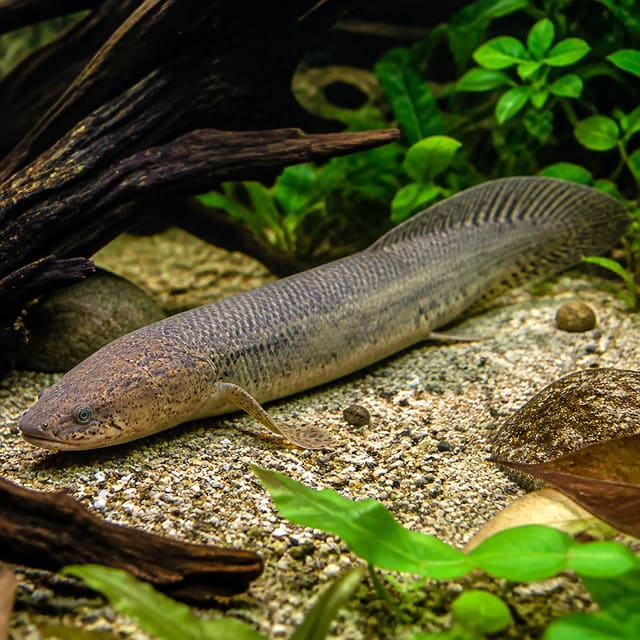
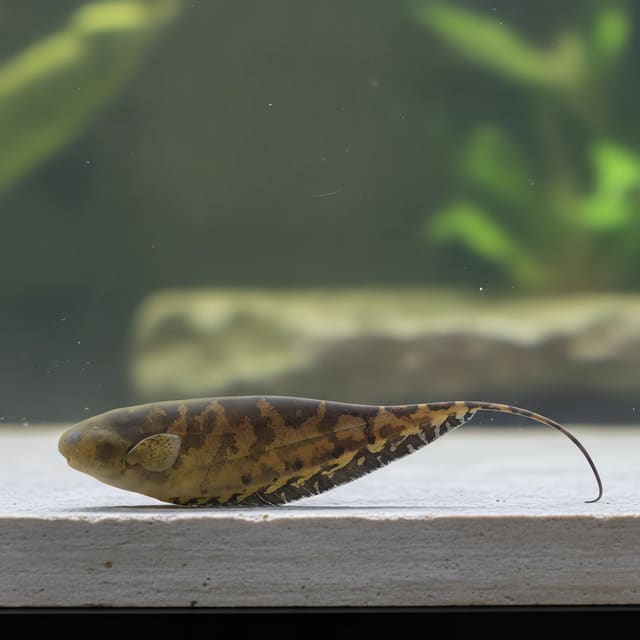
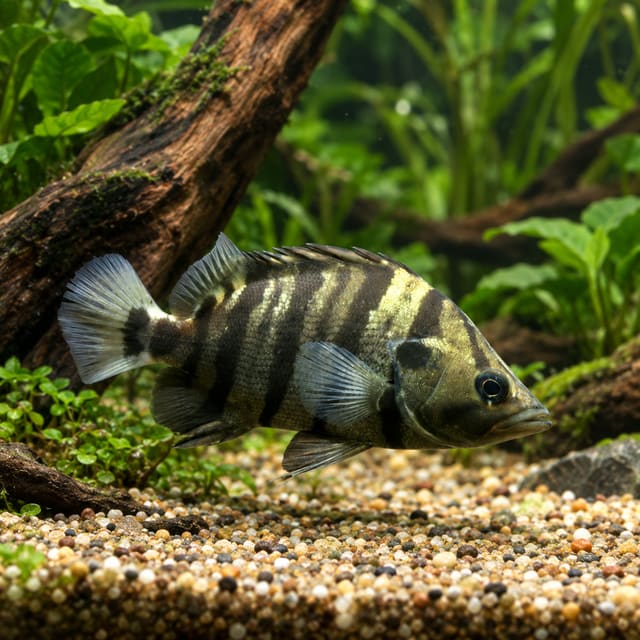
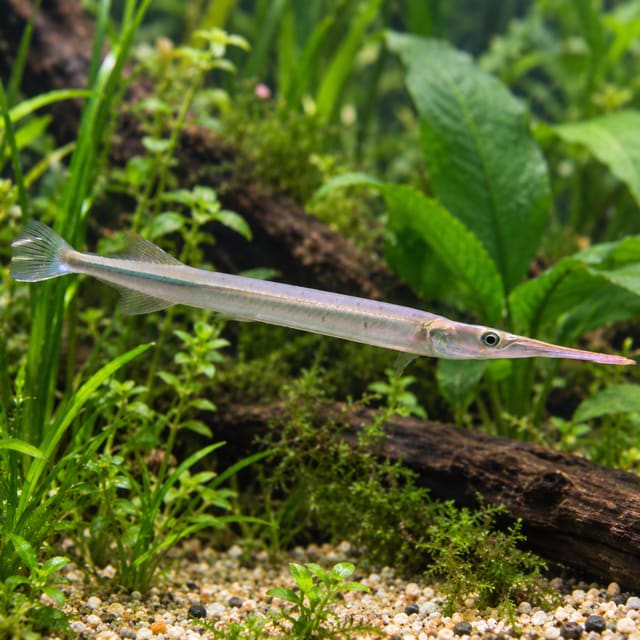
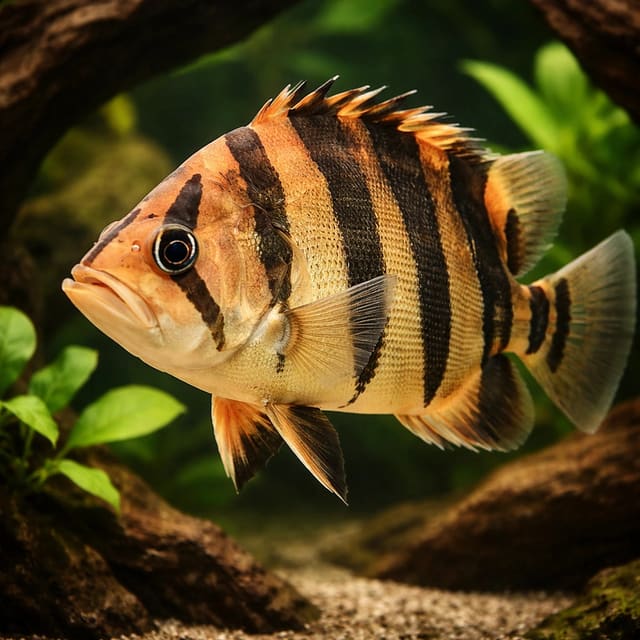
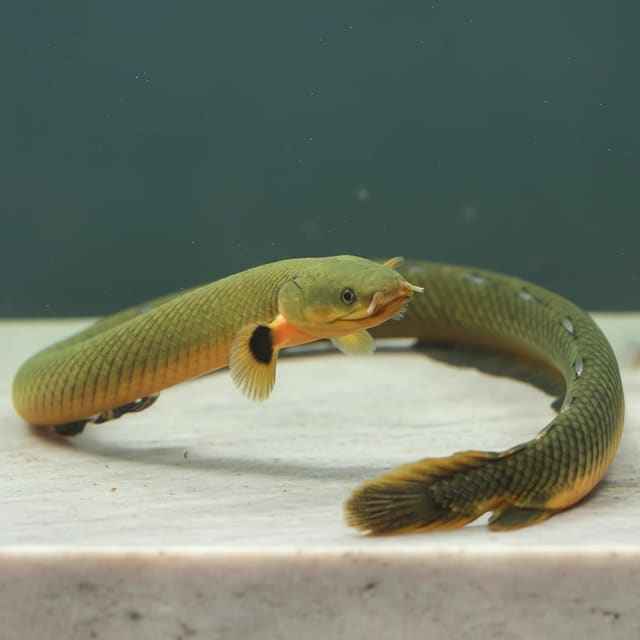
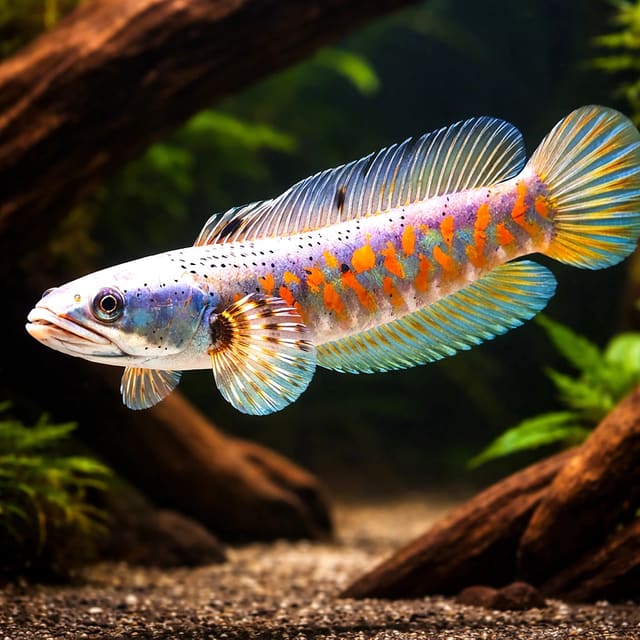
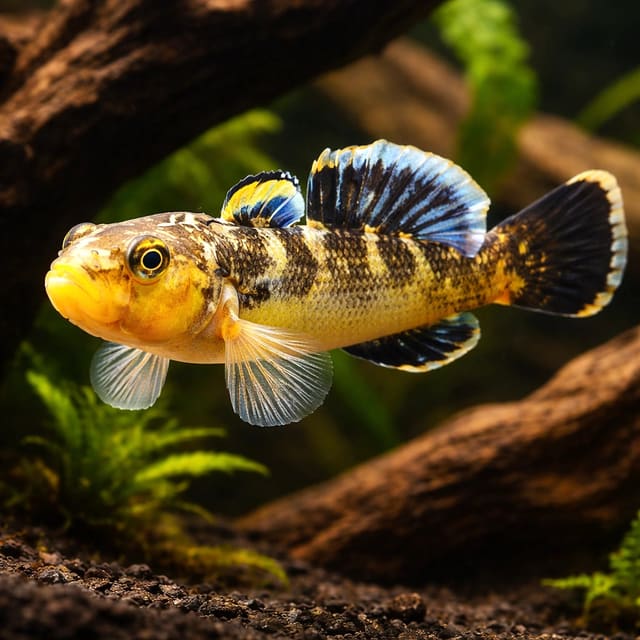
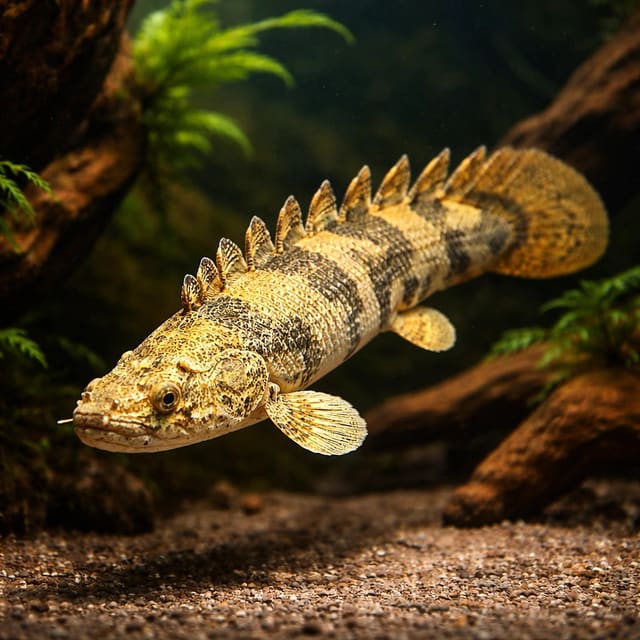
The gallery gives illustrative views rather than photographs of the fish allocated to an order. Use it for general body-form and aquarium-layout ideas, rather than judging an individual fish's colour, sex, size or health.
| Gallery position | What it shows | Useful for | Not evidence of |
|---|---|---|---|
| 1 | Illustrative single fish with driftwood and plants | General body-form and shaded-layout ideas | The exact fish, final colour or adult scale |
| 2 | Illustrative two-fish planted scene | Understanding that sightlines and space matter | A pair sale, compatible pair or two fish per quantity |
| 3 | Illustrative side profile on a plain background | Seeing the elongated silhouette | Diagnostic species identification or a measurement reference |
| 4 | Illustrative single fish beside broad-leaved plants | Visualising shaded cover | Included plants, exact markings or the dispatched individual |
Never release this fish, its eggs, aquarium water, plants or live food into a pond, river, canal or drain connected to the environment. Never move it to an outdoor waterbody. A large predator that outgrows its aquarium must be rehomed through a responsible legal route, not released.
For England and Wales, current GOV.UK guidance links an official Aquarium Ornamentals checklist that includes the genus Parachanna for the indoor ornamental framework. That does not create unlimited permission for import, farming, public display, outdoor stocking, release or every destination. Rules can differ by UK nation and purpose and can change.
Before ordering, confirm the current rules for the delivery address and intended use. Customers in Scotland, Northern Ireland, islands or other regulated destinations should check the relevant authority and our delivery coverage first. We may restrict or cancel a shipment where legal, welfare or courier requirements are not met.
Indoor ornamental keeping and release are different legal questions. The safest universal rule is simple: verify the destination, maintain secure containment and never release or stock the fish outdoors.
Confirm the adult footprint, lid, heating, mature filtration and food supply. Check that one unsexed fish is what you intend to receive and that the selected size can be fed safely. Check the available size options and delivery terms before ordering.
Use the freshwater fish selection guide if you are still comparing experience levels. The other freshwater fish category provides alternatives, but do not choose another large predator until its adult size and welfare needs are understood.
Read the current Live Arrival Guarantee terms before ordering, including the delivery, inspection, evidence and contact requirements. These terms do not change the fish's care needs.
You should be able to answer yes to all five: adult tank planned, rigid lid fitted, warm humid air gap present, filter mature, and species-only/separation plan ready. If any answer is no, complete the system first.
The following sources cover species biology and regulatory context. Aquarium dimensions above are conservative welfare planning recommendations; species records do not establish the origin or traits of an individual retail fish.
Species information can develop as new research becomes available, and sizes and stock can change between shipments. The visible variant selector and current checkout are the source for availability and price. Contact us through the help and FAQ page when a care or destination question needs clarification before ordering.
No reviews for this item yet. Bought one? Honest reviews only, good or bad.
What customers say about ordering from us
I have a small group of long finned mountain minnows. So was delighted to be able to order ten of this variety to increase the genetics in my tank . The ones I recieved are healthy but it’s to early to give a verdict on wether they are of a long finned type since they are small currently.
Gordon Walker · 23 Sept 2026
100% success travel and "installation". Pleased with quality of purchase. The Siamese fighter a bit "shy" so have not yet seen him at his best yet but looking good. Happy customer. GG
George E Garratt · 21 Sept 2026
Reviews of our shop, collected by Judge.me, an independent third-party review collector. Newest first.