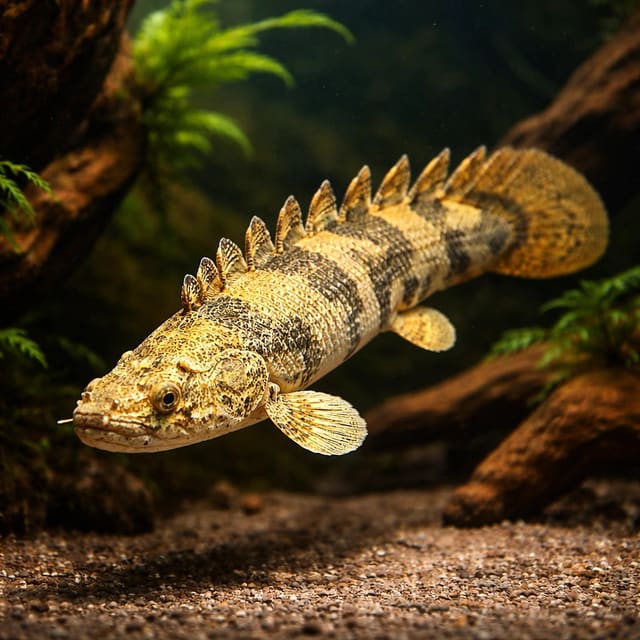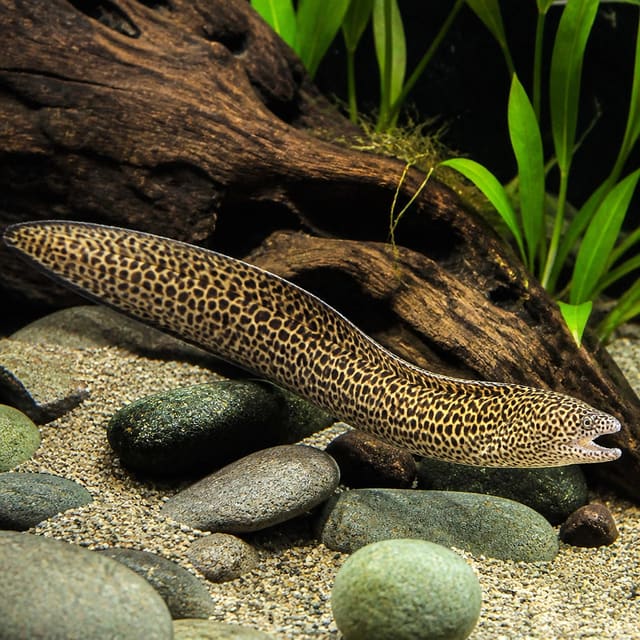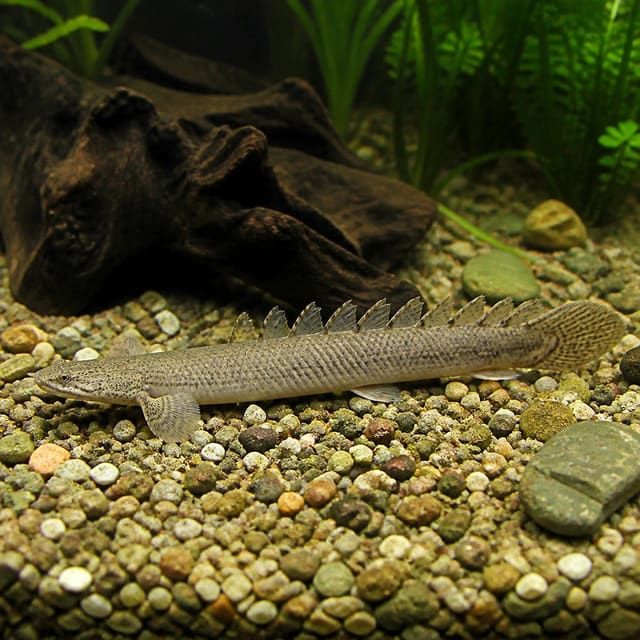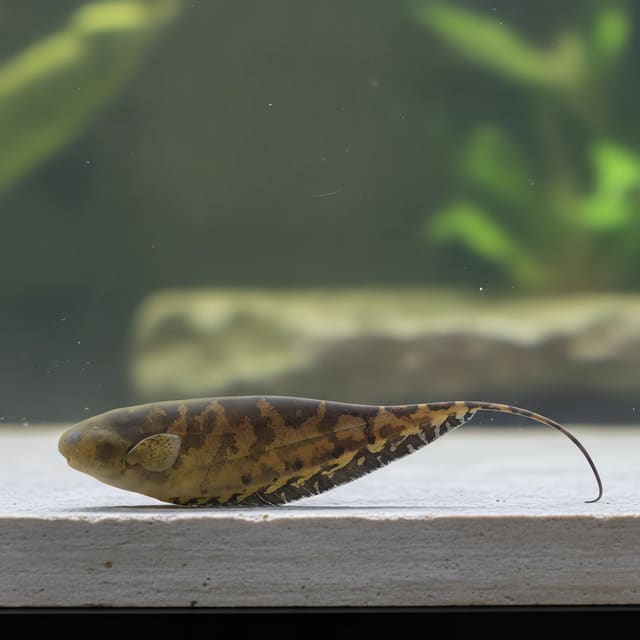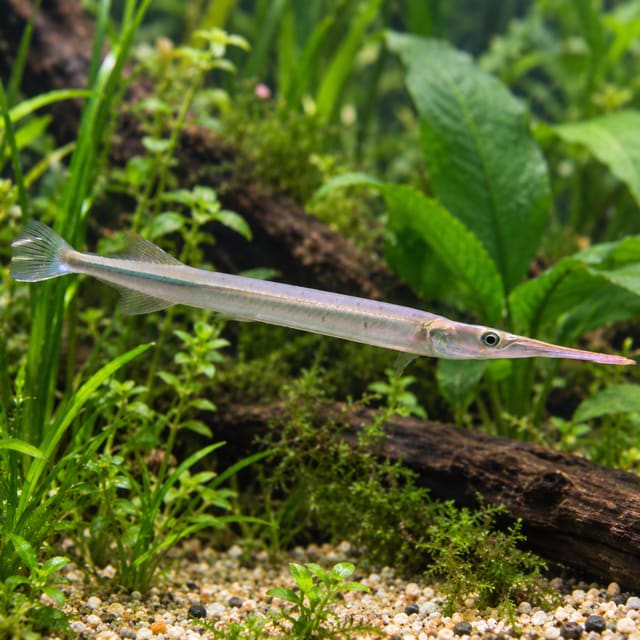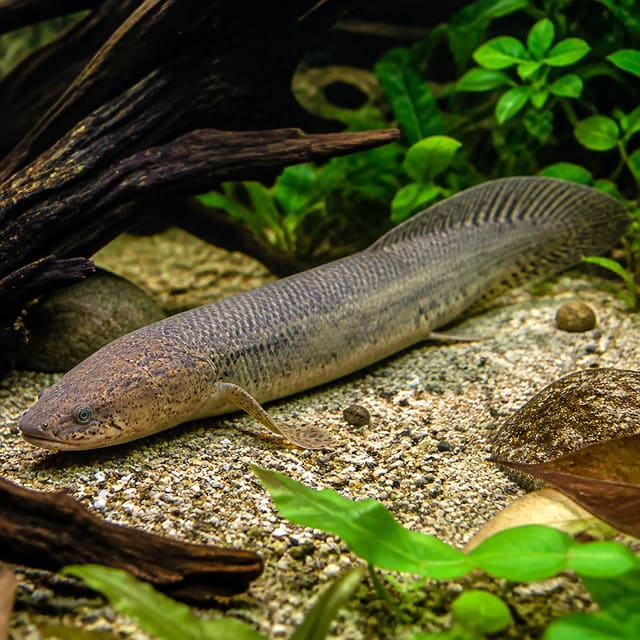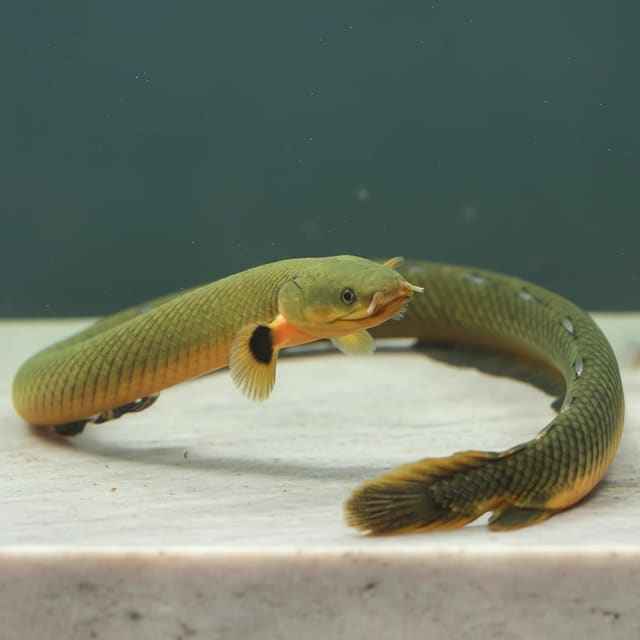
Freshwater Butterflyfish (Pantodon buchholzi)
23–30°C · pH 6–7.5 · 81L
£19.99

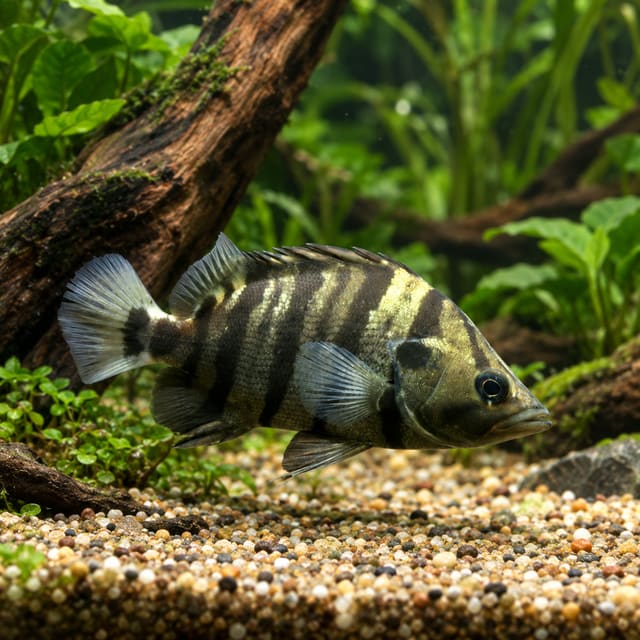
Datnioides polota is a large-fish commitment for advanced keepers who can prepare adult accommodation, powerful mature filtration and a measured maintenance routine before purchase. One live fish is supplied in the chosen 4–5, 6–7 or 7–10 cm dispatch grade; much smaller fish should not share its aquarium.
Datnioides polota
Datnioides polota is a large-fish commitment for advanced keepers who can prepare adult accommodation, powerful mature filtration and a measured maintenance routine before purchase. One live fish is supplied in the chosen 4–5, 6–7 or 7–10 cm dispatch grade; much smaller fish should not share its aquarium.
Datnioides polota is offered here as one live fish per purchase, with a choice of 4–5 cm, 6–7 cm or 7–10 cm dispatch grade. The size you select is the size supplied, not the adult size. This distinction matters: a compact arrival can still demand a purpose-built large-fish system later, so the adult plan belongs at the start of the buying decision rather than at the end.
WoRMS records Datnioides polota as the accepted name used on this page. The store's three dispatch grades describe the fish sent, not a final length, a sex guarantee or an indication that a smaller aquarium will remain suitable.
| Decision | What to plan |
|---|---|
| Suits | Advanced keepers with room, budget and practical capacity for a very large filtered system |
| Purchase unit | One live fish in the size chosen at checkout |
| Housing priority | Adult accommodation, mature biological filtration, secure equipment and regular water testing |
| Community priority | Avoid much smaller fish; assess every other companion individually |
A useful starting question is not simply whether the fish fits today, but whether the household can support the complete system through growth, maintenance days, equipment replacement and unexpected interruptions. Large aquaria become heavy, use substantial floor space and need safe access for siphoning, filter work and moving water. Place the system on a structure intended for the load, away from direct sun, draughts, heat sources, vibration and sudden disturbance. Leave working space around it rather than fitting it so tightly that routine care becomes awkward.
Before ordering, settle who will maintain the aquarium, how conditioned replacement water will be prepared, where emergency aeration can be connected and how a large fish would be moved safely if the main system needed attention. These are ordinary ownership questions for a tankbuster, not signs that something is wrong. A calm, rehearsed plan protects the fish far better than buying equipment after a problem appears.
Use a written go-or-wait checklist. The adult aquarium must have an agreed location and safe support; the filter must be mature; the keeper must own suitable test kits and water-change equipment; transport-day supervision must be arranged; and every proposed companion must have passed an adult-risk review. Add an honest maintenance-time check as well. A system that can be cleaned only when two people are free, or that needs buckets carried over an unsafe route, is unlikely to receive consistent care. Delaying the purchase until those details are solved is part of good husbandry.
The aquarium should be fully cycled and stable before this fish arrives. If you are refreshing the basics, the first tropical tank guide explains maturation and the nitrogen cycle. Experienced keepers can use it as a checklist for a new large system: confirm that the filter is processing waste, verify ammonia and nitrite at zero, and make sure the maintenance routine is practical before adding a substantial new bioload.
Sex is guaranteed only when the selected option explicitly states male or female. This Datnioides qadrifasciatus listing has no sex-guaranteed option.
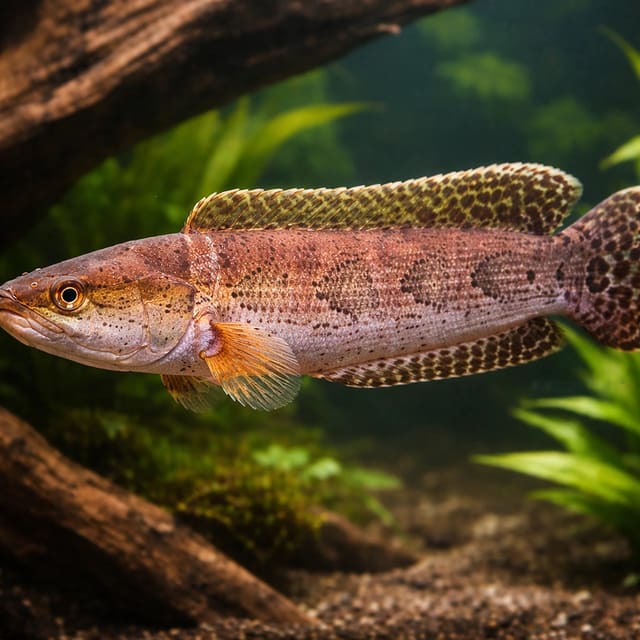
Gallery images have been digitally enhanced to improve image quality. Natural colour, pattern, size and maturity can vary between live animals.
Choose this fish for the commitment you can support, not for a temporary gap in an existing aquarium. If the final adult system, filtration capacity or compatibility plan is uncertain, resolve that before checkout. The live size control on the product page governs the dispatch grade; it does not alter the same long-term welfare obligation.
OATA's large-fish guidance says tankbuster aquaria are often in excess of 500 litres, but that is a group-level planning statement rather than a species minimum for Datnioides polota. Activity, adult body dimensions, turning room, filtration volume and any companions all change the real requirement. The responsible plan is therefore a purpose-built adult system whose dimensions and equipment have been checked before purchase, not a promise that one generic volume will suit every individual and every layout.
Long, wide swimming and turning space is more useful than a tall decorative column. A keeper should be able to reach key equipment without dismantling the aquarium and should have a safe route for removing water. Account for the external footprint of sumps, filters, pipework and electrical isolation. If the aquarium sits above a living area or near valuable flooring, plan spill control as carefully as filtration. A large system is easiest to keep well when maintenance can be completed without improvising heavy lifts or stretching over unsecured covers.
Secure heavy rocks, wood and ornaments so a large fish cannot dislodge them. Protect heaters and other fragile equipment from impact. Use a fish-proof cover because newly introduced large fish may jump, and check openings around cables and pipework rather than assuming a heavy lid has no gaps. Avoid sharp edges in the substrate and décor, particularly where a startled fish might turn quickly. Subdued, predictable activity around the aquarium is preferable to repeated vibration or sudden movement.
Plants are optional in a large-fish system. If used, they must not reduce swimming room or hide areas where waste gathers. The layout should allow a siphon to reach the bottom and let the keeper see whether food is left behind. Open service routes are more valuable than elaborate decoration that becomes impossible to clean. A simple layout can still provide sheltered zones while keeping the filtration intake, heater guard and water surface easy to inspect.
Large fish create substantial solid and dissolved waste. OATA notes that multiple large aquarium filters or even pond filtration may be needed for tankbusters, while the RSPCA explains why mature biological filtration is essential: fish waste becomes ammonia, bacteria convert it to nitrite and then to the less immediately toxic nitrate. A clear-looking aquarium can still have unsafe chemistry, so appearance never replaces testing.
Plan mechanical filtration so collected solids can be removed before they decay. Plan biological filtration with enough mature media and oxygenated flow to process the expected load. Neither part substitutes for the other. A powerful pump with clogged media is not effective filtration, and spotless mechanical pads cannot replace a functioning bacterial colony. Check intakes, return flow and surface movement during every maintenance session, and investigate any unexpected reduction rather than waiting for water tests to deteriorate.
Cycle the complete system before the fish arrives, including the actual filter and as much of the intended media as possible. Confirm that ammonia and nitrite have risen and returned to zero during fishless cycling. Adding a large fish increases the filter's workload, so test more frequently after introduction and after any material change in feeding or stocking. Increase livestock slowly; a large new bioload added to an immature bacterial population can produce new tank syndrome even when the aquarium itself is physically large.
Do not rinse established biological media under the tap. Chlorine or chloramine can damage the bacterial population the aquarium relies on. When cleaning is needed, lightly rinse suitable media in water removed from the aquarium, following the filter manufacturer's instructions and preserving normal flow. Condition replacement tap water before it reaches the fish, and match temperature closely enough to avoid an abrupt change.
The complete OATA tankbuster water table sets ammonia at 0 mg/L, nitrite at 0 mg/L and nitrate at no more than 20 mg/L above normal tap-water levels. The tap-water baseline is essential: “20 mg/L” is not a standalone aquarium ceiling in that guidance. Record the nitrate in the source water as well as the aquarium result so you can see the actual rise caused by feeding, waste and biological activity.
| Test | Large-fish guidance and action |
|---|---|
| Ammonia | 0 mg/L; any detectable result needs immediate investigation and corrective water management |
| Nitrite | 0 mg/L; confirm the biological filter is functioning and reduce further loading |
| Nitrate | No more than 20 mg/L above the normal tap-water level; compare tank and source-water readings |
| Temperature, pH and hardness | Set a species-appropriate target before transfer, keep it stable and match changes gradually |
Tankbusters come from different habitats, so the group sheet does not give one universal temperature, pH or hardness range. Before purchase, establish a target suitable for Datnioides polota, test the aquarium and source water, and decide how replacement water will be prepared. The water chemistry guide explains what each measurement means, while the water matcher can help compare your measured values with the care target you are using.
Stability is not an excuse to leave waste in the system. OATA strongly recommends at least a weekly 25% partial water change for large fish, accompanied by regular testing and removal of solids from the substrate. RSPCA's general aquarium page discusses a 30% weekly change as a broad welfare routine. Treat these figures as starting frameworks, then use measured waste production to plan a schedule that keeps the verified targets in range without abrupt chemistry changes.
A practical log makes trends visible. Record the date, ammonia, nitrite, aquarium nitrate, tap-water nitrate, temperature, pH, hardness, water changed, filter flow, feeding response and any unusual behaviour. A single result describes one moment; a sequence shows whether maintenance is keeping pace. Re-test after a major filter clean, power interruption, missed maintenance day, increased feeding or new animal. If ammonia or nitrite appears, protect the fish first with appropriate water management while checking the filter, feeding and actual load.
For tankbusters generally, the practical feeding routine is conservative: choose appropriately sized food, offer only what can be eaten within a few minutes, and remove uneaten pieces promptly. OATA notes that carnivorous tankbusters may take larger frozen items such as mussel, shrimp or lance fish, but the exact menu for this animal should be chosen to meet its nutritional needs rather than copied as a universal recipe.
Observe the fish while it feeds. Food that repeatedly reaches the substrate or filter intake is not merely wasted money; it becomes extra load on the system. Adjust portion size before increasing frequency, and inspect the body condition over time rather than responding to begging alone. Store frozen food safely, thaw and handle it hygienically, and do not leave leftovers in warm aquarium water. A feeding record can help another carer maintain the same routine if the usual keeper is away.
Large pellets and frozen foods differ in moisture and energy, so equal-looking portions are not necessarily equal meals. Introduce dietary changes gradually enough to see whether the fish accepts them and whether waste changes. Avoid creating a long menu simply for variety: the goal is a nutritionally appropriate routine that the fish consumes cleanly and the filtration can support. When professional dietary advice is needed, ask with the exact accepted name, current size and foods already taken.
On delivery day, have the aquarium stable, the cover ready and transfer equipment within reach. Read the current delivery and Live Arrival Guarantee policy before the box arrives. Someone must receive the live-animal parcel. If a claim is needed, the store asks for a continuous unboxing video beginning with the sealed outer parcel, continuing through opening and showing the fish still in the sealed bag. That evidence step comes before opening or disturbing the bag.
If the fish arrives in a bucket or box rather than a bag, OATA advises slowly adding aquarium water until conditions match; a small airline siphon may be used while temperature is protected. The container must remain secure, and the final transfer should not introduce its water into the display system. The important principle is controlled matching, not rushing because the temperature step has finished.
Check swimming, breathing, colour, fins, scales, body condition and response to food against the individual's normal pattern. OATA lists surface hanging, prolonged bottom sitting, erratic swimming, unusual darkening or paling, faster or slower gill movement, clamped or damaged fins, white spots, fluffy growths and loss of appetite as changes worth investigating. Behaviour alone cannot diagnose a cause, so start with water tests and the recent maintenance history.
Test ammonia and nitrite more often during the introduction period and confirm that nitrate is not climbing faster than planned. Make only measured corrections. Abrupt, repeated changes can compound stress, while inaction lets a water-quality fault continue. If something looks wrong, record the values, time, behaviour, recent food and maintenance, then seek appropriate aquatic or veterinary advice with those details.
Check equipment at the same time: filter flow, surface movement, heater protection, lid security, pipe connections and any area where waste accumulates. Large-fish care is reliable when small warning signs are noticed early. A quieter fish may simply be settling, but a quieter fish plus deteriorating water or abnormal breathing requires a prompt response.
A large, heavily filtered aquarium depends on continuous circulation and oxygen exchange. Identify which plugs operate the filter, heater and aeration, label them clearly and keep cables arranged so water cannot track into sockets. Know how long the filter can be without flow before intervention is needed, and keep a safe method of emergency aeration ready. Test that backup equipment works rather than discovering a flat battery during an outage.
Keep enough water conditioner and essential maintenance equipment for an unplanned water change. A spare air pump, tubing, clean fish-only containers and a reliable thermometer are practical reserves. If a main pump stops, check temperature, surface movement and animal behaviour while arranging repair. Keep filter media wet and oxygenated where practical, and test ammonia and nitrite after service returns because a long interruption can reduce biological performance.
Write down emergency contacts and the aquarium's normal readings. A temporary carer should be able to find the stop valves, isolate equipment safely, follow the usual feeding amount and recognise when professional help is needed. Clear instructions prevent well-meant overfeeding or an unsafe filter restart. Review this plan after equipment changes so it continues to match the actual system.
OATA's tankbuster guidance gives one clear starting rule: large fish with large mouths should not be mixed with much smaller fish. Size at introduction is not enough. Compare the likely adult size and body depth of every animal, and consider whether a fish that looks substantial today could become vulnerable as the Datnioides grows. A companion should never be chosen simply because another large predator once shared a similar display.
Do not treat large catfish or cichlids as universally safe companions for Datnioides polota. Large animals can still differ in aggression, activity, feeding speed, territoriality and environmental needs. Similar length alone does not make a match safe.
| Check | Question to answer |
|---|---|
| Adult physical risk | Could either animal swallow, bite, crush or repeatedly displace the other as an adult? |
| Behaviour | Does either animal defend space, pursue companions or monopolise shelter and food? |
| Water | Can both live under the same stable temperature, pH, hardness and waste-control routine? |
| Space and filtration | Does the adult system provide turning room and enough processing capacity for the combined load? |
| Feeding | Can each animal obtain an appropriate diet without chronic competition or large leftovers? |
A “yes” to one risk question can be enough to reject a combination. A lack of obvious conflict on day one does not prove long-term compatibility. Growth changes mouth size and strength; sexual maturity may alter behaviour; and an aquarium that appears spacious with juveniles can become crowded later. Reassess after growth and after every meaningful change in stocking or layout.
Before trialling any companion, know where one fish can go if the combination fails. That means a genuinely suitable filtered destination, not an uncycled emergency container. Observe access to food, shelter, open water and surface oxygen as well as obvious chasing. Persistent hiding, damaged fins, missed meals or a changed breathing pattern can signal pressure even without a dramatic fight.
Do not use extra animals as a way to “test” whether the fish is predatory. Welfare should not depend on a trial ending badly. If the adult-risk assessment is uncertain, a species-focused setup is the clearer choice. Alternative products are not automatically companions and should never be treated as a tank-mate list.
Compatibility includes the filter. Two large animals may ignore each other yet still overwhelm waste-processing capacity or make water changes impractical. Estimate feeding and waste together, confirm the aquarium can stay at zero ammonia and nitrite, and monitor the nitrate rise above the tap-water baseline. Add no companion until the existing system is stable and the maintenance record shows enough margin.
Feed in a way that lets you confirm each animal ate without leaving excess food behind. If one fish consistently loses access, that is a compatibility problem rather than a reason to scatter more food. Keep the cover secure during introductions and do not rearrange heavy décor in a way that creates unstable structures. Any change intended to reduce conflict must remain safe for the fish and the aquarium.
For final planning, browse the store's loaches and oddball fish collection only as a catalogue route, not as a tank-mate list. Compare each candidate's adult welfare needs independently. When the adult-risk assessment remains uncertain, leaving the aquarium species-focused is more responsible than turning a product relationship into an implied compatibility claim.
Treat Datnioides polota as a tankbuster and plan a purpose-built adult system rather than sizing the aquarium around a juvenile dispatch grade. Use final adult dimensions and activity when the permanent aquarium is specified rather than relying on a centimetre claim here.
OATA says tankbuster aquaria are often over 500 litres, but that is broad group guidance rather than a Datnioides polota minimum. Choose adult dimensions, turning room and filtration for this animal and any companions before purchase.
Plan around the one fish supplied per purchase and add no second individual unless adult space, behaviour and a safe separation option have been assessed.
Datnioides polota is rated advanced by the store because it needs long-term large-system planning, mature high-capacity filtration, measured water care and cautious compatibility decisions.
Use an appropriately sized, nutritionally suitable large-fish diet and offer only what is eaten within a few minutes. Remove leftovers promptly; OATA notes that carnivorous tankbusters may take larger frozen foods, but the exact menu should be matched to this fish.
Set a species-appropriate temperature, pH and hardness target before transfer and keep it stable. Test both source and aquarium water, then match chemistry gradually instead of treating temperature floating as the whole adjustment.
No simple aggression label is promised. Treat the fish as a large-mouthed tankbuster, avoid much smaller fish and watch every proposed combination for pursuit, feeding exclusion, hiding or damage.
There is no universal tank-mate list. Consider only animals whose adult size, behaviour, diet and water needs are compatible, and whose combined waste load the aquarium can support; keep a suitable separation plan ready.
Tropical Fish Co packs live fish in oxygen-filled bags inside insulated boxes and uses a tracked licensed live-animal courier. Someone must receive the parcel. For a Live Arrival Guarantee claim, record one continuous unboxing video from the sealed parcel to the fish still in its sealed bag and contact the store the same day.
One purchase supplies one live fish in the selected 4–5, 6–7 or 7–10 cm dispatch grade. Those grades do not establish adult size, sex, temperature, pH, hardness or a universal companion list.
The care plan deliberately separates group-level large-fish practice from species-specific facts. Use the waste and maintenance guidance as an operational baseline, then establish the species-appropriate chemistry and final housing plan before the fish is transferred. This keeps practical help visible without turning a broad care sheet into a false precision.
No reviews for this item yet. Bought one? Honest reviews only, good or bad.
What customers say about ordering from us
I have a small group of long finned mountain minnows. So was delighted to be able to order ten of this variety to increase the genetics in my tank . The ones I recieved are healthy but it’s to early to give a verdict on wether they are of a long finned type since they are small currently.
Gordon Walker · 23 Sept 2026
100% success travel and "installation". Pleased with quality of purchase. The Siamese fighter a bit "shy" so have not yet seen him at his best yet but looking good. Happy customer. GG
George E Garratt · 21 Sept 2026
Reviews of our shop, collected by Judge.me, an independent third-party review collector. Newest first.