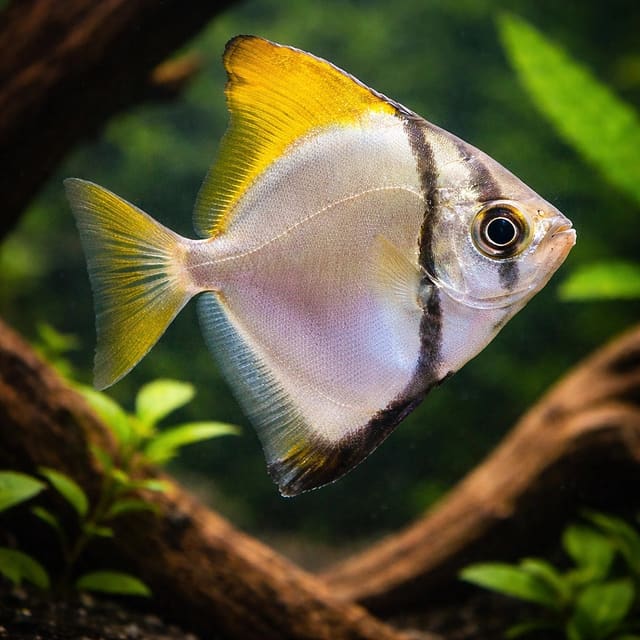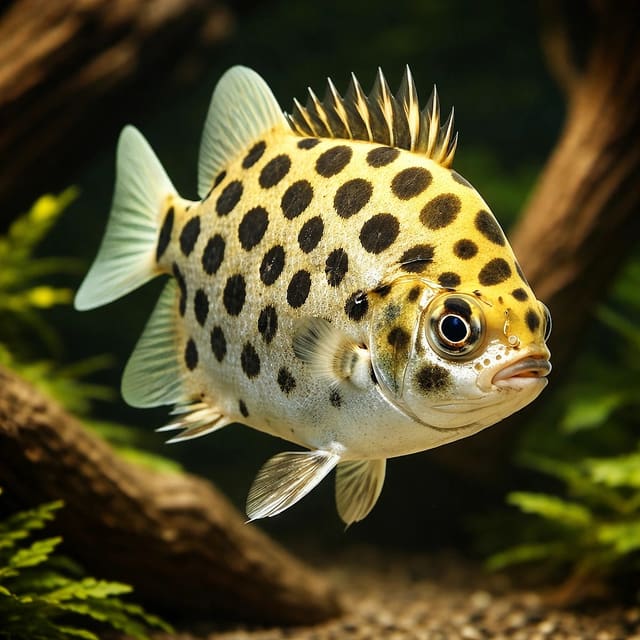
Silver Moony – Monodactylus argenteus, disc-shaped brackish fish with metallic silver body

Monodactylus argenteus

Silver Moony Moonfish (Monodactylus argenteus) - UK

Moderate Care
Peaceful
£35.99In Stock

Buy Silver Moony Moonfish for a striking silver display fish with moderate care needs. Ideal for larger aquariums and UK delivery is available.

Display FishExotic FishFishFreshwater FishModerate CareShoaling FishTropical FishUK Delivery

Care at a Glance

Scientific Name
Monodactylus argenteus
Adult Size
25 cm
Lifespan
10 years
Care Level
Moderate
Temperament
Peaceful
Temperature
24–28°C
pH Range
7.5–8.5
Hardness
15–30 dGH
Minimum Tank
300L
Diet
Flakes, pellets, frozen foods, vegetables

Premium Quality

Healthy, vibrant fish from trusted suppliers

Expert Care

Detailed care guides and support

Live Arrival Guarantee

Your fish arrives healthy or we'll replace it

Acclimated

Properly quarantined and ready for your tank

Quick Care Guide

Temperature
24–28°C
pH Range
7.5–8.5
Minimum Tank
300L
Adult Size
25 cm
Lifespan
10 years
Care Level
Moderate
Temperament
Peaceful
Diet
Flakes, pellets, frozen foods, vegetables
Water Hardness
15–30 dGH
Tank Region
Middle

Water Parameters

Maintain these water conditions for optimal health and vibrant colors

Temperature
24–28°C
24°CIdeal Range28°C
pH Level
7.5–8.5
7.5Ideal Range8.5
Water Hardness
15–30 dGH
15 dGHIdeal Range30 dGH

Why Choose This Fish?

Buy Silver Moony Moonfish for a striking silver display fish with moderate care needs. Ideal for larger aquariums and UK delivery is available.

The Silver Moony, also sold as Moonfish, Mono, Fingerfish, or Monodactylus argenteus, is one of the most striking large display fish available in the freshwater fish UK market—though experienced keepers know it is really a brackish species that matures best in salty conditions. With its tall, disc-like body, mirror-bright silver sheen, and elegant schooling movement, this is an elegant silver brackish fish that instantly changes the look of a big aquarium. Adult fish reach around 15-20 cm, live 7-10 years with good care, and show a peaceful but active temperament when kept in the right mono fish group. For aquarists searching for exotic fish UK options beyond standard community species, the Silver Moony stands out as one of the best brackish schooling fish for a spacious setup. It is not a beginner nano species; it is a true moonfish for large aquarium displays, and success depends on understanding mono fish brackish care, the correct mono fish tank size, and stable mono fish water parameters. See our detailed photos showing the deep body shape, yellow-edged fins, and clean silver flanks that make this fish so popular with keepers looking for brackish fish UK stock, tropical fish UK oddballs, and memorable centrepiece shoals. If you want a hardy, active species for a big coastal-style aquarium, this Silver Moonfish is a rewarding choice.

🔹 Quick Facts

  • Scientific Name: Monodactylus argenteus
  • Care Level: Intermediate
  • Min Tank Size: 400 litres (88 gallons)
  • Recommended Tank Size: 600 litres+ for a proper group
  • Temperature: 24-28°C (75-82°F)
  • pH Range: 7.5-8.5
  • Lifespan: Up to 10 years
  • Temperament: Peaceful, active, schooling
  • Diet: Omnivore

Classification

  • Order: Perciformes
  • Family: Monodactylidae
  • Genus: Monodactylus

Monodactylus argenteus is the best-known member of the Monodactylidae family in the aquarium hobby. It has long been imported for large brackish displays because of its bright silver body, schooling nature, and tolerance of a wide salinity range when young. In the trade, it is often confused with other fish called Diamondfish or Moonfish, but true Silver Moony care depends on recognising that this species grows large and requires progressively saltier water as it matures.

24-28°C
Temperature
7.5-8.5
pH
10-20 dGH
Hardness
400-600L+
Tank Size

Where Do Silver Moony Come From? Natural Habitat Explained

The natural Monodactylus argenteus habitat stretches across a huge Indo-Pacific range, from East Africa through the Red Sea and Indian Ocean to Southeast Asia and northern Australia. In the wild, these fish are found in estuaries, mangrove edges, tidal creeks, coastal lagoons, and lower river mouths. That wide distribution explains why they are so adaptable when young, but it also explains why many care mistakes happen in home aquariums: juvenile Moonfish may tolerate low-end brackish water, while adults do best in near-marine conditions.

Unlike many uk freshwater fish species, Silver Moony are not river fish from cool inland waters. They come from warm, mineral-rich, coastal environments with changing tides and constant water movement. This makes them very different from fish on a list of uk freshwater fish, a typical freshwater fish uk list, or common freshwater fish uk identification guides. Customers sometimes compare them with fish seen in pictures of freshwater fish in uk, but the Silver Moony is really a specialist brackish import rather than one of the freshwater fish species uk or uk freshwater fish species commonly discussed in angling circles.

In nature, they travel in loose schools and browse on algae, detritus, small crustaceans, plankton, and organic matter. Their body shape is ideal for moving through open, shallow water where they can turn quickly and stay with the group. This schooling habit is one reason they are often recommended as a hardy brackish schooling fish UK aquarists can keep in large displays.

People searching broad topics like uk sea fish species, freshwater fish representative species, or freshwater fish in the uk often land on Moonfish pages because the common name causes confusion. To be clear, this is not one of the native freshwater fish of the uk, nor is it part of a normal uk freshwater fish list. It is a tropical coastal species sold in the ornamental trade for aquariums, not a native British fish for ponds or rivers.

💡 Expert Tip

Mimicking the natural habitat of Silver Moony means thinking “estuary” rather than “community freshwater tank”. Strong filtration, open swimming space, alkaline mineral-rich water, and a gradual move to higher salinity as the fish mature will improve colour, feeding response, and long-term health.

How to Set Up the Perfect Tank for Silver Moony

A proper silver moony tank setup starts with scale. These are not fish for cramped aquariums or mixed soft-water communities. The minimum practical mono fish tank size is 400 litres, but for a stable adult group the best result comes from 600 litres or more. If you want the best moonfish for large tank display effect, keep 5-6 or more together in a long aquarium with plenty of open midwater space.

Tank Size Requirements

Young fish sold as small freshwater fish UK stock often look manageable, but their adult needs are very different. Monodactylus argenteus size reaches 15-20 cm, and their deep body means they need turning room as well as length. A proper silver moony school size is at least five fish, because a small pair or trio often becomes nervous and skittish. For aquarists seeking freshwater fish uk for tank displays with real movement, Moonfish are excellent—but only if the aquarium is genuinely large.

Because they are active feeders and constant swimmers, they produce a meaningful bioload. This is why moonfish for large aquarium searches are accurate: they simply do not belong in undersized systems. Many failed setups happen when juveniles are bought small and housed like ordinary community fish.

Water Parameters

The ideal moonfish temperature is 26°C, with a safe moonfish temperature range of 24-28°C. Keep pH between 7.5 and 8.5, hardness around 10-20 dGH, and avoid acidic, soft water. Correct mono fish water parameters are essential for appetite, slime coat health, and fin condition.

One of the most important parts of silver moony care guide advice is salinity. Juveniles can start in low brackish water, but adults need higher salinity and should not be maintained long term as true freshwater fish. The practical Monodactylus argenteus salinity range rises with age, and mature specimens are best in strong brackish to near-marine conditions. This is the key difference between casual “freshwater” listings and accurate long-term care.

Filtration and Flow

Use oversized filtration with strong biological capacity and good oxygenation. A large external canister, sump, or dual-filter system works best. Aim for total turnover of at least 6-8 times tank volume per hour. Moonfish enjoy moderate current, and cleaner water reduces stress-related disease. If you are building a display with species such as Banded Archerfish or Silver Scat “Spot-Banded”, heavy filtration becomes even more important because these are all messy, active feeders.

Substrate, Decor and Layout

Use sand or fine smooth gravel in pale or natural shades. A dark substrate can make silver tones pop, but the priority is easy maintenance. Decor should include bogwood or branch structures placed to the sides, leaving broad open swimming lanes through the middle. Rockwork must be secure because fast-moving fish can startle easily.

Plants are optional. In full brackish systems many common aquarium plants struggle, so most keepers use a minimalist estuary layout. If you want a mixed display with younger fish in lower salinity, hardy species may survive for a while, but expect to redesign as salinity rises. Open water is more important than dense planting for this species.

Lighting

Moderate lighting for 8-10 hours daily works well. Bright top lighting highlights the metallic body and yellow fin edging. In show tanks, a little side shading helps reduce skittishness while still showing off the reflective scales seen in our product image freshwater-fish-uk.webp.

Quick Setup Checklist

  • Choose 400 litres minimum, 600 litres preferred for a group
  • Keep 5-6+ fish to reduce stress and improve schooling
  • Maintain 24-28°C, pH 7.5-8.5, hard alkaline water
  • Use strong filtration and brisk surface movement
  • Start juveniles in low brackish water, increase salinity as they mature
  • Prioritise open swimming space over heavy decor

💡 Pro Tip

Always cycle the aquarium for 4-6 weeks before adding Silver Moony. In large brackish systems, stability matters more than chasing numbers. Test ammonia, nitrite, nitrate, pH, and salinity regularly, especially during the transition from juvenile low-brackish care to adult near-marine care.

What Do Silver Moony Eat? Complete Feeding Guide

The moonfish diet is omnivorous and varied. In the wild they graze on algae films, tiny invertebrates, detritus, and suspended food items. In the aquarium, successful silver moony feeding combines a quality staple with regular vegetable matter and protein-rich extras. This broad feeding response is one reason they are popular as mono fish UK display fish in large brackish communities.

Staple Foods

Offer a high-quality omnivore pellet or flake formulated for brackish or marine-leaning species. Spirulina-based foods are especially useful because Moonfish naturally browse plant material. Feed only what the group clears in 1-2 minutes. In a busy mono fish group, spread food across the surface so shy fish are not pushed aside by bolder individuals.

Supplemental Foods

Supplement 3-4 times weekly with frozen mysis, brine shrimp, krill, chopped prawn, and enriched bloodworm in moderation. Blanched spinach, shelled peas, and algae wafers add fibre and help mimic browsing behaviour. This variety supports growth, body condition, and the clean silver finish expected in healthy silver brackish fish UK specimens.

Treats and Foods to Avoid

Treats can include chopped mussel or clam, but avoid fatty meats and random kitchen scraps. Searchers sometimes arrive looking for a freshwater fish to eat list, freshwater fish uk to eat, british fish to eat, edible freshwater fish uk, moonfish taste, or even moonfish recipe. For aquarium care, those topics are irrelevant—the goal is balanced ornamental fish nutrition, not culinary use. Likewise, odd searches such as warm blooded fish list or moonfish warm blooded do not apply here; Silver Moony are standard ectothermic fish and need stable water temperature, not myths.

Do not overuse bloodworm, and avoid feeding exclusively meaty foods. Too much protein without plant matter can lead to poor digestion and excess waste.

Time Food Amount
Morning Omnivore pellet or spirulina flake What the group eats in 1-2 minutes
Evening Frozen mysis, brine shrimp, or algae-based supplement Small portion, fully consumed
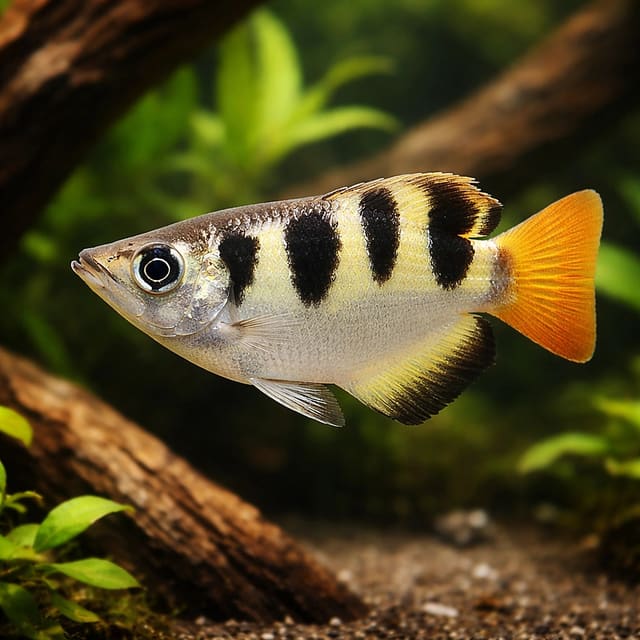
Banded Archerfish

A great companion species with similar feeding style in large brackish displays; feed both species a varied omnivore-to-carnivore menu with strong filtration.

Silver Scat “Spot-Banded”

Ideal for mixed brackish communities where algae-based foods and vegetable matter are already part of the routine.

⚠️ Feeding Warning

Overfeeding causes ammonia spikes, cloudy water, and rapid filter fouling in large brackish tanks. Silver Moony are enthusiastic feeders, so it is easy to give too much. Keep portions controlled and siphon uneaten food promptly.

What Does Silver Moony Look Like? Colors, Shape & Varieties

The Silver Moony has one of the most recognisable silhouettes in the hobby: a tall, laterally compressed, almost diamond-shaped body with long triangular dorsal and anal fins. This elegant outline is why some hobbyists loosely compare it with Diamondfish or even ask about a giant moon fish. In reality, adult Monodactylus argenteus size in aquariums is usually 15-20 cm, large enough to command attention without becoming unmanageable in a properly sized system.

Base colour is bright silver with reflective flanks that can look white, chrome, or pale pewter depending on lighting. Fins often show yellow tones, especially on healthy, settled fish. Juveniles may display darker edging and stronger contrast. Good diet, clean water, and dark background panels help intensify the metallic effect. For hobbyists interested in freshwater fish uk identification or freshwater fish uk species, the deep body and sloping forehead make this species easy to distinguish from most community fish.

There is little reliable sexual dimorphism in routine aquarium conditions, so males and females are hard to separate visually. That is one reason silver moony breeding remains out of reach for home aquarists. Customers sometimes compare silver moony vs spotted scat; both are silver-toned brackish fish, but Moonfish are flatter, more disc-shaped, and generally cleaner in pattern. They are also very different from odd search comparisons like orange tench, large freshwater fish UK, or native fish shown in british freshwater fish pictures.

If you are building a display for impact, this is one of the best choices among freshwater fish uk for tank shoppers who really mean a large tropical brackish setup rather than a true freshwater community.

What Fish Can Live With Silver Moony? Compatibility Guide

Understanding Monodactylus argenteus tank mates starts with two rules: choose species that enjoy similar salinity, and avoid anything small enough to be bullied or outcompeted. Silver Moony are peaceful by nature, but they are fast, active, and constantly on the move. Their energy can stress delicate fish, and adults should never be mixed long term with freshwater-only species.

Ideal Tank Mates

Excellent companions include larger brackish fish that appreciate alkaline water, open swimming room, and strong filtration. The classic pairing is with Spotted Scat or Silver Scat “Spot-Banded”, both of which share similar adult conditions and make a bold display. Archerfish are another strong option, especially Banded Archerfish or Blyth’s Archerfish. These combinations work especially well in a mono fish for brackish community setup of 600 litres or more.

Searches for mono fish vs archerfish are common. The answer is that they are not really rivals; they are complementary species when tank size is generous. Archerfish use the upper level more, while Moonfish dominate the midwater zone. Both need space and stable brackish conditions.

Species to Avoid

Avoid tiny community fish, slow long-finned species, and soft-water fish such as rasboras or bettas. That means decorative options like X Strawberry Rasbora or STUNNING Double Tail Male SPLEND BEAUTIFUL are not suitable companions. They need very different water chemistry and would be stressed by the movement and salinity of a Moonfish tank. Likewise, fish often searched under native topics such as gudgeon freshwater fish uk, barbel freshwater fish uk, common bream freshwater fish uk, bream freshwater fish uk, or common roach freshwater fish uk are not relevant tank mates for this species.

Community Stocking Examples

For a 600-litre display, a practical plan is 6 Silver Moony with 4-5 Archerfish and 3-4 Scats, supported by heavy filtration and regular water changes. In even larger systems, mixed schools can be spectacular. If you want a more unusual contrast, some keepers ask about oddball combinations with hillstream species like Protomyzon pachychilus, but this is not advised because salinity and temperature needs diverge too far.

Moonfish are usually poor candidates for shrimp or delicate snails. Invertebrates may be harassed or eaten, especially in active feeding situations.

Species Compatible? Notes
Banded Archerfish ✅ Yes Excellent upper-level brackish companion in large tanks
Spotted Scat ✅ Yes Very good match for salinity, size, and active behaviour
X Strawberry Rasbora ❌ Avoid Too small and requires true freshwater conditions

Some search terms around this fish are misleading, including moonfish vs sunfish, moonfish finding nemo, who owns moonfish, moonfish orlando reviews, moonfish orlando reservations, and moonfish restaurant locations. These are unrelated to aquarium compatibility. The key moon fish facts for aquarists are simple: keep them in groups, keep them in brackish water, and choose robust tank mates of similar size.

💡 Compatibility Tip

Always quarantine new arrivals for 2-4 weeks before introducing them to a Silver Moony display. Fast-moving shoaling fish can carry parasites without obvious symptoms, and a quarantine period protects the whole group.

How to Breed Silver Moony: Complete Breeding Guide

For home aquarists, silver moony breeding is effectively considered impossible. This species is not bred in normal aquarium conditions, and the exact captive spawning method remains unknown in the hobby. Most fish offered as freshwater fish for sale UK, uk freshwater fish for sale, or Monodactylus argenteus for sale UK are wild-collected or farmed through commercial systems not replicated in home tanks.

Breeding Setup

If you are researching how to breed Moonfish, the first challenge is identifying a mature pair, because reliable sexual dimorphism is weak. The second challenge is scale: adults need large, stable, high-salinity systems and may require marine spawning conditions. This alone puts them beyond the reach of most hobby fish rooms.

Spawning Behaviour

There are reports that spawning likely occurs in marine or near-marine environments rather than in low-end brackish water. That fits what we know from the species’ coastal life cycle. In practical terms, this means there is no dependable home method for inducing reproduction.

Egg and Fry Care

Because successful captive spawning is not established, there is no standard fry protocol for hobbyists. This is very different from easy egg scatterers or livebearers. If you are comparing them with broad topics like uk fish species freshwater, freshwater uk fish, freshwater fish in uk, freshwater fish in the uk, or even angling-related searches such as catch and keep fishing uk, sea fishing laws uk, and what size sea fish can you keep, remember those subjects do not apply to ornamental breeding in a home aquarium.

Common Breeding Challenges

The main barriers are unknown spawning triggers, lack of visible sex differences, likely marine larval requirements, and the need for very large mature groups. For that reason, aquarists should buy Silver Moony for display and behaviour rather than as a breeding project.

Advanced Breeding Tip

If your goal is to observe natural courtship-like schooling behaviour, keep a larger group in a spacious, stable, high-quality brackish system with seasonal variation kept minimal. While this will not guarantee spawning, it does encourage the strongest social displays and best adult condition.

Silver Moony vs Similar Species: Which Should You Choose?

Comparison matters because many aquarists looking for buy mono fish UK, buy moonfish online UK, or moony fish buy UK are also considering Scats or Archerfish for the same aquarium. All three are bold brackish fish, but they fill slightly different roles.

Feature Silver Moony Spotted Scat
Max Size 15-20 cm 25-30 cm
Care Level Intermediate Intermediate
Temperature 24-28°C 24-28°C
Price £35.00 Varies by size
Best For Active silver schooling display Larger, bolder brackish centrepiece mix
Feature Silver Moony Banded Archerfish
Swimming Zone Midwater Upper level
Temperament Peaceful schooling fish Alert, predatory surface hunter
Diet Omnivore Carnivore-leaning omnivore
Visual Style Bright silver disc shape Striped, elongated body
Best For Group movement and shine Behaviour-focused oddball display

Choose Silver Moony if you want a coordinated school of reflective fish that gives a tank a clean, open-water look. Choose Spotted Scat if you want a chunkier, more imposing brackish fish with stronger pattern. Choose Banded Archerfish if surface behaviour is your main interest. In many large aquariums, the best answer is not one or the other—it is a mixed display built around all three.

Searches such as moonfish price UK, mono fish price UK, silver moonfish for sale UK, and Monodactylus argenteus buy online UK usually come from buyers deciding between these species. The Silver Moony is often the better choice if your priority is schooling movement, metallic colour, and a more peaceful midwater presence.

Common Health Problems in Silver Moony & How to Prevent Them

A healthy Silver Moonfish is alert, upright, eager to feed, and strongly attached to the group. Fins should be open, the body should look full rather than pinched, and the silver flanks should appear clean and reflective. If fish hang alone in corners, darken dramatically, clamp fins, or breathe heavily, something is wrong with water quality, salinity, or social setup.

Common Diseases and Symptoms

The biggest health issue is not an exotic disease—it is incorrect care. Long-term freshwater maintenance in adults often leads to chronic stress, poor osmoregulation, and reduced immunity. Secondary problems can include fin erosion, bacterial infections, cloudy eyes, and susceptibility to external parasites such as whitespot. Because these fish are active, injuries from panic dashes can also happen in cramped tanks.

Searchers sometimes look for unrelated terms like moonfish teeth, moonfish bnha, or fishbones orlando. For aquarium keepers, the useful questions are simpler: is the fish eating, schooling, breathing normally, and holding colour?

Treatment and Prevention

Start with water. Check ammonia and nitrite immediately, then confirm pH, hardness, temperature, and salinity. Correct moonfish lifespan depends on consistency. A stable adult system with strong filtration and weekly water changes gives these fish the best chance of reaching 7-10 years. Quarantine all new fish, and avoid sudden salinity swings.

If medication is needed, research carefully before dosing a brackish display. Some treatments behave differently in salted water, and in mixed systems you must consider all tank residents. If one fish is off-colour or isolated, move it to a hospital tank for observation where possible.

⚠️ Health Warning

Never assume a Silver Moony can live its whole life as a normal community freshwater fish. Juveniles may cope for a time, but adults need much saltier conditions. Keeping mature fish in unsuitable water is one of the most common causes of chronic ill health.

Quarantine Protocol

  • Use a separate tank for 2-4 weeks
  • Match temperature and pH to the main system
  • Observe feeding response daily
  • Check for spots, fin damage, flashing, or rapid breathing
  • Only move fish once they are active, stable, and symptom-free

Understanding Silver Moony Behavior in the Aquarium

Mono fish behaviour is one of the main reasons people buy this species. They are active, social, and visually impressive when kept in the right numbers. A settled group spends most of the day cruising the midwater zone, turning in unison, browsing surfaces, and rushing to food together. This makes them one of the most rewarding schooling fish UK aquarists can keep in a large brackish display.

They are not aggressive in the classic territorial sense, but they can become nervous or nippy if kept in too small a group. A proper mono fish group spreads attention and creates the calm, coordinated swimming pattern that makes the species famous. Solitary fish or pairs often hide, sulk, or dash at reflections.

To encourage natural behaviour, keep open space, maintain excellent water quality, and avoid mixing them with tiny fish. In a mature system with compatible species such as Blyth’s Archerfish or Silver Scat “Spot-Banded”, they become confident and show the full appeal of a silver moony for brackish tank setup.

Why Buy from Tropical Fish Co?

Silver Moony are often sold too casually, as if they were ordinary community fish. Our approach is different: we list them with their real adult needs in mind. That means clear guidance on group size, salinity progression, and long-term housing so customers looking for freshwater fish uk for sale, freshwater fish for sale uk, uk freshwater fish for sale, or Monodactylus argenteus for sale UK know exactly what they are buying.

Before dispatch, each fish is observed for feeding response, body condition, and swimming stability. We do not just check whether the fish is alive; we look for whether it is schooling normally, taking prepared foods, and showing the bright reflective finish expected of healthy stock. This matters with Moonfish because weak specimens often reveal themselves through posture and group behaviour before obvious disease signs appear.

Fish are packed in insulated boxes with appropriate bag volume for active swimmers, and heat packs are used in winter conditions when needed. Tracked delivery helps reduce transit time, and acclimation guidance is included because this species should never be rushed into a new tank. For customers planning a mixed display, we can also advise on matching stock such as Spotted Scat, Banded Archerfish, or Silver Scat “Spot-Banded”.

If you want to buy mono fish UK with confidence, or you are comparing moonfish price UK and mono fish price UK listings, accurate husbandry advice matters as much as the fish itself. Order your Silver Moony today if you are ready for a true large-tank brackish species rather than a short-term “freshwater” compromise.

Why Choose Tropical Fish Co for Silver Moony

  • Sold with honest long-term brackish care advice, not misleading community freshwater guidance
  • Observed for feeding strength, posture, and schooling behaviour before dispatch
  • Packed specifically for active midwater fish with insulated shipping and acclimation support

Build a stronger brackish display around your Silver Moony with compatible species and contrasting swimmers. Banded Archerfish adds surface activity and classic estuary behaviour, while Spotted Scat brings size and bold pattern. For a cleaner silver-and-yellow look, Silver Scat “Spot-Banded” pairs especially well. If you enjoy active oddballs, Blyth’s Archerfish is another strong option for large brackish systems. Looking at very different freshwater species for another project? X Rhombo Barb and Protomyzon pachychilus show how specialised fish needs can vary—useful when planning separate tanks rather than mixed stocking.