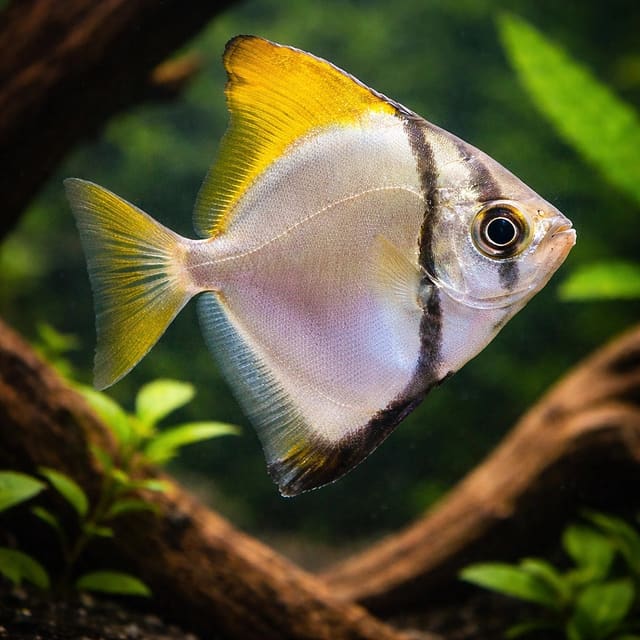
African Moony (Monodactylus sebae)
24–28°C
£32.99

Spotted Scat (Scatophagus argus) is an active Indo-Pacific fish for a spacious brackish aquarium and a marine adult plan, with substantial plant matter in its varied diet.
Scatophagus argus
Save when buying multiple fish. Each quantity is one fish; sex and pair formation are not guaranteed unless the selected variant explicitly states them.
Spotted Scat (Scatophagus argus) is an active Indo-Pacific fish for a spacious brackish aquarium and a marine adult plan, with substantial plant matter in its varied diet.
Maintain these water conditions for optimal health and vibrant colors
Spotted Scat, Scatophagus argus, is a deep-bodied, spotted fish for a keeper who wants to build a substantial aquarium around an active coastal species. One purchase supplies one live fish in your selected size. Its compact appearance when young is only the beginning: adult space, water preparation and a suitable salinity plan should all be in place before you order.
The bold pattern is easy to appreciate, but there is more to this fish than its spots. Watch how it moves through open water, investigates surfaces and joins the activity around feeding. A well-planned display leaves room to enjoy that movement without filling every gap with decoration. The result can be a very engaging aquarium, particularly for someone interested in the transition between river mouths, estuaries and the sea.
Its natural range lies across the Indo-Pacific, and it occurs in freshwater, brackish and marine environments. That range of habitats can cause confusion when choosing a home aquarium. For keeping purposes, plan brackish conditions for juveniles and a marine adult home. A permanent freshwater community is a poor fit for the long-term project, even when the fish is small enough to appear comfortable among ordinary tropical fish.
Size choices on this listing are 1.5–2 cm, 3–4 cm, 4–5 cm, 5–6 cm and 7–9 cm. These are different supply grades of the same species, rather than different adult forms. Choose the grade that fits your prepared aquarium and experience, and use the selector for current purchasing details. The size you select is the size supplied, not the adult size.
| Suits | A keeper with a large aquarium, established filtration and a plan for brackish-to-marine care as the fish grows. |
|---|---|
| What you receive | One live Spotted Scat at the selected size per purchase quantity. |
| Long-term space | A substantial open-swimming display with room for adult body depth, turning and a considered social group. |
| Food | A varied omnivorous diet with a substantial plant component. |
| Main planning decision | Whether your aquarium and its other inhabitants can share the required water conditions over the fish's life. |
Sex is guaranteed only when the selected option explicitly states male or female. This Spotted Scat listing has no sex-guaranteed option. The gallery images are representative of this type of animal rather than photographs of the exact animal supplied, so colours can look slightly different from the live animal.
A smaller supply grade is useful when you have appropriate arrangements for a young fish, but it does not reduce the eventual commitment. Consider how you will make water changes in the adult aquarium, prepare replacement water and move a large fish safely if needed. Those practical questions matter just as much as whether the aquarium will fit in the room.
This is an appealing choice if you enjoy planning a distinctive aquarium and keeping records of its changing needs. There is satisfaction in seeing a fish grow into the space you prepared for it. A long view also makes equipment decisions easier: choose a filter you can service, leave clear access to the tank and make the water-mixing routine manageable.
For another coastal fish to research while designing that kind of display, compare the Silver Moony. It is a separate species and its own adult care requirements need checking; the comparison is about choosing the project you want, not a promise that the two will suit any shared aquarium. Similar juvenile size alone cannot settle a stocking decision.
The wider loaches and unusual fish collection includes animals for very different types of aquarium. Use it to explore their individual needs. If your main interest is a small planted freshwater community, choosing a fish whose adult requirements fit that plan will be more satisfying than trying to keep a scat permanently within it.
Before buying, make sure everyone who helps care for the aquarium understands the same adult plan. It helps to agree where replacement water will be prepared, who checks the tests and how feeding is measured. A clear shared routine makes a large specialist display much easier to keep consistent over time.
FishBase records a maximum of 45 cm TL for male/unsexed fish. TL means total length, including the tail. This is a recorded maximum, not an expected size for every aquarium individual. It is nevertheless an important reminder of the space commitment behind a fish that may arrive only a few centimetres long.
Tropical Fish Hobbyist describes a usual length of about 38 cm, with larger individuals encountered; that account does not identify the measurement method. Keep the larger recorded total-length figure in mind when assessing the adult home. It is more useful to leave generous space than to assume that a particular fish will finish at the smaller end of a description.
For a school, the magazine suggests a six-to-eight-foot aquarium. Treat this as a large-display recommendation, rather than a formula that guarantees a certain number of fish. Width, depth, furnishings, adult companions and filtration all affect what the aquarium can support. A long but very narrow tank can still restrict turning, especially for a deep-bodied species.
Look at the water space after decorations have been placed. Leave a clear route along the tank, with room to pass other fish and turn without brushing against the glass or sharp objects. A central pile of wood may look attractive while dividing the available water into small pockets. Place major structures so that they frame the swimming area and provide visual cover without closing it down.
Plan any upgrade before it becomes urgent. The replacement aquarium needs working filtration and suitable water, and moving a large spiny fish requires space to work. A written plan covering the stand, access, water preparation and maintenance is far more useful than an unspecified intention to buy a bigger tank later.
The species occurs around estuaries, mangroves and coastal waters. Juveniles may be encountered in very lightly brackish river areas, while adults also enter fresher water. Habitat records describe where fish occur; they are not a direction to reproduce every environmental variation in an aquarium.
The Tropical Fish Hobbyist species account recommends brackish-to-marine keeping and full marine conditions for adults. Establish the holding and transport salinity with us before delivery so the receiving aquarium can be prepared appropriately. The eventual adult plan and the conditions needed on arrival are connected decisions, but they are not necessarily the same water preparation.
Use aquarium marine salt intended for preparing this type of water, and measure the result with suitable salinity equipment. A description such as lightly salted is too vague to reproduce during maintenance. Keep a record of the product, measured salinity and temperature, so replacement batches can be prepared consistently. Follow the salt and measuring instrument instructions instead of estimating the amount by sight.
Prepare replacement water separately and check it before it enters the aquarium. This lets you confirm that the salt has mixed properly and that temperature and salinity match the intended conditions. Store the mixing equipment where it can be used safely and keep its containers separate from household cleaning products. A dependable preparation routine is especially valuable when a large aquarium needs substantial water changes.
Changes in salinity also affect biological filtration. Move towards the adult conditions as a planned process that considers the fish, filter and any companions together. Avoid a large salt increase made simply because a birthday or size milestone has been reached. Monitor ammonia and nitrite after meaningful changes and allow the system's response to guide the next step.
Keep evaporation and water replacement in your records as well. Evaporation removes water while leaving dissolved salts behind, so topping up and replacing water removed during maintenance are different jobs. Measure salinity rather than adding the same mixture for both by habit. This small distinction helps prevent a gradual drift that would otherwise be easy to miss.
The species aquarium guidance gives a temperature range of 20–28°C with hard, alkaline water. Keep the temperature steady within an appropriate part of that range for the planned aquarium, rather than allowing it to move repeatedly between the extremes. The range is a care reference, not a heating schedule.
Check the water you start with as well as the water in the aquarium. Tap water varies between areas, and the final chemistry also depends on the way brackish or marine water is prepared. Record temperature, pH, salinity and waste tests together. This is more informative than focusing on a single number while the rest of the system goes unmeasured.
Our water chemistry guide explains pH, hardness and the nitrogen cycle. The practical aim is to understand what a result means before making a correction. A pH adjustment is not a substitute for managing salinity, and a clear-looking aquarium can still contain harmful waste.
| Temperature | 20–28°C in the species aquarium account; keep it stable. |
|---|---|
| Water character | Hard and alkaline, with salinity managed for life stage and acclimatisation. |
| Ammonia and nitrite | Aim for zero mg/L; investigate a detectable reading. |
| Nitrate | Track the trend alongside feeding, stocking and water changes. |
| Salinity | Measure consistently, especially when preparing replacement water or changing the long-term setup. |
The water matcher can help compare recorded values. Use it alongside the species' salinity and adult-space needs; a partial match between freshwater numbers cannot establish that a tank is suitable for a coastal fish.
When a reading looks unusual, repeat the test according to the kit instructions and check the condition of the reagents. Note recent feeding, water changes or equipment work. A short factual log gives useful context if you need help and reduces the temptation to add several corrective products at once.
A working biological filter is central to the aquarium. Fish and uneaten food contribute waste, and the filter's bacteria process ammonia through nitrite to nitrate. The RSPCA's aquarium environment advice explains why fish need established, maintained filtration. New equipment can move plenty of water while having little biological capacity.
Complete the maturation process before introducing livestock. Test the system rather than using the number of days since filling as proof that it is ready. Our first aquarium guide is useful for those general foundations; the additional salinity needs of this species still need their own preparation.
Choose equipment with the adult aquarium and its likely feeding load in mind. Check that filter media can be accessed without dismantling the entire display. Position the intake and return so water circulates through the inhabited space while leaving comfortable areas away from the strongest flow. A powerful return should not leave the fish constantly fighting a concentrated jet.
Look at the actual water movement regularly. A filter can sound normal while an intake or mechanical stage is becoming blocked. Debris behind wood, reduced surface movement and a weaker return are useful prompts to inspect the equipment. Good circulation works with sensible feeding and waste removal; it does not make those tasks unnecessary.
Protect the biological filter when cleaning it. Rinse media gently in water removed from the aquarium instead of untreated tap water, and retain established biological media. Avoid treating a filter clean as an opportunity to replace everything at once. The aim is to restore useful flow while keeping the bacteria that make the system work.
Add livestock thoughtfully and monitor the response. More fish and more food increase the load on the filter. Even a large aquarium can develop water-quality problems when its population changes too quickly. Allow room in your plan for observation and testing after introductions, rather than completing the whole display in a single hurried stocking session.
Use the estuary setting as inspiration for a practical layout: substantial wood or root shapes around an open swimming area, with enough visual cover for fish to move out of each other's immediate view. The aquarium still needs to be easy to service. Leave a route for a siphon and a clear area where food can be offered and watched.
Make every heavy structure stable before the fish arrive. Check narrow gaps, pointed branches and rough edges with the eventual adult body in mind. Space that is harmless to a tiny juvenile can become awkward when a larger fish turns through it. Arrange the display so routine cleaning can reach waste without repeatedly moving the main structures.
Choose aquarium-safe materials suited to the planned water conditions. A plant or decoration used successfully in freshwater may not suit a more saline adult setup. Plant matter is also part of this fish's diet, so a carefully maintained planted scene may become a feeding area. Keep essential shelter independent of delicate leaves or stems.
A secure cover helps keep the aquarium contained and protects it from accidental disturbance. Check openings around pipes and cables as part of ordinary servicing. Keep the tank away from direct heat, draughts and repeated vibration, and use a suitable level stand capable of supporting the complete filled aquarium.
Fin spines can injure the keeper and are reported to be venomous. Plan transfers with a suitable container and keep hands clear of the fish. Avoid chasing it repeatedly through branches or trapping it against the glass with a net. Clear the working space first, minimise handling and get experienced assistance for moving a large individual.
Spotted Scat is an omnivore. Its natural diet includes animal foods and plant matter, and aquarium feeding should reflect that variety. Make a substantial plant component part of the normal diet rather than an occasional extra after several rich meals. Suitable prepared foods can provide a dependable foundation alongside appropriate vegetable and frozen-food variety.
Choose food that the fish can take comfortably at its current size. A large hard pellet offered to a small juvenile may be investigated without being swallowed, while very fine food can disperse before a bigger fish collects it. Watch the animal eat rather than assuming that food disappearing from the surface has reached the intended fish.
Offer portions you can observe. A scat's interest in food is useful, but an enthusiastic response is not a reason to keep adding more. Uneaten food contributes waste and can accumulate behind the same decorations that provide attractive cover. Keep the feeding area accessible so remnants can be removed without disrupting the rest of the aquarium.
Rotate suitable foods deliberately. For example, decide which prepared food forms the main ration and which items provide variety, rather than opening several foods at every meal. Keep containers dry, follow storage instructions and avoid leaving thawed food standing around. Preparation outside the aquarium makes it easier to control portion size.
In a group, watch each fish. A dominant or particularly eager feeder can collect most of a meal even when the total amount looks generous. Spreading appropriate portions across the open feeding area can give quieter fish a chance, while observation shows whether one individual is being excluded. Increasing the overall ration without checking access may simply produce more waste.
Do not treat grazing as a cleaning service. An animal browsing a surface still needs a balanced diet, and algae in the aquarium is not a measured ration. Its appetite also gives no assurance that small companions will be ignored. Feeding and compatibility should be planned as separate parts of keeping it well.
OATA's general aquarium guidance recommends regular water testing, at least weekly, with more frequent checks when establishing a system or adding fish. For a brackish aquarium, include salinity in that routine and use testing equipment appropriate to the water. Keep results together so a gradual change is visible before it becomes a problem.
Carry out partial water changes and remove accessible solid waste. Choose the amount and frequency in response to the aquarium's load and test results. Prepare replacement water for the intended salinity and temperature before it enters the tank, and treat tap water appropriately for chlorine and chloramine. Repeating a reliable method is easier than correcting inconsistent batches afterwards.
| At feeding time | Check that every fish eats and that leftovers are removed. |
|---|---|
| During daily observation | Look at breathing, swimming, condition and interactions; confirm normal filter flow. |
| At routine testing | Record water results, temperature and salinity together. |
| During water changes | Check the replacement batch, clear reachable debris and inspect equipment. |
| As the fish grow | Reassess swimming space, feeding access, shelters and the adult water plan. |
Make the routine practical for your home. Keep enough room to lift filter components, store dedicated buckets and safely carry or pump replacement water. A very large aquarium can be rewarding, but servicing it should be something you can continue consistently, including during busy periods.
If someone else will care for the fish while you are away, leave simple written instructions and measured feeding guidance. Show them the usual equipment flow and where to find recent test results. An unfamiliar keeper needs a clear way to recognise a change and contact you, rather than being asked to improvise salt mixing or treatment.
Finish the receiving aquarium before arranging delivery. Check filtration, temperature, water quality and salinity, and have a secure place ready for the new fish. Discuss the holding water and acclimatisation plan in advance so there is no need to make an improvised salinity change when the parcel is already open.
Read the current delivery and Live Arrival Guarantee policy. The service uses insulated packing and a licensed live-animal courier, with tracking and a confirmed Thursday or Friday date sent by email. Someone needs to be present to receive the parcel and inspect it the same day.
For a Live Arrival Guarantee claim, the required continuous unboxing video shows the parcel still sealed, the opening of the box and the fish still inside its sealed bag. Record that sequence before releasing the fish. Contact us on the day of arrival with your order number and the video if there is a problem.
Keep the unpacking area calm and avoid sudden bright light. Match temperature and acclimatise carefully using the plan agreed for the transport and receiving water. The delivery policy gives floating the bag for 20–30 minutes as general guidance; the salinity difference also needs attention for this species. Transfer the fish carefully and do not pour transport water into the aquarium.
Give the new arrival time to find cover and observe it without repeatedly approaching the glass or rearranging the tank. Check breathing, swimming and its access to space. During the first days, watch both the fish and the water tests: a new animal adds waste, and existing fish may respond differently once it is present.
Keep feeding measured while you establish what the new fish takes readily. A missed first meal should prompt observation of the whole situation rather than repeated food additions. If you see persistent distress, abnormal swimming or worsening condition, test the water and seek advice promptly with the relevant readings and observations.
Learn the normal behaviour of your fish after it has settled. Where it rests, how it approaches food and how steadily it breathes give you a useful reference. A change in one of these is easier to interpret when you know the animal's usual pattern, rather than judging it against a photograph or a short video of another aquarium.
Look for a combination of signs. Reduced appetite alongside unusual breathing, poor balance or a marked change in activity deserves prompt attention. Check water quality and equipment as soon as a concern appears. An environmental problem can affect several fish at once, while a single struggling individual may also be experiencing harassment or difficulty reaching food.
Keep observations factual. Record when the change began, which fish are affected, the water-test results and any recent maintenance, introduction or alteration in feeding. A clear description helps an aquatic retailer or veterinarian assess the situation. Photographs or a short video can show posture and movement more clearly than a general description such as looking unhappy.
Avoid responding to every change with a treatment. Confirm that a diagnosis and the chosen product make sense for the species, salinity and whole aquarium. Mixing treatments or changing several conditions together can make it harder to understand the original problem. If a fish is persistently distressed or injured, seek experienced help promptly and have the aquarium details ready.
Prevention also includes a workable plan for equipment failure. Know how to recognise reduced flow, where replacement parts are kept and how the aquarium will be checked during a power interruption. Keep the cover secure when inspecting equipment and take care around water and electricity. A calm response is easier when these practical arrangements have been considered before they are needed.
A school can make good use of a large aquarium, but the stocking plan must suit the available adult space. Think about the whole group rather than collecting small individuals whenever one becomes available. The arrangement needs room for passing, feeding and retreat, and the filter must be able to handle the combined load.
Chasing can occur within a group. Watch whether it remains brief activity or repeatedly prevents one fish from feeding or using the main swimming area. A fish confined behind a filter or constantly pressed into a corner is a sign that the arrangement needs attention. More food or another fish should not be the automatic response to an unresolved social problem.
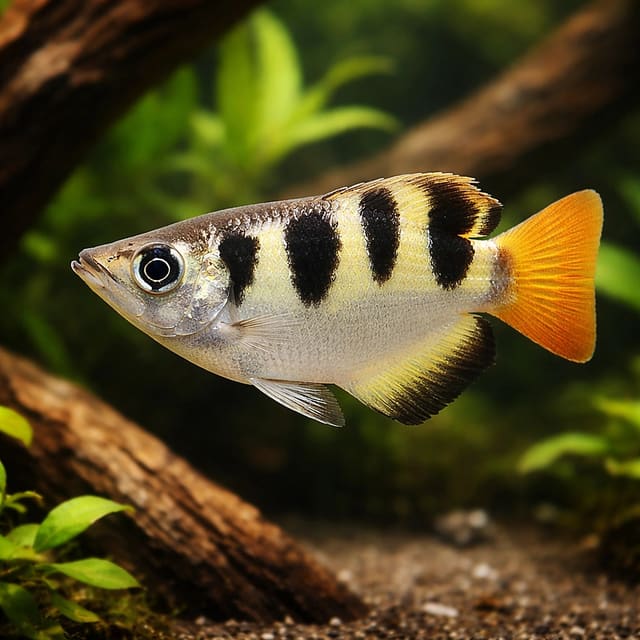
For juvenile brackish displays, specialist accounts discuss companions such as monos and archerfish. Treat these as kinds of fish to research individually, not a universal shopping list. Their adult sizes, diets and salinity needs must suit the exact aquarium you can provide. Common names can cover several species with different requirements.
The long-term water plan is a central part of compatibility. A companion that shares the juvenile conditions may not share the intended adult marine conditions. Decide how that will be handled before the fish grow together. A promise to find another aquarium later can become difficult when both species have already become large.
| Permanent freshwater community | Avoid: the long-term water plan does not match this coastal species. |
|---|---|
| Very small or delicate fish | Avoid placing them at risk beside a large, active omnivore. |
| Robust brackish fish | Consider only after matching exact species, adult space, feeding access and lifetime salinity needs. |
| Other scats | Plan a spacious group display and monitor feeding and chasing. |
| Plants and small invertebrates | Do not assume they will remain untouched by an omnivorous feeder. |
Observe the aquarium at different times, particularly around feeding and after lights change. A peaceful moment at the front glass tells only part of the story. Look for consistent body condition and normal use of the space across all inhabitants. Have a practical means of separating fish if persistent harassment or injury develops.
When considering an addition, write down the existing fish and their adult requirements before choosing another. Comparing those needs often resolves a decision more clearly than a general label such as peaceful or brackish. The aim is a stable community whose members can continue to live well together as they mature.
FishBase records a maximum of 45 cm TL for male/unsexed fish; TL includes the tail. This is a maximum record rather than an expected size for every aquarium fish. Plan a substantial adult home with generous swimming and turning space.
Tropical Fish Hobbyist suggests a six-to-eight-foot aquarium for a school. That is a large-display recommendation, not a stocking formula: width, furnishings, adult companions and filtration also determine whether the space is suitable.
Plan a group only in an aquarium large enough for the adults, with room for each fish to swim and feed. Choose the number for the whole enclosure and monitor chasing, feeding access and body condition as they grow.
It suits a keeper prepared for a large aquarium, water testing and brackish-to-marine management. The space and salinity work need planning before purchase, so it is a substantial first project rather than a simple addition to a freshwater community.
Offer a varied omnivorous diet with a substantial plant component, using suitable prepared foods and appropriate vegetable and frozen-food variety. Watch each fish eat and remove leftovers instead of relying on grazing to provide a complete diet.
The species aquarium guidance gives 20–28°C with hard, alkaline water. Plan brackish conditions for juveniles and marine conditions for adults, with measured salinity and stable water quality throughout.
Chasing can occur, and a large active feeder can disadvantage smaller or quieter fish. Monitor the group for persistent exclusion from food or space. Avoid very small or delicate companions and plan a way to separate fish if needed.
Potential companions must match in adult size, space, diet and long-term salinity needs. Monos and archerfish are discussed for juvenile brackish displays, but each exact species needs assessment; matching juvenile conditions alone is not enough.
Tropical Fish Co uses insulated packing and a licensed live-animal courier, with tracking and the confirmed Thursday or Friday delivery date emailed to you. Be present to receive and inspect the parcel that day. For a Live Arrival Guarantee claim, a continuous video must show the sealed parcel being opened and the fish still in its sealed bag; contact us the same day with your order number.
FishBase's species record covers distribution, natural habitat and the labelled maximum length. Tropical Fish Hobbyist's aquarium account discusses brackish and marine care, diet and a large school display. OATA's aquarium setup advice explains general filtration, testing and maintenance principles.
No reviews for this item yet. Bought one? Honest reviews only, good or bad.
What customers say about ordering from us
I have a small group of long finned mountain minnows. So was delighted to be able to order ten of this variety to increase the genetics in my tank . The ones I recieved are healthy but it’s to early to give a verdict on wether they are of a long finned type since they are small currently.
Gordon Walker · 23 Sept 2026
100% success travel and "installation". Pleased with quality of purchase. The Siamese fighter a bit "shy" so have not yet seen him at his best yet but looking good. Happy customer. GG
George E Garratt · 21 Sept 2026
Reviews of our shop, collected by Judge.me, an independent third-party review collector. Newest first.