Advanced
Silver Moony (Monodactylus argenteus) – 3–6cm Juvenile Size Grades
24–28°C
£26.99
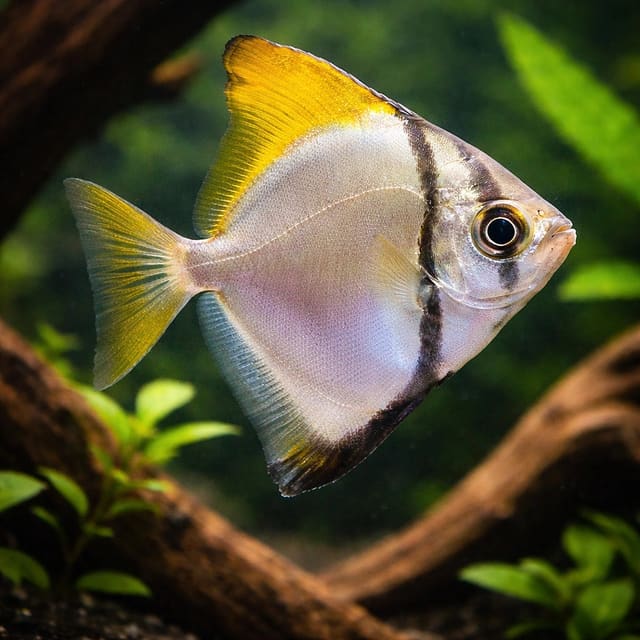
The African Moony (Monodactylus sebae), also called the African moony, is a moonyfish from the eastern Atlantic that reaches 25 cm. It suits a carefully planned, mature filtered aquarium kept at 24–28°C, with the water type planned around the estuaries and lagoons where it is very common rather than its occasional runs into freshwater. Sold individually at a 4–5 cm dispatch size.
Adult size is the maximum length this species reaches at full maturity (scientific sources). The livestock you receive will be younger and smaller. Product-photo provenance and any image-specific limitations are stated on the listing.
Monodactylus sebae
The African Moony (Monodactylus sebae), also called the African moony, is a moonyfish from the eastern Atlantic that reaches 25 cm. It suits a carefully planned, mature filtered aquarium kept at 24–28°C, with the water type planned around the estuaries and lagoons where it is very common rather than its occasional runs into freshwater. Sold individually at a 4–5 cm dispatch size.
Adult size is the maximum length this species reaches at full maturity (scientific sources). The livestock you receive will be younger and smaller. Product-photo provenance and any image-specific limitations are stated on the listing.
Maintain these water conditions for optimal health and vibrant colors
African Moony (Monodactylus sebae), also called the African moony, is a moonyfish native to the eastern Atlantic coast from Cape Verde and the Canary Islands south to Angola. FishBase records a maximum length of 25 cm total length, making this a substantial fish for a keeper prepared to plan around its mature size, water type and predatory diet.
FishBase describes a fish that is very common in estuaries, lagoons, marshes and lower river courses, also lives in shallow bays and harbour areas of the sea, and only sometimes ascends long distances into freshwater. Choose the aquarium’s water type deliberately and assess every proposed companion against that same environment.
A Wikipedia overview of the African moony also places it in fresh, brackish and marine waters from the Canary Islands to Angola, including mangrove swamps, estuaries and occasional lagoons. These habitats explain why a simple freshwater community label is not enough: the aquarium must be planned as one coherent system rather than assembled from animals with conflicting water requirements.
FishBase records fish, shrimps, zooplankton and various small invertebrates in its natural diet. That feeding biology matters when choosing both food and companions. Plan for animal-based foods that reflect the recorded diet, and do not assume fish or shrimps will automatically be safe community animals.
One purchase supplies one live fish at a dispatch size of 4–5 cm. This measurement describes the fish when supplied, not its eventual size. Build the long-term plan around the recorded 25 cm maximum rather than treating the arrival measurement as a guide to the final aquarium.
Sex is guaranteed only when the selected option explicitly states male or female. This African Moony listing has no sex-guaranteed option.
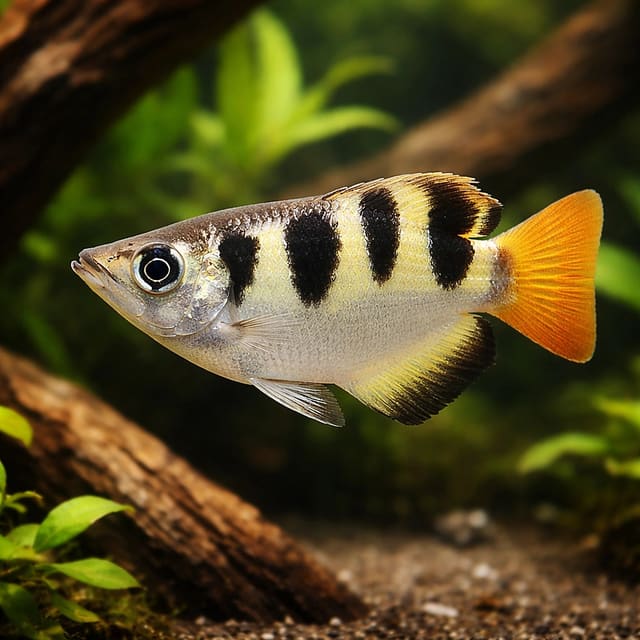
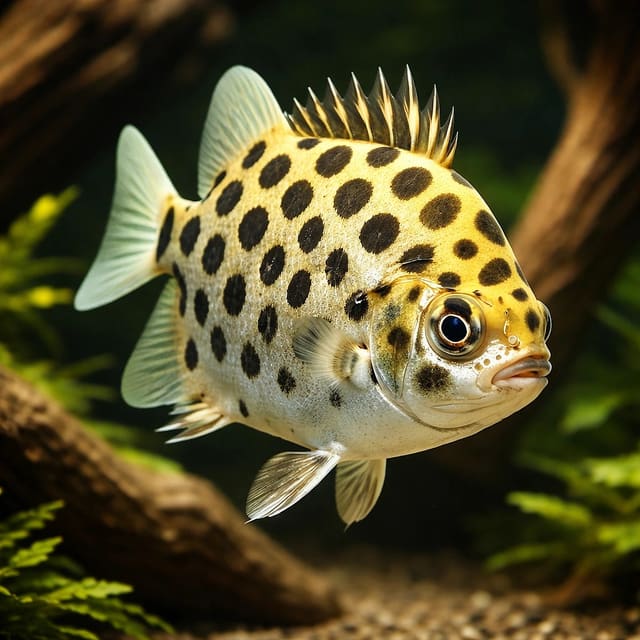
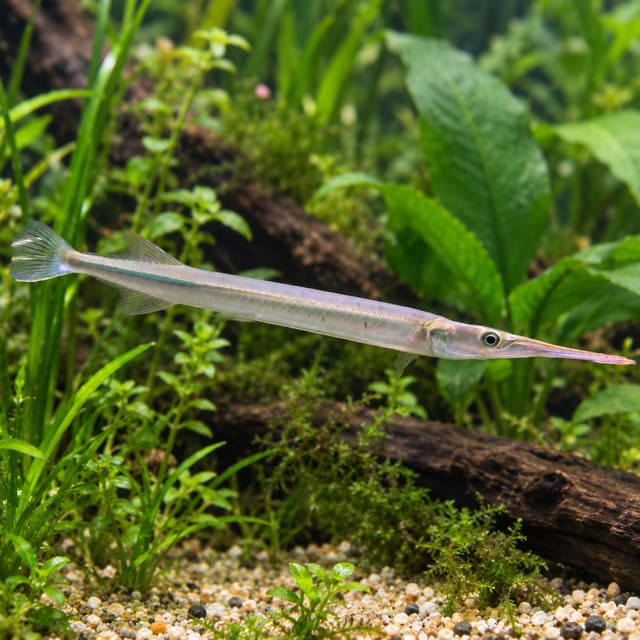
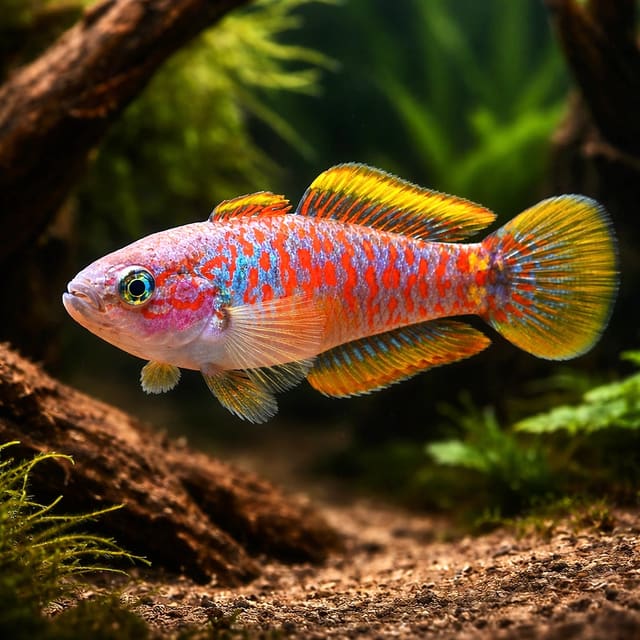
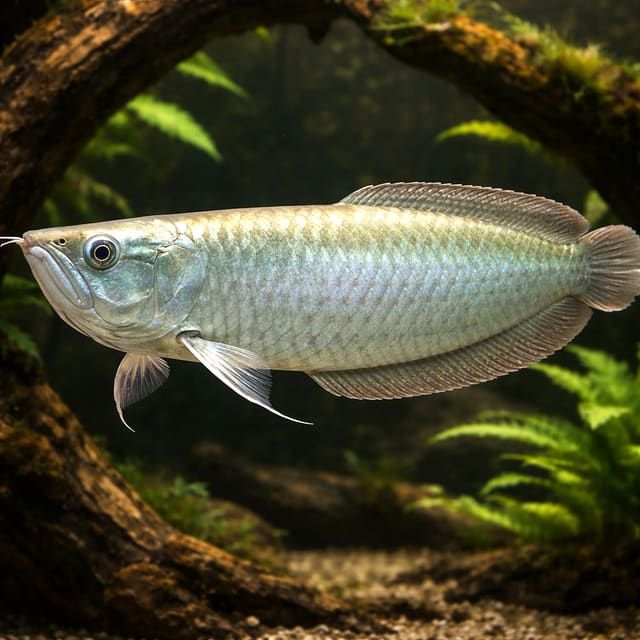
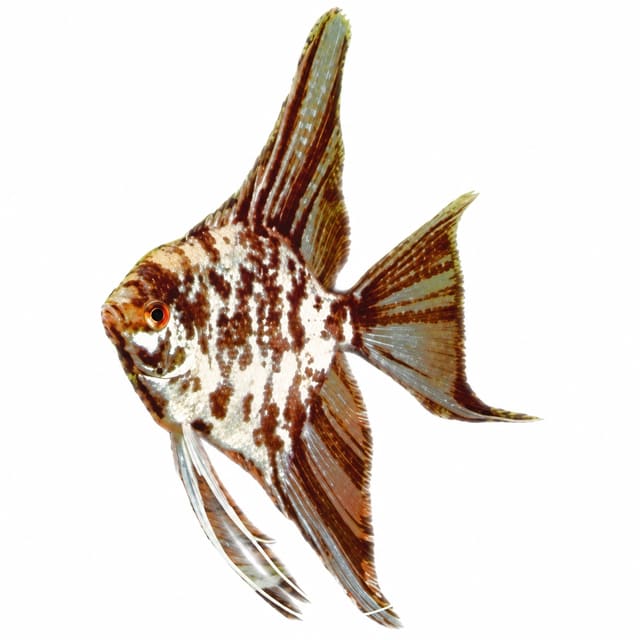
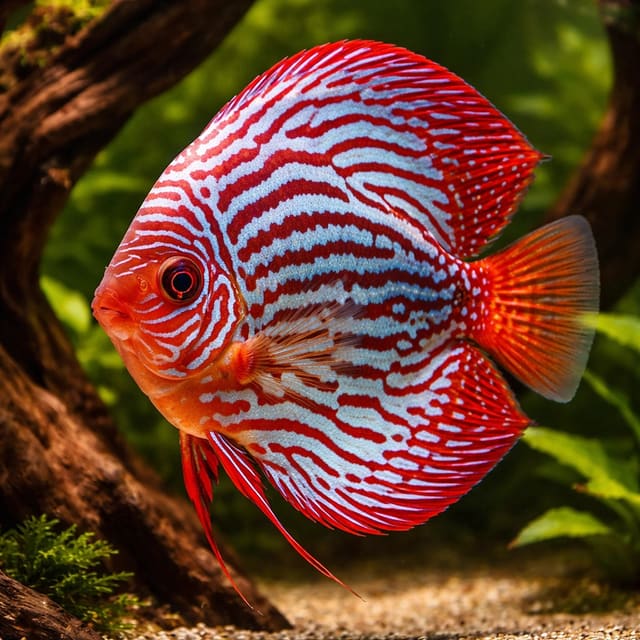
The gallery images are representative of this type of animal rather than photographs of the exact animal supplied, so colours can look slightly different from the live animal.
Use the first weeks to judge the individual fish’s feeding response, swimming pattern and reaction to its surroundings. Those observations help refine husbandry, but they do not change the need to provide adult space, stable water, a mature biological filter and carefully screened companions.
This fish sits naturally among the shop’s more unusual aquarium animals. You can also browse the loaches and oddballs collection, but treat those products as separate possibilities rather than assumed companions for this species.
Choose this fish when you can make the adult aquarium, water type and compatibility decisions before it arrives. A 4–5 cm fish can look modest at first, but the 25 cm planning length changes how much open room, filtration capacity and total stocking allowance the aquarium needs.
| Suits | Not suited to |
|---|---|
| Aquariums planned around a 25 cm adult fish | Plans based only on the 4–5 cm dispatch size |
| A mature, maintained biological filter | Unfiltered or newly assembled aquariums |
| A water type planned around its estuary and lagoon habitat | Mixed communities with conflicting water types |
| Keepers prepared to screen every companion | Communities where fish or shrimps may become prey |
| Stable tropical water at 24–28°C | Aquariums outside the recorded temperature range |
The decisive questions are practical. Can the aquarium accommodate a 25 cm fish when fully grown? Can its filter keep ammonia and nitrite at zero? Can every animal share the selected water type and temperature? Can feeding be managed without leaving waste to burden the filter?
A “yes” to each question creates a defensible starting plan. If one answer is uncertain, settle that decision before adding the fish. A larger aquarium will be more stable than a smaller one, but water volume alone cannot compensate for incompatible occupants, an immature filter or unsuitable water.
Plan around a maximum adult length of 25 cm. FishBase gives that figure as total length and separately reports a maximum standard length of 20 cm; use the 25 cm figure consistently for aquarium planning.
Wikipedia also gives 25 cm as the species maximum, so keep the aquarium workable for a fish that reaches that length.
OATA’s freshwater aquarium guidance recommends choosing as large an aquarium as reasonably possible and ensuring it can accommodate the selected fish once fully grown. It also explains that larger aquariums contain more water, so they will be more stable and less susceptible to variations in temperature and pH.
Apply these tests to the aquarium’s internal dimensions rather than its label alone. Two aquariums with a similar stated volume can leave different amounts of usable room after decoration and other occupants are included. Map where the fish can move at adult size, then account for retreats and plants without allowing them to consume the space needed by the complete stocking plan.
Do not derive a stocking allowance by dividing aquarium litres by the fish’s current centimetres. Body shape, adult size, water requirements, filtration, behaviour and the needs of every companion all affect capacity. Ask us for a stocking and compatibility assessment based on the aquarium’s dimensions, filtration, measured water and complete livestock plan.
Keep the aquarium at 24–28°C. FishBase records this range for the tropical environment of Monodactylus sebae, so use it as the working temperature range and keep the aquarium stable within it rather than moving repeatedly between its limits.
It is very common in estuaries and lagoons, also lives in the sea and only sometimes ascends into freshwater. This means the aquarium’s water type must be an intentional decision. Do not combine animals merely because each tolerates the same temperature; they must also share the same freshwater, brackish or marine plan.
Measure pH rather than judging it from appearance, and keep it stable within the requirements of the complete livestock plan. Treat hardness and salinity in the same deliberate way: establish what the chosen system is intended to be, measure the relevant values and avoid assembling a community around conflicting requirements. The water chemistry guide explains the purpose of routine measurements, while the water matcher can help compare measured aquarium conditions with stated guidance.
| Reading or decision | Action |
|---|---|
| Temperature below 24°C | Bring the aquarium into the 24–28°C range before introduction. |
| Temperature above 28°C | Correct the cause before adding the fish. |
| Ammonia above zero | Do not add livestock; investigate filtration and waste. |
| Nitrite above zero | Do not add livestock; allow the biological filter to establish. |
| Conflicting water types | Revise the livestock plan rather than forcing a compromise. |
Use the temperature range as a boundary, not a reason to make frequent adjustments. For example, an aquarium holding steadily within 24–28°C does not need to be moved towards the opposite end merely because both values appear in the range. Investigate movement that is unexpected for the established system and correct the underlying heat source, draught or equipment issue before introducing the fish.
Write down the aquarium’s normal readings. A written baseline makes gradual changes easier to detect and gives health observations useful context. Check temperature regularly and test more frequently when establishing an aquarium or adding livestock, because biological demand rises as feeding and stocking increase.
Use a well-established biological filter and maintain ammonia and nitrite at zero milligrams per litre. OATA’s freshwater aquarium sheet gives broad group guidance: dechlorinate new water, switch on the equipment, allow the aquarium 24–48 hours to settle and use test kits for ammonia, nitrite, nitrate and pH. Settling confirms that equipment and temperature are working, while filter maturation establishes the bacteria that process fish waste.
The RSPCA explains why filtration is vital: fish release toxic ammonia, biological filter bacteria convert it to nitrite, and further bacteria convert nitrite into safer nitrate. A running filter is therefore not automatically a mature filter. Test results, rather than the sound of the pump or the clarity of the water, show whether ammonia and nitrite are being controlled.
If this is your first setup, follow the shop’s first tropical aquarium guide before arranging livestock. Add fish gradually because each addition increases waste and feeding. OATA warns that stocking too quickly can create new tank syndrome when the bacterial population cannot process the increased load.
Separate the equipment check from the biological-readiness decision. The first 24–48 hours can show whether the heater and filter are operating, but passing that check does not by itself show that the filter can process livestock waste. Record the test results and wait for zero ammonia and zero nitrite before introduction rather than relying on elapsed time alone.
Clear water can still contain ammonia or nitrite, so visual inspection never replaces testing. Decoration and plants are useful additions, but account for the space they occupy. Live plants can help remove nitrate, while ornaments can provide retreats for less boisterous or reclusive fish.
Base the diet on foods made from fish, shrimp, zooplankton and other small invertebrates. FishBase records all four in the wild diet of Monodactylus sebae, so animal-based foods matching those ingredients are the appropriate starting point.
Choose food particles the individual fish can take cleanly. Watch the first portion and judge whether food is being swallowed or left behind. Uneaten food contributes to the aquarium’s ammonia load, so reduce subsequent portions when food remains after the fish stops actively feeding.
| What you see | What to do |
|---|---|
| Food is taken promptly | Continue with a controlled portion that leaves no excess. |
| Food repeatedly remains | Reduce the amount and check whether the food is suitable. |
| The fish ignores a familiar food | Test water quality and compare its behaviour with its normal pattern. |
| Other fish take every portion | Change the feeding arrangement so this fish can obtain its share. |
| Ammonia or nitrite rises | Stop increasing food or livestock and investigate the filter and waste load. |
Make one adjustment at a time when feeding response changes. If food remains, reduce the next portion before changing several foods or adding more. If the fish approaches but cannot obtain its share, alter how the portion is distributed and watch the whole feeding event. This separates an access problem from loss of appetite and limits avoidable waste.
Variety should remain within the recorded dietary pattern. Rotating foods based on fish, shrimp, zooplankton and small invertebrates is more closely aligned with its biology than relying on a food chosen only because it is convenient for other aquarium occupants.
Observe body condition as well as appetite. OATA identifies increased or decreased body weight, reduced food intake and loss of interest in food as useful warning signs. A fish that approaches food but repeatedly fails to eat needs both the water and the feeding setup checked; simply adding more food increases waste without resolving the cause.
Compatibility and feeding are linked for this species. Its recorded diet includes fish and shrimps, so food selection does not remove prey risk within a mixed aquarium. Screen prospective companions separately and never use regular feeding as a reason to assume another animal will be ignored.
Test water quality at least once a week and check temperature regularly. OATA suggests you may wish to test more often when setting up an aquarium and when adding fish. Keep ammonia and nitrite at zero, track nitrate and pH, and compare each result with the aquarium’s normal baseline.
Carry out partial water changes of up to 25% every week. Match replacement water to the aquarium’s temperature and treat new tap water so it is safe before adding it. The appropriate change may vary with aquarium size, species, stocking and waste production, so use test results and the established system plan to judge the routine within that upper amount.
Use the log to distinguish an isolated reading from a developing trend. For example, ammonia or nitrite above zero requires immediate investigation even when the water looks clear, while repeated movement in nitrate or pH gives a reason to review stocking, feeding and maintenance before the shift becomes larger. Retest after corrective work so the decision is based on the aquarium’s response.
Look for hanging at the surface, sitting on the bottom, erratic swimming, unusually fast or slow gill movement, darker or paler colour, increased hiding, changed aggression, white spots, fluffy growths, damaged fins or scales, altered body condition and reduced feeding. These signs do not all have one cause, so begin with measured water quality rather than guessing at a treatment.
If the fish changes suddenly, test temperature, ammonia, nitrite, nitrate and pH and compare the result with its normal conditions. Correct husbandry problems that you can identify, isolate incompatible interactions where practical and contact us for further guidance if the change continues or the fish’s condition is deteriorating.
Consistency is more useful than occasional intensive cleaning. A regular log reveals trends before they become large swings, and controlled partial water changes remove accumulated waste without turning routine maintenance into a complete reset of the aquarium.
Prepare the mature aquarium before the parcel reaches you. Confirm 24–28°C, zero ammonia, zero nitrite and the intended water type in advance so arrival time is used for careful inspection and acclimatisation rather than last-minute adjustments.
Tropical Fish Co hand-bags live fish in pure oxygen, uses an insulated poly box and adds a heat pack when the weather calls for it. The current delivery and Live Arrival Guarantee policy explains the packing, receipt and claim requirements.
Set up the filming device before touching the parcel so the sealed outer box appears at the start of the continuous take. Keep the fish inside the sealed bag while its condition is shown, then preserve the recording with the order details. This prevents the claim sequence from being interrupted while the aquarium remains ready for the 20–30 minute float.
Film every parcel continuously from its sealed state through opening and the view of the fish still inside the sealed bag. For a Live Arrival Guarantee claim, send the short unboxing video with the order number on the day the fish arrives. The sequence must show the sealed parcel, the opening and the fish before anything is disturbed.
After release, compare the fish with the health observations used for routine care: swimming, breathing, colour, body condition and responsiveness. Keep the aquarium within its established values and avoid increasing the wider livestock load quickly, because each new animal and its feeding increase the work required from the biological filter.
FishBase records that African moonies are sometimes found in wild shoals of several hundred individuals, so the species does associate with its own kind in nature.
Choose the number only after assessing adult space, filtration, water type and the complete stocking plan. Every additional 25 cm fish increases the eventual space and biological load that must be accommodated. Do not build a group around how small the fish look at dispatch.
Work through the group plan at adult size before deciding how many fish the system can support. A plan that appears spacious for several 4–5 cm fish may become unsuitable as each approaches 25 cm. Include the increased food and waste load as well as physical room, because adding bodies without matching biological capacity can move ammonia or nitrite above zero.
Additions should be gradual. OATA explains that beneficial bacteria need to increase as fish numbers and feeding increase; stocking too quickly can result in new tank syndrome. Test more frequently around additions and pause further stocking if ammonia or nitrite moves above zero.
Observation must remain individual. Watch whether one fish is excluded from food, changes its swimming pattern, hides more than normal or develops altered body condition. Those changes require a check of water, feeding access and interactions. A numerical group target should never override what the aquarium can support or what the fish are showing through their behaviour.
Avoid communities where fish or shrimps may be treated as prey. FishBase records both fish and shrimps in the African moony’s natural diet, alongside zooplankton and other small invertebrates. Feeding the moony regularly does not turn those animals into dependable companions.
For every other proposal, use a screening rule rather than a universal tank-mate list. The other animal must share the chosen water type, remain within the same 24–28°C temperature plan, fit the aquarium at adult size and avoid creating an obvious prey arrangement.
| Compatibility question | Decision |
|---|---|
| Does it require a different water type? | Do not mix them. |
| Does its temperature range exclude 24–28°C? | Do not mix them. |
| Could fish or shrimp function as prey? | Avoid that community. |
| Will all adults fit with usable swimming room? | Proceed only if the full plan remains workable. |
| Can the filter keep ammonia and nitrite at zero? | Delay or reduce stocking until it can. |
Run the screen in order and stop at the first failed requirement. For example, a proposed companion that shares 24–28°C but needs a different water type is not a workable match. Likewise, shared water conditions do not settle prey risk. Only continue to adult-space and filtration checks after water type, temperature and feeding biology align.
Watch every companion for changed aggression, increased hiding, damaged fins, altered feeding access or unusual swimming. Separate an interaction that is causing injury or preventing normal feeding, then reassess the community rather than waiting for repeated damage.
Do not assume animals from a similar shop category share care requirements. “Oddball”, “tropical” or “freshwater” is too broad to settle compatibility. Compare the exact water type, temperature, adult space, diet and behaviour of each proposed occupant.
A successful temperature match is only one part of the decision. Two animals can both tolerate 24–28°C while requiring incompatible salinity, space or feeding arrangements. Build the community from overlapping requirements and measured aquarium conditions, then continue observing because individual behaviour can change the practical result.
It reaches a recorded maximum of 25 cm total length. Plan the aquarium around that full measurement even though the fish is supplied at 4–5 cm.
Choose as large an aquarium as reasonably possible and ensure it can accommodate a 25 cm fish alongside every other fully grown occupant. Larger aquariums will be more stable; assess dimensions, usable space, filtration and total stocking together.
FishBase records that it is sometimes found in wild shoals of several hundred individuals. Choose the number only after assessing 25 cm adult space, filtration, water type and the complete stocking plan.
It best suits a keeper prepared to plan for a 25 cm adult, plan the water type around its estuary and lagoon habitat, maintain 24–28°C and screen companions against its predatory diet.
FishBase records fish, shrimps, zooplankton and various small invertebrates in its natural diet. Offer foods based on those animal ingredients in portions the fish consumes without leaving excess waste.
Keep it at 24–28°C. Measure pH and keep it stable within the requirements of the chosen water type, with ammonia and nitrite maintained at zero.
Watch feeding access, hiding, swimming and fin condition in every fish sharing the aquarium, and separate any fish that is causing injury or preventing normal feeding.
Avoid communities where fish or shrimps may be treated as prey. Consider other animals only when they share the selected water type, 24–28°C range, adult-space plan and filtration capacity.
Tropical Fish Co hand-bags it in pure oxygen, uses an insulated poly box and adds a heat pack when weather calls for it. Make sure someone is at the delivery address to receive the parcel, film every delivery in one continuous take from the sealed parcel to the fish still in its sealed bag, open and inspect it on the day it arrives, and float the bag for 20–30 minutes before release.
No reviews for this item yet. Bought one? Honest reviews only, good or bad.
What customers say about ordering from us
Easy website plenty of info on fish your buying great to pick a time slot
TRACEY DURRANT · 7 Oct 2026
Got some lovely fish thank you
Kevin Mackie · 7 Oct 2026
Reviews of our shop, collected by Judge.me, an independent third-party review collector. Newest first.