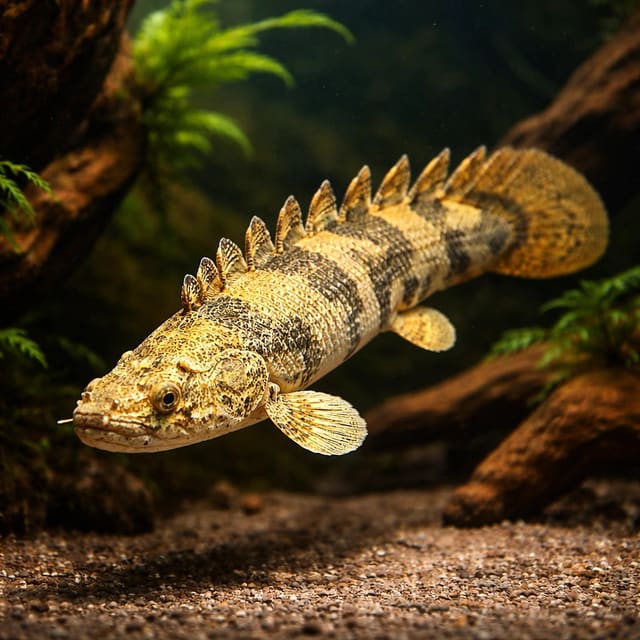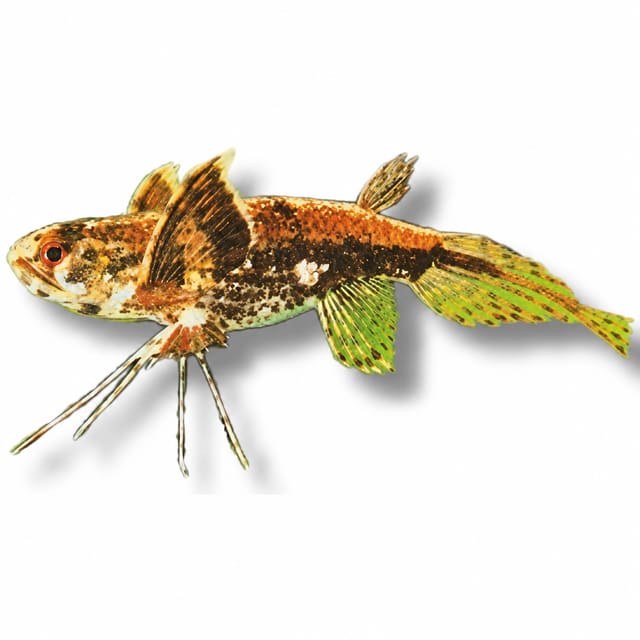
Freshwater Butterflyfish (Pantodon buchholzi)
23–30°C · pH 6–7.5 · 81L
£19.99

One live Marbled Hillstream Loach (Sewellia marmorata) per purchase at the supplier's approximate 3–4 cm dispatch grade, for a mature, oxygen-rich aquarium with varied flow.
Sewellia marmorata
Shoaling fish: kept in a group they feel safer, stay calmer and show their best colour.
One live Marbled Hillstream Loach (Sewellia marmorata) per purchase at the supplier's approximate 3–4 cm dispatch grade, for a mature, oxygen-rich aquarium with varied flow.
Marbled Hillstream Loach is the practical trade name used here for Sewellia marmorata, a small freshwater fish in the hillstream-loach family Gastromyzontidae. FishBase places the species in the Vinh Thanh river catchment in Vietnam. Its flattened, surface-oriented body plan suits life close to the bottom and other solid surfaces rather than prolonged swimming in open mid-water.
One purchase supplies one live fish at the supplier's approximate 3–4 cm dispatch grade. That grade describes the size supplied, not a guaranteed exact measurement and not the adult maximum. Sex is guaranteed only when the selected option explicitly states male or female. This Marbled Hillstream Loach listing has no sex-guaranteed option.
FishBase records a maximum of 5.9 cm standard length for male/unsexed fish. Standard length stops at the base of the tail and therefore excludes the tail fin. A secondary species summary reports 6.4 cm standard length. Because those records differ and both are labelled SL measurements, this listing keeps their scope rather than turning either into a bare whole-animal size promise.
Wild habitat notes matter more than a slogan about maximum current. FishBase reports the species from streams with shallow rapids, clear water and relatively slow current, as well as deeper pools with detritus and muddy or sandy substrate. The useful aquarium translation is good oxygen exchange and purposeful movement combined with quieter resting areas. A fish should be able to choose its position instead of being forced into one powerful jet all day.
FishBase also reports aquatic invertebrates in stomach contents. That is strong evidence against selling this animal as a self-feeding algae tool. OATA's broader algae-eater guidance makes the same practical point for grazing fish generally: algae eaters still need deliberately supplied food, and a fish never replaces control of lighting, nutrients, stocking and maintenance.
Plan a mature, well-filtered aquarium with a broad usable footprint, clean water, strong gas exchange, varied flow, secure cover and enough feeding surfaces for the actual stocking. Ask for current source-water pH and hardness before dispatch, test the receiving aquarium and avoid borrowing figures from Sewellia lineolata or another algae-eating species.
RSPCA aquarium guidance gives 18–26°C for loaches as a broad example. It is useful for screening a community, but it is not claimed as a measured optimum for S. marmorata. Ammonia and nitrite must be 0 mg/l under general aquarium-welfare guidance. Test the receiving aquarium and compare it with the source water rather than changing chemistry abruptly to meet a copied number.
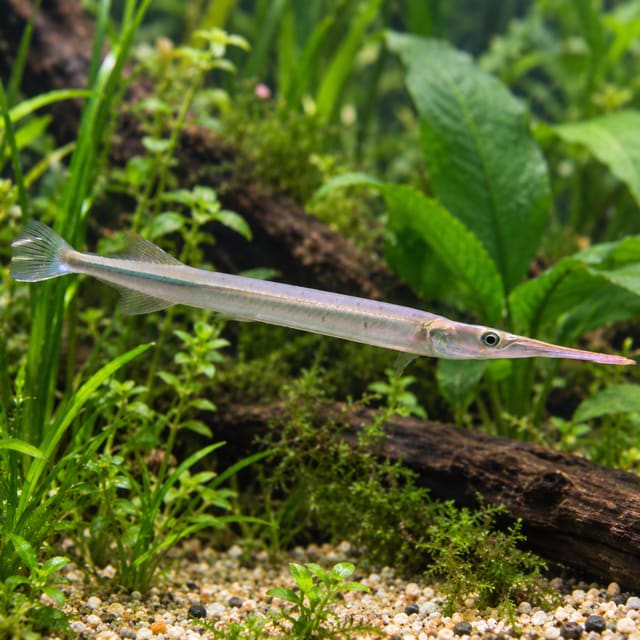
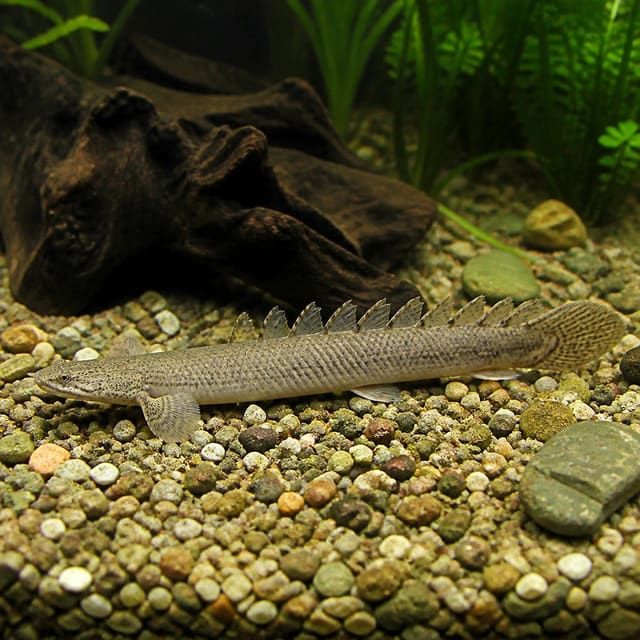
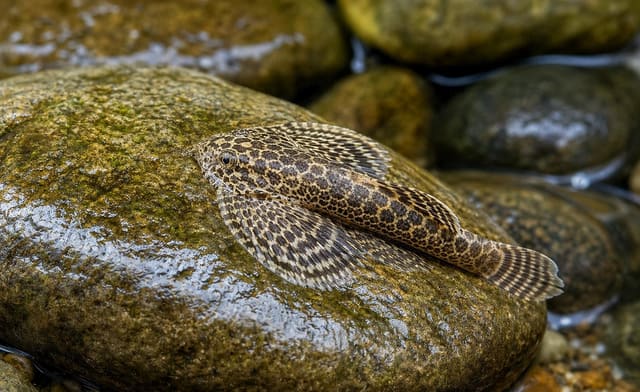
Gallery images have been digitally enhanced to improve image quality. Natural colour, pattern, size and maturity can vary between live animals. The four gallery views show one or two patterned fish in different aquarium scenes without promising the exact markings, sex, age or size of the animal sent.
This fish is a better fit for an intermediate keeper who already understands biological filtration, oxygen exchange and observation-led feeding. It is not a shortcut for an immature tank. Browse the Loaches and Oddballs collection to compare current options, but assess each species on its own water, diet, adult size and behaviour rather than assuming one shop category means one care plan.
| Care point | Practical guidance |
|---|---|
| Identity | Sewellia marmorata, family Gastromyzontidae |
| Sold unit | One live fish per purchase |
| Dispatch grade | Approximately 3–4 cm size supplied |
| Recorded adult length | 5.9 cm SL in FishBase; a secondary summary reports 6.4 cm SL |
| Temperature | 18–26°C only as broad RSPCA guidance for loaches |
| Ammonia and nitrite | 0 mg/l |
| Habitat clue | Clear shallow rapids with relatively slow current, plus deeper detrital pools with muddy or sandy substrate |
| Diet clue | Aquatic invertebrates recorded in stomach contents |
| Care assessment | Intermediate, because a mature oxygen-rich setup and close feeding observation are required |
Ask for current source-water pH and hardness before dispatch, test the receiving aquarium and make any transition gently. The values printed for Bristlenose Catfish, Clown Plecos, Otocinclus, Siamese Algae Eaters, Garra and shrimp on OATA's broad page belong to those animals and should not be transferred to this fish.
A mature filter is non-negotiable. Fish release ammonia, which is toxic. Beneficial bacteria convert ammonia to nitrite, also toxic, and then into nitrate. Both ammonia and nitrite must read 0 mg/l before this fish is added. Clear water can still contain harmful dissolved waste, so testing is part of the setup rather than an emergency-only task.
The first aquarium setup guide explains cycling and the sequence of preparing filtration before livestock arrives. Use it for the process, but do not take a generic tropical temperature as a species recommendation. A cycle result also applies to the tested stocking load; adding several animals or sharply increasing food still requires monitoring.
Choose a broad footprint rather than a tall, narrow shape because this fish uses surfaces near the bottom; do not reduce that decision to a fixed litre shortcut. More floor area makes it easier to create different flow zones, provide several feeding points and keep individuals away from one another when territorial behaviour appears.
Volume remains important because larger systems usually change more slowly, but litres alone are not a welfare certificate. A large aquarium with blocked flow, low oxygen, immature media or heavy competition can be worse than a carefully maintained system. Consider adult livestock load, filtration capacity, summer temperature, surface area and access to food together.
FishBase records both muddy or sandy substrate in deeper pools and shallow rapids in the species habitat. In an aquarium, use sand or fine smooth gravel with stable rounded stones and smooth-edged surfaces. Avoid sharp rock, unstable piles and narrow gaps where a flattened fish can be trapped.
Leave routes for water and waste to move around the hardscape. A dramatic rock wall can create stagnant pockets that collect food. Test the layout with the pump running, then adjust stones before livestock is introduced. Every heavy item should rest securely rather than on loose substrate that can shift.
Provide several broad surfaces instead of one prized feeding stone. The secondary species summary describes S. marmorata as highly territorial, so a choice of resting and feeding sites is more useful than a single focal point that one fish can guard. Break sight lines with stones or wood while retaining open routes for circulation and cleaning.
Plants can add shade and visual barriers, but do not let dense growth hide every feeding point or reduce surface movement. Choose species that tolerate the planned flow and temperature. Secure roots and attached plants so maintenance does not repeatedly dismantle the habitat.
Hillstream shape often leads to the advice that every centimetre of the aquarium needs violent current. FishBase's habitat record is more useful: the fish occurs around shallow rapids where current was described as relatively slow, and in deeper pools. Create purposeful circulation, strong gas exchange and clean water, but also quieter areas behind stones where the fish can rest.
Watch the fish's choices. If it spends all its time pressed into the single calmest corner, the pump layout may offer impressive numbers but poor usable habitat. If detritus accumulates in dead spots, change direction or hardscape. A flow gradient is successful when it supports both oxygenation and behavioural choice.
Surface agitation improves gas exchange. A spray bar, air stone or correctly aimed return can help, but check that the entire system remains oxygenated. Warm water holds less dissolved oxygen, so summer heat can reduce the safety margin. Use a reliable thermometer and prepare a safe cooling and aeration response before a heatwave.
Guard pump and filter intakes. A small fish that spends time close to surfaces can be pinned against an unprotected intake. Guards need regular inspection because debris can reduce flow and oxygenation. Never use an intake cover so fine that it blocks unnoticed within a day.
RSPCA guidance uses 18–26°C as a broad example for loaches. Keep the word broad attached to the range: it is not a species-specific optimum from FishBase. Choose a stable point only after checking the exact community and the water the fish is arriving from. Do not force a rapid change merely because the thermometer is inside a general range.
Use the water-chemistry guide to understand ammonia, nitrite, nitrate, pH and hardness. Record the aquarium's readings and use the water parameter matcher to organise a source-to-tank comparison. A written comparison is more useful than describing water as simply soft, hard or typical for the UK.
Test after filter maintenance, a power cut, a stocking change, unusual feeding or a change in behaviour. General OATA guidance recommends regular weekly water testing and warns that new-tank syndrome follows when the bacterial population cannot process the increased waste. RSPCA likewise says ammonia and nitrite kits are essential.
Condition replacement tap water and match temperature closely enough to avoid shock. Clean reusable filter media in removed aquarium water when maintenance is needed rather than under untreated tap water, which can damage beneficial bacteria. Do not replace all mature media at once unless the manufacturer and current water quality require it.
FishBase records aquatic invertebrates in the stomach contents of wild S. marmorata. That does not provide a complete aquarium menu or a feeding schedule, but it establishes that this species should not be treated as an algae-only grazer. OATA's broad algae-eater guidance also says grazing fish need prepared supplementary food.
Choose a complete, appropriately sized sinking food that reaches the surfaces the fish uses. Confirm that the animal actually feeds rather than assuming a disappearing portion reached it. Mid-water fish, other bottom dwellers and snails may take food first. Place small portions in more than one location when competition is visible.
Natural biofilm can add foraging opportunity, but its nutritional content and quantity are unpredictable. Mature surfaces are useful; a green pane is not proof of a balanced diet. Avoid cleaning every stone at once, while still removing trapped waste and old food so the aquarium does not become dirty in the name of maturity.
Offer a modest portion, confirm that the loach reaches it, observe body condition and remove persistent leftovers. Adjust the next portion from what the fish actually ate rather than using a fixed schedule. More food is not the first answer to every thin fish; check access, competition, water and stress.
Look for steady breathing, controlled movement, intact fins, clear eyes, an even body profile and interest in food. OATA lists darker or paler colour, hiding more than normal, clamped fins, unusual swimming, altered breathing, body-condition change and reduced feeding as warning signs in fish generally.
These signs do not diagnose one disease. Test temperature, ammonia and nitrite first, confirm filter and pump output, and review recent additions. Seek competent aquatic or veterinary help where concern persists. Do not copy a medicine dose from a different species or use treatment automatically before identifying the problem.
The secondary summary's territorial description makes feeding exclusion especially important. One animal repeatedly displaced from every surface, losing body condition or hiding continuously needs a layout and stocking review. Add routes and feeding sites, reduce competition or separate fish where welfare is compromised.
Prepare the tank before dispatch: mature filter running, 0 mg/l ammonia, 0 mg/l nitrite, stable temperature, guarded intakes and secure cover. Review the current delivery and Live Arrival Guarantee policy, arrange for someone to receive the parcel and keep disturbance low when it arrives.
Use the store's current acclimation direction: float the sealed bag for 20–30 minutes before releasing the fish, avoid adding transport water to the aquarium, then monitor water and behaviour closely through the first week.
The intermediate care assessment is a store judgement about the setup work, not a scientific fact. Before ordering, the keeper should be able to show a mature filter, dependable oxygen exchange, a guarded intake, a broad usable footprint, stable temperature, test results and a deliberate food plan. A powerhead bought on delivery day does not make an immature aquarium ready.
Plan for equipment failure. Check that air lines, spare batteries or a backup aeration option are usable before an outage. Know how quickly temperature changes in the room and where the aquarium receives direct sun. A contingency is most valuable when it has been tested before fish depend on it.
Keep a simple log of temperature, ammonia, nitrite, feeding and unusual behaviour. The aim is not paperwork for its own sake; it is to notice a trend that memory misses. A record also helps a retailer or aquatic professional understand what changed and when.
A hillstream-style aquarium needs both hygiene and established surfaces. These aims are not opposites. Siphon loose waste, remove persistent leftover food and keep filter flow clear, while leaving selected stones and other safe surfaces mature enough to offer a stable environment. Cleaning every surface to a bright finish on the same day removes useful continuity and makes feeding observation harder.
General OATA guidance recommends a weekly 25% partial water change and weekly checks of ammonia, nitrite, nitrate, pH and hardness. RSPCA guidance recommends regular water changes and stresses that clear water alone cannot establish safety. Use the current test results and livestock response to refine the routine, but do not allow ammonia or nitrite to become an accepted background reading.
Treat replacement tap water for chlorine or chloramine before it reaches fish or filter bacteria. Check temperature, then refill in a way that does not blast substrate or dislodge the hardscape. A broad, shallow fish can shelter under or beside objects, so confirm its position before moving stones, siphon tubes or intake guards.
Inspect the filter outlet, circulation pump and intake guard every day. A reduction in output can mean a blockage long before the water looks cloudy. Clean the impeller and mechanical parts according to the manufacturer, but preserve biological media and avoid exposing it to untreated tap water.
After maintenance, confirm that flow has returned through the intended route and that quieter resting areas still exist. Moving one stone can redirect a jet or create a dead zone. Briefly watch suspended debris and fish position rather than assuming the layout works because the pump is running.
Record what food was offered, where it was placed and whether the fish reached it. A feeding log is especially useful in a mixed aquarium because an empty dish does not show which animal ate. Adjust portion and placement from direct observation, keeping the aim of complete nutrition without a persistent layer of decomposing food.
View the fish from more than one angle when possible. A patterned back can look impressive while the body behind the head is losing condition. Repeated refusal, a narrowing profile or displacement from every feeding surface should prompt checks of competition, water, temperature and food suitability before simply increasing the total amount.
A community fish is not suitable merely because it is labelled peaceful. Every animal must tolerate the same stable temperature, oxygen level, flow pattern and water chemistry. Compare the actual source-water pH and hardness, the receiving aquarium and each candidate's care needs before combining them.
Avoid large or predatory fish that could swallow, injure or continually displace a small bottom-oriented loach. Also avoid a stocking plan in which faster animals take every sinking food. Compatibility includes access to food and resting space, not only absence of visible attacks.
The secondary species summary describes S. marmorata as highly territorial. That is a reason to provide several surfaces, broken sight lines and more than one feeding point. Use it to plan several surfaces and feeding points without assuming that one fixed group number will remain peaceful.
Watch interactions after introduction. Brief displacement may differ from persistent exclusion, but damaged fins, weight loss, continual hiding or one fish unable to feed are welfare problems. Rework the layout, spread food and reduce or separate the stocking if the arrangement is failing.
Other bottom-oriented animals compete most directly for surfaces and food. Do not assume a shared preference for current makes two species compatible. Compare adult size, mouth size, territorial behaviour, feeding speed and the space each animal uses.
FishBase's aquatic-invertebrate stomach record means very small invertebrates cannot be promised safe. Where every juvenile invertebrate must survive, use a separate system rather than testing the risk in a display tank.
The Reticulated Hillstream Loach (Sewellia lineolata) is a useful same-form shopping comparison, but it is a different accepted species. The link does not imply that the two are interchangeable or should be housed together. Compare their source water and adult needs before choosing.
FishBase records Sewellia marmorata to 5.9 cm standard length for male/unsexed fish, while a secondary summary reports 6.4 cm standard length. Standard length excludes the tail fin. The approximate 3–4 cm supplier grade is the size supplied, not an exact measurement or adult-size promise.
Use a mature, well-filtered aquarium with a broad footprint, strong oxygen exchange, varied flow and several smooth resting and feeding surfaces. Choose capacity for the full adult community rather than relying on one fixed litre shortcut.
A secondary summary describes the species as highly territorial, so plan several surfaces and feeding points rather than relying on one fixed social quota. Provide multiple surfaces and feeding points, monitor displacement and body condition, and be prepared to change the layout or separate fish if welfare suffers.
The store rates it intermediate because success depends on a mature biological filter, dependable oxygen exchange, guarded intakes, stable temperature, varied flow and observation-led feeding. A keeper who has not yet cycled and tested an aquarium should finish that work before ordering this fish.
FishBase records aquatic invertebrates in the stomach contents of wild fish. OATA's broader algae-eater guidance says grazing fish still need prepared supplementary food. Offer an appropriately sized complete sinking food, confirm that the loach reaches it, and treat mature biofilm as useful foraging rather than a complete diet.
RSPCA gives 18–26°C for loaches as a broad example, not a species-specific optimum. Ask for current source-water pH and hardness before dispatch, test the receiving aquarium, keep conditions stable and avoid rapid chemical adjustment to figures copied from another species.
A secondary summary describes the species as highly territorial, so competition over surfaces deserves attention. Focus on competition over surfaces rather than treating it as a routine fin nipper. Provide broken sight lines and several feeding places, and act if one fish is persistently excluded, injured or losing condition.
Use environmental and feeding overlap rather than a universal list. Choose non-predatory animals that share the stable temperature, oxygen and flow plan and will not block access to food or bottom surfaces. Very small invertebrates cannot be promised safe because aquatic invertebrates occur in the species' natural diet.
Tropical Fish Co hand-packs live animals in oxygenated bags, an insulated box and a heat pack when weather calls for one, then uses a tracked licensed live-animal courier. Someone must receive the parcel. For a Live Arrival Guarantee claim, contact the team the same day with the order number and a continuous video showing the sealed parcel being opened and the fish still in its sealed bag.
The FishBase species summary supports family, distribution, the 5.9 cm SL record, habitat and stomach-content evidence. The secondary species summary supplies the separately labelled 6.4 cm SL and territorial records.
OATA's tropical algae-eater guidance supports general setup, feeding, maintenance and arrival practice for the animals it covers. The RSPCA aquarium guidance supports filtration, cycling, oxygen exchange, 0 mg/l ammonia and nitrite and the broad 18–26°C loach example.
No reviews for this item yet. Bought one? Honest reviews only, good or bad.
What customers say about ordering from us
I have a small group of long finned mountain minnows. So was delighted to be able to order ten of this variety to increase the genetics in my tank . The ones I recieved are healthy but it’s to early to give a verdict on wether they are of a long finned type since they are small currently.
Gordon Walker · 23 Sept 2026
100% success travel and "installation". Pleased with quality of purchase. The Siamese fighter a bit "shy" so have not yet seen him at his best yet but looking good. Happy customer. GG
George E Garratt · 21 Sept 2026
Reviews of our shop, collected by Judge.me, an independent third-party review collector. Newest first.