
 By Connor Boyle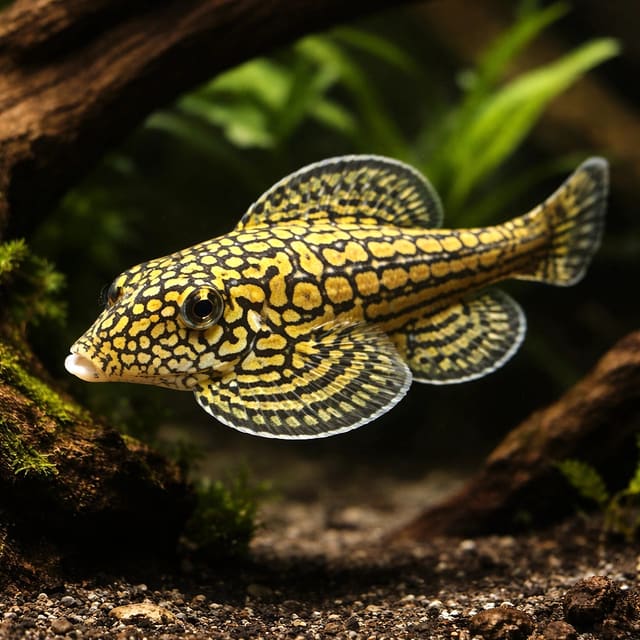
Moderate
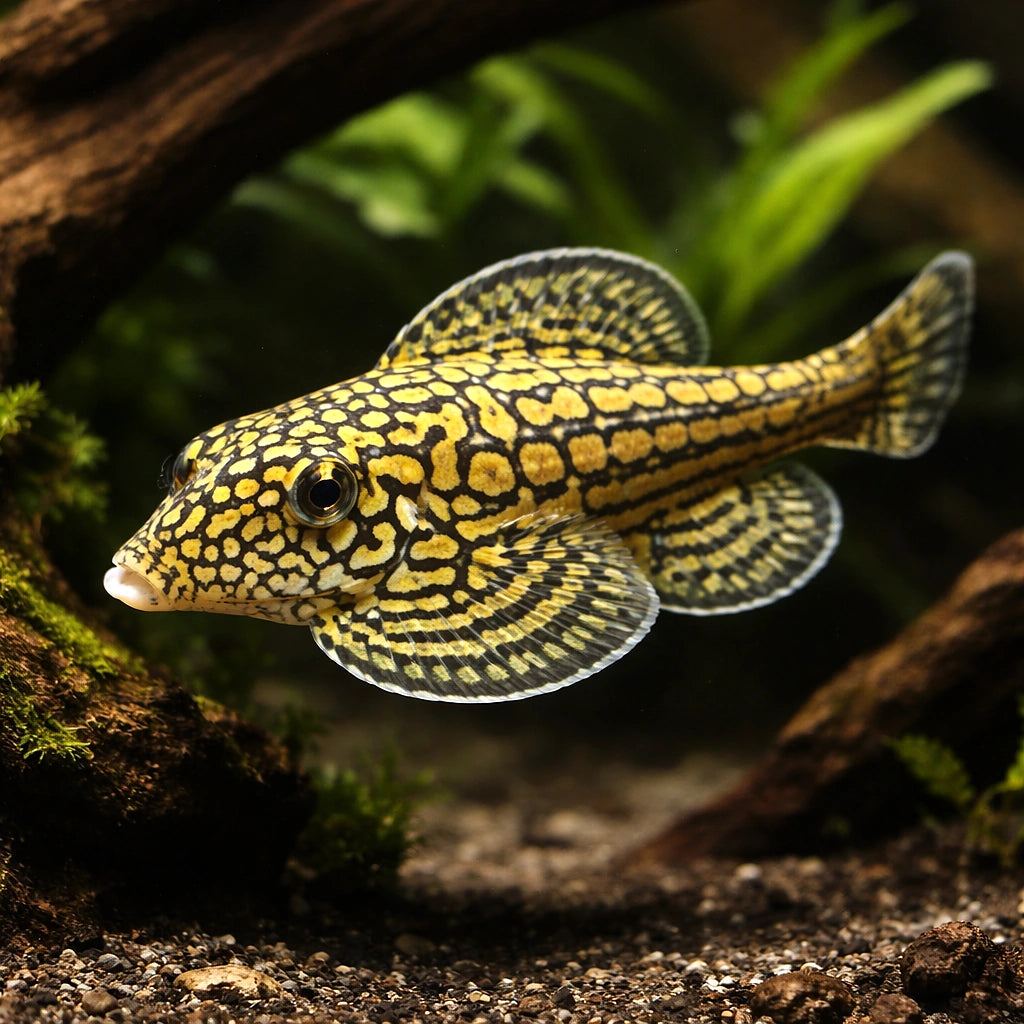
Marbled Hillstream Loach (Sewellia marmorata)
£17.99
Loaches & Oddballs · Buying Guide
The hillstream loach is the UK's go-to high-flow specialist — sucker-bodied, cool-water, algae-eating. Species ID, tank setup, and the 5 varieties we ship.
7 products in stock today
Live prices and stock. Every fish covered by our Live Arrival Guarantee.

22–23.9°C · pH 6.5–7.5 · 68L

20–24°C · pH 6–7.5 · 68L

20–25.5°C · pH 6–7.5 · 54L
24–26°C · pH 6–8 · 81L
22–27°C · pH 6–8
Our trained assistant knows this hillstream loach page inside out. Ask it anything — water parameters, tank mates, how many to buy — or have it read the guide aloud while you set up your tank.
They look like plecos but aren't. They need water flow that would stress most fish. They prefer temperatures a discus keeper would consider dangerous. And they're one of the few tropical-trade species that UK tap-water conditions suit almost perfectly without any chemistry adjustment.
I'm Connor, the site's coldwater + native-UK specialist. I keep a dedicated Asian-stream biotope at home with four species of hillstream loach and a cool-tolerant tetra community. This is the guide I'd send to a friend who just saw a hillstream on Instagram and assumed it was a kind of pleco.
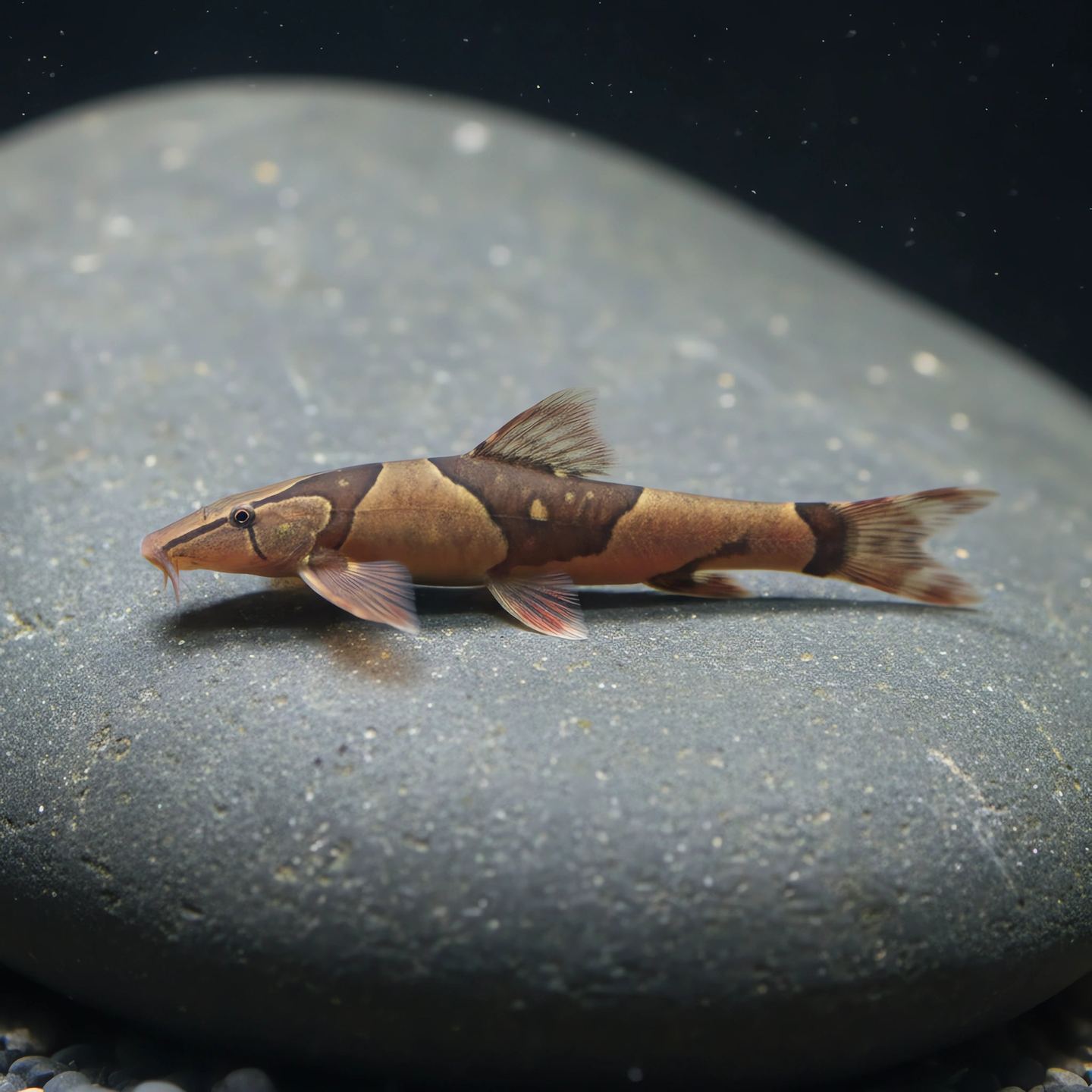
A Red Hillstream Loach (Homaloptera orthogoniata) from our current catalogue media. Check the scientific name when buying: “hillstream loach” is used for several genera with different temperature and flow preferences. Representative catalogue image · Tropical Fish Co.
| Species | Adult size | Pattern | Water preference | Price |
|---|---|---|---|---|
| Sewellia lineolata (Red) | 6 cm | Orange stippling on tan | 20–24 °C, soft | £20–£25 |
| Sewellia marmorata (Marbled) | 6–7 cm | Dark marbled cream | 20–24 °C, soft | £15–£20 |
| Beaufortia kweichowensis (Sucker-belly) | 7 cm | Bold black spots on cream | 18–24 °C, flexible | £15–£18 |
| Beaufortia leveretti (Chinese) | 6 cm | Fine speckling | 18–24 °C, flexible | £12–£15 |
| Pseudogastromyzon myersi (Panda) | 5 cm | Black + white bands | 20–24 °C | £12–£18 |
| Homaloptera ogilviei (Ogilvie's) | 8 cm | Banded body | 22–26 °C, warmer end | £9–£12 |
Beaufortia species tolerate warmer water better than Sewellia and are the honest recommendation if you keep a heated community tank that sits at 24–25 °C.
New hillstream keepers routinely install them in standard community tanks with canister filters sized for tetras and guppies. The fish survive 6–12 months before dying of cumulative hypoxic stress — and the keeper never knows why. If you can't commit to 10–15× turnover, don't keep hillstreams.
The cool-water requirement narrows the tank-mate pool considerably:
Avoid: Discus, angelfish, most cichlids (temperature mismatch), tiger barbs (aggressive toward slow-moving hillstreams).
Most hillstream deaths in UK tanks come from insufficient flow or low dissolved oxygen — both preventable, both hard to spot until the fish are already declining. Here's the diagnostic matrix:
| Observed behaviour | Flow/O₂ status | Action |
|---|---|---|
| Actively grazing all tank surfaces | Healthy | Maintain current setup |
| Parked at filter outlet | Needs more flow | Add powerhead or reposition filter |
| Clinging to glass near surface | Low dissolved O₂ | Add airstone, increase surface agitation |
| Hiding under wood 90% of time | Flow too weak OR stressed | Measure flow rate (target 10×/hour) |
| Gasping at surface | Critical hypoxia | Immediate airstone + 30% water change |
| Not feeding for 48+ hours | Environment wrong | Review flow + temperature simultaneously |
| Skin discolouration | Substrate abrasion (if sharp) or disease | Check substrate; medicate if needed |
Target turnover: 10–15× tank volume per hour. Example:
| Tank volume | Minimum flow (L/h) | Typical setup |
|---|---|---|
| 60 L | 600–900 | HOB filter 600 L/h + small powerhead |
| 90 L | 900–1,350 | Canister 900 L/h + powerhead 500 L/h |
| 120 L | 1,200–1,800 | Canister 1,200 L/h + wavemaker |
| 180 L | 1,800–2,700 | Large canister + 2× powerheads |
Look at your filter's spec sheet for rated L/h. Reduce by ~30% for real-world flow vs spec (cartridges + media reduce throughput). Hillstreams are the one fish in UK trade where 'over-filtered' isn't a problem.
Skip any of these and hillstream survival drops noticeably over 3–6 months [4].
Hillstream loaches are moderately hardy shippers but sensitive to dissolved oxygen loss during transit. Our protocol adds an extra oxygen-boost step compared to standard tropicals:
Live arrival guarantee: photograph unopened bags within 2 hours. Full refund/replacement at our cost.
For related species guides, see the kuhli loach care guide for the other UK trade loach specialist, or the otocinclus care guide for the small tropical algae specialist.
Comparing algae crews? The Siamese algae eater guide and the ancistrus pleco guide together form the full algae-control toolkit that a hillstream doesn't provide on its own.
Shopping the full range? The loaches & oddballs hub has everything in this genus group currently in stock.
Visual route into the rest of our UK live-fish range.
Loaches and oddball fish for sale UK — Kuhli, Clown, Yoyo, Knife Fish, Bichirs, Puffers, Mudskippers, Eels.
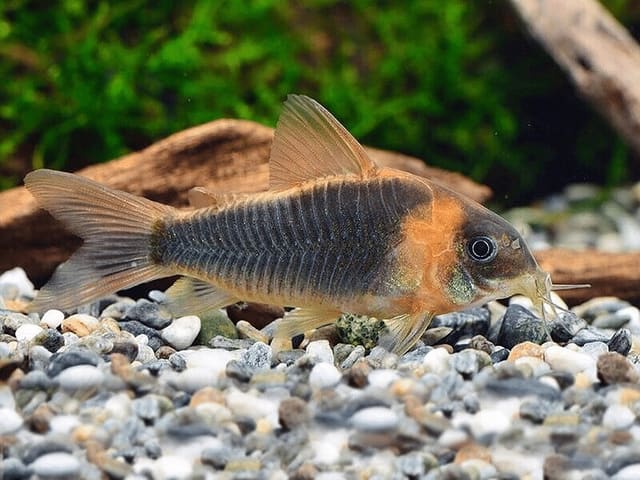
Corydoras, Bristlenose, L-number plecos, Synodontis and Otocinclus for clean-up and character — supplied and adult size on each listing so the tank fits.
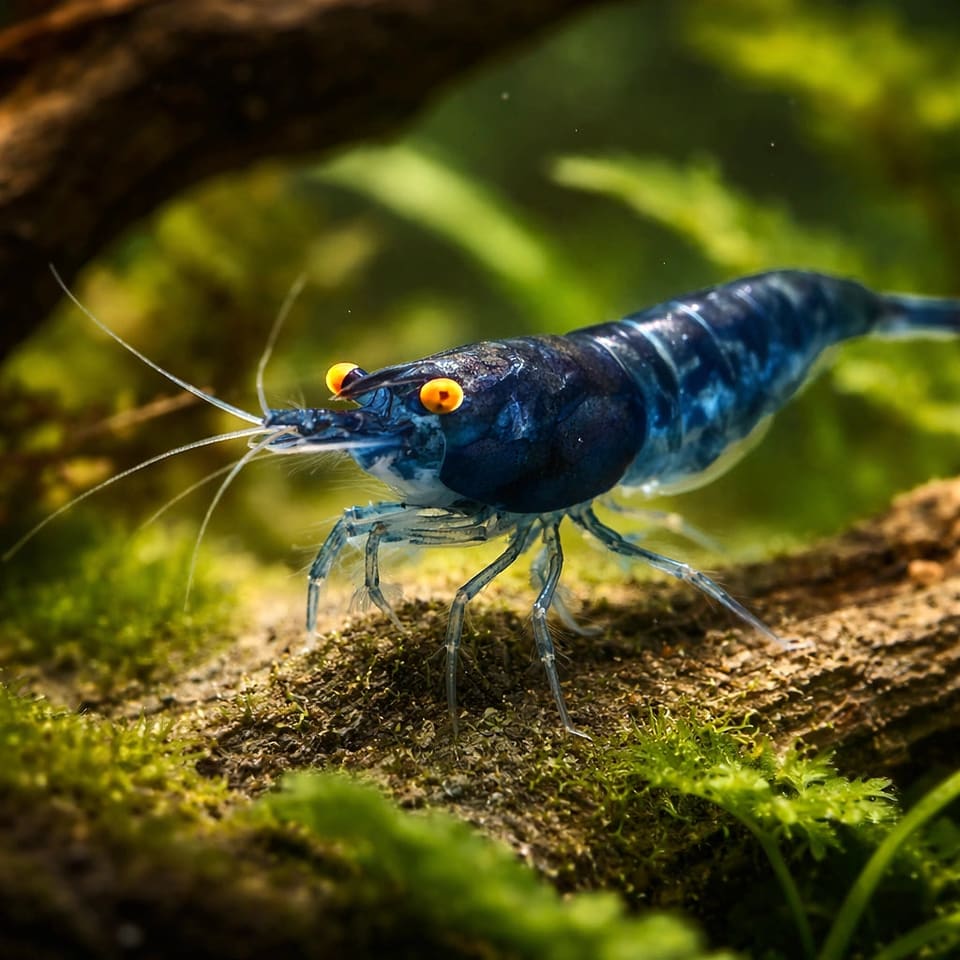
Browse a broad algae-related collection. Check each animal's identity, feeding and aquarium needs; a catalogue match is not proof of grazing suitability.
Material factual claims cite the sources below; store policy and cautious inference are labelled in the article. Sources are grouped by type so you can judge their weight at a glance.
Taxonomic reference for hillstream genera — cited on species distinctions.
Source for water-parameter ranges, habitat, and flow requirements.
Conservation status and wild-habitat context.
Independent cross-check on husbandry + tank-flow requirements.
UK hobbyist perspective — referenced on cool-water keeping.
UK-club biotope guidelines — cited on tank-layout recommendations.
Referenced in the flow-setup section.
Fishkeeping moves fast and we want every guide spot-on. If you think something here is wrong, out of date, or could be clearer, tell us — our team reads every message and updates the page.
Suggest an editLoaches and oddball fish for sale UK — Kuhli, Clown, Yoyo, Knife Fish, Bichirs, Puffers, Mudskippers, Eels.
Corydoras, Bristlenose, L-number plecos, Synodontis and Otocinclus for clean-up and character — supplied and adult size on each listing so the tank fits.
Browse a broad algae-related collection. Check each animal's identity, feeding and aquarium needs; a catalogue match is not proof of grazing suitability.
Kuhli loach care for UK keepers: plan an 80-litre group tank, compare water needs, choose safe substrate and avoid risky medication shortcuts.
Otocinclus catfish care for UK tanks: compare tank size, 22–25°C water, group planning, grazing foods, algae limits, tank mates and buying checks.
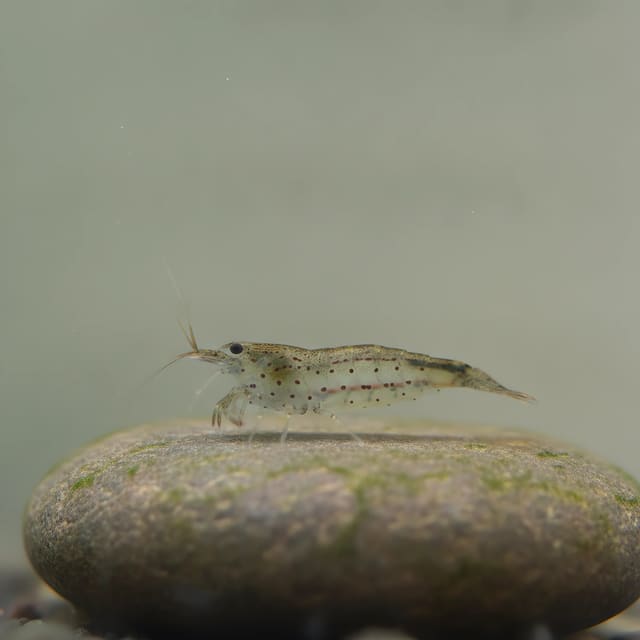
Amano shrimp care for UK aquariums: plan a mature 20L-plus tank, group, stable water, feeding, algae limits, tank mates, moulting and breeding.
Marine & Coldwater Specialist · 9+ years in the hobby
Connor kept a reef aquarium for four years before switching to coldwater native fish and goldfish — he now runs a 400-litre river-community tank modelled on the Thames chalk streams. He writes Tropical Fish Co's coldwater, native-UK, and future marine guides.