Myxocyprinus asiaticus
15.5–21°C · pH 6–8
£29.99

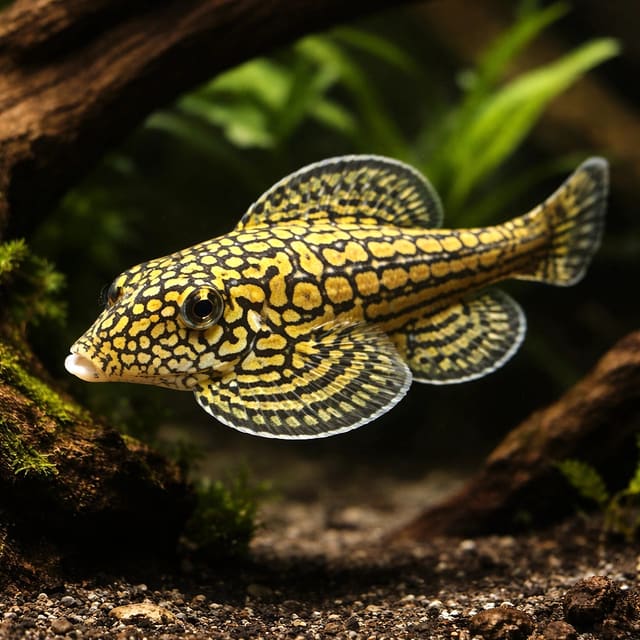
The Reticulated Hillstream Loach (Sewellia lineolata) is a freshwater hillstream loach from China, Viet Nam and Cambodia that reaches 5.7 cm standard length. It suits a mature, high-flow aquarium of about 68 litres or more, kept at 20–24°C and pH 6.0–7.5. Sold individually in dispatch sizes from 1.5–2 cm to 6–7 cm.
Adult size is the maximum length this species reaches at full maturity (scientific sources). The livestock you receive will be younger and smaller — pick a size above for the actual shipping size. Product-photo provenance and any image-specific limitations are stated on the listing.
Sewellia lineolata
Shoaling fish: kept in a group they feel safer, stay calmer and show their best colour.
The Reticulated Hillstream Loach (Sewellia lineolata) is a freshwater hillstream loach from China, Viet Nam and Cambodia that reaches 5.7 cm standard length. It suits a mature, high-flow aquarium of about 68 litres or more, kept at 20–24°C and pH 6.0–7.5. Sold individually in dispatch sizes from 1.5–2 cm to 6–7 cm.
Adult size is the maximum length this species reaches at full maturity (scientific sources). The livestock you receive will be younger and smaller — pick a size above for the actual shipping size. Product-photo provenance and any image-specific limitations are stated on the listing.
Maintain these water conditions for optimal health and vibrant colors
The Reticulated Hillstream Loach (Sewellia lineolata) is a freshwater, bottom-living member of the hillstream-loach family Gastromyzontidae. It occurs in China, Viet Nam and Cambodia, including the Mekong basin, and reaches 5.7 cm standard length. It suits a fishkeeper prepared to run a mature, highly oxygenated aquarium with sustained water movement, algae-covered grazing surfaces and compatible stream fish.
It is a bottom-living 'sucker belly' loach that keeps close to rock surfaces in flowing water. FishBase records the wild fish in rapids, riffles, waterfalls and larger river habitats with both moderate and very fast current. It also records daytime searching across horizontal and vertical stone surfaces, where the fish works through periphyton for food.
Use 5.7 cm standard length as the adult planning figure. Seriously Fish recommends minimum base dimensions of 75 × 30 cm, equivalent to about 68 litres, for general care. Keep the water at 20–24°C, pH 6.0–7.5 and 1–10 dGH. The aquarium must be clean, well oxygenated and arranged around current rather than treated as an ordinary still-water community.
This fish grazes benthic algae and associated microorganisms, while wild stomach contents also include benthic invertebrates. It should therefore enter a mature aquarium with productive rock and other hard surfaces, followed by deliberate supplementary feeding. It is an engaging grazer, but it is not a substitute for routine algae control, sensible stocking or aquarium maintenance.
One purchase supplies one Reticulated Hillstream Loach in the size selected on the live size selector. The choices are labelled 1,5 - 2 cm, 2.5-3 cm, 3,5 - 4 cm, 4-5 cm and 6-7 cm. The size you select is the size supplied, not the adult size. Use the dispatch measurement to choose the fish you want to receive, then plan the aquarium around the 5.7 cm standard-length care figure.
Sex is guaranteed only when the selected option explicitly states male or female. This Reticulated Hillstream Loach listing has no sex-guaranteed option.
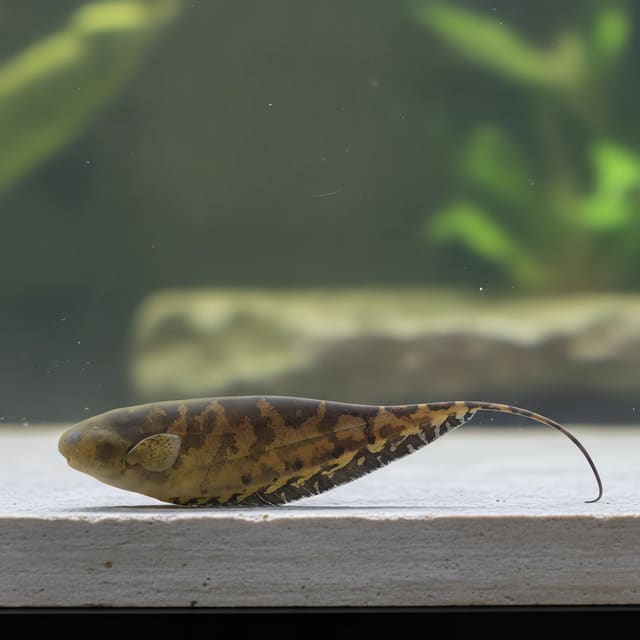
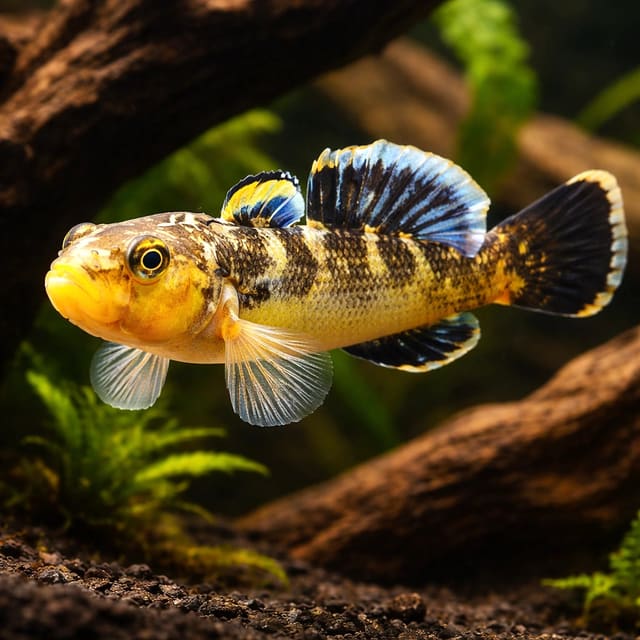
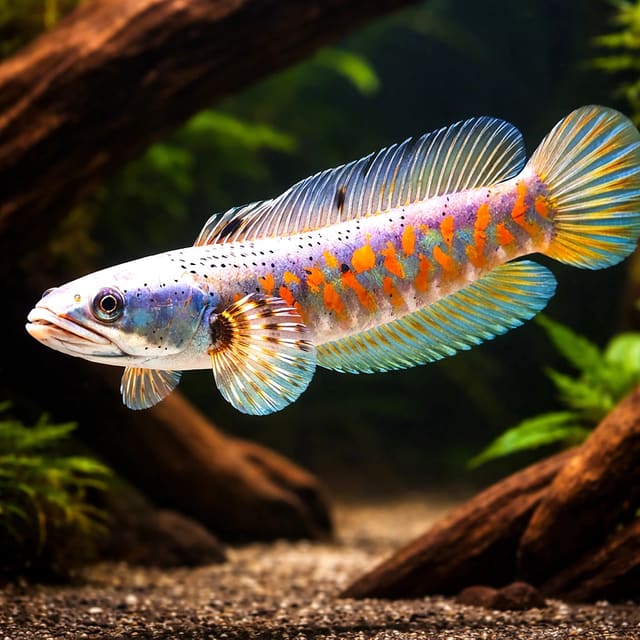
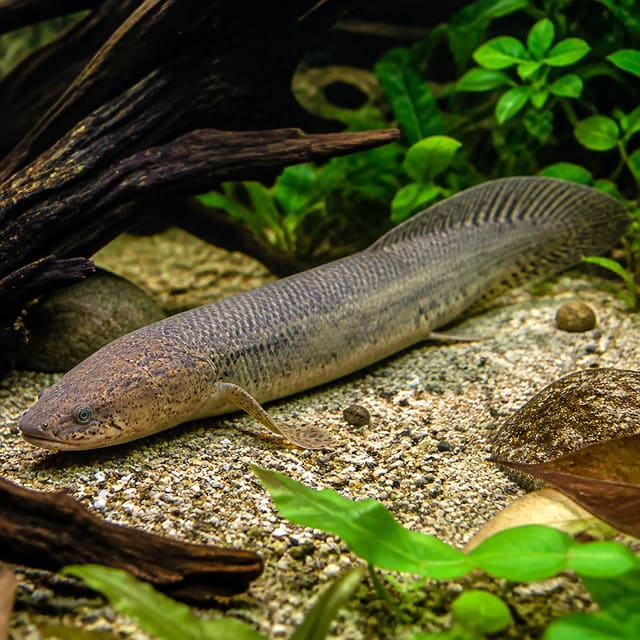
The gallery images are representative, based on reference photographs of this species, so colours can look slightly different from the live animal.
| Suits | Not suited to |
|---|---|
| A mature aquarium with a base of at least 75 × 30 cm | A small aquarium chosen only from the fish’s compact body length |
| Clean, highly oxygenated water at 20–24°C | Poorly oxygenated or weakly circulated water |
| Rock, established wood and other productive grazing surfaces | A newly prepared interior with little established algal growth |
| Companions that share the water and flow requirements | Fish that monopolise the same food and bottom territories |
| A keeper willing to supplement natural grazing deliberately | An aquarium relying on the loach to solve an algae problem |
Smaller dispatch fish need the same water quality, oxygen and mature food-producing surfaces as larger ones. Do not scale down the permanent aquarium simply because the selected fish is small. Likewise, a larger dispatch label does not remove the need to check the aquarium footprint, current, feeding space and companion species before purchase.
The decisive question is whether the aquarium already functions as a stable stream environment. If it does, select the preferred dispatch size from the live selector. If it does not, prepare the full system first so the fish enters established biological filtration and productive grazing conditions rather than a newly assembled display.
Provide a base measuring at least 75 × 30 cm, with about 68 litres as the corresponding general-care volume. Floor area matters because this loach feeds, rests and interacts on solid surfaces. Extra height does not compensate for a short base with too few stones, feeding positions or current lanes.
In a 75 × 30 cm base, reserve much of the lower area for rounded stones, cobbles and open grazing faces. Position decor so water can pass across it rather than leaving every surface in a sheltered pocket. A larger aquarium gives more freedom to separate territories, broaden the current and maintain stable conditions, but it must still have purposeful flow and productive surfaces.
Before adding livestock, use our guide to prepare and mature the aquarium. Biological maturity and visible grazing growth solve different needs: the filter processes waste, while established algae and microorganisms contribute to the loach’s feeding environment. Both must be considered.
| Check | Decision |
|---|---|
| Base dimensions | Use at least 75 × 30 cm for general care. |
| Volume | Plan from about 68 litres, not from the dispatch size. |
| Grazing area | Provide several exposed hard surfaces receiving light and flow. |
| Resting positions | Create more than one usable place instead of one dominant rock. |
| Equipment room | Leave clear space for the filter outlet, powerhead and safe circulation. |
Do not select a stocking number from litres alone. Sewellia can compete over territory and food, so the workable number depends on distinct grazing positions, food production, filtration and the other bottom-dwelling fish. A footprint that technically meets the minimum may still be unsuitable if one ornament blocks the flow or all food lands in a single contested place.
Review the layout from the fish’s level. The aquarium is ready when water crosses several accessible surfaces, food can be placed in more than one position and no companion is forced to occupy exactly the same limited patch.
Keep the water clean and highly oxygenated, with strong, sustained circulation across the aquarium. Seriously Fish describes an ideal turnover of 15–20 times the aquarium volume per hour and suggests an oversized filter as the minimum requirement, plus additional powerheads or airstones as necessary. Reach that turnover through filtration, circulation and gas exchange across the whole aquarium.
For an aquarium of about 68 litres, Seriously Fish advises a filter rated 270–340 litres per hour plus a powerhead rated 750–1,020 litres per hour alongside it, because this hillstream fish wants a torrent. Use those figures while accounting for the aquarium’s dimensions, decor and the reduction in flow that occurs as filter media gathers debris. The result should move water across rocks and through the whole system rather than leaving stagnant pockets behind them.
The RSPCA’s general aquarium welfare advice states that fish need a properly set up and maintained filter. Biological filtration supports bacteria that convert toxic ammonia to nitrite, which is also toxic, and then to safer nitrate. A powerhead can add circulation, but it does not replace that waste-processing role unless it is itself part of a suitable filtered system.
Cover equipment choices with the aquarium’s full biological load. The loach’s stream adaptation does not make it immune to waste, and strong visible movement does not automatically mean the biological filter is mature. Filtration, oxygenation and current are related decisions, but each must perform its own job.
Allow room around intakes and outlets when arranging decor. A visually convincing river layout is useful only when the filter can still be maintained and water can move through the whole aquarium.
Build the interior around established stones and other hard surfaces that can carry algae and associated microorganisms. Seriously Fish recommends a mature aquarium with plentiful algae-covered rocks for long-term care. Exposed filter sponges will also be grazed, so keep any exposed sponge part of a maintained filter.
Use sufficiently strong lighting to promote algae and its associated microorganisms on chosen surfaces. Set the lighting according to the aquarium’s response rather than applying an arbitrary daily duration. The goal is a controlled supply of productive grazing area, not uncontrolled algae caused by neglected maintenance or unsuitable water chemistry.
If the fish and its companions consume growth faster than the aquarium replaces it, Seriously Fish suggests maintaining a separate container or aquarium in which algae can establish on rocks. Rotate those rocks into the main aquarium without stripping every surface clean at once. This creates a planned food resource rather than leaving the loach dependent on whatever develops by chance.
Do not deep-clean all decor and filter material together. Preserve biological filtration and useful grazing surfaces while carrying out regular maintenance. Clean equipment as required for reliable operation, but keep productive rock faces in the feeding plan.
A visually spotless aquarium can still be poorly suited to this species. Judge the setup by whether it offers clean water, established filtration, usable flow and enough mature surfaces to support repeated grazing alongside supplementary food.
Make mature algae-covered surfaces the foundation of the feeding environment, then supplement them with foods reflecting both algal grazing and invertebrate foraging. FishBase records algae and benthic invertebrates in wild stomach contents. Seriously Fish describes benthic algae and associated microorganisms as much of the natural diet, with insect larvae probably taken opportunistically.
Offer a vegetable- and Spirulina-rich prepared food or gel mixture that can be grazed from a surface, alongside appropriately sized invertebrate-based food. Seriously Fish specifically recommends home-made foods bound with gelatine because their ingredients can include a high proportion of fresh vegetables, Spirulina and similar components. Place food where the loach can reach it in the current and where other fish cannot take every portion first.
OATA’s tropical algae-eater guidance advises controlled portions while allowing extra time for grazing foods. Give supplementary portions small enough that none is left uneaten, and do not treat the visible algae supply as unlimited.
| Observation | Action |
|---|---|
| Rock surfaces remain productive | Continue supplementary feeding so natural growth is not the sole diet. |
| Surfaces are stripped rapidly | Add rotated algae-grown rocks and review competition for food. |
| Other fish take each portion first | Use several feeding locations and reassess the companion mix. |
| Food remains after feeding | Reduce the next portion rather than allowing waste to accumulate. |
| Persistent nuisance algae develops | Review maintenance, stocking and water chemistry instead of adding more grazers. |
Watch the fish obtain food rather than assuming that a full aquarium feeding reaches the bottom. Its daytime grazing makes this easier to assess, particularly on clear rock faces. A mature aquarium creates feeding opportunities, but deliberate portions and suitable variety remain necessary.
Fresh vegetables used in food should be organic or thoroughly washed, following OATA’s advice about possible pesticide residues. Remove deteriorating food before it contributes unnecessary waste.
Keep the aquarium at 20–24°C, pH 6.0–7.5 and 1–10 dGH. Seriously Fish recommends these values for general aquarium care. Higher temperatures may be tolerated when oxygen requirements are maintained, but use 20–24°C for routine aquarium planning rather than deliberately running above it.
Test temperature, pH and hardness against the intended range. Our water chemistry guide explains the values to measure, while the water matcher helps compare measured aquarium water with this care range. Establish whether the water is suitable before selecting companions or making repeated adjustments.
OATA treats a water testing kit as essential so the water can be checked once a week. Record results so a slow change is visible before it becomes a large one. A single reading within range is useful, but stability also depends on a maintained filter, appropriate stocking and regular care.
Persistent algae is not a reason to add more Reticulated Hillstream Loaches automatically. OATA notes that algae trouble may indicate water-chemistry or maintenance problems and that algae-grazing fish do not replace suitable stocking or routine care.
Keep the filter running as the core waste-processing system. The fish releases ammonia like other aquarium fish, and strong current does not neutralise it. Stable chemistry, biological filtration, oxygenation and controlled feeding work together; correcting only one while ignoring the others leaves the aquarium vulnerable.
Arrange for someone to receive the parcel so live fish are not left unattended, and open and inspect it the same day it arrives. The fish is hand-bagged in pure oxygen and placed in an insulated poly box, with a heat pack when weather conditions call for one. Tracking and the confirmed arrival date are sent by email.
Read the current delivery and Live Arrival Guarantee policy before the delivery date so the receiving and claim requirements are clear. The aquarium should already be mature, filtered, within 20–24°C and arranged with appropriate current and grazing surfaces before the parcel is opened.
Once released, check that the fish can hold position without being pushed continuously through the aquarium. Make sure it can reach several surfaces and is not immediately excluded from every useful area by an established bottom fish. Its normal biology includes daytime searching across stones, so access to those surfaces is a practical first checkpoint.
Judge its appetite by watching it graze the aquarium surfaces. Offer suitable food where it can be observed, while keeping portions controlled and preserving longer access to grazing surfaces.
If breathing, grip, movement or feeding changes cause concern, check temperature, filtration, oxygenation and water chemistry promptly and correct the reading that is out of range first. Do not begin an undiagnosed treatment or alter several water values at once.
Use 5.7 cm standard length as the adult aquarium-planning figure. Plan companions and space for a fish of this adult length rather than the size supplied. Plan the permanent aquarium around a minimum base of 75 × 30 cm and approximately 68 litres.
Dispatch measurements describe the fish supplied, while the adult figure guides permanent care. Whichever size you select, keep to the 75 × 30 cm base and approximately 68-litre recommendation rather than calculating a smaller aquarium from the selected label.
FishBase records this species as active during the day, searching periphyton across horizontal and vertical stone surfaces. Regular movement between grazing areas therefore fits its wild feeding behaviour. A fish spending time attached to rock, glass, wood or broad leaves is using the solid surfaces designed into the aquarium.
Members of Sewellia are perhaps the most dominant of the sucker-bellied loaches. Short territorial interactions can reflect competition over a productive surface, but Seriously Fish says they are not generally aggressive towards dissimilar-looking fish. Review resource distribution when one individual repeatedly controls the only useful rock or feeding location.
| Change | First checks |
|---|---|
| Less grazing than usual | Confirm food access, temperature, flow, oxygenation and water quality. |
| Repeated competition at one rock | Spread food and productive surfaces across more positions. |
| Difficulty holding position | Review the direction of flow and provide a range of usable current zones. |
| Companions take all food | Reassess compatibility and place food where the loach can obtain it. |
Do not diagnose illness from colour or one posture alone. Compare the change with the fish’s established activity, feeding access and measured aquarium conditions. Correct environmental problems identified by testing, and do not start a treatment by guesswork.
Choose companions that can share 20–24°C water, strong circulation, high oxygen levels and a feeding plan built around productive surfaces. Seriously Fish names small open-water cyprinids such as Tanichthys, Danio, Devario and Rasbora as potential tank mates. It also names stream gobies from Rhinogobius, Sicyopterus and Stiphodon, plus rheophilic catfishes including Glyptothorax, Akysis and Hara.
These are candidates, not automatic matches. Check the exact species for adult size, water chemistry, current tolerance, behaviour and feeding competition. A genus can contain species with different requirements, and an aquarium meeting this loach’s needs may still be wrong for another member of the same broad group.
| Question | Required outcome |
|---|---|
| Do the water values overlap? | The companion must suit 20–24°C, pH 6.0–7.5 and 1–10 dGH. |
| Can it live with the current? | It must function normally in the circulation and oxygenation provided. |
| Does it use the same territory? | The layout must offer enough distinct space for both animals. |
| Will it take the loach’s food? | The loach must retain dependable access to grazing and supplementary food. |
| Is the aquarium large enough? | Use the adult needs of every species, not the dispatch sizes. |
Some loaches from Nemacheilidae, Balitoridae and Gastromyzontidae are also suitable, while others are not. Research the exact animal rather than using “hillstream loach” as a universal compatibility label. For other specialist choices, browse the loaches and oddballs collection, then compare each candidate against the screen above.
Similar habitat preferences improve the starting point, but they do not settle questions of territory or food. If the planned combination includes several bottom grazers, give each its own grazing surfaces and feeding places, and confirm that each species suits 20–24°C, pH 6.0–7.5, 1–10 dGH and strong flow.
Treat food and grazing territory as the main compatibility resources. Sewellia are perhaps the most dominant of the sucker-bellied loaches, and competition becomes more significant when several fish depend on the same small area of algae-covered rock. Increase usable surfaces and distribute supplementary food rather than assuming a larger water volume alone resolves the problem.
Seriously Fish cautions that less bold gastromyzontids such as Gastromyzon and Hypergastromyzon tend not to compete well for food and territory alongside Sewellia. Even relatively robust Pseudogastromyzon may struggle when those resources are limited. Where one exposed rock or one feeding position carries most of the usable food, add grazing surfaces and feeding places before keeping Pseudogastromyzon with Sewellia.
Dissimilar-looking open-water fish generally create less direct territorial overlap, but they still need compatible water and flow. A fast-feeding species can also reduce the food reaching the loach even if it never occupies the same rock.
Set the number kept by the grazing positions, food and floor area available. If keeping more than one, provide distinct grazing positions, adequate food and enough floor area for normal interactions. Watch whether every fish can feed rather than judging success from the absence of obvious injury.
This loach is not generally aggressive towards dissimilar-looking fish. Its compatibility challenge is more specific: combine the correct water and current with fair access to territory and food. That rule is more reliable than a universal list of “peaceful community fish”.
It reaches 5.7 cm standard length. Plan its permanent aquarium around that adult figure rather than the dispatch measurement selected for the order.
Provide minimum base dimensions of 75 × 30 cm, corresponding to about 68 litres, for general care. Prioritise floor area, flow and multiple grazing surfaces rather than extra height.
Use the number that the aquarium can support with distinct grazing territories, reliable food access and suitable filtration. Members of Sewellia can compete over food and territory, so do not apply a fixed group number without assessing the layout.
It best suits a fishkeeper able to maintain a mature aquarium with strong circulation, high oxygenation, stable water values and established grazing surfaces. It is a poor choice for a newly assembled or weakly filtered tank.
It grazes benthic algae and associated microorganisms, while wild stomach contents include benthic invertebrates. Provide mature algae-covered rocks, vegetable- and Spirulina-rich food, suitable invertebrate-based food and controlled supplementary portions.
Keep it at 20–24°C, pH 6.0–7.5 and 1–10 dGH. Seriously Fish recommends those values for general aquarium care, and the water must be clean and well oxygenated.
It is not generally aggressive towards dissimilar-looking fish, although Sewellia can compete over food and territory. Provide several grazing and feeding positions, especially when keeping other bottom-dwelling grazers.
Potential companions include suitable Tanichthys, Danio, Devario and Rasbora, stream gobies such as Rhinogobius, Sicyopterus and Stiphodon, and rheophilic catfishes such as Glyptothorax, Akysis and Hara. Check the exact species for matching water, current, space and feeding needs.
It is hand-bagged in pure oxygen and packed in an insulated poly box, with a heat pack when weather calls for one. Someone must receive the parcel and open it the same day it arrives. Start filming before opening it, showing the sealed parcel, the continuous opening and the fish still in the bag; float the bag for 20–30 minutes, then release the fish without pouring transport water into the aquarium.
No reviews for this item yet. Bought one? Honest reviews only, good or bad.
What customers say about ordering from us
I have a small group of long finned mountain minnows. So was delighted to be able to order ten of this variety to increase the genetics in my tank . The ones I recieved are healthy but it’s to early to give a verdict on wether they are of a long finned type since they are small currently.
Gordon Walker · 23 Sept 2026
100% success travel and "installation". Pleased with quality of purchase. The Siamese fighter a bit "shy" so have not yet seen him at his best yet but looking good. Happy customer. GG
George E Garratt · 21 Sept 2026
Reviews of our shop, collected by Judge.me, an independent third-party review collector. Newest first.