Advanced
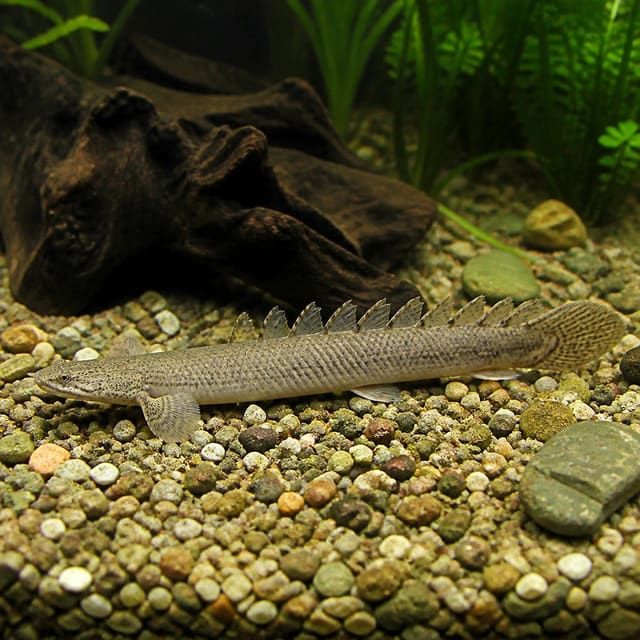
Saddled Bichir (Polypterus endlicherii) – 5–25cm Size Grades
From £17.99Some sizes on sale

Rare Malabar Snakehead for sale in the UK, ideal for experienced keepers. A striking predator fish with moderate care needs. Order online today.
Adult size is the maximum length this species reaches at full maturity (scientific sources). The livestock you receive will be younger and smaller — pick a size above for the actual shipping size. Product-photo provenance and any image-specific limitations are stated on the listing.
Channa diplogramma
Confirm your email, then we’ll send an availability message for this exact item if it returns within 180 days.
This request is only for this product—no newsletter or other promotions. A mail-provider retry may very rarely duplicate the same availability message. Unconfirmed addresses are removed after 48 hours. See our privacy policy.
Rare Malabar Snakehead for sale in the UK, ideal for experienced keepers. A striking predator fish with moderate care needs. Order online today.
Adult size is the maximum length this species reaches at full maturity (scientific sources). The livestock you receive will be younger and smaller — pick a size above for the actual shipping size. Product-photo provenance and any image-specific limitations are stated on the listing.
Maintain these water conditions for optimal health and vibrant colors
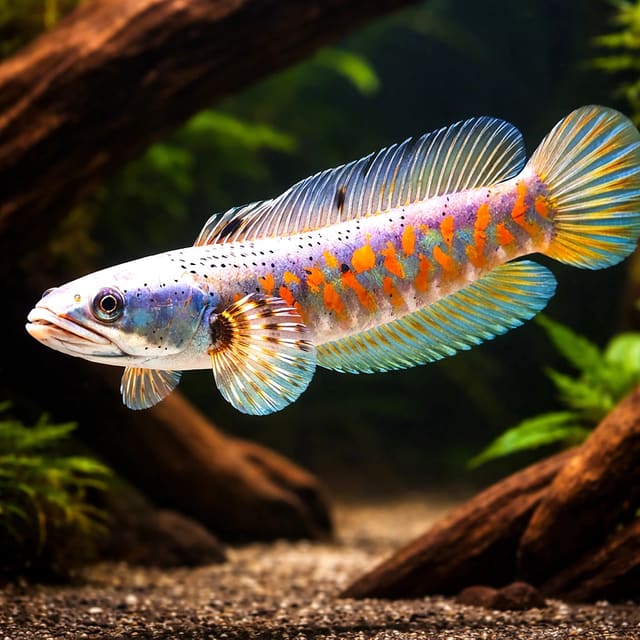
The Malabar Snakehead is not just another oddball predator. Channa diplogramma is one of the most impressive freshwater predators kept in the hobby, a true giant from the rivers of southern India that combines intelligence, raw power, and striking juvenile patterning. For keepers searching for unusual tropical fish UK listings, this species stands out because it is both rare and demanding. It is best suited to experienced aquarists who understand very large aquariums, heavy filtration, and the risks of keeping a highly territorial air-breathing hunter. See our detailed photos showing the body shape, broad head, and predatory profile that make this fish so distinctive.
If you are researching malabar snakehead care guide topics, the key points are simple but serious: this fish reaches an enormous adult malabar snakehead size of around 100 cm, needs a huge footprint, requires secure covers because it can jump, and should usually be kept alone. The malabar snakehead lifespan can reach 15 years in stable conditions, so this is a long-term commitment rather than an impulse purchase. Its combination of rarity, intelligence, and dramatic feeding response makes it appealing to advanced keepers interested in rare tropical fish UK, large tropical fish UK, and specialist freshwater snakehead UK species. For hobbyists who buy live fish online UK, buy aquarium fish online UK, or compare tropical fish UK for sale listings, the Malabar Snakehead offers a truly memorable centrepiece fish—provided you can meet its demanding care needs.
The Malabar Snakehead belongs to the snakehead family, a group of predatory freshwater fishes known for elongated bodies, large mouths, and the ability to breathe atmospheric air. Channa diplogramma was long confused with the giant snakehead, but is now recognised as a distinct Indian species. In the aquarium hobby it sits firmly in the specialist category, alongside other advanced predatory fish kept by enthusiasts who value behaviour and presence over community compatibility.
The malabar snakehead habitat is the river systems of the southern Western Ghats in India, especially in Kerala and Tamil Nadu. Records place this species in the Meenachil, Manimala, Pampa, Achenkovil, Kallada, Chittar, and Tambaraparani river systems, including connected reservoirs. These are tropical freshwater environments with seasonal changes in flow, submerged structure, and areas of slower water where ambush predators can hold position.
Understanding this origin helps explain malabar snakehead behaviour. In the wild, this fish is a powerful predator that feeds on fish, crustaceans, worms, and other meaty prey. It is built for short bursts of speed rather than constant cruising, and it often uses cover, shadows, and structure to stalk food. That is why a successful malabar snakehead aquarium setup should not be a bare glass box with bright light and no shelter. Even a giant predator feels more secure with visual barriers and dimmer zones.
Water chemistry in its range varies, but for aquarium purposes the safest malabar snakehead ideal conditions are moderate: a malabar snakehead pH level of 6.0 to 7.5, moderate mineral content, and stable temperatures. The recommended malabar snakehead water parameters reflect this natural flexibility without pushing extremes. Aim for a malabar snakehead water hardness of 5-15 dGH and avoid sudden swings. Stability matters more than chasing exact numbers.
This species is also notable from a conservation perspective. The Malabar Snakehead is regarded as vulnerable in the wild, which makes responsible fishkeeping even more important. Buyers looking for buy snakehead UK, snakehead for sale UK, or buy malabar snakehead UK options should plan carefully before purchase and make sure the fish is going into a suitable permanent home.
Mimicking the natural habitat improves confidence and feeding response. In very large aquariums, use shaded areas, oversized wood, and open swimming lanes. A fish that feels secure usually shows better colour, steadier appetite, and less frantic surface dashing.
The first question most serious buyers ask is about malabar snakehead tank size, and rightly so. This is not a species for standard home aquariums. The malabar snakehead minimum tank size is 1000 litres, but that figure should be treated as a bare minimum for a juvenile or subadult with excellent maintenance. For a full-grown specimen, a much larger custom setup with a very large footprint is the responsible choice. If you are wondering how many malabar snakehead in a tank, the answer for most keepers is one. This species is highly aggressive, and the safest long-term plan is a single fish in a species-focused aquarium.
A proper malabar snakehead tank setup prioritises floor space over height. These fish are muscular, turn with force, and produce heavy waste. A long, wide aquarium or indoor pond-style system is better than a tall tank. Because this is an obligate air-breather, leave access to the surface at all times. The lid must be tight-fitting and weighted if needed, because snakeheads are famous escape artists. One of the most common mistakes in how to care for malabar snakehead discussions is underestimating jumping risk.
The recommended malabar snakehead temperature range is 22-28°C, with a matching malabar snakehead water temperature target chosen based on age and feeding intensity. Mid-range values around 24-26°C work well for general maintenance. Keep the malabar snakehead pH level stable rather than chasing tiny adjustments. Sudden changes in pH, hardness, or temperature stress large predatory fish and can trigger refusal to feed.
The malabar snakehead filtration needs are substantial. This fish eats meaty foods and creates a heavy bioload, so oversized external filtration or sump filtration is strongly recommended. Aim for strong biological capacity and reliable mechanical removal of waste, but avoid turning the tank into a river torrent. Moderate circulation is ideal. If you are building a specialist predator system, pair the fish with robust life-support equipment and keep spare media ready. A large canister or sump system is essential in any serious aquarium snakehead UK setup.
For keepers planning a large predator aquarium, a strong external filtration approach works far better than a basic internal unit. If you also keep other monster fish, you may want to compare species such as the African Snakehead - Parachanna Obscura - for a similarly predatory setup.
Use sand or smooth fine gravel. Darker substrate helps the fish feel secure and often improves contrast in the body pattern. Avoid sharp gravel that can damage the lower jaw or belly during lunges. Keep decor stable and heavy; a startled Malabar Snakehead can move unsecured items surprisingly easily.
Can you keep a malabar snakehead in planted tank conditions? Yes, but only with realistic expectations. Delicate stems are usually a poor choice. Use hardy, strongly rooted or attached plants such as Anubias, Java fern, and large Vallisneria in protected areas. The fish itself will not eat plants, but its size and force can uproot them. Large wood, rock piles, and visual barriers are more important than dense planting. A sparse planted layout with open swimming space is the most practical malabar snakehead aquarium setup.
If you enjoy comparing oddball predators, the X 2 Peacock Snakehead - Channa and Dwarf Snakehead - Channa Gachua - show how much tank planning changes across the genus.
Moderate lighting is best. Very bright light can make this species more skittish, especially in sparsely decorated tanks. A day length of 8-10 hours is enough. Floating cover in sections can help diffuse light and make the fish more confident.
Always cycle the aquarium for 4-6 weeks before adding a Malabar Snakehead. Large predators are hardy in some ways, but they are unforgiving of ammonia and nitrite spikes caused by immature filtration.
The malabar snakehead diet is strictly carnivorous. In nature, this species takes fish, prawns, worms, and other meaty prey. In captivity, the goal is to provide a varied, balanced menu without relying on feeder fish. Many people searching malabar snakehead feeding guide advice assume live feeders are necessary, but they are usually a poor choice because they can introduce parasites and encourage nutritional imbalance. A better plan is a rotation of quality frozen and fresh meaty foods.
Good staples include prawns, mussel, strips of white fish, earthworms, and other clean meaty items sized to the fish. Juveniles may accept smaller items more often, while adults do well on larger portions less frequently. Some specimens can be trained onto prepared predator sticks, though not all will accept them readily. For keepers browsing tropical fish UK freshwater predators, this species is one that benefits from a disciplined feeding routine rather than constant snacking.
Supplemental foods can include lancefish, cockle, and occasional insect-based items. Variety helps cover micronutrients and keeps feeding response strong. If you keep multiple predatory species and compare best tropical fish UK oddballs, you will notice snakeheads often show individual preferences. Offer variety, but keep portions sensible.
Avoid mammal meat such as beef heart as a staple, and avoid fatty processed foods. Do not use random feeder fish from uncertain sources. These can carry disease and worsen malabar snakehead health. If you are deciding whether to buy tropical fish online UK, order tropical fish online UK, or browse tropical fish online UK listings for predators, remember that long-term success depends more on correct feeding than on the initial purchase.
Juveniles can be fed once daily or every other day depending on size. Larger subadults and adults usually do best every 2-3 days. Feed enough that the fish takes the food with interest but does not leave leftovers. Overfeeding quickly degrades water quality in a large predator tank. This is especially important for keepers comparing online tropical fish UK, tropical fish UK online, and tropical fish buy online UK options and planning their first monster fish system.
| Time | Food | Amount |
|---|---|---|
| Morning | Earthworms or prawn pieces for juveniles | Only what is eaten promptly |
| Evening | Fish fillet, mussel, or predator stick | 1 controlled portion |
Overfeeding causes ammonia spikes, greasy surface films, and rapid filter clogging. Remove uneaten food immediately and never assume a large predatory fish should be fed every day just because it begs.
Useful as a comparison species if you are planning a very large fish room and want another giant fish with completely different feeding behaviour.
A contrasting large freshwater species often researched by aquarists building oversized aquariums for monster fish.
The Malabar Snakehead has the classic snakehead build: an elongated muscular body, broad flattened head, large mouth, and long dorsal and anal fins that give it a sleek, powerful outline. Adult fish can reach an imposing malabar snakehead size of around 100 cm, though most aquarium-kept specimens are rehomed or moved before full size. Juveniles are often especially attractive, showing stronger contrast and patterning that changes as they mature.
Base colours usually range through olive, brown, bronze, and darker chocolate tones, often with banding or mottled pattern depending on age and mood. In subdued lighting over dark substrate, the fish often looks richer and more defined. Our photos show the intense predatory profile and the strong body depth that distinguish this species from smaller Channa.
Many keepers ask about malabar snakehead male vs female. Sexual dimorphism is not always obvious, especially in juveniles. Mature fish may show subtle differences in body depth, head shape, and fullness when conditioned, but reliable sexing is difficult without experience. That is one reason malabar snakehead breeding is uncommon in home aquaria.
There are no mainstream ornamental colour morphs in the hobby in the way you might see with guppies or cichlids. This species is valued for its natural look, size, and behaviour rather than artificial line-bred forms. If you are comparing giant oddballs with more decorative community fish like the Albino Sky Blue Guppy or Red Black Guppy, the appeal here is clearly different: presence, power, and rarity rather than bright small-scale colour.
The short answer is that malabar snakehead tank mates are extremely limited. This is not the best snakehead for community tank setups. In fact, for most keepers, the safest plan is a species-only aquarium. The phrase malabar snakehead with other fish sounds appealing in theory, but in practice this species is large, territorial, predatory, and capable of injuring or eating smaller tankmates. Even similarly sized fish can be bullied or attacked.
Realistically, the list of malabar snakehead compatible fish is close to none for the average home aquarist. In very large public-aquarium-style systems, experienced keepers may trial robust tankmates of similar size and temperament, but this is advanced territory with no guarantees. If you are shopping malabar snakehead online UK or researching where to buy malabar snakehead UK, plan for one fish per enclosure.
Some hobbyists compare this species with others such as the African Snakehead - Parachanna Obscura -, X 2 Peacock Snakehead - Channa, or Dwarf Snakehead - Channa Gachua - when deciding what level of aggression and tank size they can manage. The Malabar Snakehead is among the least suitable for mixed displays.
Avoid all small fish, all slow fish, and most surface-oriented fish. Guppies, tetras, barbs, gouramis, and similar species are not appropriate. Crustaceans and ornamental shrimp will be treated as food. Snails may survive if large, but they do not count as meaningful companions. If you are comparing malabar snakehead or betta, the contrast is huge: a betta can suit a carefully planned small tropical setup, while a Malabar Snakehead needs a giant specialist enclosure.
Even large fish can be poor choices. A Gold Giant Gourami may coexist in some oversized displays, but this is not something to recommend casually. Likewise, giant characins or pacu such as Red-Bellied Pacu - Piaractus Brachypomus are only theoretical companions in very large systems and still carry risk.
For normal private aquariums, there is no true community stocking example to recommend. The answer to how many malabar snakehead in a tank is usually one, and the answer to malabar snakehead with other fish is usually none. That may sound strict, but it is the most honest guidance for long-term welfare.
Shrimp, crayfish, and most snails are unsuitable. Any moving invertebrate that fits in the mouth is prey. Larger crustaceans may injure the fish during moulting or feeding conflicts. This species should not be chosen by anyone hoping for a mixed oddball and invertebrate display.
| Species | Compatible? | Notes |
|---|---|---|
| Dwarf Snakehead - Channa Gachua - | ❌ Avoid | Different size class; severe aggression risk |
| Gold Giant Gourami | ⚠️ Caution | Only in enormous expert systems; not recommended for most homes |
| Small community fish | ❌ Avoid | Will be hunted or stressed |
Always quarantine new arrivals for 2-4 weeks before introducing them to any large predator system. Even if the Malabar Snakehead is housed alone, quarantine protects it from parasites and bacterial infections introduced by feeder items or new stock.
Malabar snakehead breeding is difficult and rarely attempted successfully in private aquaria because of the fish’s size, aggression, and the challenge of obtaining a compatible pair. This is not a practical project for most keepers, and certainly not for anyone considering a malabar snakehead for beginners purchase. If breeding is your main goal, smaller snakehead species are far more realistic.
A breeding setup would require an enormous enclosure, excellent water quality, secure cover, and a stable pair that has grown up together or bonded without serious injury. The challenge starts with malabar snakehead male vs female identification, which is subtle. Because sexing is difficult, many keepers cannot even begin a planned pairing project.
Like other snakeheads, this species is expected to show strong territorial and pair-bond behaviour when breeding. Increased patrolling, display, and site guarding may occur. However, because malabar snakehead behaviour can also become violently aggressive, distinguishing courtship from combat is not always easy. Any attempted pair must be monitored closely.
Detailed aquarium reports are limited, but snakeheads generally require calm water, secure surroundings, and minimal disturbance during spawning. If eggs or larvae are produced, the adults may guard them depending on the species’ breeding strategy. Given the rarity of established captive breeding data for Channa diplogramma, most keepers should focus on maintenance rather than reproduction.
If fry were raised, they would need very clean water, frequent small feeds of suitable live or frozen foods, and strict size grading to reduce losses. Growth in snakeheads can be rapid when fed heavily, so filtration and space become limiting factors early.
The main problems are pairing aggression, uncertain sexing, and sheer space. This is one reason many hobbyists compare malabar snakehead vs dwarf snakehead or malabar snakehead vs channa pulchra before choosing a species. Smaller snakeheads are still specialist fish, but they are far more realistic for advanced home breeding projects.
If you ever attempt pairing, start with a massive enclosure full of visual barriers and multiple retreat zones. Never force two adults together in a bare tank. In snakeheads, failed introductions can turn serious within minutes.
Comparison matters with snakeheads because the difference between “interesting oddball” and “giant specialist predator” is enormous. Many buyers searching live snakehead UK, buy snakehead UK, or freshwater snakehead UK options first look at appearance, then discover that adult size and aggression are the real deciding factors.
| Feature | Malabar Snakehead | Dwarf Snakehead |
|---|---|---|
| Max Size | 100 cm | Much smaller |
| Care Level | Expert | Moderate to advanced |
| Temperature | 22-28°C | Varies by species/setup |
| Price | £36.77 | Varies |
| Best For | Huge species-only predator tanks | Specialist keepers with less space |
| Feature | Malabar Snakehead | Peacock Snakehead |
|---|---|---|
| Temperament | Very aggressive | Still predatory, often more manageable |
| Tank Need | 1000L+ minimum | Large but less extreme |
| Display Value | Massive presence | Pattern and colour interest |
| Who Should Choose It? | Monster fish specialists | Snakehead enthusiasts scaling up gradually |
| Alternative | Malabar Snakehead | X 2 Peacock Snakehead - Channa |
If you are comparing malabar snakehead vs gourami, the difference is even more dramatic. A gourami, even a large one, is generally chosen for display and personality in a mixed tropical setup. The Malabar Snakehead is chosen for a dedicated predator system. In any best snakehead species comparison, this species ranks high for impact but also high for difficulty. Choose it only if you specifically want a giant, solitary predator and already have the space, filtration, and experience to support it.
Good malabar snakehead health starts with water quality, secure housing, and sensible feeding. This species is robust when kept correctly, but giant predators often hide problems until they are advanced. A healthy fish is alert, responsive, well-muscled, and interested in food without appearing bloated. It should surface calmly for air, not gasp frantically or crash into the lid.
Look for clear eyes, intact fins, full body condition, and smooth breathing. Minor colour shifts can be normal with mood and lighting, but persistent darkening, clamped fins, or refusal to feed may indicate stress. Because this species is strong and reactive, even small injuries from decor or failed tankmate experiments can become serious if water quality slips.
Malabar snakehead diseases most often relate to poor environment rather than species-specific weakness. Common issues include bacterial infections after abrasions, parasitic outbreaks introduced by feeder fish, and digestive trouble from overfeeding or unsuitable fatty foods. External parasites may show as flashing, excess mucus, or rubbing on decor. Bacterial problems can appear as redness, ulcers, or fin damage.
Treatment begins with testing water and correcting the cause. Large water changes, improved filtration maintenance, and temporary fasting are often part of the solution. Medications should be used carefully and according to diagnosis. If the fish is not eating, avoid repeated medicated food attempts that pollute the tank. A separate treatment system is ideal when possible.
Prevention is simple in principle: stable malabar snakehead water parameters, appropriate malabar snakehead diet, no risky feeder fish, and no unsuitable tankmates. Keep the lid secure to prevent jump injuries. Vacuum uneaten food promptly. In large predator systems, routine maintenance matters more than fancy additives.
Any new fish, feeder substitute, or decor from another system should be treated cautiously. Quarantine new livestock for at least 2-4 weeks. This is especially important for keepers exploring tropical fish delivery UK, uk tropical fish delivery, and tropical fish delivered UK services, where fish may arrive healthy but still need observation before entering an established system.
Never rely on feeder fish from uncertain sources. They are one of the fastest ways to introduce parasites and bacterial infections into a predator aquarium.
Malabar snakehead behaviour is one of the main reasons experienced keepers find this species so fascinating. It is intelligent, observant, and often learns the routine of the room. Many specimens recognise feeding tools or the approach of the keeper. Unlike small schooling fish, this is a solitary predator with presence. It may spend time hovering motionless, then move with sudden power when interested in food or disturbed.
This species is territorial and best kept alone. It is not a fish that enjoys company, and it does not need conspecifics for confidence. The answer to how many malabar snakehead in a tank is almost always one. In a secure, well-structured setup, the fish will patrol open areas, rest under cover, and surface regularly to breathe atmospheric air.
To encourage natural behaviour, provide open lanes for movement, shaded retreats, and a calm environment without constant tapping or bright sudden light. A settled specimen often becomes bolder over time. For many keepers interested in tropical fish for sale online UK and unusual predators, this combination of intelligence and raw predatory style is exactly what makes the species memorable.
When you order a fish as specialised as a Malabar Snakehead, the quality of preparation matters as much as the fish itself. This is not a species for casual packing or vague care advice. Each specimen should be assessed for body condition, feeding response, and transport readiness before dispatch. For keepers searching best place to buy tropical fish online UK, tropical fish for sale UK, tropical fish sale UK, or tropical fish for sale in UK, product-specific handling is what separates a routine order from a successful long-term result.
We focus on clear, realistic guidance for giant predators. That means honest advice on malabar snakehead price UK, tank requirements, and compatibility rather than pretending this is a community fish. Fish are prepared for shipment with insulated packaging, secure bagging, and seasonal heat packs when needed. Tracked tropical fish delivery UK methods help reduce transit stress, and careful packing is especially important for strong, active species that can damage thin bags if handled poorly.
Customers who buy tropical fish online UK, tropical fish UK buy online, or search tropical fish for sale in the UK for specialist predators often want one thing above all: confidence that the fish has been handled properly and that the care information is realistic. We include practical acclimation guidance, and we strongly encourage buyers to have the full setup running before arranging order malabar snakehead UK or malabar snakehead delivery UK. If you have been searching malabar snakehead for sale UK, live malabar snakehead UK, malabar snakehead shop UK, or even cheap malabar snakehead UK, remember that the real cost is long-term housing. Order your Malabar Snakehead today only when your giant species tank is fully ready.
If you are building a specialist predator collection, compare the giant Malabar Snakehead with the more manageable Dwarf Snakehead - Channa Gachua - or the eye-catching X 2 Peacock Snakehead - Channa. For aquarists interested in other heavyweight oddballs, the African Snakehead - Parachanna Obscura - offers another predatory option, while the Gold Giant Gourami and Piaractus Brachypomus - Red-Bellied Pacu - show different approaches to keeping very large freshwater fish. If your taste runs more toward colourful community species than giant predators, the Albino Sky Blue Guppy and Red Black Guppy are far better suited to smaller tropical aquariums.
No reviews for this item yet. Bought one? Honest reviews only, good or bad.
What customers say about ordering from us
I have a small group of long finned mountain minnows. So was delighted to be able to order ten of this variety to increase the genetics in my tank . The ones I recieved are healthy but it’s to early to give a verdict on wether they are of a long finned type since they are small currently.
Gordon Walker · 23 Sept 2026
100% success travel and "installation". Pleased with quality of purchase. The Siamese fighter a bit "shy" so have not yet seen him at his best yet but looking good. Happy customer. GG
George E Garratt · 21 Sept 2026
Reviews of our shop, collected by Judge.me, an independent third-party review collector. Newest first.