−10%
Advanced
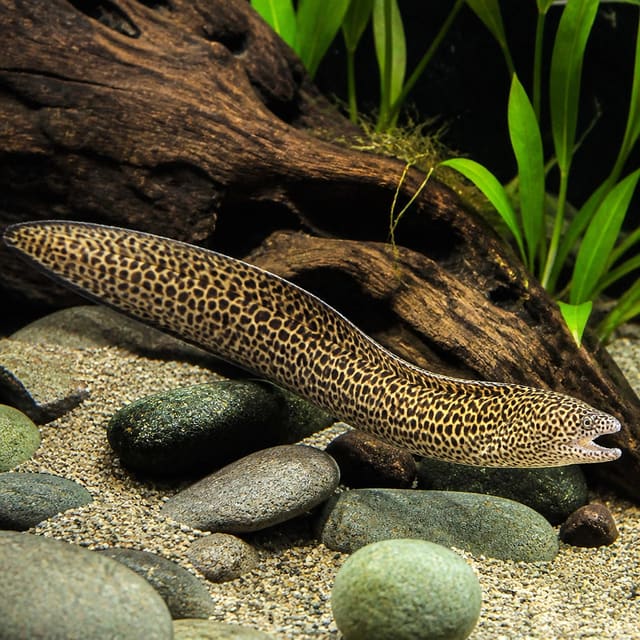
Freshwater Moray (Gymnothorax polyuranodon)
£107.99£119.99

Eastern Bottlenose Mormyrid (Mormyrus longirostris) is a very large, mainly nocturnal African elephantfish for advanced keepers able to provide a mature, spacious aquarium, sheltered resting areas and reliable feeding access.
Mormyrus longirostris
Eastern Bottlenose Mormyrid (Mormyrus longirostris) is a very large, mainly nocturnal African elephantfish for advanced keepers able to provide a mature, spacious aquarium, sheltered resting areas and reliable feeding access.
The Eastern Bottlenose Mormyrid (Mormyrus longirostris) is a large African member of the elephantfish family, Mormyridae. It is a freshwater, bottom-associated fish with a long snout, a mainly nocturnal routine and the weak electric sense characteristic of its family. That combination makes it an absorbing specialist fish, but also one that deserves sober planning before it enters the aquarium. A small juvenile can look manageable; the adult record tells a very different story.
One purchase supplies one live animal of the size selected. This parent listing has two genuine size choices, covering 4–8 cm across the selector. The size you select is the size supplied, not the adult size. FishBase records a maximum of 75 cm standard length for male/unsexed fish. Standard length excludes the tail, so this is not a bare total-length promise for every individual; it is a clear warning that the species can become exceptionally large.
Sex is guaranteed only when the selected option explicitly states male or female. This Eastern Bottlenose Mormyrid listing has no sex-guaranteed option. Do not try to infer sex from colour, body depth, size or a gallery image. The offer is for one unsexed animal unless a future selector option expressly says otherwise.
This is best treated as an advanced, long-term aquarium project. The central questions are not whether the young fish fits today, but whether there is a credible adult housing plan, a mature biological filter, enough uninterrupted space, a gentle bottom, secure shaded shelter and a feeding routine that reaches a mainly nocturnal bottom forager. OATA’s guidance for very large fish notes that ordinary off-the-shelf aquaria may not be enough and that systems are often over 500 litres. That is broad large-fish guidance rather than a species-specific minimum, so the final aquarium should be planned around the fish’s eventual dimensions and movement rather than a single generic litre figure.
Its natural history gives useful design clues. FishBase describes quiet deep water, soft muddy bottoms, caves and weed cover, and records activity mainly at night. In an aquarium, the practical translation is a calm layout with a forgiving bottom surface, broad clear routes, shaded retreats and lighting that does not leave the fish permanently exposed. These choices also help food reach the animal without forcing it to compete in a bright open space.
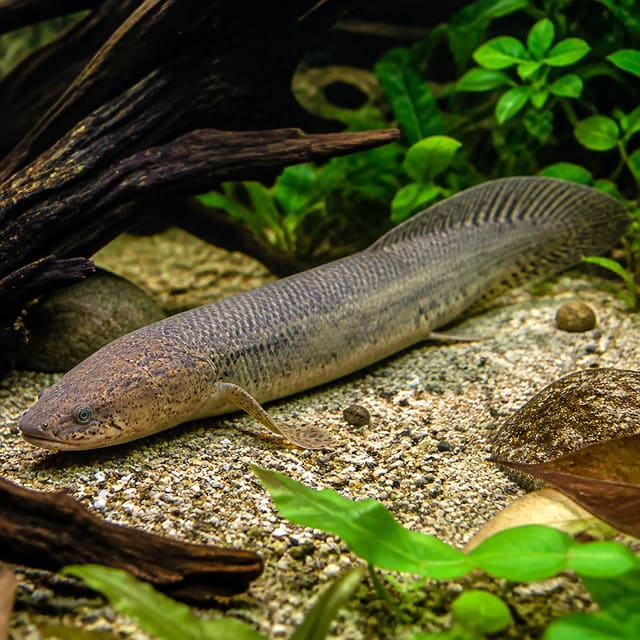
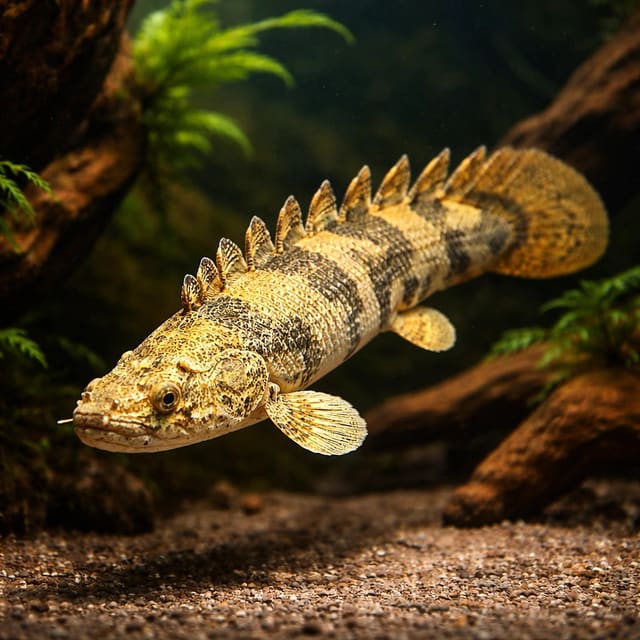
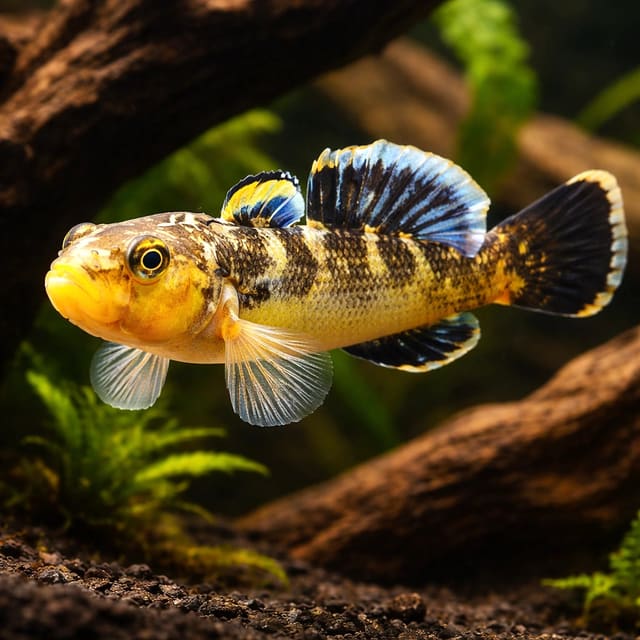
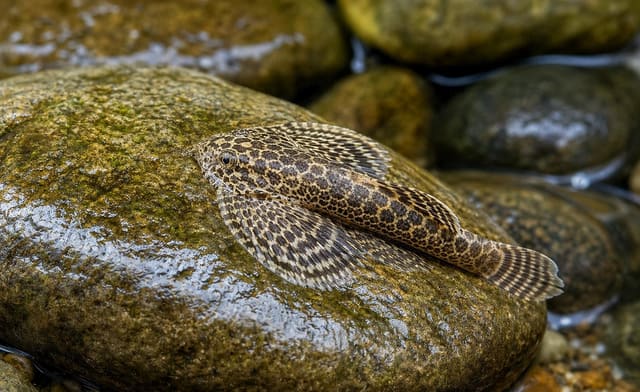
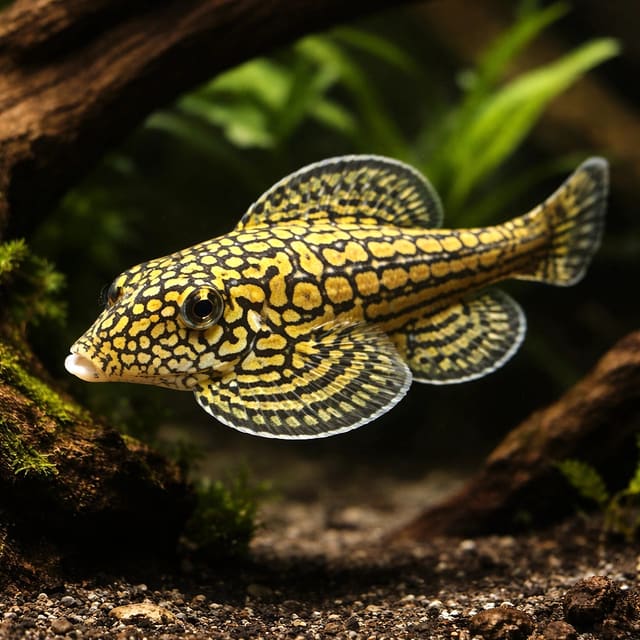
Gallery images have been digitally enhanced to improve image quality. Natural colour, pattern, size and maturity can vary between live animals. They are useful for understanding the long-bodied silhouette and subdued aquarium presentation, not for promising the exact colour, sex or individual markings of the fish received.
Before choosing this fish, prepare the system and its maintenance routine first. The aquarium setup guide explains filter maturation and the basic sequence, while the current loaches and oddball fish collection gives the right browsing context for specialist freshwater animals. Neither link turns this species into a general community choice: the adult commitment still comes first.
| Suitable when | A mature, exceptionally spacious system, large-scale filtration, soft unobstructed bottom and shaded retreats are already part of the plan. |
|---|---|
| Poor fit when | The aquarium depends on the fish remaining near its 4–8 cm dispatch size, or fast companions will take every sinking meal before dusk. |
| Evidence boundary | The adult record is 75 cm SL for male/unsexed fish; aquarium temperature, pH, hardness and a captive group number must be confirmed for the actual holding history rather than copied from a generic tropical profile. |
The most useful pre-purchase conversation is therefore about the final footprint, filtration route and feeding observation, not novelty. A keeper with a workable adult plan can appreciate the animal’s unusual natural history without turning uncertainty into a confident care number.
Mormyrus longirostris is the Eastern Bottlenose Mormyrid, an elephantfish in the family Mormyridae. FishBase places it across eastern and southern African drainage systems, including the lower and middle Zambezi, Buzi, Pungwe, lower Sabi and Ludi, the Luapula–Moero–Bangwelo system, the Ruvuma and Rufiji, and lakes including Malawi and Tanganyika. That is a broad natural range, so a single decorative ‘biotope’ recipe would oversimplify the habitats in which it occurs.
The more useful habitat clues are structural. FishBase reports caves, weed cover, muddy areas and quiet deep water with a soft bottom. It also describes the fish as mainly active at night. Use those points to create choice: sheltered areas where the fish can withdraw, open routes that a large body can use without scraping, and a bottom surface that does not punish repeated probing. Keep hard or sharp edges away from the routes the snout and flanks will use.
FishBase’s maximum record is 75 cm SL for male/unsexed fish. ‘SL’ means standard length, measured without the tail fin. It is therefore both a sizeable record and a measurement with a precise limit; it should not be rewritten as an unqualified whole-animal maximum. The correct keeper decision is to plan for a genuinely large adult from day one, even though the selectable supply sizes are much smaller.
OATA’s large-fish guidance says these animals commonly require exceptionally large aquaria, often more than 500 litres, and that adult accommodation may extend beyond a normal shop-bought tank. That statement covers very large fish as a group. It does not establish a magic minimum for this species. Footprint, turning room, unobstructed length, waste load, shelter and the keeper’s ability to maintain stable water all matter. A tall but short aquarium can have impressive litres while still giving a long fish poor usable space.
Ask four practical questions before purchase: can the adult turn and travel without repeatedly touching décor; can filters handle the expected waste without creating punishing flow; can every shelter remain accessible as the fish grows; and is there a realistic route to a larger custom aquarium or heated indoor pond if required? If any answer depends on hoping the fish stays small, the plan is not ready.
A soft, smooth bottom is the sensible interpretation of the recorded muddy-bottom habitat and long-snouted feeding behaviour. Sand should be kept clean enough that it does not become a trap for decaying food. If rocks or timber are used, make them stable and leave generous clearance. Large fish can shift loose furnishings, and a route that suits a juvenile may become a pinch point later.
Use cover to break up the visual field without filling every centimetre. Broad pieces of smooth wood, roomy caves or shaded zones can give the fish somewhere to rest through the brighter part of the day. Plants may help create shade, but they must not reduce turning room or become the only structure holding heavy décor in place. Arrange the layout for the adult outline, not the dispatch outline.
Lighting can be gradual and subdued. Sudden full brightness is a poor match for a fish recorded as mainly nocturnal. Give the animal a predictable transition into its active period, and observe from a distance at first. A fish that stays hidden when the room is busy may still emerge and feed once the light level falls.
Match the aquarium to the temperature, pH and hardness in which the fish is currently held, then make any change gradually. This profile leaves out a fixed numeric range and prioritises a mature, stable system.
OATA’s guidance for very large fish gives firm group-level waste targets: ammonia at 0 mg/l, nitrite at 0 mg/l and nitrate no more than 20 mg/l above the normal tap-water level. The RSPCA explains why a working biological filter matters: fish waste produces toxic ammonia, bacteria convert it to nitrite, and further bacterial activity converts nitrite to the less harmful nitrate. Those are general welfare principles, not substitutes for a missing species-specific mineral profile.
Test rather than guess. The water chemistry guide explains what common readings mean, and the water parameter matcher helps compare measured water with stated guidance. Use the tools to understand stability and transfer risk while matching the animal’s known holding conditions.
A filter is essential. The system must provide enough biological capacity for a fish that can become very large and enough mechanical capture to remove solid waste before it breaks down. In practice, that can mean more than one large filter or pond-scale filtration as the animal grows. Build in redundancy where possible so routine maintenance does not remove all biological capacity at once.
High filtration capacity does not require a jet blasting the fish. FishBase describes quiet deeper water and also notes that the species is not a powerful swimmer in the context of wild migration. Spread returns, use broad outlets and watch the animal’s posture. The aim is efficient exchange and oxygenation with calm usable zones, not a high-velocity obstacle course.
Check intakes and guards as the fish grows. A long snout, fins and a nocturnal feeding path should not meet an exposed intake or narrow equipment gap. Secure heaters and cables so a large-bodied fish cannot trap itself behind them. These are ordinary layout precautions for a big active animal, not a claim that one particular accident is inevitable.
FishBase records a broad wild diet: weeds and insects, with small fishes and fish eggs, bloodworms, small crustaceans and molluscs also taken. That is evidence of opportunistic feeding, not a licence to reduce the aquarium diet to feeder fish. Offer suitable sinking foods in a varied rotation and make sure they reach the fish after the light level falls.
Distribution matters as much as menu. A shy bottom-associated fish can lose condition in a busy aquarium while faster animals take food above it. Place food in predictable sheltered areas, observe that the individual actually finds and swallows it, and remove uneaten remains before they affect water quality. Do not judge success merely because food vanished from view.
OATA’s large-fish group guidance advises feeding only what can be eaten within a few minutes once a day and warns that excess food becomes toxic waste as it decomposes. Treat that as a broad starting routine and adjust portion size to the animal’s condition and actual response. It does not prove that every individual will accept every pellet or frozen item immediately.
A newly arrived fish may need quiet and time before feeding confidently. Start with the foods and schedule it already recognises where that information is available. If it repeatedly fails to feed, first check disturbance, competition, hiding access and water quality instead of endlessly adding food. Repeated uneaten meals create a second problem in the filter.
Do not add this species to a newly filled tank. OATA advises checking that ammonia and nitrite are zero before adding fish and increasing a system’s livestock gradually so the biological filter can respond to the new waste load. This matters especially when a juvenile will eventually become a much larger source of waste.
Match the transfer carefully to the water the fish arrives in, keep the room calm and prevent sudden light exposure. The store policy advises slow acclimation. Once released, allow the fish to find shelter rather than rearranging the aquarium around it. A clear, uninterrupted observation of breathing, balance and swimming is more useful than repeatedly flushing it from cover.
For delivery, Tropical Fish Co hand-bags livestock in oxygen, uses an insulated poly box and adds a heat pack when conditions call for it. A licensed live-animal courier carries the parcel on the confirmed Thursday or Friday date, with tracking sent by email. The full delivery and Live Arrival Guarantee policy gives the current terms and receiving steps.
OATA’s large-fish sheet says: at least once every week, a partial water change of 25% is strongly recommended. Test at least weekly for ammonia and nitrite. Treat replacement tap water with conditioner before it enters the aquarium. Siphon settled waste from accessible areas, but do not turn every maintenance session into a complete disruption of the fish’s shelter.
Check filters for blockages. If the filter needs cleaning, do not run it under the tap because chlorine or chloramine may kill the beneficial bacterial population. Rinse it lightly in the aquarium water removed during the partial water change. Stagger deep cleaning across multiple filters or media sections so biological function remains continuous.
Build a baseline for the individual. Note its normal resting place, active period, breathing, colour, body condition and feeding response. OATA’s general warning signs include hanging at the surface, sitting abnormally, erratic swimming, unusual darkening or paling, a change in aggression or hiding, altered gill movement, white spots, fluffy growths, damaged fins or scales, body-condition loss and reduced feeding.
If behaviour changes, test the water first and review recent events: filter work, missed maintenance, temperature instability, a new companion, a moved shelter or a change in feeding access. Contact the retailer or an aquatic veterinary professional when concern persists. When treatment may be needed, obtain advice based on the fish and diagnosis rather than guessing from a symptom.
Record the aquarium’s ammonia, nitrite and nitrate, the fish’s feeding time, the food taken and its normal resting area. Repeat the same observations after water changes, filter work or a stocking change. A written pattern helps separate a one-off shy evening from a steady loss of appetite or a gradual water-quality problem.
Review usable length, turning clearance, shelter entrances, intake guards and filter capacity at regular intervals. Growth can turn safe gaps into traps and can increase waste before the aquarium looks crowded. Make the next housing step while the current system is still comfortable, with time to mature added filtration before a move.
At least once every week, a partial water change of 25% is strongly recommended under OATA’s very-large-fish guidance. Check ammonia and nitrite at least weekly, condition replacement tap water and siphon decaying food from quiet corners. Check filters for blockages. If a filter needs cleaning, do not run it under the tap because chlorine or chloramine can kill beneficial bacteria; rinse it lightly in aquarium water removed during the partial change.
Wait until the fish’s active period, place sinking food where it can locate it and stay long enough to see a swallow. Note whether another animal takes the food, whether the mormyrid abandons the feeding area, and whether remains are left behind. This simple check joins nutrition, compatibility and water quality in one routine.
These habits do not replace a species-specific aquarium profile. They are robust welfare actions supported by large-fish and general aquarium guidance while the precise water prescription remains a matter for the animal’s known holding conditions and specialist advice.
Compatibility begins with the adult fish, not the juvenile in the bag. FishBase records small fishes and fish eggs among the foods taken, while OATA’s large-fish guidance says much smaller fish should be avoided because size and mouth capacity can make them vulnerable. Do not combine this animal with nano fish, fry or any livestock that could become an easy meal.
Treat every aquarium companion for Mormyrus longirostris as conditional. A list of familiar large fish would look helpful while hiding the real work: comparing adult size, feeding speed, activity period, use of the bottom, flow needs and each animal’s response to confined space. Every proposed companion needs its own evidence and an aquarium large enough for both adults.
A mainly nocturnal bottom forager can be disadvantaged by fast daytime feeders even when there is no overt aggression. Watch who actually eats. If another fish clears the bottom before the mormyrid emerges, the combination is not working simply because nobody is chasing. Separate feeding zones and evening observation are practical tests.
Avoid boisterous animals that constantly invade shelter or force the fish into exposed areas. Also avoid cramped layouts in which two large animals must pass through the same narrow route. Space cannot guarantee harmony, but inadequate space removes the animal’s ability to withdraw and makes every feeding or maintenance event more intense.
FishBase says Eastern Bottlenose Mormyrids form shoals in nature, but keeping several adults requires a case-by-case captive plan for space, filtration, shelter and feeding. A natural shoaling record should not be converted into a casual instruction to buy a pair or trio. Multiple animals would multiply the adult-space, shelter, filtration and feeding-access requirements and need a specialist plan.
The listing therefore does not label this fish solitary or prescribe a group. If a keeper is considering more than one, the decision should be based on a system designed for several exceptionally large adults and on direct specialist advice about the actual animals. The absence of a numeric group rule is an important planning boundary, not a reason to improvise.
These rules are more honest than a fixed tank-mate list. The supplied alternative products are not presented as companions: sharing an ‘oddball’ retail category does not prove that two species belong in the same aquarium.
FishBase records 75 cm standard length for male/unsexed fish. Standard length excludes the tail, and the figure is a maximum record rather than a promise for every animal, but it makes clear that this is an exceptionally large adult fish.
Use a custom adult plan rather than relying on one generic litre minimum. OATA says very large fish often need aquaria over 500 litres and may outgrow ordinary off-the-shelf tanks; for this species, plan the final footprint, turning room, filtration and shelters around the 75 cm SL adult record.
FishBase reports shoaling in nature, but several captive adults require a specialist plan rather than a fixed group rule. Do not turn that wild observation into an automatic pair or trio; keeping several would require space, filtration and feeding access for several very large adults.
No. This is an advanced store suitability assessment because of the exceptional adult size, the need for mature large-scale filtration, specialist space planning and the importance of making sure a mainly nocturnal bottom forager receives food.
FishBase records weeds, insects, small fishes and fish eggs, bloodworms, small crustaceans and molluscs in the wild diet. In the aquarium, use an appropriate varied sinking diet and verify after lights dim that this individual is eating rather than losing food to faster fish.
Match the fish’s current holding temperature, pH and hardness gradually, then keep the mature aquarium stable. Match the holding water carefully, avoid sudden changes and use a mature filtered aquarium; OATA’s large-fish guidance requires 0 mg/l ammonia, 0 mg/l nitrite and controlled nitrate.
Treat aquarium temperament and fin safety as conditional for this species. Plan conservatively around its adult size, nocturnal feeding and need for retreat space, then watch the actual animals rather than relying on a simple peaceful/aggressive label.
No universal tank mates are supported. Avoid much smaller fish, and assess any candidate by adult size, feeding speed, activity period, space and water needs. The aquarium must let this mormyrid feed after lights dim without being crowded from shelter.
Tropical Fish Co hand-bags livestock in oxygen, uses an insulated poly box and a weather-dependent heat pack, and sends it by a licensed live-animal courier for the confirmed Thursday or Friday date. For a Live Arrival Guarantee claim, record one continuous video from the sealed parcel to the fish still in its sealed bag and contact the team the same day.
FishBase: Mormyrus longirostris supports the species identity, family, distribution, habitat, activity, shoaling record, diet and the 75 cm SL male/unsexed maximum. Its wild records are not presented as a complete aquarium prescription.
Wikipedia’s species summary was used only as secondary identity context. It is used only for secondary identity context.
OATA’s very-large-fish care sheet supports broad large-fish planning, filtration, water-quality, feeding, maintenance, warning-sign and small-companion guidance. Its figures apply to the group, not as a species-specific optimum.
RSPCA aquarium welfare guidance supports the general explanation of biological filtration and toxic nitrogen waste. Offer, size choices and sex scope are handled separately from the public care references.
No reviews for this item yet. Bought one? Honest reviews only, good or bad.
What customers say about ordering from us
I have a small group of long finned mountain minnows. So was delighted to be able to order ten of this variety to increase the genetics in my tank . The ones I recieved are healthy but it’s to early to give a verdict on wether they are of a long finned type since they are small currently.
Gordon Walker · 23 Sept 2026
100% success travel and "installation". Pleased with quality of purchase. The Siamese fighter a bit "shy" so have not yet seen him at his best yet but looking good. Happy customer. GG
George E Garratt · 21 Sept 2026
Reviews of our shop, collected by Judge.me, an independent third-party review collector. Newest first.