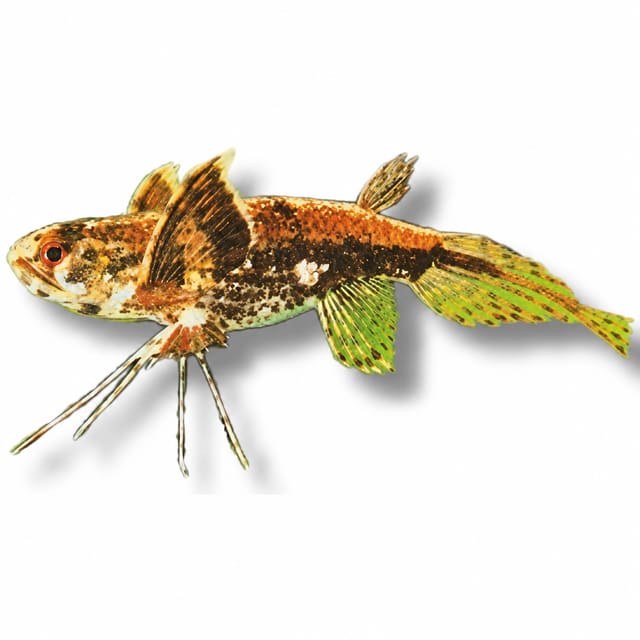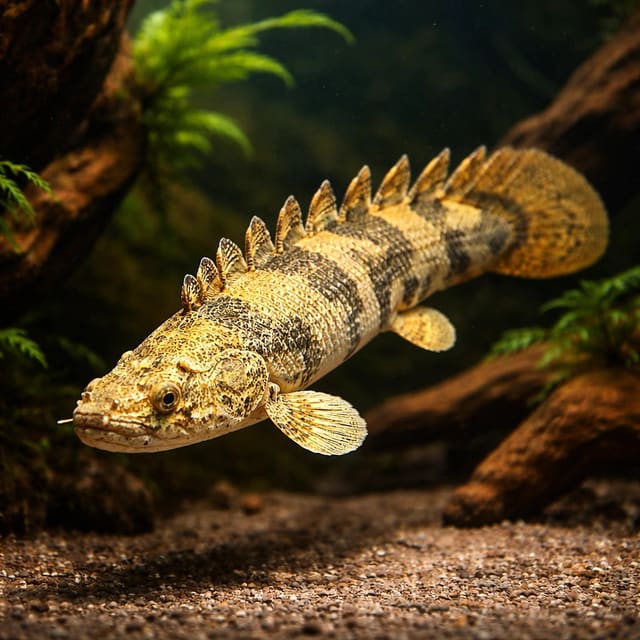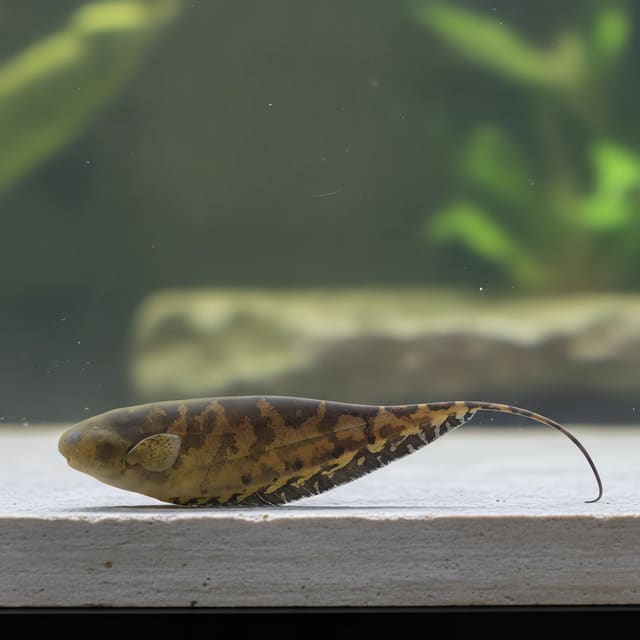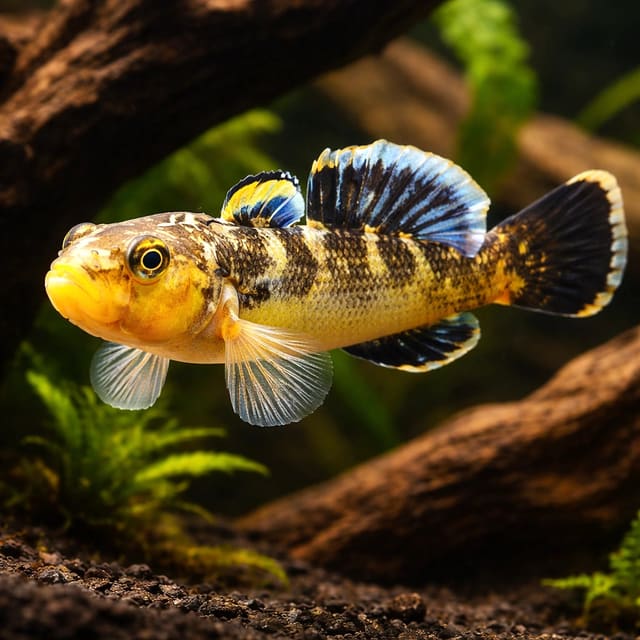
Desert Goby (Chlamydogobius eremius)
20–28°C · pH 7–8.5
£11.99

A beautifully patterned dwarf predator with fascinating behavior, best suited to a calm, planted aquarium and a live-food diet. Moderate care, semi-aggressive. 23-27C, pH 6.0-8.0.
Adult size is the maximum length this species reaches at full maturity (scientific sources). The livestock you receive will be younger and smaller. Product-photo provenance and any image-specific limitations are stated on the listing.
Badis badis
Confirm your email, then we’ll send an availability message for this exact item if it returns within 180 days.
This request is only for this product—no newsletter or other promotions. A mail-provider retry may very rarely duplicate the same availability message. Unconfirmed addresses are removed after 48 hours. See our privacy policy.
A beautifully patterned dwarf predator with fascinating behavior, best suited to a calm, planted aquarium and a live-food diet. Moderate care, semi-aggressive. 23-27C, pH 6.0-8.0.
Adult size is the maximum length this species reaches at full maturity (scientific sources). The livestock you receive will be younger and smaller. Product-photo provenance and any image-specific limitations are stated on the listing.
Maintain these water conditions for optimal health and vibrant colors
The small aquarium fish enthusiast seeking a beautifully patterned dwarf predator will find Badis badis a fascinating species with captivating behaviour, best suited to calm, planted aquariums and a live-food diet. Native to South Asia, particularly India, Bangladesh, Nepal, and Pakistan, this diminutive fish displays intricate colouration, territorial behaviour, and specialized feeding requirements that make it a rewarding but challenging species for dedicated aquarists. Available for sale UK hobbyists should note that Badis badis requires moderate-level care with careful tankmate selection and target feeding to thrive. At 1-2cm, these tiny juveniles will grow to a maximum of 6.5cm, remaining perfectly sized for nano and small community aquariums.
Badis badis displays variable colouration depending on mood, health, and breeding condition, ranging from muted brown and grey to vibrant blue, red, and orange hues. Males are more colourful than females, especially during spawning periods when they develop intense iridescent blue and red tones with intricate barring and patterning. The body is laterally compressed with a large head and prominent eyes. The fins are well-developed, with the dorsal and anal fins displaying subtle striping. At 1-2cm, juveniles are modest in colouration, but as they mature and reach 6.5cm, well-conditioned males become stunning display fish with chameleon-like colour changes.
Native to slow-moving rivers, ponds, canals, and floodplains throughout South Asia, Badis badis inhabits heavily vegetated waters with abundant submerged plants, leaf litter, and hiding places. These environments feature warm, slightly acidic to neutral water with low to moderate flow and complex structure. In the wild, Badis badis are ambush predators that lurk among vegetation and strike at passing invertebrates and small prey. They are territorial and establish small territories around favoured hiding spots. Recreating these conditions with dense planting, hiding places, and subdued flow supports natural behaviour and reduces stress.
Provide a minimum of 60 litres with a heavily planted layout including Java moss, Java fern, Anubias, Cryptocoryne, and floating plants to create hiding places and visual barriers. Use a fine sand or smooth gravel substrate and furnish the aquarium with driftwood, smooth rocks, and caves. Maintain gentle filtration with subdued flow, as this species prefers calm waters. Subdued lighting or shaded areas replicate natural habitats and encourage natural behaviour. Perform regular partial water changes to maintain excellent water quality. Provide multiple territories if keeping more than one male, as territorial disputes can occur.
Badis badis is a carnivore that primarily feeds on live and frozen meaty foods. Offer bloodworms, brine shrimp, daphnia, mosquito larvae, and small insect larvae. This species may be reluctant to accept prepared foods initially, though some individuals can be trained to take high-quality carnivore pellets or flakes over time. Live foods are strongly preferred and essential for conditioning and breeding. Feed small portions once or twice daily, using a feeding pipette or target feeding to ensure the fish receives adequate nutrition. Remove uneaten food promptly to maintain water quality. A varied, protein-rich diet promotes vibrant colouration and healthy breeding condition.
Badis badis is semi-aggressive, territorial, and an ambush predator. Males establish small territories around caves or favoured hiding spots and may display aggression towards other males or similarly sized fish. Females and juveniles are less territorial. This species is shy and easily outcompeted at feeding time by faster, more aggressive tankmates. They are most active during dawn, dusk, and night, often remaining motionless among plants during the day. During spawning periods, males display intensified colouration and court females with elaborate displays. Despite territorial tendencies, they are generally peaceful towards appropriately sized, non-competitive tankmates.
Compatible with small peaceful fish that will not outcompete it for food, including dwarf rasboras, microrasboras, small peaceful tetras, and non-aggressive livebearers. Snails are generally safe, though peaceful shrimp may be at risk in heavily planted tanks if they are small enough to be considered prey. Avoid large or boisterous fish, fast-feeding community fish, aggressive cichlids, fin-nippers, and very small fry or shrimp. Choose tankmates that occupy different areas of the aquarium and are not overly competitive. A quiet, heavily planted nano tank with similarly sized, calm companions is ideal.
Badis badis spawns in caves or sheltered crevices, with males guarding eggs and fry. Provide fine-leaved plants, caves, and very calm tankmates to encourage spawning. Condition breeding pairs with high-quality live foods to bring them into spawning condition. Males display intensified colouration and court females with elaborate displays. After spawning, the male guards the eggs until they hatch, fanning them to provide oxygenation. Remove the female after spawning if aggression occurs. Fry are tiny and require microscopic live foods such as infusoria before graduating to newly hatched brine shrimp. Breeding success requires excellent water quality and dedicated attention.
Best kept in a quiet, well-planted aquarium with hiding places and subdued flow. Badis badis are shy and easily outcompeted at feeding time, so target feeding is often necessary to ensure they receive adequate nutrition. Males can be territorial towards conspecifics, so provide multiple territories and visual barriers if keeping more than one male. This species is sensitive to poor water quality and stress, requiring stable parameters and a calm environment. Avoid housing with aggressive or highly competitive tankmates. Moderate care level indicates experience with shy, specialized feeders is beneficial for long-term success.
Tropical Fish Co is a leading UK supplier of healthy, vibrant dwarf fish including Badis badis. Each fish is carefully selected for excellent condition, active behaviour, and robust health. Our livestock is quarantined and health-checked before dispatch, ensuring you receive only the finest specimens. We provide expert care advice, detailed species information, and ongoing support to help you succeed with specialist fish. With fast, secure delivery across the UK and a commitment to sustainable, responsible fishkeeping practices, Tropical Fish Co is your trusted partner for premium tropical fish and aquatic livestock.
No reviews for this item yet. Bought one? Honest reviews only, good or bad.
What customers say about ordering from us
I have a small group of long finned mountain minnows. So was delighted to be able to order ten of this variety to increase the genetics in my tank . The ones I recieved are healthy but it’s to early to give a verdict on wether they are of a long finned type since they are small currently.
Gordon Walker · 23 Sept 2026
100% success travel and "installation". Pleased with quality of purchase. The Siamese fighter a bit "shy" so have not yet seen him at his best yet but looking good. Happy customer. GG
George E Garratt · 21 Sept 2026
Reviews of our shop, collected by Judge.me, an independent third-party review collector. Newest first.