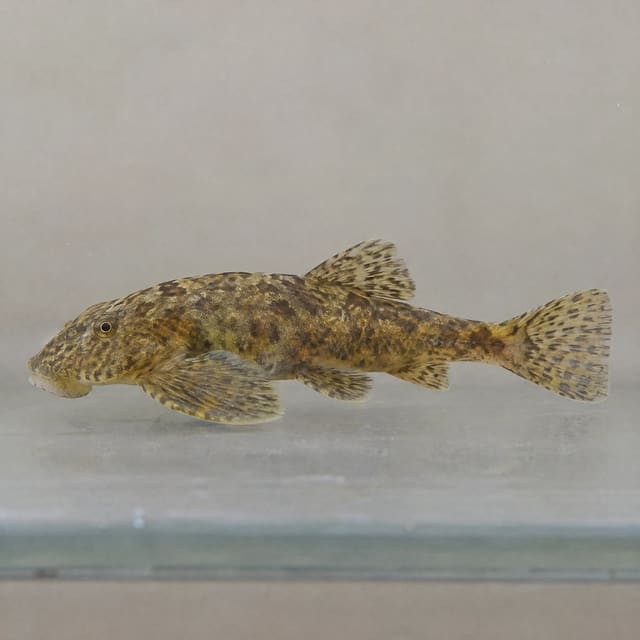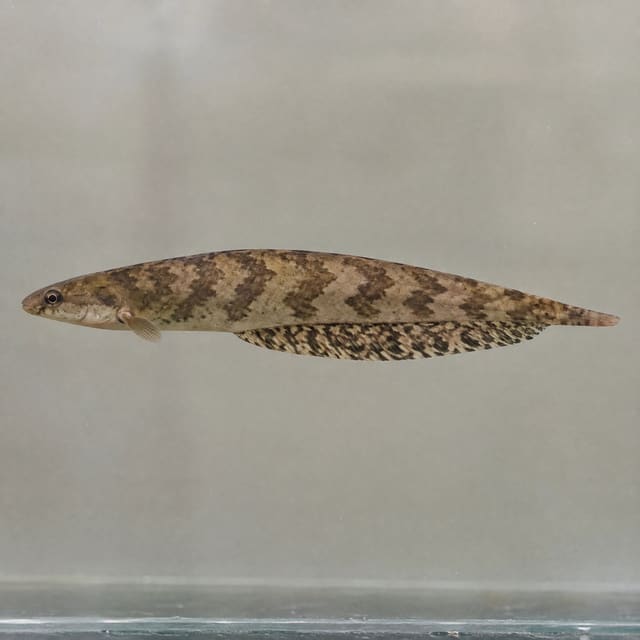
Duida Knifefish (Steatogenys duidae)
£85.99
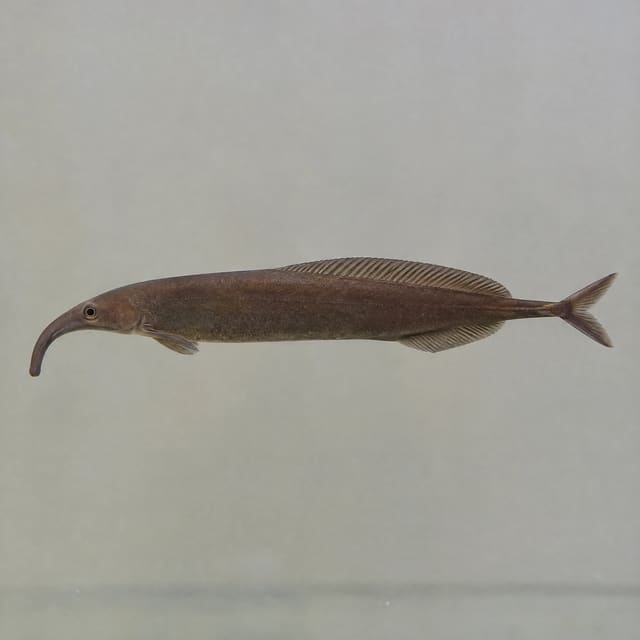
The Elephant Shortnose Mormyrid is an African elephantfish with a short, blunt snout: a peaceful, mostly nocturnal, weakly electric fish that finds its food with thousands of electroreceptors. Plan for an adult of 25 to 30 cm in a dim, sandy aquarium at least 120 cm long, with daily live or frozen food. One live fish per purchase.
Adult size is the maximum length this species reaches at full maturity (scientific sources). The livestock you receive will be younger and smaller. Product-photo provenance and any image-specific limitations are stated on the listing.
Mormyridae sp. (short-snouted; trade usage points to Marcusenius)
The Elephant Shortnose Mormyrid is an African elephantfish with a short, blunt snout: a peaceful, mostly nocturnal, weakly electric fish that finds its food with thousands of electroreceptors. Plan for an adult of 25 to 30 cm in a dim, sandy aquarium at least 120 cm long, with daily live or frozen food. One live fish per purchase.
Adult size is the maximum length this species reaches at full maturity (scientific sources). The livestock you receive will be younger and smaller. Product-photo provenance and any image-specific limitations are stated on the listing.
Read the full care guidance when planning conditions for your aquarium.
The Elephant Shortnose Mormyrid is an African elephantfish, a member of the family Mormyridae, with a short, blunt snout instead of the long, trunk-like chin of the classic elephantnose. Like all mormyrids it is a weakly electric fish: it surrounds itself with a faint electric field and reads the distortions in it to find food, avoid obstacles and recognise other fish in dark, murky water. It is calm, curious and mostly active at dusk and at night.
The family is large. Heiko Bleher's guide to elephantnoses in Practical Fishkeeping counts 21 genera and more than 190 valid species, from fish of a few centimetres to giants over a metre long. "Elephant shortnose" is a trade name, and the scientific name is not given with this fish. In the trade, short-nosed mormyrid names are used mostly for Marcusenius, a genus that Bleher describes as having a short, blunt snout with the mouth at the tip and a fleshy lobe on the chin. This page therefore plans for a Marcusenius-sized fish and uses care advice that applies across the family.
| Group | Snout | Adult size |
|---|---|---|
| Marcusenius | Short and blunt, with a fleshy chin lobe | Up to 25 cm (Practical Fishkeeping); 25.5 and 32.1 cm SL for two species (FishBase) |
| Brienomyrus | Short, without a trunk | Rarely more than 12-15 cm (Practical Fishkeeping) |
| Petrocephalus | Rounded, bulldog-like head | Rarely over 10 cm (Practical Fishkeeping) |
| Elephantnose, Gnathonemus petersii (for comparison) | Long, mobile chin trunk | About 22.5 cm SL (Seriously Fish) |
FishBase lists Marcusenius senegalensis, a West African species, at 32.1 cm standard length and Marcusenius annamariae at 25.5 cm, so plan for an adult of 25 to 30 cm, not the small fish you receive. Compare it with the classic Elephantnose Fish and the much larger Eastern Bottlenose Mormyrid, browse our loaches and oddballs, the other freshwater fish category or the rare and collector fish range.
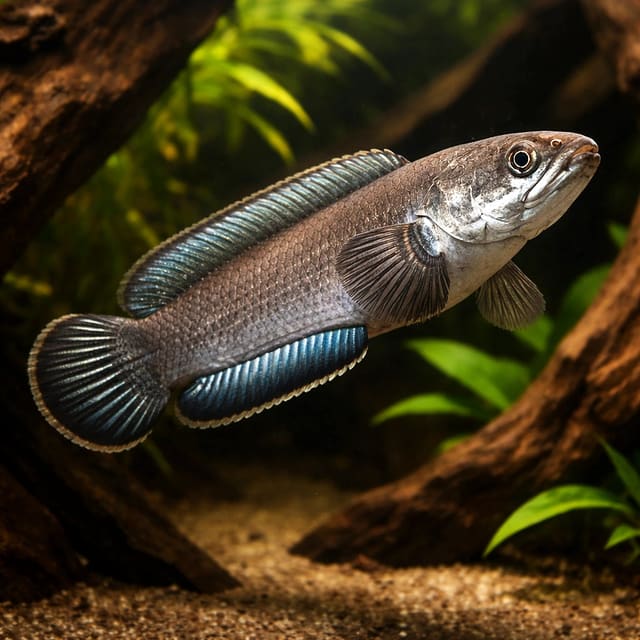
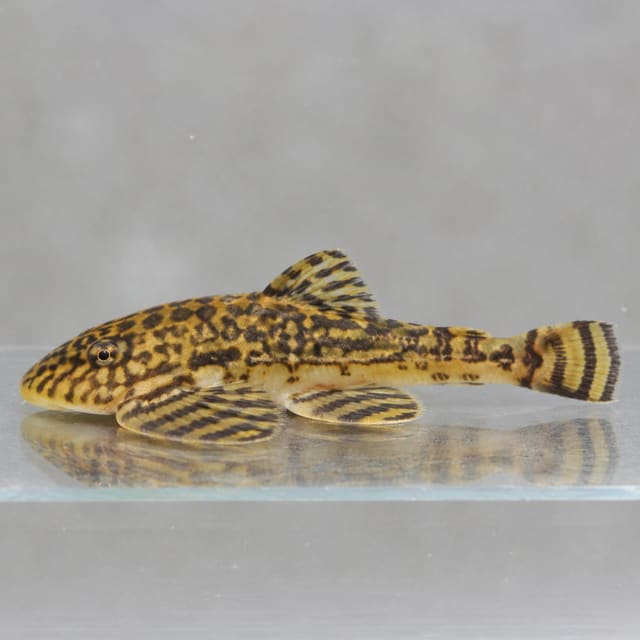
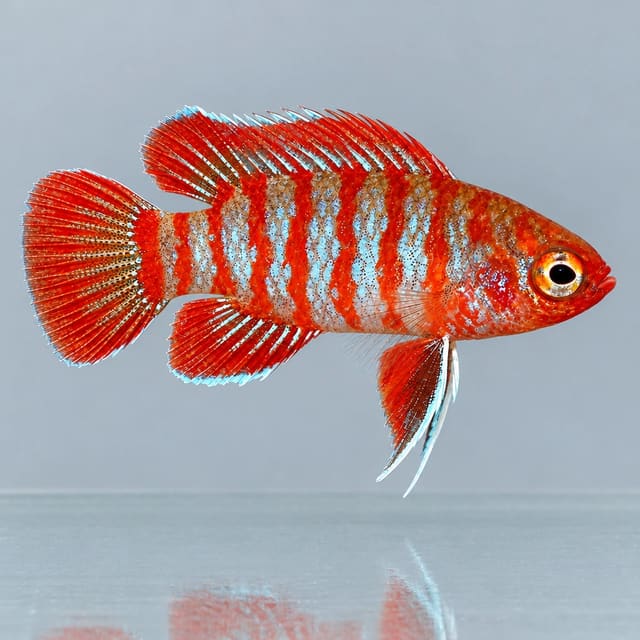
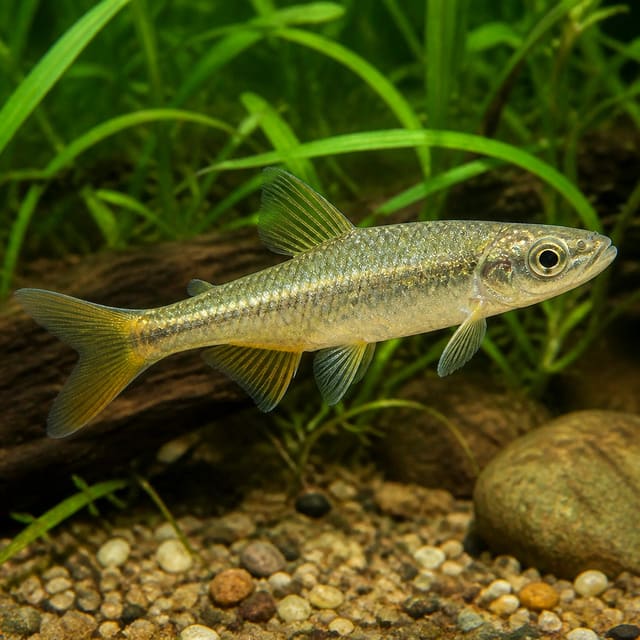
One purchase supplies one live Elephant Shortnose Mormyrid in the standard size we stock. That is a young fish, not an adult. Mormyrids are normally wild-caught imports, so each fish varies a little in shade and shape. The photographs are representative: snout length and shape vary between mormyrid genera, so the fish you receive may differ from the picture in snout shape, colour and pattern.
The sex cannot be chosen. Seriously Fish notes that elephantnoses cannot be sexed by eye; the sexes can be told apart from their electric discharge patterns, which is not practical at home.
Bleher goes further and says no elephantnose should be kept alone, while Collins accepts a single fish. For a fish that may reach 25 to 30 cm, a single specimen in a calm community is the realistic choice for most home aquariums. Read our delivery and Live Arrival Guarantee policy before ordering.
Bleher gives a general minimum of 100 cm length for elephantnose aquariums, "and the bigger the better", and says tanks for any Marcusenius should be at least 100 cm long. Seriously Fish calls a 120 x 45 cm base, about 243 litres, just about acceptable for an elephantnose and says a group needs a larger tank. Collins says a large group needs a roomy tank of several hundred litres. Put together, plan on at least 120 cm for one fish, and considerably more for a group.
| Step | What to check |
|---|---|
| Measure | At least 120 cm long and about 45 cm front to back |
| Plan the adult | Allow for a fish of 25 to 30 cm, not the size on arrival |
| Count the community | Add every tank mate at its adult size; keep the stocking light |
Our tank volume calculator works out the real volume of your aquarium, and the stocking calculator helps you keep a calm, lightly stocked community.
Every source agrees on three things. First, the floor must be soft: Seriously Fish calls a fine sand substrate absolutely critical, and Collins recommends soft silver sand to protect the fish's sensitive skin and snout as it probes for food. Second, the light must be dim: Seriously Fish says elephantnoses withdraw and waste away under bright light. Third, they need plenty of cover. Bleher suggests larger stones, driftwood and leaves, with plants such as Crinum natans, Bolbitis heudelotii and Anubias; Seriously Fish adds java fern and Vallisneria.
| Area | Purpose |
|---|---|
| Open fine sand | Night-time foraging with the snout and chin |
| Driftwood roots and caves | Daytime retreats, one more than the number of mormyrids |
| Shade-tolerant plants and floating cover | Lower light and broken sight lines |
| Leaf litter in a corner | Extra cover and somewhere to search for food |
Fit a cover. OATA recommends dim lighting and a lid for wild-caught fish so that they do not startle and jump. If your room lights stay on late, use a timer and floating plants to keep the tank shaded.
No water values are published for the short-nosed species themselves; FishBase gives none for Marcusenius, and Bleher gives figures only for triggering spawning. The values below are Seriously Fish's figures for the elephantnose, which come from similar African rivers. What matters most is cleanliness: Seriously Fish says elephantnoses are very sensitive to deteriorating water and notes that they have been used as living water-quality monitors in some German and US municipal water supplies, because their discharge rate rises as pollution increases.
| Reading | Seriously Fish, elephantnose | Aim for |
|---|---|---|
| Temperature | 23-28°C | 24-27°C |
| pH | 6.0-7.5 | 6.5-7.2 |
| General hardness | 5-15 dGH | 5-12 dGH |
| Ammonia and nitrite | not given | zero |
| Nitrate | not given | as low as possible |
Soft to medium UK tap water usually suits after dechlorinating. In a hard-water area, test first and soften with reverse-osmosis water, mixing every water change the same way so the pH and hardness do not swing. Our water chemistry guide explains pH and hardness, and the water matcher checks your readings against this fish.
Elephantnoses come from slow-flowing water, according to Seriously Fish, so aim for a filter that keeps the water very clean without blasting the sand. Spread the return flow and keep a calm area near the hiding places. The biological filter must be fully mature before a mormyrid arrives; our guide to the nitrogen cycle explains how to establish it.
Mormyrids have small mouths and weak teeth, and they feed on small invertebrates; FishBase describes Marcusenius annamariae as apparently insect-eating. Bleher lists rotifers, water fleas, copepods, mosquito larvae, bloodworms, white worms, blackworms, daphnia and cyclops, live or frozen, and warns that fish in shops and importers often become thin and die from inadequate food. His advice is blunt: if you cannot offer these foods every day, do not keep elephantnoses. Seriously Fish reports that most elephantnoses accept a range of dried, frozen and live foods, and that worms are a favourite; Collins says they usually prefer live or frozen food and are weak competitors at feeding time.
Watch the belly. A slim, flat-sided mormyrid is losing out to tank mates or not finding the food. Feed it at lights-out, and remove leftovers next morning so they do not foul the sand.
New mormyrids are nervous and sensitive. OATA's advice for wild-caught fish is to keep lighting dim, to quarantine new arrivals before mixing them with established fish, and to use drip acclimatisation for sensitive species. Seriously Fish warns that elephantnoses are very sensitive to many medications, including salt, and Collins says many chemical treatments can harm them, so prevention matters more than cure.
| Checkpoint | What to look for |
|---|---|
| Day 1 | Fish hiding in a cave: normal |
| Days 2-3 | Searching the sand at night; takes live food |
| Days 3-7 | Belly stays full; no chasing from tank mates |
| Day 7 | Test ammonia and nitrite after the stocking rise |
Our guide to acclimatising new fish covers both the floating-bag and the drip methods.
Collins says constant close contact with other fish stresses elephantnoses and that they belong in a peaceful community, because faster, more outgoing fish take the food first. Seriously Fish advises against very active or aggressive species and against other mormyrids, and suggests African butterflyfish, smaller bichirs, Congo tetras, Synodontis, Ctenopoma, eartheaters such as Satanoperca and some Geophagus, and angelfish.
| Suits | Avoid |
|---|---|
| Freshwater Butterflyfish | Other mormyrids, unless one large group of a single kind |
| Congo Tetra | Boisterous or territorial cichlids |
| Featherfin Synodontis and other calm catfish | Fast, greedy fish that clear the food before dark |
| Leopard Bushfish | Fin-nippers and constant chasers |
| A smaller bichir such as the Senegal Bichir, or Angelfish | Fish small enough to fit in its mouth, such as tiny shrimp |
Our tank mates tool checks size and temperament before you buy. Night-active catfish compete for the same food at the same time, so feed them and the mormyrid in different spots.
Collins explains that mormyrids map their surroundings with more than 2,000 electroreceptor organs, called mormyromasts, and use their electric field to feed, navigate and find mates. Bleher notes that the discharge rate rises sharply when a fish is disturbed and that most species discharge only about one volt, too little to harm you or other fish. Its behaviour therefore tells you a lot about its comfort.
| What you see | What it usually means |
|---|---|
| Slow, searching swimming over the sand after dark | A settled, healthy fish |
| Hiding all night as well as all day | Light too bright, bullying, or poor water: test and dim the tank |
| Thin, flat belly | Not enough suitable food: add live food at lights-out |
| Rubbing on sand, cloudy skin or rapid breathing | Water quality first; treat only with medicines safe for scaleless and sensitive fish |
| Chasing another mormyrid | A pair or small group: separate them or build a group of five or more |
It is an African elephantfish (family Mormyridae) with a short, blunt snout instead of the long trunk of the classic elephantnose. The name is a trade name and the species is not given; in the trade, short-nosed mormyrid names are used mostly for Marcusenius species.
Plan for 25 to 30 cm. Practical Fishkeeping gives up to 25 cm for a Marcusenius, and FishBase lists Marcusenius species at 25.5 and 32.1 cm standard length. Smaller short-snouted genera stay at 10 to 15 cm.
At least 120 cm long for one fish. Practical Fishkeeping says elephantnose tanks should be at least 100 cm and bigger is better, and Seriously Fish calls 120 x 45 cm only just acceptable for a single elephantnose. A group needs several hundred litres.
One fish in a calm community, or a group of five or more in a big tank. Never keep exactly two: Seriously Fish warns that the stronger fish often bullies the weaker one, sometimes to death.
Small live and frozen foods every day: bloodworm, mosquito larvae, daphnia, cyclops, brine shrimp and small worms. Many will also learn to take a good sinking dried food. Feed at dusk, because mormyrids are mostly active at night.
Weakly. It produces a small electric field and senses it with more than 2,000 electroreceptor organs, using it to find food, navigate and communicate in murky water. It cannot harm you or other fish.
No. Practical Fishkeeping describes elephantnoses as fish for experienced aquarists: they are sensitive to poor water and to many medicines, need daily live or frozen food and lose out to faster tank mates.
Avoid it unless you are keeping a large group of one kind. Seriously Fish advises against mixing elephantnoses with other mormyrids.
No reviews for this item yet. Bought one? Honest reviews only, good or bad.
What customers say about ordering from us
Easy website plenty of info on fish your buying great to pick a time slot
TRACEY DURRANT · 7 Oct 2026
Got some lovely fish thank you
Kevin Mackie · 7 Oct 2026
Reviews of our shop, collected by Judge.me, an independent third-party review collector. Newest first.
Moved by UK carriers licensed to handle live animals
Hand-packed with oxygen bags, poly box, heat pack
Email photos the same day; an optional unboxing video helps us review problems faster — claim terms apply
Klarna & PayPal Pay in 3 at checkout