Moderate
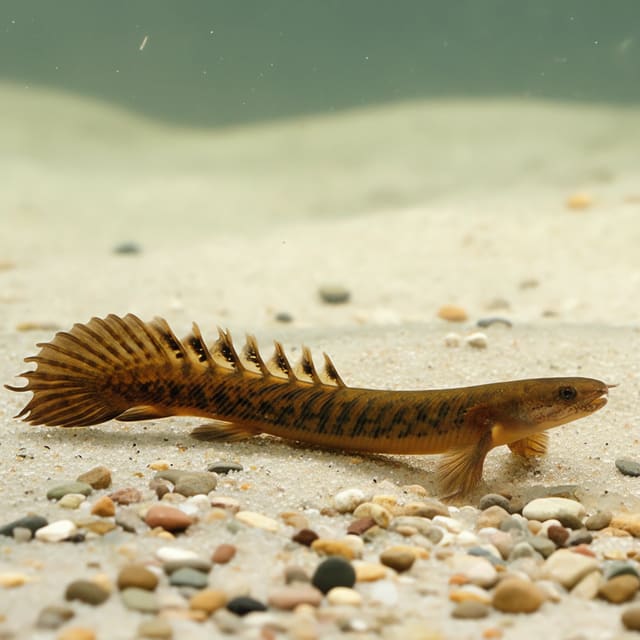
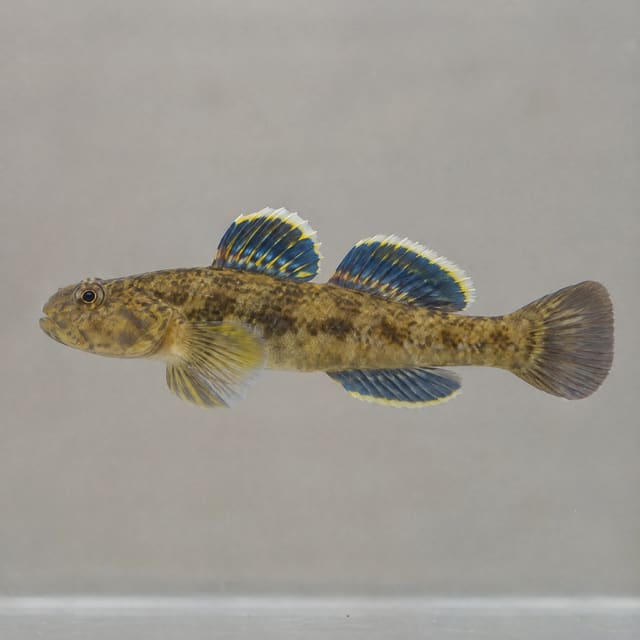
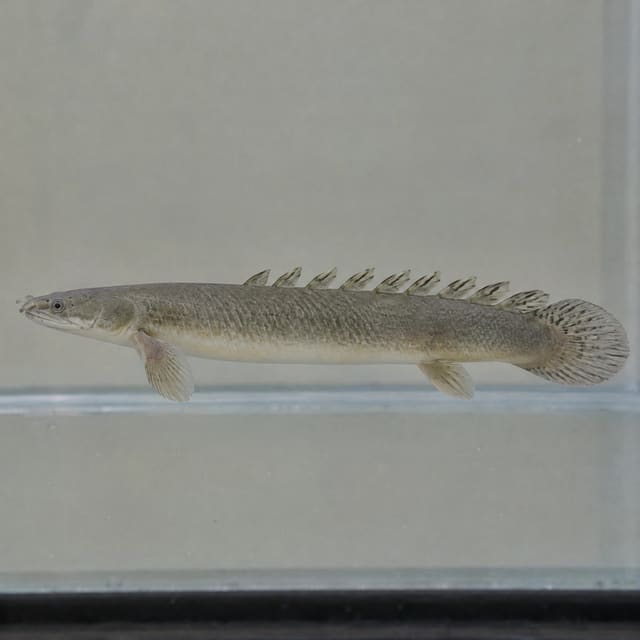
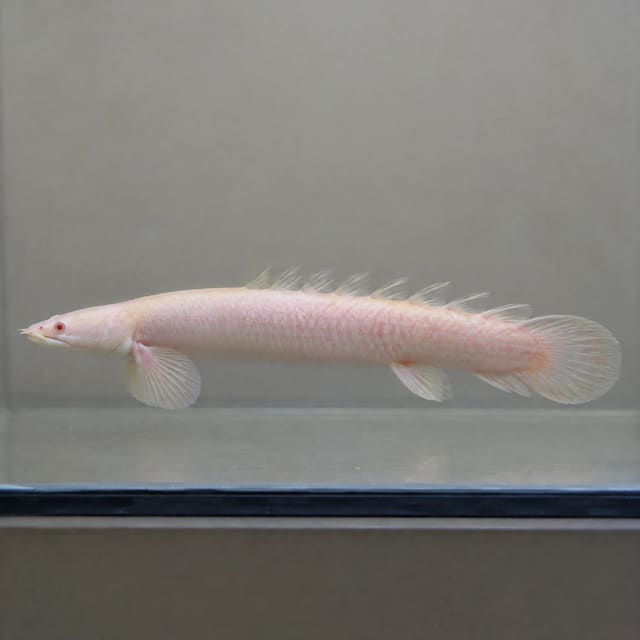
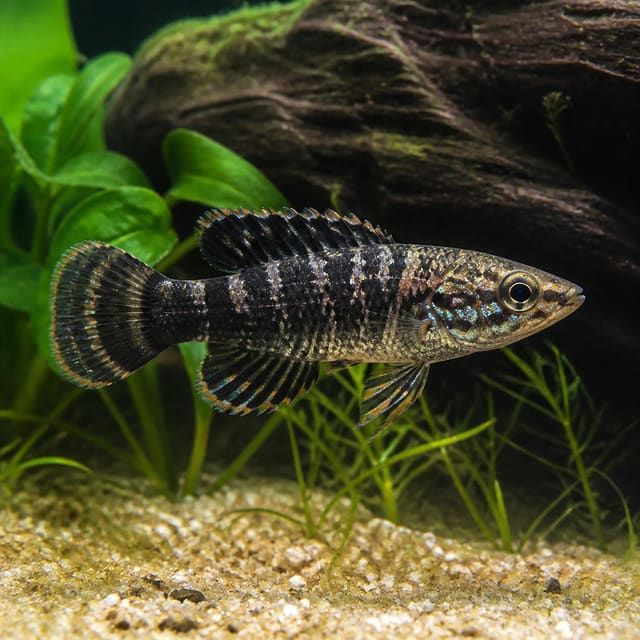
Black Tiger Dario (Dario sp. 'Black Tiger')
26–30°C · pH 5–7 · 80L
£9.99
The Scarlet Badis (Dario dario) is a tiny micro-predator from the Brahmaputra drainage of India that reaches about 2 cm standard length. It needs a densely planted aquarium with a 45 × 30 cm base or more, 18–26°C, and small live or frozen foods such as Artemia nauplii and daphnia. Sold individually; sex not specified.
Dario dario
Save when buying multiple fish. Each quantity is one fish; sex and pair formation are not guaranteed unless the selected variant explicitly states them.
The Scarlet Badis (Dario dario) is a tiny micro-predator from the Brahmaputra drainage of India that reaches about 2 cm standard length. It needs a densely planted aquarium with a 45 × 30 cm base or more, 18–26°C, and small live or frozen foods such as Artemia nauplii and daphnia. Sold individually; sex not specified.
Read the full care guidance when planning conditions for your aquarium.
The Scarlet Badis, Dario dario, is one of the smallest perch-like fishes in the hobby. It belongs to the family Badidae and comes from shallow, clear streams in the Brahmaputra drainage of West Bengal and Assam in India, and possibly Bhutan. Seriously Fish gives a maximum of 20 mm standard length (body without the tail), which places it among the smallest percoid fishes known.
Mature males are bright red with seven iridescent blue vertical bars on the flanks and grow extended dorsal, anal and pelvic fins. Females are smaller and plainer. It moves slowly, hunts tiny live foods with great care and suits a densely planted nano or species aquarium rather than a busy community tank.
| Name | What it tells you |
|---|---|
| Dario dario | The current scientific name; the genus Dario was set up in 2002 with this fish as its type species |
| Labrus dario, Badis dario | Older names; it was first described by Hamilton in 1822 |
| Badis badis bengalensis | A name Seriously Fish describes as coming from an erroneous 1999 magazine description |
| Scarlet Badis, Dwarf Badis | Common names; FishBase also records the Bengali name "Darhi", meaning beard |
Seriously Fish notes that the seven blue bars of the male are unique within Dario, which helps tell this species from its close relatives. Its larger cousins in the genus Badis have their own badis category on our site.
One purchase quantity supplies one live Scarlet Badis. The sex is not specified. Our photographs show a male; females are smaller, have no red or blue on the flanks and show indistinct bars or none. Seriously Fish notes that the species is easy to sex but that often only males are traded.
Have the tank planted and matured before you order, and read our delivery and live arrival information.
Seriously Fish gives a minimum base of 45 × 30 cm, about 41 litres, for a pair or for one male with several females. That is a modest tank, but the fish's needs are specific: dense planting, territories for males, stable water and a reliable supply of tiny live or frozen food.
Mature the filter first. The RSPCA explains that cycling takes at least two weeks, and fish should only be added once ammonia and nitrite have risen and fallen back to zero. Small tanks swing faster than large ones, so stability matters even more here.
In the wild the Scarlet Badis lives among dense vegetation. Seriously Fish lists Hygrophila, Limnophila, Ottelia, Rotala and Vallisneria at one locality, over sand or gravel. FishBase describes a collection stream 2–5 m wide and 30–70 cm deep, with clear water and dense plants over sand and fine gravel.
| Feature | Why it helps |
|---|---|
| Soft sand or fine gravel | Seriously Fish prefers a soft substrate; fine gravel is acceptable |
| Cryptocoryne and stem plants | Dense cover that breaks up sight lines between males |
| Moss, Java fern or Anubias on wood | Attached plants Seriously Fish suggests; moss also serves as a spawning site |
| Several small caves spread apart | Separate territories so spawning sites are not bunched together |
| Floating plants and leaf litter | Shade, shelter and a natural surface for tiny prey |
Our live plants guide for beginners covers easy plants that suit a tank like this. A mature, well-planted tank can also support tiny creatures for it to hunt between meals.
This is an adaptable fish when it comes to chemistry, but it dislikes sudden change. Seriously Fish gives 18–26°C, pH 6.5–8.5 and 1–15 dGH. Aquarium Glaser gives a wider 16–28°C and says that any tap water safe to drink is suitable. FishBase notes about 26°C in the collection stream.
| Source | Temperature | pH | Hardness |
|---|---|---|---|
| Seriously Fish | 18–26°C | 6.5–8.5 | 1–15 dGH |
| Aquarium Glaser | 16–28°C | Not stated | Any drinkable tap water |
| FishBase | About 26°C at collection | Not stated | Not stated |
| Our planning range | 18–26°C | 6.5–8.5 | 1–15 dGH |
We follow Seriously Fish because it sits inside the other sources. Keep ammonia and nitrite at zero and nitrate low, test weekly, and compare your tap water using our water matcher. Our water chemistry guide explains the readings.
Seriously Fish uses a filter turnover of four to five times the tank volume per hour; for a 41-litre tank that is roughly 165–205 litres per hour. Aquarium Glaser describes the natural habitat as clear, moderately flowing water. Spread the flow with a spray bar or sponge so this small, slow fish is never pushed around.
Live foods such as daphnia survive in the tank until eaten, which makes them cleaner to use than frozen foods in a small aquarium.
The Scarlet Badis is a micropredator. Seriously Fish describes a natural diet of small aquatic crustaceans, worms, insect larvae and zooplankton, and lists suitable foods as Artemia nauplii, Daphnia, grindal worm, microworm and banana worm. Aquarium Glaser says it does not eat dry food, takes frozen food readily and strongly prefers live food.
| Food | How to use it |
|---|---|
| Live Artemia nauplii | A staple for most days; rinse before feeding |
| Microworm culture | Easy to keep going at home; good for days without fresh nauplii |
| Frozen daphnia | Thaw a small piece and feed what is eaten; remove leftovers |
| Bloodworm and Tubifex | Avoid: Seriously Fish links them to obesity and disease in this species |
Feed small amounts once or twice a day and watch the fish eat. It feeds slowly and carefully, so faster tank mates can take everything before it gets a share. If it is not eating, offer live food first; Aquarium Glaser notes that it strongly prefers live food.
Switch the lights off, float the sealed bag to equalise temperature, then add tank water gradually before releasing the fish and discarding the bag water. The RSPCA suggests floating the bag for half an hour and keeping the lights off for the rest of the day. Our guide on acclimatising new fish covers each step.
| Checkpoint | What to do |
|---|---|
| Before arrival | Hatch Artemia or start a microworm culture so live food is ready |
| Day of arrival | Lights off, no food; let it find cover |
| Days two to four | Small live feeds near its chosen cover; check it is eating |
| Day seven | Water test and routine water change |
A new Scarlet Badis often hides for a few days and shows little colour. It usually colours up once it has claimed a territory and is eating well.
With a fish this small, feeding is the main health measure. A healthy Scarlet Badis has a gently rounded belly, clear eyes and fins held open, and it hovers and inspects the plants for food.
| If you see | Do this first |
|---|---|
| Thin or hollow belly | Offer live food and check that tank mates are not taking it all |
| Constant hiding and pale colour | Check for chasing by another male or bolder fish; add cover |
| Torn fins | Look for a rival male and separate if the chasing does not stop |
| Fast breathing or hanging near the surface | Test ammonia and nitrite and check the temperature |
| White spots or fluffy growths | Test the water and seek fish-health advice before treating |
Avoid frequent bloodworm feeds even if the fish takes them eagerly; Seriously Fish links them to obesity and disease in this species.
Seriously Fish describes the Scarlet Badis as slow-moving and retiring, easily intimidated or outcompeted for food by larger or more aggressive fish. It recommends keeping it alone or with small pelagic, open-water species. Rival males are aggressive to each other, especially in small tanks, so a small tank should hold one pair or one male with several females.
| Suits | Avoid |
|---|---|
| A species tank with one male and several females | Two or more males in a small tank |
| Small, calm open-water fish such as the Mosquito Rasbora, if the water ranges overlap | Fast, greedy feeders that take its food |
| Snails and a heavily planted layout | Larger or boisterous fish that intimidate it |
Sources disagree on groups. Aquarium Glaser reports that groups of 10–20 interact without seriously harming one another, while Seriously Fish advises a group only in a larger tank where each male can hold its own territory. Start with one male unless you have a large, densely planted tank. Our tank mates tool checks temperature and pH overlap before you mix species.
For related fish, compare the larger Dwarf Chameleon Badis and the Chameleon Fish (Badis badis), or browse our loaches and oddball fish, the other fish category and our nano tank fish. Our article on small tropical fish covers more species for small aquariums.
Seriously Fish describes the Scarlet Badis as a substrate spawner that forms temporary pair bonds. Courtship can last several days, and the spawning embrace itself takes only seconds. Eggs are scattered on the underside of a leaf or another solid surface; the female is then driven away and the male guards the territory.
FishBase lists the species as Data Deficient on the IUCN Red List, so buying aquarium stock carefully and never releasing fish matters.
About 2 cm standard length (body without the tail), according to Seriously Fish. FishBase lists 1.5 cm for males and 1.2 cm for females.
Small live or frozen foods such as Artemia nauplii, daphnia, grindal worm and microworm. Aquarium Glaser says it does not eat dry food, and Seriously Fish advises avoiding bloodworm and Tubifex.
Only in a larger, densely planted aquarium where each male can hold its own territory. In a 45 × 30 cm tank, keep one male, alone or with several females.
Seriously Fish gives a minimum base of 45 × 30 cm, about 41 litres, for a pair or one male with several females, densely planted.
Seriously Fish gives 18–26°C, pH 6.5–8.5 and 1–15 dGH. Aquarium Glaser says any drinkable tap water is suitable. Stability matters more than an exact number.
Not for a busy community. It is shy and slow to feed, so keep it alone or with small, calm open-water fish that cannot outcompete it for food.
The sex is not specified. Our photographs show a male; Seriously Fish notes that the species is easy to sex and that often only males are traded.
Seriously Fish lists small aquatic crustaceans in its natural diet, so newborn shrimp are likely prey. Keep a shrimp breeding colony in its own tank.
No reviews for this item yet. Bought one? Honest reviews only, good or bad.
What customers say about ordering from us
Easy website plenty of info on fish your buying great to pick a time slot
TRACEY DURRANT · 7 Oct 2026
Got some lovely fish thank you
Kevin Mackie · 7 Oct 2026
Reviews of our shop, collected by Judge.me, an independent third-party review collector. Newest first.
Moved by UK carriers licensed to handle live animals
Hand-packed with oxygen bags, poly box, heat pack
Email photos the same day; an optional unboxing video helps us review problems faster — claim terms apply
Klarna & PayPal Pay in 3 at checkout