
Small Tropical Fish: 14 Species Compared

Small body does not mean tiny-tank fish. Compare adult length, measurement type, usable tank footprint, complete social group, tested water and feeding needs. Most fish here still need at least a 45 by 30 cm footprint; neon tetras and dwarf pencilfish are useful counterexamples because published guidance points to 60 cm of aquarium length.
Small body does not mean tiny-tank fish. FishBase records the neon tetra at 2.5 cm maximum standard length, yet its aquarium note calls for a group and at least 60 cm of aquarium length[11]. Adult length is only the first filter: usable footprint, the complete social group, tested water, temperature, behaviour and feeding decide whether a fish fits.
This guide compares 14 genuinely small aquarium fish without turning them into one stocking recipe. Retail disclosure: Tropical Fish Co sells live fish. This article owns the suitability comparison; the live tropical fish catalogue owns current stock, sale units and prices. Availability is not evidence that a fish suits your aquarium.
The 30-second suitability screen
Write down these six things before choosing from the table:
- Usable tank length and width, measured inside the aquarium after allowing for equipment and hardscape.
- Real water volume, after substrate and decor—not only the number printed on the box. Our tank-volume tool helps with the calculation.
- Temperature, measured with an independent aquarium thermometer.
- pH, GH and KH from the water you will actually use. A postcode or regional label is not a test.
- Ammonia and nitrite, both at 0 mg/L in a mature, stable system before livestock is added[31].
- Every present animal, plus the full adult social group you are considering.
Published ranges are screening envelopes, not targets and not permission to swing conditions. A 45 by 30 cm footprint is also not a universal minimum: decor, water depth, group size, behaviour, filtration and existing livestock can require more space.
Compare 14 small tropical fish
SL means standard length, measured to the base of the tail. TL means total length, including the tail. They are not interchangeable. Where reliable sources disagree or measure differently, both records remain visible.
| Species | Recorded adult length | Space and social need | Published water screen | Best fit / main caveat |
|---|---|---|---|---|
| Chilli rasbora (Boraras brigittae) | 20 mm SL profile; FishBase has a larger TL record | From 45 × 30 cm; substantial same-species group | 20–28°C; pH 4.0–7.0; 1–10 dGH | Quiet, mature, planted soft-water setup; tiny food and confident feeding access |
| Celestial pearl danio (Danio margaritatus) | 21 mm SL | From 45 × 30 cm; group with cover and sight breaks | 20–26°C; pH 6.5–7.5; 5–15 dGH | Cooler, planted aquarium; rival males need space rather than a cramped pair/trio |
| Ember tetra (Hyphessobrycon amandae) | 20 mm SL | From 45 × 30 cm; complete shoal | 20–28°C; pH 5.0–7.0; 1–10 dGH | Gentle community where water fits; no blanket all-UK-tap claim |
| Pygmy cory (Gastrodermus pygmaeus) | Sources record 21–30 mm SL | From 45 × 30 cm; social group and usable floor area | 22–26°C; pH 6.4–7.4; verify hardness against the cited profile and holding water | Must be fed directly; not a waste-removal tool |
| Neon tetra (Paracheirodon innesi) | 25–30 mm SL across cited records | 60 × 30 cm / 60 cm length; complete shoal | 21–25°C; pH 4.0–7.5; 1–12 dGH | Small-bodied counterexample to the short-tank shortcut |
| Green neon tetra (Paracheirodon simulans) | 20–25 mm SL | From 45 × 30 cm; complete shoal | pH 3.0–6.5; 1–8 dGH; broad 21–35°C source envelope | Mature, soft acidic system; choose a stable target inside the overlap |
| Endler guppy (Poecilia wingei) | 25 mm SL profile; females are larger | From 45 × 30 cm; plan sex mix and offspring | 24–30°C; pH 7.0–8.5; 15–35 dGH | Harder water; trade fish may be guppy hybrids rather than pure Endlers |
| Sparkling gourami (Trichopsis pumila) | 40 mm SL | From 45 × 30 cm; pair or compatible small group with cover | 22–28°C; pH 5.0–7.5; 1–12 dGH | Quiet feeding environment; territorial and predation risks still need checking |
| Scarlet badis (Dario dario) | 15–20 mm SL | From 45 × 30 cm; territory and sight breaks | 18–26°C; pH 6.5–8.5; 1–15 dGH | Feeding specialist; confirm the actual prepared/live/frozen food response before buying |
| Least killifish (Heterandria formosa) | Males around 20 mm SL; females reach a larger TL | Species-focused colony with room for reproduction | 20–26°C; pH 7.0–8.0; 5–20 dGH | Cooler, harder water; not a true killifish or default mixed-nano choice |
| Exclamation-point rasbora (Boraras urophthalmoides) | 16 mm SL profile; FishBase records up to 40 mm TL | From 45 × 30 cm; substantial same-species group | 20–28°C; pH 6.0–7.0; 1–10 dGH | Exact identity matters; SL and TL records must not be collapsed |
| Phoenix rasbora (Boraras merah) | 20 mm SL | From 45 × 30 cm; substantial same-species group | 20–28°C; pH 4.0–6.5; 1–5 dGH | Very soft acidic, mature setup; can be confused with other Boraras |
| Dwarf pencilfish (Nannostomus marginatus) | 25 mm SL profile; 35 mm TL record | Use 60 cm aquarium length conservatively; complete group | 22–28°C; pH 4.0–7.0; 1–10 dGH | Soft-water group with calm companions; body length alone understates space |
| Clown killifish (Epiplatys annulatus) | 35 mm SL profile; 40 mm TL record | From 45 × 30 cm; 8–10 in the cited aquarium profile | 20–26°C; pH 4.0–7.0; 1–8 dGH | Mature soft-water setup, small foods, floating cover and a secure lid |
The figures above summarise the cited records below. They are not measured tolerance limits, current shop holding-water values or a recommendation to combine these species.
Soft-water shoaling fish
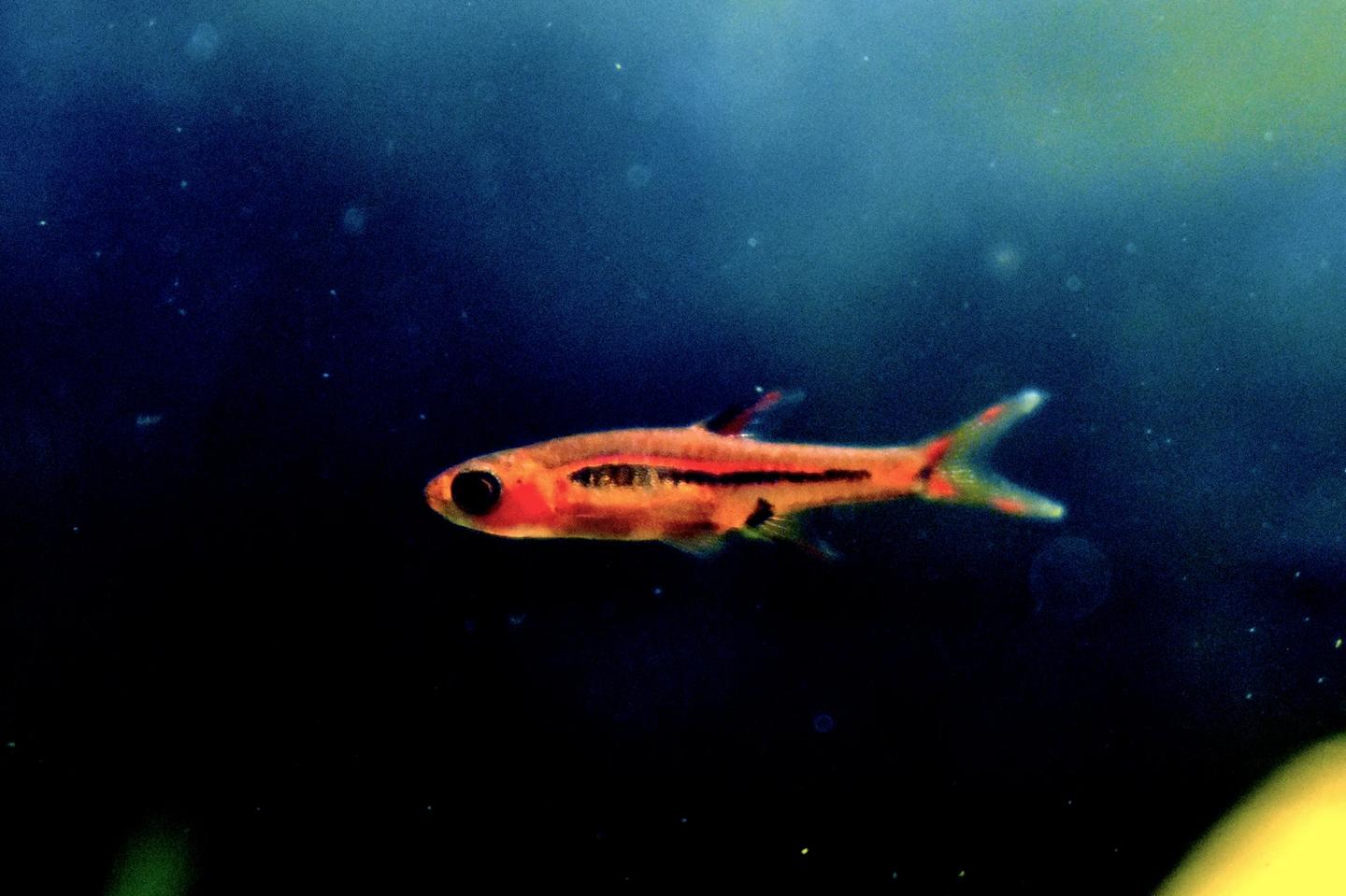
Chilli rasbora
The profile figure for Boraras brigittae is 20 mm SL, with a 45 by 30 cm aquarium footprint, a substantial same-species group and very small foods. FishBase carries a larger total-length record, so the old claim that the species has a “hard 2 cm cap” was false. Treat source-labelled fish cautiously because related Boraras can be confused in trade[1][2].
Consider when: the aquarium is mature, quiet, planted and consistently soft/acidic, and food can be delivered in particles small enough for every fish. Avoid when: measured water is far outside the cited screen or vigorous tank mates dominate feeding.
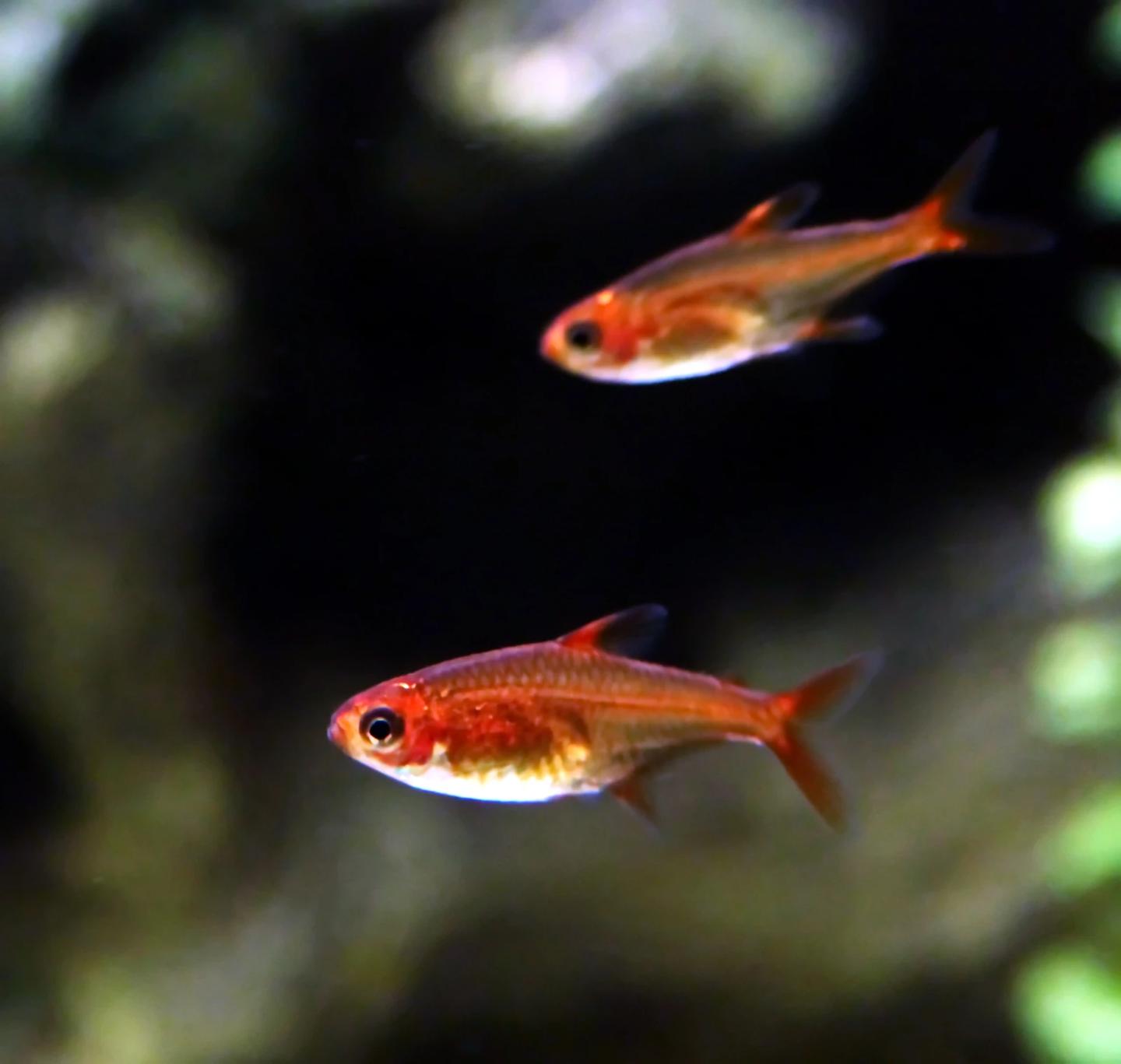
Ember tetra
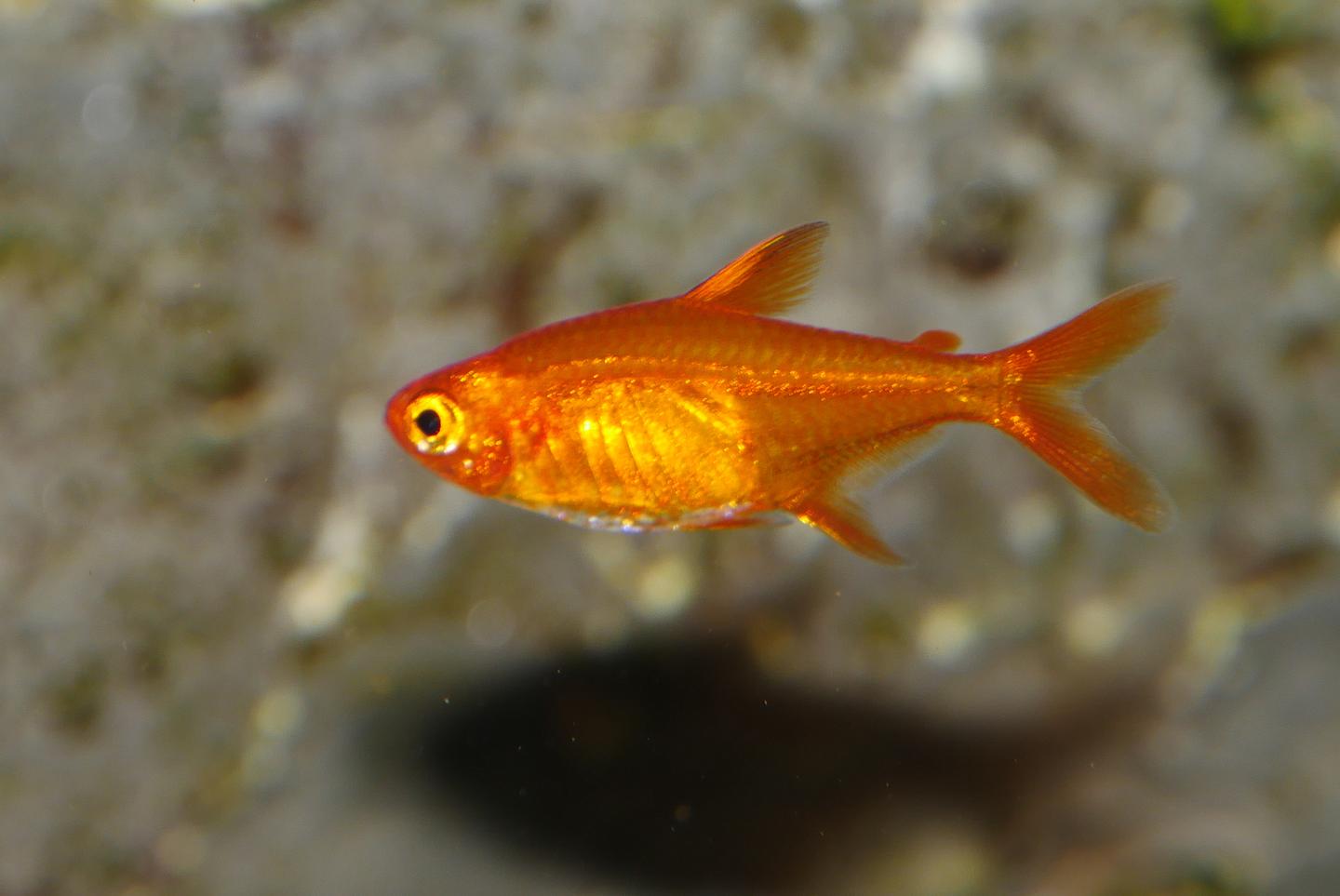
Hyphessobrycon amandae is recorded around 20 mm SL. Its cited aquarium profile starts from 45 by 30 cm and places it in a social group, with soft-to-moderate water and appropriately small food[5][6]. That does not justify the former promise that ember tetras tolerate every UK tap-water supply unchanged.
For a deeper species check, use the verified ember tetra care guide. The tetra shop is the separate owner for live stock and prices.
Green neon tetra
Green neons (Paracheirodon simulans) stay small, but the cited profile is a soft-water, group-living fish for a mature aquarium. Its temperature envelope is unusually broad; that is a source range, not a target and not permission for repeated swings[12][13].
Consider when: source and aquarium water are reliably soft and acidic. Avoid when: the tank is new, hard/alkaline, or the plan depends on small size overriding the full group requirement.
Exclamation-point and phoenix rasboras
The 16 mm SL profile figure for B. urophthalmoides and its larger FishBase TL record show why measurement labels matter[22][23]. B. merah has a 20 mm SL profile figure but a particularly soft, acidic water screen, and hobby sources warn that small Boraras identities can be confused[24][25].
Do not select either from colour or a vague “micro rasbora” label. Ask for the exact scientific/trade identity and measured holding water, then compare the complete group and aquarium footprint. Browse rasboras and danios only after that care screen.
Dwarf pencilfish
Nannostomus marginatus has a 25 mm SL profile figure, while FishBase carries a 35 mm TL record and a secondary note calling for 60 cm aquarium length[26][27]. It belongs on a small-fish list, but not on a short-tank shortcut list.
Clown killifish
The cited Epiplatys annulatus profile uses 35 mm SL, a 45 by 30 cm footprint and a group of 8–10. FishBase records up to 40 mm TL[28][29]. Its surface-oriented behaviour means floating cover and a secure lid matter, while its small mouth and feeding style make food choice part of the fit.
Small fish for cooler or harder water screens
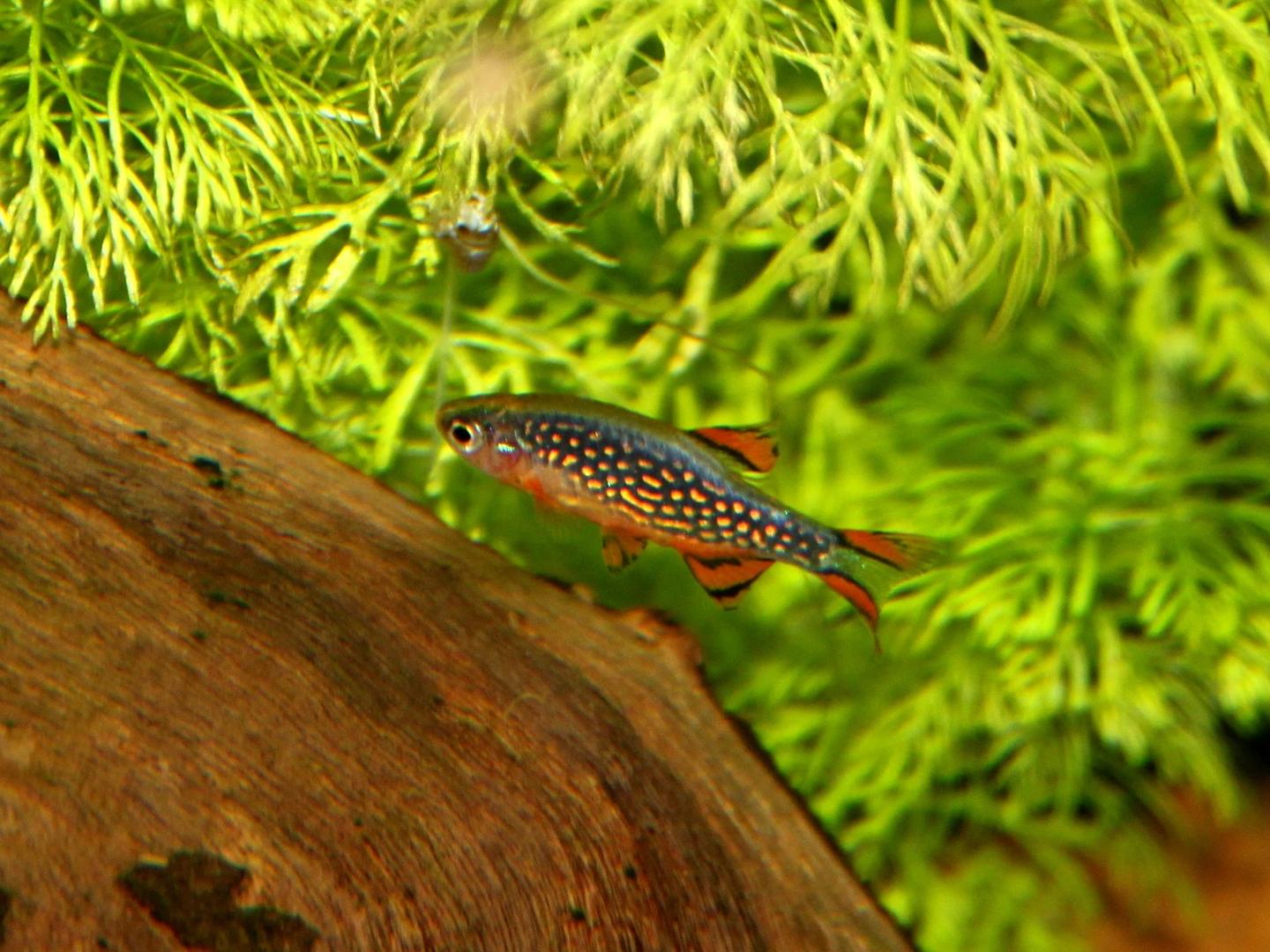
Celestial pearl danio
The current scientific name is Danio margaritatus; “galaxy rasbora” is a useful trade-recognition name, not the current genus[4]. The cited aquarium profile gives 21 mm SL, a 45 by 30 cm footprint and cooler tropical temperatures. Males can rival one another, so cover, sight breaks and a worthwhile group are more useful than squeezing a pair or trio into a very short aquarium[3].
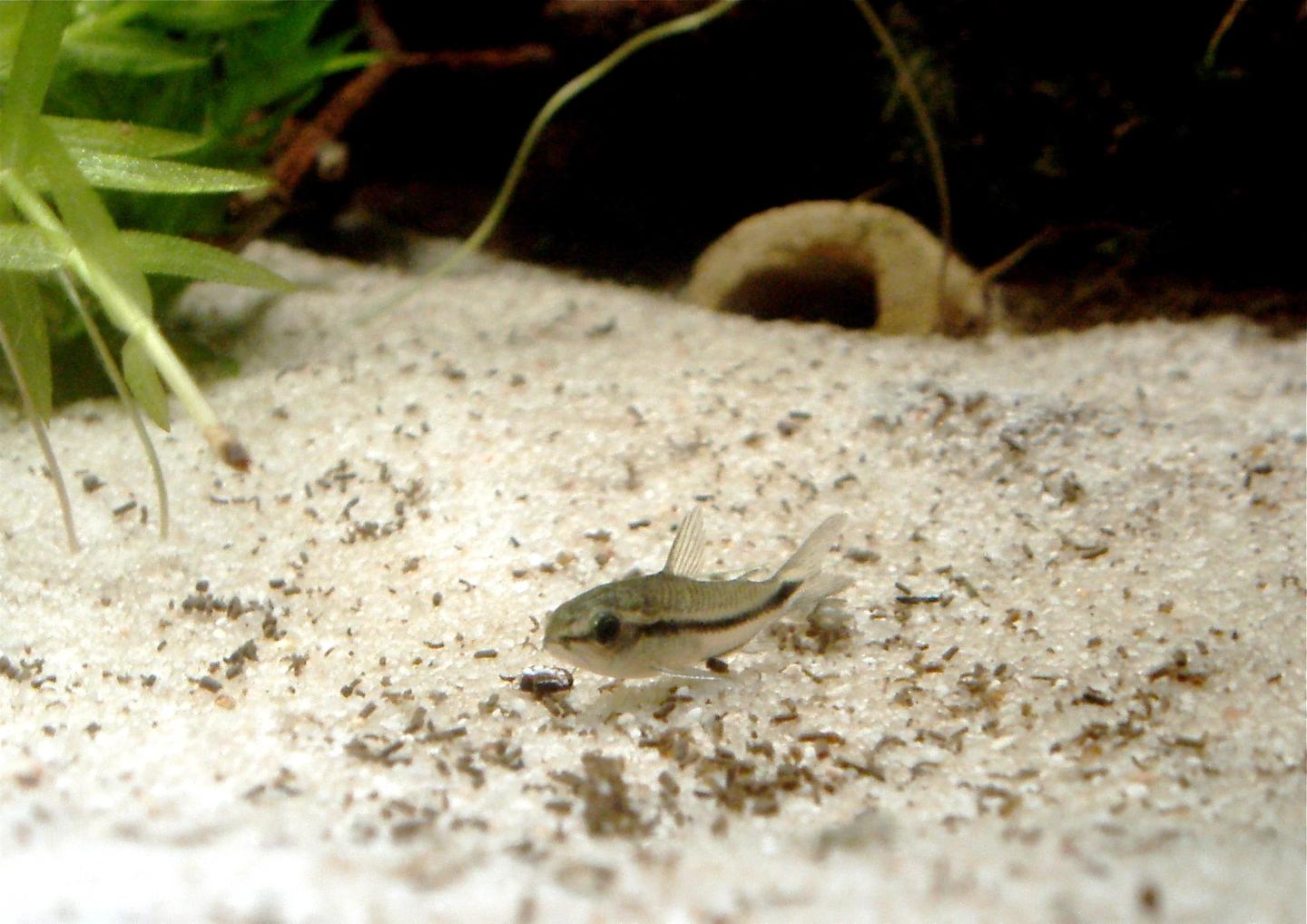
Pygmy cory
The current combination is Gastrodermus pygmaeus, although Corydoras pygmaeus remains common in shops and older care material[9]. The cited records span 21–30 mm SL rather than one magical adult number[7][8].
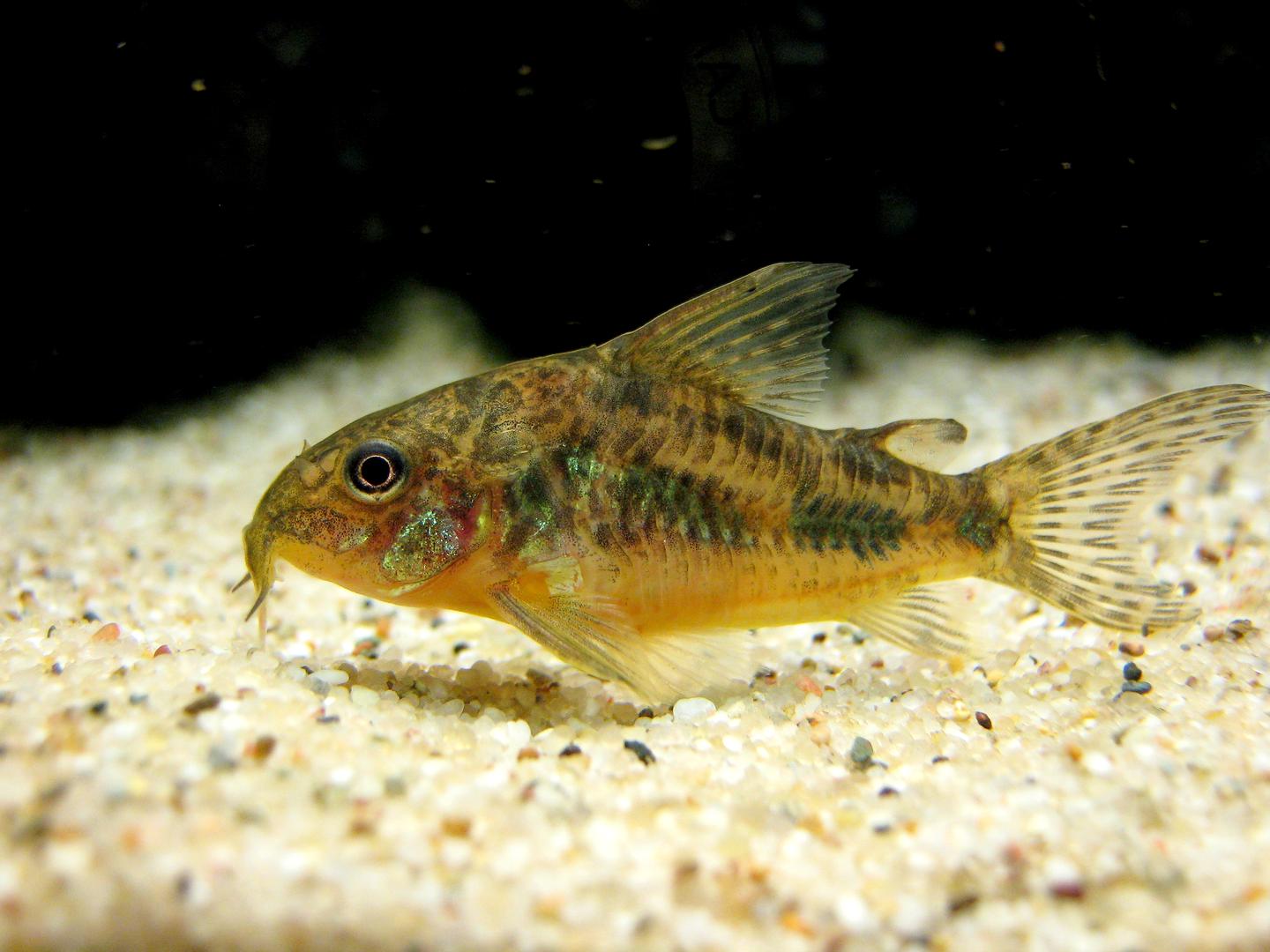
Pygmy corys need a real social group, floor area, gentle feeding access and their own complete food. They are not “clean-up crew.” Our verified corydoras guide covers the wider trade group but is not a pygmy-only profile; the corydoras shop owns current listings.
Neon tetra
Neon tetras are the clearest reason not to rank fish by body length alone. Seriously Fish uses 30 mm SL and a 60 by 30 cm footprint; FishBase records 2.5 cm maximum SL and repeats a 60 cm aquarium-length note[10][11]. Do not shrink the shoal to force the species into a shorter tank.
Endler guppy
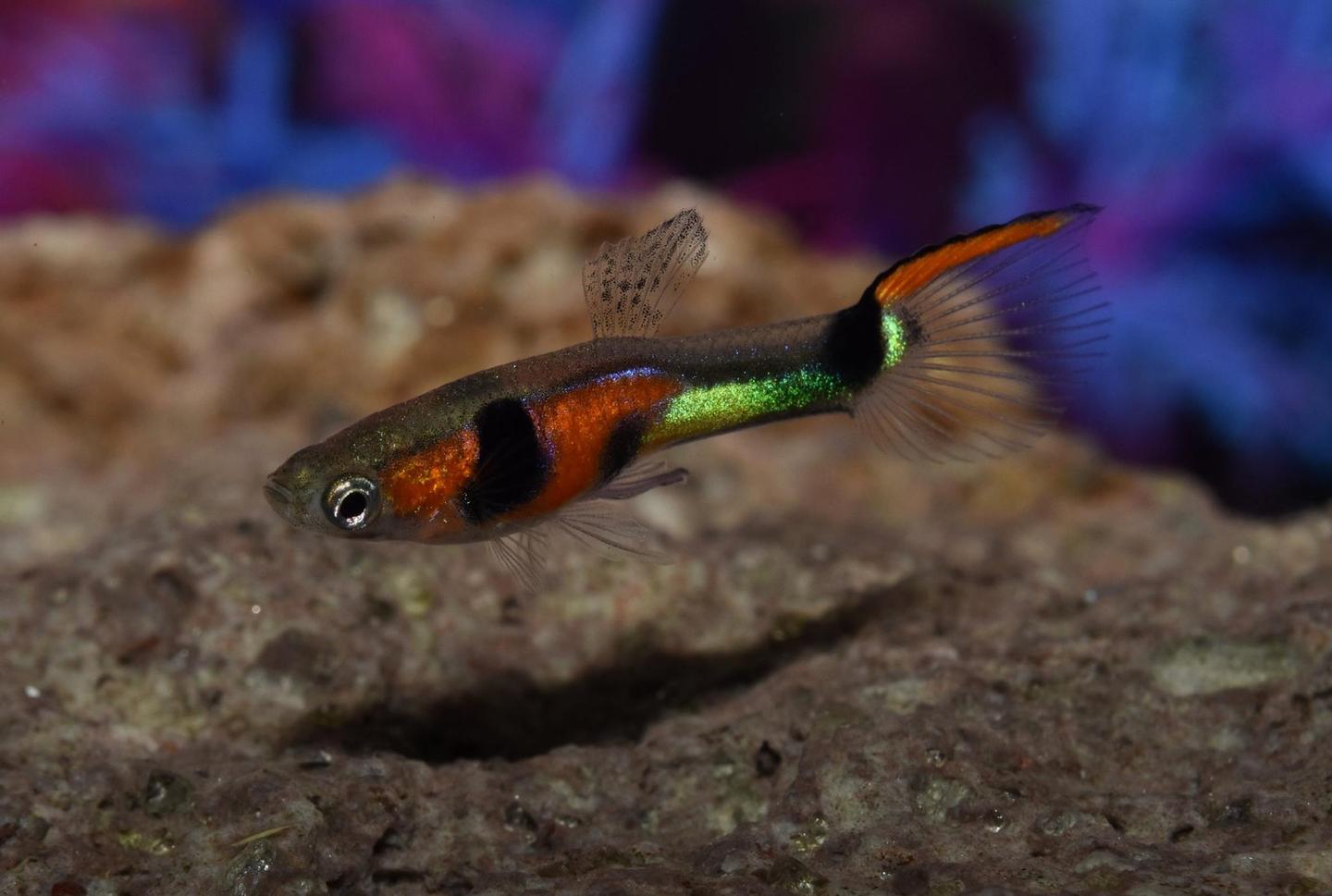
The 25 mm SL profile figure applies to a small-bodied sex; females grow larger, and mixed-sex groups reproduce readily. The cited care material also warns that fish sold as Endlers may be guppy hybrids, so colour alone cannot establish pure Poecilia wingei[14][15].
This is a harder-water candidate only where measured GH and pH fit. Use the verified Endler guppy care guide for the full decision, then check the Endler shop for current options.
Least killifish
Despite its common name, Heterandria formosa is a livebearer rather than a true killifish. Males and females differ in size, and a breeding colony creates a different space and population problem from a displayed pair[20][21]. It suits cooler, harder water than the soft-water Boraras group, so “small tropical fish” does not imply shared chemistry.
Behaviour and feeding specialists
Sparkling gourami
At about 40 mm SL in the cited records, Trichopsis pumila is still small, but it is not simply a colourful shoaling fish. FishBase records the same current binomial and a 4.0 cm SL maximum, while the aquarium profile recommends a quiet, structured aquarium and a pair or compatible small group rather than an unsupported solitary shortcut[17][16]. Territorial behaviour, feeding competition and possible predation on tiny shrimp or fry must be evaluated for the actual aquarium.
Scarlet badis
Dario dario is small and territorial. The cited profile describes a preference for small live or frozen foods, not a universal rule that every fish refuses prepared food or “starves in a week”[18][19]. Confirm what the actual fish is eating before purchase and plan enough structure to separate sight lines.
Match the shortlist to UK water
UK tap water is not one chemistry. The Drinking Water Inspectorate explains that hardness varies with local geology; use your supplier report as context, then test the source water and aquarium you actually maintain[32]. Keep these distinctions clear:
- pH describes acidity or alkalinity at the time of the test.
- GH describes dissolved calcium and magnesium salts relevant to the species screen.
- KH affects buffering; it is not interchangeable with GH.
- A published range shows the source's scope, not a target or permission for rapid movement between its endpoints.
Leaves and wood may influence a particular aquarium, but they are not a measured, predictable substitute for a water-management plan. Do not prescribe a fixed tap/RO ratio without testing both source and finished water.
Build one shortlist, not a stocking recipe
- Measure first. Record usable length, width and real water volume.
- Test the actual water. Compare pH, GH, KH and temperature with the exact species—not a regional stereotype.
- Choose one focal social group. Make room for the full group and adult sex/size differences before considering companions.
- Verify identity and holding water. Ask the retailer for the scientific or precise trade name, sale unit, feeding response and current holding-water measurements.
- Account for every animal. Include swimming and floor area, territory, food access, filtration and a separation plan. Never use centimetres-per-litre as the final decision.
OATA's UK rasbora guidance likewise tells keepers to plan around adult size, a cycled aquarium, tested ammonia/nitrite and local pH/hardness rather than one national water assumption[30].
Neon tetra and dwarf pencilfish are both small-bodied, yet their cited records point to 60 cm of aquarium length. A shoal needs usable horizontal space even when each individual is short.
Shrimp, snails and tank mates
Shrimp and snails are animals with their own water, food and social requirements—not cleaning equipment. No fish on this page is guaranteed shrimp-safe. Adult dwarf shrimp may coexist in some planted aquariums, while shrimplets, fry or small snails may be eaten; the outcome depends on fish, invertebrate size, cover, feeding and individual behaviour.
Compatibility is a new evidence check, not a bonus column. Compare the full temperature, pH, GH, activity, adult size, territory and feeding needs of every proposed resident. If one complete group already uses the aquarium's available space or water screen, stop there.
Before you use the shop
When the care screen is complete, compare the current listing with your written plan. Verify identity, sale unit, approximate dispatch size, sex or strain label where relevant, and current holding water. If any answer changes the fit, change the shortlist—not the facts.
Browse current tropical fish availability after those checks. Stock and prices can change; this page does not promise that any of the 14 species is available today. If you are choosing your first aquarium group, read the verified beginner tropical fish guide before ordering.
How this comparison was checked
Current names were checked against Eschmeyer's Catalog where older aquarium pages lag. FishBase records support identity, measured length and environment; species-specific Seriously Fish pages supply bounded aquarium guidance. OATA and the Royal Veterinary College provide UK cycling and testing context, while the Drinking Water Inspectorate supports only the source-water statement.
The reference list below links to every record used. Standard length and total length remain labelled, broad ranges are not turned into targets, and retailer availability is kept separate from care. If a source, photograph or recommendation appears wrong, use the visible Suggest an edit link. Editorial feedback is not counted as a lead, add-to-cart event or purchase.
Source-labelled small aquarium fish
Frequently asked questions
Browse our UK live-fish range
From this article straight into the catalogue.
Beginner Fish
The best tropical fish for beginners UK — hand-picked easy-care species that thrive with minimal fuss. Perfect starter community tank candidates.
Community Tank Fish
Peaceful tetras, rasboras, corydoras, platies and gouramis chosen to live together — temperament, adult size and water range per listing so the mix works.
Tetras
Premium Tetras for sale UK — Cardinal, Ember, Black Neon, Rummy Nose, Serpae, Diamond, Glowlight and more. Peaceful community schoolers.
Betta Fish
Halfmoon, plakat, koi, giant and wild-type Betta splendens, males and females, tail type and size stated per listing. Bagged singly, live arrival covered.
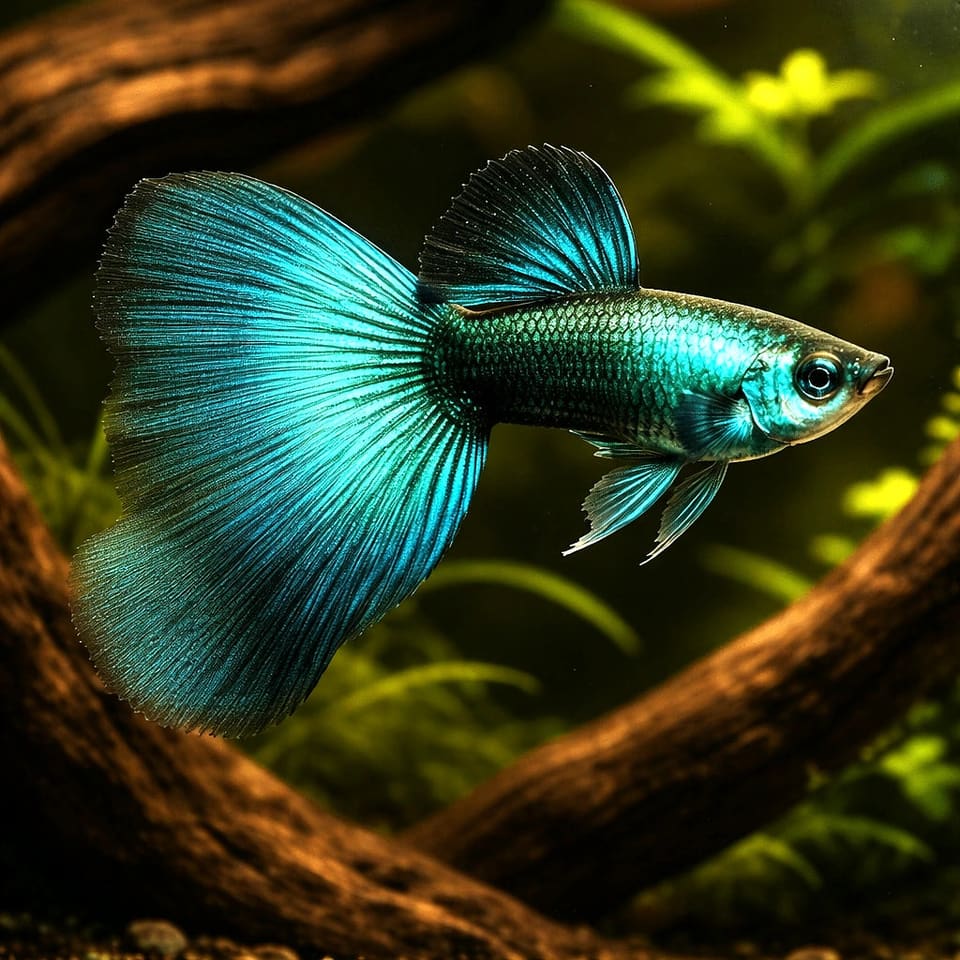
Guppy
Fancy guppies bred for colour — Moscow, Cobra, Dumbo ear and Endler lines as males, females or pairs. Hardy in UK tap water; live arrival guarantee.
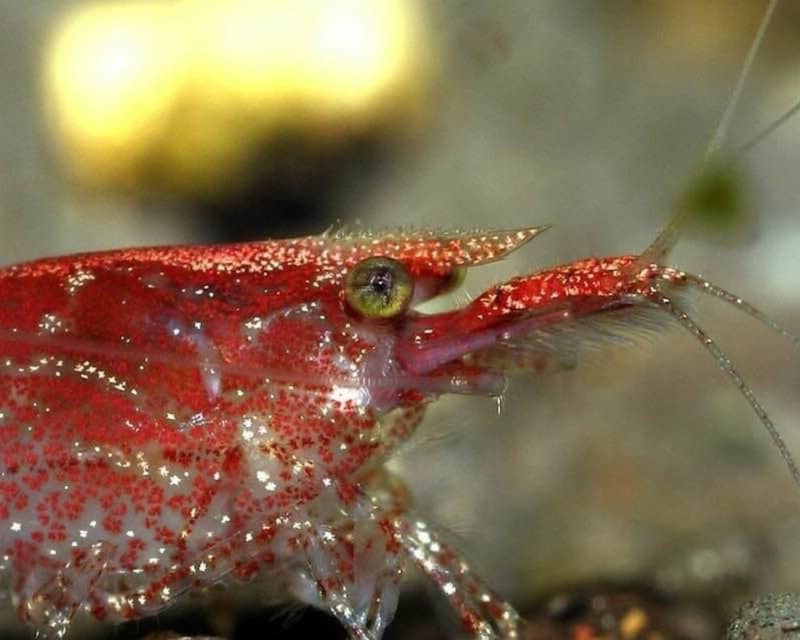
Cherry Shrimp
Red, blue, yellow, black and Rili cherry shrimp (Neocaridina) graded per listing, with mature-tank and water guidance so a new colony settles and breeds.
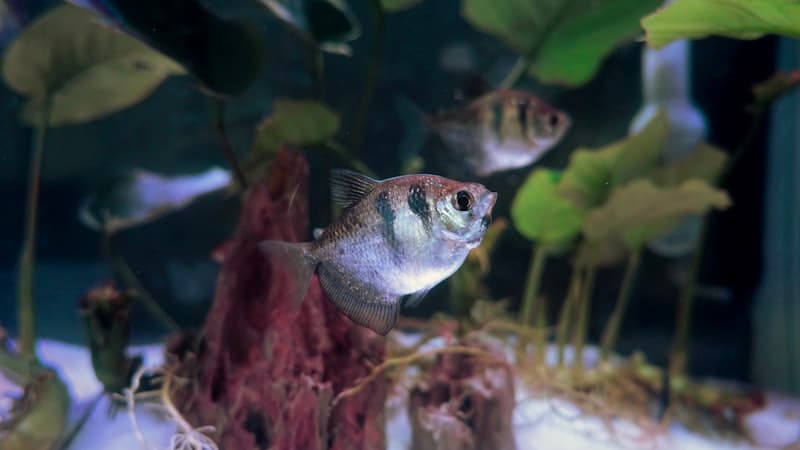
Corydoras
Shop current Corydoras catfish listings in the UK. Compare scientific identity, size and sale unit, with price and availability shown per product.
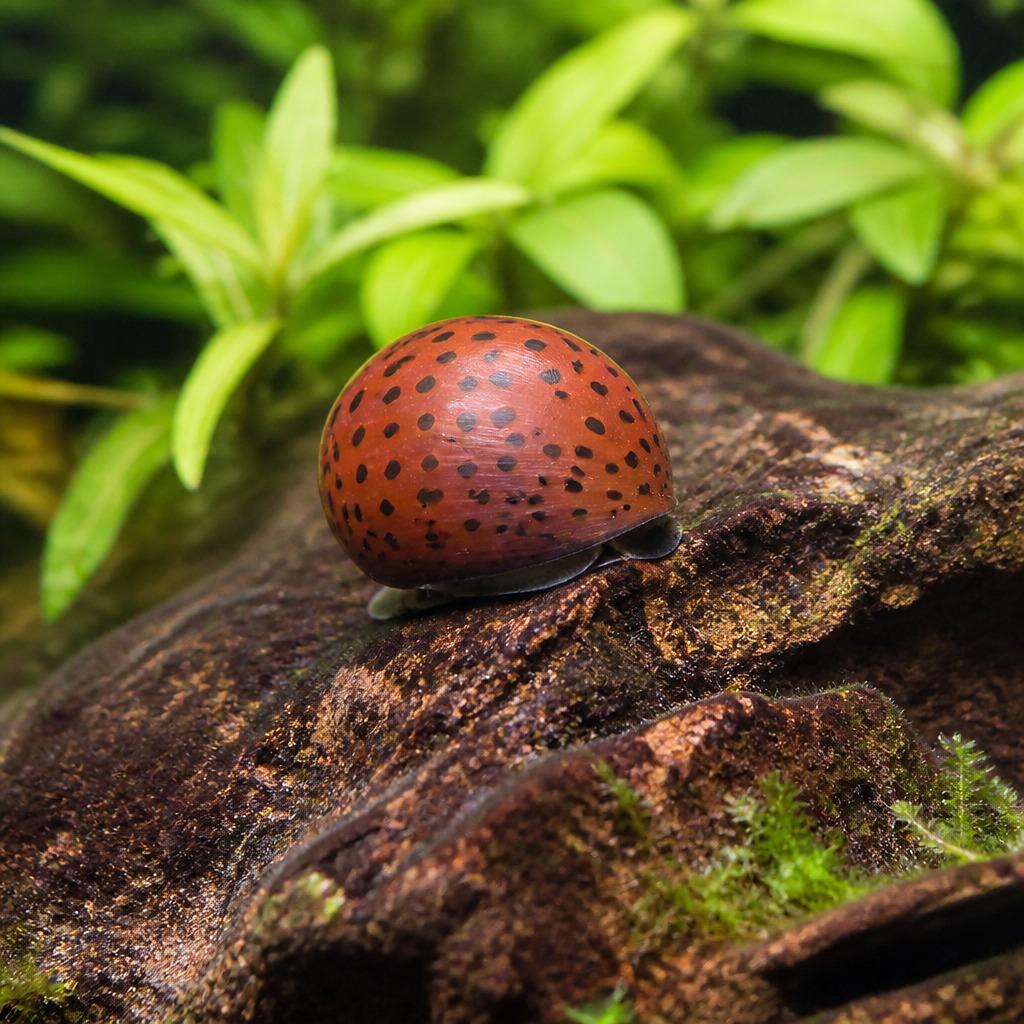
Freshwater Snails
Shop freshwater aquarium snails in the UK. Compare current species, adult size, water needs, diet, breeding risk, compatibility, prices and availability.
Sources & further reading
Material factual claims cite the sources below; store policy and cautious inference are labelled in the article. Sources are grouped by type so you can judge their weight at a glance.
Scientific database (15)
- [2]
- [4]Fricke, R., Eschmeyer, W. N. & Van der Laan, R. (eds.). Catalog of Fishes: Danio margaritatus. California Academy of Sciences. View source
- [6]
- [8]
- [9]Fricke, R., Eschmeyer, W. N. & Van der Laan, R. (eds.). Catalog of Fishes: Gastrodermus pygmaeus. California Academy of Sciences. View source
- [11]
- [13]
- [15]
- [17]
- [19]
- [21]
- [23]
- [25]
- [27]
- [29]
Veterinary reference (1)
- [31]Royal Veterinary College (2024). Aquarium health: nitrogen cycle. Royal Veterinary College. View source
Trade-body guidance (1)
- [30]
Hobbyist reference (14)
- [1]
- [3]
- [5]
- [7]
- [10]
- [12]
- [14]
- [16]
- [18]
- [20]
- [22]
- [24]
- [26]
- [28]
Government / regulatory (1)
- [32]
Spotted something that needs a fix?
Fishkeeping moves fast and we want every guide spot-on. If you think something here is wrong, out of date, or could be clearer, tell us — our team reads every message and updates the page.
Suggest an edit
Tropical Fish Co Editorial Team
Evidence-led aquarium editorial team
The Tropical Fish Co editorial team compiles care guidance from the sources cited on each page, separates published evidence from practical husbandry policy, and checks retail links against the current catalogue. First-hand experience is included only when a named contributor and the observation have been verified.
Related care guides
Ember Tetra Care Guide: Hyphessobrycon amandae
Ember tetras are very small Brazilian social fish, with a maximum recorded length of 2.0 cm excluding the tail. Keep them only in a fully cycled, stable aquarium. We recommend a group of at least 10 and about 45 litres with a 45 × 30 cm footprint rather than using a litres-per-fish formula.
Endler Guppy Care Guide: Poecilia wingei
Endler's livebearer is a small, social, rapidly reproducing Venezuelan fish. Start with a mature filtered aquarium, a deliberate sex and population plan, stable tested medium-hard water, open swimming room and cover. Our conservative house screen is an aquarium at least 60 cm long and a group of five or more where capacity allows.
Corydoras Care Guide: Choose the Right Cory Catfish
Identify the exact cory catfish before choosing care. Our starting policy for many common medium species is six compatible conspecifics, a mature 60 x 30 cm aquarium of about 60 litres, smooth fine sand and measured species-appropriate water.