
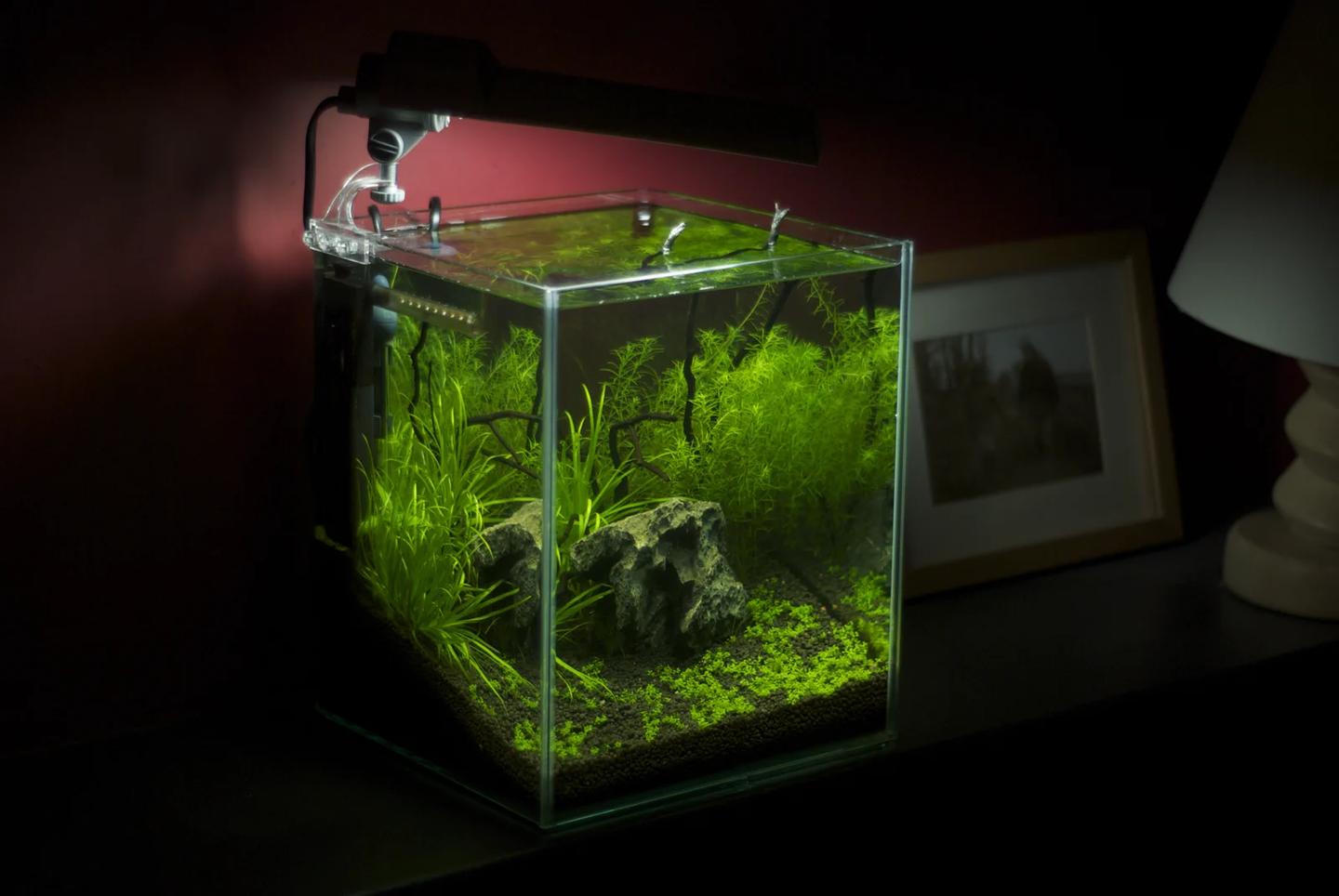
Best Fish for a 30 Litre Tank: Honest UK Guide

Direct answer: there is no responsible universal number of fish for a 30 litre tank. The clearest fish route in the selected UK guidance is one male Betta, because OATA recommends at least 20 litres for one male. However, the RSPCA recommends choosing an aquarium larger than about 40 litres. A nominal 30 litres therefore sits at a restrictive boundary—not at the start of a miniature community.
If the exact tank cannot provide suitable inner dimensions, usable water, mature filtration, stable heat, gentle flow, cover and tested water for one male Betta, choose a larger aquarium. A species-focused shrimp or snail aquarium is a separate alternative. Do not combine fish and invertebrates automatically, and do not use a fish-per-litre formula.
A nominal 30 litres is about 7.9 US gallons or 6.6 imperial gallons, using NIST conversion factors[1]. Substrate, rocks, wood, equipment and the air gap reduce the water actually available. Two tanks carrying the same 30 L label can also provide very different swimming length, floor area and gas exchange.
Commercial disclosure: Tropical Fish Co sells live animals. This article owns the planning decision; the exact identity, sale unit, size, price and availability belong on the current product page. A pictured or discussed animal is a research candidate—not a stock claim, basket recipe or compatibility guarantee.
Why the old “how many fish” answer was removed
The former page gave fixed recipes such as six Ember Tetras, six to eight chilli rasboras, eight Endlers, six Sparkling Gouramis or one Betta plus shrimp and snails. It also claimed a maximum of 12–15 small fish. Those statements made litres do work they cannot do.
A simple count ignores:
- adult body size and mass;
- swimming activity and the tank's actual length;
- social-group and territorial behaviour;
- surface area, oxygen and filter maturity;
- measured pH, hardness and temperature;
- sex, reproduction and fry;
- every existing resident; and
- the difference between gross capacity and usable water.
The RSPCA says larger volumes provide more stable conditions, recommends choosing a tank larger than 45 × 30 × 30 cm—about 40 litres—and treats fish-length calculations only as guidelines because temperature, source water, filtration and maintenance also affect water quality[2]. OATA likewise requires exact-species research, a mature filter, zero ammonia and nitrite and gradual additions[4].
Google's result page currently answers this query with an AI-generated fixed number. That search feature was used to understand the unanswered question, not as a husbandry source. The recommendations below come from the cited welfare, government, trade-body and scientific records.
Measure the tank before choosing any animal
Measure the aquarium's inside rather than relying on a model name. For a rectangular tank:
inner length (cm) × inner width (cm) × filled water depth (cm) ÷ 1,000 = approximate litres before displacement
Then record:
- inner length and width;
- approximate usable water after substrate and décor;
- surface access and cover;
- stable temperature measured with an independent thermometer;
- pH, general hardness (GH) and carbonate hardness (KH);
- ammonia, nitrite and nitrate trend;
- the exact filter and its flow; and
- every existing animal at adult size.
UK tap water is not one chemistry. The Drinking Water Inspectorate says hardness varies with geology and local supply and directs readers to the water company for an accurate local result[5]. Use that report as context, then test the aquarium and replacement water. “UK tap water” is not a species-suitability claim.
Use the tank-volume calculator for the estimate, compare measured water with the water matcher, and screen current residents with the tank-mate tool. These tools organise evidence; they cannot guarantee capacity or compatibility.
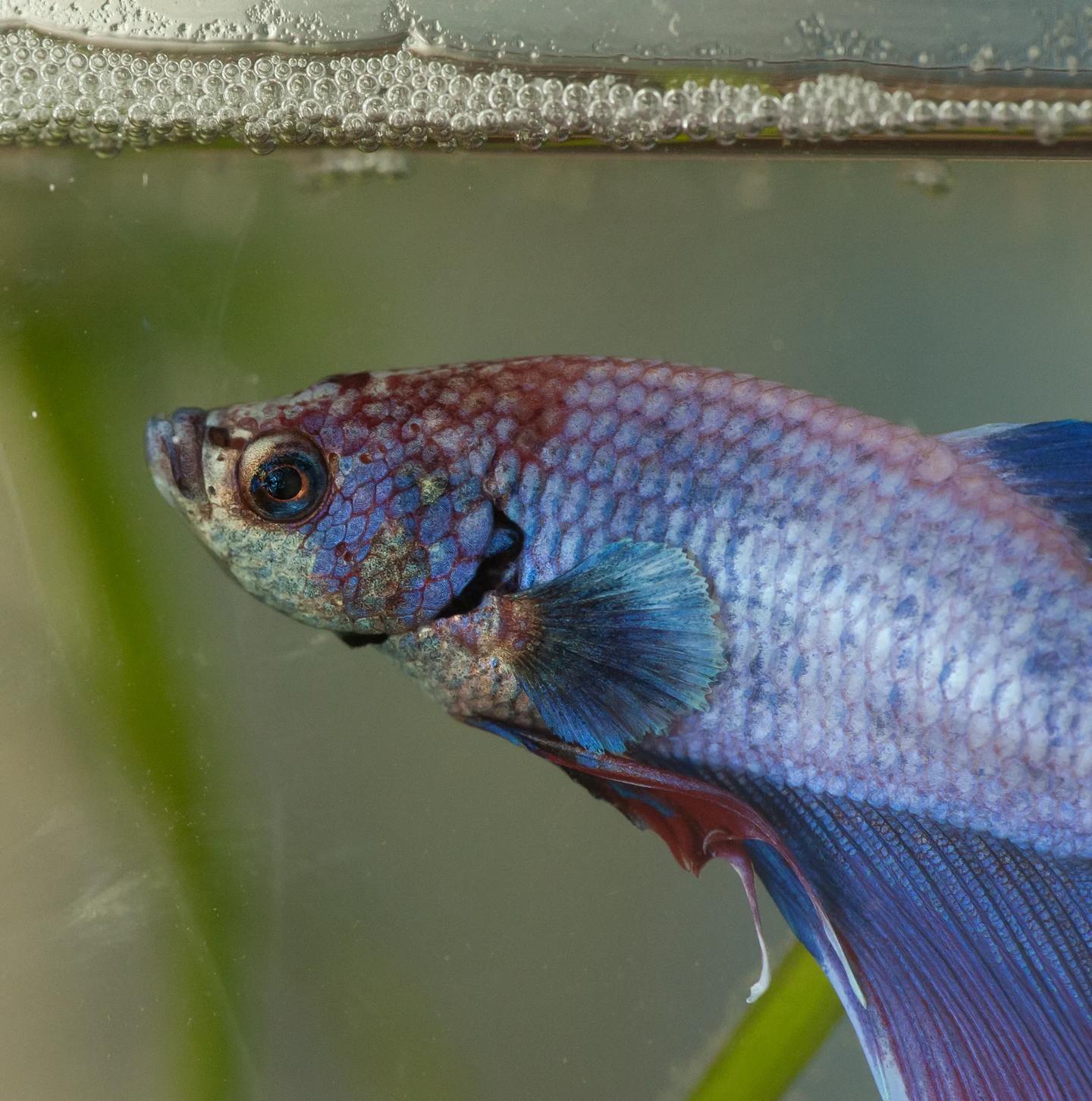
Route 1: one male Betta, conditionally
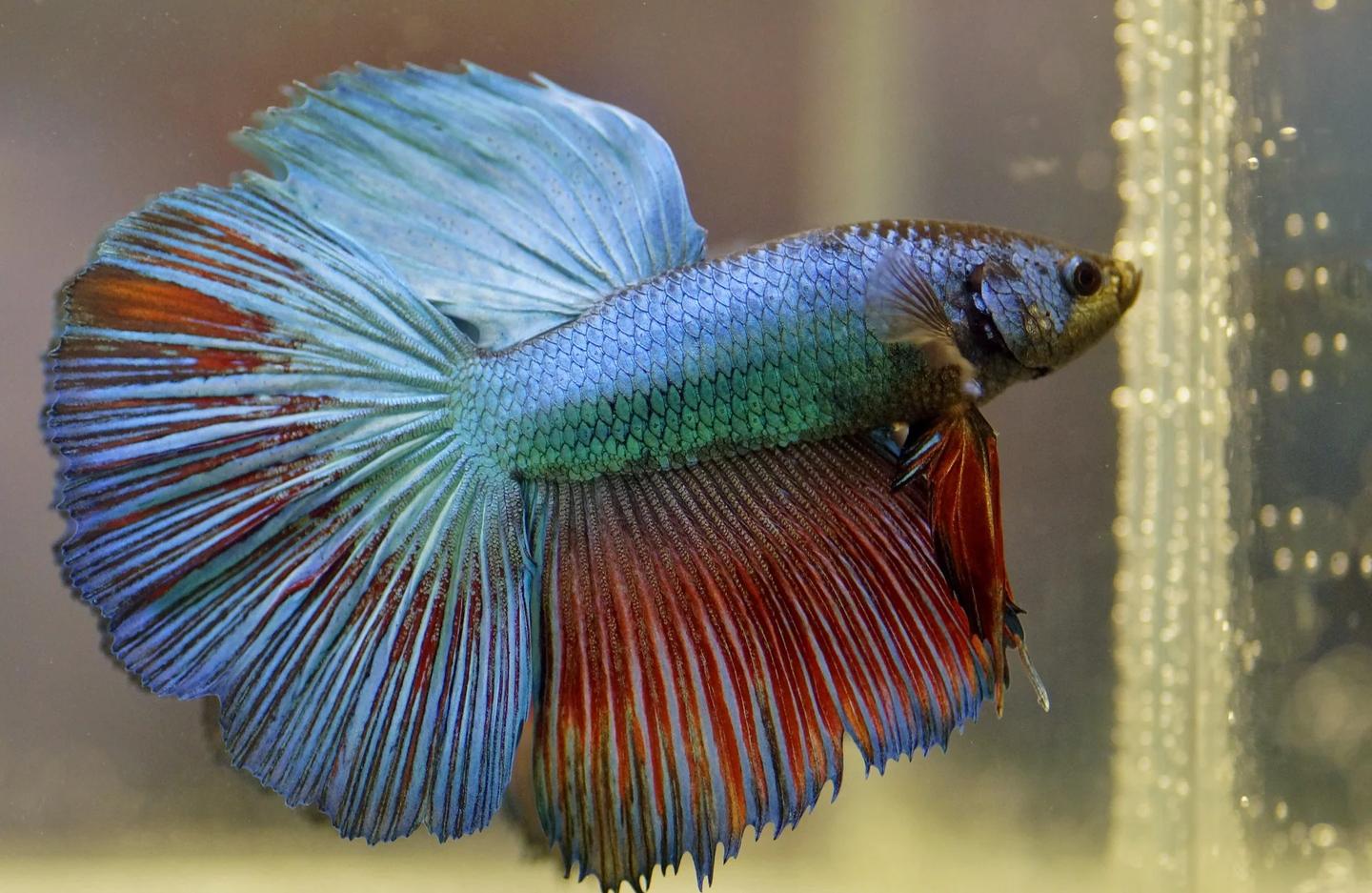
One male Betta splendens is the clearest fish candidate—not permission for a Betta community. OATA recommends at least 20 litres for one male, compared with at least 60 litres for a female group. It also requires filtration, heating, gentle flow, cover, planting or suitable shelter and access to air at the surface[6]. FishBase supports the current species identity but does not set a home-aquarium stocking recipe[7].
A 30 litre Betta plan must pass all of these checks:
- the usable water remains above the relevant source boundary after displacement;
- the footprint lets the individual swim and turn without sharp décor;
- a mature filter keeps ammonia and nitrite at zero without excessive current;
- tested pH, GH, KH and temperature fit the animal and the seller's holding-water transition;
- the aquarium is covered while leaving warm air and surface access;
- planting or smooth shelter provides cover without obstructing the surface; and
- a separate mature enclosure is ready if any proposed companion fails.
Do not add a second male. Do not treat a female group as an alternative at this size. OATA warns that mixing Bettas with other fish can be difficult, and the RSPCA notes that male Bettas may fight with their own kind while shoaling species need proper groups[3].
The RSPCA's broader recommendation remains more cautious than the OATA species sheet. This page does not hide that difference: 30 litres may pass OATA's single-male volume screen, but a larger aquarium can offer more stable water and greater design margin.
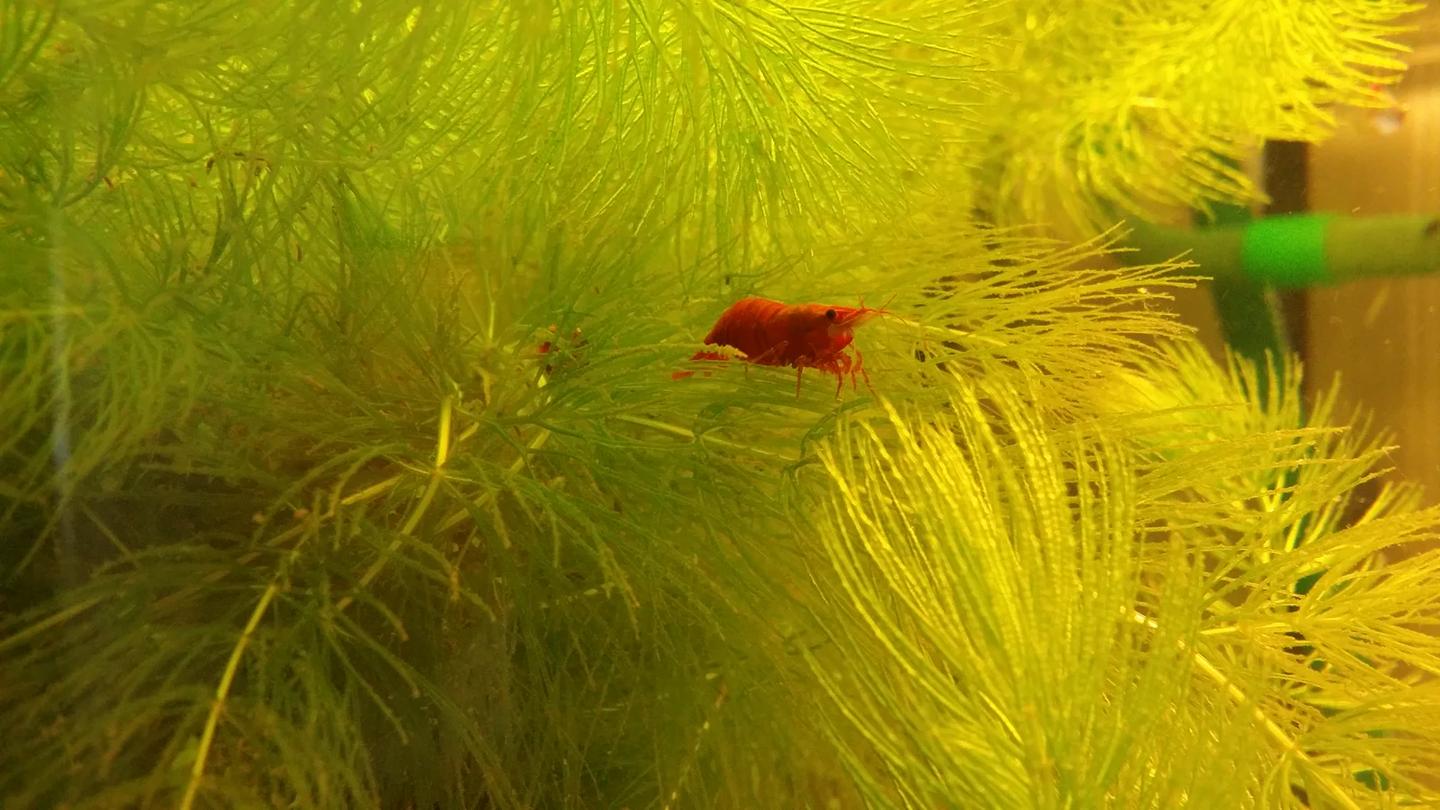
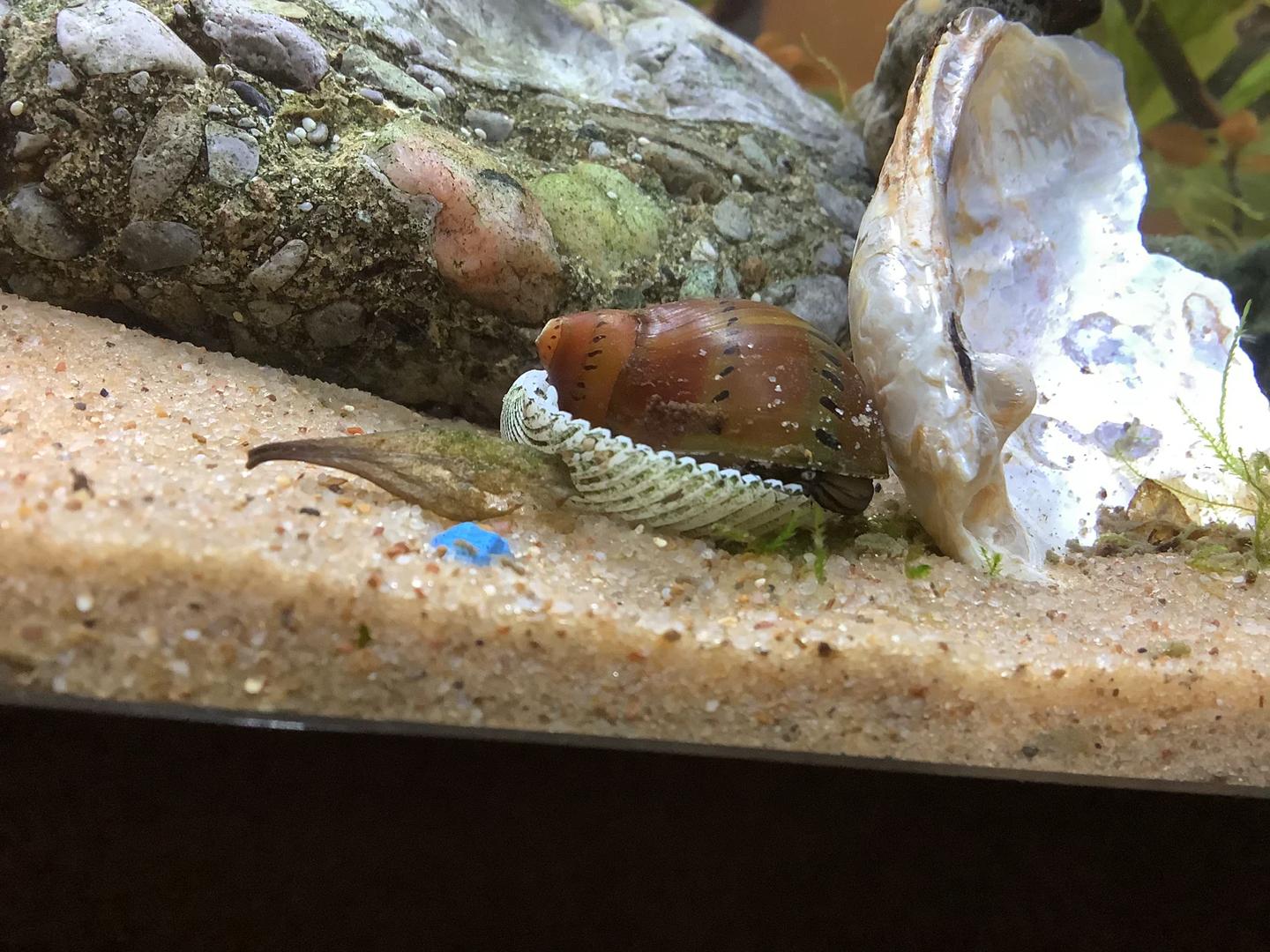
Route 2: a species-focused shrimp or snail aquarium
Shrimp and snails are not fish, but a carefully planned invertebrate aquarium can make better use of a small footprint than an undersized mixed fish community. They are animals with complete needs—not equipment for removing algae or leftovers.
OATA recommends at least 10 litres for a group of smaller freshwater shrimp or snails and about 20 litres for larger examples such as Amano Shrimp. It also says the aquarium must be larger when they are kept with fish[12]. Its group-level sheet cannot identify the exact animal in a shop, so verify species or trade-form identity and use the exact care guide.
Before choosing this route:
- mature the filter and confirm zero ammonia and nitrite;
- match temperature, pH, GH and KH to the exact animal;
- protect the filter intake and provide appropriate cover;
- provide a complete diet instead of relying on visible algae;
- check every medicine or additive for copper and invertebrate safety;
- plan for reproduction before a colony expands; and
- add animals gradually while monitoring water and behaviour.
Continue with the Shrimp Keeping guide, Cherry Shrimp guide, Amano Shrimp guide or Nerite Snail guide. No fish is guaranteed shrimp-safe, and a snail's family-level trade label is not enough to determine adult size, diet or reproduction.
Fish groups that do not pass the 30 litre screen
The old page used small shop size as a substitute for a complete adult plan. Current broad UK guidance gives these starting boundaries before exact species, dimensions, water and social needs are considered:
| Proposed animal | Why it does not pass this 30 litre guide |
|---|---|
| Neon, Ember or other tetras | OATA starts a small shoal of a smaller tetra or pencilfish species at 45 litres; social fish need a complete group, not a token sample[8] |
| Chilli or other rasboras | OATA starts a shoal of its smallest rasboras at 45 litres and larger examples at 60 litres[9] |
| Guppies or Endlers | OATA starts a small group of smaller guppy forms at 45 litres; water, sex, social pressure and reproduction still need a plan[10] |
| Female Betta group | OATA starts a female group at 60 litres; a single female is not a shortcut around social and behavioural planning[6] |
| Corydoradinae or small pleco | OATA starts a smaller Corydoradinae shoal or smaller pleco at 80 litres; floor area, substrate, oxygen and direct feeding also matter[11] |
| Goldfish | The RSPCA says small volumes are unstable and records at least 60 litres of water per goldfish; a 30 litre tropical plan is not a goldfish plan[2] |
| Sparkling or dwarf gourami | The selected sources do not establish the former six-fish or single-fish 30 litre recipes; exact species, adult size, territory, surface access and social needs require a separate larger-tank assessment |
| Scarlet Badis or an unidentified “nano fish” | A small label does not establish adult space, sex ratio, feeding, territory, group, water or a responsible minimum aquarium |
This table is a shortlist stop, not proof that the stated boundary is ideal. Upgrade to the 60 litre guide and still check the exact internal length, water and adult social plan.
How to answer “how many fish?” without a formula
Use a staged capacity gate:
- Choose one exact route. One male Betta or one species-focused invertebrate plan—not both by default.
- Verify identity and adult needs. A common name, shop size or colour does not settle the species.
- Fit the complete social plan. Do not isolate shoaling fish to make the litres appear sufficient.
- Finish fishless maturation. Ammonia and nitrite must rise and then return to zero and remain there; elapsed weeks alone do not prove readiness.
- Check the adult layout. Preserve the surface, cover, open water and floor area the selected animal uses.
- Add deliberately. Follow the exact social and acclimation plan rather than adding random “starter fish”.
- Measure again. Record water results, feeding, breathing, swimming, hiding, chasing and injury.
- Stop when evidence is uncertain. An empty-looking layer is not unused biological capacity.
If an animal hides continually, cannot feed, gasps, chases, is chased or shows injury, test the water immediately and separate when needed. Contact a qualified aquatic vet or knowledgeable retailer for diagnosis. This guide gives no medicine, heat, salt or dosing recipe.
Equipment without a one-size shopping list
A mature filter is essential. Choose flow that supports gas exchange and filtration without preventing the selected animal from swimming normally. Protect the intake where shrimp or small animals could be drawn in.
There is no universal heater wattage for “30 litres”. Heater choice depends on room temperature, target temperature, aquarium shape, cover, circulation and the manufacturer's current rating. Where the selected tropical animal requires heat, use a thermostatically controlled heater and verify stable water temperature with an independent thermometer[2].
Buy tests for ammonia, nitrite, nitrate trend and pH; measure GH and KH for species selection. OATA says a filter matures when ammonia and nitrite have risen, fallen to zero and remain at zero—not when a fixed four- or six-week calendar expires[4].
Purchase-ready 30 litre checklist
Do not buy an animal until every line has a defensible answer:
- Gross label, inner dimensions and approximate usable water are recorded.
- The exact animal's adult space and social needs fit the measured footprint.
- pH, GH, KH and temperature are measured rather than guessed.
- The filter is mature and ammonia and nitrite are zero.
- One male Betta or one invertebrate species plan is selected—not a mixed recipe.
- The exact identity and adult size are verified from a reliable source.
- Flow, cover, surface access, substrate and shelter fit that animal.
- Every animal has a complete diet; none is purchased as cleaning equipment.
- Sex, reproduction and a realistic destination for young are planned.
- Every current resident is included in capacity and compatibility checks.
- A mature separation option exists before any companion is attempted.
- Current product identity, sale unit, size and availability are checked on the exact listing.
Read the first tropical tank guide for fishless maturation and the water chemistry guide before choosing livestock. For the fish route, continue to the Betta guide. Only after those checks should you browse freshwater fish. Stock changes; this article contains no product card, SKU, price or availability promise.
How this guide was checked
The Tropical Fish Co Editorial Team rebuilt this page on 6 September 2026. Unit conversions come from NIST; aquarium welfare and the broader over-40-litre recommendation come from the RSPCA; setup and species-group boundaries come from OATA; UK hardness context comes from the Drinking Water Inspectorate; and FishBase is used narrowly for current Betta identity.
Owned UK-mobile Search Console evidence showed that “how many fish” questions were the page's largest unanswered opportunity. A current external mobile result also showed Tropical Fish Co being cited in Google's AI Overview for the old fixed stocking recipes. Search results, competitors, forums and AI summaries were used to understand intent and misinformation—not as husbandry authorities.
The old universal under-4-cm rule, 12–15-fish maximum, eight fixed stocking recipes, “clean-up crew”, UK-tap-water promise, fixed equipment prices, universal heater wattage and calendar-only cycling claim were removed because the selected evidence did not support them.
If you spot a source conflict, use the correction box below. A correction request is editorial feedback—not a lead, sale or ecommerce conversion. Purchases and revenue are the final ecommerce outcomes. Add-to-cart and begin-checkout are diagnostic funnel signals, not leads or final conversions; forms, email, feedback, newsletters, back-in-stock requests and generic events are never leads or ecommerce conversions.
Fish and invertebrate routes to investigate
Frequently asked questions
Browse our UK live-fish range
From this article straight into the catalogue.
Beginner Fish
The best tropical fish for beginners UK — hand-picked easy-care species that thrive with minimal fuss. Perfect starter community tank candidates.
Community Tank Fish
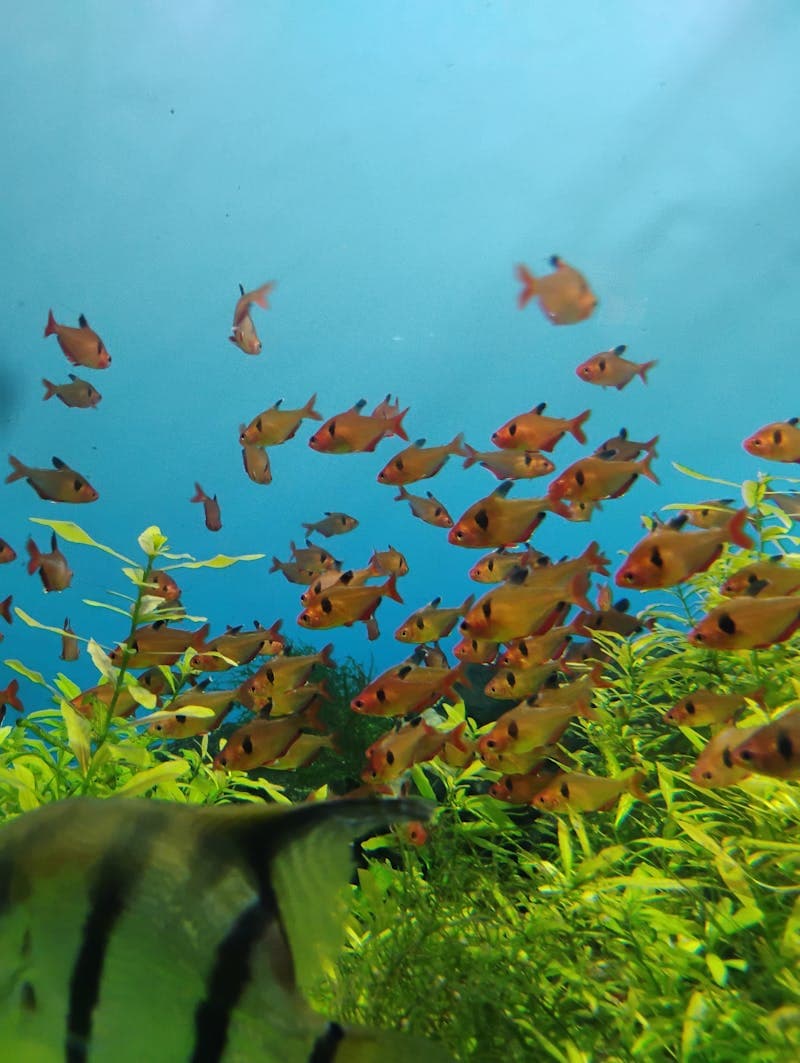
Peaceful tetras, rasboras, corydoras, platies and gouramis chosen to live together — temperament, adult size and water range per listing so the mix works.
Tetras
Premium Tetras for sale UK — Cardinal, Ember, Black Neon, Rummy Nose, Serpae, Diamond, Glowlight and more. Peaceful community schoolers.
Betta Fish
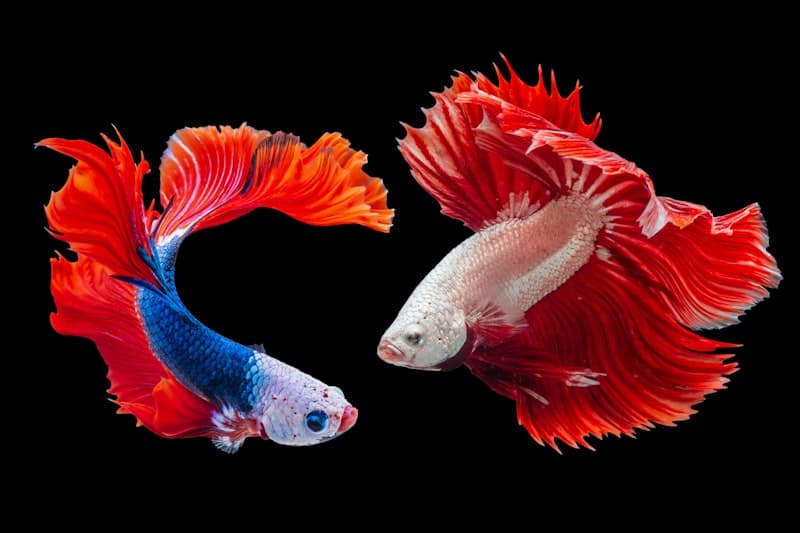
Halfmoon, plakat, koi, giant and wild-type Betta splendens, males and females, tail type and size stated per listing. Bagged singly, live arrival covered.
Guppy
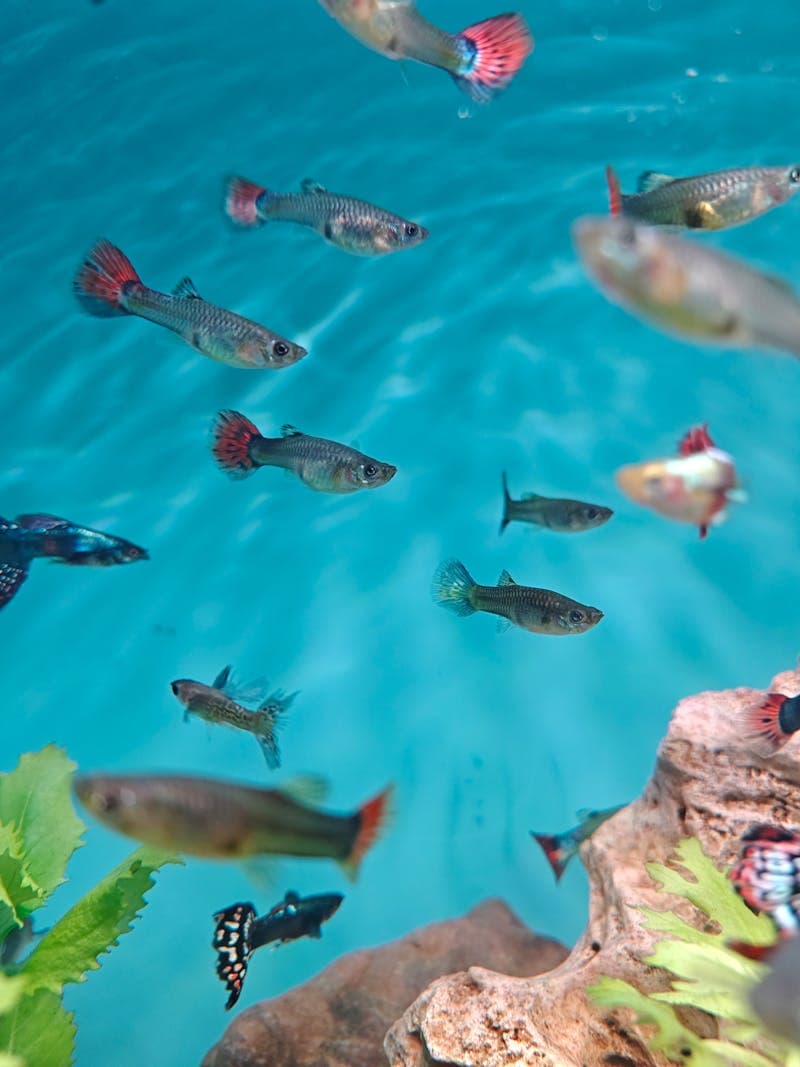
Fancy guppies bred for colour — Moscow, Cobra, Dumbo ear and Endler lines as males, females or pairs. Hardy in UK tap water; arrive alive or replaced.
Cherry Shrimp
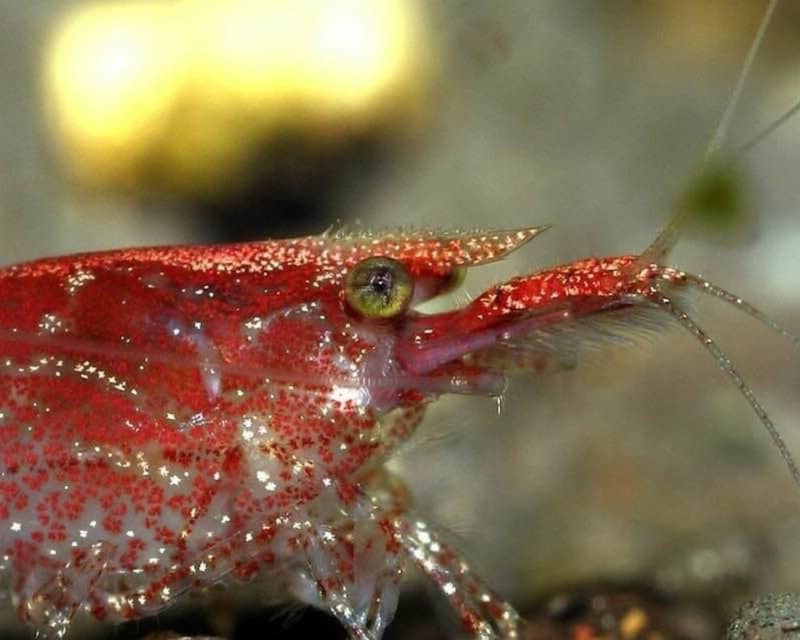
Red, blue, yellow, black and Rili cherry shrimp (Neocaridina) graded per listing, with mature-tank and water guidance so a new colony settles and breeds.
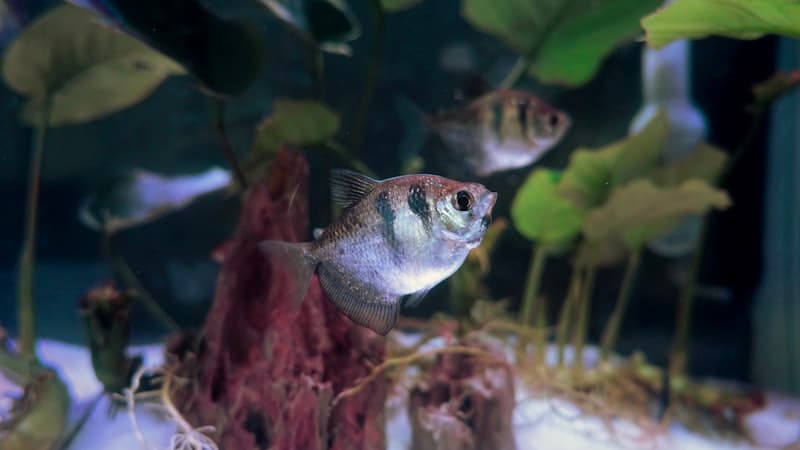
Corydoras
Shop current Corydoras catfish listings in the UK. Compare scientific identity, size and sale unit, with price and availability shown per product.
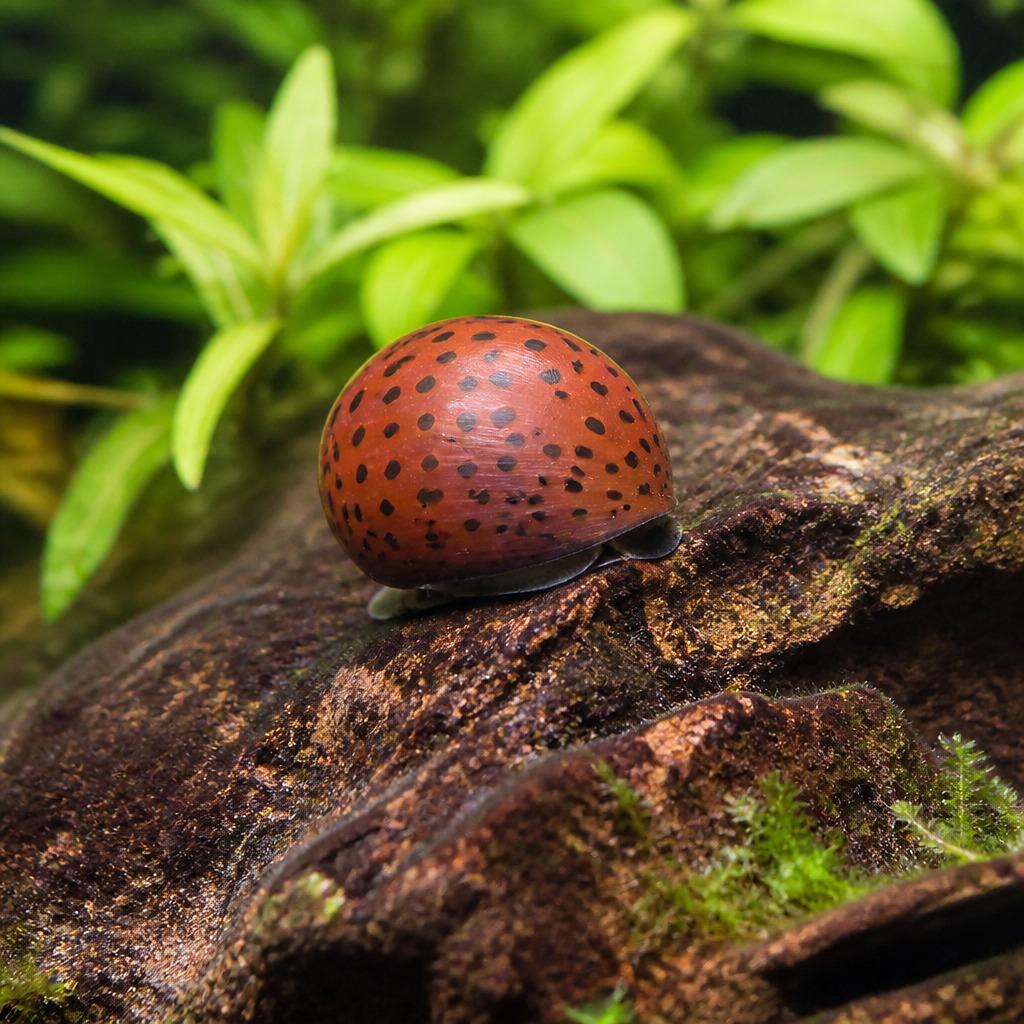
Freshwater Snails
Shop freshwater aquarium snails in the UK. Compare current species, adult size, water needs, diet, breeding risk, compatibility, prices and availability.
Sources & further reading
Material factual claims cite the sources below; store policy and cautious inference are labelled in the article. Sources are grouped by type so you can judge their weight at a glance.
Scientific database (1)
- [7]Froese, R. & Pauly, D. (eds.). FishBase: Betta splendens. FishBase. View source
Current species record used for identity and biological context; it does not establish a household tank volume, companion or outcome.
Animal-welfare charity (2)
- [2]Royal Society for the Prevention of Cruelty to Animals. Choosing an aquarium for pet fish. RSPCA. View source
UK welfare guidance on aquarium size and shape, adult growth, stable water, oxygen, filtration, testing and fishless cycling. It recommends choosing a tank larger than 45 by 30 by 30 cm, about 40 litres, and treats length calculations only as guidelines.
- [3]Royal Society for the Prevention of Cruelty to Animals. Keeping pet fish together. RSPCA. View source
UK welfare guidance on social groups, water, behaviour and compatibility; it does not approve a fixed 30 litre community.
Trade-body guidance (7)
- [4]Ornamental Aquatic Trade Association. How to set up and look after a freshwater tank / aquarium. OATA. View source
UK trade-body guidance on species choice, fishless filter maturation, zero ammonia and nitrite, testing, gradual additions and routine maintenance.
- [6]Ornamental Aquatic Trade Association. How to look after Siamese fighting fish (Bettas). OATA. View source
UK guidance recommends at least 20 litres for one male, 60 litres for a female group, filtration, heat, gentle flow, cover and surface-air access; it warns that community mixing can be difficult.
- [8]Ornamental Aquatic Trade Association. How to look after tetras and pencilfish. OATA. View source
Broad UK guidance starts a small shoal of a smaller species at 45 litres and larger species at 80 litres; exact-species requirements still control.
- [9]Ornamental Aquatic Trade Association. How to look after rasboras. OATA. View source
Broad UK guidance starts a shoal of the smallest rasboras at 45 litres and larger examples at 60 litres; it does not support a 30 litre chilli-rasbora recipe.
- [10]Ornamental Aquatic Trade Association. How to look after guppies and mollies. OATA. View source
UK guidance starts a small group of smaller forms at 45 litres and also requires water, social, sex and reproduction planning.
- [11]Ornamental Aquatic Trade Association. How to look after freshwater catfish. OATA. View source
Broad UK guidance starts a smaller Corydoradinae shoal or smaller pleco at 80 litres and requires exact identity, floor, substrate and feeding checks.
- [12]Ornamental Aquatic Trade Association. How to look after freshwater shrimp and snails. OATA. View source
Broad UK invertebrate guidance on group, space, water, cover, food, copper sensitivity and fish-related capacity; its older trade taxonomy is not used for exact identity.
Government / regulatory (2)
- [1]National Institute of Standards and Technology. NIST Guide to the SI, Appendix B.8: Factors for Units Listed Alphabetically. US National Institute of Standards and Technology. View source
Authoritative US and imperial gallon-to-litre conversion factors; it does not provide aquarium stocking advice.
- [5]Drinking Water Inspectorate. Water Hardness / Hard Water. Drinking Water Inspectorate. View source
UK drinking-water hardness varies by local geology and supply; the local water-company report is context and does not replace aquarium tests.
Spotted something that needs a fix?
Fishkeeping moves fast and we want every guide spot-on. If you think something here is wrong, out of date, or could be clearer, tell us — our team reads every message and updates the page.
Suggest an editRelated care guides
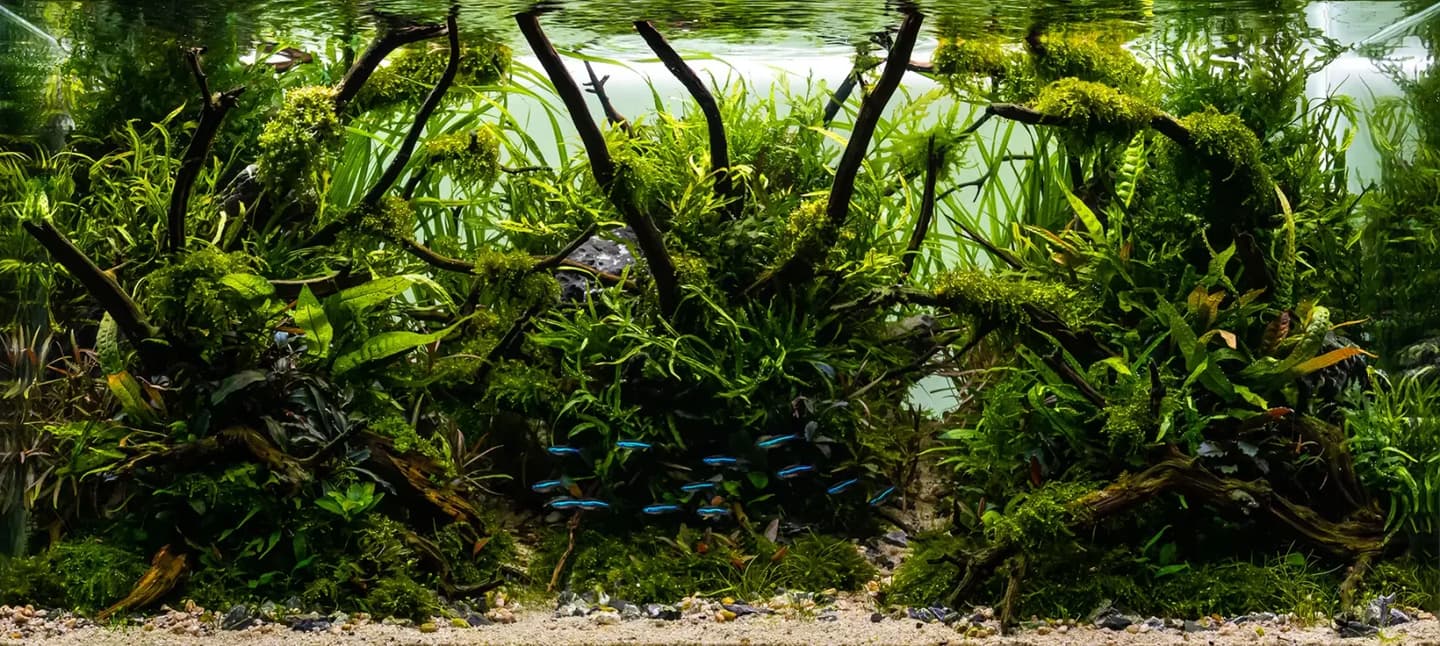
How to Set Up a Tropical Fish Tank: 10 Safe Steps
Choose the intended fish before the aquarium, place the tank on a suitable level support, install a filter and thermostatic heater, condition and test the water, then complete a fishless cycle. Add fish only after the chosen maturation process reaches its defined endpoint and repeated tests show zero ammonia and zero nitrite; elapsed days alone do not prove readiness.
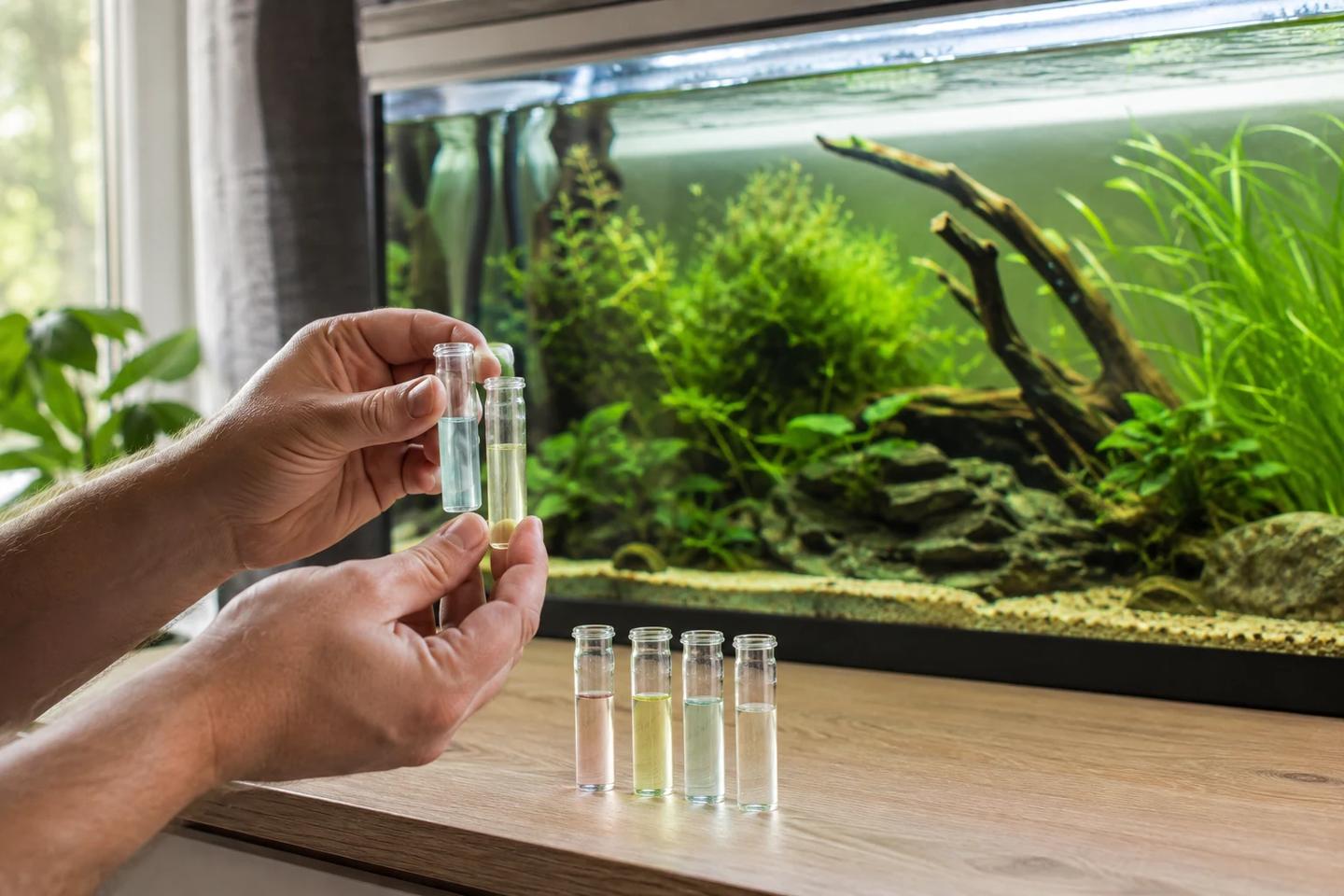
Aquarium Water Parameters: What to Test and Why
There is no universal set of perfect freshwater aquarium parameters. Identify the animals, learn what the test and unit actually report, establish your local source-water baseline, and compare repeat measurements. In an established aquarium, a confirmed ammonia or nitrite detection needs investigation; pH, GH, KH, temperature and nitrate decisions depend on the species, life stage and whole system.
Betta Fish Care Guide: Siamese Fighting Fish
For one typical domestic Betta splendens, start with at least 20 litres, a mature filter, thermostatic heater, separate thermometer, gentle flow, a secure lid with surface access, and plants or refuges. Keep one male per aquarium.