
Best Fish for a 60 Litre Tank: UK Stocking Guide

Direct answer: there is no universal “best community” or fish count for a 60 litre tank. A responsible shortlist begins with the aquarium's inner length and width, usable water and measured chemistry, then selects one complete adult social plan. Neon Tetras or Harlequin Rasboras may suit one long, mature, softer-water route; Endler guppies or platies may suit a harder-water route with a reproduction plan; a single male Betta can be considered as the focal plan rather than an automatic addition to a shoal.
A nominal 60 litres is about 15.9 US gallons or 13.2 imperial gallons, using NIST conversion factors[1]. That is gross capacity. Substrate, wood, rocks, equipment and the air gap reduce usable water, while two tanks with the same litres can provide very different swimming length and floor area. This guide therefore replaces the former fixed-number answer and four fixed communities with conditional routes.
Commercial disclosure: Tropical Fish Co sells live fish. This article owns the stocking decision; exact identity, sale unit, size, price and availability belong on the current product page. A species or photograph here is a research candidate, not a stock claim, basket recipe or compatibility guarantee.
Measure the aquarium before choosing fish
Measure the inside of the aquarium instead of relying on the model label. For a rectangular tank:
inner length (cm) × inner width (cm) × filled water depth (cm) ÷ 1,000 = approximate litres before displacement
Then allow for substrate and décor. The result is still an estimate, but it distinguishes a “60 L” marketing label from the water and footprint the fish receive. The RSPCA says adult size, aquarium capacity, shape, oxygen exchange, filtration and maintenance all affect stocking, and describes length-based calculations only as guidelines[2].
Record these before making a shortlist:
- inner length, width and filled depth;
- approximate usable water after décor;
- stable temperature measured with an independent thermometer;
- pH, general hardness (GH) and carbonate hardness (KH);
- ammonia and nitrite results;
- every existing resident at adult size; and
- the exact filter, feeding and maintenance plan.
The RSPCA also separates social needs from simple capacity: some fish need a proper group, while others may fight with their own kind or unsuitable companions. It therefore tells keepers to research the exact species, water and compatibility rather than assemble fish by tank layer alone[3].
UK tap water is not one chemistry. Hardness varies with geology and supply, and the Drinking Water Inspectorate directs readers to their water company for accurate local information[5]. Use that report as context, then test the aquarium and replacement water. A fish is not “easy” when its needs conflict with the water you can keep stable.
Compare five realistic starting routes
This is a comparison table, not a five-species community. Choose one route first, verify the exact animal and fit its complete social or individual plan before asking whether anything else belongs in the tank.
| Route | When it enters the shortlist | What prevents an automatic yes |
|---|---|---|
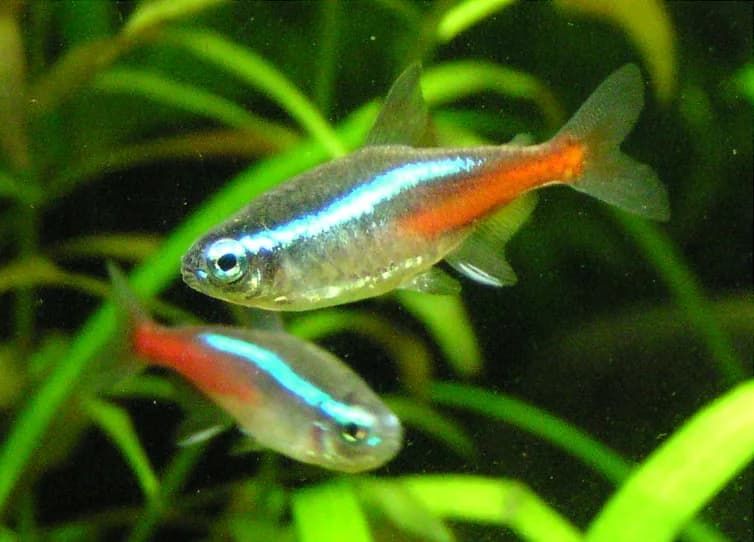
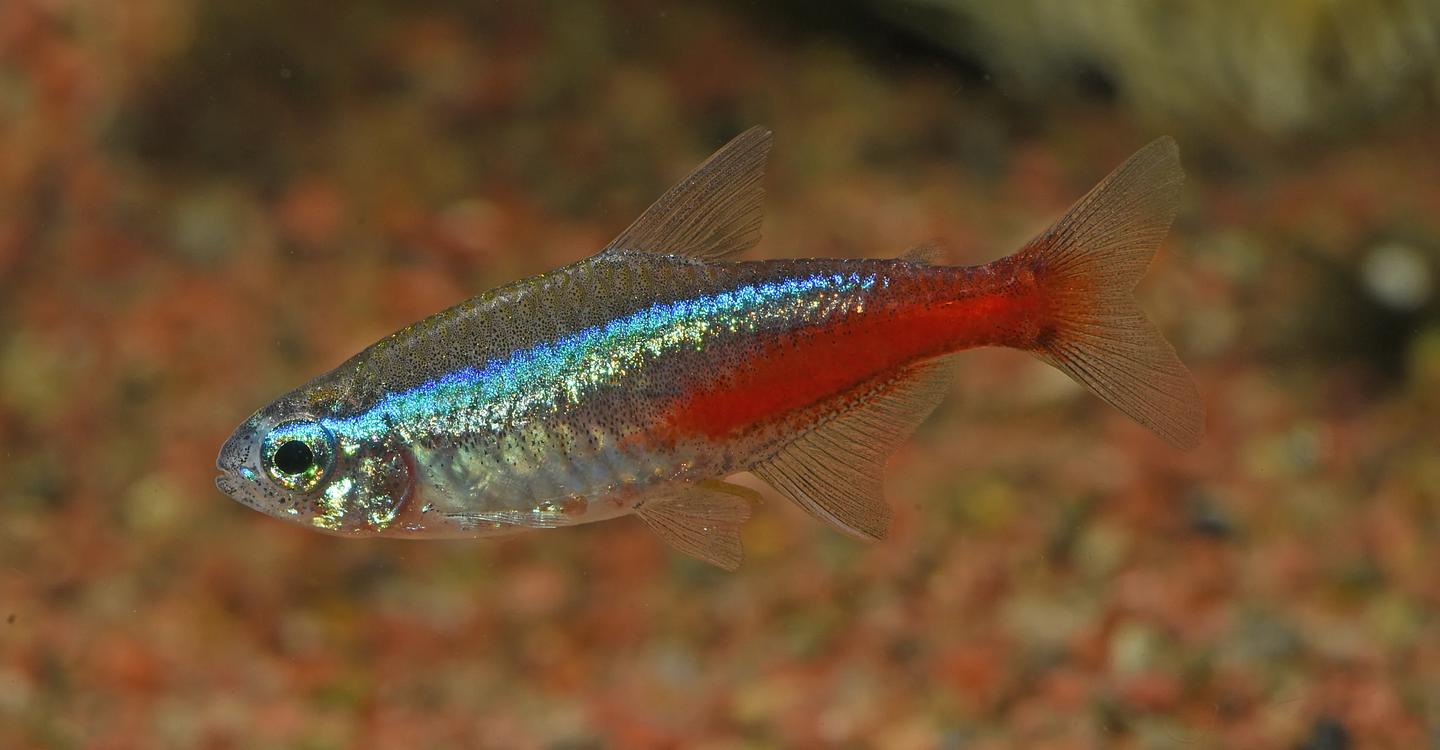
| Neon Tetra (Paracheirodon innesi) shoal | A mature aquarium at least 60 cm long, suitably soft water and room for one complete group | “60 litres” may be shorter than 60 cm; a token group, hard water, an immature filter or a second shoal can fail the screen |
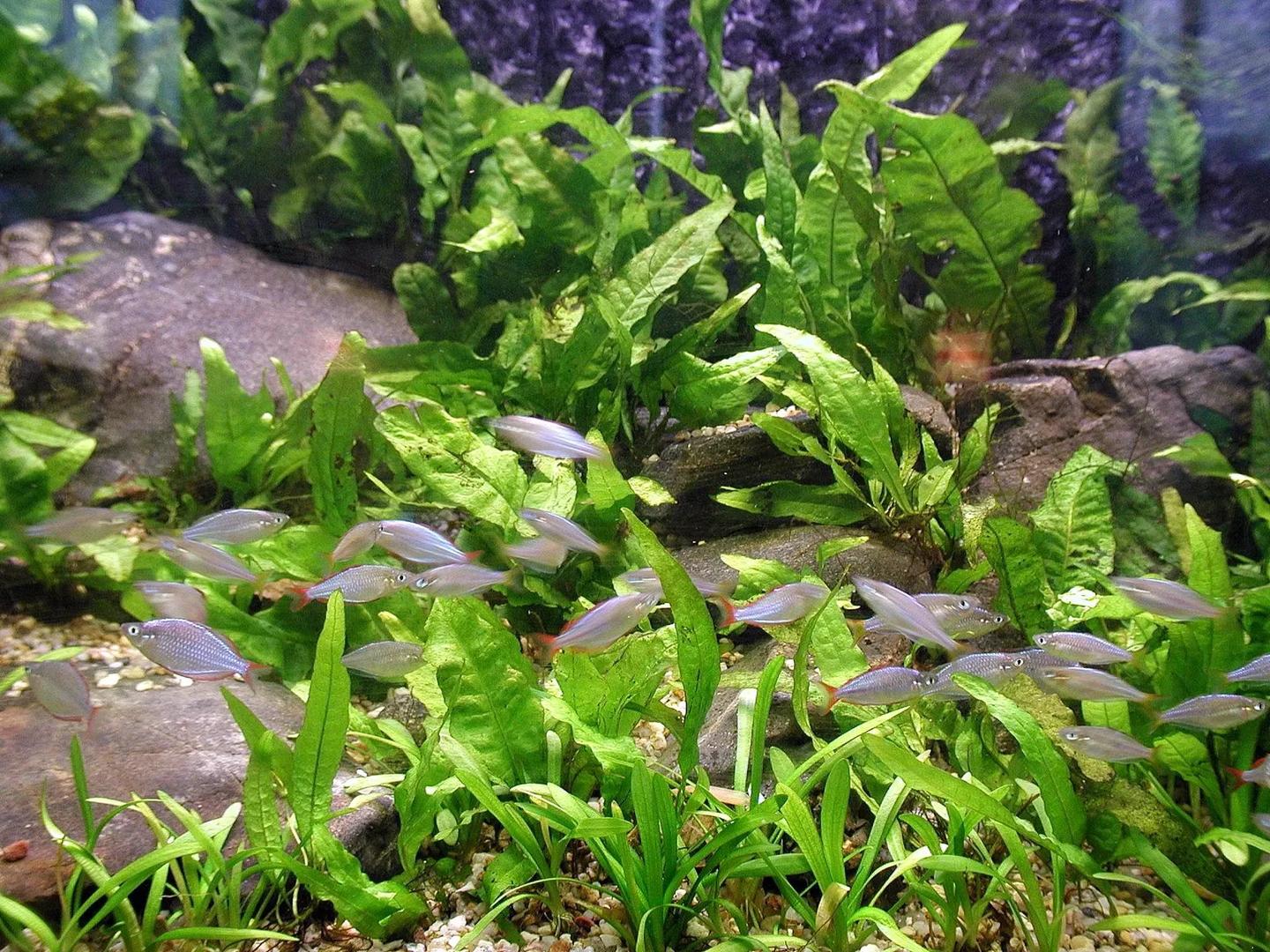
| Harlequin Rasbora (Trigonostigma heteromorpha) shoal | A long, planted, calm aquarium with water inside the exact species' checked range | This roughly 5 cm species sits at OATA's 60-litre broad starting boundary; the label gives no spare capacity automatically |
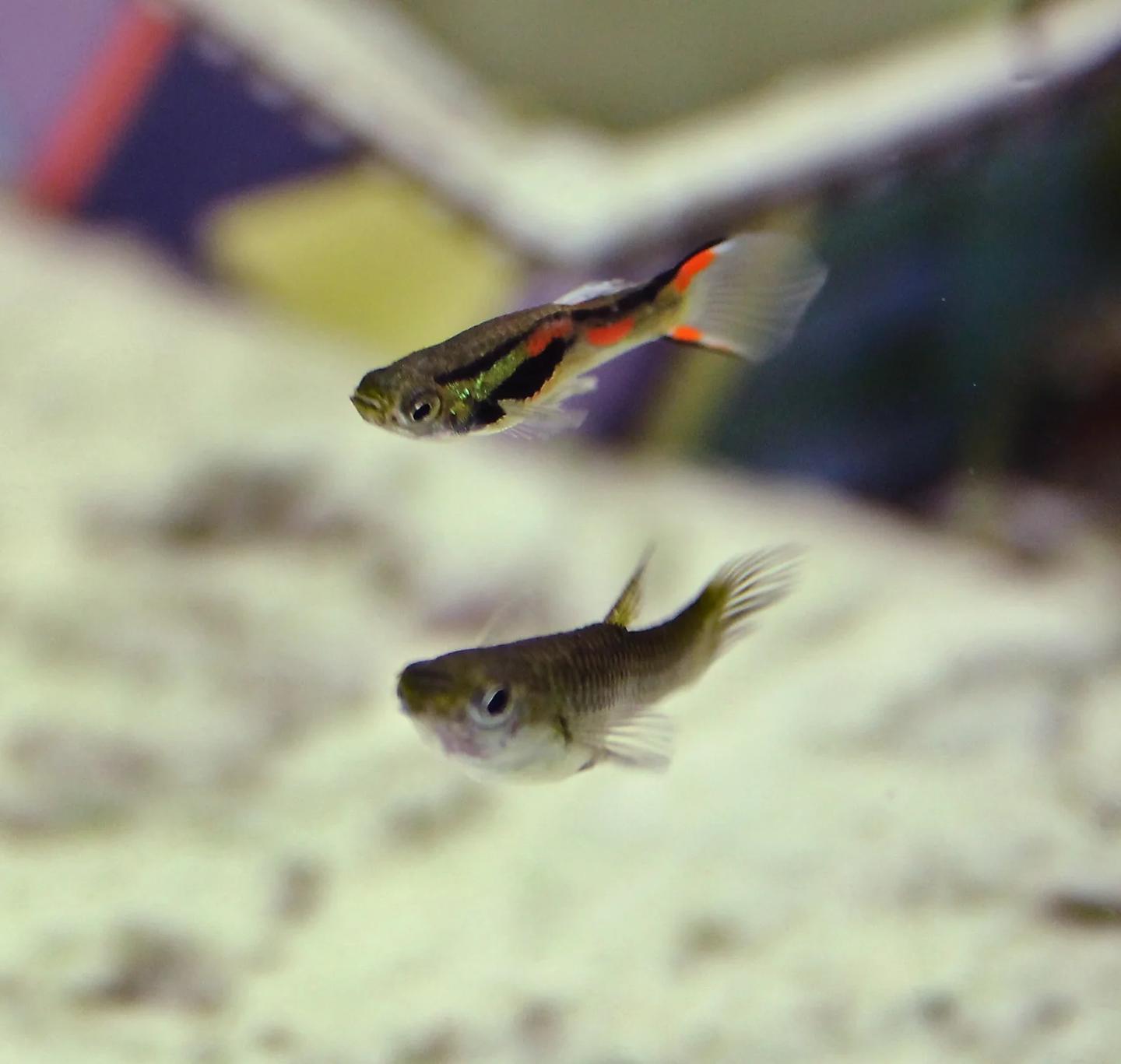
| Endler guppy (Poecilia wingei) focus | Tested harder, more alkaline water, verified identity and a deliberate sex and fry plan | Retail “Endler” fish may be hybrids; reproduction and adult bioload can change the plan quickly |
| Platy (Xiphophorus maculatus) focus | Matching water, open swimming room and a planned group and sex structure | Adults are larger than tiny nano fish; fry and persistent male attention can consume limited capacity |
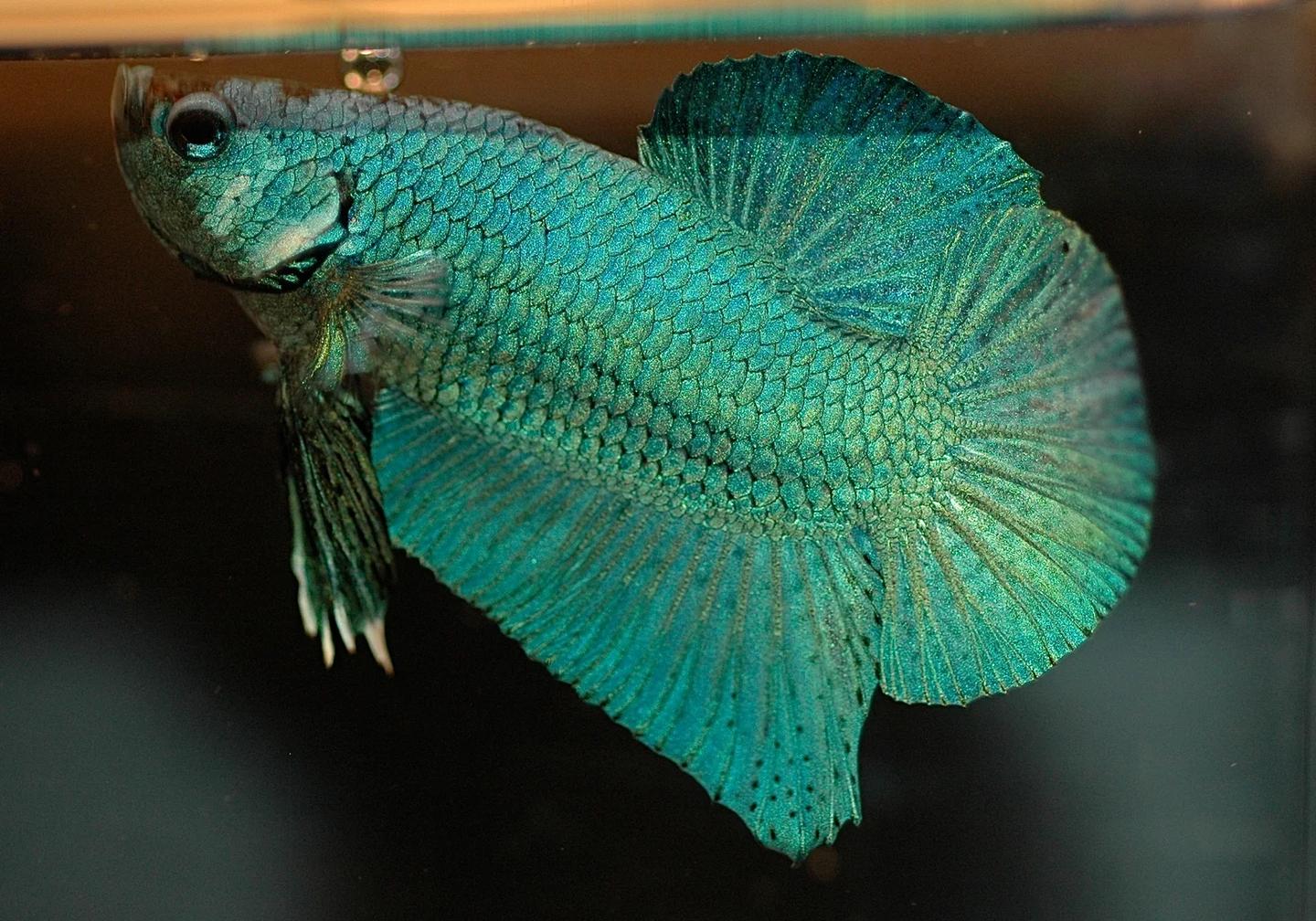
| Single male Betta (Betta splendens) focus | A covered, planted aquarium with gentle flow, warm surface air and access to breathe at the surface | It is not a guaranteed community fish; fin-nipping, individual behaviour and companions require a separate plan |
FishBase compiles a 60 cm aquarium-length screen for Neon Tetra and Harlequin Rasbora, while OATA treats their broader groups as social shoaling fish and prefers more than the minimum group[7][6][9][8]. Those sources support a screening boundary—not a promise that a particular group number fits every 60 litre tank.
Route 1: one softer-water shoal
Choose one complete shoal rather than a few Neon Tetras, a few Harlequins and another colourful species. A single coherent group makes better use of limited swimming space and avoids turning each social species into a token sample.
- Check the exact species rather than relying on “small tetra” or “rasbora”.
- Require the species' full minimum tank length as well as enough litres.
- Match the aquarium and replacement water to the checked range.
- Preserve open swimming space while providing suitable cover.
- Add the complete social plan only after fishless maturation is demonstrated by tests.
- Reassess repeated water results, feeding access and behaviour before considering any companion.
Neon Tetras and Harlequins are alternatives, not an instruction to combine them. A 60 cm minimum is also not an ideal-size claim: it is the point below which these sources stop the shortlist, not proof that everything above it is suitable.
Route 2: a harder-water livebearer focus
OATA uses a 45-litre starting screen for a small group of its smaller guppy forms and separately distinguishes Endler guppies from traditional guppies. It also stresses harder, more alkaline water, social structure and reproduction[10]. FishBase confirms Poecilia wingei as a current species record, but neither source turns 60 litres into an exact number[11].
Before purchasing Endlers, decide:
- whether the animals are P. wingei, P. reticulata or hybrids;
- how sexes will be verified and managed;
- where fry will go before breeding occurs;
- whether every adult can feed and swim without persistent harassment; and
- whether tested pH and hardness match the seller's current holding water and the species plan.
Platies are a separate option, not an automatic companion. OATA starts a small platy group at 45 litres, records a 6–8 cm adult-size range and calls for a group and sex plan[12]. FishBase supports the Xiphophorus maculatus identity[13]. In a 60 litre aquarium, a well-planned single-species focus is clearer than stacking platies, guppies and a bottom group because all are described as peaceful.
Route 3: one male Betta as the focal plan
A single male Betta splendens can use a 60 litre aquarium well when the flow is gentle, the tank is covered and planted, and warm air remains accessible above the water. OATA's 20-litre starting minimum for one male is not a target to shrink towards; the extra room can support more stable conditions and a richer layout[14]. FishBase records the species and a 6.5 cm maximum total length, but not a guaranteed community arrangement[15].
Do not automatically add “8 tetras and 6 bottom fish” around the Betta. Individual response, fin shape, current, surface access, temperature, feeding, the companions' behaviour and a ready separation tank all change the decision. A Betta can be the centrepiece because it is the main plan, not because the top layer looked empty.
The same caution applies to gouramis. OATA's group sheet covers animals from minute species to giant gouramis and calls for species-level checks, social planning, cover, gentle flow and surface-air access[16]. “One dwarf gourami” or “six sparkling gouramis” is not a reusable 60 litre formula.
Route 4: a planted invertebrate aquarium
Shrimp and snails are not fish, but an invertebrate-focused aquarium is a valid alternative when the reader wants small-scale behaviour rather than a crowded mixed community. They are animals—not a clean-up service—and need a mature filter, suitable water, cover, food and species-level research.
OATA uses a broad 10-litre screen for a group of small freshwater shrimp or snails and about 20 litres for larger examples such as Amano Shrimp, then says the aquarium must be larger when fish are included[18]. Its older trade names are not used here for scientific identity. Use the current Shrimp Keeping guide, Cherry Shrimp guide, Amano Shrimp guide or Nerite Snail guide for the exact route.
No fish is guaranteed shrimp-safe. Adult shrimp, young shrimp, newly moulted animals and eggs present different risks, and dense planting cannot promise zero loss.
Fish that do not fit the default 60 litre plan
Small shop size, a “cleaner” label or an empty-looking tank zone does not prove adult suitability.
| Leave out or research a larger aquarium first | Why |
|---|---|
| Corydoradinae group | OATA starts a shoal of smaller Corydoradinae at 80 litres; social group, floor area, substrate, oxygen and direct feeding still matter |
| Bristlenose or other small pleco | OATA also starts smaller plecos at 80 litres; exact identity, adult size, waste, shelter and diet can require substantially more |
| Unidentified common pleco or “algae eater” | The trade label does not establish species, adult size, behaviour, space or food |
| Swordtails or sailfin mollies | OATA gives these larger livebearer routes an 80-litre starting screen before adult group and reproduction are considered |
| Kuhli or hillstream loach group | Body shape and a bottom-zone label do not remove social, footprint, flow, oxygen, substrate and species needs |
| Multiple shoals plus a centrepiece | Dividing fish into top, middle and bottom layers does not create extra water, filtration capacity or compatible chemistry |
| Goldfish added to a tropical community | Temperature, oxygen, adult-size and social planning belong to a separate cold-water decision |
For catfish, the broad UK guidance is decisive enough to reject the old “six Corydoras plus one Bristlenose” recipes: OATA recommends at least 80 litres for a smaller Corydoradinae shoal or smaller pleco[17]. A Pygmy Cory's small body does not cancel that general welfare screen, and no catfish should be bought to consume waste or make maintenance optional.
How many fish: use a staged capacity gate
The former high animal-count answer ignored body depth, adult mass, oxygen demand, swimming activity, territory and social structure. OATA says species differ and stocking must proceed slowly after the filter matures, while RSPCA treats simple length formulas only as guidance[4][2].
Use this sequence instead:
- Choose one exact species. Verify the scientific identity and adult size.
- Fit its complete social plan. Do not use isolated shoaling fish as filter tests.
- Check the adult layout. Reserve swimming, surface, cover, floor and territorial space.
- Finish fishless maturation. Ammonia and nitrite must rise and then return to zero and remain there; elapsed weeks alone do not prove readiness.
- Add deliberately. A complete social group may need to arrive together, while separate species additions can be staged.
- Measure again. Record ammonia, nitrite, nitrate trend, temperature, feeding and behaviour.
- Stop when evidence is uncertain. An unused visual layer is not unused biological capacity.
If a fish hides continually, chases, cannot feed, breathes abnormally or shows injury, test the water immediately and separate when needed. Contact a qualified aquatic vet or knowledgeable retailer for diagnosis. This guide gives no medicine, heat, salt or dosing recipe.
Equipment decisions without a one-size shopping list
A fixed “100 W heater” or “filter rated for 100 litres” is not evidence that equipment suits every 60 litre setup. Heater selection depends on the difference between room and target temperature, aquarium shape, cover, circulation and the manufacturer's current instructions. Use a thermostatically controlled heater where the chosen tropical species requires one, then verify temperature with an independent thermometer[2].
The filter must provide mature biological filtration and appropriate flow without overwhelming the selected fish. Protect intakes where small fish or shrimp could be drawn in. Test ammonia, nitrite, nitrate trend and pH; measure GH and KH for species selection. Do not buy livestock to solve algae or uneaten food—review light, feeding, nutrients and maintenance instead.
A purchase-ready 60 litre checklist
Do not proceed until every line has a defensible answer:
- Gross label, inner dimensions and approximate usable litres are recorded.
- The aquarium meets the exact adult fish's minimum length and footprint needs.
- pH, GH, KH and temperature are measured rather than guessed from a UK postcode.
- The filter is mature and ammonia and nitrite are zero.
- The focal animal has a verified scientific identity and adult-size source.
- Its complete social or individual plan fits before any second species is considered.
- Sex, reproduction and a realistic destination for fry are planned where relevant.
- Every current resident is included at adult size.
- Territory, cover, surface, open-water and floor-space conflicts are checked.
- Every animal has a complete diet; none is purchased as cleaning equipment.
- A quarantine or biosecure observation plan and mature separation option exist.
- Current product identity, sale unit, size and availability are checked on the exact listing.
Use the tank-volume calculator for the internal-volume estimate, then compare tested water with the water matcher and screen existing residents with the tank-mate tool. These tools organise the decision; they cannot guarantee compatibility.
Before you use the shop
Read the first tropical tank guide for fishless cycling and the water chemistry guide before choosing fish. For the softer-water route, continue to the Neon Tetra guide or Harlequin Rasbora guide. For harder water, use the Endler guppy guide or Platy guide. For a focal fish, use the Betta guide.
Only after those checks should you browse freshwater fish. Stock changes; this article contains no product card, SKU, price or availability promise.
How this guide was checked
The Tropical Fish Co Editorial Team rebuilt this page on 5 September 2026. Unit conversions come from NIST; aquarium welfare, cycling and social boundaries come from the RSPCA and OATA; UK hardness context comes from the Drinking Water Inspectorate; and FishBase is used for narrow current species records and clearly labelled secondary aquarium compilations.
Search evidence was used to answer the questions UK mobile users ask, not to manufacture a fish count. Competitor pages, snippets, forums and Google's AI Overview were not treated as husbandry authorities. The previous fixed communities, “clean-up crew”, universal fish totals, one-size equipment, stale prices and compatibility promises were removed because the selected evidence did not make them safe or transferable.
If you spot a source conflict, use the correction box below. A correction request is editorial feedback—not a lead, sale or ecommerce conversion. Ecommerce success is measured only through add-to-cart, checkout, purchase and revenue outcomes.
Three different 60 litre stocking routes to investigate
Frequently asked questions
Browse our UK live-fish range
From this article straight into the catalogue.
Beginner Fish
The best tropical fish for beginners UK — hand-picked easy-care species that thrive with minimal fuss. Perfect starter community tank candidates.
Community Tank Fish
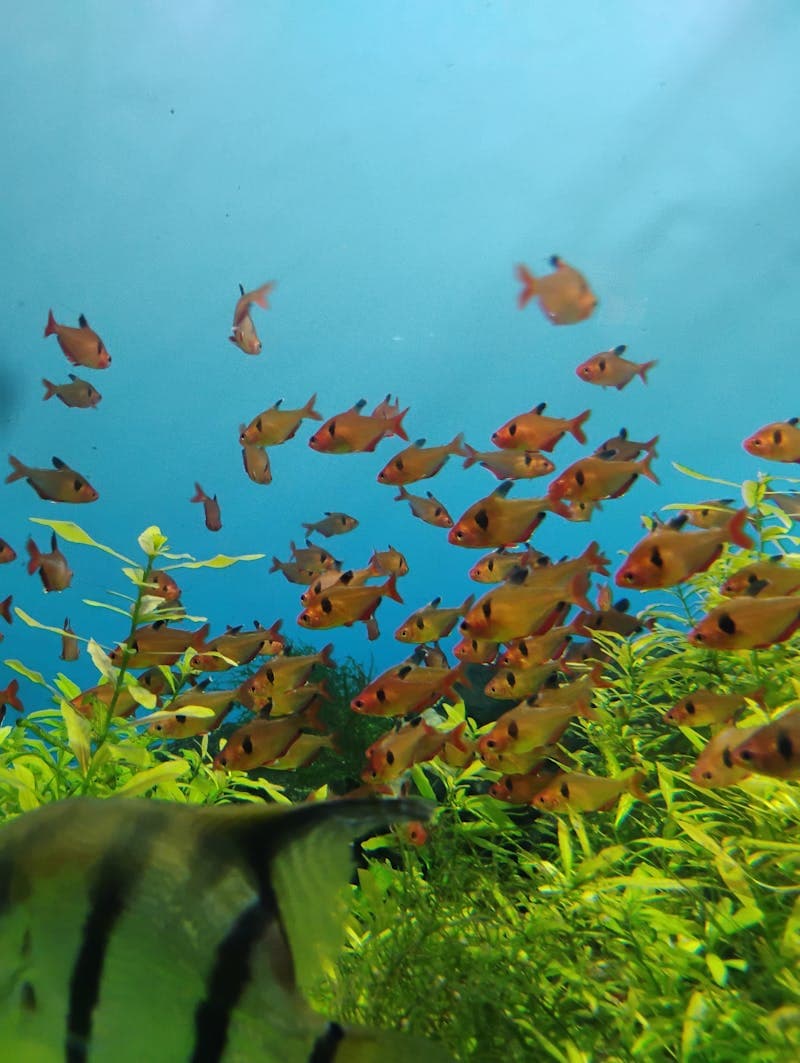
Peaceful tetras, rasboras, corydoras, platies and gouramis chosen to live together — temperament, adult size and water range per listing so the mix works.
Tetras
Premium Tetras for sale UK — Cardinal, Ember, Black Neon, Rummy Nose, Serpae, Diamond, Glowlight and more. Peaceful community schoolers.
Betta Fish
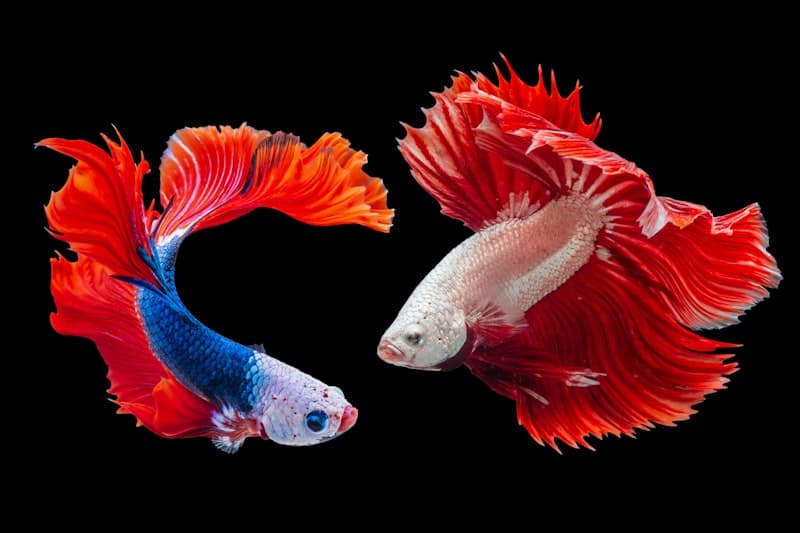
Halfmoon, plakat, koi, giant and wild-type Betta splendens, males and females, tail type and size stated per listing. Bagged singly, live arrival covered.
Guppy
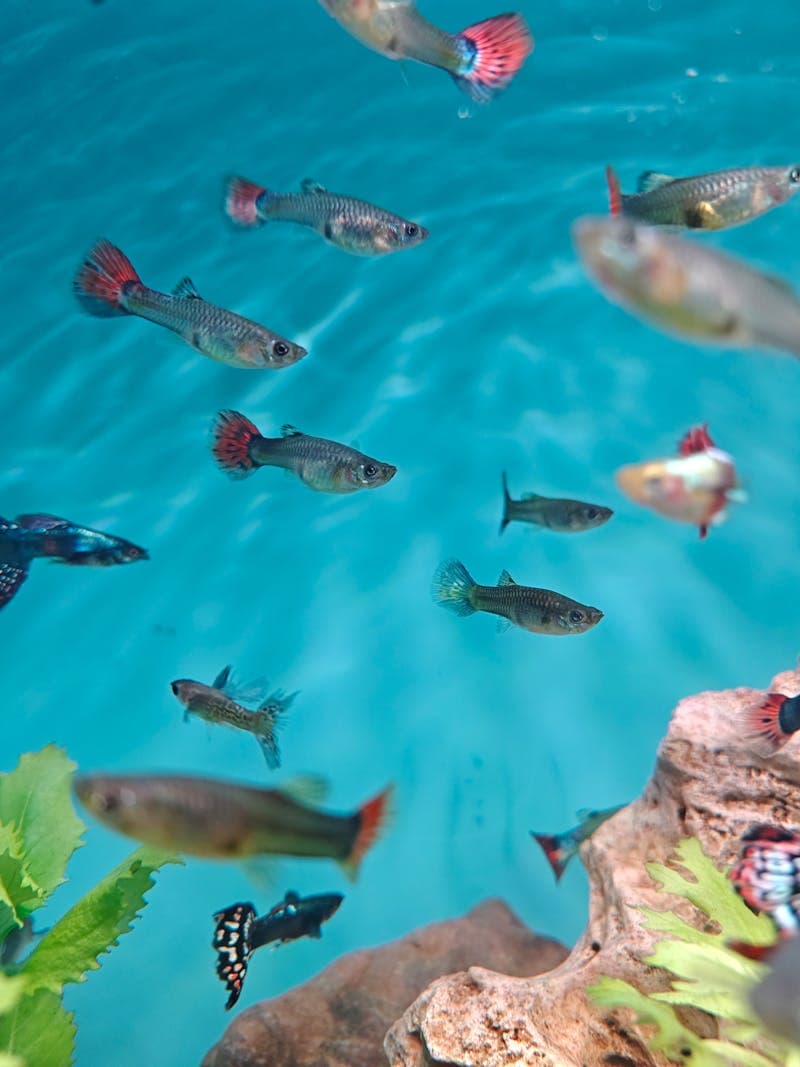
Fancy guppies bred for colour — Moscow, Cobra, Dumbo ear and Endler lines as males, females or pairs. Hardy in UK tap water; arrive alive or replaced.
Cherry Shrimp
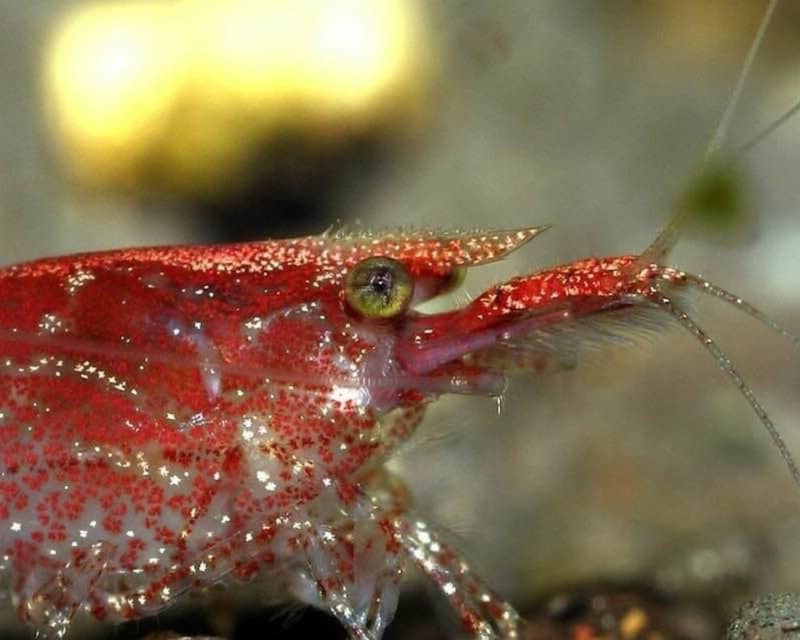
Red, blue, yellow, black and Rili cherry shrimp (Neocaridina) graded per listing, with mature-tank and water guidance so a new colony settles and breeds.
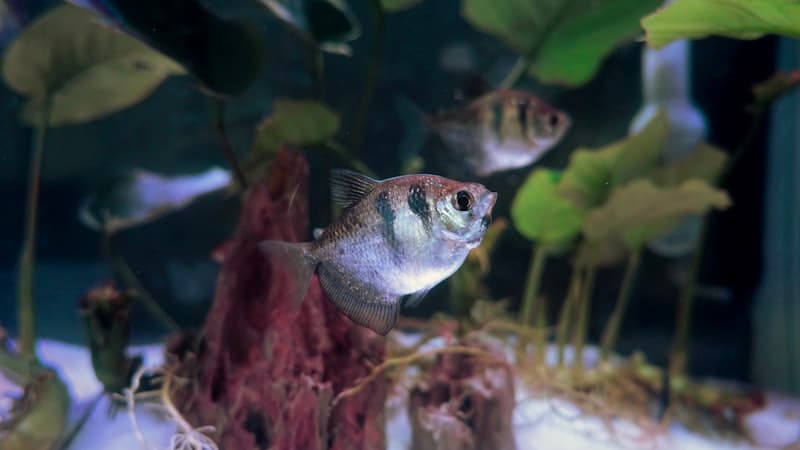
Corydoras
Shop current Corydoras catfish listings in the UK. Compare scientific identity, size and sale unit, with price and availability shown per product.
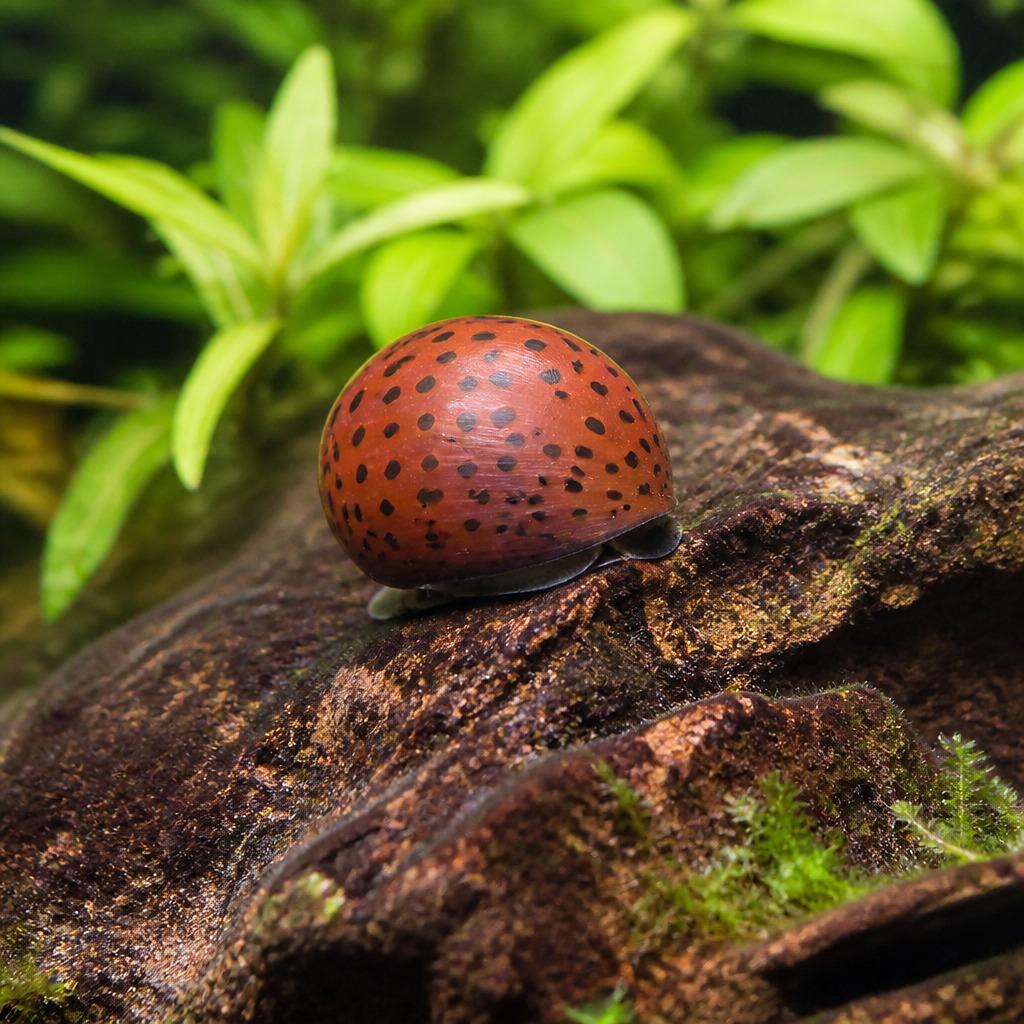
Freshwater Snails
Shop freshwater aquarium snails in the UK. Compare current species, adult size, water needs, diet, breeding risk, compatibility, prices and availability.
Sources & further reading
Material factual claims cite the sources below; store policy and cautious inference are labelled in the article. Sources are grouped by type so you can judge their weight at a glance.
Scientific database (5)
- [7]Froese, R. & Pauly, D. (eds.). FishBase: Paracheirodon innesi. FishBase. View source
Current species record and secondary aquarium compilation including a 60 cm length screen and group context; not a controlled stocking trial.
- [9]Froese, R. & Pauly, D. (eds.). FishBase: Trigonostigma heteromorpha. FishBase. View source
Current species identity, size record and secondary 60 cm aquarium-length and group compilation; not a compatibility guarantee.
- [11]Froese, R. & Pauly, D. (eds.). FishBase: Poecilia wingei. FishBase. View source
Current species identity, standard-length record and distribution; it does not establish a household group number or water target.
- [13]Froese, R. & Pauly, D. (eds.). FishBase: Xiphophorus maculatus. FishBase. View source
Current Platy identity and biological context; it does not provide a universal home-aquarium number or compatibility rule.
- [15]Froese, R. & Pauly, D. (eds.). FishBase: Betta splendens. FishBase. View source
Current species identity, total-length record and biological context; it does not establish a community outcome.
Animal-welfare charity (2)
- [2]Royal Society for the Prevention of Cruelty to Animals. Choosing an aquarium for pet fish. RSPCA. View source
UK welfare guidance on adult size, aquarium capacity and shape, biological filtration, fishless cycling, testing and stable conditions. Its length formula is explicitly only a guideline.
- [3]Royal Society for the Prevention of Cruelty to Animals. Keeping pet fish together. RSPCA. View source
UK welfare guidance on social groups, water, compatibility and species-specific research; it does not approve a fixed 60 litre community.
Trade-body guidance (9)
- [4]Ornamental Aquatic Trade Association. How to set up and look after a freshwater tank / aquarium. OATA. View source
UK trade-body guidance on adult-size planning, fishless maturation, zero ammonia and nitrite, gradual stocking and species-level differences.
- [6]Ornamental Aquatic Trade Association. How to look after tetras and pencilfish. OATA. View source
Broad UK guidance on shoaling, water, space and compatibility; exact-species requirements still control.
- [8]Ornamental Aquatic Trade Association. How to look after rasboras. OATA. View source
Broad UK guidance on social groups, water and a 45- or 60-litre starting screen according to adult species size; not a mixed-community proof.
- [10]Ornamental Aquatic Trade Association. How to look after guppies and mollies. OATA. View source
UK guidance on guppy identity, harder-water context, social and sex planning, reproduction and a 45-litre small-group screen for smaller forms.
- [12]Ornamental Aquatic Trade Association. How to look after platies and swordtails. OATA. View source
UK guidance on platy adult size, water, group and sex planning, reproduction and a 45-litre small-group starting screen; swordtails receive a separate 80-litre screen.
- [14]Ornamental Aquatic Trade Association. How to look after Siamese fighting fish (Bettas). OATA. View source
UK guidance on Betta identity, single-male housing, gentle flow, surface-air access and cautious compatibility; it does not guarantee tank mates.
- [16]Ornamental Aquatic Trade Association. How to look after gouramis and paradise fish. OATA. View source
Broad UK guidance on varied adult size, social planning, cover, flow and surface access; it does not prove that one gourami is a universal centrepiece.
- [17]Ornamental Aquatic Trade Association. How to look after freshwater catfish. OATA. View source
Broad UK guidance starts a smaller Corydoradinae shoal or smaller pleco at 80 litres and requires species, floor, substrate and feeding checks.
- [18]Ornamental Aquatic Trade Association. How to look after freshwater shrimp and snails. OATA. View source
Broad UK invertebrate guidance on group, space, cover, food and fish-related capacity; its older trade taxonomy is not used for species identity.
Government / regulatory (2)
- [1]National Institute of Standards and Technology. NIST Guide to the SI, Appendix B.8: Factors for Units Listed Alphabetically. US National Institute of Standards and Technology. View source
Authoritative US and imperial gallon-to-litre conversion factors; it does not provide aquarium stocking advice.
- [5]Drinking Water Inspectorate. Water hardness / hard water. Drinking Water Inspectorate. View source
UK drinking-water hardness varies with geology and supply; local supplier information is context and does not replace aquarium testing.
Spotted something that needs a fix?
Fishkeeping moves fast and we want every guide spot-on. If you think something here is wrong, out of date, or could be clearer, tell us — our team reads every message and updates the page.
Suggest an editRelated care guides
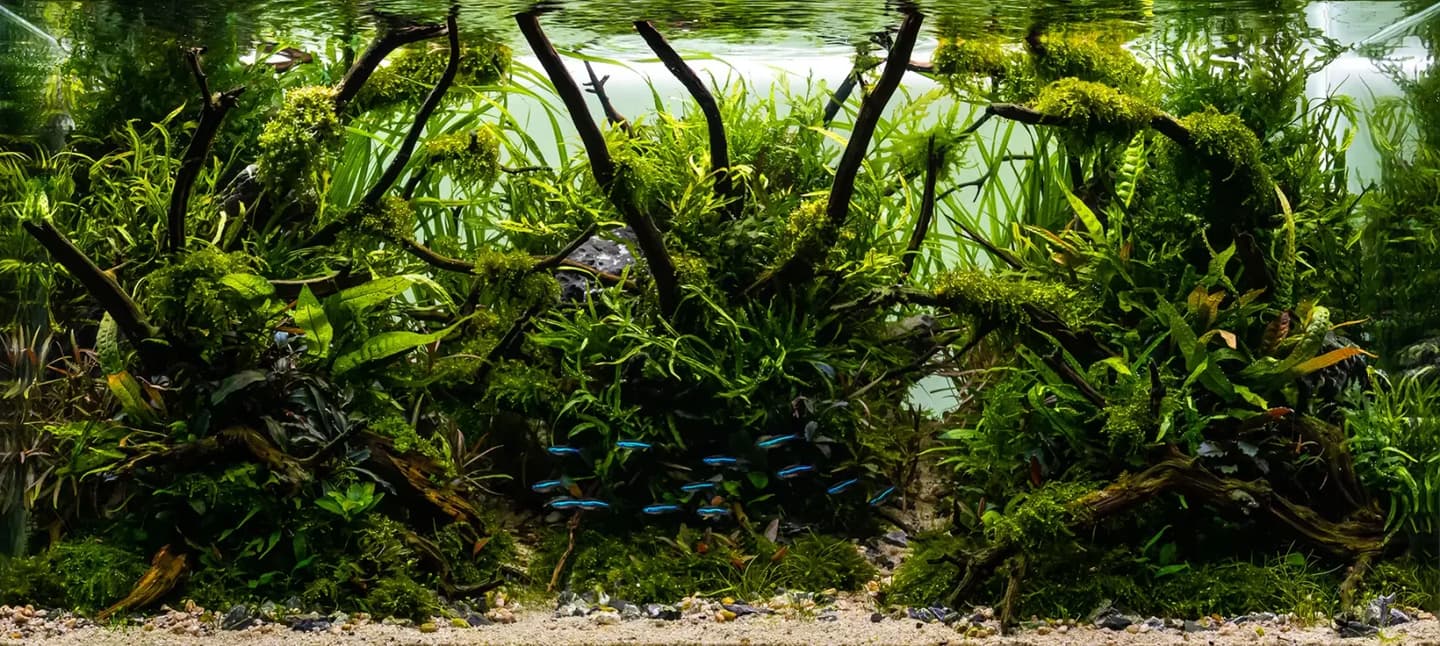
How to Set Up a Tropical Fish Tank: 10 Safe Steps
Choose the intended fish before the aquarium, place the tank on a suitable level support, install a filter and thermostatic heater, condition and test the water, then complete a fishless cycle. Add fish only after the chosen maturation process reaches its defined endpoint and repeated tests show zero ammonia and zero nitrite; elapsed days alone do not prove readiness.
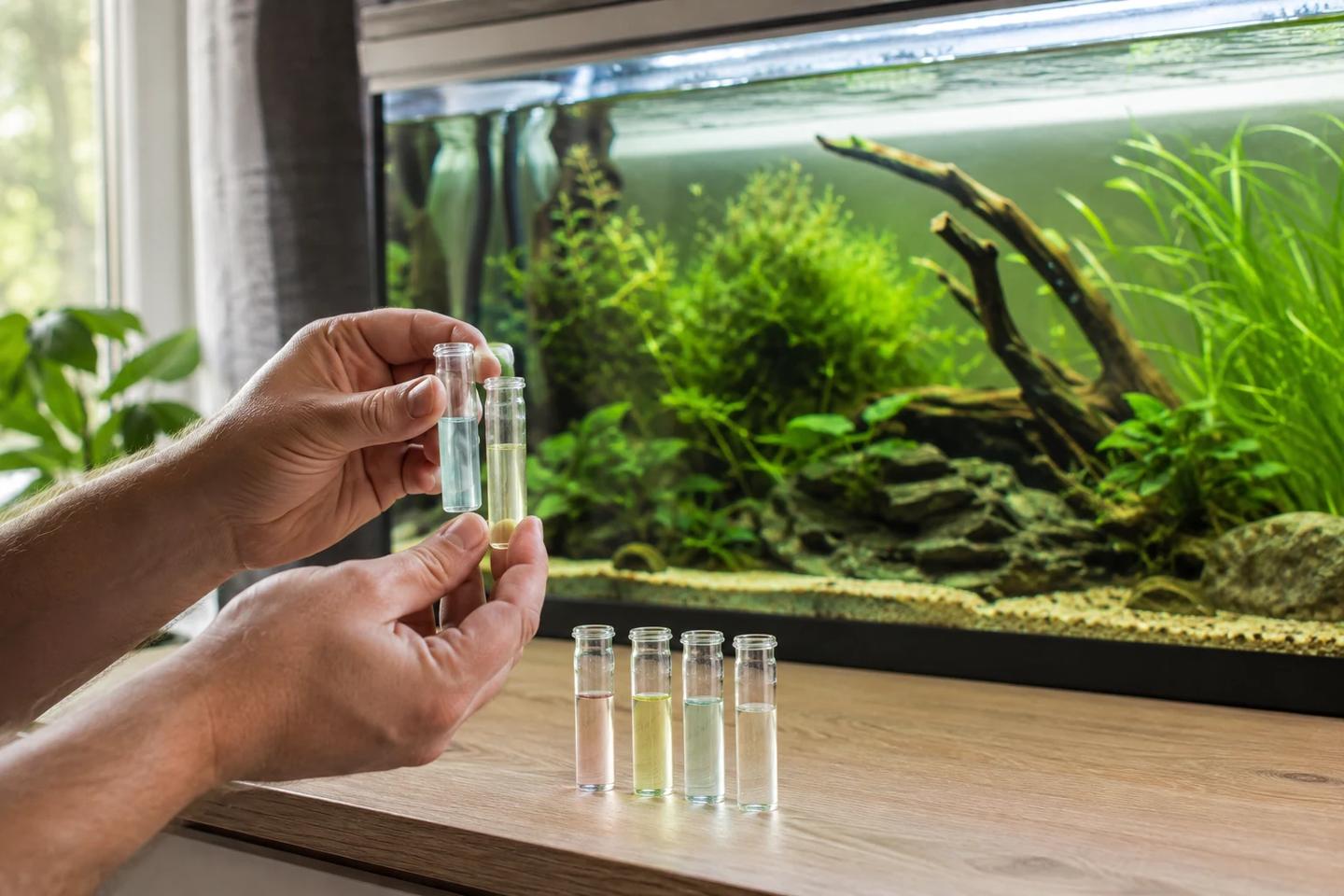
Aquarium Water Parameters: What to Test and Why
There is no universal set of perfect freshwater aquarium parameters. Identify the animals, learn what the test and unit actually report, establish your local source-water baseline, and compare repeat measurements. In an established aquarium, a confirmed ammonia or nitrite detection needs investigation; pH, GH, KH, temperature and nitrate decisions depend on the species, life stage and whole system.
Neon Tetra Care Guide
Start here: use a mature, filtered aquarium at least 60 cm long. FishBase and OATA compile groups of five or more; our conservative planning screen starts at eight, then checks usable volume, water, filtration and every adult tank mate.