
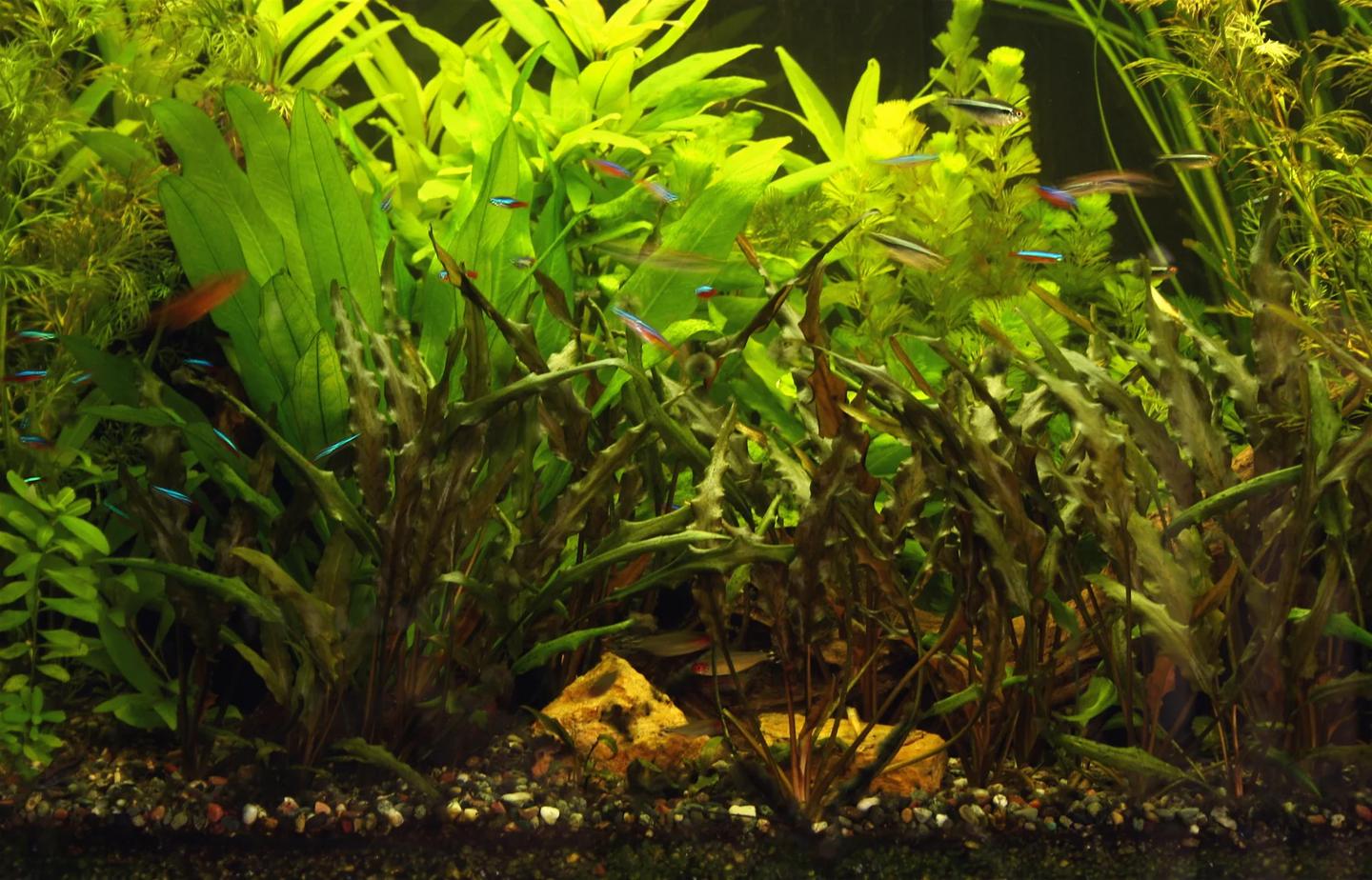
Best Fish for a 100 Litre Tank: UK Stocking Guide

Direct answer: the best fish for a 100 litre tank are not one universal list. A sensible shortlist begins with the tank's usable dimensions and measured water, then chooses one complete social group whose adult needs fit. Harlequin rasboras or neon tetras may suit a softer-water shoal; platies or guppies may suit harder, more alkaline water; a Honey Gourami or a small Corydoradinae species may be considered only after their different social, footprint and compatibility needs are checked.
A nominal 100 litres is about 26.4 US gallons or 22.0 imperial gallons, using NIST conversion factors—not “25 gallons” in both systems[1]. It is also gross capacity. Substrate, wood, rocks, equipment and the air gap reduce the water actually present. That is why this guide gives decision routes rather than “30 fish”, a supposedly perfect community or a list that can be copied into a basket.
Commercial disclosure: Tropical Fish Co sells live fish. This page owns the planning decision; current identity, sale unit, size, price and availability belong on the exact product page. A species mentioned here is a research candidate, not a stock claim or compatibility guarantee.
Start with usable water and footprint
Measure the inside of the aquarium rather than trusting the model name. For a rectangular tank:
inner length (cm) × inner width (cm) × water depth (cm) ÷ 1,000 = approximate litres before displacement
Then allow for substrate and décor. The answer is still an estimate, but it separates a gross “100 L” label from the water and swimming space the fish receive. Long, wide tanks usually give active or territorial fish more useful space than tall, narrow tanks with the same litres. The RSPCA likewise says aquarium capacity, oxygen exchange, adult size and shape matter, and its own length calculation is only a guideline because temperature, filtration and maintenance change capacity[2].
Before shortlisting fish, record:
- inner length, width and filled water depth;
- estimated usable litres after décor;
- stable temperature measured independently;
- pH, general hardness (GH) and carbonate hardness (KH);
- ammonia and nitrite results;
- every existing resident at adult size; and
- the exact filter, maintenance routine and feeding plan.
UK tap water is not one chemistry. Hardness changes with geology and supply source, so use the current water-company report as context and test the water that reaches the aquarium[4]. Do not buy a soft-water shoal or a hard-water livebearer solely because a national article calls it “easy”.
Compare six realistic starting candidates
This table is a screening tool, not a six-species community. Select one route, verify the exact species with the seller, and plan its whole social group before adding another role.
| Candidate | When it enters the shortlist | What stops an automatic “yes” |
|---|---|---|
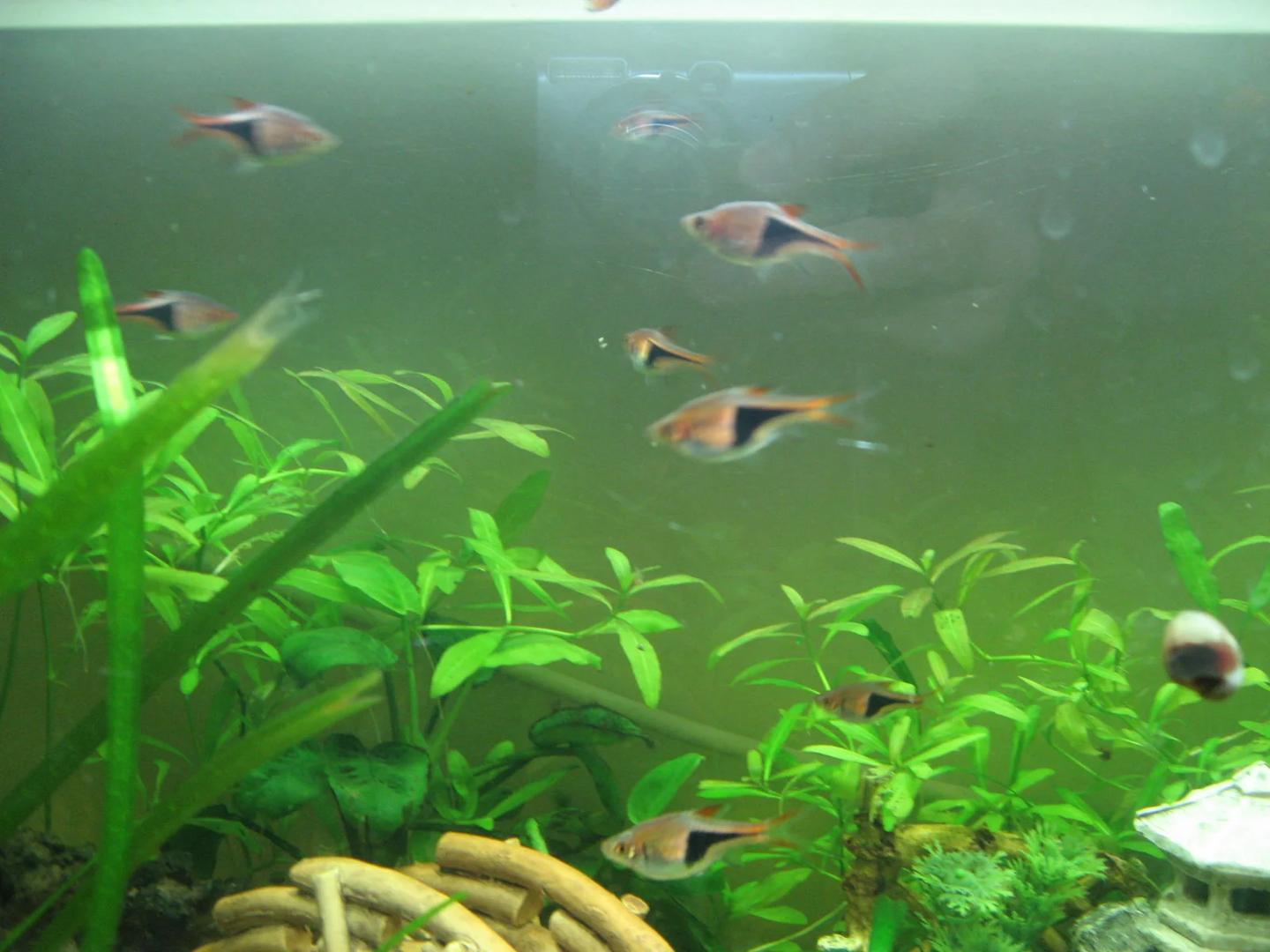
| Harlequin rasbora (Trigonostigma heteromorpha) | A mature, planted tank at least 60 cm long, with water inside the exact species' checked range and room for a proper shoal | A token group, hard or unsuitable water, cramped active-swimming length, or combining several incomplete shoals |
| Neon tetra (Paracheirodon innesi) | A mature aquarium at least 60 cm long with suitably soft water, stable temperature and a complete group | Small body size does not make hard alkaline water, an immature filter or a short tank suitable |
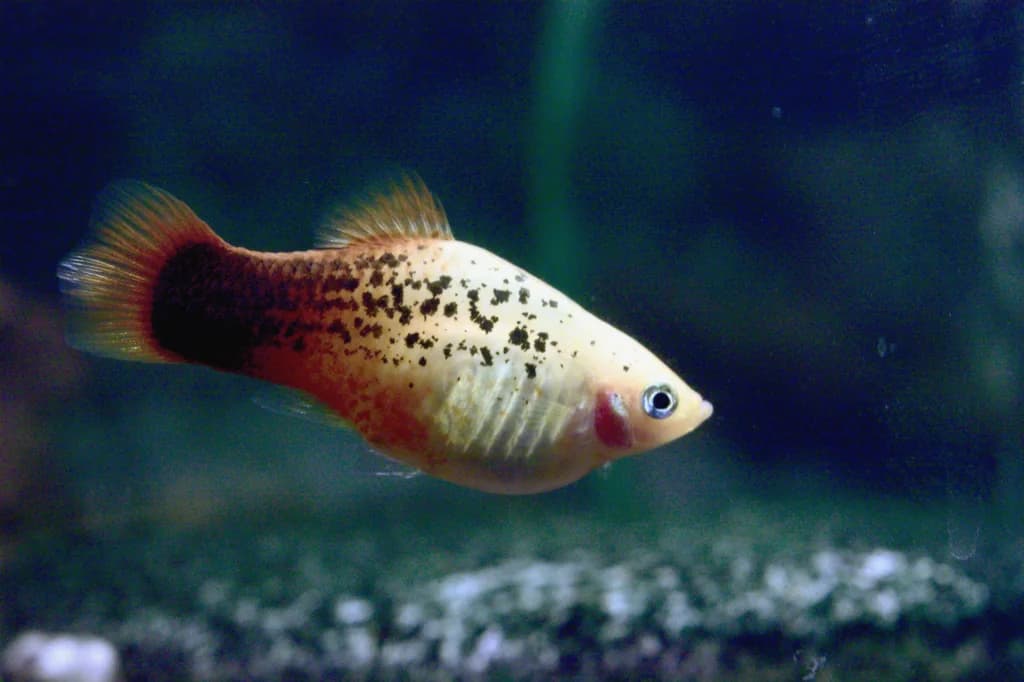
| Platy (Xiphophorus maculatus) | Tested harder, more alkaline water and a planned social/sex structure | Fry, adult bioload and persistent male attention can change capacity quickly; do not mix with soft-water fish by habit |
| Guppy (Poecilia reticulata) | Similar hard-water screening, with exact strain health and retailer water checked | A mixed-sex group can multiply; long-finned strains and tank mates need individual behaviour checks |
| Honey Gourami (Trichogaster chuna) | A quiet, planted aquarium at least 60 cm long with gentle flow, surface access and a deliberate social plan | “One pair” is not a universal rule, seller sex labels can be uncertain, and other surface or territorial fish change the decision |
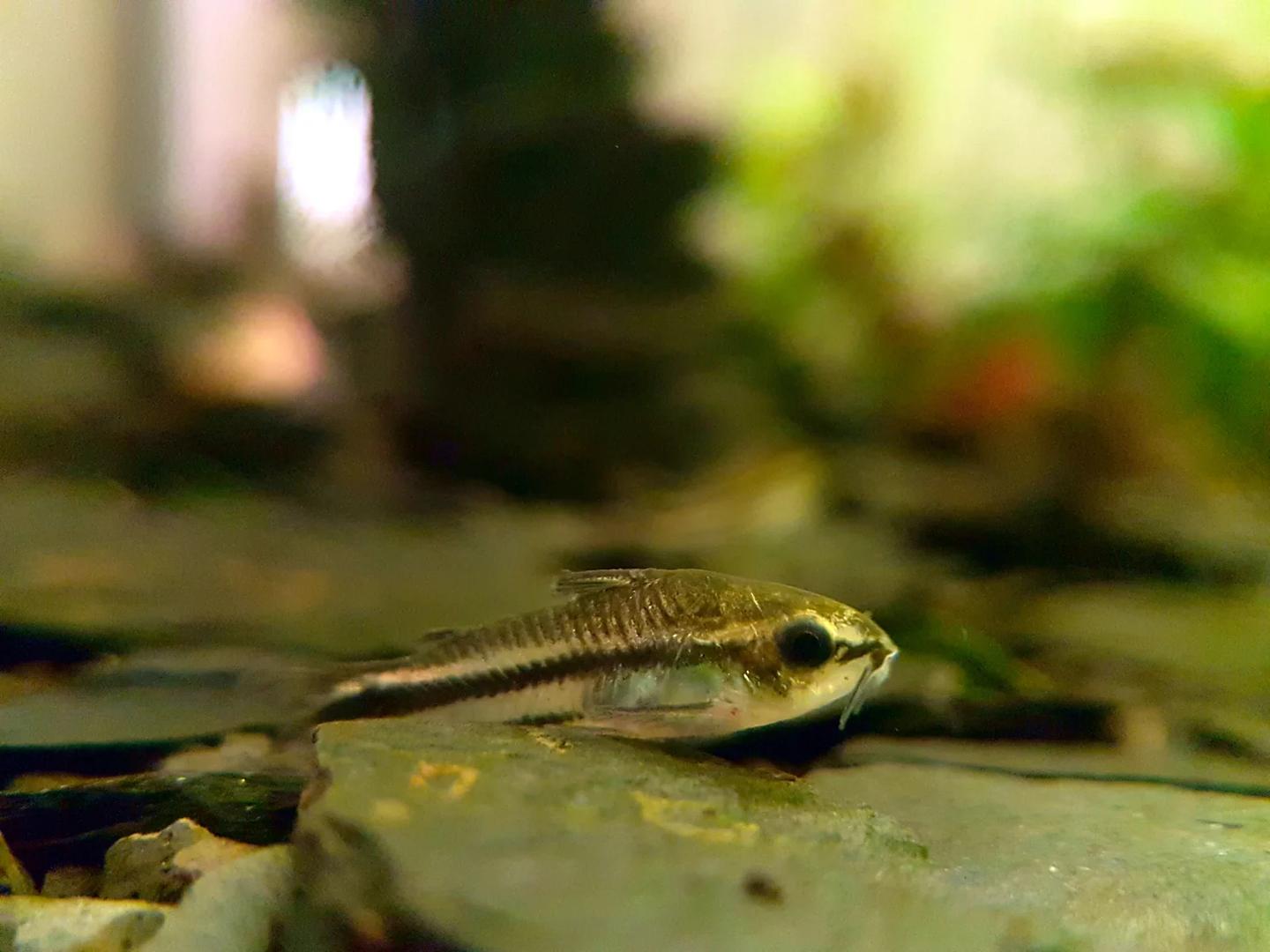
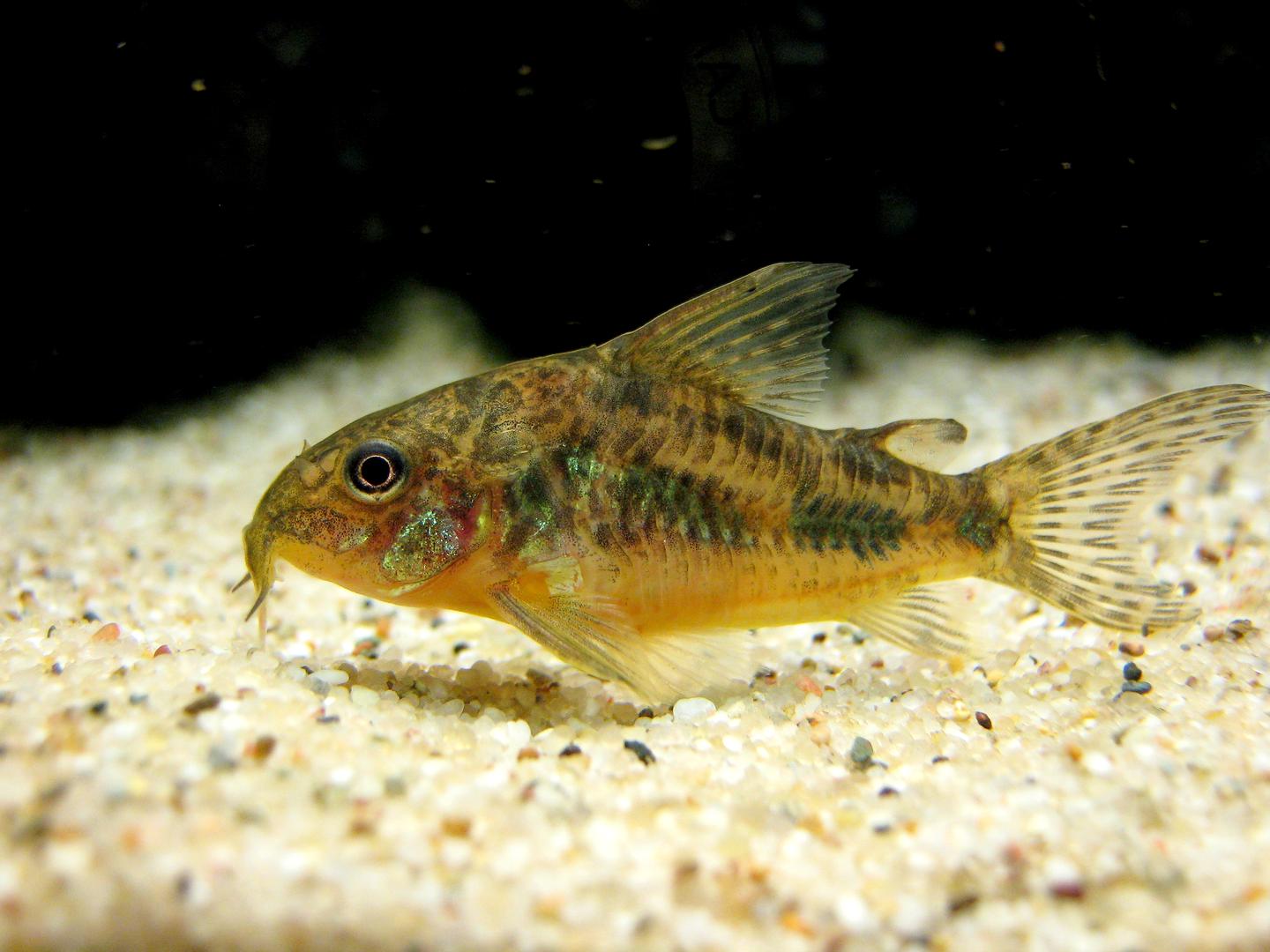
| Pygmy Cory (Gastrodermus pygmaeus) | Adequate floor area, smooth substrate, good oxygenation, direct sinking food and a proper conspecific group | It is not a cleaner; tiny size does not remove group, feeding, oxygen, floor-space or species-identification needs |
The harlequin and neon records compile a 60 cm aquarium length and groups of at least five; OATA's broader guidance also treats rasboras and tetras as shoaling fish and says more than the minimum is preferable[8][7][6][5]. These are screening boundaries, not proof that five is ideal or that two different groups should be squeezed together.
OATA broadly starts a small Corydoradinae group at 80 litres and at least five fish, then requires suitable floor area, substrate and direct feeding[13]. FishBase records G. pygmaeus at only 2.1 cm maximum standard length, but that one dimension cannot replace those social and habitat needs[14].
Route 1: one soft- to neutral-water shoal
Choose one complete shoal, not a few harlequins, a few neons and a few ember tetras. A larger single-species group usually makes better use of limited swimming space and keeps the social plan legible.
- Match the exact fish's source guidance to measured aquarium and replacement water.
- Check adult size, swimming level and minimum tank length.
- Preserve open swimming space while adding plants or wood for cover.
- Add the group only after fishless maturation is demonstrated by tests.
- Reassess behaviour, feeding access and repeated water results before considering a bottom or centrepiece species.
This route is not appropriate merely because the aquarium looks spacious. A broad “community” label cannot reconcile incompatible water or temperature ranges.
Route 2: a hard-water livebearer plan
Platies and guppies can be strong candidates where tested water fits, but they are not interchangeable decorations. OATA places platies in a group context, gives broad sex-ratio guidance and warns that livebearers can reproduce readily[9]. FishBase supports the X. maculatus identity and size context, not a universal household count[10].
Decide before purchase:
- male-only or mixed-sex group;
- how sex will be verified;
- how persistent attention will be monitored;
- what happens to fry;
- whether the filter and usable volume still work at adult size; and
- whether every proposed companion genuinely overlaps in water, temperature and behaviour.
Do not plan a full tank from the current small shop size. Do not combine platies and guppies automatically simply because both are livebearers. One well-planned group is a clearer starting point.
Route 3: a quiet Honey Gourami focus
A Honey Gourami can be considered when the aquarium is at least 60 cm long, mature, covered and planted, with gentle circulation and access to warm air at the surface. FishBase compiles that 60 cm screen, while OATA's broader gourami guidance discusses cover, flow, water and group planning[12][11].
The evidence does not prove that one fish, one pair or one trio is universally correct. Verify Trichogaster chuna, the seller's current water, adult-size advice and any claimed sexes. Leave a separation plan for persistent chasing, hiding, feeding failure or injury. A heavily stocked shoal, another territorial centrepiece or busy surface fish can make a nominal 100 litres unsuitable.
Route 4: a bottom-led Corydoradinae group
“Corydoras” is not one care profile, and the 2024 taxonomic revision moved several familiar species into other genera. Select an exact species, not “any cory”. Pygmy Cory is one candidate because of its recorded small body size, but a group still needs horizontal room, direct food and suitable water.
Use fine, non-abrasive substrate; preserve open foraging patches; check oxygen and flow; and ensure every fish reaches complete sinking food. Normal maintenance remains your job. No catfish makes overfeeding, accumulated waste or an immature filter safe.
If you prefer a larger bronze, panda, sterbai or similarly traded cory, repeat the adult-size, temperature, floor and exact-identity checks from the beginning. Do not transfer the Pygmy Cory decision to another species.
Fish to leave out of a standard 100 litre plan
Some animals appear in generic “100 L” lists because they are sold small or described by one attractive role. That is not enough.
| Leave out or upgrade first | Why |
|---|---|
| Adult angelfish | OATA treats them as social cichlids, warns a singleton may be stressed and starts a pair of smaller American cichlids at 120 litres; angelfish also require suitable height |
| Discus | OATA advises at least five unless an established pair is kept and uses about 50 litres per adult, with roughly 300 litres for six adults |
| Common pleco or unidentified “pleco” | Exact species and adult size may be radically different; a cleaning label does not establish space, diet or waste load |
| Chinese algae eater or unidentified “algae eater” | Juvenile appearance and a job label do not establish adult behaviour, identity or suitability |
| Multiple territorial cichlid pairs | Breeding territories and aggression are not solved by dividing litres into “top, middle and bottom” roles |
| Goldfish added to a tropical community | Different temperature, oxygen, adult-size and social requirements require their own plan |
For angelfish, the old advice to keep “one only” in 100 litres is not a welfare fix. OATA's broad American-cichlid guidance says angelfish may live in pairs or groups and that a singleton may become stressed[15]. For discus, the gap is larger: OATA's group and volume guidance makes a standard 100 litre aquarium an inappropriate long-term plan[16].
How many fish: use a staged capacity check
Neither “one centimetre per litre” nor “30 small fish” accounts for body depth, adult mass, oxygen demand, activity, territory or social structure. OATA says no exact count can be given because species and systems differ, while RSPCA describes length-based calculations only as a guideline affected by other conditions[3][2].
Use this sequence instead:
- Choose one focal species. Confirm scientific identity and adult size.
- Fit its complete group. Do not use isolated social fish as a filter test.
- Check the adult layout. Reserve swimming, floor, surface and territorial space.
- Finish fishless maturation. Ammonia and nitrite must both test zero; elapsed weeks alone do not prove readiness.
- Add in deliberate stages. A complete social group may need to arrive together, but separate species additions can be staged.
- Measure again. Record ammonia, nitrite, nitrate trend, temperature, feeding and behaviour.
- Stop when uncertainty appears. An empty visual zone is not unused biological capacity.
More water usually changes temperature and chemistry more slowly, but it does not forgive overfeeding or incompatible fish. The RSPCA and OATA both make biological filtration, water testing and gradual, adult-size planning central[2][3].
A purchase-ready 100 litre checklist
Do not proceed until every line has a defensible answer:
- Gross label, inner dimensions and approximate usable litres are recorded.
- The tank is long and wide enough for the exact adult fish, not only large enough by volume.
- pH, GH, KH and temperature are measured rather than assumed from a UK postcode.
- The filter is mature and ammonia and nitrite are zero.
- The focal fish has a verified scientific identity and adult-size source.
- Its complete social group and sex plan fit.
- Every current resident has been included at adult size.
- Territory, surface, open-water and bottom-space conflicts have been checked.
- Every animal has its own complete diet; none is purchased as cleaning equipment.
- Quarantine or biosecure observation and a mature separation/return plan exist.
- Current product details are checked on the exact listing rather than inferred from this guide.
Use our tank-volume calculator to estimate gross internal volume, then compare the measured water with the water matcher and screen existing residents with the tank-mate tool. Tools narrow the questions; they do not guarantee compatibility or replace species-level research.
Before you use the shop
Read the first tropical tank guide for fishless cycling and the water chemistry guide before choosing a fish. If a bottom group is on your shortlist, use the Corydoradinae guide to avoid treating all “corys” as one species. The Honey Gourami guide, Platy guide, Neon Tetra guide and Harlequin Rasbora guide provide the next species-level checks.
Only after those checks should you browse freshwater fish. Stock changes; this article does not promise that a named species is available today.
How this guide was checked
The Tropical Fish Co Editorial Team rebuilt this page on 5 September 2026. Unit conversions come from NIST; aquarium welfare and setup boundaries come from the RSPCA and OATA; UK hardness context comes from the Drinking Water Inspectorate; and FishBase is used for narrow species identity, size and clearly labelled secondary aquarium compilations.
Search evidence was used to answer the questions UK mobile users actually ask, not to manufacture a fish count. Competitor pages and search-result summaries were not used as husbandry authorities. The former fixed communities, “clean-up crew”, universal filter/heater sizes, stale cost table, one-angelfish advice and exact 25–35-fish total were removed because the selected evidence did not make them safe or universal.
If you spot a source conflict, use the correction box below. A correction request is editorial feedback—not a lead, sale or ecommerce conversion. Ecommerce success is measured only through add-to-cart, checkout, purchase and revenue outcomes.
Three candidates to assess for a 100 litre aquarium
Frequently asked questions
Browse our UK live-fish range
From this article straight into the catalogue.
Beginner Fish
The best tropical fish for beginners UK — hand-picked easy-care species that thrive with minimal fuss. Perfect starter community tank candidates.
Community Tank Fish
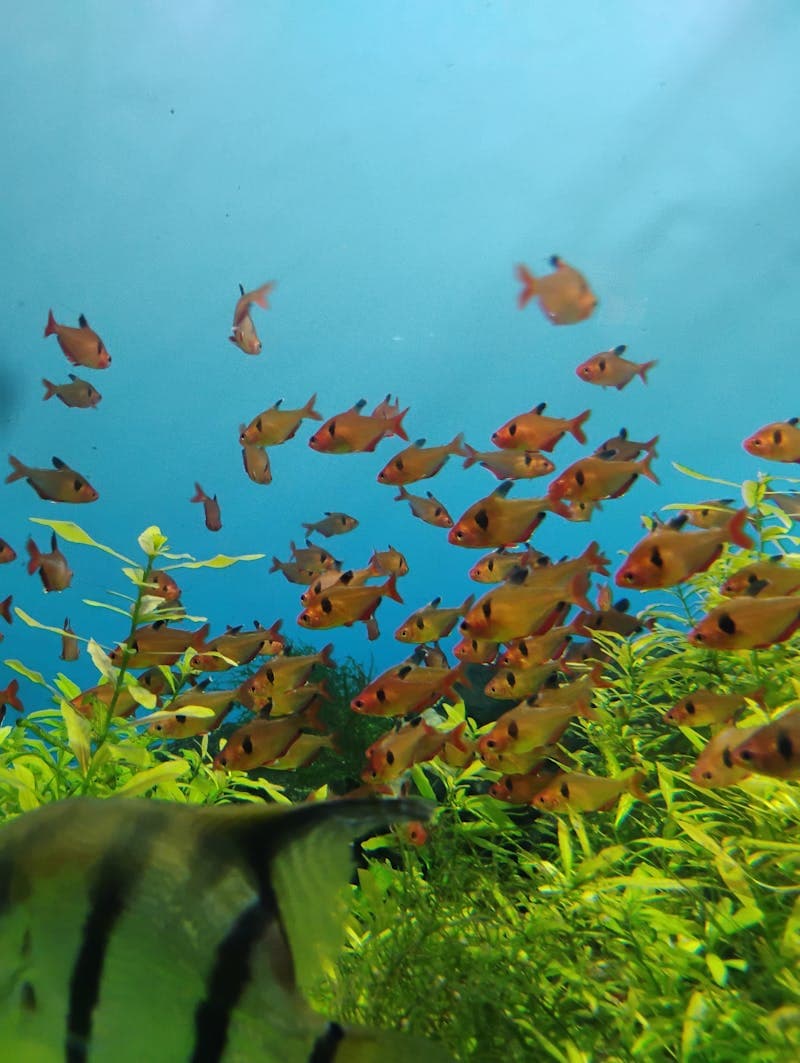
Peaceful tetras, rasboras, corydoras, platies and gouramis chosen to live together — temperament, adult size and water range per listing so the mix works.
Tetras
Premium Tetras for sale UK — Cardinal, Ember, Black Neon, Rummy Nose, Serpae, Diamond, Glowlight and more. Peaceful community schoolers.
Betta Fish
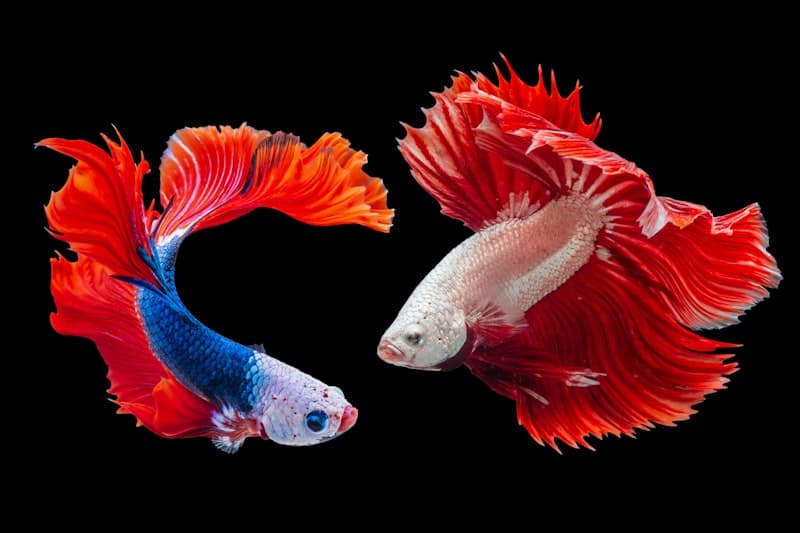
Halfmoon, plakat, koi, giant and wild-type Betta splendens, males and females, tail type and size stated per listing. Bagged singly, live arrival covered.
Guppy
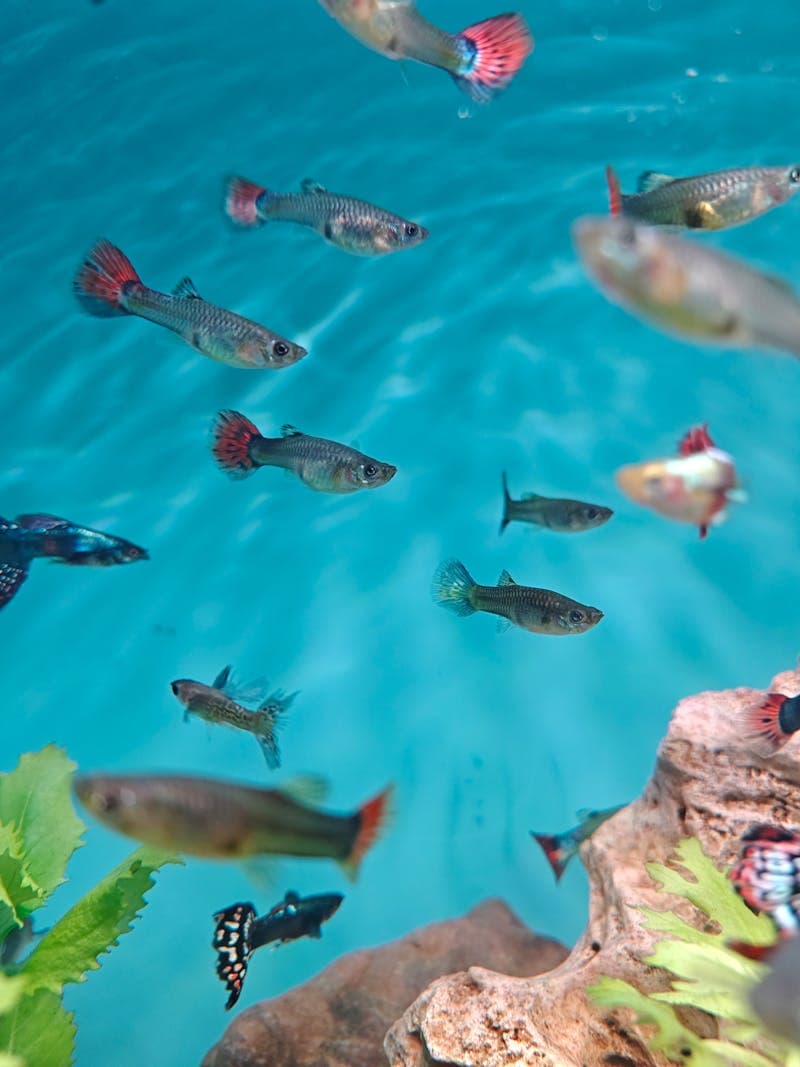
Fancy guppies bred for colour — Moscow, Cobra, Dumbo ear and Endler lines as males, females or pairs. Hardy in UK tap water; arrive alive or replaced.
Cherry Shrimp
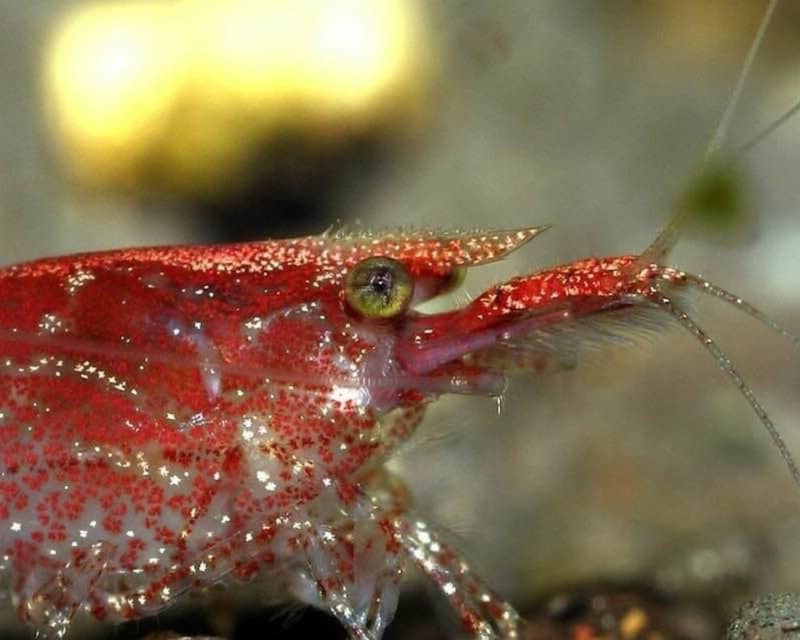
Red, blue, yellow, black and Rili cherry shrimp (Neocaridina) graded per listing, with mature-tank and water guidance so a new colony settles and breeds.
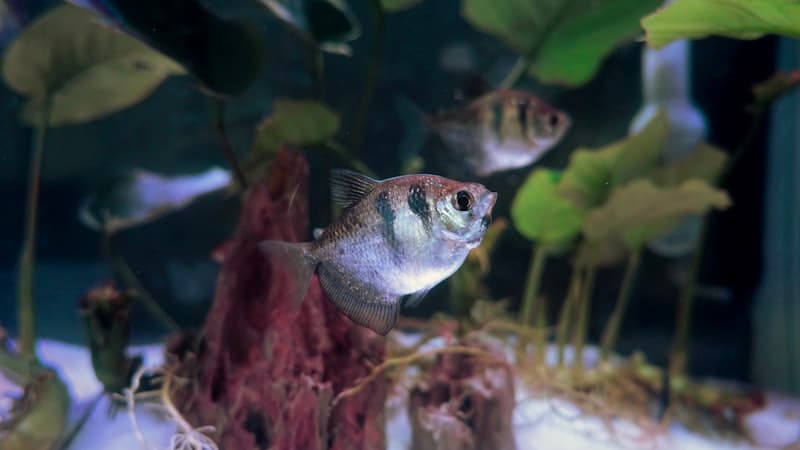
Corydoras
Shop current Corydoras catfish listings in the UK. Compare scientific identity, size and sale unit, with price and availability shown per product.
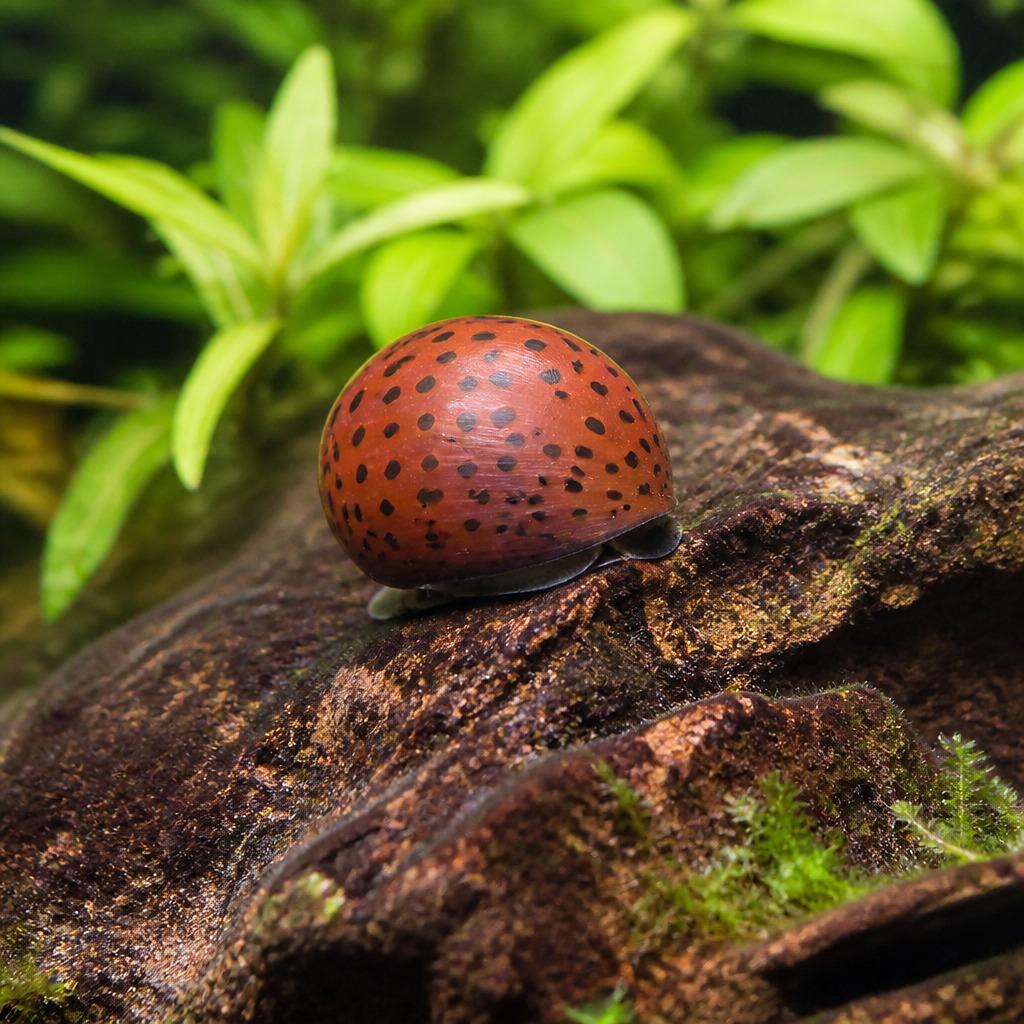
Freshwater Snails
Shop freshwater aquarium snails in the UK. Compare current species, adult size, water needs, diet, breeding risk, compatibility, prices and availability.
Sources & further reading
Material factual claims cite the sources below; store policy and cautious inference are labelled in the article. Sources are grouped by type so you can judge their weight at a glance.
Scientific database (5)
- [6]Froese, R. & Pauly, D. (eds.). FishBase: Paracheirodon innesi. FishBase. View source
Species identity, recorded size and secondary aquarium compilation; the aquarium values are not controlled tolerance or stocking trials.
- [8]Froese, R. & Pauly, D. (eds.). FishBase: Trigonostigma heteromorpha. FishBase. View source
Species identity, size record and secondary group, water and aquarium-length compilation; not a compatibility guarantee.
- [10]Froese, R. & Pauly, D. (eds.). FishBase: Xiphophorus maculatus. FishBase. View source
Species identity, size records and environmental context; not a home-aquarium stocking formula.
- [12]Froese, R. & Pauly, D. (eds.). FishBase: Trichogaster chuna. FishBase. View source
Species identity and secondary aquarium compilation including a 60 cm length screen; not a universal litre, group or companion rule.
- [14]Froese, R. & Pauly, D. (eds.). FishBase: Gastrodermus pygmaeus. FishBase. View source
Reviewed species record used for identity and a 2.1 cm maximum standard-length record only; it does not provide a universal tank or group minimum.
Animal-welfare charity (1)
- [2]Royal Society for the Prevention of Cruelty to Animals. Choosing an aquarium for pet fish. RSPCA. View source
UK welfare guidance on adult size, aquarium capacity and shape, biological filtration, fishless cycling, testing and stable conditions. Its length formula is explicitly only a guideline, not a complete stocking answer.
Trade-body guidance (8)
- [3]Ornamental Aquatic Trade Association. How to set up and look after a freshwater tank / aquarium. OATA. View source
UK trade-body guidance on adult-size planning, fishless maturation, zero ammonia and nitrite, gradual stocking and why an exact universal fish count is not possible.
- [5]Ornamental Aquatic Trade Association. How to look after tetras and pencilfish. OATA. View source
Broad UK group-level guidance on shoaling, aquarium space and water; exact-species requirements still control.
- [7]Ornamental Aquatic Trade Association. How to look after rasboras. OATA. View source
Broad UK group-level care guidance for rasboras; it does not prove that every rasbora shares one tank, water or group requirement.
- [9]Ornamental Aquatic Trade Association. How to look after platies and swordtails. OATA. View source
UK guidance on platy water, social composition, adult size and reproduction; broad advice still requires an exact-species and aquarium check.
- [11]Ornamental Aquatic Trade Association (2022). How to look after gouramis and paradise fish. OATA. View source
Broad group guidance on water, cover, air access, flow and social planning; it is not a Honey-Gourami-specific compatibility trial.
- [13]Ornamental Aquatic Trade Association. How to look after freshwater catfish. OATA. View source
UK group-level guidance on Corydoradinae social groups, aquarium floor, substrate and direct feeding; exact species still control.
- [15]Ornamental Aquatic Trade Association. How to look after American cichlids. OATA. View source
Broad UK guidance including social and space cautions for angelfish and a 120 litre starting context for a pair of smaller American cichlids; species-level requirements still control.
- [16]Ornamental Aquatic Trade Association. How to look after discus. OATA. View source
UK discus guidance on social group, adult volume and water; it rules out treating a 100 litre community as a normal discus home.
Government / regulatory (2)
- [1]National Institute of Standards and Technology. NIST Guide to the SI, Appendix B.8: Factors for Units Listed Alphabetically. US National Institute of Standards and Technology. View source
Authoritative US and imperial gallon-to-litre conversion factors; it does not provide aquarium stocking advice.
- [4]Drinking Water Inspectorate. Water hardness / hard water. Drinking Water Inspectorate. View source
UK drinking-water hardness varies by geology and source; use the current supplier report as context and test the actual aquarium water.
Spotted something that needs a fix?
Fishkeeping moves fast and we want every guide spot-on. If you think something here is wrong, out of date, or could be clearer, tell us — our team reads every message and updates the page.
Suggest an editRelated care guides
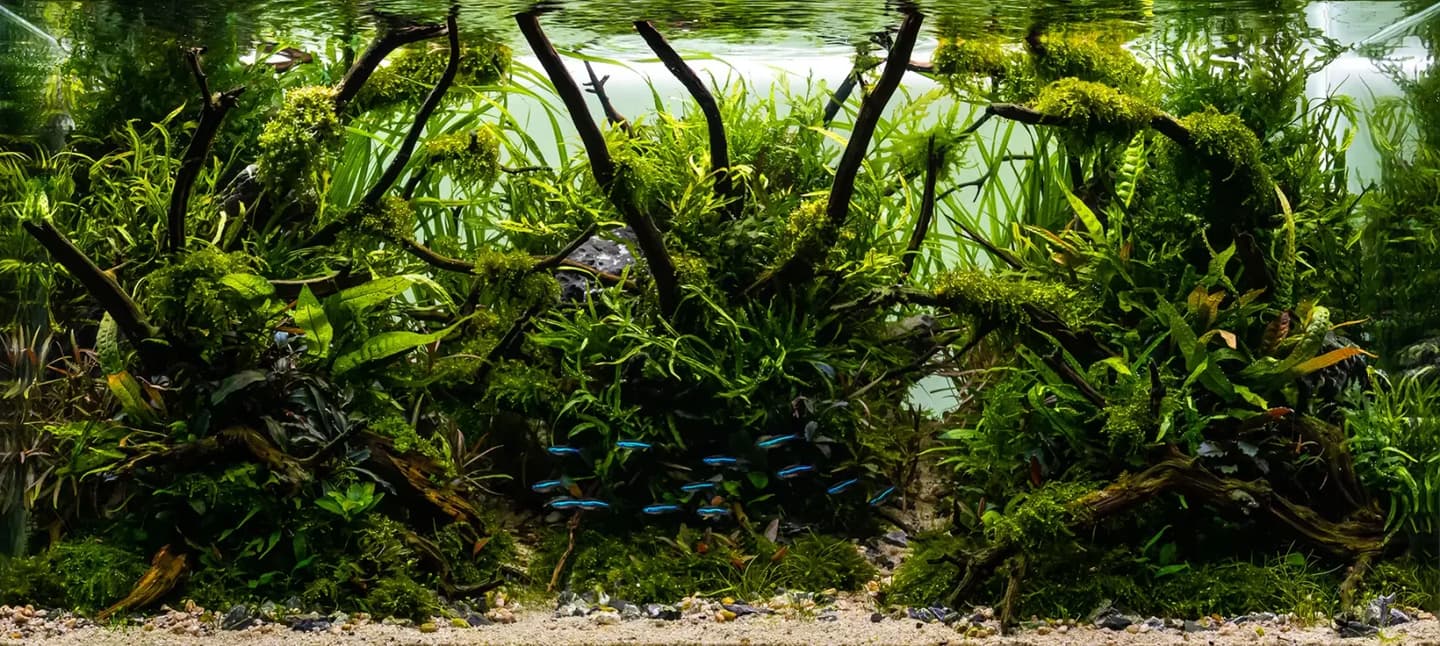
How to Set Up a Tropical Fish Tank: 10 Safe Steps
Choose the intended fish before the aquarium, place the tank on a suitable level support, install a filter and thermostatic heater, condition and test the water, then complete a fishless cycle. Add fish only after the chosen maturation process reaches its defined endpoint and repeated tests show zero ammonia and zero nitrite; elapsed days alone do not prove readiness.
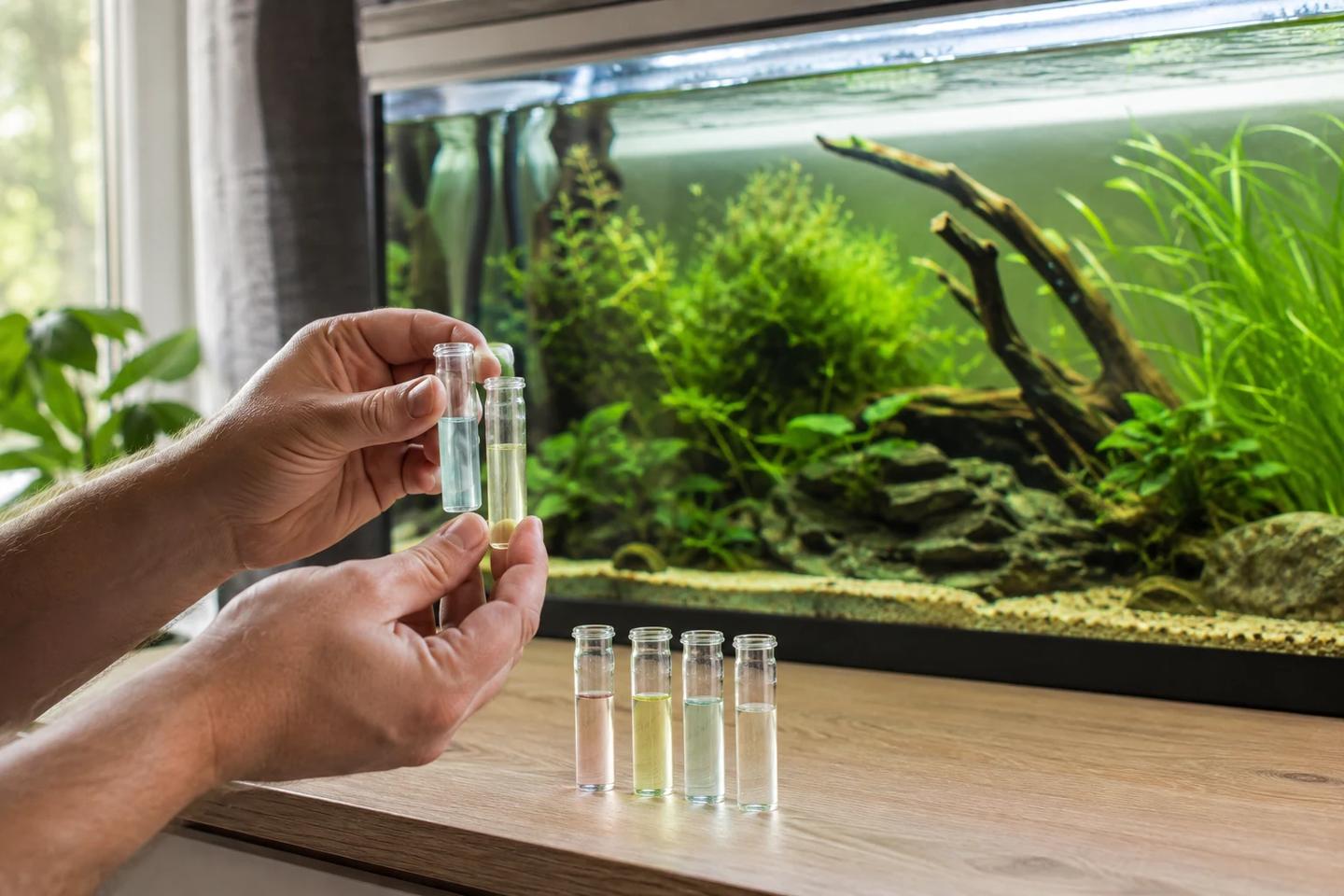
Aquarium Water Parameters: What to Test and Why
There is no universal set of perfect freshwater aquarium parameters. Identify the animals, learn what the test and unit actually report, establish your local source-water baseline, and compare repeat measurements. In an established aquarium, a confirmed ammonia or nitrite detection needs investigation; pH, GH, KH, temperature and nitrate decisions depend on the species, life stage and whole system.
Corydoras Care Guide: Choose the Right Cory Catfish
Identify the exact cory catfish before choosing care. Our starting policy for many common medium species is six compatible conspecifics, a mature 60 x 30 cm aquarium of about 60 litres, smooth fine sand and measured species-appropriate water.