Moderate
Teugelsi Bichir (Polypterus teugelsi)
24–28°C · pH 6.5–7.5 · 600L
£45.99
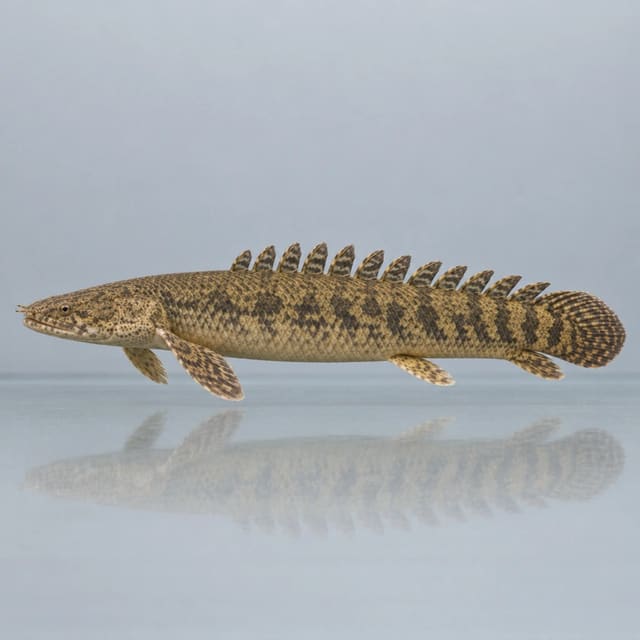
The Marbled Bichir (Polypterus palmas), also called the Shortfin Bichir, is a hardy, air-breathing West African bichir with a marbled, armoured body and a row of finlets along its back. It grows to about 32–35 cm and needs a covered aquarium with a base of 120 × 45 cm, soft sand, hiding places and meaty foods. Sold singly: one live fish per purchase.
Adult size is the maximum length this species reaches at full maturity (scientific sources). The livestock you receive will be younger and smaller. Product-photo provenance and any image-specific limitations are stated on the listing.
Polypterus palmas
The Marbled Bichir (Polypterus palmas), also called the Shortfin Bichir, is a hardy, air-breathing West African bichir with a marbled, armoured body and a row of finlets along its back. It grows to about 32–35 cm and needs a covered aquarium with a base of 120 × 45 cm, soft sand, hiding places and meaty foods. Sold singly: one live fish per purchase.
Adult size is the maximum length this species reaches at full maturity (scientific sources). The livestock you receive will be younger and smaller. Product-photo provenance and any image-specific limitations are stated on the listing.
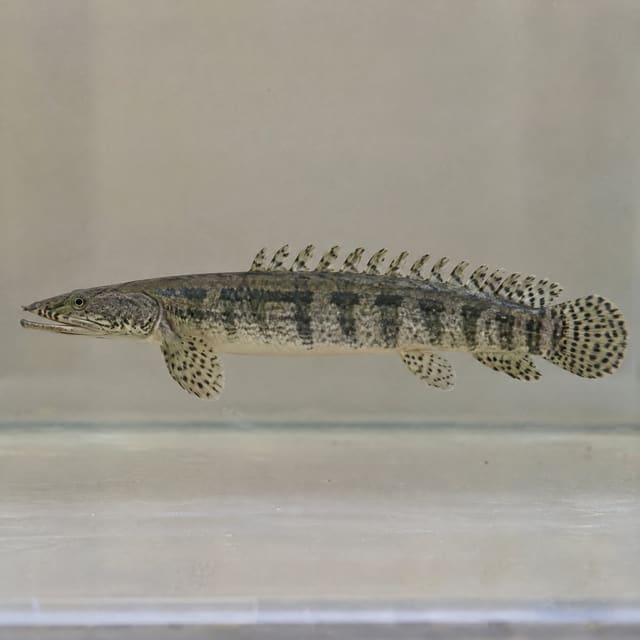
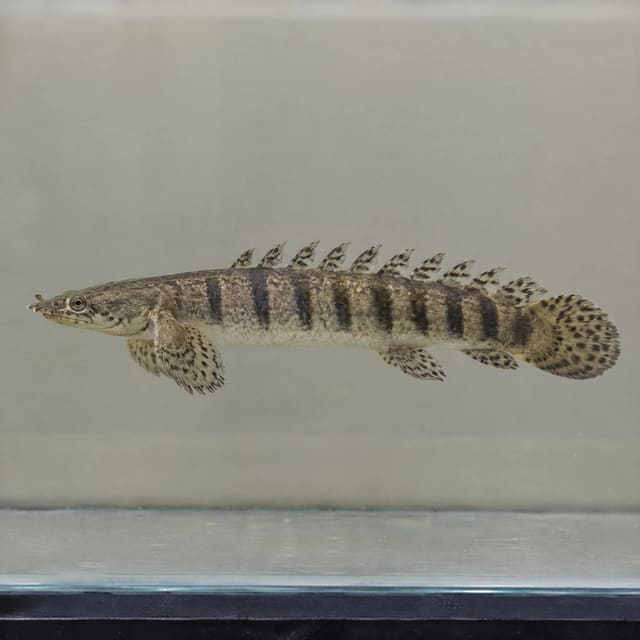
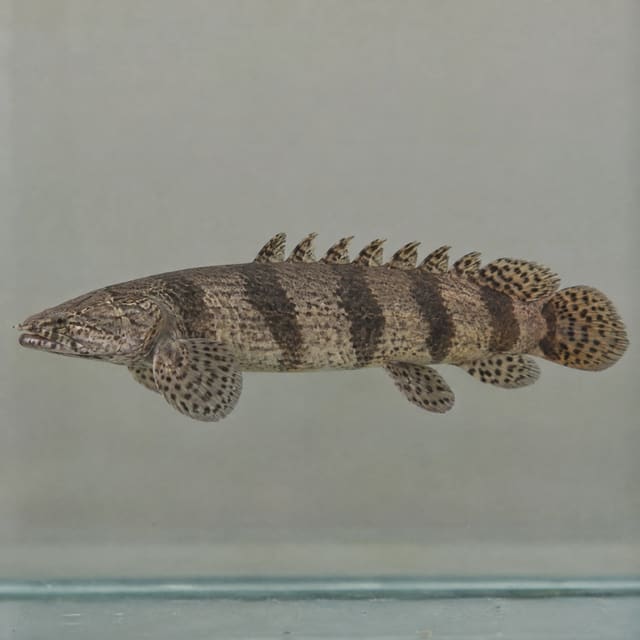
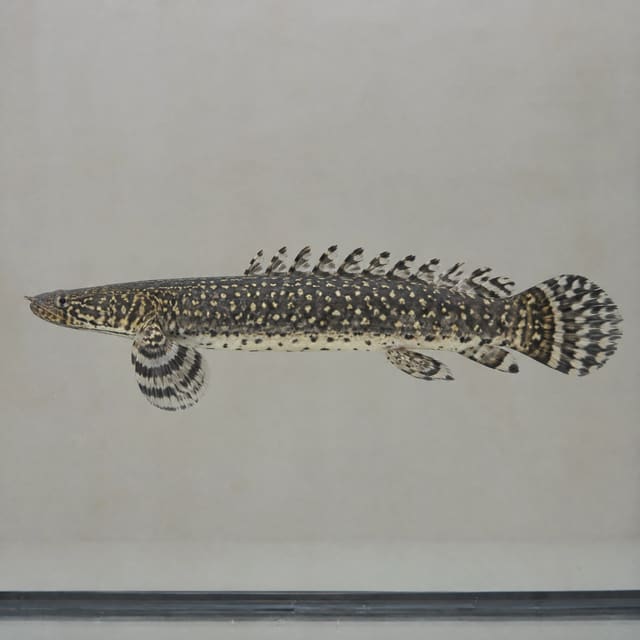
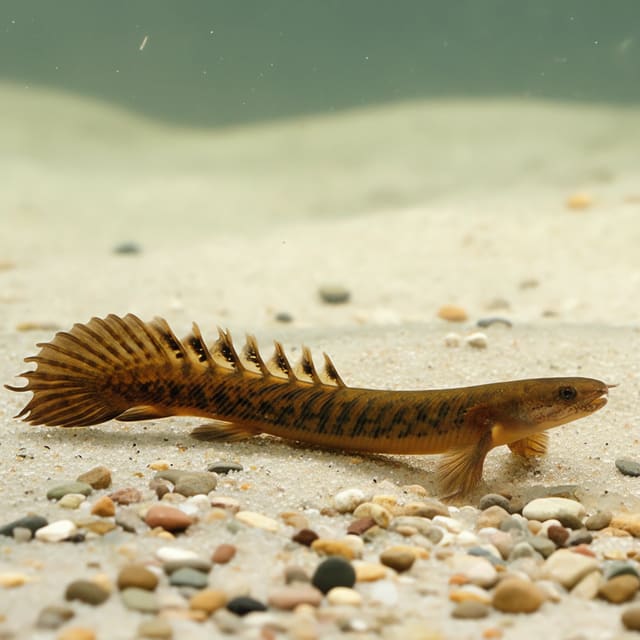
The Marbled Bichir (Polypterus palmas), also called the Shortfin Bichir, is one of the smallest bichirs. It has the classic bichir build: a long, round body covered in hard, diamond-shaped scales, a row of separate little finlets along the back that gives the genus its name (Polypterus means "many fins"), and fleshy pectoral fins it uses to prop itself up on the bottom. The marbled bichir is tan to olive with a bold pattern of dark blotches and bars, and banded fins.
Bichirs are an ancient line of fish. Seriously Fish notes that their fossil relatives date back to the Triassic, more than 200 million years ago. They breathe air with a divided swim bladder that works as a lung, and young fish have feathery external gills that disappear as they grow. Watching a bichir rise to the surface for a gulp of air is part of the appeal.
| Feature | What to look for |
|---|---|
| Pattern | Tan to olive body marbled with irregular dark blotches |
| Back | A row of separate finlets, each with a small spine |
| Fins | Rounded, banded pectoral and tail fins |
| Size | About 32–35 cm, one of the smallest bichirs |
| Names | Marbled Bichir, Shortfin Bichir; formerly P. palmas palmas |
The name needs a word of explanation. Seriously Fish records that the former subspecies P. palmas polli is now treated as a separate species, P. polli, and that most fish sold as P. palmas are reportedly P. polli; the former P. palmas buettikoferi is now a synonym of P. palmas. FishBase adds that records of P. palmas from the Congo Basin probably refer to P. polli. The care is identical, so you can plan the tank with confidence either way.
Compare it with the other bichirs on our Polypterus bichirs page, including the Senegal Bichir, Delhezi Bichir and Ornate Bichir, and its slender cousin the Reedfish. More unusual species are in our loaches and oddball fish range.
One purchase supplies one live Marbled Bichir. The listing has a single option rather than graded sizes, and the sex is not chosen. If you need to know the current size, for example to judge it against existing tank mates, ask us before you order.
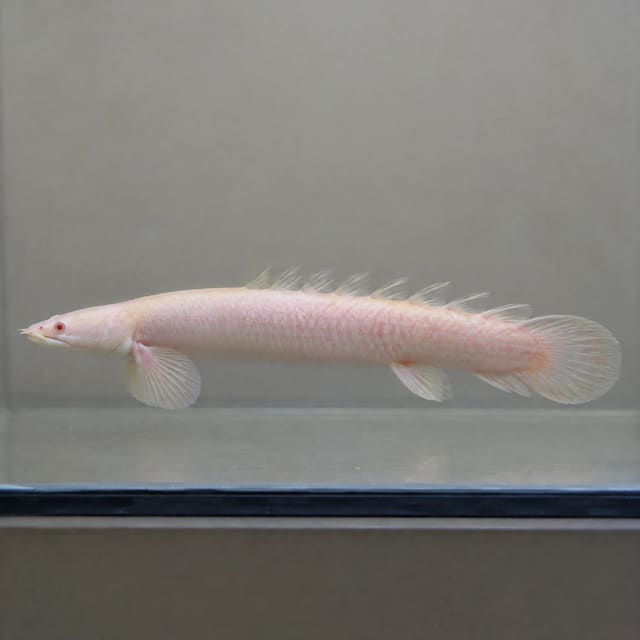
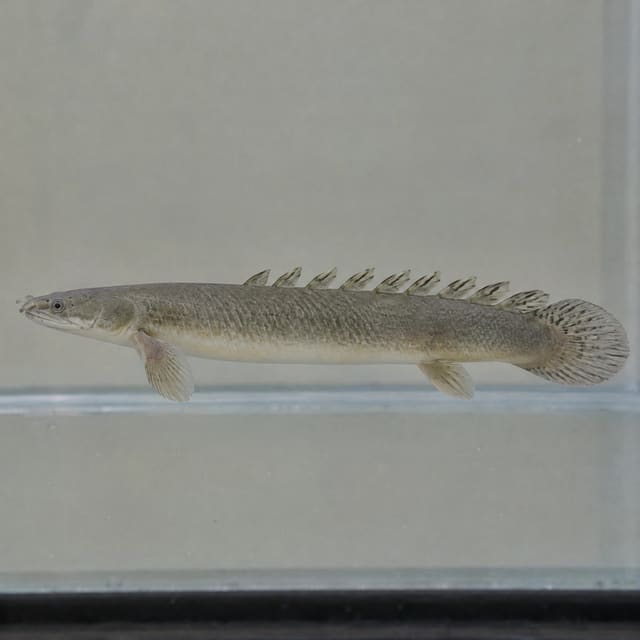
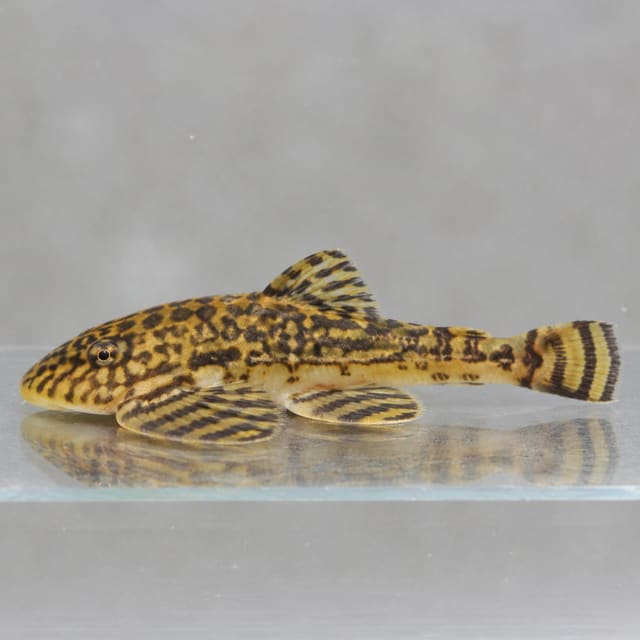
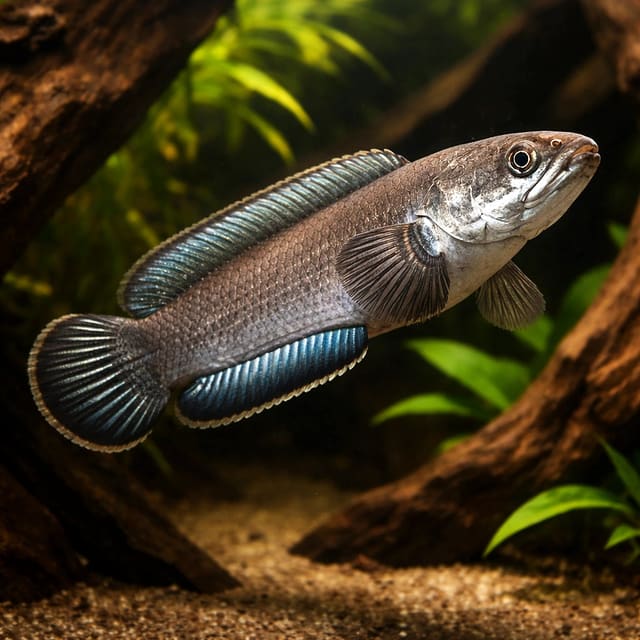
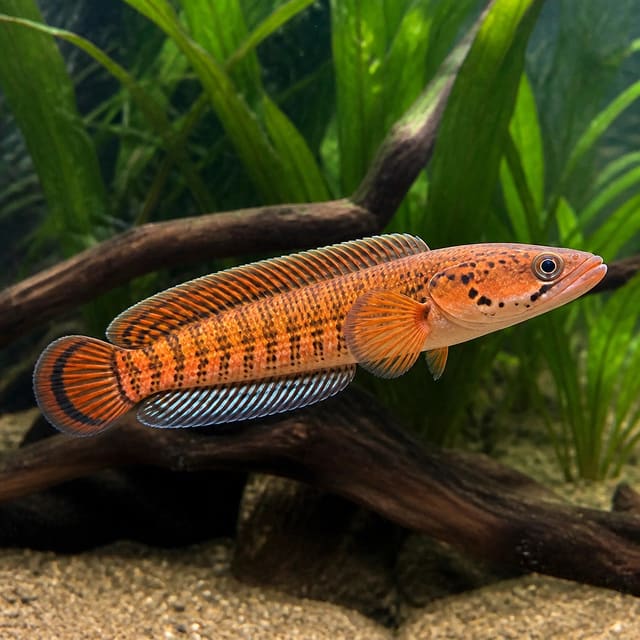
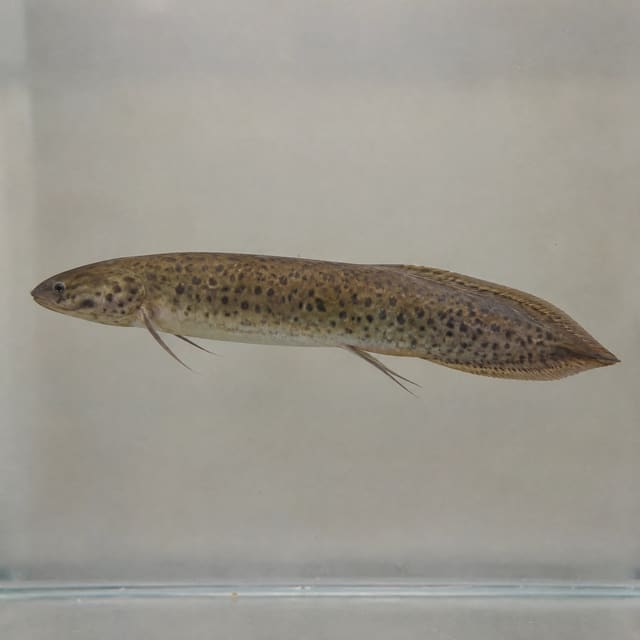
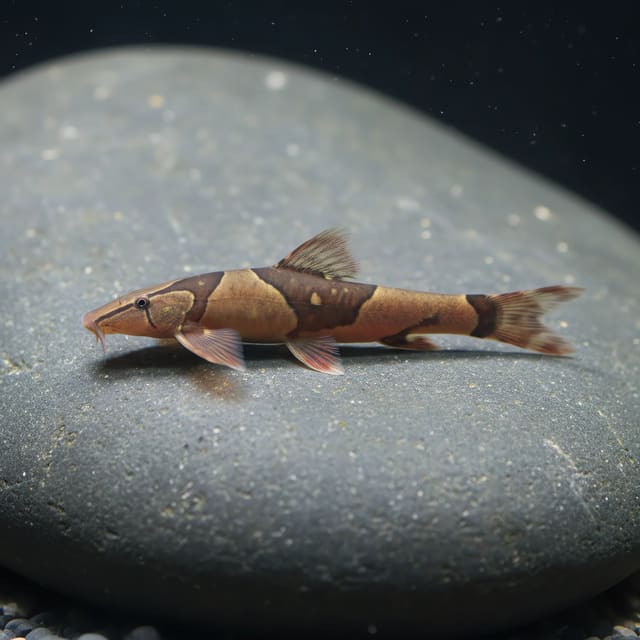
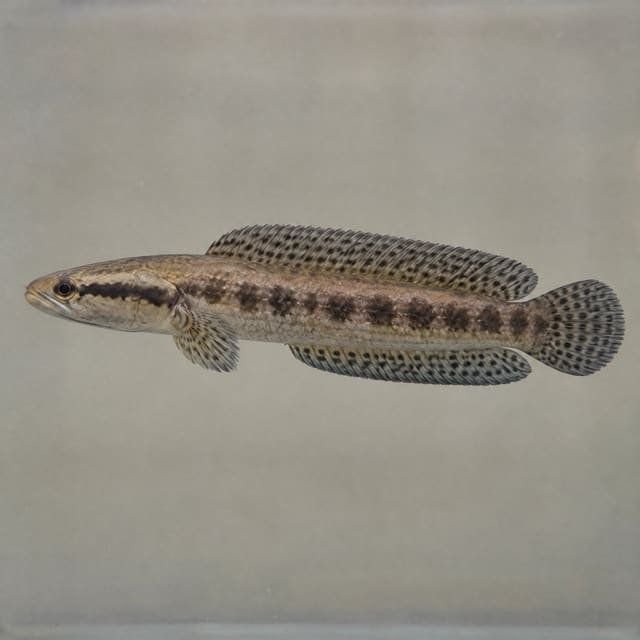
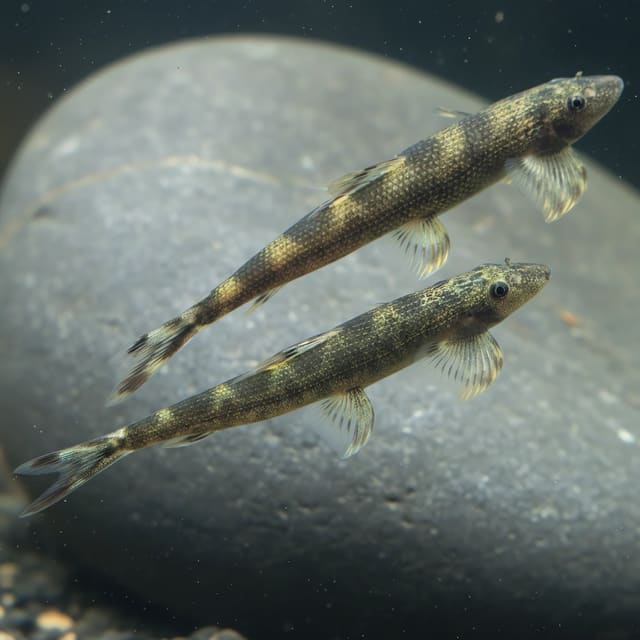
The photographs are illustrations prepared from a reference image of the species. They show the body shape, finlets and marbled pattern, not the individual you will receive; the exact arrangement of blotches differs from fish to fish.
Read our delivery and Live Arrival Guarantee information before ordering, and make sure the aquarium is fully matured first.
Seriously Fish gives a maximum of 325 mm standard length and FishBase 35.3 cm, so plan for a fish of about 32–35 cm, longer still to the tip of the tail. Seriously Fish recommends a base of 120 × 45 cm, about 205 litres, and stresses that floor space matters more than depth for this bottom-dwelling fish.
| Measurement | Minimum | Why it matters |
|---|---|---|
| Length | 120 cm | Room for a 35 cm fish to cruise and turn |
| Front to back | 45 cm | A bichir spends its life on the floor |
| Volume | About 205 litres | Stable water for a meaty diet |
| Air space | A gap under the lid | It must reach the surface to breathe |
Seriously Fish gives the Marbled Bichir a moderate difficulty rating and describes it as smaller and more peaceful than most bichirs, which is why it suits a smaller tank than the 150–210 cm bases it gives for species such as the Senegal and Saddled Bichirs. Use our tank volume calculator to check your aquarium, and our stocking calculator before adding companions.
Seriously Fish recommends a soft substrate, with driftwood and smooth rocks arranged to form hiding places; plants are not essential but are appreciated. The species is nocturnal with poor eyesight and finds food by smell, so it spends the day resting in cover and comes out to hunt at dusk.
| Area | Purpose |
|---|---|
| Open sand at the front | Resting and feeding ground |
| Driftwood roots and smooth stone caves | Daytime hiding places |
| Robust plants such as Anubias on wood | Shade and broken sight lines |
| Surface area free of clutter | Easy access to air |
Seriously Fish calls this bichir an excellent escape artist that is known to jump, so a tight-fitting cover is essential; close every gap around pipes and cables. It also notes that bichirs can survive out of water for a while if kept moist, but may drown if they cannot reach atmospheric air. Keep the water level a few centimetres below the lid so the fish can always reach the surface.
FishBase places the species in the coastal rivers of the Gulf of Guinea, from Guinea-Bissau to Liberia, the upper Cavally in Côte d'Ivoire and the upper Casamance in Senegal. The two main sources agree closely on water values.
| Reading | Target | Source note |
|---|---|---|
| Temperature | 26–28°C | Seriously Fish 25–28°C; FishBase 26–28°C |
| pH | 6.0–7.0 | Seriously Fish; FishBase gives up to 7.0 |
| General hardness | 5–10 dGH | Seriously Fish 5–15; FishBase up to 10 |
| Ammonia and nitrite | 0 mg/l | OATA |
| Nitrate | No more than 20 mg/l above your tap water | OATA |
Bichirs are hardy, and Seriously Fish's range up to 15 dGH shows some tolerance, but many UK areas have hard, alkaline tap water. Check your water company's report for your postcode and test the tank itself; in hard-water areas, blending in some reverse-osmosis water brings the hardness down. Our water matcher and water chemistry guide help you compare readings. Seriously Fish assumes two heaters with a total of 125–200 W for a 205-litre tank in a room at about 20°C; our guide to tropical tank temperature covers heater sizing and placement.
Seriously Fish suggests a filter rated at 820–1,025 litres per hour for a 205-litre tank, four to five turnovers an hour. Meaty foods break down fast, so good biological filtration and a steady routine keep the water safe.
Our filtration guide explains how to choose and maintain a filter for a meat-eating fish.
Seriously Fish describes the Marbled Bichir as carnivorous; it usually refuses dried foods, although some individuals accept pellets. In the wild, adults leave their daytime refuges at night to hunt invertebrates and small fish in shallow water.
| Food | Use |
|---|---|
| Frozen bloodworm and mysis | Settling in and smaller fish |
| Prawn, mussel and krill | Regular staples |
| Earthworms and lancefish | Larger fish and shy feeders |
| Sinking carnivore pellets | Only if your fish learns to accept them |
Feed once a day, as OATA recommends, in the evening when the bichir is active. Because it hunts by smell, drop food close to where it rests, and check that faster fish are not taking everything first. Remove leftovers after a few minutes. Our frozen mussel, frozen mysis and live earthworms cover the core menu.
Seriously Fish warns that wild-caught bichirs may carry parasites or infections, so watch new fish closely for the first few weeks. OATA's guidance on wild-caught fish adds that they can be less tolerant of water outside their normal range and may need live or fresh food before they reliably take prepared diets.
Our acclimatisation guide covers both this method and the slower drip method.
| If you see | Do this |
|---|---|
| Not eating after a few days | Offer live earthworms or bloodworm at dusk |
| Thin body | Check that tank mates are not taking its food |
| White spots, fluffy patches or cloudy eyes | Test the water first, then seek advice |
| Rapid, repeated trips to the surface | Test ammonia and nitrite and check oxygenation |
| Rubbing on decor or flicking | Test the water and watch for parasites |
Regular trips to the surface for air are normal for a bichir; what matters is a sudden change from its usual pattern. These warning signs follow OATA's health guidance.
Seriously Fish describes the Marbled Bichir as relatively peaceful and active, and its genus page groups it with the Senegal Bichir as more peaceful than other species. But it is still a predator: it cannot be trusted with any tank mate small enough to fit in its mouth, and it hunts at night when small fish are resting.
| Suits | Avoid |
|---|---|
| Other Polypterus bichirs | Small tetras, rasboras and livebearers |
| Synodontis catfish | Shrimps and dwarf crayfish |
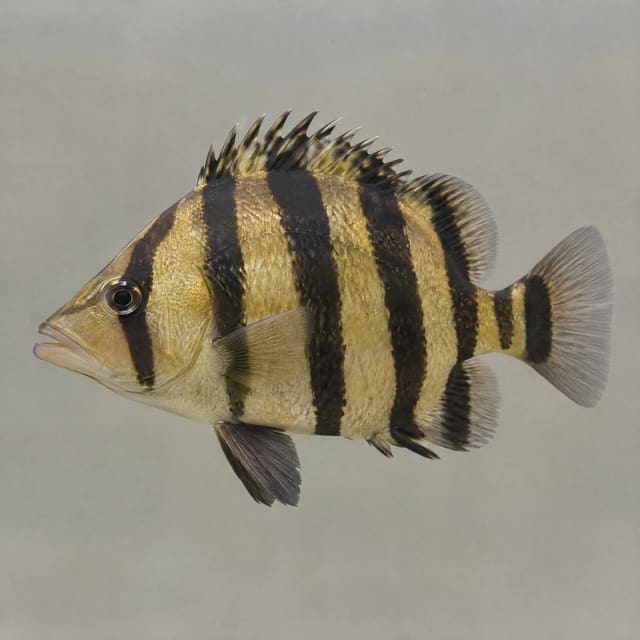
| Datnoids and knifefish | Fish that fit in its mouth |
| Larger Ctenopoma and African butterflyfish | Very fast, greedy feeders that leave it hungry |
| Medium to large characins | Aggressive cichlids that harass bottom fish |
Those suggestions come from Seriously Fish. From our range, the Featherfin Synodontis, Freshwater Butterflyfish, Leopard Bushfish and a group of fully grown Congo Tetras make a West and Central African community with the bichir, provided every fish is too large to swallow. Check any plan with our tank mates tool, and see more bottom-dwelling fish and other freshwater fish.
Seriously Fish notes that adult males have a thicker anal fin than females. Breeding has not been recorded in aquariums, and the account below is how other bichirs breed. In nature, spawning happens in the rainy season, probably triggered by changes in temperature and water chemistry.
The male chases and nudges the female, then cups his anal and tail fins to collect and fertilise the eggs and scatters them among plants. The adults may eat the eggs, so they are removed afterwards. Eggs hatch in three to four days, and the fry become free-swimming about three days later, taking brine shrimp nauplii or microworm. Treat a spawning as a bonus rather than a plan.
OATA reminds buyers to be prepared to care for a fish for its whole life, with a tank that fits the adult, and never to release one into the wild. FishBase lists P. palmas as Least Concern on the IUCN Red List and notes its commercial importance in the aquarium trade.
It is Polypterus palmas, a small bichir from the coastal rivers of West Africa, also called the Shortfin Bichir. It has a long, armoured body with a marbled pattern of dark blotches, a row of separate finlets along the back and a lung-like swim bladder that lets it breathe air.
About 32–35 cm. Seriously Fish gives a maximum of 325 mm standard length and FishBase 35.3 cm, which makes it one of the smallest bichirs.
A base of at least 120 × 45 cm, about 205 litres, according to Seriously Fish, which notes that floor space is more important than depth. A tight lid is essential.
Yes. Bichirs gulp air from the surface, and Seriously Fish warns that one may drown if it cannot reach atmospheric air. Leave a gap between the water and the lid and never fill the tank to the brim under a sealed cover.
Meaty foods: frozen prawn, mussel, krill, mysis and bloodworm, with earthworms and lancefish for adults. Most refuse dried foods, though some learn to take sinking pellets. Feed in the evening.
Fish too large to swallow: other bichirs, Synodontis catfish, datnoids, knifefish, larger Ctenopoma, medium to large characins and African butterflyfish, as Seriously Fish suggests. Anything that fits in its mouth will be eaten.
It is sold under that name. Seriously Fish notes that most fish traded as Polypterus palmas are reportedly Polypterus polli, a closely related species with identical care, so the aquarium needs are the same either way.
Adult males have a thicker, fleshier anal fin than females. Bichirs have not been bred in aquariums very often, so treat breeding as a bonus rather than a plan.
One live Marbled Bichir. The listing has a single option and sex is not chosen; ask us if you need the current size.
No reviews for this item yet. Bought one? Honest reviews only, good or bad.
What customers say about ordering from us
Easy website plenty of info on fish your buying great to pick a time slot
TRACEY DURRANT · 7 Oct 2026
Got some lovely fish thank you
Kevin Mackie · 7 Oct 2026
Reviews of our shop, collected by Judge.me, an independent third-party review collector. Newest first.
Moved by UK carriers licensed to handle live animals
Hand-packed with oxygen bags, poly box, heat pack
Email photos the same day; an optional unboxing video helps us review problems faster — claim terms apply
Klarna & PayPal Pay in 3 at checkout