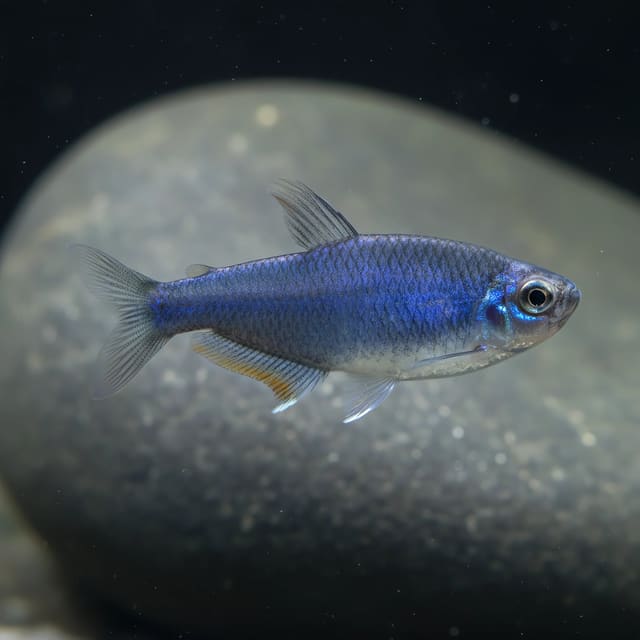
Reticulated Hillstream Loach (Sewellia lineolata)
20–24°C · pH 6–7.5 · 68L
£11.99
Doryichtys martensii is a freshwater fish for an established, filtered aquarium. It suits a prepared keeper who can match adult size, temperament, water and feeding behaviour, with ammonia and nitrite kept at 0 mg/l. Sold individually in dispatch sizes of 7-10 cm and 20-30 cm.
Doryichtys martensii
Doryichtys martensii is a freshwater fish for an established, filtered aquarium. It suits a prepared keeper who can match adult size, temperament, water and feeding behaviour, with ammonia and nitrite kept at 0 mg/l. Sold individually in dispatch sizes of 7-10 cm and 20-30 cm.
Doryichtys martensii is a freshwater fish for an established, filtered aquarium. It suits a keeper prepared to assess its full-grown space, water, temperament and feeding requirements before bringing it home. Plan the aquarium first, confirm that the biological filter is working, and judge every proposed tank mate against the same practical requirements.
This is not a fish to add merely because an aquarium has an empty-looking area. Water volume, filter capacity, occupied swimming space and the behaviour of every resident all affect whether another fish can be kept well. Browse the shop’s loaches and oddballs collection for other fish, and screen each one before mixing.
One purchase supplies one fish in the size chosen through the live selector. Choose 7-10 cm or 20-30 cm. Choose by the space and established filter capacity that the aquarium can provide immediately, then continue planning for the fish’s full-grown requirements.
The size you select is the size supplied, not the adult size. A fish dispatched at 7-10 cm still needs room for its full-grown size, while a fish dispatched at 20-30 cm needs an aquarium that fits that length from its first day. Choose the aquarium for the fish’s full-grown size, not the size it arrives at.
| Size you order | How to plan |
|---|---|
| 7-10 cm | Prepare for one fish within this size band on arrival and leave room for continued growth. |
| 20-30 cm | Prepare for one fish within this size band on arrival, and confirm its full-grown space before ordering. |
Sex is guaranteed only when the selected option explicitly states male or female. This Doryichtys martensii listing has no sex-guaranteed option.
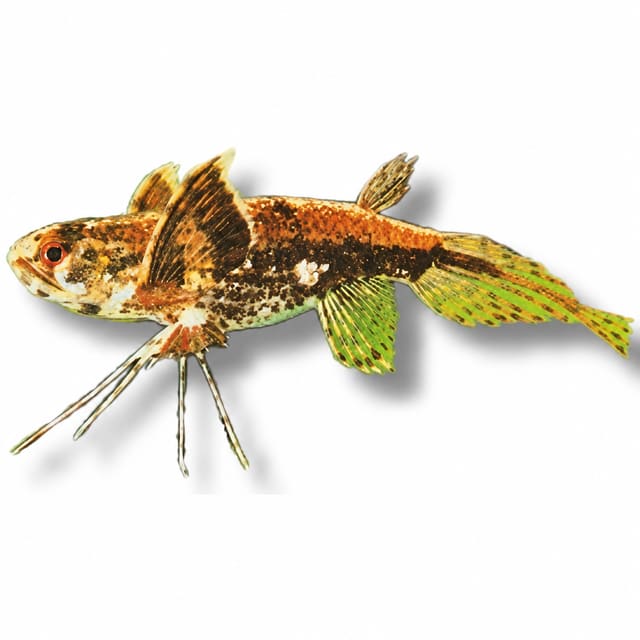
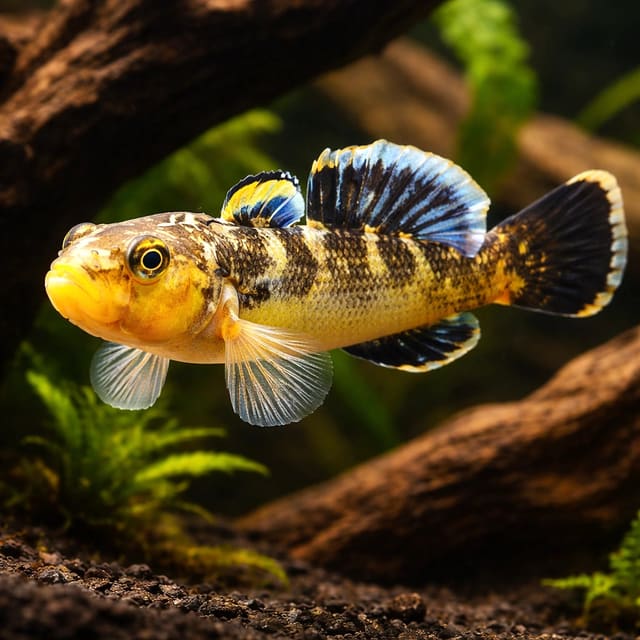
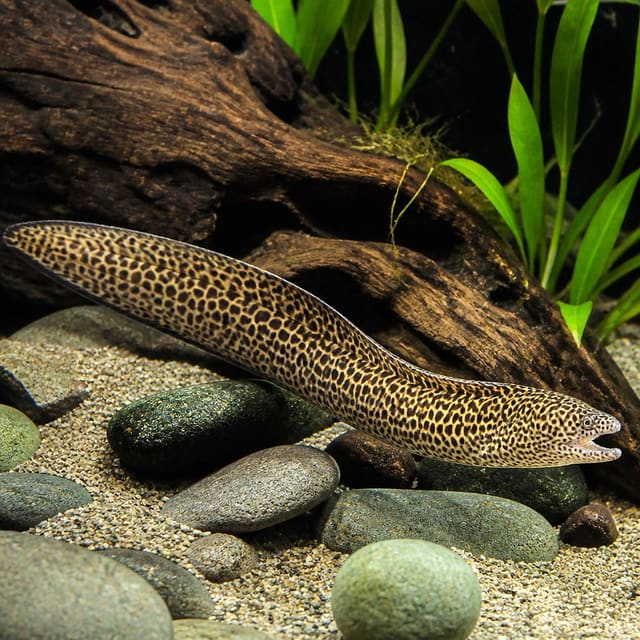
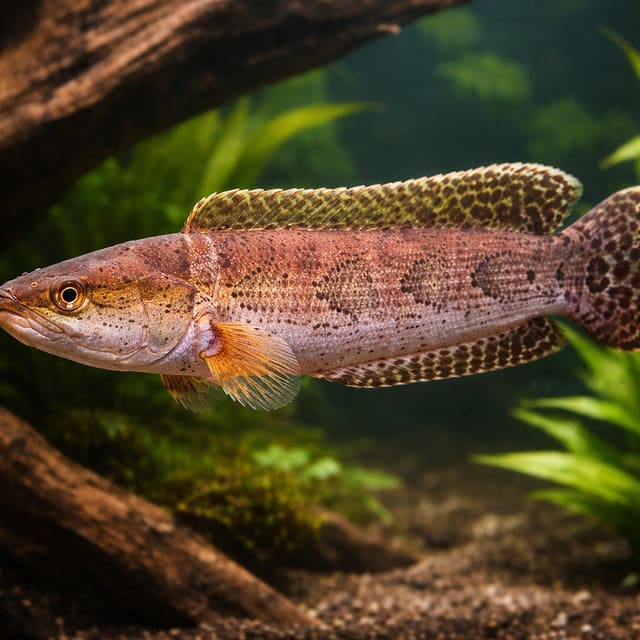
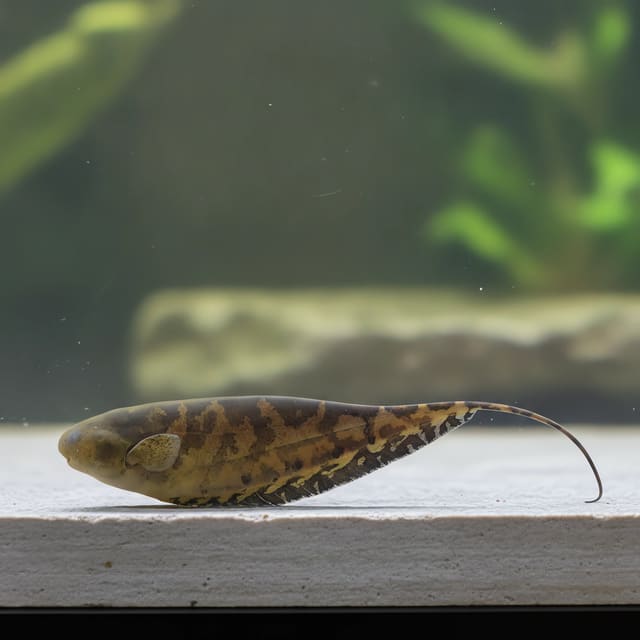
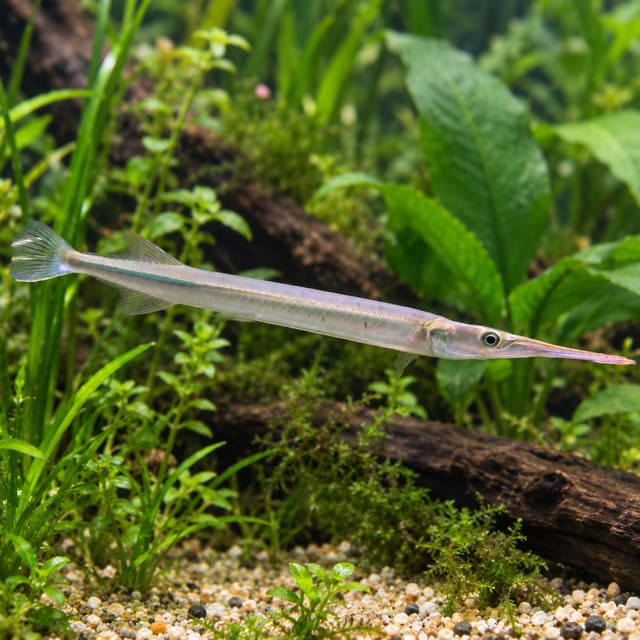
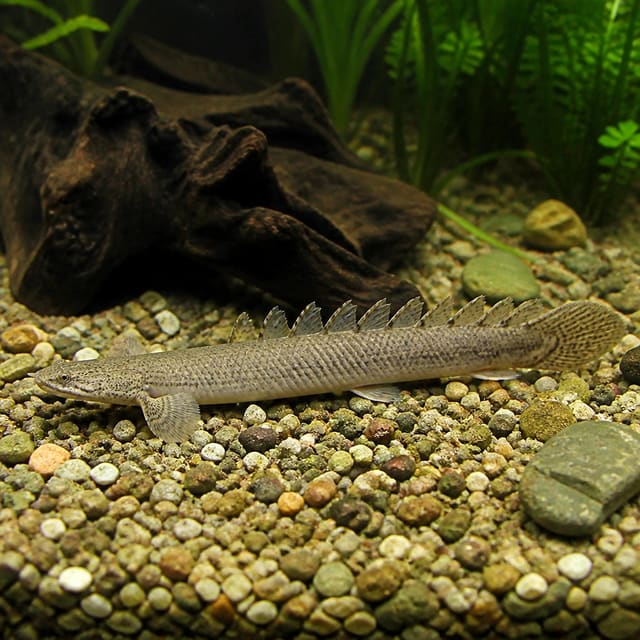
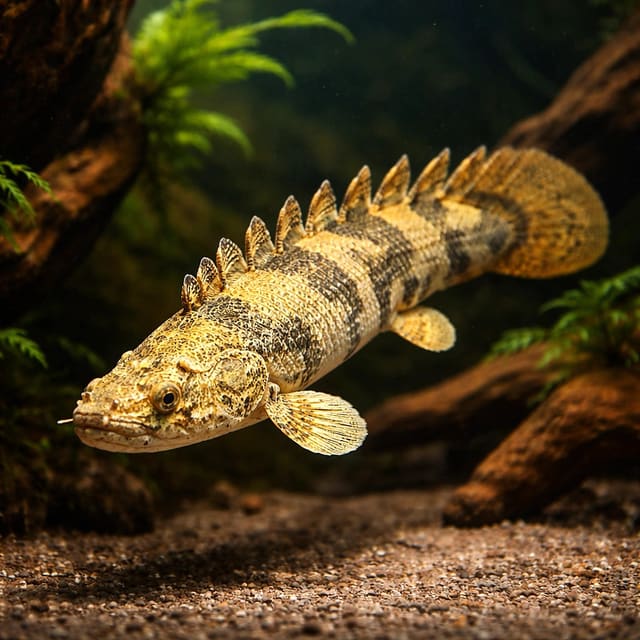
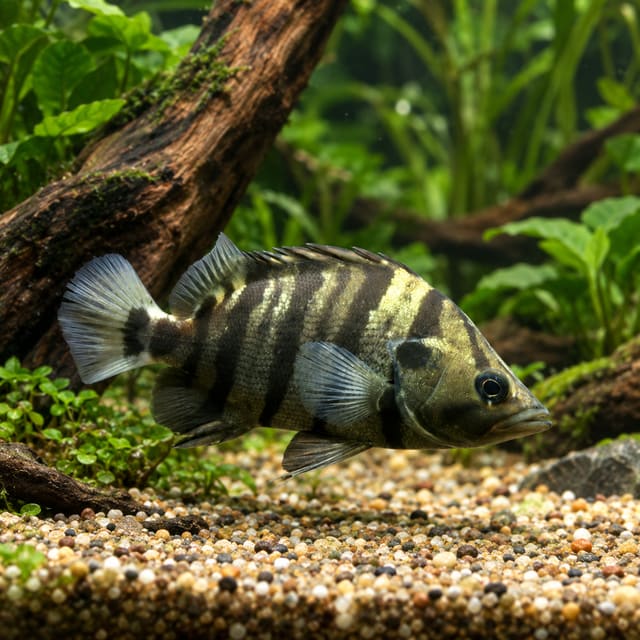
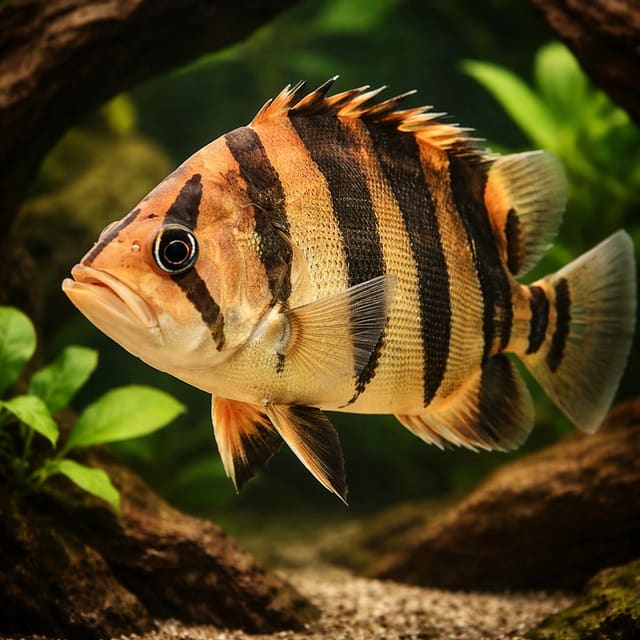
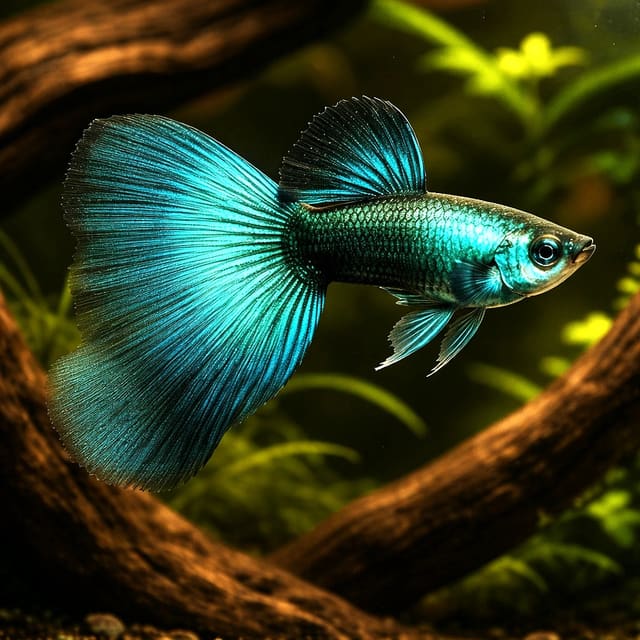
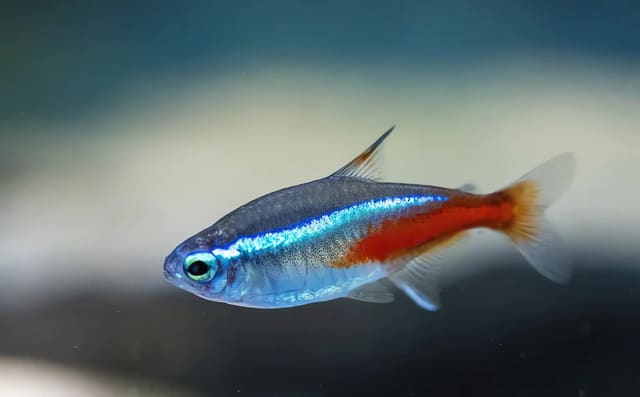
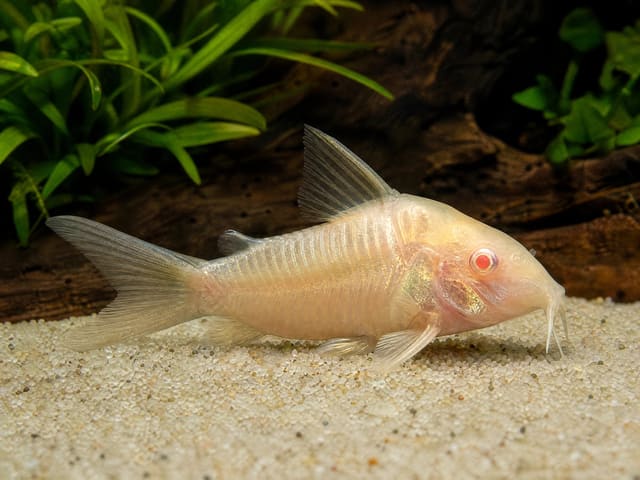
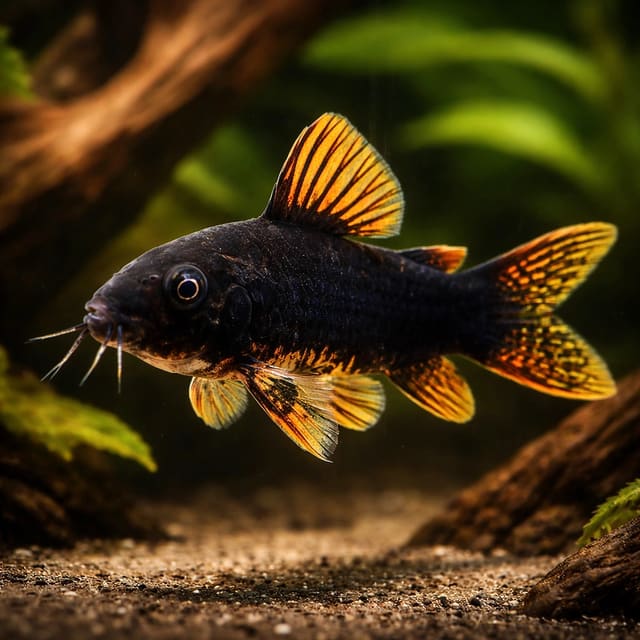
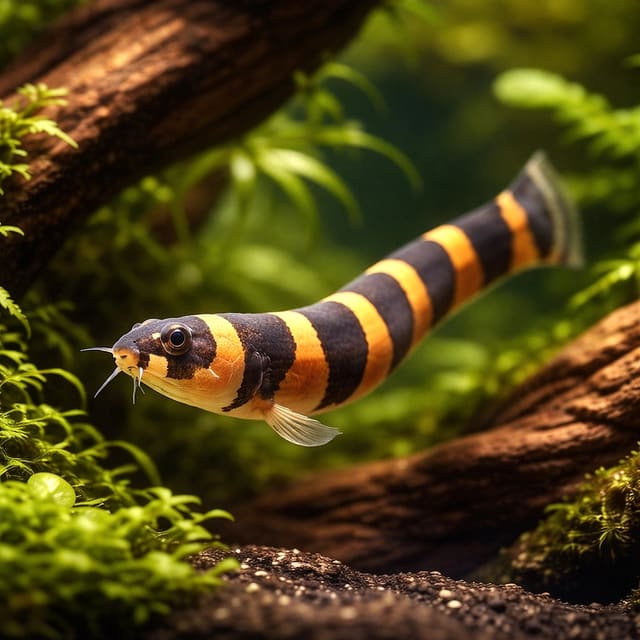
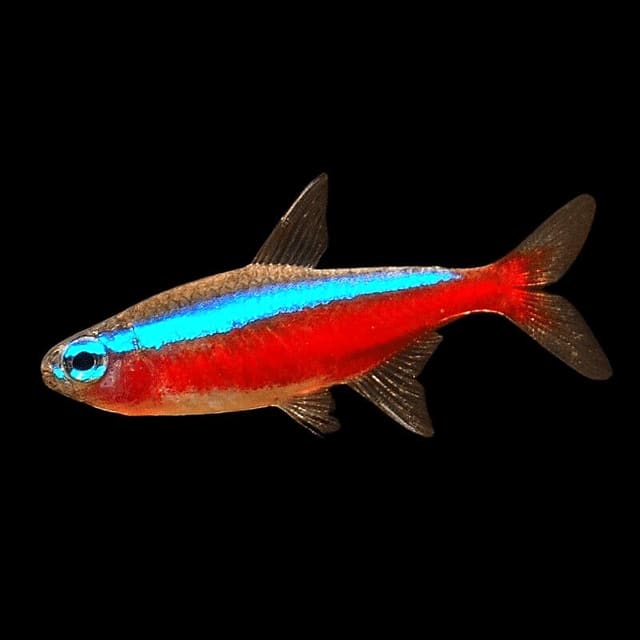
The gallery images are representative, based on reference photographs of this species, so colours can look slightly different from the live animal.
Neither the number of fish pictured nor their visible appearance changes the purchase unit. The offer is one fish per purchase, and the gallery is representative rather than a view of the individual animal that will be packed.
Begin with three firm conditions: a working biological filter, ammonia and nitrite at 0 mg/l, and enough usable space for the fish after every plant and ornament is counted. Keep temperature and pH stable, test rather than guess, and arrange the aquarium around the fish’s eventual needs instead of the amount of open water that appears to remain today.
Larger aquariums contain more water, so they are more stable and less susceptible to changes in temperature and pH than small aquariums. That stability is useful, but volume alone does not make a system suitable. Filter maturity, water matching, occupied space, temperament and feeding access must all work together.
| Suits | Not suited to |
|---|---|
| An established aquarium with a maintained biological filter | An aquarium without a properly established and maintained filter |
| A keeper who tests ammonia, nitrite, nitrate and pH regularly | A system stocked before ammonia and nitrite have reached 0 mg/l |
| A carefully assessed community or dedicated arrangement | An unassessed mix chosen only by appearance or spare-looking space |
| Aquarium planning that allows for full-grown space | A tank chosen only for the size the fish arrives at |
Complete the aquarium plan before ordering. Record its dimensions, tested water, current residents and filtration before ordering, and ask us to check them against this fish. That preparation gives a much stronger basis for a welfare decision than a broad stocking formula.
Set up the aquarium in a stable position and establish its equipment before adding the fish. Follow OATA’s freshwater aquarium guidance for positioning, setting up, testing and routine maintenance.
Fill the aquarium with dechlorinated water. OATA gives two routes: allow tap water to stand for 24 hours or use a commercial dechlorinator. Switch on the equipment and allow the system to settle for 24 to 48 hours so that the intended temperature can be reached and equipment operation can be checked. This initial settling period is an equipment check; biological filter maturation is a separate process that must be completed before fish are added.
If this is your first setup, follow the shop’s guide to preparing and maturing a first tropical aquarium. Do not compress these stages to meet an arrival date. Move the livestock date instead of asking an immature filter to process a sudden waste load.
Keep ammonia at 0 mg/l and nitrite at 0 mg/l. The RSPCA’s aquarium welfare guidance explains why every fish aquarium needs a well-set-up and maintained filter: fish release toxic ammonia, and biological filtration supports bacteria that convert ammonia to nitrite and then to the safer nitrate.
A filter is therefore living waste-processing capacity, not simply a device that moves water or removes visible particles. Its bacteria must be established before the fish arrives and must keep pace with the total waste produced by fish and uneaten food. Clear water can still contain ammonia or nitrite, so appearance cannot replace test results.
| Result | Action |
|---|---|
| Ammonia 0 mg/l and nitrite 0 mg/l | Continue routine monitoring and check the remaining compatibility factors. |
| Any detectable ammonia | Pause livestock additions and review filter operation, loading and feeding. |
| Any detectable nitrite | Pause livestock additions and restore stable biological filtration before proceeding. |
| Rising nitrate | Review the maintenance routine, stocking load and tap-water baseline. |
Test more frequently while establishing an aquarium and after adding fish because the filter’s bacterial population must adjust when waste and feeding increase. Additions made too quickly can leave too few nitrifying bacteria to process the new load, producing the water-quality failure commonly called new tank syndrome.
Check the filter for blockage and accumulated fish waste as part of routine maintenance. Keep it operating as the aquarium’s biological support system, and investigate any change in flow or performance alongside the water tests. Do not respond to a poor reading by adding another fish or increasing food; stabilise the system first.
Choose an aquarium that can accommodate the fish fully grown and that provides enough room on the day it arrives. Buy as large an aquarium as practical: a larger body of water is more stable and less susceptible to changes in temperature and pH.
The selected dispatch grade sets the immediate lower boundary for physical planning. A 20-30 cm fish needs unrestricted accommodation for a fish within that band from the outset. A 7-10 cm fish still needs an aquarium chosen for future growth rather than one that only fits the smaller arriving body.
Plants and ornaments can enrich an aquarium, and retreats can help less boisterous or reclusive fish find shelter. Live plants also help to remove nitrate. Those benefits do not make decoration space-free: every object changes the area left for swimming and may alter how fish meet one another.
Write down the aquarium’s length, width and height rather than relying only on its stated litres. Combine those dimensions with the selected dispatch size and the space occupied by the aquascape. The result should provide immediate room and a credible growth plan, not merely a temporary fit.
Check water quality at least once a week with tests for ammonia, nitrite, nitrate and pH, and check the temperature regularly. Test more often while setting up the aquarium, after adding fish or whenever behaviour, breathing, colour or appetite changes. A written log makes gradual movement easier to see than isolated readings.
Use the shop’s water chemistry guide to understand what each test represents. Ammonia and nitrite must remain at 0 mg/l. Nitrate should be interpreted against the aquarium’s stocking, maintenance and tap-water baseline because nitrate in tap water can differ widely by area.
OATA advises partial water changes of up to 25% every week to help remove excess waste chemicals. In a 100-litre aquarium, 25% is 25 litres; in a 200-litre aquarium, it is 50 litres. Actual needs can vary with aquarium size, fish numbers and waste production.
Prepare replacement tap water at the correct temperature and treat it to make it safe for fish before adding it. Do not turn a water change into a sudden shift in temperature or chemistry. Keep the maintenance method repeatable so that a change in the fish can be compared with known actions rather than a different procedure every week.
Record weekly results, water-change amounts and observations during the first month. If ammonia or nitrite appears, stop further stocking and reassess the biological filter. If nitrate rises faster than expected, compare feeding, stocking and the tap-water reading before changing several variables at once.
Feed suitable aquarium food chosen for this fish’s feeding requirements, using modest portions and watching appetite, body condition and water quality. Diets and feeding positions differ between freshwater fishes, so do not choose a staple merely because another aquarium resident accepts it.
Ask us which food this fish is currently eating before you order, and have that food ready before it arrives.
Before purchase, identify a food that matches the fish’s requirements and make sure it can be delivered where the fish will encounter it. Some fishes feed at the surface, some throughout the water column and some near the bottom. Observe whether this fish reaches the food and feeds without being displaced rather than assuming food placed anywhere in the aquarium is accessible.
Keep portions modest enough to observe the response clearly. A larger serving does not solve poor access, an unsuitable food or competition. If the fish repeatedly fails to feed, review food suitability, feeding access, tank-mate pressure and water test results as separate questions.
Track body condition alongside appetite. An increase or decrease in body weight or condition can be an early warning, while a sudden feeding change may accompany water-quality or health problems. If condition changes, test the water and contact us with the readings rather than guessing at treatments.
Feeding and filtration are directly connected. Waste from fish and uneaten food contributes to ammonia, so every increase in feeding changes the biological load. Use measured observations to guide portions and keep the weekly water log beside the feeding notes during the settling period.
Arrange for someone to receive the parcel at the delivery address because live fish cannot be left unattended. Tropical Fish Co uses oxygenated bags, an insulated box and a heat pack when the weather calls for it, with a licensed live-animal courier. Read the full delivery and Live Arrival Guarantee policy before the delivery date.
Before arrival, the aquarium should already have a mature biological filter, tested water, ammonia and nitrite at 0 mg/l, and a completed compatibility assessment.
If practical, film the delivery from the sealed parcel onward. If a Live Arrival Guarantee claim is needed, report the issue on the day the fish arrives and include the order number plus clear photos or an optional continuous unboxing video showing the sealed parcel, opening and fish in the sealed bag. Never delay necessary care to record evidence; clear photos are accepted and video is optional. We strongly recommend an unboxing video when practical: it helps us investigate arrival concerns faster, resolve them with less back-and-forth and understand packing or transit issues so we can reduce recurrence. Video is optional and clear photos are accepted. Never delay necessary animal care to record evidence.
Once the fish has been released, begin the observation routine. Arrival is the point at which the prepared aquarium takes over: stable water, established filtration, suitable space and carefully screened residents now determine the quality of the settling period.
Observe the fish closely throughout its first week and learn its normal pattern before judging a change. Watch swimming, breathing, colour, temperament, hiding, feeding and body condition. A short written note each day helps distinguish a one-off movement from a developing trend.
| What you see | What to do next |
|---|---|
| Hanging at the surface, sitting on the bottom or erratic swimming | Test water quality immediately and compare the temperature with your logged readings. |
| Faster or slower gill-cover movement | Check ammonia, nitrite, temperature and filter operation promptly. |
| Darker or paler colour than normal | Review water readings and recent interactions or maintenance. |
| More hiding or a change in aggression | Reassess tank-mate interactions and pause further additions. |
| White spots, fluffy growths, or loss of fins or scales | Test the water and seek health guidance rather than guessing at treatment. |
| Reduced feeding or changing body condition | Review food access, food suitability, interactions and water results together. |
Begin with water testing because toxic ammonia or nitrite can affect every fish and may be present even when the water looks clear. Check the filter at the same time so that a reading can be linked to flow, blockage, loading or recent feeding.
Separate observation from intervention. Record what changed, when it began, which test values moved and what maintenance took place. Changing food, water chemistry and equipment simultaneously can hide the cause and create further instability.
If you are concerned by a health change, test the water quality and record the readings alongside a clear description of the change. Those details are more useful than a treatment chosen from appearance alone.
Combine this fish with other freshwater fish only after checking adult size, temperament, water requirements and feeding behaviour for every animal involved. No universal tank-mate list applies here; each proposed mix needs an individual assessment based on the actual aquarium.
| Test | Decision |
|---|---|
| Adult dimensions | Confirm that every animal can be accommodated fully grown after decoration and equipment are counted. |
| Temperament | Check whether the proposed animals can live together peacefully and whether retreats remain accessible. |
| Water requirements | Proceed only when the same stable aquarium can meet every animal’s temperature, pH and water-quality needs. |
| Feeding behaviour | Make sure each animal can reach suitable food without another resident consistently taking it first. |
Use the shop’s water matcher to compare measured aquarium water with the intended targets. Enter test results rather than estimates, and repeat the measurements if the aquarium has recently undergone maintenance or a stocking change.
Include the filtration load in the assessment. A socially workable combination can still fail if the biological filter cannot process the increased waste. Ammonia and nitrite must both be 0 mg/l before adding fish, and stocking should increase slowly so the bacterial population can adjust.
Ask us for a stocking and compatibility assessment using the aquarium dimensions, tested temperature and pH, ammonia, nitrite and nitrate readings, filter details, aquascape and a complete resident list. Include the selected 7-10 cm or 20-30 cm dispatch grade so immediate physical space can be considered separately from long-term growth.
Reject a combination when its water requirements cannot be met in the same stable aquarium or when the proposed fish are expected not to live together peacefully. Do not treat close-looking colours, similar body shapes or shared collection placement as compatibility criteria.
Add fish to an established aquarium gradually. Each addition increases waste and feeding, so the biological filter’s nitrifying bacteria need time to adjust. Stocking too quickly can produce new tank syndrome even when the aquarium looked stable before the change.
Look for stress, repeated chasing, altered hiding, changing aggression or failure to reach food. These observations do not identify a cause by themselves, so compare them with water readings, aquarium layout and the behaviour of established residents.
If a problem appears, stop adding livestock and reassess one factor at a time. Check whether the fish can move through the aquascape, reach a retreat and access food. Then compare temperature, pH, ammonia, nitrite and nitrate with the values recorded before introduction.
Do not interpret one peaceful hour as a complete compatibility result. The first week includes feeding periods, maintenance and changing use of space, all of which can reveal pressures that were not visible at release. Continue the normal weekly log after the initial observation period so later changes have a reliable baseline.
Plan the aquarium around its full-grown size before ordering. Treat 7-10 cm and 20-30 cm as the size supplied, not the adult size.
Choose an aquarium that accommodates the fish fully grown, with decoration counted, and make it as large as practical. Larger aquariums are more stable than smaller ones.
Set the number only after assessing social behaviour, full-grown space, filter capacity and the complete resident list.
Before ordering, make sure you can provide an established biological filter, test the water every week and supply a food it will eat.
Feed suitable aquarium food chosen for this fish’s feeding requirements in modest portions. Confirm that it finds and eats the food, and remove uneaten food and review food choice and access rather than increasing the serving. Ask us which food this fish is currently eating before you order, and have that food ready before it arrives.
Keep temperature and pH stable. Check the temperature regularly and test water quality, including pH, at least once a week.
Treat aggression and fin-nipping as compatibility questions to screen before mixing. Review temperament, observe interactions during the first week and pause further additions if behaviour changes.
Consider other freshwater fish only when adult dimensions, temperament, water requirements and feeding behaviour all match. Check biological filter capacity as part of the same assessment.
Tropical Fish Co packs live fish in oxygenated bags inside an insulated box, adds a heat pack when the weather calls for it, and sends them with a licensed live-animal courier. Be present, if practical, film continuously from the sealed parcel and float the bag for 20-30 minutes before release.
No reviews for this item yet. Bought one? Honest reviews only, good or bad.
What customers say about ordering from us
Easy website plenty of info on fish your buying great to pick a time slot
TRACEY DURRANT · 7 Oct 2026
Got some lovely fish thank you
Kevin Mackie · 7 Oct 2026
Reviews of our shop, collected by Judge.me, an independent third-party review collector. Newest first.