

Advanced
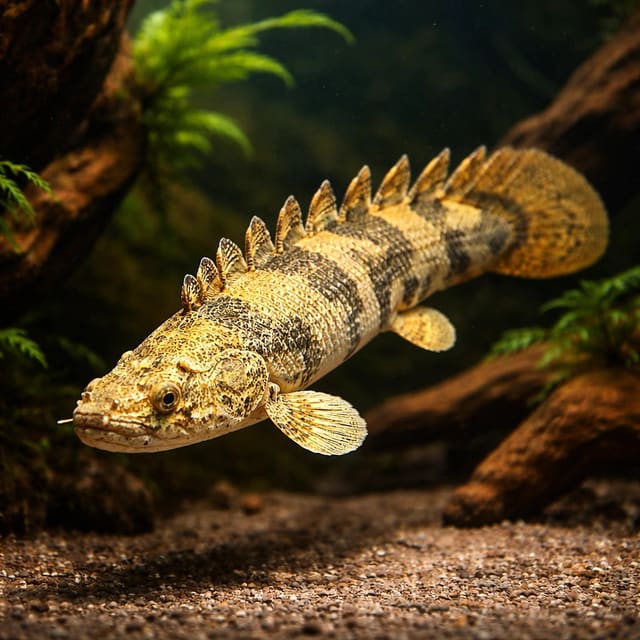
Saddled Bichir (Polypterus endlicherii) – 5–25cm Size Grades
From £17.99Some sizes on sale
Xenentodon cancila is a freshwater needlefish for a spacious, tightly covered aquarium. This surface predator needs considered feeding, a suitable group and companions too large to swallow. One 10–14 cm fish is supplied per purchase; sex is not guaranteed.
Adult size is the maximum length this species reaches at full maturity (scientific sources). The livestock you receive will be younger and smaller. Product-photo provenance and any image-specific limitations are stated on the listing.
Xenentodon cancila
Xenentodon cancila is a freshwater needlefish for a spacious, tightly covered aquarium. This surface predator needs considered feeding, a suitable group and companions too large to swallow. One 10–14 cm fish is supplied per purchase; sex is not guaranteed.
Adult size is the maximum length this species reaches at full maturity (scientific sources). The livestock you receive will be younger and smaller. Product-photo provenance and any image-specific limitations are stated on the listing.
Maintain these water conditions for optimal health and vibrant colors
Xenentodon cancila, the freshwater needlefish or freshwater garfish, is an elongated predator that spends much of its time in the upper water column. Its long jaws and sudden bursts of speed make it striking to watch, but they also set the terms for a responsible aquarium: substantial horizontal room, an escape-proof cover, suitable companions and food it will actually accept. It is a member of the needlefish family Belonidae, not one of the true gars. A surface view of a young fish can make it seem slight; an adult is a long fish that needs its own open swimming lane.
This listing supplies one live fish per purchase, in the recorded 10–14 cm dispatch grade. That is the supplied size, not the mature length. Sex is guaranteed only when the selected option explicitly states male or female. This Xenentodon cancila listing has no sex-guaranteed option. If you are planning a group, each additional cart quantity represents another fish and each will need space as it grows. Specialist aquarium guidance favours keeping this species in a group of four or more, particularly as juveniles. That group recommendation is a care decision, not an indication that four arrive with one purchase.
This fish suits a keeper able to prepare a large, covered aquarium before arrival and to observe feeding closely. It does not belong in a small mixed community whose inhabitants include fish or invertebrates it can swallow. It is also a poor choice when the only available foods are standard flakes dropped among quick-feeding companions. Seriously Fish describes it as a predator that can be difficult to wean onto dead alternatives; successful care may require patience and a suitable supply of meaty aquarium foods. The keeper should be comfortable checking water quality, maintaining substantial filtration and adjusting a feeding method based on what the fish actually takes.
Do not choose a tank by volume alone. The specialist profile recommends surface dimensions of at least 180 × 60 cm; its example at that footprint is approximately 648 litres. The long, unobstructed surface matters more than simply adding height. A tight cover is essential because this species can jump when startled. The fish also needs space to turn and a calm route to feeding. It is an unusual, rewarding subject for a planned setup, but its shape and behaviour make it much less flexible than an ordinary small community fish.
These are not interchangeable measurements. A 10–14 cm animal is a young dispatch grade, 35 cm standard length and 40 cm total length describe different adult measures, and a 180 cm footprint concerns the aquarium that must ultimately house it. Make the long-term plan before judging how a juvenile looks in a temporary tank.
FishBase places the species across parts of South and South-East Asia and reports adults in rivers as well as ponds, canals and flooded areas. It notes slow-flowing pools, but also describes the fish swimming against current and making rapid pursuit movements. The captive takeaway is not to imitate every location or a single current speed. Give the fish a long upper-water route, some surface security and water movement that supports good filtration without turning the whole top of the aquarium into a turbulent chute.
FishBase reports a solitary observation in the wild; Seriously Fish's aquarium guidance recommends a group of four or more and notes particularly strong juvenile schooling. These observations have different contexts. For captive planning, use the group guidance while recognising that one purchase supplies one fish. The wild observation describes a different context. Plan a group only if the adult-size aquarium, food budget and compatibility choices can support every member. If that is not feasible, reconsider whether this species fits the setup rather than crowding several into a small tank.
Seriously Fish recommends an aquarium with surface dimensions of 180 × 60 cm or more for X. cancila. Its approximate 648 litre volume is an example attached to that footprint, not a universal instruction to use any tank carrying the same litres. A tall, narrow aquarium can hold a large volume while leaving little distance for a needlefish to cruise or turn. Water depth is less important than surface area, but the profile says it should not be under 30 cm. Account for the space occupied by equipment and décor when judging the real swimming lane.
Plan for the adult fish, not just the 10–14 cm grade supplied now. FishBase's 40 cm total-length maximum gives a more realistic sense of the eventual turning room than the sale size. If you hope to keep four or more, do not treat the single-fish footprint as a licence to add a group without further planning. Consider how they will pass one another at the surface and whether all can reach food. A grow-out tank is useful only when the larger permanent home is genuinely available before the fish needs it.
Site the aquarium on a suitable support away from avoidable heat, draughts and disturbance. The full system's weight is substantial, and OATA's general aquarium guidance calls for a stable stand and position.
A tight-fitting lid is a core part of this species' welfare. Seriously Fish warns that it may jump when startled, and FishBase notes that it can launch at great speed. Check not just the main cover but gaps around pipes, cables, feeding flaps and filter returns. A fish that can reach an uncovered corner can still escape from an otherwise enclosed aquarium. Recheck the cover after maintenance, when lids are most likely to be left misaligned.
Reduce avoidable startle points. Give the fish surface cover from floating or overhanging vegetation while keeping a clear swimming route. Approach the tank calmly, especially in a dim room, and avoid sudden movements that send the fish into the lid. Ensure the cover does not trap it in a narrow gap above the water. A feeding opening should be closed promptly after use. If plants or branches project through an opening, assess whether they create an escape path.
Take care with hands near the upper water. The fish has an elongated jaw and can accelerate quickly; do not use your fingers to corner or hand-feed it. Work deliberately with appropriate aquarium tools, keep the lid managed and avoid an unnecessary chase during routine cleaning.
This is primarily an upper-water fish, so design the top layer deliberately. Seriously Fish recommends floating or overhanging vegetation for cover. That can help a needlefish feel less exposed while leaving room to swim between sheltered sections. Avoid a continuous dense mat that blocks every feeding point or forces fish into a narrow channel. Decorations lower down are less central to its daily behaviour, though wood, roots, sand and attached plants can make the aquarium attractive and provide refuge for compatible companions.
Lighting can be set for the plants, but consider the fish's reaction when lights switch abruptly. A predictable transition and a calm area under plant cover can reduce frantic dashes. Keep enough surface visible to check the fish's body, swimming and appetite. If the aquarium is unusually deep, the specialist profile discusses using the upper part creatively with emergent branches and plants; this is an aesthetic option, not a substitute for the required water depth, footprint or secure lid.
Place equipment so it does not create a collision point directly across the main swimming lane. Observe where the fish chooses to rest and where food naturally gathers, then adjust cover and feed position without stripping away all familiar structure.
Seriously Fish lists 18–30 °C, pH 6.0–8.0 and 2–15 dGH for this species in aquarium care. This is a broad husbandry range, not an instruction to push a stable aquarium to its hot, cold, acidic or alkaline edge. FishBase records a different wild environmental range, including pH 7.0–7.5 and a hardness figure beginning at 20 dH; those observations describe wild conditions. Use the specialist aquarium profile for planning and measure the water you can actually maintain consistently.
Before stocking, record the tank's temperature, pH and hardness at different points in the normal maintenance cycle. Large abrupt changes may be more stressful than a steady reading that sits comfortably within guidance. The water-chemistry guide explains the tests and the difference between a single result and a stable pattern. The water matcher can help compare measured values with published ranges once you have identified the right species guidance. Dechlorinate replacement water and bring its temperature close to the aquarium before a change.
Check the needs of every intended companion as well. Sharing a tank requires an overlap that works for all fish, not a compromise that puts one species at an extreme.
Predatory fish can produce considerable waste, and the specialist profile calls for efficient filtration in a large aquarium. Choose equipment that can move and process water throughout the tank while preserving some less turbulent surface refuge. Mechanical cleaning removes particles, but the biological filter's beneficial bacteria process ammonia and nitrite. Both substances should read zero in a ready aquarium. A large volume helps buffer change but cannot replace a matured filter, testing and routine maintenance.
Prepare the system before the fish arrives. The first-tank guide introduces the maturation process; general OATA and RSPCA guidance likewise emphasises filtration and testing. Add livestock at a rate the biological filter can support. When feeding meaty food, remove uneaten pieces before they decay out of sight. Clean pre-filters and check flow without replacing all biological media at once.
A weekly maintenance rhythm is sensible, with water changes adjusted to measured waste and the number of fish. Treat new tap water to remove chlorine or chloramine, and clean filter media gently in removed tank water when necessary. Keep an eye on the fish's breathing and appetite as well as the test results; neither alone gives the whole picture.
Xenentodon cancila is an obligate predator. Seriously Fish describes a diet based largely on smaller fish and insects in nature and warns that captive fish can be difficult to wean onto dead food. FishBase reports crustaceans prominently in one wild observation as well as small fish and insects. A new individual may not immediately accept the frozen or prepared foods used in another aquarium, so observe its actual response rather than assuming a particular bag of food will work. Arrange an appropriate feeding plan before purchase.
For smaller fish, the specialist account mentions bloodworm, small earthworms and chopped prawn; larger fish can take appropriately sized pieces of fish, whole prawn or shrimp, mussel and larger earthworms. Live insects or river shrimp also appear in the species account. These are examples for the right size and condition, not a demand to offer every item. Choose clean, suitable aquarium foods and avoid overfeeding. If moving a fish towards non-live items, proceed patiently with appropriate pieces and watch that it swallows them.
Do not feed mammalian or bird meat such as beef heart or chicken. The specialist profile specifically cautions that their fats are unsuitable for this predator.
Food presentation matters because this species spends most of its time near the surface. Offer suitably sized pieces where the needlefish can see and take them without having to compete in a frantic feeding crowd. A companion that is too quick may seize food before the needlefish commits, even when the companion is too large to be eaten. Seriously Fish describes the needlefish as a poor competitor with some tank mates; that risk is easy to miss if the keeper only sees food disappear.
Feed a portion you can account for. Watch the fish take it and remove pieces that sink unseen or remain caught among plants. The specialist account cautions that the fish may gorge if given the opportunity, so do not use an apparently eager response as the sole measure of a suitable amount. Record what a new arrival accepts, how quickly it feeds and whether any group member is being excluded. A simple feeding log can show a gradual refusal earlier than an obvious change in body condition.
A small, quiet feeding area away from vigorous companions may help. Avoid using bare fingers at the surface: the long jaws and speed make close handling unnecessary and unwise.
The specialist aquarium account says X. cancila is not aggressive towards its own species and is best maintained in numbers of four or more; juveniles in particular show schooling behaviour. This does not mean every group will share any tank without stress or that four small fish can be left in a temporary aquarium indefinitely. Each one can approach adult dimensions, use the surface and need reliable access to food. Plan the full group around the 180 × 60 cm starting footprint and enlarge the system as required by the number and actual behaviour.
FishBase's wild observation calls the species solitary. That observation is useful natural-history context, but it does not cancel the captive group recommendation. In the aquarium, watch whether fish can disperse, turn, feed and rest without one repeatedly being pushed out of the upper layer. Introduce new fish only when the filter and space can support them. If a group member stops feeding, intervene based on what you see instead of assuming a schooling label guarantees equal access.
The retail offer remains one fish per purchase. Decide on the complete social plan and long-term aquarium before ordering multiple units.
A healthy-looking water test is important, but it does not tell you whether a needlefish is being outcompeted or startled. Watch its usual position, swimming control, breathing and response to food. A fish that suddenly hides below its normal layer, collides with a lid repeatedly or fails to take food may be responding to the environment or companions. First check water quality and equipment, then review recent changes in lighting, flow, cover or stocking. OATA's general aquarium guidance advises observing swimming, colour, fins, gill movement and appetite as part of routine care.
Keep the cover secure during every inspection. If you need to work in the tank, plan the task so the lid is open for as short a period as possible and the fish is not chased. Never assume its long body makes it slow. Look along the jaw and body without trying to handle it unnecessarily. If a fish appears injured or unwell, seek appropriate aquatic-veterinary or specialist advice; this listing cannot diagnose a condition from a description.
Written notes help. Date a change in feeding, flow or tank mates, and compare later behaviour with the fish's own normal pattern rather than with another keeper's individual.
Before the courier arrives, confirm that the tank is ready: biological filtration matured, ammonia and nitrite zero, appropriate temperature and water chemistry, secure lid, and a quiet upper-water area. Check that any existing inhabitants are too large to swallow and will not dominate every feeding opportunity. Tropical Fish Co's delivery and Live Arrival Guarantee page provides the current packing, receipt and acclimatisation instructions. It describes an insulated box, oxygen-bagged fish and a licensed live-animal courier; use the current page for actual dates and conditions rather than a timeless promise here.
Be present to receive the live animal. Open the parcel promptly and follow the store's acclimatisation guidance, including temperature adjustment with the bag and avoiding the introduction of transport water into the tank. Limit disturbances while the needlefish finds the surface cover. Once released, make sure the cover is fully closed. Observe orientation and breathing, then give the fish an opportunity to feed at a suitable time without a crowd of eager companions.
If a Live Arrival Guarantee claim is needed, the policy calls for same-day contact with the order number and a short continuous video showing the sealed parcel, its opening and the fish still in its bag. That video is conditional claim evidence, not a routine fish-care step.
The first compatibility question is physical: could the needlefish take a companion into its mouth, now or as it grows? A small fish, fry or small invertebrate is prey, not a safe companion merely because the tank has plenty of space. This applies even if the needlefish does not immediately chase it. FishBase and Seriously Fish both describe predation, and the specialist account says the species can be surprisingly peaceful with fish too large to swallow. That qualification is the important part.
Assess the companion at its smallest life stage and the needlefish at its adult size. An animal that appears too large for a 10–14 cm youngster may not remain safe as the predator grows. Do not use a short trial period as proof of permanent compatibility. Where fry may appear, expect them to be at risk. Invertebrates and small ornamental fish also need a separate plan if they matter to the setup.
A long tank does not remove predation. Space helps fish move and reduces crowding, but it cannot make swallowable companions suitable. Choose the community around the adult needlefish's mouth and feeding behaviour.
Choosing tank mates too large to swallow is necessary but not sufficient. Seriously Fish notes that this needlefish can be a poor competitor. A large, vigorous fish that rushes every food item may leave the surface predator hungry despite ample food entering the aquarium. Other companions may disturb the quiet upper-water zone or startle it into the lid. The right combination requires a workable water range, suitable adult dimensions, enough swimming room and an observed feeding plan.
A broad group name tells you little about a particular fish's adult size, feeding speed or temperament. Assess the exact species, size and aquarium before treating it as a companion. If you have a proposed companion, compare its adult size, temperament, feeding speed and usual swimming level. Decide how both fish will eat and avoid each other. Watch introductions closely and be prepared to separate a fish that is being outcompeted or injured.
Members of a planned needlefish group also need individual feeding access. Count food taken by each fish where possible; a group label does not prevent a shy individual from missing meals.
Begin with the aquarium footprint and covered upper lane. Then list the adult dimensions of every animal that would share it. Remove from consideration anything the needlefish could swallow. For those remaining, compare their water needs with the specialist aquarium range and ask whether each can live without dominating the surface. Finally, plan a feeding method that lets the needlefish take suitable meaty food without turning every meal into a race. This process is more dependable than a list of attractive species names.
Consider what happens when the needlefish is first introduced and again after it has grown. Some fish are not immediate prey but become a poor match as they mature or as feeding competition changes. Keep a separation option in mind before stocking. If the aquarium already contains delicate small fish, an established shrimp colony or fast-feeding large fish, a separate species-focused setup may be the more sensible choice.
If you are comparing specialist fish before choosing one, browse the loaches and oddballs collection; its members have different care needs and are not automatically suitable companions. A predator can be peaceful in the sense of not defending a territory and still eat a smaller neighbour. Use the exact risk, not a single temperament label, when making a decision.
FishBase records a maximum of 40 cm total length. Seriously Fish lists 35 cm standard length, which excludes the tail. The 10–14 cm fish supplied here still needs adult-size planning.
Seriously Fish recommends at least a 180 × 60 cm surface footprint and water depth of at least 30 cm. Its example at that footprint is about 648 litres; a tall tank with the same volume may have too little swimming length.
Specialist aquarium guidance favours four or more, especially as juveniles. Plan enough adult space and food access for every fish; each purchase on this listing supplies one.
It is better suited to an experienced keeper who can provide a large covered tank, maintain strong filtration, manage a predatory diet and choose companions carefully.
It is an obligate predator. Suitable-sized bloodworm, earthworms and chopped prawn may suit smaller fish; larger fish can take appropriate fish, prawn, shrimp or mussel. Some individuals need patience to accept dead food.
Seriously Fish gives a broad aquarium range of 18–30 °C, pH 6.0–8.0 and 2–15 dGH. Keep conditions stable within suitable guidance rather than chasing its extremes.
Specialist guidance describes it as surprisingly peaceful with fish too large to swallow, but it is a predator and a poor competitor. Swallow risk and feeding competition matter more than a blanket fin-nipping label.
Consider only fish too large to swallow that share suitable water, space and a calm feeding arrangement. Assess the exact companion and aquarium for adult size, water needs and feeding access.
Tropical Fish Co describes oxygen-bagged fish, insulated packing and a licensed live-animal courier on its delivery page. Be present to receive the parcel and follow the current acclimatisation and conditional claim instructions there.
FishBase's Xenentodon cancila account supports identity, range, wild ecology and maximum total length. The Seriously Fish species profile supplies the aquarium footprint, water range, diet, group and jumping guidance. The OATA freshwater aquarium guide and RSPCA fish environment advice address general filtration and welfare. Use the delivery page linked above for current store-specific receipt and claim terms.
Wild observation and aquarium husbandry answer different questions. The account of a solitary fish in a river is not a captive group recommendation; the published maximum length is not the supplied size; and a broad water range is not a reason to move a stable aquarium abruptly. Apply each fact to the particular tank and fish you intend to keep.
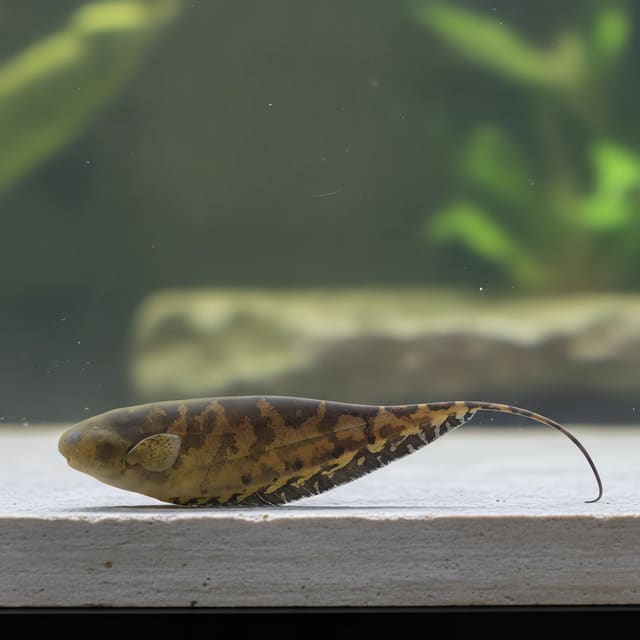
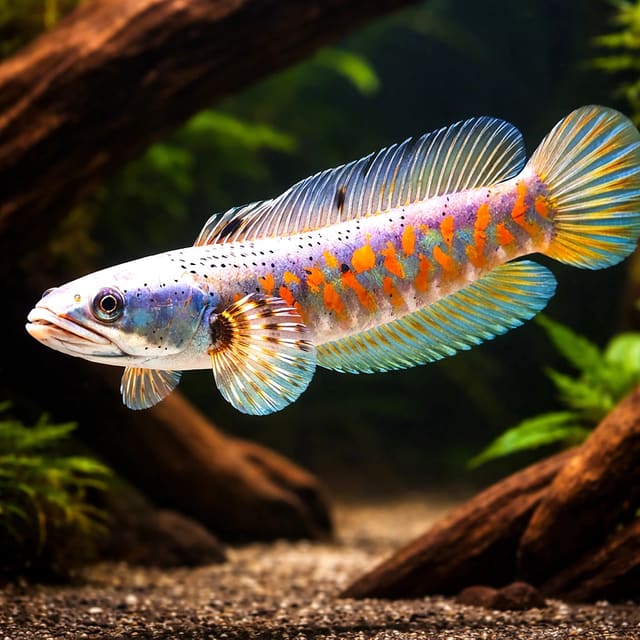
Photo adapted (new background, slight change of angle) from a photo by Guérin Nicolas, CC BY-SA 3.0, via Wikimedia Commons; the adapted photo is shared under the same licence.
No reviews for this item yet. Bought one? Honest reviews only, good or bad.
What customers say about ordering from us
Easy website plenty of info on fish your buying great to pick a time slot
TRACEY DURRANT · 7 Oct 2026
Got some lovely fish thank you
Kevin Mackie · 7 Oct 2026
Reviews of our shop, collected by Judge.me, an independent third-party review collector. Newest first.












-1.JPG)