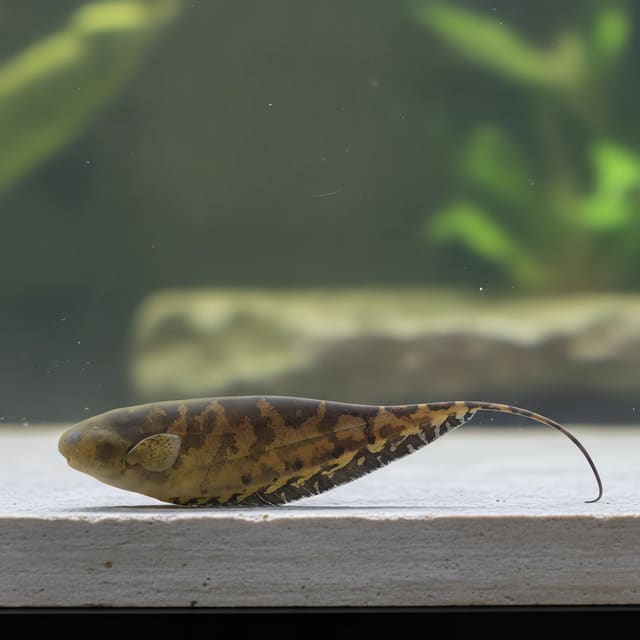
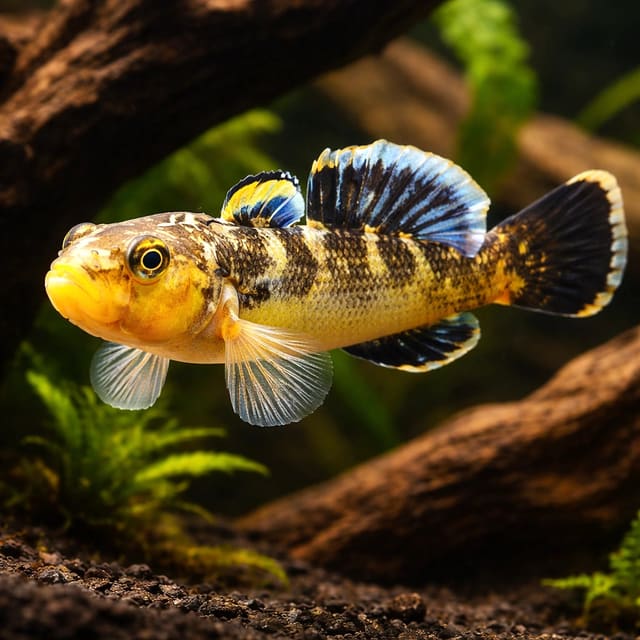
Silver Scat Spot-Banded (Selenotoca multifasciata) - brackish water fish with vertical banded pattern

Selenotoca multifasciata

Silver Scat “Spot-Banded” (Selenotoca multifasciata) - UK

Moderate Care
Peaceful
£25.99In Stock

Striking Silver Scat “Spot-Banded” with bold banding and standout character for specialist aquariums. Order today with secure UK delivery at £25.00.

ActiveBrackish FishExotic SpeciesFishLiving CreatureModerate CareOmnivore

Care at a Glance

Scientific Name
Selenotoca multifasciata
Adult Size
30 cm
Care Level
Moderate
Temperament
Peaceful
Minimum Tank
300L
Diet
Omnivore - flakes, pellets, vegetables, frozen foods

Premium Quality

Healthy, vibrant fish from trusted suppliers

Expert Care

Detailed care guides and support

Live Arrival Guarantee

Your fish arrives healthy or we'll replace it

Acclimated

Properly quarantined and ready for your tank

Quick Care Guide

Minimum Tank
300L
Adult Size
30 cm
Care Level
Moderate
Temperament
Peaceful
Diet
Omnivore - flakes, pellets, vegetables, frozen foods

Why Choose This Fish?

Striking Silver Scat “Spot-Banded” with bold banding and standout character for specialist aquariums. Order today with secure UK delivery at £25.00.

The Silver Scat “Spot-Banded”, Selenotoca multifasciata, is one of the most striking oddball choices for keepers searching for freshwater fish UK listings that offer something beyond the usual community staples. Juveniles are often sold as adaptable brackish fish, but experienced aquarists know the real appeal of this species is watching it develop from a bold young fish into a broad-bodied, elegant banded scat fish suited to a spacious, mineral-rich brackish system. Native to the Indo-Pacific, this peaceful but active species reaches 15-25 cm, lives around 5-10 years, and thrives best in groups, making it ideal as a silver scat for large aquarium displays rather than small mixed tanks. If you keep a fresh water aquarium fish uk collection and want a fish with personality, movement, and unusual patterning, the Silver Scat stands out immediately. See our detailed photos showing the metallic body sheen, dark spot-banding, and deep-bodied profile that make this fish so popular in specialist freshwater fish aquarium uk searches. While many hobbyists ask whether it belongs in a uk freshwater fish aquarium, the key point is simple: juveniles tolerate freshwater, but adults need brackish conditions to stay healthy long term. For aquarists building a serious freshwater fish uk quick guide shortlist of larger, hardy, social species, the Silver Scat offers movement, intelligence, and a truly distinctive display fish experience.

🔹 Quick Facts

  • Scientific Name: Selenotoca multifasciata
  • Care Level: Intermediate
  • Min Tank Size: 570 litres (125 gallons)
  • Recommended Tank Size: 750 litres+
  • Temperature: 22-28°C (72-82°F)
  • pH Range: 7.5-8.5
  • Lifespan: Up to 10 years
  • Temperament: Peaceful, active, social
  • Diet: Omnivore
  • Swimming Level: Midwater

Classification

  • Order: Perciformes
  • Family: Scatophagidae
  • Genus: Selenotoca

The Silver Scat belongs to a small but very distinctive family of laterally compressed coastal fish adapted to estuaries, mangroves, and tidal river systems. In the aquarium hobby it is often grouped with other scats and monos as a specialist brackish display species. For keepers researching the best Selenotoca for aquarium choices, Selenotoca multifasciata is valued for its calmer temperament, handsome spot-banded pattern, and suitability for large group displays.

Where Do Silver Scat Come From? Natural Habitat Explained

The natural range of the Silver Scat covers northern Australia, Papua New Guinea, and parts of Southeast Asia, where it inhabits mangrove creeks, estuaries, coastal lagoons, and lower river stretches influenced by tides. This is important because many aquarists searching broad terms such as freshwater fish in uk, freshwater fish uk rivers, or fresh water river fish uk assume all fish sold in the trade are true freshwater species. The Silver Scat is not one of the freshwater fish native to uk, nor is it comparable to freshwater fish in rivers uk like bream or gudgeon. Instead, it comes from warm, alkaline, mineral-rich waters where salinity shifts through the seasons and with the tides.

In the wild, juveniles often move through lower-salinity areas, including river mouths and sheltered inlets, while adults are more strongly associated with brackish to near-marine conditions. That is why a young fish may look fine in a freshwater holding tank for a while, yet long-term care differs from many fish on a typical freshwater fish list uk. Their habitat includes submerged roots, open swimming areas, sandy or silty bottoms, and plenty of algal growth to graze. This natural grazing behaviour explains their constant pecking at surfaces in the aquarium.

People comparing this species with small river fish species, freshwater pond fish uk, freshwater lake fish uk, or even freshwater fish for small ponds uk should note that Silver Scats are not pond fish and not suitable for cool-water outdoor systems. They are tropical estuarine fish that need warmth, dissolved minerals, and room to cruise in a group. They also do not fit discussions around when does the uk river fishing season start, when does the uk river fishing season end, when is the uk river fishing season, or when is uk river fishing season, because those queries relate to wild angling law rather than aquarium husbandry.

💡 Expert Tip

Mimicking the Silver Scat’s natural estuary habitat with open swimming space, strong filtration, stable alkalinity, and gradually increased salinity as the fish matures improves appetite, colour, and long-term health. Keepers who treat it as a permanent freshwater fish often see stunting and recurring health issues after the juvenile stage.

How to Set Up the Perfect Tank for Silver Scat

A proper silver scat tank setup starts with scale. This is not a fish for compact aquariums, mixed nano communities, or lightly filtered displays. If you are building a serious uk freshwater fish guide for larger species, the Silver Scat belongs in the category of specialist brackish fish that need room, current, and social structure. A juvenile may arrive at a modest size, but its body depth and activity level increase quickly.

Tank Size Requirements

The minimum practical silver scat tank size is 570 litres, with 750 litres or more strongly recommended for a proper group. Because this species should be kept as a silver scat group of at least six, footprint matters as much as volume. Long tanks with broad front-to-back swimming space work better than tall, narrow aquariums. A single fish may survive alone, but behaviour is much better in groups, and group keeping spreads social tension naturally.

For hobbyists searching terms like silver scat for large aquarium, this is exactly the right way to think about the species. It is peaceful, but it is also bulky, fast-moving, and messy compared with many standard community fish UK options. Heavy feeding and constant grazing mean a high bioload, so oversizing the tank pays off immediately in water stability.

Water Parameters

Stable chemistry is one of the biggest keys to success. The ideal silver scat temperature is 26°C, though the safe silver scat temperature range is 22-28°C. Aim for pH 7.5-8.5 and hardness 15-25 dGH. These silver scat water parameters suit their estuarine background and support strong osmoregulation. Juveniles can be acclimated from freshwater holding conditions, but adults should live in brackish water. If you are creating a long-term uk fish species freshwater aquarium display, this is one species where “freshwater” is only part of the story.

22-28°C
Temperature
7.5-8.5
pH
15-25 dGH
Hardness
570 L min
Tank Size

Filtration

Use powerful external filtration with strong mechanical and biological capacity. Scats are enthusiastic feeders, so waste output is high. Aim for total turnover of at least 6-8 times the tank volume per hour. Add surface agitation for oxygenation, especially in warm brackish systems. If you are pairing them with active species such as Banded Archerfish or Blyth’s Archerfish, robust filtration becomes even more important.

Substrate

Fine sand or smooth mixed grain substrate works well. Silver Scats are not delicate bottom sifters, but a natural pale substrate reflects light and suits their estuarine look. Darker substrates can increase contrast and make the body barring stand out, but avoid sharp gravel. Keep décor stable and leave large open lanes for swimming.

Plants & Decor

Plant choice is limited because brackish conditions and grazing behaviour rule out many soft freshwater species. Hard décor, mangrove-style roots, smooth rockwork, and open areas are usually more practical. If you want companion species in a large display, consider a brackish-themed setup with Silver Moony Moonfish or Spotted Scat rather than delicate plant-focused fish such as X Strawberry Rasbora or X Rhombo Barb, which suit very different water chemistry.

Lighting Requirements

Moderate lighting is ideal. Bright light can encourage biofilm and algal growth, which these fish naturally graze, but there is no need for extreme intensity. A 7-9 hour photoperiod is usually enough. In larger display tanks, lighting that creates shimmer across the silver body can make the spot-banded pattern especially attractive in photos and in person.

Quick Setup Checklist

  • Choose 570 litres minimum, 750 litres recommended
  • Keep a group of 6 or more
  • Maintain 22-28°C, ideally 26°C
  • Hold pH between 7.5 and 8.5
  • Use hard, alkaline water with brackish progression for adults
  • Install strong external filtration and high oxygenation
  • Prioritise open swimming space over dense planting

💡 Pro Tip

Always cycle the aquarium for 4-6 weeks before adding Silver Scats. Because they are heavy feeders and often sold to keepers upgrading from standard freshwater systems, immature filtration is one of the most common causes of early losses.

What Do Silver Scat Eat? Complete Feeding Guide

The silver scat diet is best described as omnivorous with a strong grazing instinct. In nature they consume algae, detritus, plant matter, small crustaceans, worms, and other edible material they find while browsing. This means the best captive silver scat feeding plan combines quality prepared foods with vegetable matter and occasional protein-rich extras. Hobbyists often ask broad questions like what do small freshwater fish eat or how much to feed freshwater fish; for Silver Scats, the answer is more structured because they are active, social, and produce substantial waste.

Staple Foods

Use a high-quality omnivore pellet or flake as the daily base, ideally one that includes spirulina or marine algae. Offer enough that the group can finish most of it within 1-2 minutes. Because these fish browse all day, two smaller feeds are better than one very large meal.

Supplemental Foods

Blanched spinach, shelled peas, courgette, seaweed sheets, and spirulina-based foods help match their natural intake. Frozen mysis, brine shrimp, krill, and chopped seafood can be offered several times per week. This variety supports growth and keeps the fish from becoming overly dependent on one food type.

Treats & Special Foods

Occasional live or frozen invertebrates are useful for conditioning and enrichment. If customers ask questions such as can you eat freshwater fish, can you eat freshwater fish uk, is freshwater fish safe to eat, are uk freshwater fish safe to eat, or search a freshwater fish to eat list, it helps to separate aquarium care from food-fish topics. Silver Scats sold for aquariums are ornamental fish, not table fish, and should not be viewed through queries like what freshwater fish can you eat uk, what uk freshwater fish can you eat, what uk river fish can you eat, freshwater fish uk to eat, freshwater fish you can eat uk, best freshwater fish to eat uk, best uk freshwater fish to eat, best uk river fish to eat, british fish to eat, or which freshwater fish can you eat uk.

Feeding Frequency & Portion Control

Feed juveniles 2-3 small meals daily and adults twice daily. A good rule for how much to feed freshwater fish in this case is to offer what the group consumes promptly, then remove leftovers. Their appetite is strong, but overfeeding quickly degrades water quality in warm brackish tanks.

Foods to Avoid

Avoid fatty mammal meats, stale flake, and diets based only on bloodworm. Do not use medicated foods casually, and avoid exposing food to copper contamination if invertebrates share connected systems. Also remember that wild predators such as freshwater fish eating birds uk have no relevance to captive feeding strategy; aquarium fish need controlled, balanced nutrition.

Time Food Amount
Morning Omnivore pellet with spirulina Small portion, eaten in 1-2 minutes
Evening Vegetable matter or frozen mysis/brine shrimp Moderate portion, no leftovers

⚠️ Feeding Warning

Overfeeding causes ammonia spikes, cloudy water, and rapid filter overload. Silver Scats are greedy and will beg for food, but a leaner feeding routine with strong variety produces healthier fish and cleaner water.

Spotted Scat — A useful comparison species if you are planning a mixed scat display and want fish with similar omnivorous feeding habits.
Silver Moony Moonfish — Another active brackish species that benefits from a varied omnivore diet in large, well-filtered systems.

Silver Scat Appearance: Colors, Patterns & Varieties

The Silver Scat has a tall, laterally compressed body with a steep forehead, strong dorsal profile, and broad fins designed for steady cruising in open water. Adults usually reach 15-25 cm, with especially well-grown specimens becoming impressively deep-bodied. The base colour is silver to silver-grey, overlaid with darker vertical or spot-banded markings that create the “Spot-Banded” look. Under the right lighting, the body can show subtle olive, bronze, or smoky tones.

Because hobbyists often search broad appearance terms such as freshwater fish with red fins, freshwater fish with red fins uk, freshwater fish with orange fins uk, black freshwater fish uk, freshwater fish uk yellow, or freshwater fish uk green, it is worth being clear: Silver Scats are not prized for bright red fin colour. Instead, they are valued for metallic sheen, dark barring, and a clean estuarine look. They do not resemble british freshwater fish with red fins, and they are not an endangered freshwater fish uk species in the aquarium trade context.

Sexual dimorphism is weak, so identifying a freshwater fish uk male versus female by sight is unreliable. Mature fish may differ slightly in body fullness, but there is no dependable external marker for casual keepers. Good diet, stable salinity, and low stress do more for appearance than any supposed colour trick. Our photos show the crisp banding and reflective body tone that develop best when fish are kept in groups, fed a varied omnivore diet, and housed over a contrasting substrate.

What Fish Can Live With Silver Scat? Compatibility Guide

Silver Scats are peaceful, social, and active, which makes them excellent brackish water schooling fish UK candidates for large displays. They are not schooling fish in the tight tetra sense, but they do best in a visible group and become bolder when kept with their own kind. For aquarists researching Selenotoca multifasciata tank mates, the main rule is to choose robust species that enjoy similar alkaline, brackish conditions and enough swimming space.

Ideal Tank Mates

Other scats are the most natural companions, so a mixed group with Spotted Scat can work very well in a large aquarium. Active mid-to-upper level fish such as Banded Archerfish and Blyth’s Archerfish are also strong choices. In very large systems, Silver Moony Moonfish adds movement and silver contrast. These combinations suit keepers looking for hardy brackish fish UK and a dynamic, open-water display.

If you are browsing a general community fish UK category, remember that not all community fish are compatible just because they are peaceful. Water chemistry matters more than temperament here. Delicate freshwater species such as X Strawberry Rasbora, X Rhombo Barb, or even specialist hillstream fish like Protomyzon pachychilus should not be mixed with adult Silver Scats because their water needs differ too much.

Species to Avoid

Avoid small fish that may be intimidated or outcompeted at feeding time. Avoid freshwater-only species, slow fancy fish, and invertebrates expected to thrive in soft water. The Silver Scat is peaceful, but its size and speed can overwhelm tank mates that need calmer conditions. It also does not belong with fish chosen from unrelated searches like what fish are native to england, what fish are native to uk, what freshwater fish live in the uk, or what fish are banned in uk, which concern native fauna and regulation rather than tropical brackish stocking.

Community Tank Stocking Examples

For a 750-litre setup, a strong starting point is 6 Silver Scats with 4-6 archerfish. In larger systems, add a small group of moonies for upper-level movement. This creates a classic silver scat for brackish tank display with constant activity and good visual balance. Customers often compare this with broad search ideas like what are freshwater fish uk, what are the best freshwater fish for beginners, or what day uk freshwater fish species; Silver Scats are not beginner fish, but they are very rewarding for keepers ready for a large specialist setup.

Compatibility with Invertebrates

Snails may be investigated and shrimp are not safe long term. These fish are opportunistic omnivores. If you want ornamental shrimp or delicate snails, choose a different aquarium plan.

Species Compatible? Notes
Banded Archerfish ✅ Yes Excellent for large brackish tanks with similar activity level
Silver Moony Moonfish ✅ Yes Works in spacious systems; needs similar water chemistry
X Strawberry Rasbora ❌ Avoid Too small and requires very different water conditions

💡 Compatibility Tip

Always quarantine new arrivals for 2-4 weeks before adding them to a Silver Scat display. Large brackish tanks are expensive to stabilise, so preventing disease introduction is far easier than treating a full stocked system later.

How to Breed Silver Scat: Complete Breeding Guide

Silver scat breeding is effectively unavailable to home aquarists. Current hobby knowledge indicates this species is not bred in captivity on a routine basis, and the exact spawning method remains poorly documented. So while customers often ask how often uk freshwater fish spawn or search broad terms like what uk freshwater fish are in season, those ideas do not translate neatly to this species. Silver Scats offered in the trade are generally wild-sourced or farm-collected juveniles rather than tank-bred fish.

Breeding Setup

There is no reliable home breeding setup. The likely challenge is that mature fish may require environmental triggers linked to tidal movement, salinity shifts, or migration patterns not easy to replicate in aquaria. Their adult size and group requirements also make experimentation difficult.

Spawning Behaviour

Documented captive spawning behaviour is essentially absent. Unlike fish where you can watch pair formation or nest defence, Silver Scats do not offer a practical breeding route for most keepers. This means queries such as what time freshwater fish uk time, what time freshwater fish uk today, what time uk freshwater fish species, or what time will the fish bite today are not relevant to aquarium breeding success here.

Egg Care & Hatching

Because confirmed captive spawning is lacking, there is no standard protocol for egg care, hatching time, or larval development in hobby conditions. Any online claims should be treated cautiously unless backed by documented evidence.

Fry Care & Growth

There is no repeatable fry-rearing method available to the average aquarist. If your goal is a species you can breed and grow out at home, Silver Scats are not the right project fish.

Common Breeding Challenges

The main challenge is not technique but biology and scale. Large tank requirements, uncertain sexing, possible migratory triggers, and lack of captive records make this a species for display rather than propagation. That is why Silver Scats are better described as silver scat for experienced keepers than as a breeding project.

Advanced Breeding Tip

If you are determined to study reproductive behaviour, focus first on maintaining a long-term, mature group in a very large brackish system with seasonal variation in salinity, temperature, and diet. Even then, expect observation rather than a practical spawning result.

Silver Scat vs Similar Species: Which Should You Choose?

Comparison matters because many aquarists searching freshwater fish uk for tank options see scats, monos, and archerfish listed together and assume they fill the same role. In reality, each has a different shape, feeding style, and display effect. The Silver Scat is best for keepers who want a broad-bodied, constantly browsing, social fish with a calmer demeanour than some other active brackish species.

Feature Silver Scat Spotted Scat
Max Size 15-25 cm Up to around 30 cm
Care Level Intermediate Intermediate
Temperature 22-28°C 24-28°C
Price £25.00 Varies
Best For Group brackish display with elegant banding Bolder spotted scat display
Feature Silver Scat Banded Archerfish
Body Shape Deep-bodied grazer Streamlined surface hunter
Social Style Group-oriented Group or loose shoal
Diet Focus Omnivore with algae/veg component Predatory omnivore
Tank Role Midwater movement Upper-level action
Best For Balanced brackish community centrepiece Behaviour-focused display

Choose the Silver Scat if you want one of the more unusual large freshwater fish uk search results that transitions into a true brackish show fish. Choose Spotted Scat if you prefer larger, bolder spotting, or Banded Archerfish if surface hunting behaviour is your main interest. For a bright silver schooling effect, Silver Moony Moonfish makes a good alternative or companion in very large systems.

Common Health Problems in Silver Scat & How to Prevent Them

The most common Silver Scat health problems are not exotic diseases but husbandry errors. Poor salinity progression, low mineral content, unstable pH, and overcrowding cause chronic stress. In many cases labelled as uk freshwater fish disease, the root issue is simply keeping an estuarine fish in unsuitable long-term freshwater conditions. Healthy Silver Scats are alert, active, eager to feed, and hold their fins open while moving confidently through the tank.

Signs of a Healthy Silver Scat

Look for a full-bodied fish with smooth skin, clear eyes, even respiration, and strong interest in food. In a settled group, fish should move together loosely and spend time grazing surfaces. Dull colour, clamped fins, isolation, or hanging near outlets can indicate stress.

Common Diseases & Symptoms

External parasites, bacterial infections after shipping stress, and secondary fungal issues can occur, especially if the fish is kept in the wrong water chemistry. White spot can appear after sudden temperature drops. Fin erosion and chronic wasting are more often linked to poor environment than a specific pathogen. Keepers asking which uk freshwater fish is best, which uk freshwater fish species, what uk freshwater fish can you keep, or what uk freshwater fish species should understand that the “best” fish is the one matched to the correct setup; Silver Scats are excellent only when their specialist needs are met.

Treatment Options

First correct water quality. Test ammonia, nitrite, nitrate, pH, hardness, and salinity before medicating. Use a separate hospital tank where possible. Raise temperature gradually within the safe range if treating temperature-sensitive parasites. Medication choice should be cautious in mixed systems, especially if invertebrates are present elsewhere.

Prevention Tips

Keep the group size right, maintain strong filtration, perform regular water changes, and feed a varied omnivore diet. Quarantine all new fish. Avoid sudden moves from freshwater to strong brackish conditions; acclimate in stages. This species rewards consistency more than intervention.

Quarantine Procedures

A 2-4 week quarantine period is sensible for all new arrivals. Watch for flashing, excess mucus, heavy breathing, or refusal to feed. During quarantine, match temperature and gradually align salinity with the destination tank.

⚠️ Medication Warning

Never dose the main display blindly. Copper-based medications can be problematic in mixed systems and are lethal to many invertebrates. Always confirm the diagnosis and check compatibility before treatment.

Quarantine Protocol

  • Use a separate tank for 2-4 weeks
  • Observe appetite, respiration, and skin condition daily
  • Match temperature to 22-28°C
  • Adjust salinity gradually to the destination system
  • Test ammonia and nitrite frequently
  • Do not mix new arrivals directly into an established group

Understanding Silver Scat Behavior in the Aquarium

Silver Scats are active daytime fish with a calm but constantly curious personality. They spend much of the day cruising midwater, browsing algae and biofilm, and interacting with one another. In a proper group they are confident and visible, which is one reason they are so appealing in large display tanks. A lone fish often becomes skittish or withdrawn.

This species is best thought of as a social grazer rather than a tight shoaler. The group dynamic matters, and a proper silver scat group reduces stress. They are not aggressive in the usual sense, but they are assertive feeders, so timid species can be overshadowed. Their behaviour becomes more natural in tanks with open swimming lanes, a clear line of sight, and enough current to encourage movement.

Customers sometimes arrive via broad searches like common freshwater fish uk, small freshwater fish uk, freshwater fish names a-z, freshwater fish representative species, or how many freshwater fish species are there in the uk. Silver Scats are not a representative small community fish. They are specialist estuarine fish with visible intelligence, strong feeding response, and a display presence that suits larger, more advanced aquariums.

Why Buy from Tropical Fish Co?

Our Silver Scat “Spot-Banded” are selected for body shape, alert behaviour, and clean finnage, with particular attention paid to fish that settle well into group life. Because this species is often misunderstood in the trade, we focus on supplying specimens suited to aquarists who understand the transition from juvenile freshwater holding conditions to adult brackish care. That matters far more than vague claims of being freshwater fish for sale uk cheap.

Each fish is held under observation before dispatch, with feeding response checked and condition monitored. We prepare fish for UK home aquariums by stabilising them in clean, well-oxygenated systems and ensuring they are eating confidently before travel. Orders are packed in insulated boxes with appropriate bagging volume, and heat packs are added in cold weather when needed. Tracked delivery reduces transit uncertainty, and careful packing is especially important for active species with a strong oxygen demand.

If you are searching freshwater fish uk for sale, uk freshwater fish for sale, live freshwater fish uk for sale, freshwater fish online uk, freshwater fish uk buy, can you buy freshwater fish online, or freshwater fish delivery uk, choosing a seller that understands species-specific care is the real difference. The Silver Scat is not one of the usual british freshwater fish for sale or native freshwater fish for sale uk listings, and it should not be treated like a generic freshwater community fish. We also support customers planning larger systems, whether you are a private keeper or researching freshwater fish uk wholesale style quantities for a display project. Order your Silver Scat today with confidence if you are ready to provide the space, filtration, and brackish progression this species deserves.

Why Choose Tropical Fish Co for Silver Scat

  • Selected for strong feeding response and confident group behaviour
  • Held and assessed with the species’ brackish long-term needs in mind
  • Packed for safe UK transit with insulated materials and seasonal heat support

Build a more complete brackish display with compatible, similarly scaled species. Banded Archerfish adds surface activity and fascinating hunting behaviour. Blyth’s Archerfish is another excellent upper-level companion for large systems. Spotted Scat pairs naturally with Silver Scats in roomy aquariums, while Silver Moony Moonfish brings fast-moving silver contrast. If you are comparing very different community options before committing, you can also view X Rhombo Barb or X Strawberry Rasbora to see why soft-water nano fish are not suitable tank mates for this species.