Advanced
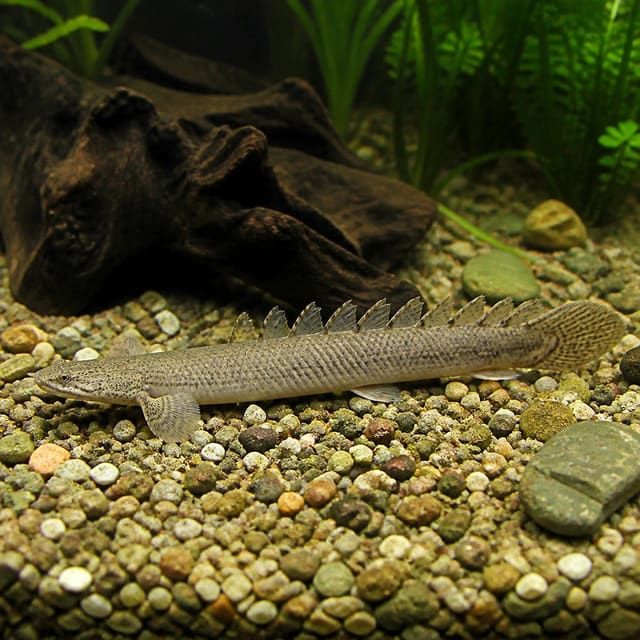
Lapradei Bichir (Polypterus bichir 'Lapradei')
23–28°C · pH 6.5–7.5
£47.99
A fascinating, ancient air-breathing lungfish with prehistoric looks and extraordinary adult size, best suited only to experienced keepers with very l.
Adult size is the maximum length this species reaches at full maturity (scientific sources). The livestock you receive will be younger and smaller — pick a size above for the actual shipping size. Product-photo provenance and any image-specific limitations are stated on the listing.
Lepidosiren paradoxa
Confirm your email, then we’ll send an availability message for this exact item if it returns within 180 days.
This request is only for this product—no newsletter or other promotions. A mail-provider retry may very rarely duplicate the same availability message. Unconfirmed addresses are removed after 48 hours. See our privacy policy.
A fascinating, ancient air-breathing lungfish with prehistoric looks and extraordinary adult size, best suited only to experienced keepers with very l.
Adult size is the maximum length this species reaches at full maturity (scientific sources). The livestock you receive will be younger and smaller — pick a size above for the actual shipping size. Product-photo provenance and any image-specific limitations are stated on the listing.
Maintain these water conditions for optimal health and vibrant colors
The South American lungfish is a genuine living fossil — an air-breathing giant whose lineage has drifted almost unchanged through more than 100 million years. Sinuous and eel-like, it hangs in the water like a length of living rope, rising every few minutes to gulp a fresh breath at the surface. This is not a community fish but a lifelong specimen for the dedicated keeper: it is enormous, remarkably long-lived and utterly unlike anything else in the hobby. Owning one is closer to keeping a small aquatic reptile than a typical tropical fish.
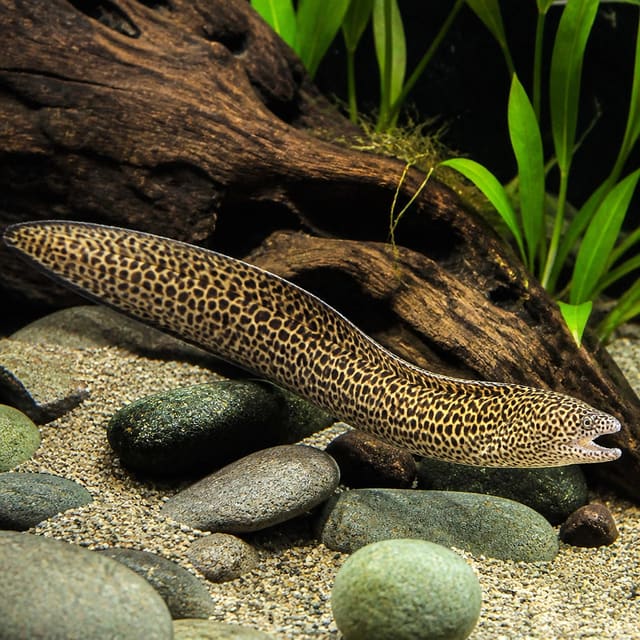
The body is long, cylindrical and smooth, coated in a heavy protective mucus that gives it a slick, dark sheen ranging from slate-grey to olive-brown, sometimes flecked in juveniles. In place of ordinary pectoral and pelvic fins it carries slender, thread-like filaments that it uses to feel and “walk” delicately along the bottom. The eyes are small and the mouth wide. Mature adults are formidable, commonly reaching around one metre and occasionally 125 cm, so the fish you receive as a modest youngster will one day fill a very large system.
Provide an oversized, long-footprint aquarium — 1,500 litres is a sensible minimum for an adult — with a soft sand bed, smooth rounded décor and no sharp edges. Filtration should be strong but gently returned, as this is a slow-water species. Keep the water warm at 24–30°C and soft to moderately hard at pH 6–7.5. Critically, the lungfish is an obligate air-breather: it must reach the surface to fill its paired lungs, so never seal the tank to the waterline, and always leave a clear, unobstructed air gap above the water.
This is an obligate air-breather that grows to around a metre, is muscular and can deliver a serious bite. It is a lifetime, single-specimen commitment for experienced keepers only, and needs a very secure, heavy lid.
Slow, deliberate and surprisingly placid toward anything too large to be seen as food, the South American lungfish is nonetheless a committed predator with a powerful bite. In practice it is best kept entirely alone. Tank mates small enough to swallow will simply disappear, and rival lungfish can be intolerant of one another. Its temperament is peaceful in the sense that it will not chase or harass — but everything it can fit in its mouth is treated as a meal.
| Great tank mates | Best avoided |
|---|---|
| Best kept as a solitary specimen | Any fish small enough to be swallowed |
| Only very large, calm fish in huge custom systems | Fin-nippers and boisterous species |
| Sturdy, unpalatable companions if any | Aggressive large cichlids |
| A second lungfish in the same tank |
A carnivore through and through, the lungfish takes earthworms, prawn, mussel, cockle and other meaty items, along with sinking pellets formulated for large predators. It feeds slowly and deliberately, often mouthing food before committing, so allow plenty of time and remove anything uneaten. Two or three substantial meals a week suit an adult; juveniles can be fed a little more often. Vary the diet to keep it in strong condition.
Breeding is essentially unheard of in home aquaria and demands conditions far beyond a normal tank. In the wild the male excavates a burrow and guards the eggs, developing richly blood-vesseled filaments on his pelvic fins that are thought to help oxygenate the developing young. It is a fascinating natural history but not a realistic aquarium project.
Keep the surface clear at all times — a floating cover of plants or a blocked air gap can be fatal to an animal that has to breathe air to survive.
Every South American Lungfish is hand-selected and quarantined before sale, then packed in oxygenated bags with insulation and heat packs when needed and sent by tracked, live-animal courier. Your order is covered by our Live Arrival Guarantee, so it reaches you safely anywhere in the UK.
No reviews for this item yet. Bought one? Honest reviews only, good or bad.
What customers say about ordering from us
Easy website plenty of info on fish your buying great to pick a time slot
TRACEY DURRANT · 7 Oct 2026
Got some lovely fish thank you
Kevin Mackie · 7 Oct 2026
Reviews of our shop, collected by Judge.me, an independent third-party review collector. Newest first.