
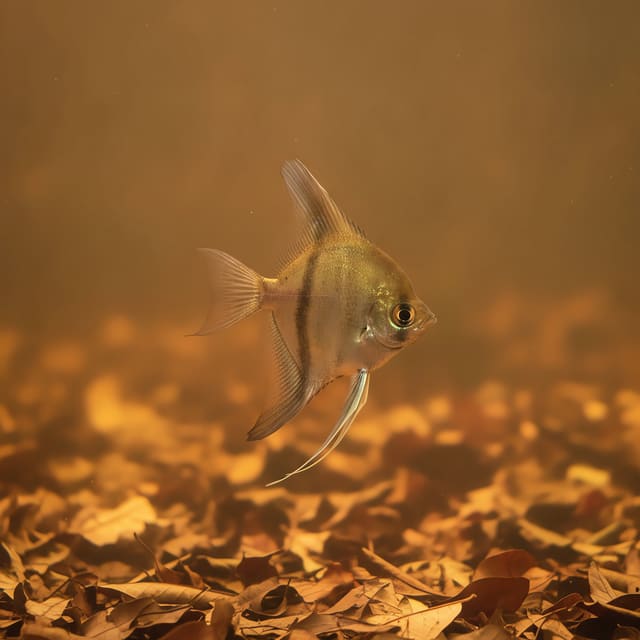
NO NEED OF BRACKISH WATER (Monodactylus sebae)
24–28°C
£32.99

The Silver Moony (Monodactylus argenteus) is a moonyfish from the Indo-West Pacific that reaches 27 cm standard length. It suits advanced keepers planning a mature filtered system at 24–28°C, with group size, pH, hardness and companions decided through an adult stocking assessment. Sold individually in 3 cm, 4–5 cm and 5–6 cm dispatch sizes.
Adult size is the maximum length this species reaches at full maturity (scientific sources). The livestock you receive will be younger and smaller — pick a size variant above for the actual shipping size. Product-photo provenance and any image-specific limitations are stated on the listing.
Monodactylus argenteus
Silver Moony are a shoaling species — they need 6+ to feel safe and show their full colour.
The Silver Moony (Monodactylus argenteus) is a moonyfish from the Indo-West Pacific that reaches 27 cm standard length. It suits advanced keepers planning a mature filtered system at 24–28°C, with group size, pH, hardness and companions decided through an adult stocking assessment. Sold individually in 3 cm, 4–5 cm and 5–6 cm dispatch sizes.
Adult size is the maximum length this species reaches at full maturity (scientific sources). The livestock you receive will be younger and smaller — pick a size variant above for the actual shipping size. Product-photo provenance and any image-specific limitations are stated on the listing.
Maintain these water conditions for optimal health and vibrant colors
The Silver Moony (Monodactylus argenteus) is a ray-finned moonyfish in the family Monodactylidae. It is native to the Indo-West Pacific, including the Indian Ocean, western Pacific, Persian Gulf, Red Sea and associated estuaries. FishBase records a maximum of 27 cm standard length. We rate it advanced because its eventual size, highly territorial behaviour and use of marine, brackish and freshwater environments all need to be considered before its aquarium and companions are chosen.
The 27 cm figure is the decisive size for planning. Standard length excludes the tail, so allow for a complete living fish beyond that measurement when considering usable swimming room, decoration and stocking. A small dispatch fish must not be used as the basis for the permanent aquarium.
FishBase places this species in bays, mangrove estuaries, tidal creeks, lower reaches of freshwater streams and, occasionally, silty coastal reefs. It commonly appears in large schools in nature, while small juveniles may be solitary or form small aggregations. FishBase also describes it as highly territorial. Those observations make social planning a considered decision rather than a simple instruction to buy a fixed number.
The Wikipedia account of Monodactylus argenteus identifies the same Indian and western Pacific range and includes Silver Moonyfish, Natal Moony, Butter Bream and Diamondfish among its common names. Its natural-history account is useful for understanding where the fish occurs; aquarium water, filtration and stocking still need to be planned as a complete system.
In nature, Silver Moonies feed on plankton and detritus. Choose aquarium foods that are explicitly intended to provide suitably sized planktonic nutrition and a detrital feeding component. Feeding is covered in detail below because food choice, uneaten waste and biological filtration must be considered together.
One purchase supplies one Silver Moony in the size chosen on the live selector. The labels are 3 cm, 4–5 cm and 5–6 cm. The size you select is the size supplied, not the adult size. Use 27 cm standard length for the permanent space plan regardless of which dispatch label you choose.
A dispatch grade helps you understand the approximate size of the fish at handover. It does not change the species’ adult measurement, territorial description, natural distribution or temperature range. Before choosing a grade, confirm that the aquarium, filtration and long-term stocking plan are suitable for the full-grown fish rather than treating the selected length as a separate care category.
Do not infer sex from dispatch size, colour or the appearance of a gallery fish. Choose this animal for the care plan you can provide rather than for an assumed sex.
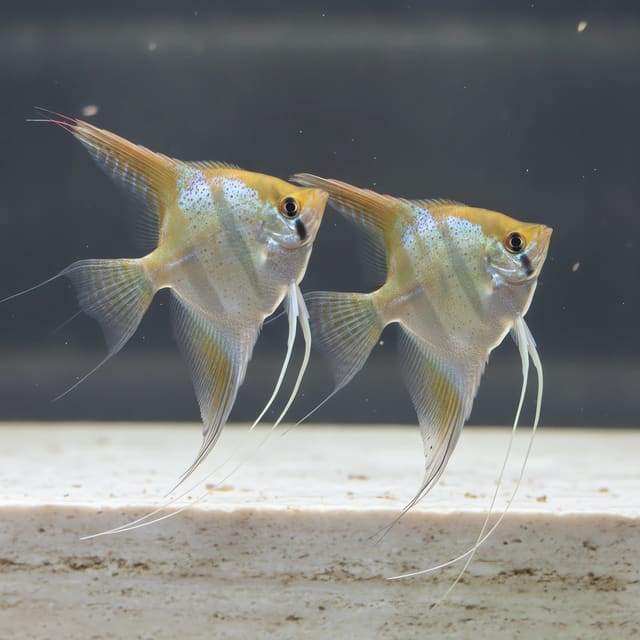
Some gallery images have been digitally enhanced to improve image quality. They show the listed type of animal rather than guaranteeing the exact markings of the individual supplied, so natural colour and pattern can vary.
The gallery can help you recognise the Silver Moony’s general body form and markings. It cannot determine the precise appearance, sex, behaviour or condition of the individual selected for an order. Make the aquarium decision from the species’ adult size, recorded environments, temperature and territorial behaviour.
This fish suits a deliberate, adult-sized aquarium plan. Start with its 27 cm standard length, a temperature of 24–28°C, a mature biological filter and a stocking assessment that accounts for highly territorial behaviour. Decide the intended water type, pH, hardness and social arrangement before adding the fish, then select only inhabitants whose requirements fit the same system.
| Suits | Not suited to |
|---|---|
| Advanced keepers planning around a 27 cm adult | A permanent aquarium chosen around a 3–6 cm dispatch fish |
| A mature, maintained biological filter | An unfiltered or biologically immature aquarium |
| A stable 24–28°C temperature plan | A system outside the species’ recorded temperature range |
| Stocking assessed for territorial behaviour | Companions chosen without a compatibility review |
| A clearly defined marine, brackish or freshwater framework | Unplanned changes between different water types |
Check four linked points: adult space, intended water type, filter maturity and compatibility. Passing only one check is not enough. A large aquarium still needs a mature filter; a mature filter does not resolve territorial conflict; and matching temperature alone does not show that pH, hardness, flow and water type suit every inhabitant.
When the complete plan does not fit your aquarium, browse the loaches and oddballs collection for animals to assess against your measured water and established space. Treat that collection as a comparison route, not as a list of automatic companions for a Silver Moony.
Record your intended temperature, water type, pH and hardness before making the final stocking decision. This turns vague ideas such as “tropical” or “community” into values and requirements that can be compared for every animal in the aquarium.
Plan the permanent aquarium around a Silver Moony reaching 27 cm standard length. This is FishBase’s maximum recorded measurement for the species and is the one adult figure used throughout this care plan. Standard length ends at the base of the tail, so the complete fish extends beyond that measurement.
Choose the aquarium by considering its usable dimensions, total water volume after decoration, filtration capacity and the complete stocking plan. OATA advises choosing an aquarium that can accommodate the selected fish once fully grown and notes that larger bodies of water are generally more stable against changes in temperature and pH. Decoration and plants occupy part of the nominal volume, so count the remaining water and swimming area rather than relying only on the number printed on an aquarium.
A fixed volume detached from dimensions, decoration and stocking could give a false sense of certainty. Select the aquarium through an adult stocking assessment that considers how much usable water and movement space remain after the complete layout and livestock plan are included.
Growth should trigger comparison with the adult plan, not a fresh attempt to justify the present aquarium from the fish’s current length. Check whether decoration still leaves usable movement space, whether territorial encounters are changing and whether the filter continues to hold ammonia and nitrite at zero. If the permanent aquarium is not yet ready, prepare it before space becomes restrictive.
Keep the Silver Moony at 24–28°C. FishBase gives this as the species’ recorded environmental temperature range and identifies it from marine, brackish and freshwater environments. Use that range as the temperature boundary for the aquarium, then choose a stable pH and hardness target that fits the intended water type and every other inhabitant.
FishBase reports adults and juveniles from bays, mangrove estuaries, tidal creeks and lower freshwater reaches, but says that usually only juveniles enter freshwater. A small dispatch grade therefore must not be treated as a permanent freshwater-care instruction. Decide the long-term water framework through an adult stocking assessment rather than inferring it from the current size.
Our water chemistry guide explains what the main aquarium tests measure. Enter the readings into the water matcher to compare your measured aquarium with the stated temperature guidance and the requirements chosen for the complete system.
Check temperature and pH regularly rather than relying on heater settings or the appearance of the water. Prepare replacement water so its temperature and intended chemistry fit the aquarium before it is added. Record readings in a simple log; a sequence of measurements makes gradual changes easier to see than a single test.
When planning companions, compare their complete requirements with the chosen water framework. Sharing the label “tropical” is not enough because OATA notes that species can prefer different water types, flow rates and temperatures.
Use a well established and maintained biological filter. OATA’s freshwater aquarium sheet gives broad group guidance: dechlorinate the water, switch on the equipment, allow 24–48 hours for temperature and equipment checks, and mature the filter before livestock is added. The settling period checks operation; it is not a substitute for biological maturation.
Fish waste and uneaten food contribute to ammonia. Nitrifying bacteria process ammonia into nitrite and then nitrate, but ammonia and nitrite are highly toxic to fish. Test kits should measure ammonia, nitrite, nitrate and pH, with ammonia and nitrite both at zero before introduction.
The first tropical tank guide provides a practical sequence for preparing and maturing an aquarium before livestock arrives. Apply the filtration and testing steps to the intended water framework for this Silver Moony.
| Check | Decision |
|---|---|
| Heater and thermometer agree | Confirm the aquarium remains within 24–28°C |
| Filter runs continuously | Check for normal flow and blockages |
| Ammonia test reads zero | Do not add fish while ammonia is detectable |
| Nitrite test reads zero | Do not add fish while nitrite is detectable |
| pH is stable | Compare it with the chosen water framework |
The RSPCA explains why aquarium filters are vital: fish release toxic ammonia, and beneficial bacteria in a working biological filter convert it through nitrite into safer nitrate. Keep the filter operating and maintained so those bacteria continue processing waste.
OATA advises increasing fish numbers slowly because the beneficial bacterial population must respond whenever livestock and feeding increase. Stocking too quickly can produce new tank syndrome. Apply that principle to the whole aquarium plan, including the Silver Moony’s adult size and the waste produced by every inhabitant.
Test the aquarium at least once a week for ammonia, nitrite, nitrate and pH, and check the temperature regularly. OATA advises more frequent testing while an aquarium is being established and when fish are added. Ammonia and nitrite should remain at zero.
Carry out partial water changes of up to 25% every week. Match new water to the correct temperature and treat tap water to make it safe before adding it. The suitable frequency and volume can vary with the aquarium, species and number of fish, so use test results and the complete stocking plan to decide whether maintenance needs to be more frequent.
| What you see | What to do |
|---|---|
| Ammonia or nitrite above zero | Test again, inspect filtration and address the water-quality problem promptly |
| Temperature outside 24–28°C | Check the thermometer, heater and surrounding heat or draught source |
| Reduced interest in food | Test water and compare behaviour with the fish’s normal pattern |
| Faster or slower gill movement | Test water quality and inspect filter operation |
| More aggression or hiding | Review territorial pressure, space and the stocking plan |
OATA highlights changes in swimming, colour, temperament, breathing, appearance, body condition and feeding as signs that need attention. White spots, fluffy growths, loss of fins or scales, erratic swimming and marked changes in body condition also call for prompt assessment. Test the water first because poor water quality can affect several signs at the same time.
If you are concerned about the fish’s health, contact us with the test results, temperature, recent maintenance and a description of the change. Do not begin a disease treatment solely from a visual guess; establish the water conditions and the pattern of symptoms first.
Inspect the filter for restricted flow, blockages and accumulated waste. Maintenance should preserve the biological filtration that processes ammonia and nitrite. Continue recording test values after cleaning so any change in filter performance is detected early.
Base the diet on the Silver Moony’s recorded feeding biology: FishBase says it eats plankton and detritus. Choose foods whose stated purpose, ingredients and particle size fit plankton-feeding fish while also accommodating detrital feeding. Do not make a food choice solely because it is marketed for all tropical fish.
Read the food label before use. The particles must be accessible to the fish at its dispatch size, while the nutritional purpose should still match planktonic and detrital feeding. As the fish grows, reassess particle size without changing the biological basis of the diet.
Uneaten food contributes to ammonia, so excess food is a filtration and welfare issue rather than merely untidy substrate. Remove accessible uneaten material during routine maintenance and check whether the food type, particle size or presentation is failing to match the fish’s feeding response.
A reduced intake or loss of interest in food is one of OATA’s warning signs. When this occurs, test ammonia, nitrite, nitrate, pH and temperature, inspect the filter and compare the fish’s swimming and breathing with its usual behaviour. Feeding more heavily does not resolve a water-quality problem.
Territorial behaviour can also affect access to food in a mixed or multi-fish plan. Observe every inhabitant rather than judging a meal by how quickly the first food disappears. If one fish consistently fails to feed, reassess the stocking and territorial arrangement alongside water quality.
Place the aquarium out of direct sunlight and away from heat sources, draughts, loud noises, vibration and sudden movement. Use a flat, level stand that can support the full aquarium indefinitely. These OATA positioning checks reduce preventable temperature variation and physical instability.
Plan the layout around the usable water left after decoration. OATA recommends plants and ornaments as enrichment and notes that they occupy space. Live plants can help remove nitrate, while ornaments may provide retreats for less boisterous or reclusive fish. For a Silver Moony, the final arrangement must also be assessed against the fish’s 27 cm adult measurement and territorial description.
After adding substrate, plants and ornaments, reassess how much water and movement area remain. A nominal aquarium volume does not describe the space occupied by decor or the effect of the complete livestock plan. Make alterations before introducing the fish if the adult-space assessment no longer works.
Check that water can circulate through the arranged aquarium and that the filter intake and outlet are not blocked. OATA notes that species can have different flow preferences, so the finished flow pattern must be considered during compatibility screening rather than assumed from the pump’s rated output.
Prepare to receive the parcel in person. The Tropical Fish Co delivery and Live Arrival Guarantee policy explains that fish are hand-bagged in oxygen, placed in an insulated box and given a heat pack when the weather calls for it. A licensed live-animal courier carries the parcel.
For a Live Arrival Guarantee claim, send us the order number and continuous unboxing video on the day the fish arrives. The video should show the sealed parcel, the uninterrupted opening and the fish still in the sealed bag.
Before the parcel arrives, confirm that the filter is mature, ammonia and nitrite are zero, the temperature is 24–28°C and the chosen pH and water framework are stable. These are aquarium-readiness checks from the care plan, separate from the parcel-opening sequence.
Make sure the aquarium has enough adult-planned space and that every resident has passed the compatibility screen. OATA advises confirming compatibility and suitable water quality before a fish is added. Do not use arrival day to improvise the intended water type, rearrange the entire stocking plan or begin biological filter maturation.
After release, note swimming, breathing, colour, temperament and interest in food without trying to diagnose normal individual variation from a single moment. Continue checking the same features so meaningful changes can be identified. If behaviour or appearance changes alongside detectable ammonia or nitrite, address water quality promptly.
Plan social housing around two established facts: FishBase says Silver Moonies are commonly seen in large schools in nature and also describes the species as highly territorial. It adds that small juveniles may be solitary or occur in small aggregations. These observations do not reduce aquarium planning to one fixed group number.
Assess the intended number against adult space, filtration and the complete territorial arrangement. A group decision that works only while the fish are 3–6 cm is not an adult plan. Equally, a juvenile seen alone does not establish solitary housing as the correct long-term choice.
Observe temperament after introduction and after any later stocking change. OATA identifies increased aggression and increased hiding as changes worth investigating. Review aquarium space, territorial encounters, water quality and recent additions together rather than assuming one cause from a brief chase.
Dispatch size is not a temperament category. A smaller fish remains a member of a species described as highly territorial, and its adult measurement remains 27 cm standard length. Build the social plan for the mature fish instead of relying on calm behaviour during its first days.
Likewise, wild schooling does not guarantee peaceful aquarium interactions. Schooling and territoriality are both part of the species account, so the aquarium must be evaluated for both. Keep a written record of aggression, hiding, feeding access and changes after introductions; patterns across several observations are more useful than a single encounter.
Approve a companion only when its water type, temperature, pH, hardness, flow, adult space and behaviour fit the same aquarium. OATA notes that fish species can need different water types, flow rates and temperatures, and that some are territorial or aggressive. FishBase describes the Silver Moony itself as highly territorial.
Compatibility remains conditional because the result depends on the aquarium’s dimensions, layout, water framework and complete stocking plan. No named animal should be treated as an automatic companion. Ask us for a stocking and compatibility assessment using the aquarium dimensions, measured water values, filtration, decor and full list of intended inhabitants.
| Question | Required decision |
|---|---|
| Does its water type match? | Use only animals planned for the same freshwater, brackish or marine framework |
| Does its temperature overlap? | Confirm the candidate can be maintained within 24–28°C |
| Do pH and hardness match? | Compare measured targets rather than broad labels |
| Is adult space adequate? | Include the Silver Moony at 27 cm standard length and every other adult |
| Has behaviour been assessed? | Account for highly territorial behaviour and monitor temperament changes |
Add fish gradually so the biological filter can respond to increased waste and feeding. Recheck ammonia and nitrite after a stocking change, with both remaining at zero. Also compare aggression, hiding, breathing, swimming and food access with the established baseline.
A candidate that matches temperature but requires a different water type has not passed the screen. The same applies when water values match but adult stocking leaves inadequate usable space or an unresolved territorial conflict. Compatibility is the result of all checks together.
Product alternatives shown elsewhere on the page are browsing suggestions, not compatibility recommendations. Assess each alternative from its own adult size, water and behaviour requirements before considering it for any aquarium.
A Silver Moony reaches 27 cm standard length according to FishBase. Standard length excludes the tail, so plan the aquarium for the complete fish beyond that recorded measurement.
Choose aquarium volume and dimensions through an adult stocking assessment based on its 27 cm standard length, usable space after decoration, highly territorial behaviour, filtration and every intended inhabitant.
Set the aquarium group size through an adult stocking assessment. FishBase reports large wild schools, small juveniles that may be solitary or form small aggregations, and highly territorial behaviour, so a fixed aquarium number would ignore important parts of its biology.
We rate the Silver Moony advanced because keepers must plan for a 27 cm adult, highly territorial behaviour, a mature filter and an intended marine, brackish or freshwater framework.
FishBase records plankton and detritus as its natural diet. Choose suitably sized foods intended to provide planktonic nutrition and a detrital feeding component, and stop adding food while uneaten material remains.
Keep it at 24–28°C and maintain a stable pH chosen for the intended water framework. Test pH regularly, and keep ammonia and nitrite at zero.
FishBase describes it as highly territorial. Treat territorial conflict as the established risk, screen the complete stocking plan and monitor changes in aggression, hiding and feeding access; fin-nipping risk needs case-specific assessment.
Consider only animals whose water type, temperature, pH, hardness, flow, adult-space and behavioural needs fit the same aquarium. No named kind is an automatic companion for this highly territorial fish.
Tropical Fish Co hand-bags the fish in oxygen, uses an insulated box and adds a heat pack when the weather calls for it; a licensed live-animal courier carries the parcel. Receive it in person, film the sealed parcel before opening and float the bag for 20–30 minutes before release.
Max adult size is the length this species reaches at full maturity (from scientific sources). The livestock you receive will be younger and smaller — pick a size variant on the buy box for the actual shipping size. Product-photo provenance and any image-specific limitations are stated on the listing.
No reviews for this item yet. Bought one? Honest reviews only, good or bad.
What customers say about ordering from us
I have a small group of long finned mountain minnows. So was delighted to be able to order ten of this variety to increase the genetics in my tank . The ones I recieved are healthy but it’s to early to give a verdict on wether they are of a long finned type since they are small currently.
Gordon Walker · 23 Sept 2026
100% success travel and "installation". Pleased with quality of purchase. The Siamese fighter a bit "shy" so have not yet seen him at his best yet but looking good. Happy customer. GG
George E Garratt · 21 Sept 2026
Reviews of our shop, collected by Judge.me, an independent third-party review collector. Newest first.
24–28°C
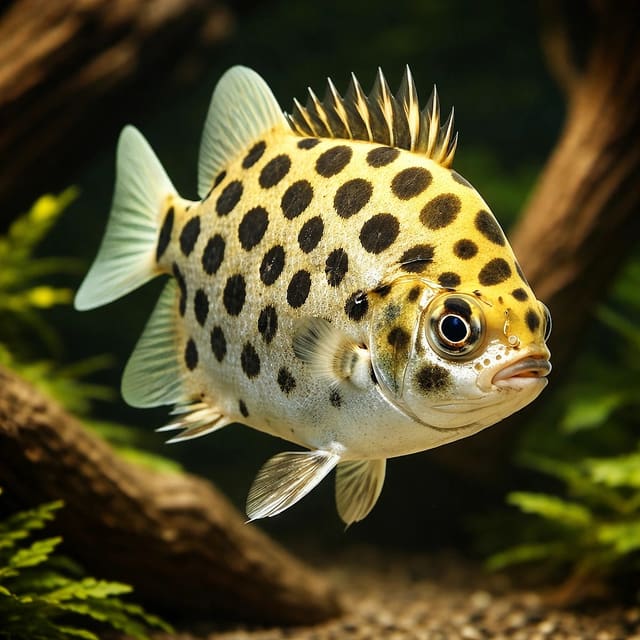
20–28°C
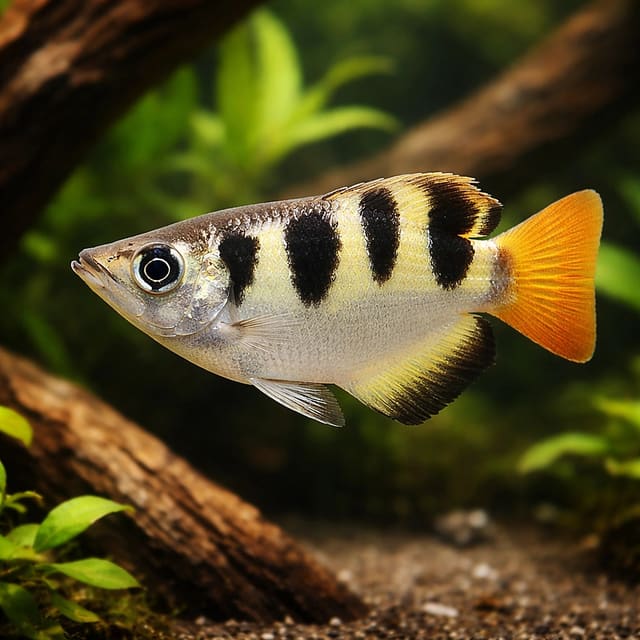
25–30°C · pH 7–8 · 432L

24–27°C · pH 6.5–6.5
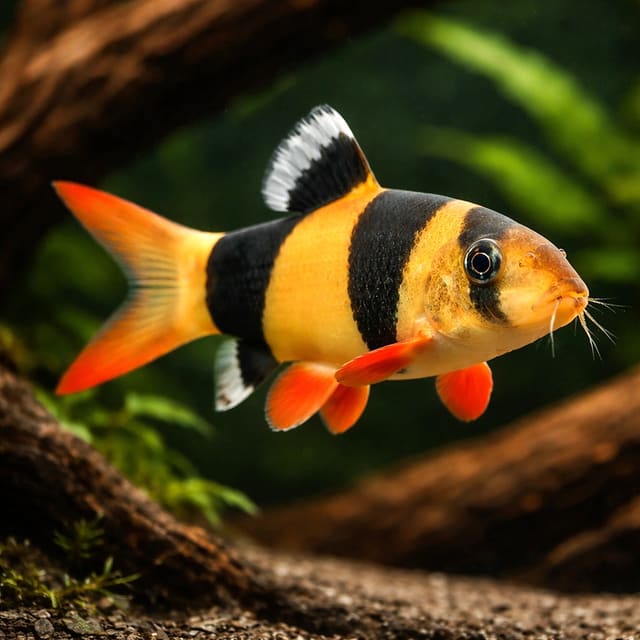
24–30°C · pH 5–7 · 648L
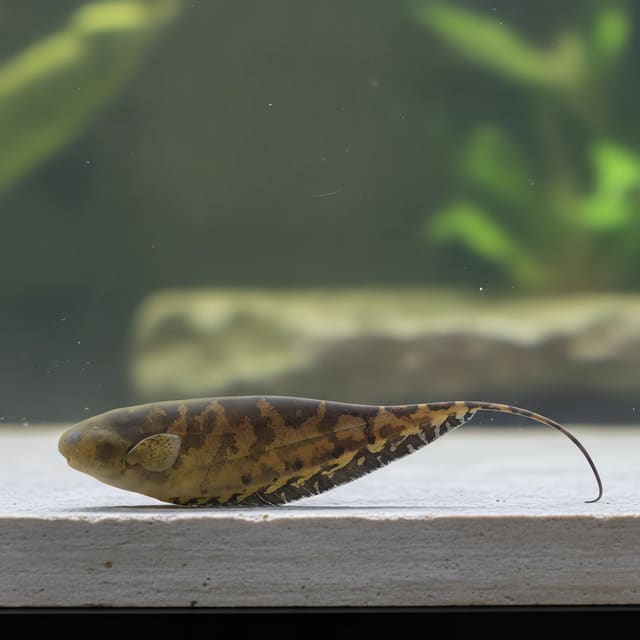

15.5–21°C · pH 6–8
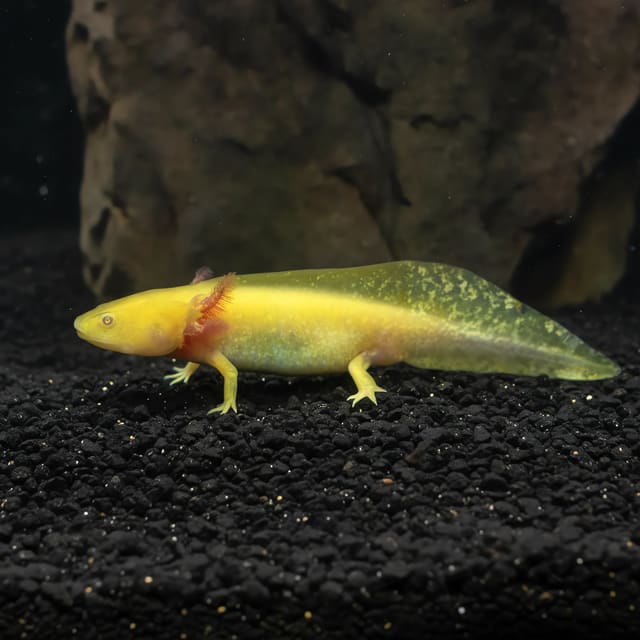
10–22°C · pH 7–8

243L
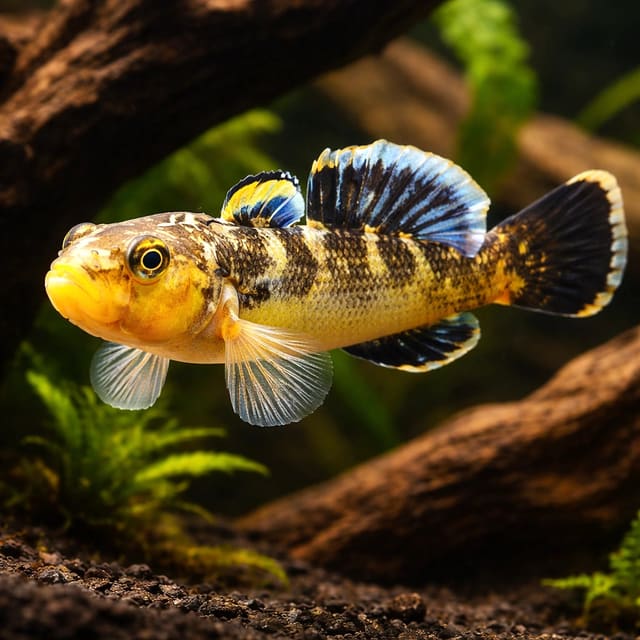
20–28°C · pH 7–8.5
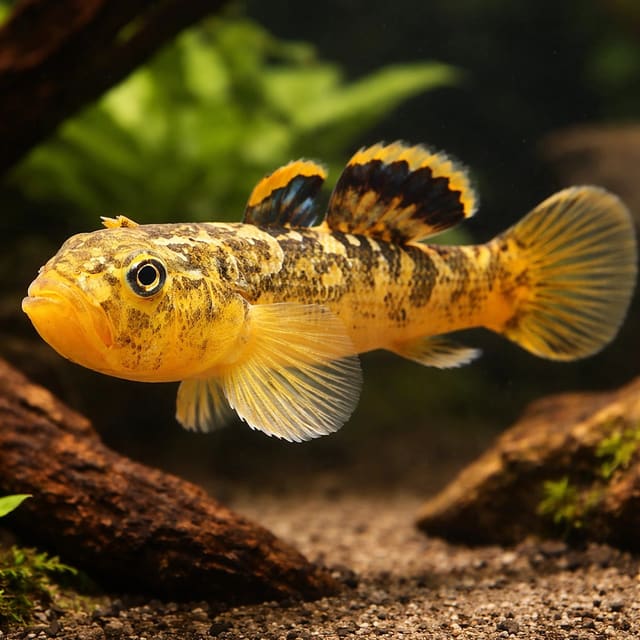
24–27°C · pH 7.5–8 · 41L
22–26°C · pH 6.5–7.5 · 54L
22–25°C · pH 7–8
22–27°C · pH 6–7.8 · 100L

22–26°C · pH 6.5–7.5 · 40L

22–26°C · pH 6–7.5 · 81L

22–28°C · pH 7–8 · 41L

21–25°C · pH 5–7
24–29°C

22–27°C · pH 6–8 · 72L
24–27°C · pH 6.5–8 · 200L

23–27°C · pH 5.5–7 · 60L

22–27°C · pH 6–8

22–26°C · pH 6–7.8 · 75L