Myxocyprinus asiaticus
15.5–21°C · pH 6–8
£29.99
Photo coming soon
The size, price and care details on this page are for this listing.
Chinese Snakehead (Channa asiatica) is an air-breathing predator for a secure species aquarium with humid air access. One live fish in the 6–7 cm grade; prepare suitable meaty foods and adult space.
Channa asiatica
Chinese Snakehead (Channa asiatica) is an air-breathing predator for a secure species aquarium with humid air access. One live fish in the 6–7 cm grade; prepare suitable meaty foods and adult space.
Maintain these water conditions for optimal health and vibrant colors
The Chinese Snakehead (Channa asiatica) is a predatory freshwater fish for an aquarium planned around its own needs. It combines an elongated body and broad head with the ability to breathe atmospheric air. That makes the top of the aquarium as important as the water beneath it: the fish needs access to a layer of humid air under a tightly fitting cover, while every opening must remain secure against escape.
One purchase supplies one live fish in the 6–7 cm dispatch grade. This is a young fish size, and the permanent aquarium should be planned for a substantially larger animal. This listing has one offered size. Buying a small individual gives you the opportunity to watch it develop, but it does not make a small community aquarium an appropriate long-term home.
Sex is guaranteed only when the selected option explicitly states male or female. This Chinese Snakehead listing has no sex-guaranteed option.
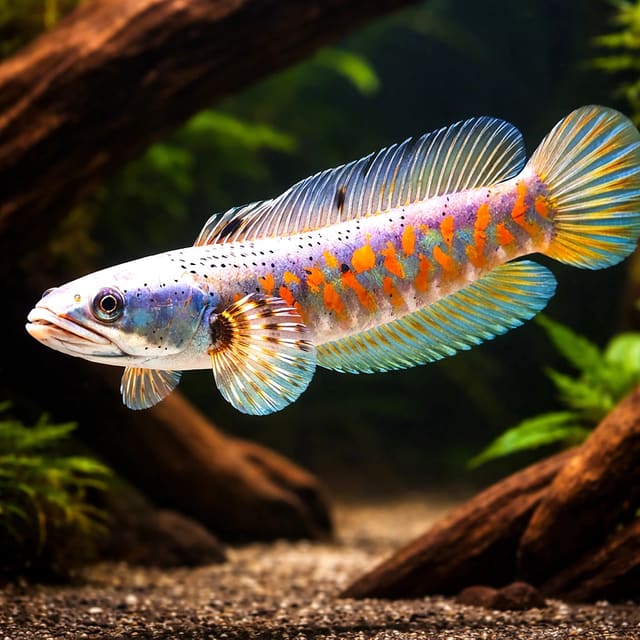
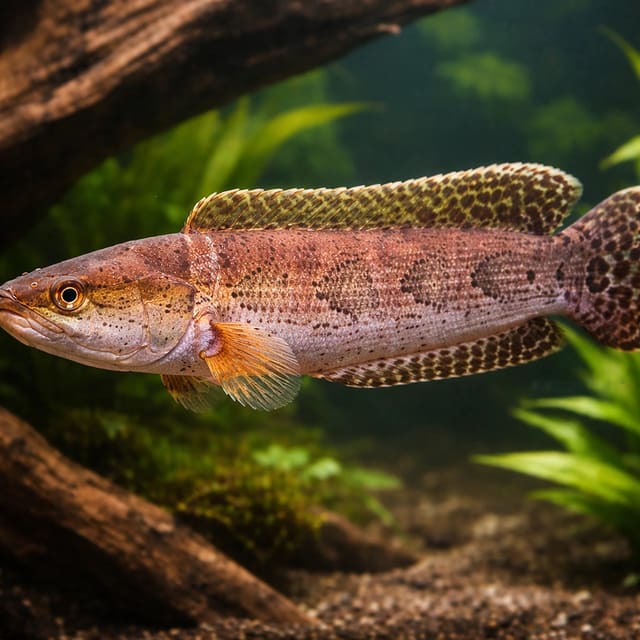
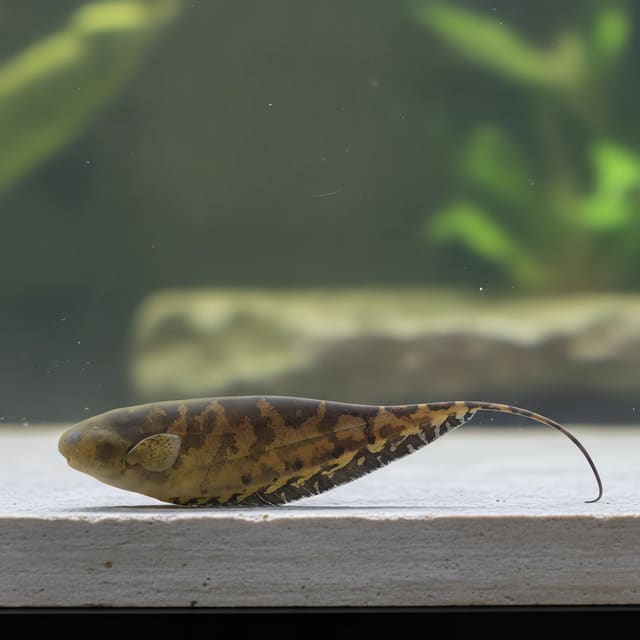
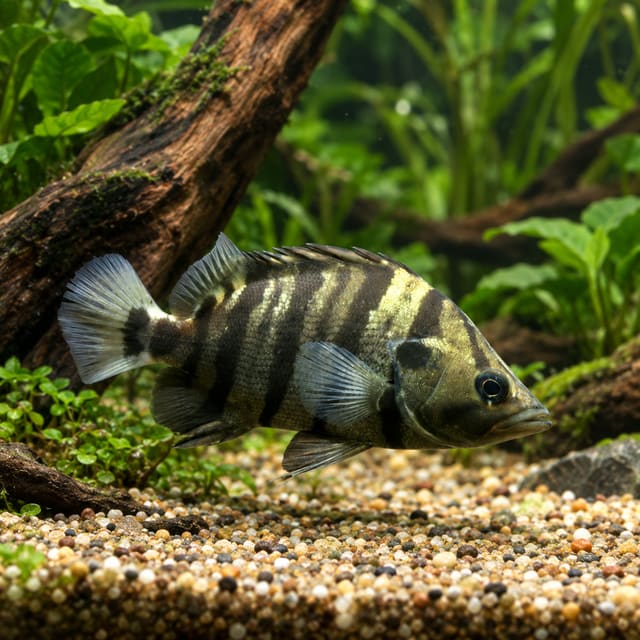
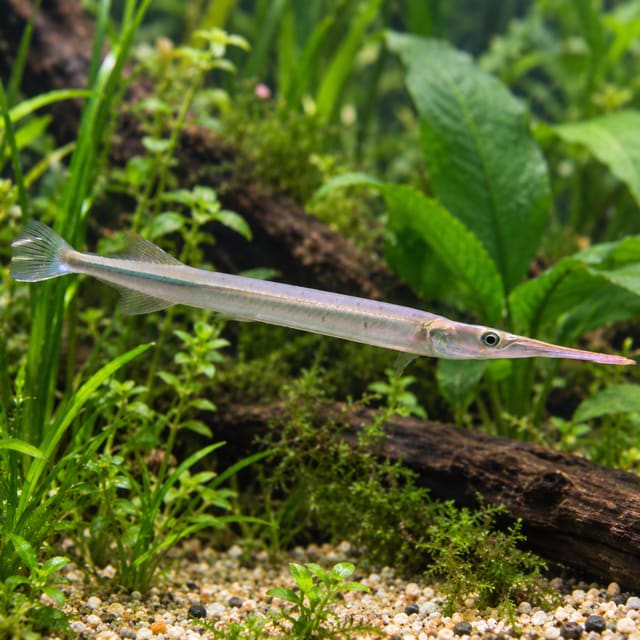
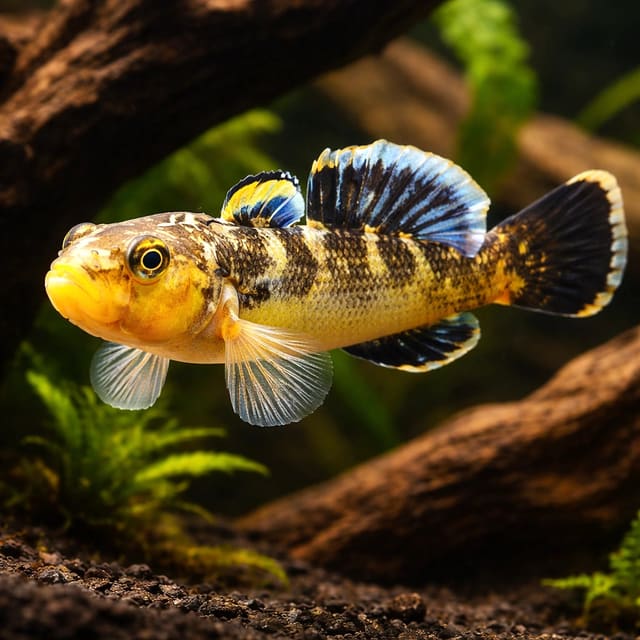
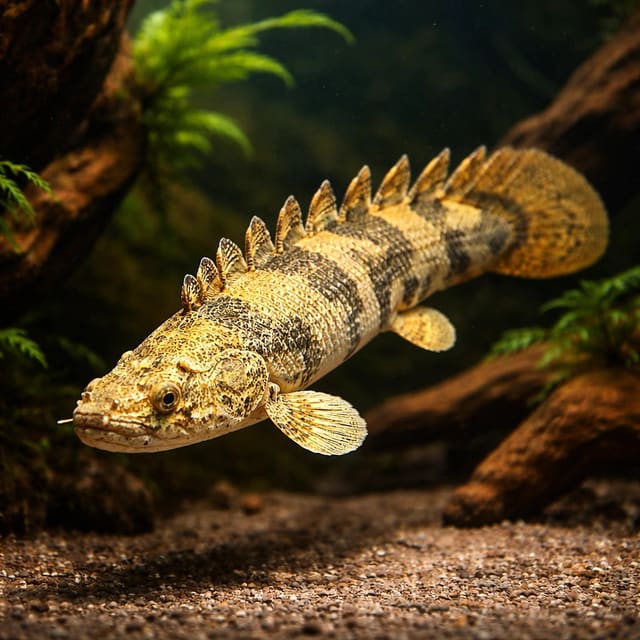
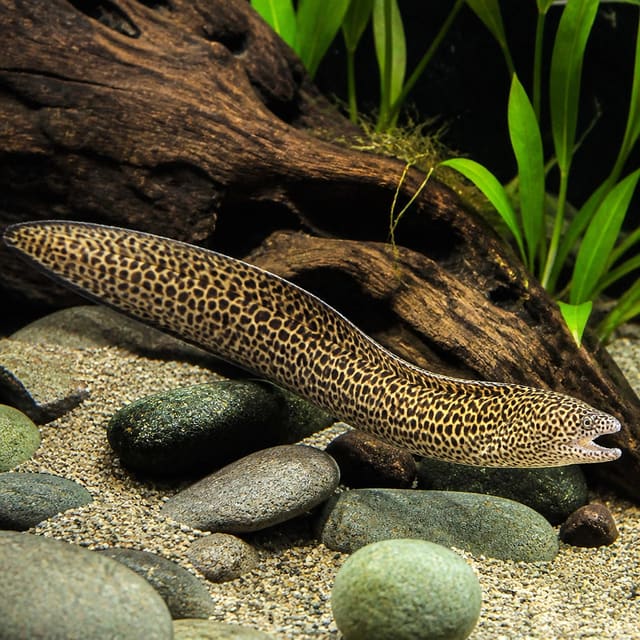
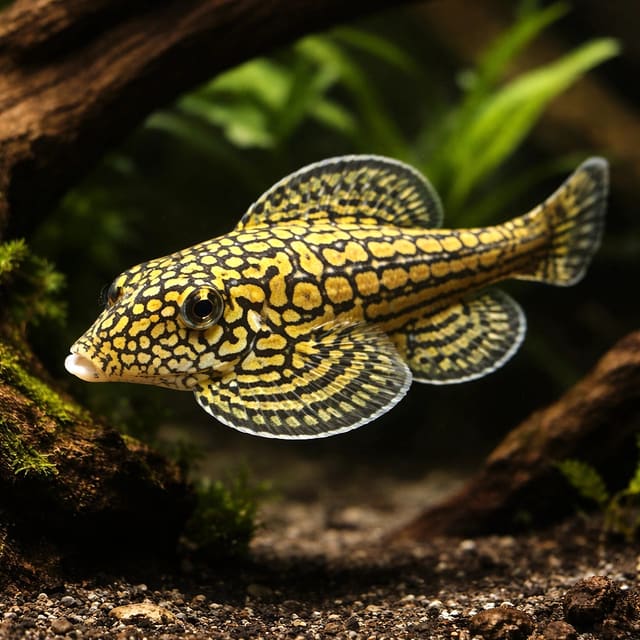
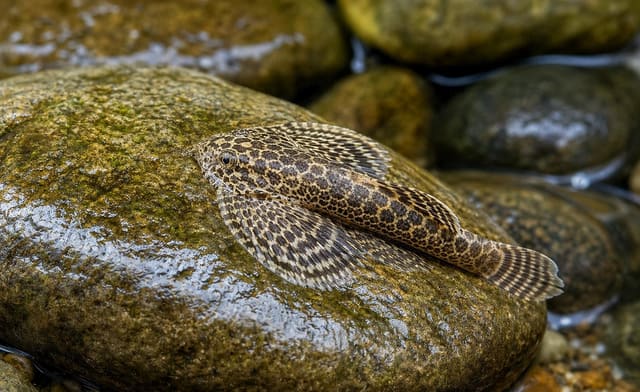
Please do not use this gallery image to identify the species or predict the exact animal supplied. Its identity has not been verified against the stock; the offer and care information refer to the animal named in this listing.
This fish is native to central and southern China and northern Vietnam. Its natural feeding includes smaller fish, insects and crustaceans, and its aquarium diet needs to reflect that predatory way of life. Small tankmates are food candidates, and the safest starting point is a species aquarium with a practical feeding routine already arranged.
The snakehead shape is distinctive: a long body, extended dorsal and anal fins and a substantial head. The species description includes dark body bars and pale spotting, but appearance should not be used to promise the sex, exact colour or locality of an individual fish. A young animal's eventual presentation is not something a single photograph can guarantee.
Air breathing is a normal part of this fish's biology. It does not make filtration optional, and it does not mean that poor water is acceptable. Think of surface access, water quality and escape prevention as three separate requirements that must all be satisfied. A fish can need access to air while also needing a mature filter and careful removal of feeding waste.
This is a fish for someone willing to manage the whole environment, including cover, feeding and social behaviour. A quiet aquarium with well-placed shelters can be more suitable than a bright, crowded display. If you hope to keep more than one individual, have a clear plan for separating them before any territorial conflict begins.
Young fish may tolerate a group, but that arrangement can change when a pair forms and becomes dominant. Buying two fish also does not establish a pair. The relationship between the animals must be judged through their behaviour, including whether each can rest, reach the surface and eat without being displaced.
The loaches and oddballs collection is useful for browsing unusual aquarium fish, but those animals have different requirements and should be assessed individually. Sharing a collection page does not mean they belong together in an aquarium.
If the idea of a dedicated snakehead setup appeals to you, start with the tank and daily routine described below. The most satisfying display is one where the animal can use its shelters, move to the surface and feed normally, without continual disturbance or competition. Those practical details matter much more than filling every area of the tank with additional fish.
| Part of the plan | What to have ready |
|---|---|
| The aquarium top | A well-fitting cover with secure equipment openings and humid air above the water. |
| Normal feeding | Suitable meaty foods, an accessible feeding place and a way to remove leftovers. |
| Social housing | Useful retreats and separate mature accommodation if the fish stop tolerating one another. |
| Future growth | Adult turning space and shelters that remain usable as the animal becomes larger. |
The adult figures available for this species use different measurement conventions. FishBase records 23.5 cm total length for male/unsexed fish; total length includes the tail. The species husbandry profile gives 35 cm standard length, which excludes the tail. Keep those labels with the figures. They cannot be combined into a precise whole-fish maximum or averaged into a more convenient number.
For practical planning, allow for the larger 35 cm body-length figure with the tail additional. Choose the floor space and decoration so that a substantial adult can turn, enter shelter and rise to breathe. The small dispatch grade should not determine the permanent layout. A shelter that is comfortable now may become an obstacle as the animal grows.
The species profile recommends an aquarium base of at least 100 × 40 cm and water depth of at least 30 cm. Those are minimum dimensions in that reference, rather than an assurance that every arrangement within them will work. Extra usable space is valuable, particularly when housing a compatible pair and providing separate retreats.
Look at internal dimensions and the room remaining after hardscape is installed. A large piece of wood may create excellent concealment while also narrowing the route to the surface. Leave multiple clear paths so the fish does not have to squeeze through a single opening whenever it moves. Keep enough room above resting areas for a direct, unobstructed rise to breathe.
Water volume helps with dilution and stability, but it does not replace length and width. A tall aquarium with a narrow base may be awkward for a large elongated fish even if its stated capacity sounds generous. Equally, reducing the water level to provide an air gap must still leave suitable water depth. Consider the water and air spaces together before filling the tank.
If using temporary accommodation for a young fish, arrange the larger home in advance. A planned move gives you time to establish filtration and compare water conditions. It also avoids having to improvise an aquarium when the fish has outgrown its cover or a social arrangement has become difficult.
A tightly fitting lid is essential. Snakeheads are noted for escaping, so check the entire top rather than only the main opening. Feeding flaps, cable exits and filter-hose cut-outs can all leave gaps. Inspect how the cover sits when equipment is running and after routine maintenance, because a lid can appear closed while one corner is lifted by a cable.
Leave a gap between the water surface and the cover so the fish can reach humid air. The aquarium should not be filled to a point where the animal has no accessible air layer. Surface access is a biological requirement, not an optional feature to add only if the fish appears distressed. Make it part of the normal layout from the first day.
Floating plants can provide shade and help the fish feel secure, but keep open places for breathing. Watch the surface as the plants grow; a useful patch of cover can become an obstruction if it spreads over every accessible area. The animal should be able to rise from its resting place without forcing its way through a dense mat.
Submerged shelter and a secure top do different jobs. Driftwood and planting help the fish withdraw from view, while the lid prevents it leaving the aquarium. Do not rely on a calm, well-covered fish never attempting to escape. Likewise, a secure lid does not compensate for a bare, exposed layout in which the animal has nowhere to settle.
Plan feeding and cleaning around keeping the top controlled. Have food and tools ready before opening the cover, and close it again when access is no longer needed. Avoid leaving the aquarium open while fetching something from another room. When changing water, check the final level and all cover fittings before considering the job finished.
You will often see a snakehead rise and take air. Observe its normal pattern rather than interpreting every surface visit as an emergency. If breathing, posture or activity changes noticeably, check the water and equipment as well as access to the surface. Air breathing explains normal behaviour; it should not be used to dismiss a fish that otherwise appears unwell.
Provide subdued lighting and a network of sheltered areas. Driftwood branches, aquarium-safe terracotta pipes, pots and live plants can create shaded places where the fish can rest without being exposed from every direction. Aim for several useful retreats rather than one decorative cave in an otherwise open aquarium.
Arrange shelter around clear movement routes. The fish should be able to enter, turn where necessary and leave without becoming wedged between hard objects. Check openings from the side and above before installing them. A narrow gap may be easy for a juvenile to enter but unsuitable once it has grown, so review the layout periodically.
A tangle of branches can divide an aquarium visually, but it should not prevent surface access or make routine inspection impossible. Leave some open sightlines where you can watch the animal without disturbing it. A keeper who can observe quietly is less likely to move every shelter simply to check that the fish is present.
Surface vegetation is particularly useful for shade. It can help a fish feel comfortable moving into view while keeping the aquarium softly lit. Balance this with open breathing areas and maintenance access. If plants deteriorate, remove decaying material and adjust the arrangement rather than allowing waste to collect under the cover.
Choose a substrate and feeding area you can clean effectively. Food can disappear into coarse or inaccessible spaces even when the fish seems to have finished eating. Keep the main feeding location visible so you can see what is accepted and remove leftovers. Position heavy decoration securely and avoid arrangements that could collapse if disturbed during cleaning.
Place the aquarium away from direct sunlight, draughts and repeated vibration, on a level support suitable for its full weight. Leave working space for the filter and hoses. These general setup decisions make it easier to keep the animal's immediate surroundings stable while you carry out normal maintenance.
The purpose of this aquascape is security, not maximum decoration. If the fish has good cover and clear routes, you can observe more natural use of the space. If every route is cramped or exposed, adding another ornamental object may make the aquarium harder to use rather than more comfortable.
The species aquarium profile gives 15–25°C, pH 6.0–8.0 and hardness 5–25 dGH. Use these as species husbandry guidance and maintain suitable conditions consistently. A broad range is not an invitation to make frequent temperature or chemistry changes. Measure the actual aquarium and source water before deciding whether equipment or water preparation is needed.
Check temperature in the aquarium with a thermometer. Room temperature, sunlight and equipment can all affect the water, so a statement that a tank is heated or unheated does not describe its actual conditions. Keep the tank away from avoidable heat sources and watch readings when the weather changes. The guidance here does not prescribe a seasonal breeding schedule.
| Measurement | What it helps you decide |
|---|---|
| Temperature | Whether the actual aquarium remains within suitable conditions. |
| pH and general hardness | Whether source and aquarium water suit the species and remain consistent. |
| Ammonia and nitrite | Whether the biological filtration is handling the waste load; both should be zero. |
| Nitrate | How waste accumulates over time and whether the maintenance routine needs adjustment. |
The water chemistry guide explains how these tests relate. Keep a short record of results, feeding and water changes so that a change in the aquarium can be understood in context. A single acceptable test does not make future checks unnecessary, particularly after moving fish or changing the amount of food.
The water matcher can help compare measured values with care guidance. It does not assess predation, territorial behaviour or whether a lid is secure. Those requirements still need to be considered separately when planning the aquarium.
Use a functioning biological filter before the fish arrives. Fish waste and uneaten food contribute ammonia, and a mature filter supports bacteria that process ammonia and nitrite. The first aquarium setup guide explains the preparation process. Running an empty tank briefly or judging the water by clarity is not enough to establish readiness.
Keep filter intakes and hoses clear and maintain useful circulation without subjecting the fish to strong flow everywhere. Its natural habitats include slow-moving water, and sheltered resting areas should remain available. Check the whole aquarium for waste accumulation instead of assessing filtration only by how forcefully the outlet moves the surface.
Carry out regular partial water changes with appropriately treated, temperature-matched water. OATA advises at least weekly water-quality checks for freshwater aquaria, with closer monitoring when circumstances change. Let actual tests, feeding and cleanliness guide the maintenance routine, and remove uneaten meaty food promptly rather than waiting for the next scheduled water change.
Prepare a varied diet of suitable meaty foods. The species husbandry profile lists shrimp, earthworms and frozen foods such as prawns, mussels and pieces of whole fish. Choose pieces appropriate to the fish's size and watch it swallow them. A small animal may investigate food that is too large to handle comfortably, leaving pieces behind even when it appears keen to feed.
The important practical point is to avoid relying on dried foods. The species profile specifically states that dried food is not accepted, so pellets should not be the basis of your feeding plan. Have suitable alternatives ready before the fish arrives. Establishing what an individual eats is much easier when the correct foods are already available.
Offer food where you can observe the response. Add manageable amounts and pause to see what happens rather than dropping a large quantity into the aquarium at once. Food that falls behind wood or into coarse substrate still affects water quality even if it disappears from view. Remove leftovers and adjust the next offering to what the fish can handle.
Record the foods accepted and watch body condition over time. A feeding response is useful information, but eagerness alone does not tell you how much food is appropriate. Growth, actual intake and the effect on water quality all matter. There is no single fixed feeding interval given here for every age, temperature and individual.
Use variety across appropriate foods instead of depending on one rich item. If introducing a different food, observe whether it is swallowed and retained rather than merely taken into the mouth. This is particularly useful with a newly settled fish, where repeated uneaten offerings can create unnecessary waste while giving a misleading impression that feeding is established.
Do not feed mammalian or avian meat such as beef heart or chicken. These are unsuitable for the species' dietary needs. There is also no benefit in routinely offering feeder fish: they introduce disease and parasite risks and are not a reliable shortcut to a balanced diet. Appropriate dead foods can support a practical feeding routine without adding live prey fish to the aquarium.
If the fish stops feeding, check water quality, temperature, recent changes and social pressure before simply offering more food. Persistent refusal accompanied by altered breathing, poor condition or other symptoms needs appropriate advice. A clear account of what has changed is more useful than repeatedly switching foods without observing the rest of the aquarium.
The best-supported approach is a species-specific aquarium. This is a predator, and other fish should not be treated as safe because they are quick, robust-looking or have shared the tank briefly. Smaller fish and suitable-sized crustaceans are natural prey types. An absence of incidents while the snakehead is young does not establish safety as it grows.
Compatibility also includes access to essential resources. Every fish must be able to rest, feed and reach the surface without being persistently displaced. An aquarium can look quiet while one individual stays hidden because it is intimidated. Observe who uses the open space and who waits until the other fish has moved away.
The species profile allows for young fish being kept together, but warns that once a pair forms and establishes dominance, the remaining animals are in danger. Those extra fish must be removed or the pair given its own aquarium. Have suitable accommodation ready before this change happens. Waiting until an animal is injured makes the move more urgent and the recovery more difficult.
Do not infer a fixed recommended group number from that description. The useful principle is that a juvenile grouping needs active observation and a future separation plan. Likewise, two purchased animals are not automatically a compatible pair. Watch their actual relationship instead of assuming that the number in the aquarium defines it.
Shelter is especially important in pair housing because the female needs opportunities to stay out of the male's view. Arrange retreats with different approaches and clear exits. If the dominant fish can oversee every hiding place from one position, the apparent abundance of caves may provide little real protection.
A larger aquarium can make shelter and distance easier to provide, but it does not turn incompatible fish into a pair. The decision to keep them together must remain open to revision. A dedicated setup works best when the keeper is prepared to act on changing behaviour instead of defending the original stocking plan.
Chinese Snakeheads can show parental care, and an established pair may defend eggs and fry. That behaviour adds another reason to provide cover and avoid crowding. It also changes the keeper's responsibilities: if young fish appear, their feeding and future accommodation must be planned rather than assuming they can remain together indefinitely.
This species does not build a bubble nest. Its eggs can float at the surface, with the adults defending the brood. These natural-history details are useful for recognising a change in behaviour, but they are not a guarantee that a purchased fish will breed or that two individuals will accept each other. The needs of the adults remain the first priority.
Check the fish without repeatedly removing its cover. Look at posture, breathing, body condition, fins and feeding, and compare these with its own usual behaviour. A resting fish may spend time under shelter, while a sudden persistent change deserves investigation. Record when the change began and whether anything else changed at the same time.
If something appears wrong, test the water and check equipment before selecting an explanation. Problems with temperature, filtration or access to food can affect behaviour. Social pressure may also be present without obvious fighting. A brief observation while food is offered can reveal whether one fish is preventing another from eating.
Avoid choosing a medication solely from a colour change or an online photograph. Clear water results, recent maintenance information and a description of symptoms help an experienced adviser assess the situation. Keep handling to what is needed for the fish's welfare, with secure temporary accommodation ready if separation is required.
Review the aquarium as the animal grows. A route that was open for a small juvenile may become awkward for a much larger fish, and a feeding portion that once worked may no longer be suitable. Check cover fittings as equipment is changed, and make sure expanding surface plants leave breathing access. Good ongoing care comes from revisiting these practical details before they become urgent.
Long-term planning also includes your ability to maintain the aquarium reliably. Arrange food supplies, cleaning equipment and help during absences so the routine remains consistent. Anyone caring for the fish needs to understand the lid, surface access and feeding method, as these are central to the setup rather than optional preferences.
Prepare the aquarium before the delivery is arranged: mature filter running, water checked, cover secured and shelters ready. Have food, a thermometer and the equipment for a careful transfer to hand. Check the route from the parcel to the aquarium so that the top does not need to stand open while you search for something.
Tropical Fish Co hand-bags fish with oxygen and uses insulated packaging, adding a heat pack when conditions require it. A licensed live-animal courier delivers on the confirmed Thursday or Friday date, with tracking and the date sent by email. Be there to receive the parcel because live fish cannot be left unattended. The current delivery and Live Arrival Guarantee policy explains the arrangements.
Open and inspect the parcel on the day it arrives. A Live Arrival Guarantee claim requires a continuous unboxing video starting with the sealed parcel and showing the fish still inside its sealed bag. Set up the camera before opening so the evidence is available if needed. If there is an arrival problem, contact the team that day with your order number and video.
Dim the aquarium lighting and handle the bag carefully. The store guidance is to float the bag for 20–30 minutes before releasing, acclimatising slowly. Keep transport water out of the aquarium. Keep the top controlled throughout the transfer and secure the lid immediately afterwards, leaving the planned air gap intact.
Allow the fish to find its shelter without repeated disturbance. Observe from outside the aquarium and check that it can move to the surface freely. Avoid lifting wood or chasing it into view simply because it has chosen a shaded place. Continue monitoring water quality and behaviour as feeding becomes established.
Keep the first days straightforward. Record where the fish rests and which appropriate food it accepts, and remove leftovers. Do not add new companions while you are still learning its normal behaviour. A settled routine gives you a much better basis for judging any later change in appetite, confidence or use of the aquarium.
FishBase records 23.5 cm total length for male/unsexed fish, including the tail. The species care profile gives 35 cm standard length, excluding the tail. Plan the aquarium around the larger body-length figure with the tail additional; do not treat the smaller record as a universal maximum.
The species profile recommends a base of at least 100 × 40 cm and water depth of at least 30 cm. Allow clear adult turning space and routes to the surface around the shelters. A secure lid and an accessible humid air gap are essential parts of the aquarium.
Young fish may tolerate a group, but a dominant pair puts the remaining fish in danger. Separate the extra fish or move the pair to its own aquarium. Two purchased individuals are not automatically compatible, so observe feeding, shelter use and access to the surface.
It requires careful escape prevention, appropriate meaty foods and active management of territorial behaviour. A prepared keeper with a dedicated aquarium and separation options is better placed to meet those needs. A standard small community setup is unsuitable.
Offer suitable meaty foods such as shrimp, earthworms, prawns, mussels and pieces of whole fish, sized for the animal. Do not rely on dried foods. Avoid mammalian or avian meat and feeder fish, and remove uneaten food promptly.
The species aquarium profile gives 15–25°C, pH 6.0–8.0 and hardness 5–25 dGH. Keep suitable conditions consistent and measure the actual aquarium water. Air breathing does not replace a mature biological filter or regular water-quality checks.
It is a predator and can become strongly territorial, particularly when a pair establishes dominance. Watch for persistent chasing and exclusion from food, shelter or the surface. A fish that remains hidden because it is being intimidated needs attention even before injuries appear.
A species-specific aquarium is the best-supported approach. Smaller fish and crustaceans can become prey, and robust appearance or swimming speed does not guarantee safety. Social housing with its own species requires observation, useful cover and a ready separation plan.
Tropical Fish Co packs fish in oxygen-filled bags and insulated boxes for a licensed live-animal courier. The confirmed Thursday or Friday date and tracking arrive by email. Be present and inspect the parcel that day. For a Live Arrival Guarantee claim, record continuously from the sealed parcel through opening to the fish still in its sealed bag, and contact the team the same day.
No reviews for this item yet. Bought one? Honest reviews only, good or bad.
What customers say about ordering from us
Easy website plenty of info on fish your buying great to pick a time slot
TRACEY DURRANT · 7 Oct 2026
Got some lovely fish thank you
Kevin Mackie · 7 Oct 2026
Reviews of our shop, collected by Judge.me, an independent third-party review collector. Newest first.