Kuhli Loach (Acanthophthalmus kuhli)
24–27°C · pH 6.5–6.5
£2.99
The Saddled Hillstream Loach (Homaloptera ogilviei) is a non-aggressive, specialised grazer sold as one 4–5 cm fish per purchase quantity. Plan for at least six in a mature, tightly covered aquarium with a 60 × 30 cm base or equivalent, clean oxygen-rich flow and 20–25.5°C water. Its recorded maximum is 5 cm standard length.
Adult size is the maximum length this species reaches at full maturity (scientific sources). The livestock you receive will be younger and smaller. Product-photo provenance and any image-specific limitations are stated on the listing.
Homaloptera ogilviei
Shoaling fish: kept in a group they feel safer, stay calmer and show their best colour.
The Saddled Hillstream Loach (Homaloptera ogilviei) is a non-aggressive, specialised grazer sold as one 4–5 cm fish per purchase quantity. Plan for at least six in a mature, tightly covered aquarium with a 60 × 30 cm base or equivalent, clean oxygen-rich flow and 20–25.5°C water. Its recorded maximum is 5 cm standard length.
Adult size is the maximum length this species reaches at full maturity (scientific sources). The livestock you receive will be younger and smaller. Product-photo provenance and any image-specific limitations are stated on the listing.
Maintain these water conditions for optimal health and vibrant colors
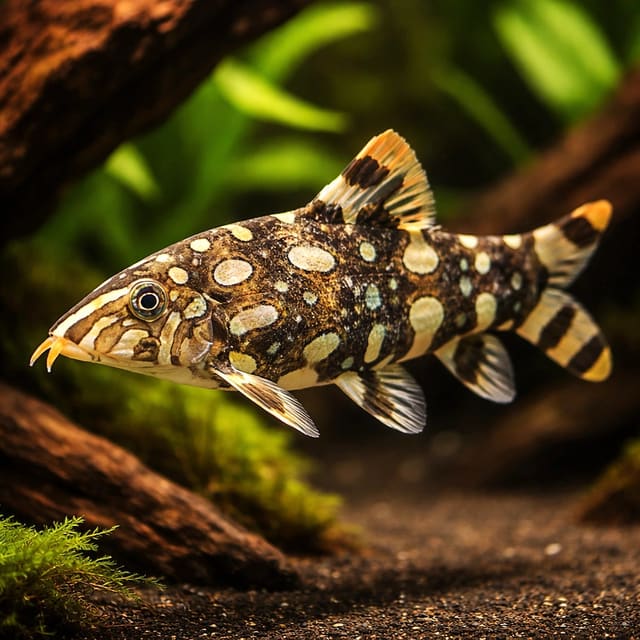
The Saddled Hillstream Loach is a small river loach with a flattened underside, broad paired fins and irregular dark markings. Its most prominent marking forms a saddle across the back and extends into the dorsal fin, giving this species its distinctive common name. The pale pinkish-brown to mottled brown body blends naturally with wood, stones and leaf-shadowed surfaces.
FishBase identifies Homaloptera ogilviei as a freshwater, bottom-associated member of the river-loach family Balitoridae. It records the wild habitat as forested blackwater streams in Malaysia and western Borneo and gives a maximum of 5 cm standard length. Use that figure as the recognised adult planning reference rather than as a promise that every individual will reach exactly the same measurement.
This is a non-aggressive fish, but its care is more demanding than that of a general community species. It needs a biologically mature aquarium, abundant grazing surfaces, clean water, high oxygen, purposeful current and a secure cover. Regular live or frozen invertebrate foods are also essential rather than optional treats. Those combined requirements make it an advanced-care choice for a keeper who can plan and monitor the aquarium around the fish.
| Suits | Not suited to |
|---|---|
| A mature, tightly covered aquarium with clean, oxygen-rich flow | A biologically immature aquarium |
| Keepers able to provide regular live or frozen invertebrate foods | A plan that relies only on visible aquarium algae |
| A group plan for at least six fish | Single-fish, pair or trio plans |
Natural biofilm matters because this loach is a specialised grazer. It feeds among algae and other growth on solid surfaces, taking small crustaceans, insect larvae and other invertebrates as part of that grazing activity. A newly assembled aquarium cannot reproduce that food web immediately, even when its water looks clear.
One purchase quantity supplies one animal. Sex is guaranteed only when the selected option explicitly states male or female. This Saddled Hillstream Loach listing has no sex-guaranteed option.
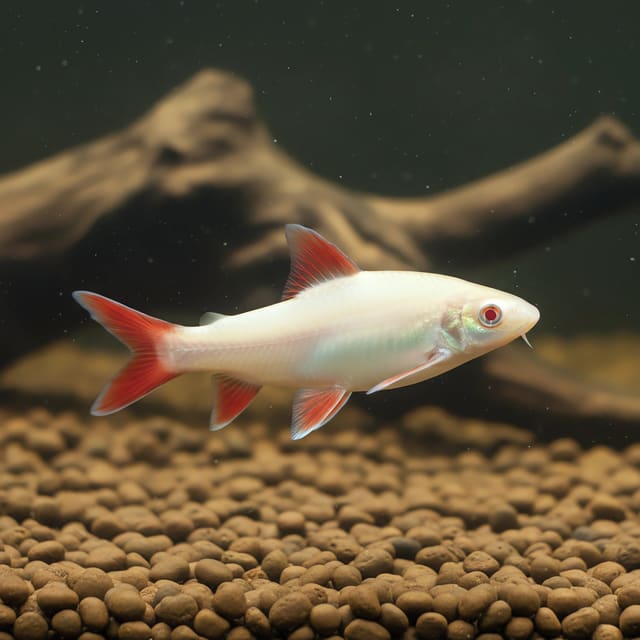
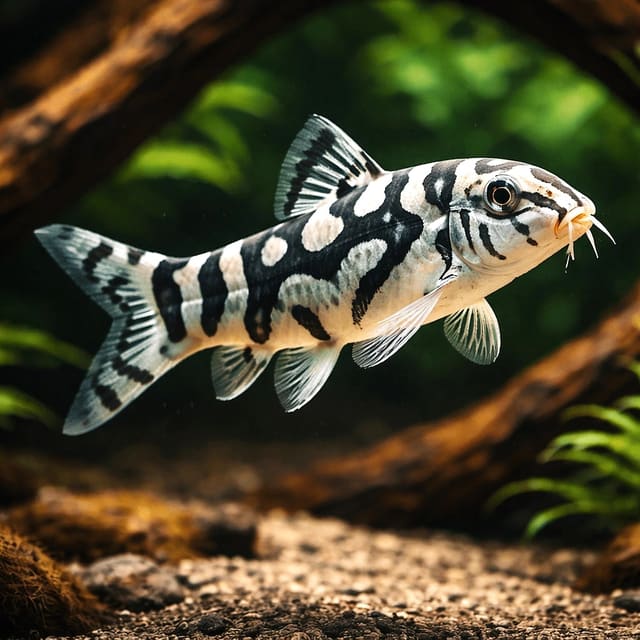
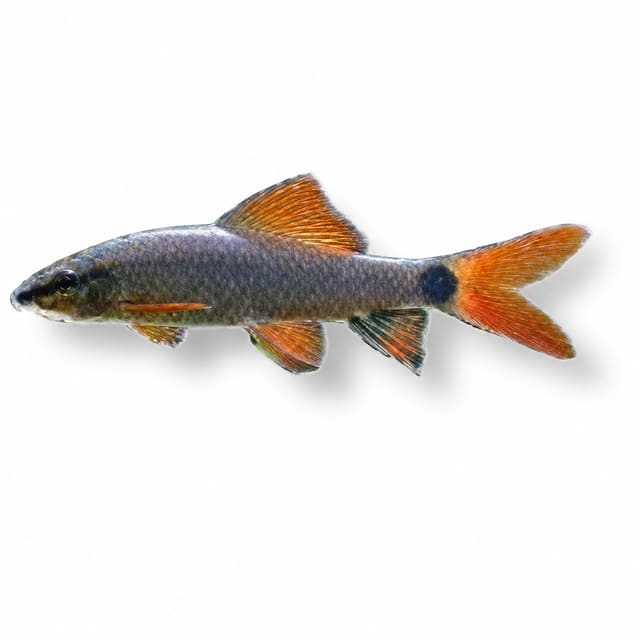
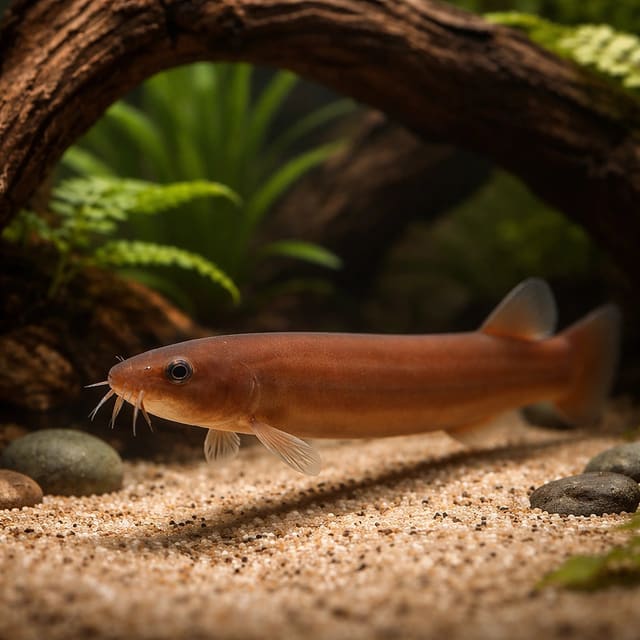
The gallery images are representative of this type of animal rather than photographs of the exact animal supplied, so colours can look slightly different from the live animal.
The Seriously Fish species account sets the practical long-term baseline at a 60 × 30 cm aquarium base or equivalent, approximately 54 litres. It gives 20–25.5°C, pH 6.0–7.5 and hardness of 1–12 dGH, together with an ideal turnover of 10–15 times the aquarium volume per hour. It also recommends at least six fish because smaller numbers are less bold.
The footprint is as important as the litre figure. This loach uses wood, rocks, pebbles, plant leaves and other solid surfaces for rest and grazing, so a tall aquarium with little usable base area is not an equivalent substitute. A longer base also gives more room to create flowing lanes and quieter current breaks without sacrificing oxygenation.
| Planning decision | Working figure |
|---|---|
| Recorded maximum | 5 cm standard length |
| Long-term baseline | 60 × 30 cm base or equivalent; about 54 litres |
| Social plan | At least six |
| Temperature | 20–25.5°C |
| pH | 6.0–7.5 |
| Hardness | 1–12 dGH |
| Ideal turnover | 10–15 times the aquarium volume per hour |
The 4–5 cm grade describes the fish at dispatch, while 5 cm standard length is the recorded maximum used for long-term planning. Prepare the permanent aquarium before ordering rather than treating the sending grade as a reason to start in a temporary or immature tank.
Clean, highly oxygenated water is the central engineering requirement. Use an oversized filter as the minimum starting point, then add a powerhead, airstone or other circulation where necessary to achieve the required movement and gas exchange. Aim for an ideal total turnover of 10–15 times the aquarium volume each hour.
For an aquarium of approximately 54 litres, multiply the volume by the turnover range:
That calculation is a planning range, not a guarantee of the flow experienced at every rock. Filter media, pipework, head height and hardscape all influence circulation through the completed aquarium. Arrange the outlets and supplementary equipment so water continues moving across the grazing surfaces rather than leaving enclosed, poorly circulated pockets.
For an aquarium around 54 litres, the species account illustrates a filter rated at 215–270 litres per hour and a separate powerhead rated at 215–380 litres per hour. Treat those equipment figures as components of the design rather than automatically assuming their printed ratings deliver the whole ideal turnover once installed. The filter must also support biological waste processing, while the powerhead can concentrate movement through the intended flowing lane.
Surface movement helps oxygen enter the water. An airstone can add aeration, while a correctly aimed return can disturb the surface and keep water circulating around the hardscape. Do not solve a circulation problem by removing every sheltered position: the fish should be able to move between stronger current and protected resting surfaces while remaining in clean, oxygen-rich water.
A tightly fitting cover completes the flow plan because this species can climb. Close gaps around cables, pipework and equipment instead of relying on the water line alone as a barrier.
Use gravel, sand or a mixture of both as the base, then add water-worn rocks and pebbles in varied sizes. Driftwood roots and branches add more solid surfaces for natural growth and let the group choose different positions within the current. The aim is not simply to imitate a stream visually; every major piece should contribute grazing area, shelter or control of the water path.
| Area | Purpose |
|---|---|
| Open flowing lane | Moves oxygenated water across accessible surfaces |
| Rock and pebble zone | Creates broad grazing faces and small current breaks |
| Wood structure | Adds resting surfaces and further area for biofilm |
| Plant zone | Offers cover and leaf surfaces without sealing off flow |
A 60 × 30 cm base or equivalent is the long-term baseline, so keep enough of that footprint functional after the hardscape goes in. A pile that occupies most of the base may look complex while leaving little usable surface around its hidden interior. Spread selected rocks and wood so the fish can reach their outer faces and move around the arrangement.
Adaptable plants from genera such as Microsorum, Crinum and Anubias can be included. Broad leaves are particularly useful because members of this genus may rest on them. Position plants so they offer cover while the principal circulation route remains open. Plants attached to wood or rock can add structure without consuming the whole base.
Biofilm and algae growth on solid surfaces form part of the feeding environment, but the loach is not a substitute for aquarium maintenance. Persistent algae can be linked with wider water-chemistry or maintenance problems, and adding a grazing fish does not correct those causes. Preserve useful mature growth on selected rocks and wood while continuing the normal care needed to keep the aquarium clean and stable.
Fit a close cover and inspect every opening around filter hoses, power leads and returns. The species can climb, so a small equipment gap matters even when the aquarium has a generous air space above the water. Recheck the cover whenever equipment is moved or maintenance changes the cable arrangement.
Maintain 20–25.5°C, pH 6.0–7.5 and general hardness of 1–12 dGH. These are aquarium ranges for this species, not targets to chase from one end to the other. Choose steady working values within all three ranges that also suit every other animal in the aquarium.
Test the aquarium rather than judging water by appearance. Temperature, pH and general hardness answer different questions: temperature controls the thermal range, pH describes acidity or alkalinity, and general hardness reflects dissolved minerals. Our water chemistry guide explains how the measurements differ, while the water matcher helps compare your measured values with the working ranges.
| Reading | Decision |
|---|---|
| 20–25.5°C | Continue only if companions also suit this full working plan |
| pH 6.0–7.5 | Keep the chosen value stable within the range |
| 1–12 dGH | Match the aquarium and proposed livestock before ordering |
| Changing readings | Find and correct the cause before introducing the group |
If the room is around 20°C, the species account uses roughly 50 W as the heater example for an aquarium of approximately 54 litres. The correct heater decision still depends on the aquarium volume, room conditions and equipment design. Set it to hold a stable point within 20–25.5°C rather than using the maximum rating as a reason to run warmer.
Test water weekly and keep a written record so gradual movement is easier to recognise. Carry out maintenance in a way that preserves stable temperature and chemistry, keeps the filter functioning and removes accumulated waste without stripping every grazing surface at once. Clean water and mature biofilm must coexist; the useful growth on rocks and wood does not remove the need for waste control.
Make changes deliberately rather than repeatedly altering pH, hardness or temperature in pursuit of a nominal centre point. A stable value inside the range is more useful than readings that swing because the keeper is constantly correcting them.
Do not add this loach to a biologically immature aquarium. It depends on stable water conditions and established biofilm, so the aquarium needs time to develop both waste-processing bacteria and accessible natural growth before the group arrives. Clear water alone does not show that either system is ready.
The RSPCA explains the biological filter cycle: fish release toxic ammonia, bacteria convert it to toxic nitrite and further bacteria convert nitrite to the safer nitrate. A well-set-up and maintained filter is therefore a welfare requirement, not just a way to collect visible debris.
Both matter here. A filter can process waste while newly scrubbed décor offers little natural grazing, and an algae-coated container is not suitable if its biological filtration and water movement are inadequate. Build the complete aquarium, run the intended filter and circulation equipment, and establish the surfaces as part of one preparation plan.
If this is your first matured aquarium, follow our first tropical tank guide before selecting livestock. Preparation should be completed in the permanent aquarium; moving a specialist grazer through a temporary immature setup only postpones the same biological and feeding requirements.
This loach grazes biofilm and associated life from solid surfaces. Its natural food includes small crustaceans, insect larvae and other invertebrates, so visible algae is only one part of the feeding environment. Preserve mature grazing surfaces, then add appropriate foods instead of expecting the fish to live on whatever grows in the aquarium.
Regular meals of live or frozen Daphnia, Artemia and bloodworm are essential for maintaining good health. Some sinking dried foods may be accepted, including a suitable quality dried product, but acceptance does not make dried food a complete replacement for the live or frozen component. Offer food where every member of the group can reach it without losing the whole portion to other fish.
OATA’s tropical algae-eater sheet gives broad feeding and weekly water-testing guidance; this species also needs time to graze on algal foods and biofilm. Start with a small controlled portion, watch whether all six or more fish gain access, and remove the cause of persistent leftovers rather than increasing food automatically.
| Food role | What to offer |
|---|---|
| Continuous grazing environment | Biofilm and aufwuchs on mature rocks, wood and other solid surfaces |
| Essential regular meals | Live or frozen Daphnia, Artemia and bloodworm |
| Possible supplementary food | A suitable sinking dried product if the fish accepts it |
Body condition deserves close attention because severely weakened balitorid loaches can be difficult to restore. If one fish is repeatedly displaced, distribute suitable food across more than one accessible feeding point while keeping it within the group’s grazing area. The goal is equal access, not a larger total portion that breaks down in the water.
Uneaten food releases waste as it decomposes, directly conflicting with the need for clean, highly oxygenated water. Adjust portion size to what the group consumes and keep the varied diet intact. If body condition declines or a fish repeatedly fails to take its regular foods, contact us promptly rather than experimenting with an unresearched treatment.
Complete the aquarium, mature the biological filter, establish grazing surfaces and confirm the water readings before the delivery window. The group should enter its permanent, oxygen-rich environment rather than waiting while equipment, décor or water chemistry is still being adjusted.
Follow our current delivery and Live Arrival Guarantee policy for the full receiving procedure. Float the closed bag for 20–30 minutes before releasing the fish, and never pour the bag water into the aquarium.
Use the aquarium’s normal operating temperature and circulation rather than switching off the central life-support equipment for an extended settling period. The loach requires high oxygen and clean moving water, so the permanent flow arrangement should already be working when it enters the aquarium.
After release, confirm that the cover is fully secured and that no gap has been left around equipment used during acclimatisation. Check that the fish can reach wood, rocks, pebbles or plant leaves without being trapped behind décor or excluded from the principal grazing surfaces.
Continue the established feeding routine with suitable live or frozen invertebrate food and mature grazing surfaces. Watch access across the whole group rather than judging success from one fish taking food. If companions consistently reach every portion first, the stocking plan or food placement needs correction.
Do not respond to a difficult first observation by making several simultaneous changes to flow, temperature and chemistry. Check each measured requirement, correct a clear departure from the working range and preserve the stable conditions on which the biological filter depends.
A structured first month helps separate routine care from reactive changes. Keep the core routine consistent: offer appropriate portions, retain mature grazing surfaces, test water weekly and maintain the equipment that supplies filtration, circulation and oxygenation.
| Checkpoint | Action |
|---|---|
| Group access | Confirm that all members can reach resting and grazing surfaces |
| Food access | Distribute suitable live or frozen food so one area is not monopolised |
| Water stability | Keep temperature, pH and hardness inside the established working ranges |
| Flow and oxygen | Keep the planned filter, circulation and aeration operating |
| Cover security | Recheck gaps after every intervention |
Use observations to answer specific questions. If food disappears but one fish never reaches a portion, change access rather than increasing the whole ration. If a rock offers excellent grazing but blocks circulation behind it, reposition that element while retaining other mature surfaces. If a water reading changes, identify the cause before adjusting several values at once.
Algae growth is not a licence to reduce maintenance. These fish graze it, but persistent algae can point to water-chemistry or husbandry issues that need direct attention. Likewise, scrubbing every mature surface at once can remove a major part of the grazing environment. Rotate cleaning across selected areas so waste control and feeding maturity remain compatible.
Judge success by the complete care plan rather than a single visible behaviour. The group needs stable water, usable surface area, regular suitable food, high oxygen and secure containment at the same time. A strong current cannot compensate for an immature filter, and mature biofilm cannot compensate for mismatched water chemistry.
Homaloptera ogilviei lives in aggregations in nature and should be kept in a group of at least six. Fish kept singly, in pairs or in trios are less bold, while a suitable group displays more of the interaction associated with the species. Individuals may arrange themselves close together while facing directly into the current at certain times of day.
The 60 × 30 cm base or equivalent and approximately 54-litre figure form the long-term aquarium baseline. When planning a group, assess how much of that base remains usable after filters, wood, rocks and plants are installed. The animals need accessible grazing faces, resting positions and routes through the flow rather than a nominal litre total filled with inaccessible hardscape.
Additional livestock also consumes space, oxygen and feeding opportunities. Do not calculate suitability from the loaches alone and then fill the remaining water column without reassessing the system. Every added fish changes total waste production, food competition and the range of conditions the aquarium must satisfy.
Some harmless squabbling may occur when this loach is kept with other members of Balitoridae. That possibility makes surface distribution important: several useful resting and feeding positions reduce the need for every fish to occupy one favoured rock. Harmless interaction should not be used to dismiss persistent loss of food access or declining condition.
If you intend to keep more than six, recalculate the complete stocking plan around the aquarium footprint, biological filtration, oxygenation and feeding access. Do not assume that each extra fish can be accommodated by adding a fixed number of litres; layout and flow determine how much of the aquarium functions as usable habitat.
This loach is not aggressive, but its specialised environment sharply limits suitable companions. A proposed tank mate must share 20–25.5°C, pH 6.0–7.5, hardness of 1–12 dGH, clean oxygen-rich water and purposeful current. It must also leave the loaches reliable access to live or frozen invertebrate food and mature grazing surfaces.
Examples associated with similar environments include Barilius, Discherodontus, Garra, Devario, some Rasbora, and gobies from Rhinogobius, Sicyopterus and Stiphodon. The catfish genera Glyptothorax, Akysis and Oreoglanis, many Nemacheilidae loaches and most Balitoridae loaches are also cited as possibilities. These are candidates for assessment, not universal pairings.
| Proposed companion | Decision rule |
|---|---|
| Another Balitoridae loach | Allow for harmless squabbles and distribute useful surfaces |
| A fast feeder | Proceed only when every hillstream loach can still reach suitable food |
| A species from still water | Reject the match if it cannot share the required current and oxygen |
| A species with different water values | Reject the match unless one stable point lies inside both sets of ranges |
Compatibility remains conditional because behaviour, stocking density, aquarium dimensions and layout interact. For a mixed aquarium, contact us once you have the aquarium dimensions, measured water values, current arrangement and a complete livestock list; that allows a practical stocking and compatibility assessment rather than a name-only answer.
It is a small river loach from forested streams in Malaysia and western Borneo. FishBase records a maximum of 5 cm standard length.
Yes. One purchase quantity supplies one animal.
The dispatch grade is 4–5 cm, while the recorded maximum is 5 cm standard length.
Use a mature, tightly covered aquarium with a 60 × 30 cm base or equivalent, about 54 litres, and clean, highly oxygenated flow.
No. Keep at least six; single fish, pairs and trios are less bold than a suitable group.
Maintain 20–25.5°C, pH 6.0–7.5 and 1–12 dGH, with stable readings and an ideal turnover of 10–15 times the aquarium volume hourly.
Provide mature biofilm plus regular live or frozen Daphnia, Artemia and bloodworm. Some sinking dried food may be accepted as a supplement.
Start filming before opening the sealed parcel and continue in one take through opening until the fish is shown inside the sealed bag. Then float the bag for 20–30 minutes before release and never pour bag water into the aquarium.
Consider only non-aggressive species that share its water, strong flow and high oxygen, then check adult stocking and access to food.
No reviews for this item yet. Bought one? Honest reviews only, good or bad.
What customers say about ordering from us
Easy website plenty of info on fish your buying great to pick a time slot
TRACEY DURRANT · 7 Oct 2026
Got some lovely fish thank you
Kevin Mackie · 7 Oct 2026
Reviews of our shop, collected by Judge.me, an independent third-party review collector. Newest first.