−15%
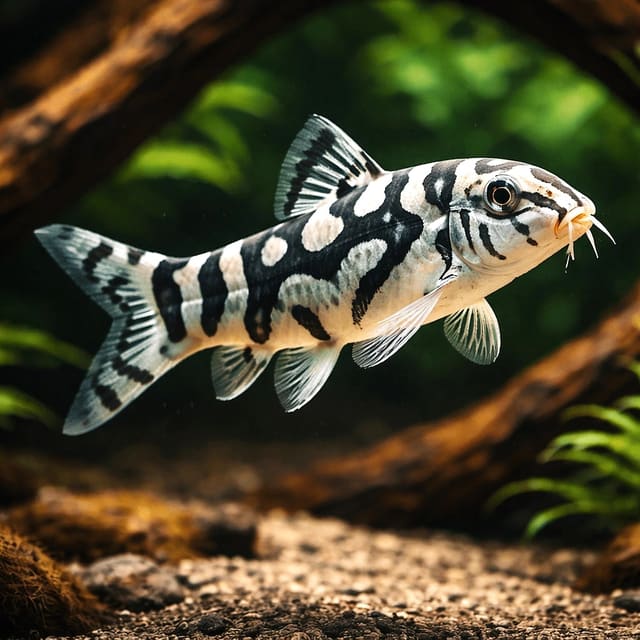
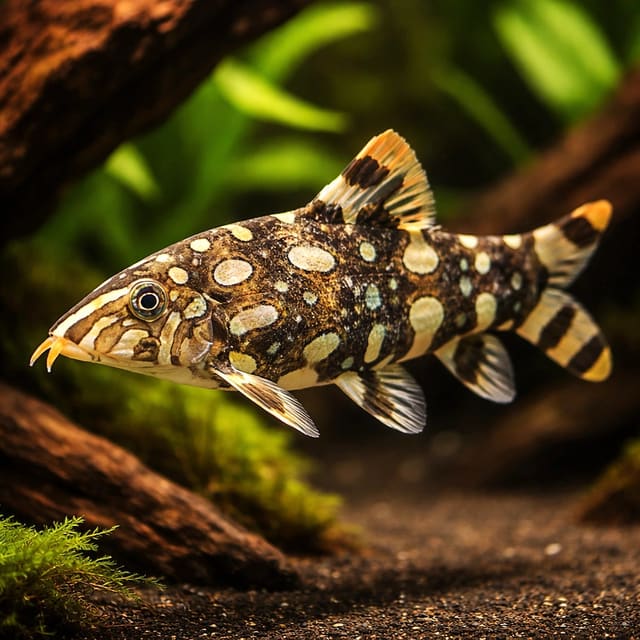
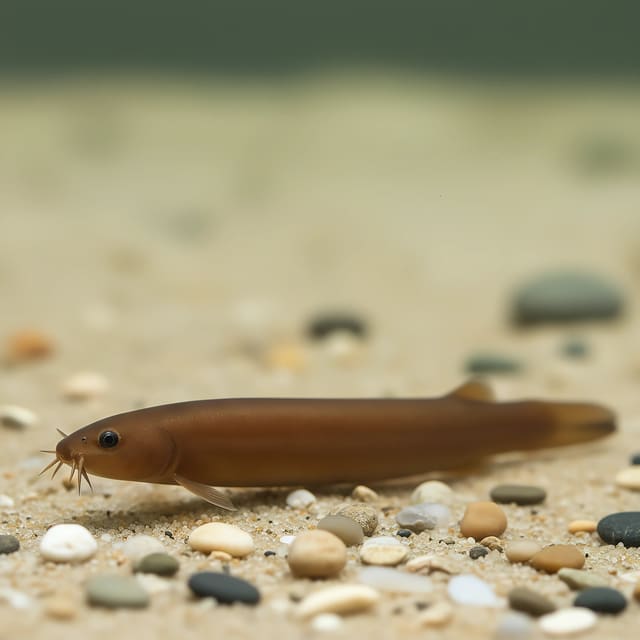
Spotted Garra (Garra spilota)
22–26°C · pH 6–7.5 · 81L
£11.04£12.99
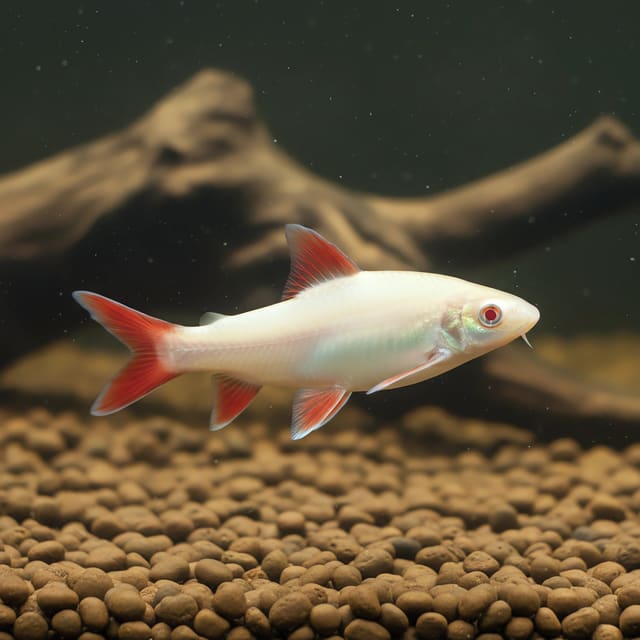
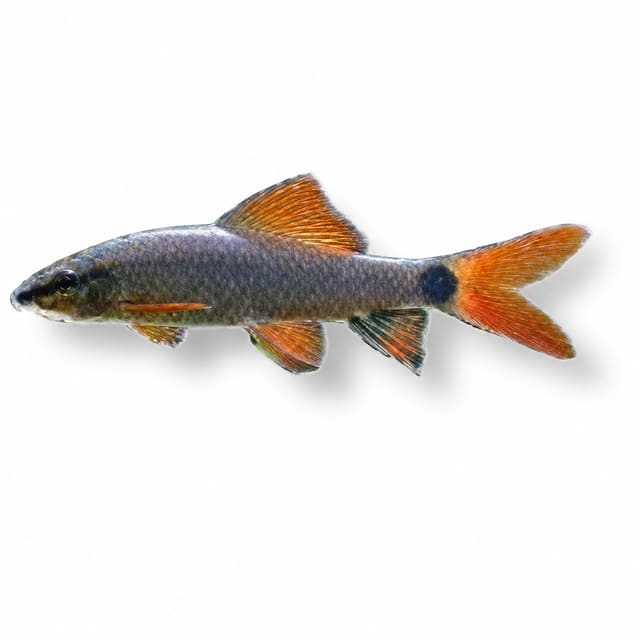
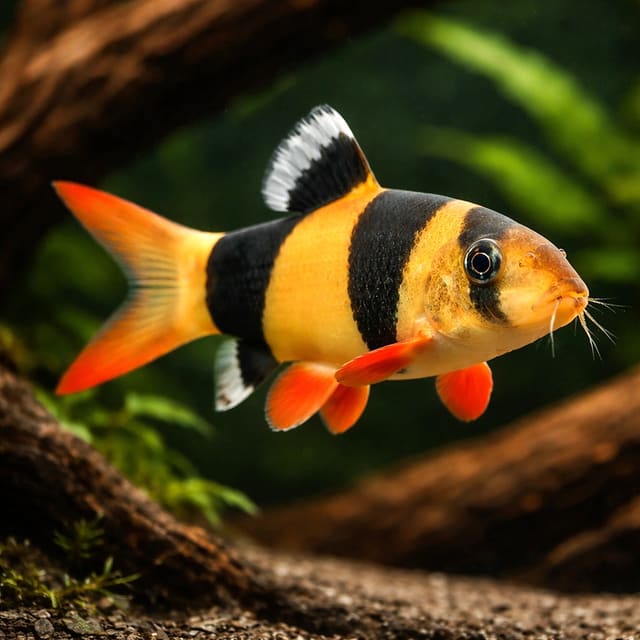
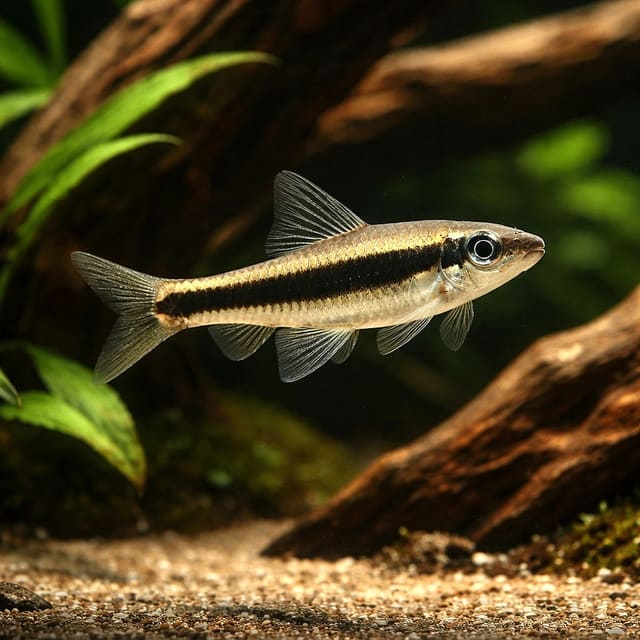
Panda Garra (Garra flavatra) is an active Myanmar stream fish for a mature, well-oxygenated aquarium with flowing water and grazing surfaces. One purchase supplies one fish in the selected 2–3 cm, 3–4 cm or 5–7 cm dispatch grade; sex is not guaranteed.
Garra flavatra
Shoaling fish: kept in a group they feel safer, stay calmer and show their best colour.
Panda Garra (Garra flavatra) is an active Myanmar stream fish for a mature, well-oxygenated aquarium with flowing water and grazing surfaces. One purchase supplies one fish in the selected 2–3 cm, 3–4 cm or 5–7 cm dispatch grade; sex is not guaranteed.
Maintain these water conditions for optimal health and vibrant colors
The Panda Garra, Garra flavatra, is an active freshwater fish from Myanmar. Its contrasting bands and habit of exploring stones make it distinctive in a well-maintained stream-style aquarium. The fish grazes on algae and biofilm, but it is an omnivore that needs a varied prepared and meaty diet as well as natural browsing. It is an animal with specific oxygen, flow and space requirements, not a substitute for aquarium maintenance.
One purchase quantity supplies one live fish of the selected size grade. This listing has three genuine choices: 2–3 cm, 3–4 cm and 5–7 cm. The size you select is the size supplied, not the adult size. The labels are dispatch grades, not exact-length or age guarantees, and the live size selector governs which choice can be ordered. Sex is guaranteed only when the selected option explicitly states male or female. This Panda Garra listing has no sex-guaranteed option.
A mature, well-oxygenated aquarium is the first requirement. Seriously Fish recommends a base of at least 90 × 30 cm, equivalent to roughly 81 litres for that footprint. The species profile calls for clean water, a strong oxygen supply and turnover preferably above ten times the aquarium volume per hour. The exact equipment should meet the actual layout and stocking, while the fish must be able to use both moving water and secure resting places.
Panda Garra is often described as an algae eater. That is an incomplete buying guide. It browses food growing on hard surfaces, but its species profile recommends good sinking prepared foods, some with substantial vegetable matter, as well as appropriate animal foods. OATA's general algae-eater guidance likewise says algae-grazing fish need supplementary feeding. A persistent algae problem should prompt a review of light, nutrients and maintenance rather than the expectation that one fish will clean the aquarium.
Check the aquarium's base dimensions and total adult stocking, then measure temperature, pH and hardness. Species aquarium guidance gives 22–27°C, pH 6.5–7.5 and 2–12 dGH. A working biological filter and stable, well-oxygenated water matter at least as much as the target numbers. Do not add this fish to a biologically immature tank: it relies partly on established biofilm as well as clean water.
Think through social space. Seriously Fish says Panda Garra is not especially tolerant of its own kind yet normally forms loose aggregations in the wild. A single fish tends to act more aggressively towards similarly shaped companions, so the profile recommends three to four or more where space permits. A group develops a pecking order and requires enough footprint, grazing surfaces and broken sightlines. If the aquarium cannot support that plan, do not treat a cramped pair as an easy compromise.
For community planning, choose inhabitants suited to the same oxygenated, moving water and able to feed without being intimidated. A Panda Garra can be relatively peaceful in a well-chosen larger stream community, but space and individual behaviour matter. Its activities on rocks and at the bottom should be compatible with other bottom users, and every companion contributes to the tank's total waste load. There is no fixed list that guarantees a match.
Scientific and husbandry sources report different standard-length figures for this species: FishBase lists 6.2 cm, while the Seriously Fish profile gives 9 cm. Standard length excludes the tail fin; neither number establishes an exact adult length for an individual fish being supplied. Plan space from the larger profile and from the species' active behaviour, rather than treating the smaller figure as a cap. The commercial dispatch grades use their own labels and must not be converted into a claimed adult size.
A secure lid, stable filter, water testing, smooth grazing surfaces and food that reaches the fish should be in place before ordering. Think about where current will pass through the layout and where fish can pause. Rocks, sand and wood can create a practical streamscape, with hardy plants attached to décor if desired. The goal is an aquarium the keeper can maintain, observe and adjust without repeatedly disrupting established biofilm.
For other bottom-oriented species to compare, the Loaches & Oddball Fish collection is a starting point. Compare each animal's adult needs independently. Panda Garra is a cyprinid, even though trade categories sometimes group it near loaches and other algae grazers.
Seriously Fish recommends a display resembling a flowing stream or river. A substrate of sand, fine gravel and varied water-worn rocks gives the fish a range of textures. Wood roots or branches add surfaces and cover. Hardy plants such as Microsorum, Bolbitis and Anubias can be attached to décor rather than planted in the strongest current. Arrange solid pieces securely and leave routes through which the fish can move and graze.
Bright lighting can promote biofilm on solid surfaces. That does not mean forcing intense light on every part of the aquarium: plan a balance of productive illuminated surfaces and sheltered places. A fish should be able to choose a resting location away from the strongest flow. Observe where it spends time and whether it can move freely between grazing and cover.
Begin with the species profile's minimum base of 90 × 30 cm. Its volume estimate is about 81 litres at that footprint. A mixed community or a group of Panda Garra may need a larger aquarium, because more animals require more grazing area, territory, oxygen and filtration. Litres alone do not describe a river fish's usable floor and swimming length. A shorter, taller tank with the same volume cannot automatically replace the required base.
Set a tightly fitting cover before adding the fish. The species profile warns that this fish can climb and escape. Inspect gaps around cables, filter pipes and feeding hatches. A loosely placed lid that covers most of the opening still leaves an escape route. Check the cover again after moving equipment or arranging maintenance access.
Clean, well-oxygenated water is central to keeping Panda Garra. The species husbandry profile prefers turnover in excess of ten times the aquarium volume each hour and notes that a powerhead or airstone can help achieve flow and oxygenation. Position equipment so current moves across the tank without forcing every resting place into a powerful jet. Watch the fish and the movement of fine particles to see whether circulation reaches the intended areas.
A strong pump rating alone does not prove adequate oxygen. Surface movement, stocking, warm water, biological filtration and blocked intakes all affect the result. Keep filter media maintained, verify flow after cleaning, and respond promptly if fish repeatedly gather in a single high-oxygen spot or breathe unusually fast. The current should support their normal exploration rather than pinning them to one surface.
Biological filtration needs time to mature. RSPCA's general aquarium guidance explains how filter bacteria convert toxic ammonia through toxic nitrite into nitrate. Test ammonia and nitrite and keep them at zero. A clear aquarium may still be biologically immature, and new rock or wood does not replace established filter capacity. The species profile specifically says not to add Panda Garra to a biologically immature setup because it needs stable water and browses biofilm.
For a new aquarium, the How to Set Up a Tropical Fish Tank: 10 Safe Steps guide explains the preparation sequence. Complete the maturation and testing before fish arrive. If expanding an existing aquarium, assess whether the filter can handle the full new stocking and whether the extra fish will still have appropriate flow and grazing access.
Seriously Fish gives aquarium guidance of 22–27°C, pH 6.5–7.5 and 2–12 dGH. The source also reports pH near 6.9–7.1 in natural water and 22–27°C recorded during warmer months, with cooler conditions presumed during the monsoon. Those environmental observations should not be turned into rapid seasonal temperature changes in a home aquarium. Stability and compatibility with the complete stocking matter.
OATA's algae-eater care sheet gives broader Garra guidance of 22–27°C, pH 6.0–8.0 and 4–12°dH. Those are genus-level values; the species profile gives narrower pH guidance for G. flavatra. Use the species information when deciding if your measured water is appropriate. If source water lies near or beyond the recommended limits, ask how a stable adjustment would be maintained before purchasing, rather than repeatedly chasing a number after fish are added.
Test the aquarium and replacement water. Temperature is easy to overlook during water changes, and pH and hardness can vary with source water or treatment. The Aquarium Water Parameters: What to Test and Why guide explains the common readings. The Water Parameter Matcher can help compare measured values with a species plan, while actual testing and observation remain essential.
OATA's group guidance recommends weekly water tests and, as a starting point, a partial water change of around a quarter of the aquarium. Adjust maintenance to the results and stocking; do not use a fixed schedule as permission to ignore a rising waste trend. Treat replacement tap water for chlorine or chloramine. When biological media needs attention, rinse it lightly in removed tank water rather than running it under the tap, because disinfectants may kill useful bacteria.
Panda Garra may browse algae and biofilm on rock, wood and glass, but natural grazing is only part of its diet. Seriously Fish says it is not exclusively herbivorous. Offer quality sinking dried food, including some with a substantial vegetable component such as Spirulina. Also provide appropriate animal foods including frozen or live bloodworm, Artemia or Tubifex, and consider occasional clean vegetables such as courgette, cucumber or blanched spinach.
Choose food that can reach the bottom without being consumed entirely by midwater fish. Feed with the lights and current in mind, and observe whether each Panda Garra receives a portion. A group may have a pecking order; one dominant fish feeding visibly does not mean every animal has eaten. Spread suitable portions over more than one location when necessary, while keeping the total quantity controlled.
OATA advises measured feeding and notes that some algae grazers need extra time with algae-based food. Watch what remains after feeding and adjust portions to the fish and aquarium. Long-lasting vegetable pieces can be useful, but remove decaying leftovers rather than letting them pollute the water. Wash vegetables well before use because residues can harm fish or invertebrates.
A soft green film on surfaces is a feeding opportunity; it does not remove the need for complete nutrition. Conversely, clear glass does not mean a fish has no food if it is receiving a suitable varied diet. Avoid buying an animal as a remedy for excessive algae while ignoring the cause. OATA notes that persistent algae may point to water chemistry or maintenance problems; review light, nutrients, feeding and water changes directly.
Look at body condition as well as appetite. A fish that grazes continuously may still lose weight if prepared food is missed or a stronger bottom inhabitant excludes it. Weigh any change against water readings and behaviour. A balanced menu and access for every animal are better indicators of feeding success than the disappearance of algae from one pane of glass.
Seriously Fish describes a fish that is relatively peaceful in a suitable larger stream community, yet not particularly tolerant of conspecifics. In the wild it normally exists in loose aggregations. Singly kept fish tend to behave more aggressively towards similarly shaped fish, so the source recommends three to four or more if space permits. A group forms a noticeable pecking order; it needs room to distribute its interactions.
Hierarchical disputes can include charging, fin flaring and temporary paling of the body. These observations are useful because a brief display is different from a fish being persistently driven away from food or cover. Provide multiple grazing surfaces and resting sites, use wood or rocks to interrupt direct sightlines and watch the less assertive animals. Do not assume that adding more fish will solve competition in an already cramped tank.
Plan the complete group before buying one. Each cart quantity is one fish, and the three size grades do not represent a pre-formed shoal. A group of differently sized animals may have different feeding opportunities, so monitor them as individuals. If the aquarium supports only one animal at present, consider whether a larger suitable setup is needed before establishing this species there.
Watch breathing, use of the current, grazing, feeding, colour and movement across the tank. A fish spending all day trapped in one corner or fighting for every resting place calls for a review. Check the filter outlet and airstone daily; lost circulation can matter quickly in a heavily stocked stream display. Examine the lid for gaps after moving equipment.
Test water at least weekly and after a significant change, following OATA's broad advice. Keep a note of ammonia, nitrite, nitrate, temperature, pH and hardness, along with water changes and filter work. Read trends against your own source water. A sudden rise in nitrite, loss of filter flow or repeated rapid breathing requires attention even when the water still looks clear.
During a partial water change, siphon waste around stones without stripping every surface bare. Preserve some established browsing area and avoid washing all filter media and décor at once. Keep replacement water treated and reasonably matched. The goal is clean, oxygenated, stable water with living biofilm, not sterile rocks followed by a sudden biological reset.
If a fish appears ill, first test water and inspect the whole group. Poor oxygen, ammonia, harassment and lack of feeding access can cause overlapping signs. Correct any identified environmental problem and seek qualified aquatic advice if signs persist or several fish are affected. Do not assume a white spot, pale body or reduced appetite has one cause and add several treatments without a diagnosis.
Have the aquarium ready before dispatch: mature filter, zero ammonia and nitrite, suitable water, secure cover and enough usable space. Tropical Fish Co's Delivery & Live Arrival Guarantee page describes hand-bagging in pure oxygen, insulated packing and a licensed live-animal courier. The team confirms the delivery date and tracking by email; be present to receive the parcel, because live fish cannot be left unattended.
For any Live Arrival Guarantee claim, a continuous unboxing video is required. Start with the still-sealed parcel and visible outer box, show its opening in one take, and show the fish still inside their sealed bags before anything is disturbed. Attendance, same-day opening and inspection are conditions of the guarantee. If a problem is found, contact the team the same day with the order number and video. Preparing the recording before opening prevents the required sequence from being missed.
Follow the supplied introduction advice for healthy arrivals. The delivery policy advises floating the bag for 20–30 minutes and acclimatising slowly. Do not pour transport water into the aquarium. Use a calm release and observe the fish's breathing and control in the current. Feeding and rearranging the tank can wait while they settle into stable, oxygenated water.
The species profile calls Panda Garra relatively peaceful and a good subject for a well-chosen, larger community of stream-dwelling Indochinese species. This description depends on the aquarium. Companions need compatible temperature and chemistry, enough oxygen and suitable current, adequate adult space and a feeding plan that lets all occupants eat. A short label such as community fish cannot evaluate those conditions for a particular tank.
Start by listing every current fish at adult size, not just the sizes visible today. Check each one's response to moving water, likely swimming region and food. A fish requiring very calm water may not belong in a river-style layout. A much larger predatory fish can endanger a small Garra, while a powerful bottom competitor can deny it access to grazing and prepared food. Avoid making a purchase decision from colour or shared retail category alone.
The old guide named danios, rasboras, barbs, rainbowfish and Corydoras as universally suitable. Assess a specific candidate individually using its documented water needs and behaviour. If evidence is incomplete, leave the match undecided until you can check it rather than treating a familiar common name as a guarantee.
Conspecific management needs its own plan. A solitary Panda Garra tends to act more aggressively towards similarly shaped fish; with three to four or more and enough space, a pecking order develops. More animals require more horizontal room and multiple grazing surfaces. A pair in a cramped aquarium may leave the weaker individual nowhere to avoid pressure.
Charging and fin flaring can occur during hierarchy disputes. Brief episodes that end with all fish feeding are different from chronic pursuit, torn fins or exclusion. Watch the whole group, including quieter fish at the back. Break long sightlines with securely arranged rocks and wood, and check whether each fish has a resting and grazing opportunity away from a dominant neighbour.
Do not resolve constant conflict by repeatedly adding fish without measuring water and space. A larger group can distribute attention only if the aquarium's filtration and footprint support it. If aggression is persistent, review the layout and stocking and maintain a suitable, filtered way to separate animals if necessary. A biologically immature spare container would create a second welfare problem.
Bottom-oriented animals can be a poor match even when they have no reputation for aggression. They may compete for the same stones, shelter or sinking food. Monitor feeding rather than assuming algae on glass will supply Panda Garra automatically. Place suitable food where it can reach each fish without adding so much that uneaten material fouls the substrate.
Different size grades are commercial dispatch choices, not social categories. If introducing a smaller Garra to established, larger residents, watch whether it can use the current and feed normally. Quarantine and acclimation decisions should protect existing livestock while providing the newcomer with mature, appropriate conditions. A matched aquarium is one in which every animal can carry out normal behaviour, not merely survive in the same water.
Observe new communities over days and weeks. Warning signs include one fish holding only a small corner, repeated loss of food to faster neighbours, frantic escape behaviour, persistently pale colour or damaged fins. Test water and confirm equipment flow as well as looking for social pressure. One change may uncover another: a clogged filter can increase stress in a group that previously appeared settled.
A suitable companion remains a conditional choice. If a combination fails, identify the cause and act on it rather than accepting chronic pressure as normal personality. Give the fish a stable home with enough oxygen, refuge, grazing opportunity and room to avoid one another. Those practical conditions matter more than a catalogue label.
FishBase records Garra flavatra at 6.2 cm standard length, while Seriously Fish lists 9 cm standard length. These sources conflict, so plan space using the larger species profile rather than treating a dispatch grade or the smaller figure as an adult cap.
Seriously Fish recommends a base of at least 90 × 30 cm, about 81 litres at that footprint. A group or mixed community may need more space, grazing surfaces, filtration and oxygen.
Seriously Fish recommends three to four or more when space permits. A single fish tends to be more aggressive towards similarly shaped fish, while a group develops a pecking order and needs room to avoid constant pressure.
No. The species needs stable, clean, oxygenated water and browses established biofilm. Set up and mature biological filtration, confirm zero ammonia and nitrite, and prepare the complete habitat before adding fish.
No. It grazes algae and biofilm but is omnivorous. Offer good sinking foods with a vegetable component plus appropriate animal foods such as bloodworm or Artemia, and make sure every fish can feed.
Seriously Fish gives 22–27°C, pH 6.5–7.5 and 2–12 dGH for this species in aquaria. Keep those conditions stable with good oxygenation; broader Garra group guidance is not a separate optimum for this species.
The species is relatively peaceful in a suitable larger stream community, but Panda Garra can charge and flare fins during conspecific hierarchy disputes. Persistent pursuit, damaged fins or missed meals call for a review of space and stocking.
Seriously Fish describes a well-chosen larger community of stream-dwelling Indochinese species. Check each candidate's adult size, current and oxygen needs, water chemistry and feeding behaviour; no named tank mate is universally safe.
Tropical Fish Co hand-bags fish in pure oxygen, uses an insulated poly box and a licensed live-animal courier, and confirms the delivery date by email. Be present to receive it. For a Live Arrival Guarantee claim, continuous video must show the sealed parcel, its opening and fish still in sealed bags; inspect and contact the team the same day with your order number.
FishBase: Garra flavatra gives species identity, Myanmar distribution and its recorded standard-length figure. Seriously Fish: Garra flavatra supplies species aquarium guidance for footprint, flow, water, diet and social behaviour. OATA's tropical algae-eater care sheet gives broad group advice, while the RSPCA aquarium environment guidance explains filtration and maturation.
The adult standard-length figures of 6.2 cm and 9 cm are presented with their respective sources. Standard length excludes the tail. The larger husbandry profile guides space planning; the commercial size choices describe dispatch grades. The OATA ranges are broad Garra guidance and do not override the species aquarium profile.
No reviews for this item yet. Bought one? Honest reviews only, good or bad.
What customers say about ordering from us
Easy website plenty of info on fish your buying great to pick a time slot
TRACEY DURRANT · 7 Oct 2026
Got some lovely fish thank you
Kevin Mackie · 7 Oct 2026
Reviews of our shop, collected by Judge.me, an independent third-party review collector. Newest first.