Moderate
Bristlenose Pleco (Ancistrus sp.)
22–27°C · pH 6–8
From £3.51Some sizes on sale

The Snow White Bristlenose Pleco is an unidentified Ancistrus species with an adult planning size of about 15 cm. One purchase supplies one fish in the selected dispatch size; provide wood, cover and filtration, and follow OATA’s bristlenose group guidance of 22–27°C and pH 6.0–8.0.
Ancistrus sp.
The Snow White Bristlenose Pleco is an unidentified Ancistrus species with an adult planning size of about 15 cm. One purchase supplies one fish in the selected dispatch size; provide wood, cover and filtration, and follow OATA’s bristlenose group guidance of 22–27°C and pH 6.0–8.0.
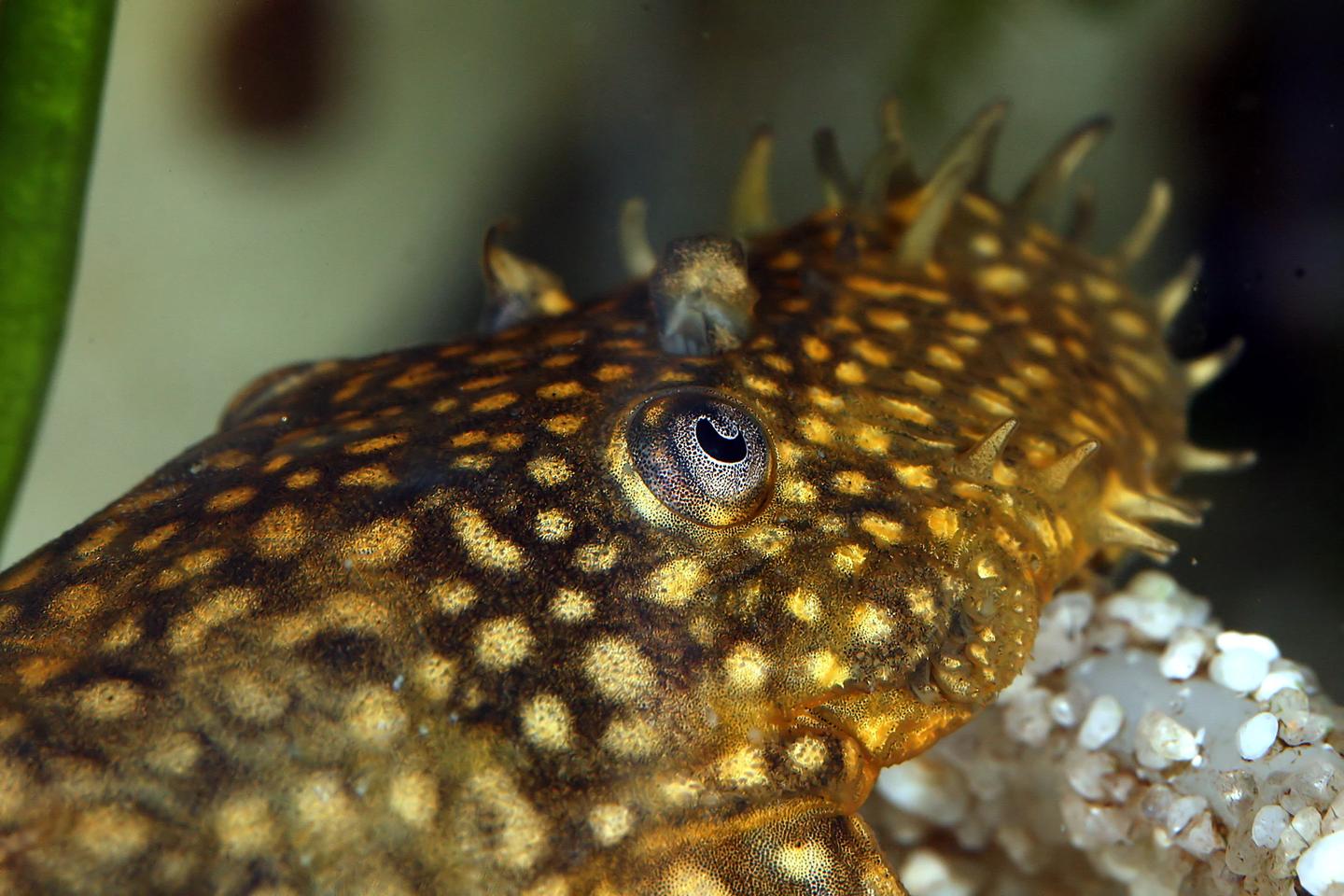
For one typical common bristlenose, start with a mature, filtered aquarium of at least 90 litres, useful floor area, wood and cover. OATA reports about 15 cm adult length, 22-27°C, pH 6-8 and 4-12 dGH. Confirm the exact trade identity before applying species-level claims.
Maintain these water conditions for optimal health and vibrant colors
The Snow White Bristlenose Pleco is labelled Ancistrus sp. because its identity is known to genus rather than species. WoRMS places Ancistrus in the catfish family Loricariidae, within the order Siluriformes. The exact species has not been identified, so the care advice here follows the genus Ancistrus and its care group.
At genus level, the natural-history summary for Ancistrus describes nocturnal freshwater catfish native to South America and Panama. Members of the genus are known in the aquarium hobby as bristlenose or bushynose catfish. “Pleco” is widely used as a trade term for loricariid catfish, although it can also refer more narrowly to other fish.
This fish suits an aquarium planned around an adult bristlenose rather than around the smaller dispatch grade. Its essential features are a well set up and maintained filter, suitable water, aquarium gravel or sand, sheltered cover and at least one piece of wood for grazing. Natural algae can contribute to its feeding, but prepared food and fresh vegetables remain part of routine care.
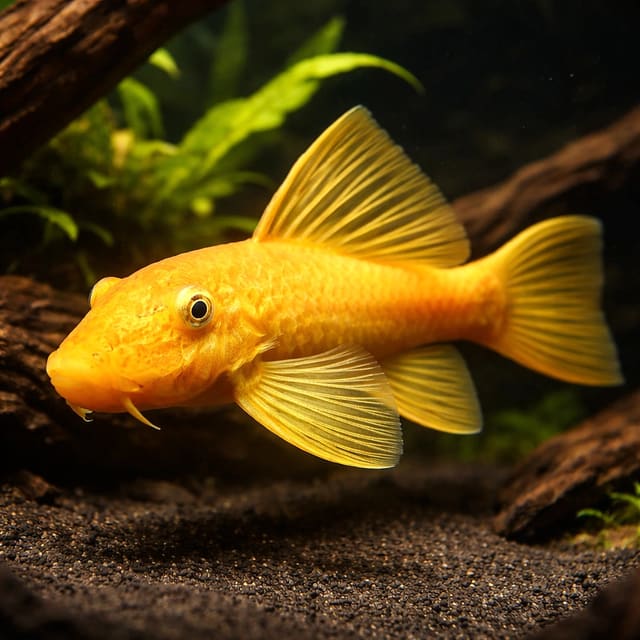
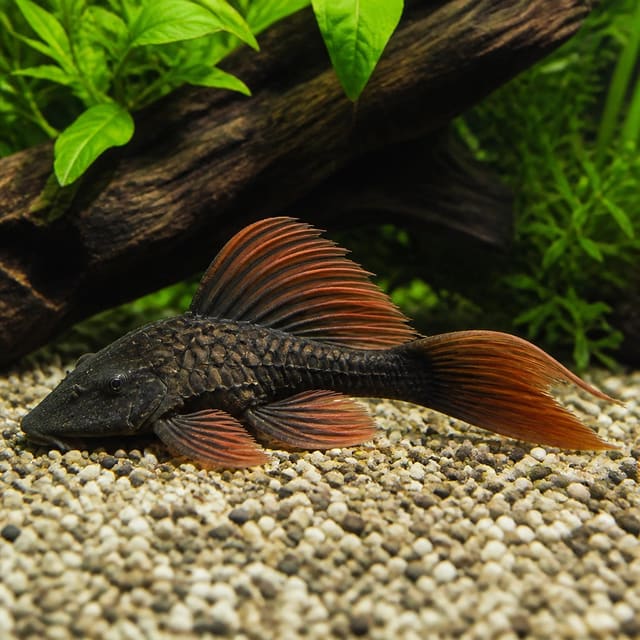
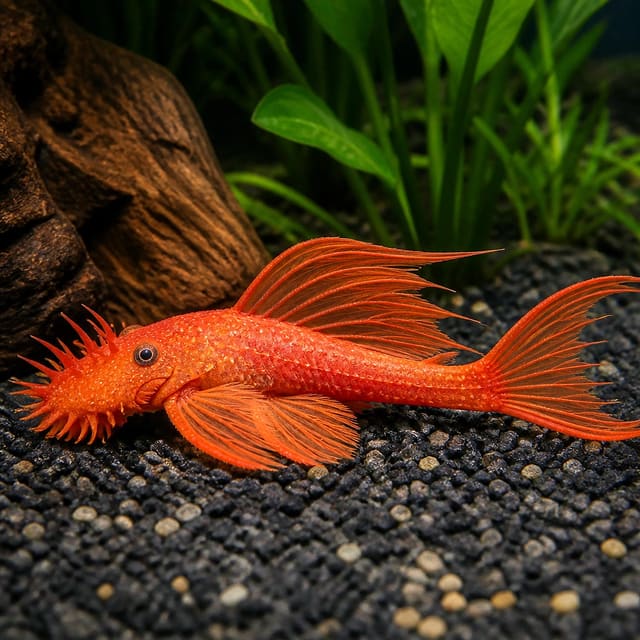
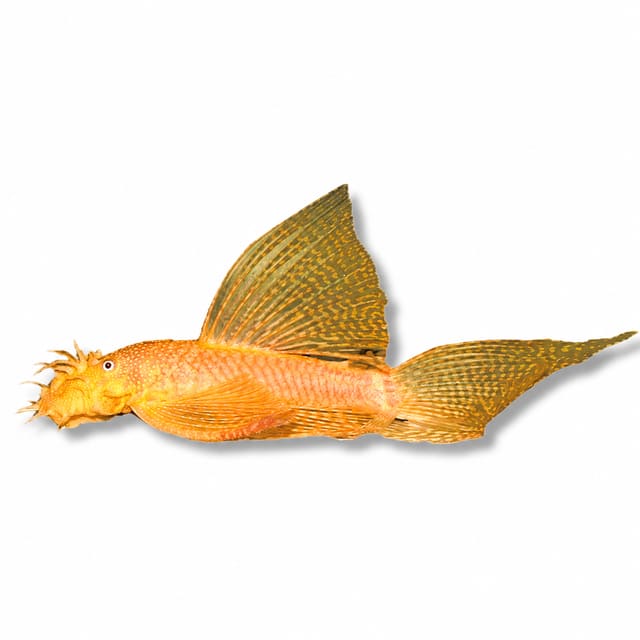
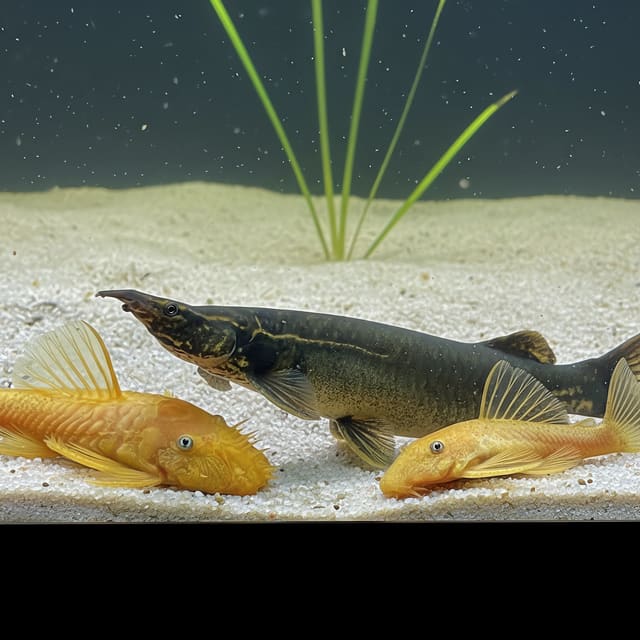
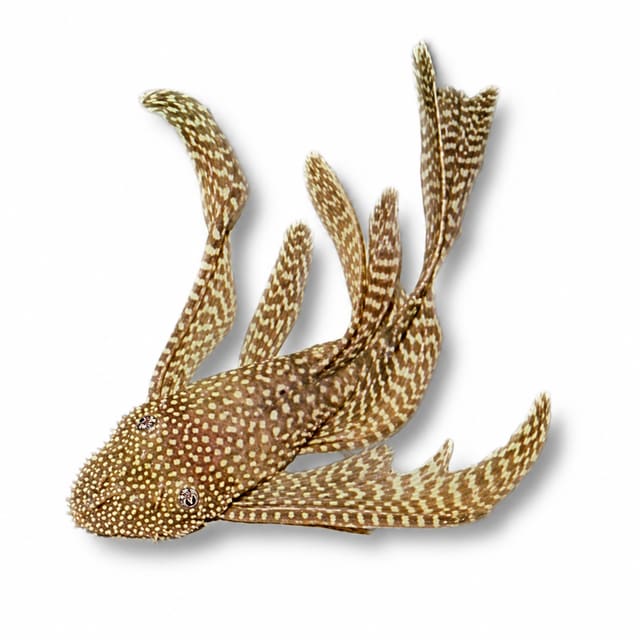
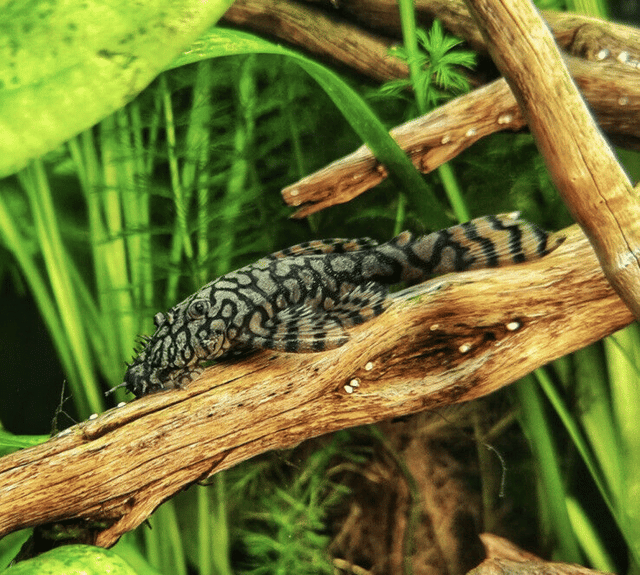
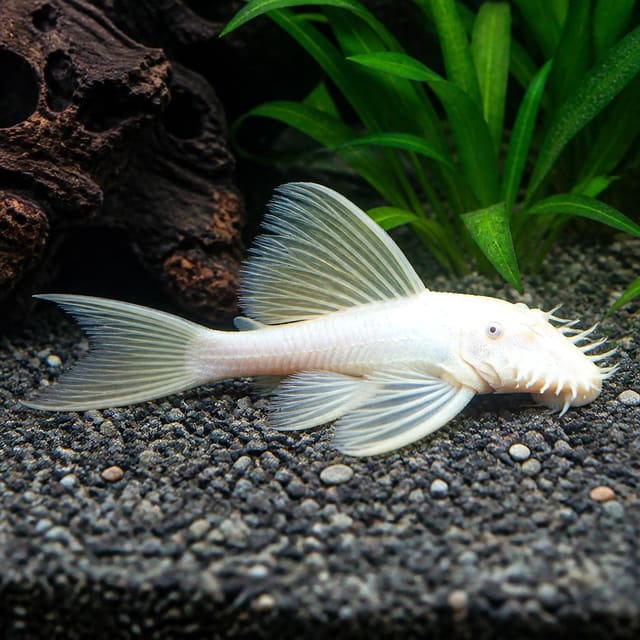
The pale Snow White form creates strong contrast against darker wood, gravel and foliage. The gallery images are representative of this type of animal rather than photographs of the exact animal supplied, so colours can look slightly different from the live animal.
| Suits | Not suited to |
|---|---|
| An aquarium planned for about 15 cm, with cover, wood and suitable water | An aquarium planned only around the smaller dispatch size |
| A filtered setup with gravel or sand and dependable access to supplementary food | An aquarium without a well set up and maintained filter |
| A keeper who wants a secretive, nocturnal catfish with sheltered resting areas | A plan that treats the fish as a replacement for maintenance or a guaranteed algae cure |
One purchase quantity supplies one animal of the selected option. The dispatch sizes are 2.5 cm, 3–3.5 cm, 4–5 cm, 5–6 cm and 7–9 cm. Use the live size selector to choose the grade shown for your order.
The size you select is the size supplied, not the adult size. A smaller grade does not reduce the space, filtration or adult-size planning required. It simply means the fish begins its time with you at a smaller measured dispatch size. The grade also does not establish the fish’s age or life stage.
| Selector wording | Planning meaning |
|---|---|
| 2.5 cm | One fish measured at the 2.5 cm dispatch grade |
| 3–3.5 cm | One fish within that dispatch range |
| 4–5 cm | One fish within that dispatch range |
| 5–6 cm | One fish within that dispatch range |
| 7–9 cm | One fish within that dispatch range |
Sex is guaranteed only when the selected option explicitly states male or female. This Snow White Bristlenose Pleco listing has no sex-guaranteed option.
Review the shop’s delivery and Live Arrival Guarantee policy for the applicable packing, dispatch and claim terms. If you are comparing this form with other colour forms and labels, you can also browse the bristlenose pleco collection.
OATA’s tropical algae-eater guidance gives bristlenose catfish an adult size of about 15 cm, a temperature between 22–27°C and pH 6.0–8.0. It also requires ammonia and nitrite at zero mg per litre, with nitrate not to exceed 20 mg per litre. These are group-level bristlenose values rather than a species-specific optimum for this unidentified Snow White fish.
| Care decision | Planning value |
|---|---|
| Adult size | About 15 cm |
| Temperature | 22–27°C |
| pH | 6.0–8.0 |
| Ammonia | Zero mg per litre |
| Nitrite | Zero mg per litre |
| Nitrate | Not to exceed 20 mg per litre |
Choose as large an aquarium as is reasonable and prioritise usable bottom area. A tank can hold enough water yet still offer a poor layout if wood, ornaments and other bottom-dwelling fish leave no accessible resting or grazing space. Conversely, a deliberate floor plan creates distinct routes between food, wood and shelter.
For a quick planning check, mark out a 15 cm line beside the aquarium and compare it with the clear spaces beneath and around the décor. The fish must be able to move between those spaces as an adult, not merely fit beneath one ornament at its dispatch size.
Measure the aquarium rather than relying on a label such as “tropical” or “community”. Use the water matcher to compare your measured temperature and pH with the stated range before making the stocking decision.
Bristlenose catfish are secretive fish that thrive with plenty of cover and at least one piece of aquarium-safe wood to graze on. Treat the wood as a functional part of the layout rather than decoration placed wherever space remains. It should be accessible from the bottom and should not block the fish’s route to food or shelter.
Use aquarium gravel or sand as the substrate. Live plants are useful for creating cover; where live planting is not part of the design, plastic plants and suitable aquarium ornaments can provide shelter. Plant pots or model caves are examples of enclosed retreats, while wood and foliage create shaded routes between them.
| Zone | What to provide |
|---|---|
| Resting zone | A sheltered space beneath wood, foliage or a suitable ornament |
| Grazing zone | Accessible wood and established aquarium surfaces |
| Feeding zone | A place where prepared food can be reached without becoming trapped |
Look at the arrangement from the fish’s level. A cave entrance hidden behind a solid ornament may appear attractive from above but offer a restricted route. Likewise, wood that touches the substrate along its whole length can reduce usable bottom area. Leave practical access around the key features while keeping enough cover for the fish to retreat.
Secure every item so normal aquarium use cannot make it shift into an occupied space. Keep filter inlets, outlets and maintenance access clear of the hardscape. This allows the filter to operate while letting you inspect the areas where food and debris can collect.
When more than one bottom-dwelling fish is planned, do not count one cave or one piece of wood as shared space automatically. Assess whether each animal can reach shelter and food without another resident controlling the route. The compatibility decision depends on this usable layout, not water volume alone.
A well set up and maintained filter is essential. The RSPCA’s aquarium welfare guidance explains why: fish release toxic ammonia, and beneficial bacteria in a working biological filter convert it first to nitrite and eventually to the safer nitrate. Both ammonia and nitrite still need to remain at zero mg per litre.
Prepare the aquarium and its biological filter before the fish arrives. Our first tropical aquarium guide sets out the preparation and maturation process. A clear-looking aquarium is not enough; use test results to judge whether biological filtration is controlling waste.
Choose the filter and aquarium together. A larger aquarium generally gives greater environmental stability, but it still needs filtration. Décor must not prevent the equipment from operating or make routine maintenance impractical. Arrange wood and cover so the filter can remain in place while you reach the main areas of the substrate.
Do not add this catfish to compensate for an unfinished aquarium or an algae problem caused by incorrect maintenance. The fish adds its own waste to the system. Establish filtration first, confirm the water values, and then judge whether the aquarium has room for another adult animal.
Use aquarium test kits once a week to check that water quality remains within the care values. The shop’s water chemistry guide explains what the principal readings mean and why they should be measured. Keep the result with the date so a gradual change is visible before it becomes a persistent problem.
| Result | Decision |
|---|---|
| Ammonia above zero | Treat it as an immediate filtration or waste-control fault and restore zero before adding livestock |
| Nitrite above zero | Check the biological filter and restore zero before making another stocking change |
| Nitrate above 20 mg/l | Review maintenance, feeding and stocking rather than accepting the higher reading |
| Temperature outside 22–27°C | Stabilise the aquarium within the stated range |
| pH outside 6.0–8.0 | Resolve the mismatch before introducing the fish |
Readings are more useful as a sequence than as isolated numbers. If nitrate rises from week to week, the direction matters even before it crosses 20 mg per litre. Review how much food is entering the aquarium, whether uneaten food is accumulating and whether the stocking plan still fits the system.
Persistent algae can also point to an underlying water-chemistry or maintenance issue. Test the water and review the routine instead of responding by adding another algae-grazing animal. Every added fish increases the biological load, so stocking cannot replace maintenance.
Keep the temperature within the range rather than aiming at alternating extremes. A reading of 22°C and a reading of 27°C both sit within the guidance, but the aquarium should operate as a stable environment. Select a target that also suits the other residents, then check it with a thermometer rather than relying only on the heater setting.
Although bristlenose catfish graze on aquarium algae, they still need their diet supplemented. Use prepared algae-based wafers or flakes and offer fresh vegetables such as cucumber. Keep aquarium-safe wood accessible for grazing, but do not treat wood or naturally occurring algae as a complete feeding plan.
Offer a controlled portion and observe whether the catfish can reach it. Algal foods may need extra grazing time, so leave the food accessible while it is being eaten, then prevent excess food from building up and breaking down into toxic waste.
| Food | How to use it |
|---|---|
| Algae-based wafer | Offer as a measured prepared food, not an unlimited addition |
| Algae-based flake | Use only where the fish can reach it before it disperses or is taken by companions |
| Cucumber | Use as a fresh vegetable supplement after washing it thoroughly |
| Natural algae | Allow grazing, while continuing the planned supplementary diet |
| Aquarium wood | Keep at least one accessible piece as a grazing surface and cover |
Vegetables can carry residual pesticides that may harm fish or invertebrates. Choose organic produce or wash it thoroughly before use. Add only a controlled portion so you can judge what is eaten and prevent old vegetable matter from becoming part of the aquarium’s waste load.
Observe access as well as quantity. Food entering the aquarium does not help this catfish if other residents consume it first or if it falls into an inaccessible gap. Choose an open feeding point near cover, then watch whether the fish can reach the food. If food consistently remains, reduce the portion rather than assuming more is beneficial.
Continue deliberate feeding even when visible algae is present. Algae growth changes with lighting, maintenance and water conditions, while the animal’s need for a dependable diet remains.
Complete the aquarium preparation before arranging the introduction. The filter should already be set up and maintained, ammonia and nitrite should test at zero mg per litre, nitrate should not exceed 20 mg per litre, and temperature and pH should sit within 22–27°C and 6.0–8.0.
Do not use the new animal as the first test of whether a filter is functioning. The biological filter must already be controlling waste. Equally, do not add the fish as an emergency response to persistent algae; correct the maintenance or water-chemistry issue first.
On the introduction day, repeat the readiness check before the fish enters the aquarium. Keep the established shelter and grazing routes open, and make sure the filter continues to operate as arranged. The purpose is to introduce the fish into a finished, stable setup rather than trying to redesign the aquarium around it afterwards.
After introduction, observe whether the fish can reach cover and food and continue the weekly test routine. A successful transfer does not change the adult-size plan or remove the need for supplementary feeding.
Algae-grazing fish can help consume some algae, but they are not substitutes for regular maintenance and appropriate stocking. Persistent algae may indicate an underlying water-chemistry issue caused by incorrect maintenance. Diagnose the aquarium decision first; do not assume another grazer is the answer.
| What you observe | What to do |
|---|---|
| Some algae on aquarium surfaces | Allow natural grazing while continuing prepared food and vegetables |
| Persistent algae growth | Test the water and review maintenance and stocking |
| Very little visible algae | Continue the complete feeding routine rather than waiting for algae to appear |
| Uneaten prepared food | Reduce the next portion and prevent waste from accumulating |
| Vegetable residue remaining | Keep portions controlled so old food does not add to the waste load |
Think of the fish as a living resident that grazes, not as aquarium equipment. It needs filtration, food, shelter and adult space regardless of how much algae is visible. Its presence also adds waste, so adding one to an already overstocked aquarium can make the underlying water problem harder to manage.
Live plants can contribute useful cover, but they do not remove the need for the same water testing and filtration. If artificial plants are used instead, combine them with suitable ornaments and wood so the fish still has shelter and a grazing surface.
When deciding whether this fish fits your purpose, separate two questions. First, can the aquarium meet the animal’s care needs for its full adult size? Second, what is causing the algae? Only proceed when the answer to the first question is yes, even if the second question still requires maintenance changes.
Ancistrus are nocturnal catfish, and bristlenose catfish are described as quite secretive. Regular use of wood, foliage or a sheltered retreat therefore fits their natural activity pattern. Judge the setup by whether the fish has reliable access to cover and feeding areas, not by expecting it to remain exposed throughout the day.
| Checkpoint | What to assess |
|---|---|
| After introduction | Whether the fish can reach cover without being displaced |
| At feeding | Whether it reaches the supplementary food before companions take it |
| Every week | Temperature, pH, ammonia, nitrite and nitrate |
| As it grows | Whether wood and ornaments still leave practical bottom routes |
| Before adding another fish | Adult space, water compatibility and the existing biological load |
Use measured water values as the first check when behaviour or feeding changes. Ammonia or nitrite above zero, nitrate above 20 mg per litre, or a temperature or pH outside the stated range calls for attention to the aquarium conditions. Do not respond by adding food repeatedly when the underlying issue may be access or water quality.
Growth changes how the fish uses the hardscape. A route that is generous for the dispatch grade may become restrictive as the fish approaches about 15 cm. Reposition décor only as part of a planned layout change that preserves cover, wood access and filter operation.
If you see a sudden health or behaviour change, test the water promptly and contact us with the readings and what has changed. Do not start a disease treatment from appearance alone; the correct response depends on the full circumstances.
Bristlenose catfish can fit many community aquariums, but a community label does not make every combination suitable. Screen the proposed residents against the same water range, adult space, bottom-area use, feeding access and need for cover. This is more reliable than relying on a universal list of fish names.
A fish that occupies open midwater can still create a poor combination if it takes every prepared food before the bristlenose reaches it. Likewise, a bottom resident with matching water needs may still be a difficult fit when both animals depend on the same enclosed retreat. Evaluate what each animal does in the aquarium, not simply where its name appears in a category.
Observe the existing aquarium before making the decision. Identify which fish reaches food first, which animal uses each shelter and whether the filter is already handling the present waste load. If the bottom layout is crowded, redesigning the hardscape does not create more biological capacity by itself.
For a stocking and compatibility assessment, contact us with the aquarium dimensions, measured water values, established residents and the number of shelters. Those details allow a conditional decision without presenting any named companion as universally suitable.
OATA advises that bristlenose catfish may be kept alone, in pairs or in small groups, with just one male usually best per group. Keeping one fish is therefore a valid long-term plan and removes the need to manage the sex composition of a group.
For a pair or small group, plan around all of the adults rather than adding together their dispatch measurements. Each fish needs practical access to cover, grazing wood and supplementary food. The aquarium must also maintain ammonia and nitrite at zero mg per litre and nitrate at no more than 20 mg per litre under the combined biological load.
| Plan | Main decision |
|---|---|
| One fish | Provide adult space, wood, shelter and deliberate feeding |
| A pair | Allow both fish to reach shelter and food, and assess sex composition |
| A small group | Plan for one male per group and enough usable bottom area for every adult |
| Mixed bottom residents | Check that caves, wood and feeding routes are not already contested |
Do not use one large ornament as the whole group’s cover plan. Spread usable shelter and grazing access across the bottom so a fish can move away from another resident without leaving all cover. Watch feeding closely because several animals can meet the same water requirements yet compete for the same prepared food.
Males and females may breed in a community aquarium when a suitable cave or crevice is present, and free-swimming fry may later be seen. Account for that possibility when planning a mixed-sex group and enclosed shelters. This is a planning consideration rather than a sex promise or a breeding recipe.
It is a pale bristlenose catfish labelled Ancistrus sp. because its identity is at genus level. Ancistrus belongs to the loricariid catfish family.
One purchase supplies one fish in the selected dispatch grade. The gallery may show representative scene content, but it does not change the sold quantity.
The dispatch sizes are 2.5 cm, 3–3.5 cm, 4–5 cm, 5–6 cm and 7–9 cm. Use the live selector to choose a grade and plan for about 15 cm adult size.
Provide a filtered freshwater aquarium with gravel or sand, plenty of cover and at least one piece of aquarium-safe wood for grazing. Plan the bottom area around an adult of about 15 cm.
Yes. It may live alone, in a pair or in a small group. When planning a group, OATA advises that just one male is usually best.
OATA’s bristlenose group guidance says to keep it at 22–27°C and pH 6.0–8.0, with ammonia and nitrite at zero mg per litre and nitrate not exceeding 20 mg per litre.
Feed algae-based wafers or flakes, supplemented by thoroughly washed vegetables such as cucumber. Natural algae and accessible aquarium wood support grazing but do not replace deliberate feeding.
Prepare the aquarium before arrival: establish and maintain filtration, test all stated water values, provide wood and cover, and confirm enough adult bottom space before introducing the fish.
Follow OATA’s broad-group bristlenose guidance and choose residents suited to 22–27°C and pH 6.0–8.0 that leave enough bottom space, food and shelter. Assess each combination because no named companion is suitable in every aquarium.
No reviews for this item yet. Bought one? Honest reviews only, good or bad.
What customers say about ordering from us
I have a small group of long finned mountain minnows. So was delighted to be able to order ten of this variety to increase the genetics in my tank . The ones I recieved are healthy but it’s to early to give a verdict on wether they are of a long finned type since they are small currently.
Gordon Walker · 23 Sept 2026
100% success travel and "installation". Pleased with quality of purchase. The Siamese fighter a bit "shy" so have not yet seen him at his best yet but looking good. Happy customer. GG
George E Garratt · 21 Sept 2026
Reviews of our shop, collected by Judge.me, an independent third-party review collector. Newest first.