Moderate
Bristlenose Pleco (Ancistrus sp.)
22–27°C · pH 6–8
From £3.51Some sizes on sale

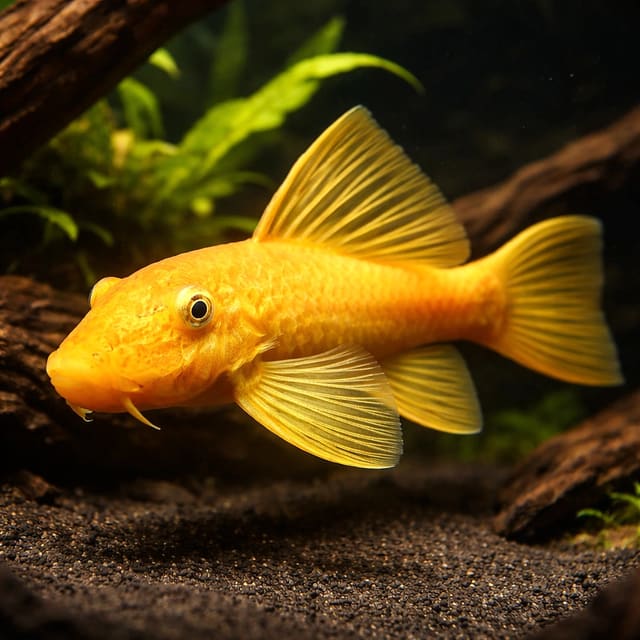
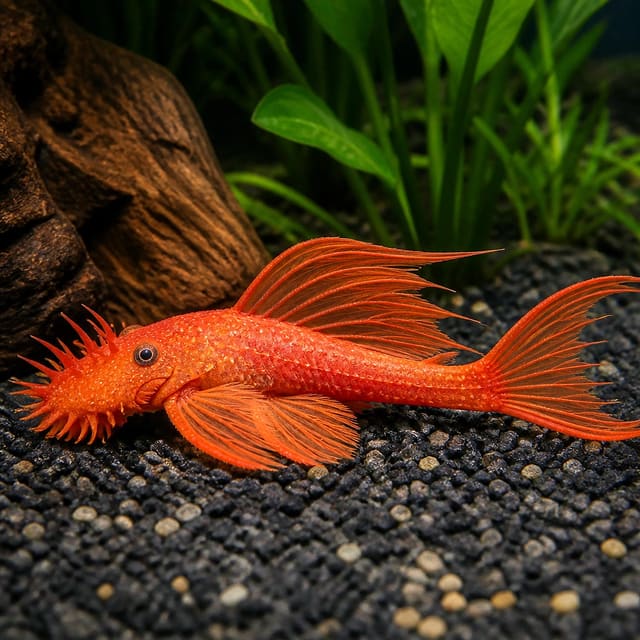
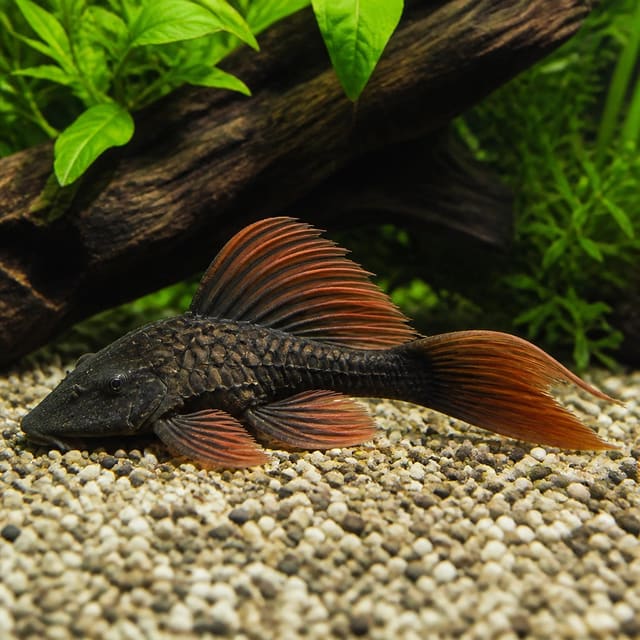
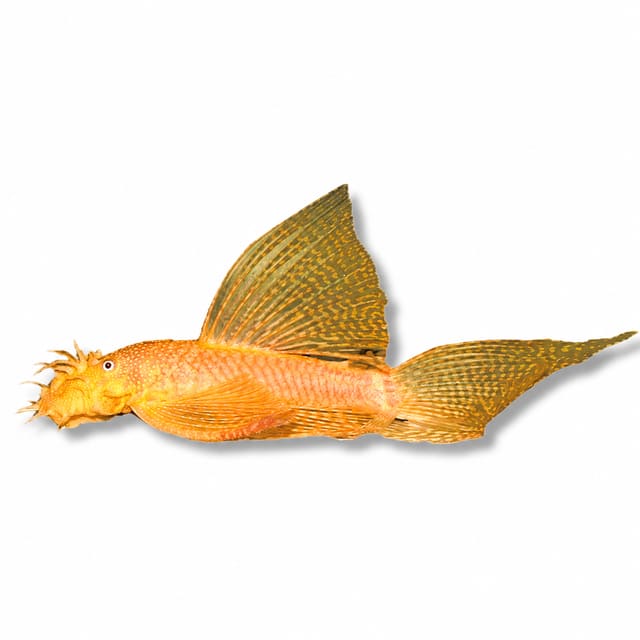
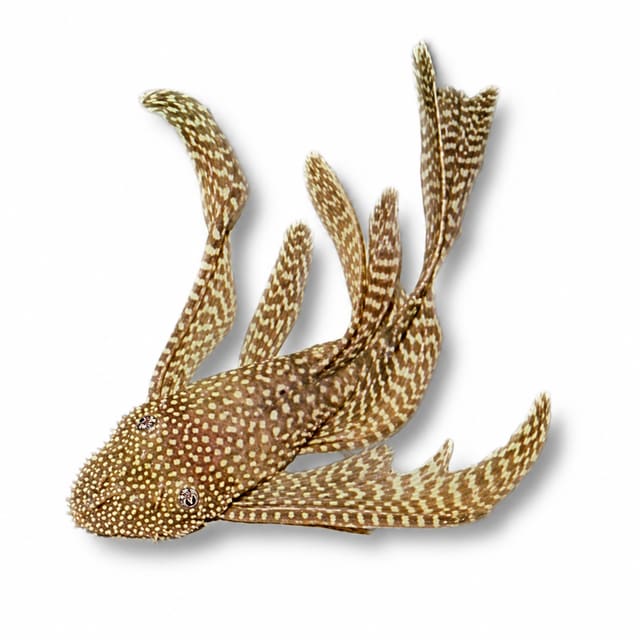
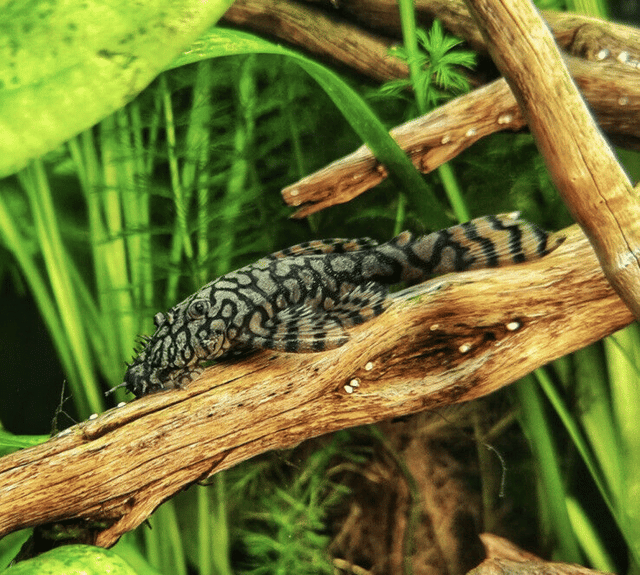
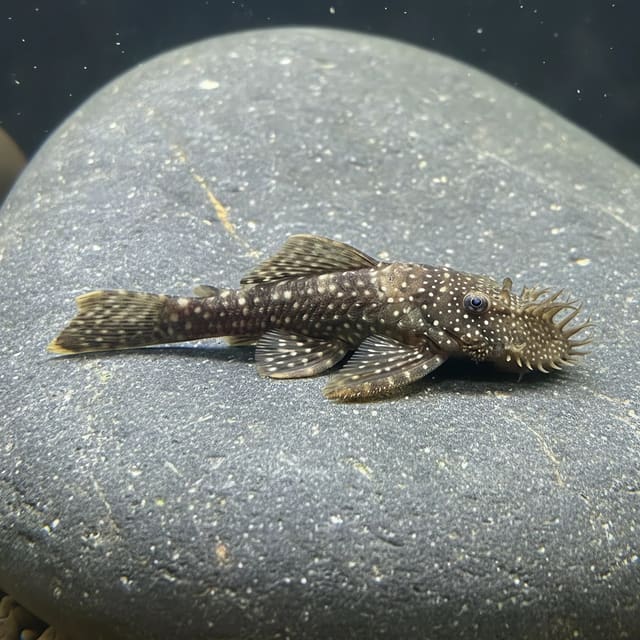
LDA16 Longfin Bristlenose Pleco (Ancistrus sp.) is a long-finned South American loricariid offered as one fish in three size bands. It suits a mature, filtered freshwater aquarium with wood, caves, steady water quality and supplementary food rather than reliance on tank algae alone.
Ancistrus sp.
LDA16 Longfin Bristlenose Pleco (Ancistrus sp.) is a long-finned South American loricariid offered as one fish in three size bands. It suits a mature, filtered freshwater aquarium with wood, caves, steady water quality and supplementary food rather than reliance on tank algae alone.
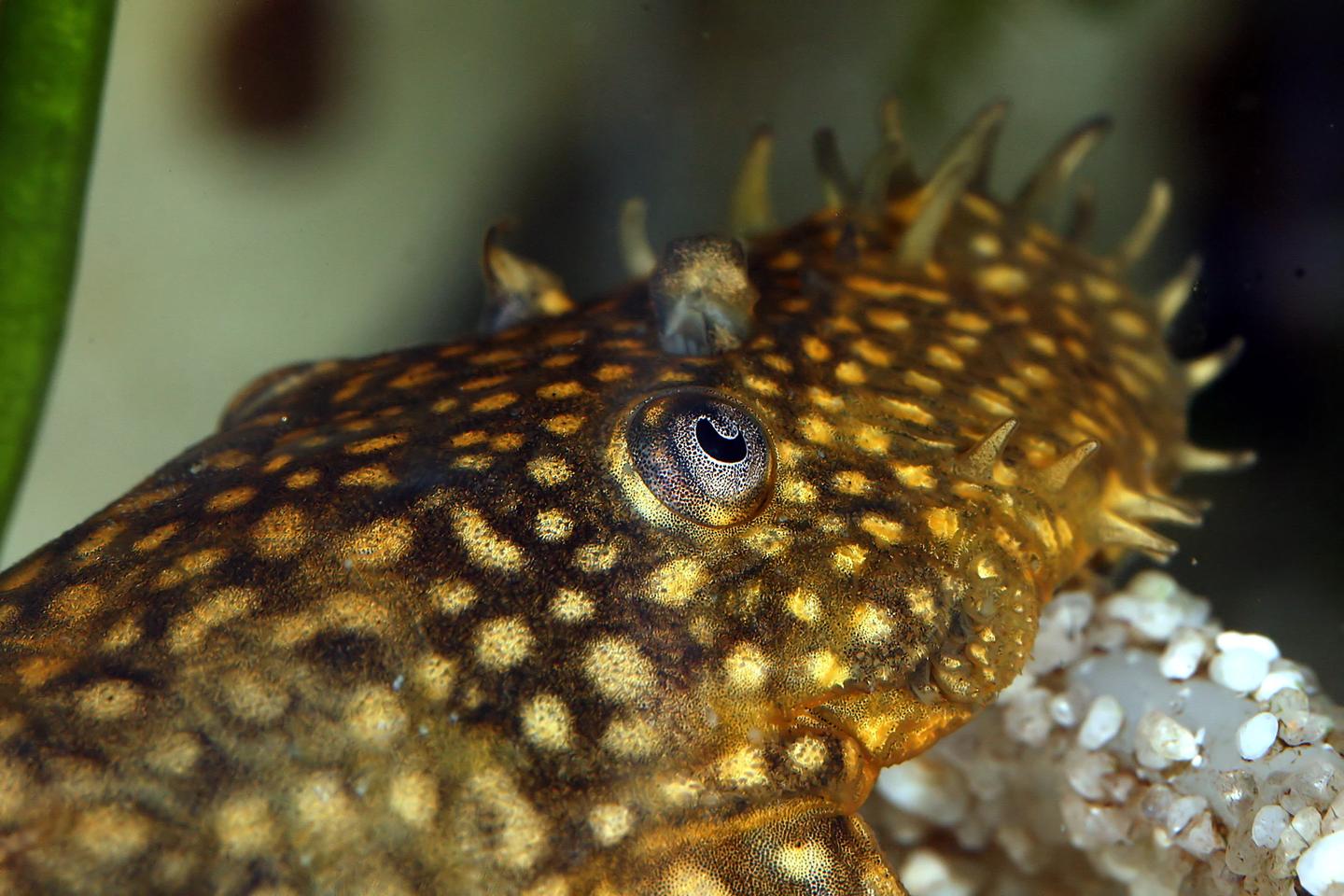
For one typical common bristlenose, start with a mature, filtered aquarium of at least 90 litres, useful floor area, wood and cover. OATA reports about 15 cm adult length, 22-27°C, pH 6-8 and 4-12 dGH. Confirm the exact trade identity before applying species-level claims.
Maintain these water conditions for optimal health and vibrant colors
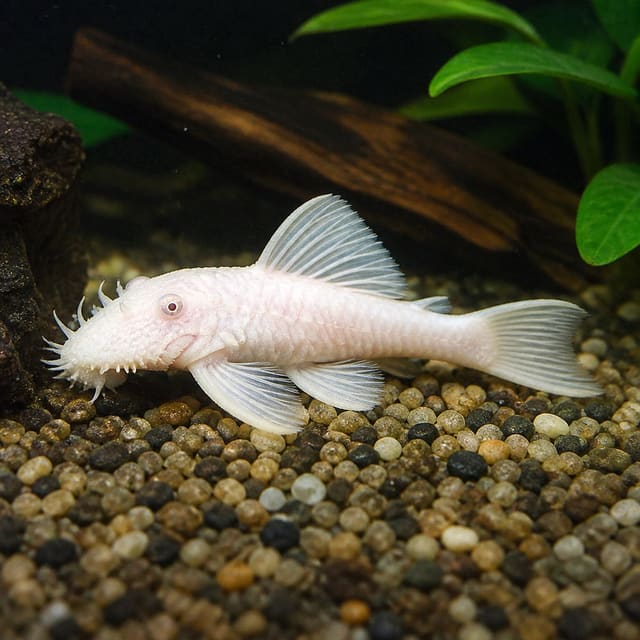
The LDA16 Longfin Bristlenose Pleco is sold here under the genus-level identity Ancistrus sp. It is a freshwater loricariid with the sucker-shaped mouth and armoured body associated with bristlenose catfish, plus an ornamental long-fin form. One purchase supplies one live fish in the size chosen on the product page. The size you select is the size supplied, not the adult size. The exact species has not been identified, so the care advice here follows the genus Ancistrus and its care group.
This distinction matters. The trade label LDA16 and the long-fin description identify the animal offered, but they do not justify adding a species name or promising a precise adult length. Ancistrus is an accepted genus within the catfish family Loricariidae. Members of the genus occur in freshwater habitats across South America and Panama and are widely known in aquariums as bristlenose or bushynose catfish. They are generally most active in subdued light and spend much of their time attached to wood, stone, glass and other surfaces.
| Suits | Keepers with a mature filtered freshwater aquarium, shaded cover, wood and time to provide a varied sinking diet. |
|---|---|
| Not suited to | An uncycled tank, a bare setup with no retreat, or a purchase made solely to fix an algae problem. |
| Sold unit | One live fish per purchase, with three dispatch-size bands represented on the product page. |
| Identity | LDA16 longfin trade form; scientific identity responsibly retained at Ancistrus sp. |
| Store care assessment | Intermediate, because stable water, appropriate feeding and secure bottom territory still need active planning. |
A bristlenose may graze soft algae and biofilm, but it is not a substitute for normal maintenance. Persistent algae often points to excess light, nutrients, stocking or an unsuitable cleaning routine. Buy this fish because its form and behaviour suit the aquarium, then feed it as an animal in its own right. Prepared algae-based foods and well-washed vegetables complement natural grazing surfaces.
Browse the bristlenose pleco collection if you are still deciding between forms. The alternatives listed elsewhere on this page are comparisons, not automatic tank mates. This animal should be chosen around available floor space, shelter, filtration and the needs of the fish already living in the aquarium.
The extended fins are an ornamental feature, not a reason to ignore ordinary catfish needs. Before ordering, decide who will perform water tests, prepare vegetables, remove leftovers and check that the fish appears at feeding time. Think about where the full fin spread can turn without brushing rough stone and whether the lower part of the aquarium remains accessible once plants mature. These small practical decisions make the difference between merely owning an algae grazer and providing a workable long-term home.
The fish may spend bright periods out of view, so it is a better choice for someone who enjoys quieter behaviour than for a buyer expecting constant mid-water display. Its value lies in its form, grazing activity and character. A clear plan for filtration, cover and food is more important than a promise that it will keep the glass clean.
Sex is guaranteed only when the selected option explicitly states male or female. This Ancistrus sp. lda 16 long fin listing has no sex-guaranteed option.
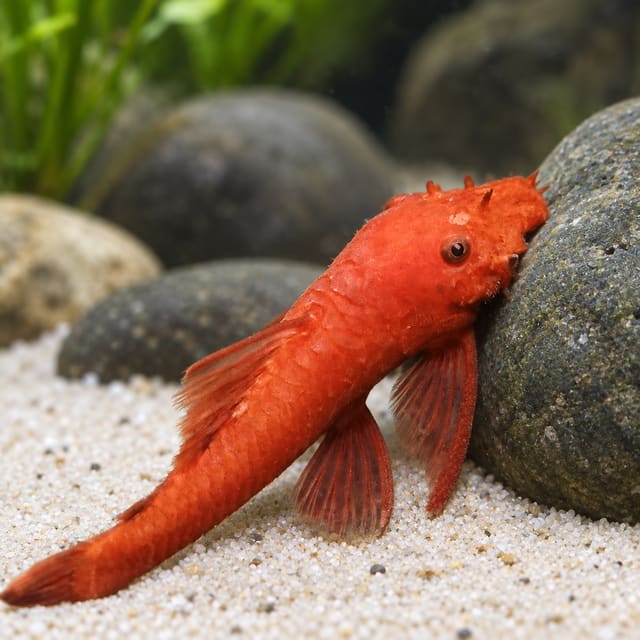
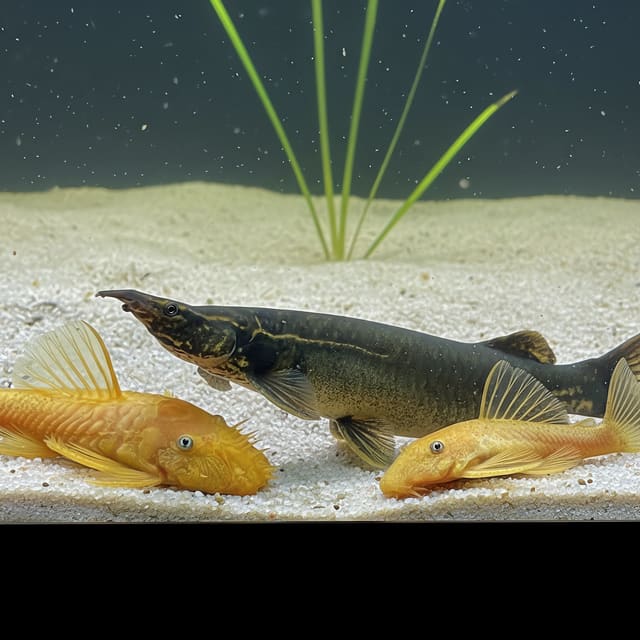
Gallery images have been digitally enhanced to improve image quality. Natural colour, pattern, size and maturity can vary between live animals.
Start with the filter, because a catfish cannot be protected from dissolved waste by décor or feeding alone. Fish release ammonia, which is toxic; a functioning biological filter supports bacteria that convert it first to nitrite and then to nitrate. Ammonia and nitrite should remain at zero. Test regularly, investigate any detectable reading promptly and reduce feeding while correcting the cause. A newly filled aquarium is not ready simply because the water looks clear.
If this is your first livestock setup, follow the step-by-step first tropical aquarium guide before choosing an arrival date. A larger, well-established volume is easier to keep stable than a very small one. Because the exact species is unresolved, this page does not assign a universal minimum tank volume. Plan from the selected fish's present size, the expected needs of a bristlenose-type loricariid, the footprint available for caves and wood, and the combined adult needs and waste load of every occupant.
The UK trade-body guidance supplied for bristlenose catfish gives 22–27°C and pH 6.0–8.0. Those figures are broad care-group guidance, not a species-specific optimum for an unidentified LDA16 fish. They are useful boundaries for planning, while stability and the conditions the fish has already been living in deserve equal attention. Avoid abrupt shifts made merely to chase the centre of a range.
| Temperature | 22–27°C as broad bristlenose-group guidance; keep the chosen point stable. |
|---|---|
| pH | 6.0–8.0 under the same broad guidance; avoid rapid correction. |
| Ammonia | 0 mg/l. |
| Nitrite | 0 mg/l. |
| Nitrate | Keep controlled through stocking, feeding, plants where appropriate and regular partial water changes. |
Record tap-water and aquarium results before purchase. The aquarium water-chemistry guide explains what the common tests mean, while the water parameter matcher helps compare measured values with the group guidance. There is no evidenced species-specific hardness range in this listing, so the structured care card deliberately leaves hardness unset rather than turning a figure from another algae eater into a promise for this animal.
Give the fish a cave or crevice it can enter fully and leave without catching its fins. Long fins make sharp slate edges, rough resin ornaments and cramped holes poor choices. Smooth wood, rounded stone and stable purpose-made caves create safer contact surfaces. Test every stack before livestock enters: a digging or wedging fish should not be able to undermine a heavy rock. Keep an open route between shelter, feeding area and the front glass so you can inspect the fish without dismantling the aquarium.
Wood is valuable as structure and a grazing surface. The OATA bristlenose guidance specifically calls for at least one piece of wood and plenty of cover. Biofilm develops on mature surfaces, giving the fish opportunities to rasp between meals. Wood does not remove the need for complete food, and adding a piece does not make an immature aquarium biologically ready.
Sand or smooth rounded gravel is easier on the underside than sharp substrate. Plants can provide shade and visual separation, although roots and leaves must not block cave entrances or collect uneaten food. Attach hardy plants to wood or rock if repeated digging disturbs rooted specimens. Leave enough open bottom area to place sinking food where the catfish can reach it.
Use a filter sized for the aquarium and its full stocking, not merely the fish being added today. Surface movement supports gas exchange. Direct the outlet so oxygen circulates through the lower levels without pinning a long-finned fish against décor. Watch behaviour: rapid breathing, prolonged exposure at the surface or an abrupt loss of feeding interest warrants immediate water testing and an equipment check.
Inspect the filter for blockages and declining flow. When media needs cleaning, rinse it lightly in aquarium water removed during a water change; do not run biological media under the tap. Clean different parts in rotation instead of stripping every mature surface at once. Replace disposable media only as its manufacturer requires, retaining enough established biological media to protect the cycle.
Bristlenose catfish graze algae, but OATA guidance is explicit that algae eaters still need prepared food. Offer a quality sinking algae-based wafer or flake and suitable well-washed vegetables, adjusting the amount to what the fish and its tank mates consume. Place food near the retreat after the main lights dim if the fish is hesitant to compete. Check that fast mid-water fish do not take every portion before it reaches the bottom.
Do not prescribe a fixed wafer count for every fish. Food size, dispatch size, temperature, tank maturity, competition and the product's formulation all change the sensible portion. A brief, consistent observation at feeding time is more useful than a rigid calendar. A fish that is repeatedly pushed away needs a targeted feeding place or a change to the stocking arrangement.
Learn where the fish rests and what its normal breathing and posture look like. A settled bristlenose may spend bright periods under wood or in a cave and emerge later to graze. Hiding alone is not automatically a problem, but a change from normal behaviour should prompt checks of temperature, ammonia, nitrite, filter flow and recent changes in the aquarium.
Look for clear eyes, intact fin edges, a body that is neither pinched nor swollen, steady attachment to surfaces and an active response to food. Long fin rays deserve special attention after moves or territorial disputes. If damage appears, remove the physical cause and improve water quality before reaching for a treatment. This page does not supply a disease diagnosis or medication dose.
Measure temperature and pH on more than one day, and test ammonia and nitrite after the normal feeding routine rather than only after a water change. Confirm that the heater, filter and thermometer agree and that a power interruption will not drain the aquarium through airline tubing. Place the cave where it can be inspected, then run the completed layout long enough to find trapped debris or weak flow before livestock arrives.
Use a siphon during partial water changes to lift waste from open areas around the cave and wood. Move slowly around the occupied retreat rather than forcing the fish out for routine cleaning. Test the replacement water, treat it for chlorine or chloramine and bring it close to the aquarium's temperature before adding it. Sudden temperature or chemistry swings create more risk than leaving a small amount of harmless biofilm on décor.
Separate visible algae from dirt. A thin grazing film on established wood or stone can be useful, whereas trapped food and faeces behind hardscape increase the load on the filter. Clean the viewing pane as needed, leave selected safe surfaces mature and keep circulation routes open. If nitrate rises faster than usual, look for a blocked intake, hidden leftovers, a dead plant leaf or increased feeding before simply performing ever-larger water changes.
Plan moves before catching the fish. Loricariid fin rays can snag in a fine mesh and the sucker mouth allows a frightened fish to hold firmly to hard surfaces. Use a smooth container where practical, keep the route short and avoid pulling a fish that is attached. Never lift it by the fins or tail. Cover the transfer vessel and keep hands wet if brief contact is unavoidable.
A transport or hospital container still needs oxygen, temperature control and shelter appropriate to the duration. Do not move the fish into an uncycled small box for convenience. If isolation is needed for observation, prepare mature biological media and a cave first, then monitor ammonia and nitrite just as carefully as in the display aquarium.
Arrange for someone to receive the parcel and review the current delivery and Live Arrival Guarantee policy before dispatch. Start a continuous unboxing video while the parcel is still sealed, keep the outer box visible, then show the fish inside the sealed bag. Inspect the fish on the day it arrives and contact Tropical Fish Co the same day with the order number and video if anything has gone wrong.
Keep introduction calm and avoid rearranging the entire aquarium after release. Offer food only when the fish has had time to find cover; remove it if uneaten. The first useful signs are steady breathing, secure attachment and gradual exploration, not immediate daytime display.
A bristlenose-type catfish is often suitable for a thoughtfully stocked freshwater community, but that is a conditional fit rather than a universal tank-mate guarantee. The keeper has to match temperature and pH, provide enough bottom area, and ensure every fish can feed without repeated displacement. A species that occupies open water may still create problems if it is aggressive, much larger, or quick enough to steal all sinking food.
Draw the aquarium as territories rather than litres alone. Mark caves, wood, open routes and feeding points. If another bottom-dweller already owns the only secure cave, adding a second fish creates conflict even when the nominal volume looks generous. Additional caves should not face one another across a narrow gap. Use wood or planting to interrupt direct sight lines while keeping circulation through the layout.
| Usually the better direction | Calm freshwater community occupants whose water needs overlap, with different feeding zones and enough space. |
|---|---|
| Needs particular caution | Other bristlenose catfish, cave users and vigorous bottom feeders competing for the same retreat or food. |
| Poor direction | Aggressive fish, persistent fin-nippers, predators or any animal requiring incompatible water. |
OATA's bristlenose guidance says these catfish can be kept alone, in pairs or in small groups, and that one male per group is usually best. This listing does not sell a sex-guaranteed option, so do not build a stocking plan around receiving a particular sex. One fish is the simpler choice where floor space or cave numbers are limited. A multi-fish plan needs a larger footprint, several retreats and a response plan if one individual prevents another from feeding.
Never infer sex from the product photograph or from juvenile size. Bristles can become more informative as a bristlenose matures, but the exact species and maturity of the animal matter. The reliable offer statement is simply that no male or female is guaranteed here.
This packet does not establish a species-specific guarantee for shrimp, snails or delicate planted displays. Treat very small animals and newly hatched young as vulnerable whenever they share space with a fish. Hardy plants attached to hardscape can work well as shade, provided leaves are not used as an excuse to reduce feeding. Protect fresh plant roots from digging and monitor any damage rather than promising that every plant will be ignored.
Two species can share water values and still be a poor combination if they need the same food in the same place. Watch at least one full feeding after lights dim. The catfish should reach a sinking portion without being repeatedly chased away, and any vegetable should be placed where it cannot trap the fish against a cave entrance. If the wafer disappears instantly, confirm who ate it rather than increasing the amount blindly.
Night feeding does not mean scattering food unseen. Use a consistent location, check it with a dim room light and remove remains later. This routine also reveals whether the fish is active, whether its belly looks healthy and whether another bottom-dweller is controlling the route to the food.
A compatibility decision is not permanent. A cave that suited a smaller fish may become cramped; a peaceful juvenile can mature into a territorial adult; dense planting can close a route that once allowed easy escape. Review the lower layout during maintenance and after every new addition. Keep at least one retreat available without dismantling the entire aquascape.
Introduce new bottom-dwellers only after confirming that the filter can handle the added waste. Adding several animals at once increases both social pressure and the demand on beneficial bacteria. A gradual plan makes it easier to identify the cause if feeding, water tests or behaviour changes.
Respond by separating the immediate aggressor or victim when needed, then revise the layout and stocking. Adding food alone does not fix territorial pressure, and adding more animals is not a safe generic cure. Compatibility should be reassessed whenever a juvenile grows, a cave becomes occupied or the aquarium's social balance changes.
It is an ornamental long-fin bristlenose catfish sold under the trade label LDA16 and identified responsibly as Ancistrus sp. The exact species has not been established, so the listing avoids a species-level adult-size promise and bases practical care on the genus and broad bristlenose guidance.
Use a mature filtered freshwater aquarium with stable temperature, zero ammonia and nitrite, wood, smooth grazing surfaces and a secure cave. There is no supported species-specific minimum volume here, so plan the footprint around the fish's present size, future needs, waste load and all other occupants.
Broad bristlenose guidance allows one fish, a pair or a small group and advises that one male per group is usually best. Because this LDA16 Longfin Bristlenose Pleco is not sold with a sex guarantee, a single fish is the simplest plan; groups need extra floor space and separate caves.
Tropical Fish Co rates it intermediate rather than effortless. A prepared keeper can succeed by maturing the filter, testing water, providing wood and cover, and making sure sinking food reaches the fish. It is not suitable as a quick solution for algae in a newly set-up aquarium.
Offer a complete sinking algae-based food and suitable well-washed vegetables, while allowing access to mature grazing surfaces. Algae in the aquarium is not a complete ration. Feed a portion the animals consume, check that faster fish do not take it first and remove deteriorating leftovers.
OATA's broad bristlenose-group guidance gives 22–27°C and pH 6.0–8.0; these are not a species-specific optimum for an unidentified LDA16 fish. Choose a stable point that also suits the other occupants and avoid rapid changes made simply to chase a central number.
Ancistrus catfish are generally chosen for calm community behaviour rather than fin-nipping. Territorial disputes can still occur around caves, especially between mature males. Provide separate retreats, enough bottom area and feeding access, and reconsider the group if one fish repeatedly excludes another.
Calm freshwater community fish can be considered when their water needs overlap and they do not harass long fins or monopolise food. Other cave users and bottom feeders require more space and shelter. No named species is automatically compatible; judge adult size, temperament, diet and territory together.
Tropical Fish Co hand-bags livestock in oxygen, uses an insulated box and adds a heat pack when conditions call for it, then sends it with a licensed live-animal courier. Be present to receive it, film the sealed parcel continuously as it is opened and contact the team the same day if anything is wrong.
The listing is resolved only to Ancistrus sp., while LDA16 and longfin are trade-form information. A care-group figure cannot identify the exact species or guarantee its eventual size, and this page leaves lifespan open because the exact species is unresolved. The page therefore keeps those points honest.
No reviews for this item yet. Bought one? Honest reviews only, good or bad.
What customers say about ordering from us
I have a small group of long finned mountain minnows. So was delighted to be able to order ten of this variety to increase the genetics in my tank . The ones I recieved are healthy but it’s to early to give a verdict on wether they are of a long finned type since they are small currently.
Gordon Walker · 23 Sept 2026
100% success travel and "installation". Pleased with quality of purchase. The Siamese fighter a bit "shy" so have not yet seen him at his best yet but looking good. Happy customer. GG
George E Garratt · 21 Sept 2026
Reviews of our shop, collected by Judge.me, an independent third-party review collector. Newest first.