Moderate
Bristlenose Pleco (Ancistrus sp.)
22–27°C · pH 6–8
From £3.51Some sizes on sale

Photo coming soon
The size, price and care details on this page are for this listing.
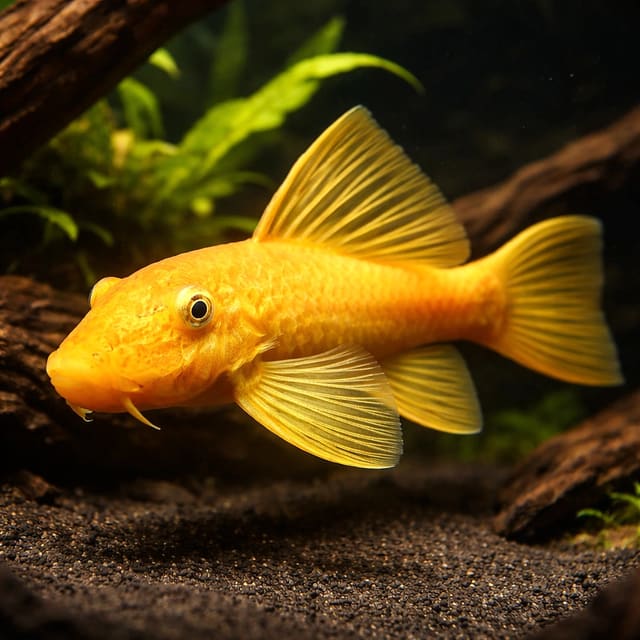
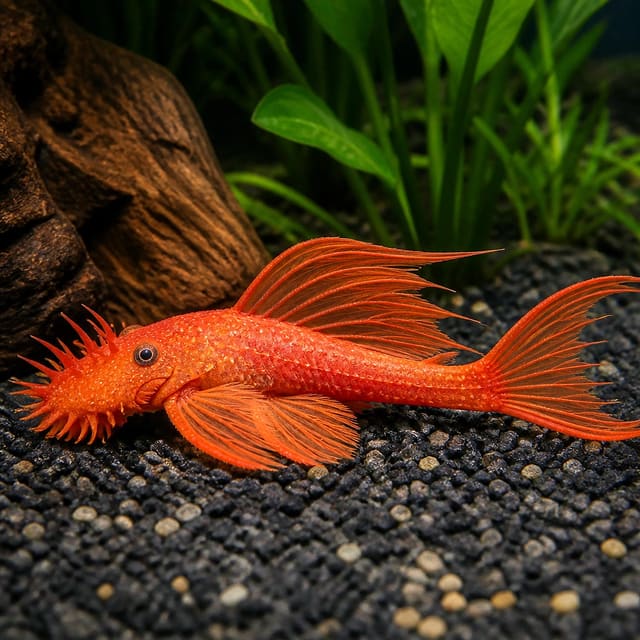
Lemon Longfin Blue-Eye Bristlenose Pleco (Ancistrus sp.) is an L144 trade-form fish for a mature, filtered aquarium with wood, cover, algae-based prepared food and washed vegetables. OATA's bristlenose care values are 22–27 °C, pH 6.0–8.0, 4–12 dGH and 3–10 dKH. One purchase supplies one fish in the selected 3–4 cm, 5–6 cm or XL dispatch grade, without a sex guarantee.
Ancistrus sp.
Lemon Longfin Blue-Eye Bristlenose Pleco (Ancistrus sp.) is an L144 trade-form fish for a mature, filtered aquarium with wood, cover, algae-based prepared food and washed vegetables. OATA's bristlenose care values are 22–27 °C, pH 6.0–8.0, 4–12 dGH and 3–10 dKH. One purchase supplies one fish in the selected 3–4 cm, 5–6 cm or XL dispatch grade, without a sex guarantee.
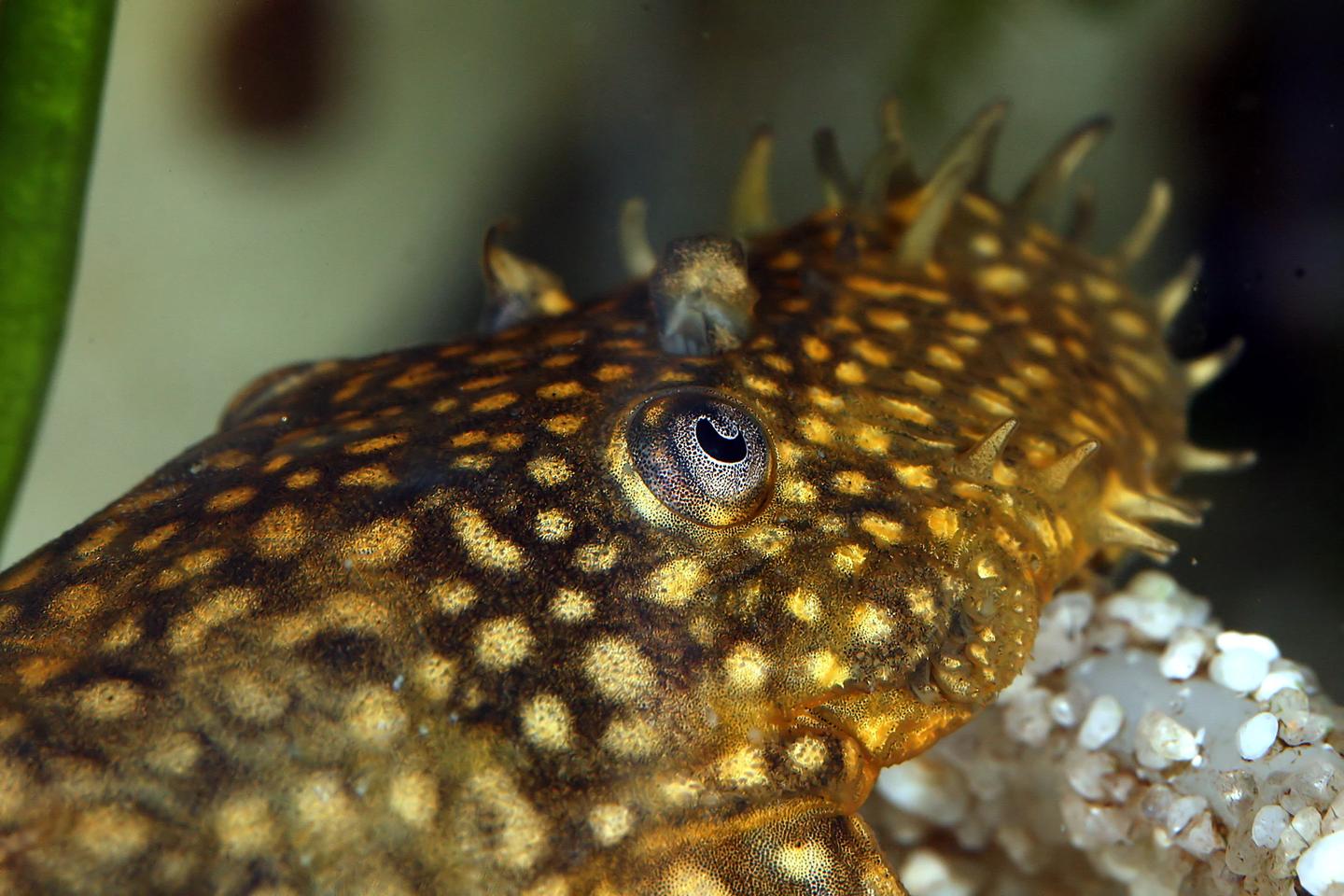
For one typical common bristlenose, start with a mature, filtered aquarium of at least 90 litres, useful floor area, wood and cover. OATA reports about 15 cm adult length, 22-27°C, pH 6-8 and 4-12 dGH. Confirm the exact trade identity before applying species-level claims.
Maintain these water conditions for optimal health and vibrant colors
This listing is for the Lemon Longfin Blue-Eye Bristlenose Pleco sold under the L144 trade code. The scientific label is Ancistrus sp., which identifies the genus without pretending that the exact species is known. The trade wording is “lemon long fin L144 blue eye”; those words describe the commercial form and do not turn L144 into a species name.
One purchase supplies one live fish. The offered dispatch grades are 3–4 cm, 5–6 cm and XL. The size you select is the size supplied, not the adult size. XL is a genuine non-numeric grade, so it is left as XL rather than converted into a guessed measurement. Availability can change, and the presence of a grade in the offer is not a promise that it is ready to order at every moment.
The exact species has not been identified, so the care advice here follows the genus Ancistrus and its care group. Use the bristlenose advice on this page to plan wood, cover, feeding, social grouping and water conditions, while keeping L144 as a trade code rather than a species diagnosis.
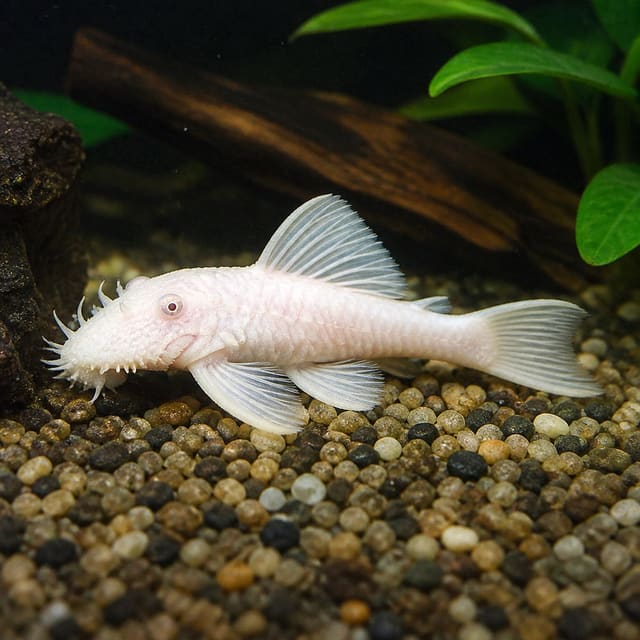
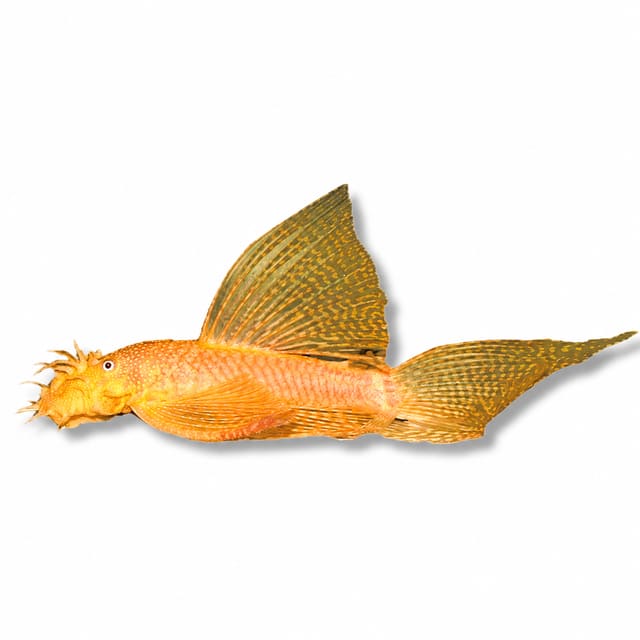
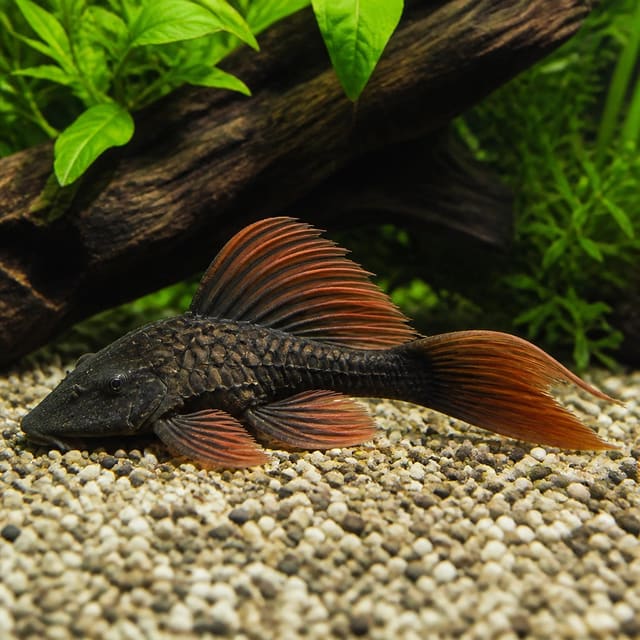
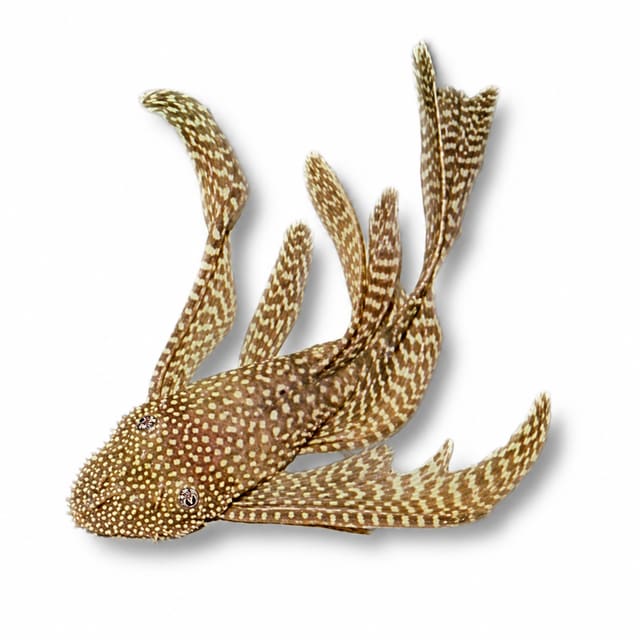
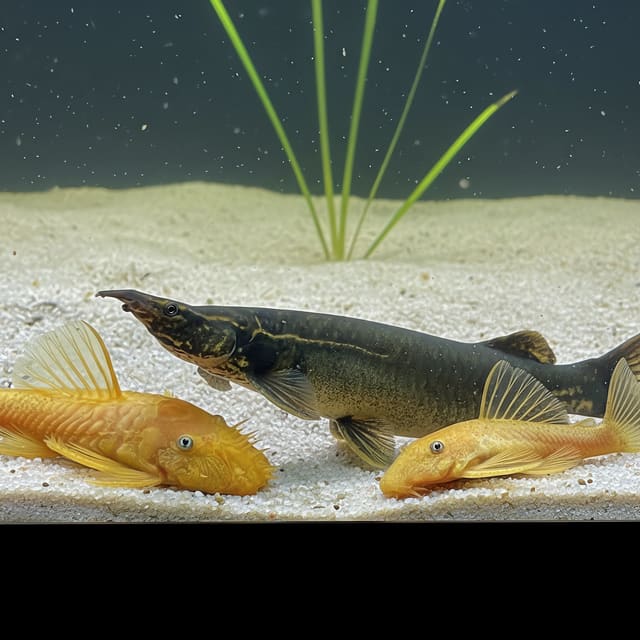
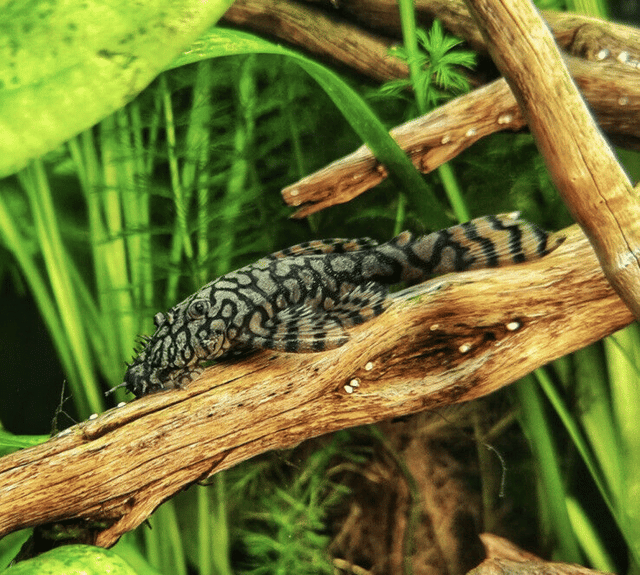
Gallery images have been digitally enhanced to improve image quality. Natural colour, pattern, size and maturity can vary between live animals.
| Suits | Keepers with a mature, filtered tropical aquarium who can provide cover, at least one piece of wood and supplementary algae-based food and vegetables |
|---|---|
| Needs care with | Social planning, because OATA's bristlenose guidance recommends only one male in a group |
| Feeding point | Algae grazing supplements a planned diet; it does not replace prepared food and washed vegetables |
| Sold unit | One live fish in the chosen 3–4 cm, 5–6 cm or XL dispatch grade |
Sex is guaranteed only when the selected option explicitly states male or female. This Ancistrus lemon long fin l144 blue eye listing has no sex-guaranteed option.
Lemon Longfin Blue-Eye Bristlenose Pleco is the trade-form name, Ancistrus sp. is the scientific label, and L144 is the trade code. Keeping those parts separate prevents a colour or fin description from being mistaken for formal taxonomy. FishBase confirms Ancistrus as a genus containing many species.
Routine planning can then stay practical. OATA's bristlenose section supplies the working size context, water values, wood and cover needs, feeding advice and social choices used below. The word “longfin” also deserves attention without exaggeration: choose smooth cover and arrange the aquarium so the fish can reach shelter and food without being crowded. Gallery appearance is not a basis for choosing sex or maturity. Browse the current bristlenose pleco collection when comparing trade forms, but treat those other listings as alternatives rather than tank-mate recommendations.
These checks are more useful than choosing by colour alone. They connect the trade form to the ordinary work of keeping a live animal: stable water, mature filtration, usable shelter, feeding access and a social plan that fits the aquarium.
Before ordering, trace one complete route across the bottom of the aquarium: retreat to wood, wood to food, and food back to cover. If another resident controls any of those points, improve the layout first. This quick exercise tests whether the planned home works for the fish rather than merely looking large enough from the front.
OATA gives 22–27 °C, pH 6.0–8.0, general hardness 4–12 dGH and carbonate hardness 3–10 dKH for bristlenose catfish. These are bristlenose-group values rather than a species-specific optimum for the L144 trade form. Aim for a stable point within them rather than moving between the ends of each range. Measure the aquarium itself with a reliable thermometer and test kit; the tap-water report is useful background but cannot show what feeding, livestock and biological filtration have done inside the tank.
Compare temperature, pH and both hardness measures with the needs of every animal already present. The aquarium water-chemistry guide explains the purpose of the common tests, while the water parameter matcher provides a practical way to compare measured values with the stated bristlenose ranges.
OATA's bristlenose entry calls for zero ammonia and zero nitrite, with nitrate not exceeding 20 mg per litre above the normal tap-water level. Test at least weekly and also test promptly when behaviour, appetite or breathing changes. A normal-looking aquarium can still contain invisible nitrogen waste. Results matter most as a pattern: a rising reading calls for an investigation into feeding, stocking, maintenance and filter performance, not an attempt to hide the number with a convenient additive.
Suppose temperature, pH and hardness stay steady but ammonia appears. The priority is the nitrogen cycle: confirm the result, inspect filter operation and review waste inputs. Moving the pH within its range would not solve that problem. If ammonia and nitrite are zero but nitrate rises beyond 20 mg per litre above the tap-water baseline, review the balance between feeding, stocking and routine maintenance. Each test answers a different question.
Use the same reasoning before adding the fish. A single acceptable reading is a snapshot; a sequence of stable readings gives a better picture of the aquarium's readiness. Record the date and result so a later change can be compared with something concrete. This is especially helpful after stocking changes, when the biological load and feeding pattern have changed together.
RSPCA guidance explains why filtration is a welfare requirement. Fish release toxic ammonia; beneficial bacteria in a working biological filter convert it to nitrite and then to the safer nitrate. A filter must therefore be established, maintained and appropriate for the aquarium's real load. Clear water is not proof that the nitrogen cycle is working.
Prepare the aquarium before the fish travels. The first tropical tank guide sets out the sequence for maturing the system and checking it. Keep the filter running continuously and maintain useful surface movement. When a test moves away from zero ammonia or zero nitrite, protect the animals by addressing the cause and restoring stable filtration.
Choose as large a mature aquarium as practical, following OATA's broad advice that larger water volumes are generally more stable. For this fish, also examine the usable bottom area. A nominally large tank can still be awkward when bulky ornaments leave no clear route between a resting place, wood and feeding areas.
OATA describes bristlenose catfish as secretive and advises plenty of cover with at least one piece of wood for grazing. Build around those needs. Gravel or sand can be used, and live plants can add cover. If live planting is not appropriate, suitable artificial plants and ornaments can provide shelter. Arrange everything firmly so normal maintenance does not destabilise the layout.
Offer more than one usable retreat when the aquarium contains several bottom-oriented animals. A hide only helps if the fish can enter and leave it comfortably and if another resident is not continually controlling the approach. Because long finnage is part of this trade form's name, use smooth materials and check entrances, joins and narrow gaps by touch. That is sensible physical planning rather than a claim that a particular injury is inevitable.
Imagine two aquariums with similar headline capacity. One has a single narrow hide behind unstable ornaments, while the other has secure cover, accessible wood, clear feeding space and a route that can be cleaned without lifting every decoration. The second is the more useful plan for this care group even before another litre is counted. Capacity matters, but it does not replace an honest look at how the bottom of the aquarium works.
Now include the existing residents in that comparison. Mark where each bottom-oriented animal rests and where its food is placed. If every route ends at the same cave or wafer, competition is built into the layout. Spread resources so the bristlenose does not have to pass another resident each time it grazes. For a pair or small group, make the same exercise more demanding: each animal needs genuine access, not several decorations that all lead to one defended patch.
A workable layout leaves access for cleaning, observation and feeding. Place wood and cover where you can still see whether the fish is eating and maintaining condition. Leave enough open substrate to remove debris without dismantling the whole aquarium. Accumulated food beneath inaccessible decor undermines the clean, oxygenated environment that algae-eating catfish require.
Do not buy this fish merely as equipment for an algae problem. OATA warns that persistent algae can indicate maintenance, stocking or water-chemistry issues, and algae-eating fish are not substitutes for solving them. The animal adds its own waste and needs its own food. Treat its grazing as behaviour to support, not a cleaning service that replaces testing and husbandry.
OATA states that fish which graze on algae still need prepared foods, including algae-based wafers or flakes, and ideally fresh vegetables such as cucumber. Use those as planned foods rather than waiting for visible algae to appear. An aquarium can look green and still fail to provide a complete, dependable diet.
Wash vegetables thoroughly; OATA specifically notes the risk of pesticide residues and suggests organic produce or careful washing. Offer food in a place the fish can reach without having to compete continually with faster residents. Check that the portion has actually been found rather than assuming a missing wafer was eaten by the intended fish.
Start with a measured portion, allow sensible grazing time and inspect what remains. A wafer or vegetable may stay available while the fish grazes, but it should not be left until it breaks down and releases waste. Remove deteriorating leftovers, and reduce the next portion if the same amount repeatedly remains.
A fish that fails to reach a wafer is not demonstrating a preference; it may simply be losing the race. Place food where the bristlenose can approach from cover, then watch which animal actually consumes it. In a busy community, one placement may favour faster fish while another gives the bottom-dweller a fair route. Change the placement before increasing the total amount.
Vegetables need the same observation. A thoroughly washed piece of cucumber can be useful only when the fish can find it and it is removed as it deteriorates. Check beneath wood and around shelters because leftovers can move out of sight. More food is not automatically better access, and decaying food works against the zero-ammonia, zero-nitrite water goal.
Observation closes the loop between feeding and maintenance. Watch from a respectful distance after food is placed, especially while a new arrival is learning the aquarium. Confirm access, then check for uneaten food and test water on schedule. A fish hidden under wood may still be feeding normally; persistent lack of access, declining condition or unusual inactivity needs investigation.
Keep the menu centred on algae-based prepared food and suitable fresh vegetables. A steady, modest routine with clean water is more useful than a long list of treats borrowed from another pleco.
OATA says bristlenose catfish can be kept alone, in pairs or in small groups, and that it is usually best to have just one male per group. That makes social planning flexible, but it is not a licence to add several fish without enough cover, feeding access and bottom space. Start with the aquarium you actually have, not the largest group the sentence appears to allow.
For a single fish, provide a secure retreat and place food where it can graze without disturbance. For a pair or group, multiply useful resources rather than clustering everything around one cave and one piece of wood. Observe access at resting and feeding times. If one fish repeatedly excludes another, the practical response is more than adding another ornament: reassess the layout, group composition and available space.
A single fish avoids the one-male-per-group question and is a sensible starting point when bottom space is already shared. A pair or small group asks more of the aquarium: more independent routes to cover, more than one useful feeding position and closer observation of access. The word “small” is not a stocking formula, so let resources and behaviour guide the decision.
Plan for change as the fish develops. A group that appears to share one shelter at dispatch size may use space differently later. Keep the layout adjustable and watch for repeated exclusion rather than waiting for obvious injury. Adding another fish to distract an excluded individual also adds waste and another competitor; solve the resource or group problem directly.
OATA notes that adult males can be distinguished by bristles on the nose, but this does not make the offered juveniles or gallery image sex-guaranteed. The sales options contain no male or female wording. Do not order a size grade expecting it to select a sex, and do not infer sex from colour, finnage, the trade code or a single image.
OATA also says males and females may breed in a community aquarium when a suitable cave or crevice is available. This is general bristlenose context rather than a home-breeding protocol for the L144 offer. Keep the aquarium for welfare first. Anyone deliberately planning breeding needs identification and husbandry information beyond what this listing can provide.
At each feed, confirm that the filter is running, the temperature is steady and the fish can reach food. Look for a change from its normal use of shelter rather than expecting it to behave like an open-water fish. Remove food that is beginning to deteriorate and check that water movement is not blocked by plant matter or debris.
Once a week, test ammonia, nitrite, nitrate, pH and hardness. Record the readings if trends are hard to remember. The OATA targets here are zero ammonia, zero nitrite and nitrate no higher than 20 mg per litre above the normal tap-water level; its bristlenose ranges are 22–27 °C, pH 6.0–8.0, 4–12 dGH and 3–10 dKH. A test is most useful when it leads to an appropriate response.
Maintain the filter without destroying the biological community it supports. RSPCA describes the beneficial bacteria as the mechanism that converts ammonia through nitrite to nitrate. Protect that established function during cleaning. If flow falls, inspect the intake and media; if nitrogen waste rises, review stocking, feeding, decaying material and the filter rather than treating the symptom alone.
A useful entry can be compact: date, temperature, pH, hardness, ammonia, nitrite, nitrate, tap-water nitrate baseline, filter flow, food remaining and whether the fish reached its shelter and meal. The value lies in comparison. Three similar entries establish a recognisable routine; one changed line shows where to look first. This reduces the temptation to alter several things at once and then lose track of which change mattered.
Connect observations to actions. Food remaining suggests a smaller portion or better placement. Reduced flow directs attention to the filter path. A fish losing access to its retreat points towards layout or social pressure. Ammonia or nitrite above zero turns attention to biological filtration and waste. The log is not paperwork for its own sake; it helps the keeper respond to the right part of the aquarium.
Review the notes after adding livestock or changing the arrangement. Those events affect waste, feeding routes and shelter use together. Comparing them with the earlier stable pattern makes the next decision more deliberate. If the aquarium cannot keep zero ammonia and nitrite, stable temperature and fair food access, pause further stocking while the underlying issue is corrected.
Use maintenance to inspect the physical environment as well. Check whether wood remains secure, shelters are accessible and the substrate can be cleaned. Long-finned trade forms deserve particularly careful inspection of tight gaps and rough surfaces, even though no individual fish is represented as the exact gallery specimen. Good husbandry is the sum of these ordinary checks, carried out before they become emergencies.
Tropical Fish Co sends live fish by a tracked, licensed live-animal courier on a confirmed Thursday or Friday delivery date. The tracking number and confirmed date are sent by email. Someone must be at the delivery address because a live-fish parcel cannot be left unattended. The aquarium should already be mature, stable and ready; delivery day is not the time to begin cycling a filter or rearranging the whole community.
Before opening, start a continuous unboxing video with the parcel still sealed and the outer box visible. Record the box being opened and the fish while it is still in the sealed bag. This protects the evidence required for a Live Arrival Guarantee claim before anything has been disturbed. Open and inspect the parcel on the day it arrives.
If there is a problem, contact Tropical Fish Co the same day with the order number and video; WhatsApp is identified as the fastest route. The current delivery and Live Arrival Guarantee policy contains the full terms and should be read before the delivery date rather than after an issue.
With the initial condition recorded, follow Tropical Fish Co's shipment instruction and float the sealed bag for 20–30 minutes.
Once the temperature has matched, follow OATA's general introduction method by adding small amounts of aquarium water to the bag gradually for up to 20 minutes. Transfer the fish while keeping transport water out of the aquarium; never pour bag water into the tank. Keep movements calm and make sure the fish has access to prepared cover once released.
After introduction, prioritise quiet observation and stable water. Confirm filtration, temperature and shelter, and avoid turning the first hours into a series of interventions. If the arrival condition is in doubt, preserve the continuous video and contact the store promptly rather than releasing first and trying to reconstruct the evidence later.
OATA includes bristlenose catfish among algae-grazing animals that can fit many community aquariums. Begin with animals that can live long term within the same stable temperature, pH and hardness plan, then compare their adult space, feeding access and use of the bottom of the aquarium.
A mid-water animal does not automatically make a good companion, and another bottom-dweller is not automatically unsuitable. The useful questions are practical: can every animal reach the food intended for it, can the bristlenose use its wood and retreat, and does the aquarium allow resting without continual displacement? The one-male-per-group advice also makes it unwise to treat several similar bristlenose fish as an effortless collection.
Avoid combinations likely to injure long finnage, monopolise the same shelter or keep the fish away from food. Do not describe a companion as safe merely because no conflict was seen on arrival; pressure can become clearer as fish mature or settle. Shrimp, snails, cichlids, bettas and named schooling fish each need an individual assessment rather than a blanket yes.
This order prevents appearance from leading the decision. Two attractive fish may still compete for the same retreat, while animals using different zones can still fail if their water needs conflict. Compatibility is the combined result of water, space, resources and behaviour.
| Potentially suitable | Calm community animals whose long-term water, space and feeding needs genuinely overlap |
|---|---|
| Needs caution | Other bristlenose-type fish, especially groups that may contain more than one male, and animals competing for the same shelter or food |
| Avoid | Any combination that cannot share stable water or that repeatedly excludes, injures or outcompetes the fish |
A compatible community is demonstrated over time. Check whether this fish can move between shelter, wood and food without being repeatedly driven away. Watch more than one feeding session, including the quieter period after faster fish have eaten. Food reaching the bottom is not the same as the intended animal being able to use it.
Inspect the aquarium after lights and activity settle. A secretive fish using cover can be normal within the broad bristlenose care description; one that never reaches food or is continually displaced needs attention. Also watch the other residents. A layout is not successful if giving one fish secure cover removes all usable space from another.
Water quality is part of compatibility. More animals mean more waste, and RSPCA's filtration explanation applies to the combined biological load. Test after changes in stocking or feeding and confirm that ammonia and nitrite remain at zero. An aquarium that only stays within range through emergency corrections is not yet a stable long-term arrangement.
When a pairing is not working, change the cause rather than applying a label to the fish. Improve resource distribution, reconsider group composition or separate animals where necessary. The trade name “lemon longfin blue-eye” tells you what form is being offered; it does not establish a unique temperament that overrides ordinary observation.
OATA says bristlenose catfish grow to about 15 cm. Use that as the planning size for this genus-level L144 listing.
Choose as large a mature, filtered aquarium as practical, with generous usable bottom area, cover and at least one piece of wood. Plan around the roughly 15 cm bristlenose size rather than the 3–4 cm or 5–6 cm dispatch grade.
OATA's bristlenose guidance allows one fish, a pair or a small group, usually with only one male in a group. Space, separate cover and feeding access still determine whether a pair or group is sensible.
It is best treated as intermediate: the keeper must provide mature filtration, suitable water, wood, cover and deliberate feeding rather than relying on algae.
Use prepared algae-based wafers or flakes and suitable fresh vegetables such as thoroughly washed cucumber. Offer a measured portion, allow appropriate grazing time and remove food before it deteriorates.
OATA's bristlenose values are 22–27 °C, pH 6.0–8.0, general hardness 4–12 dGH and carbonate hardness 3–10 dKH. They are bristlenose-group values rather than a species-specific optimum for the L144 trade form.
OATA advises only one male bristlenose per group, so provide separate cover and watch access to food and shelter. Judge the actual community and separate animals if continual displacement or injury occurs.
Choose calm community animals that share its long-term water conditions without monopolising bottom space, shelter or food. Assess each candidate's adult needs before combining them.
Tropical Fish Co uses a tracked, licensed live-animal courier on a confirmed Thursday or Friday. Have someone present and film one continuous unboxing from the sealed parcel to the fish in its sealed bag. Float the sealed bag for 20–30 minutes, then gradually add small amounts of aquarium water for up to 20 minutes before transferring the fish without bag water. Contact the store the same day with the order number and video if there is a problem.
The scientific label is bounded by the FishBase Ancistrus genus list, which establishes the genus but not a species identification or husbandry profile for this trade form. The central care values and behaviour in this listing come from the OATA tropical algae-eater care sheet and are explicitly presented as broad bristlenose-group guidance.
The explanation of ammonia, nitrite, nitrate and biological filtration follows the RSPCA aquarium environment guidance. Packing, courier, same-day reporting, continuous unboxing video, floating and no-bag-water steps follow Tropical Fish Co's current delivery policy linked in the care tab. The trade name, sizes and sold unit come from the exact store and supplier offer; they do not add a species diagnosis.
No reviews for this item yet. Bought one? Honest reviews only, good or bad.
What customers say about ordering from us
I have a small group of long finned mountain minnows. So was delighted to be able to order ten of this variety to increase the genetics in my tank . The ones I recieved are healthy but it’s to early to give a verdict on wether they are of a long finned type since they are small currently.
Gordon Walker · 23 Sept 2026
100% success travel and "installation". Pleased with quality of purchase. The Siamese fighter a bit "shy" so have not yet seen him at his best yet but looking good. Happy customer. GG
George E Garratt · 21 Sept 2026
Reviews of our shop, collected by Judge.me, an independent third-party review collector. Newest first.