Moderate
Bristlenose Pleco (Ancistrus sp.)
22–27°C · pH 6–8
From £3.51Some sizes on sale

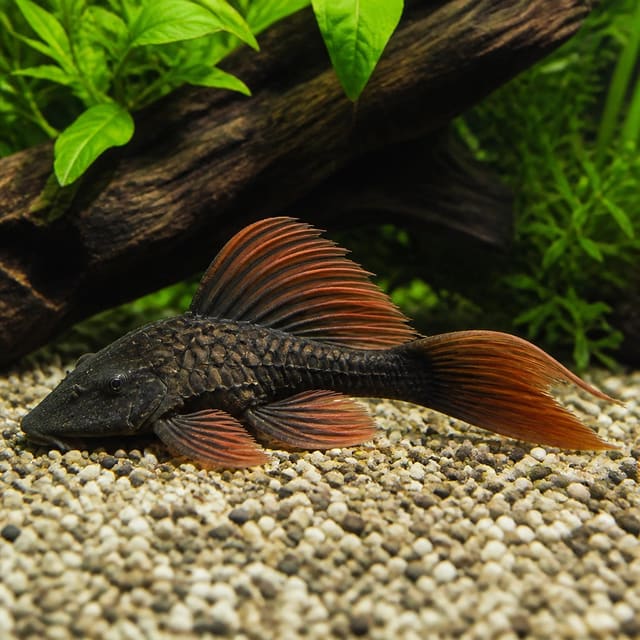
Pearl Sucker Pleco L059 is a dark, pearl-spotted South American Ancistrus for a mature, filtered aquarium with cover, grazing surfaces and a complete sinking diet. Choose from the listed dispatch sizes, then plan the permanent home around the species record of 15.8 cm standard length.
Adult size is the maximum length this species reaches at full maturity (scientific sources). The livestock you receive will be younger and smaller — pick a size above for the actual shipping size. Product-photo provenance and any image-specific limitations are stated on the listing.
Ancistrus hoplogenys
Pearl Sucker Pleco L059 is a dark, pearl-spotted South American Ancistrus for a mature, filtered aquarium with cover, grazing surfaces and a complete sinking diet. Choose from the listed dispatch sizes, then plan the permanent home around the species record of 15.8 cm standard length.
Adult size is the maximum length this species reaches at full maturity (scientific sources). The livestock you receive will be younger and smaller — pick a size above for the actual shipping size. Product-photo provenance and any image-specific limitations are stated on the listing.
For one typical common bristlenose, start with a mature, filtered aquarium of at least 90 litres, useful floor area, wood and cover. OATA reports about 15 cm adult length, 22-27°C, pH 6-8 and 4-12 dGH. Confirm the exact trade identity before applying species-level claims.
Maintain these water conditions for optimal health and vibrant colors
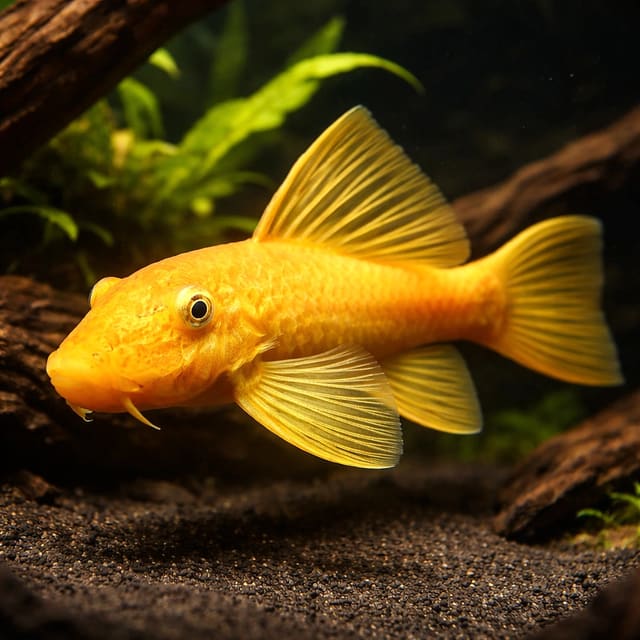
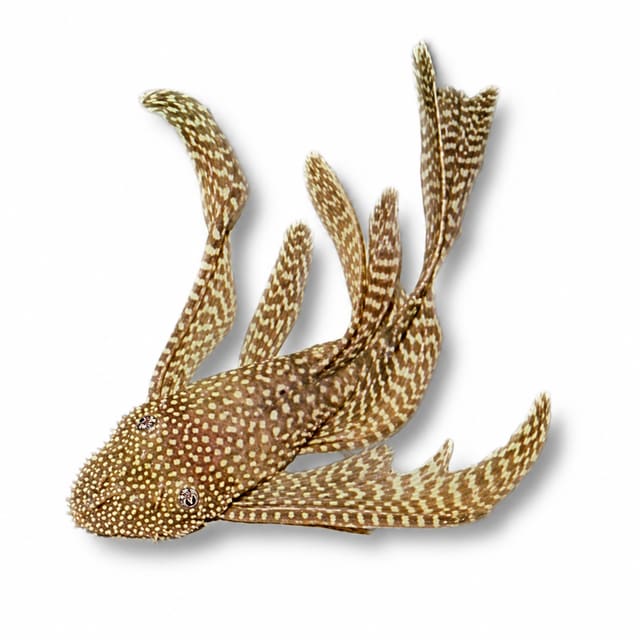
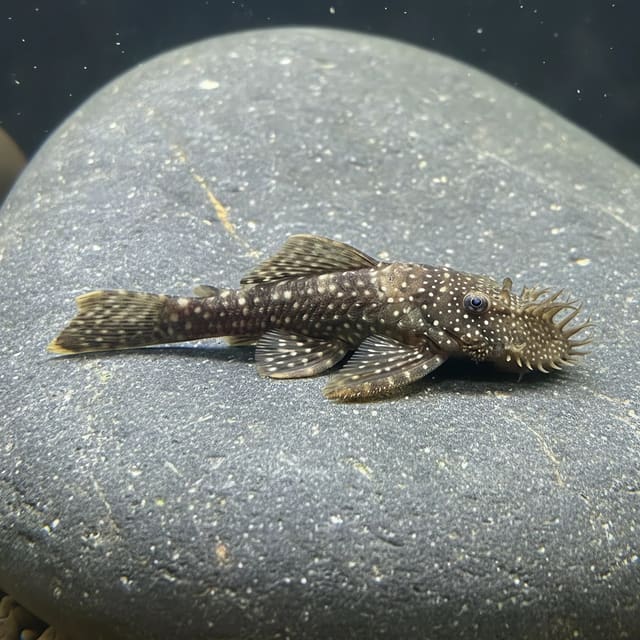
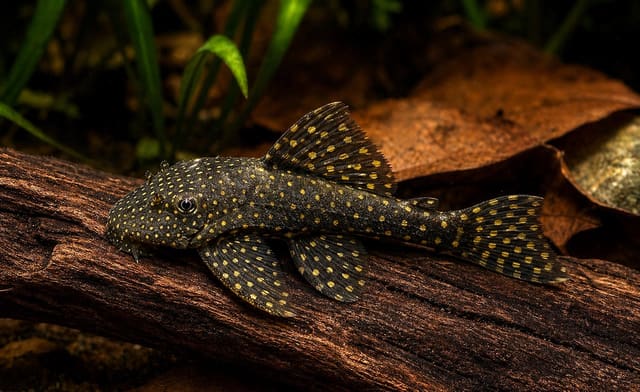
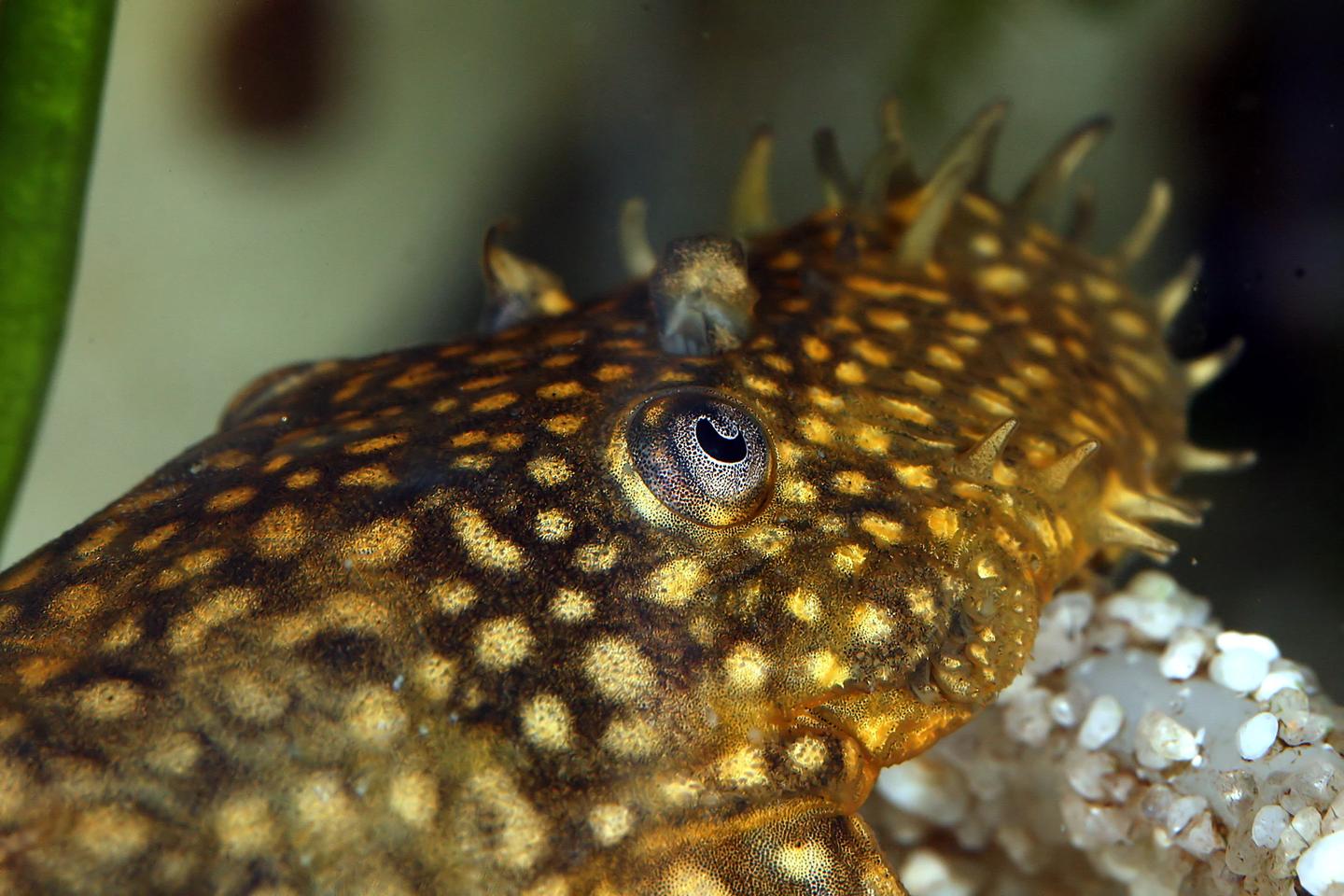
The Pearl Sucker Pleco L059 is the trade name used here for Ancistrus hoplogenys, a South American suckermouth armoured catfish in the family Loricariidae. It combines a dark body with many small pale spots, a low profile and the broad pectoral fins typical of an Ancistrus. It spends much of its time on the substrate or against hardscape, so it suits a keeper who enjoys watching quiet grazing and evening activity rather than a fish that constantly occupies open water.
One purchase supplies one live fish in the size chosen from 3.5–4.5 cm, 5–6 cm or XL. Those are recurring dispatch choices, including choices that may not be available at every visit. The size you select is the size supplied, not the adult size. FishBase records a maximum of 15.8 cm standard length for a male or unsexed specimen. Standard length ends at the base of the tail, so it is not the same measurement as total length and it should not be silently converted. Build the permanent aquarium around the adult record, footprint and waste load, even when the selected fish arrives much smaller.
Sex is guaranteed only when the selected option explicitly states male or female. This Pearl Sucker Pleco L059 listing has no sex-guaranteed option.
This is a considered choice for an aquarist with a mature tropical aquarium, reliable biological filtration and enough floor area for a medium Ancistrus. It needs more than visible algae. The keeper must provide an appropriate complete sinking food, suitable vegetable matter, cover and water movement that maintains good oxygenation without forcing the fish to battle a relentless current. The care label “moderate” reflects those practical duties and the ease with which a small juvenile can be mistaken for a nano aquarium fish.
A single fish is a sound starting point and no social minimum is asserted. More than one may be possible only where the aquarium provides additional usable floor space, several separated shelters, separate feeding points and a plan for territorial behaviour. Neither a pair nor a group is guaranteed by buying two fish, and the sex of this offer is not selected. If the aim is breeding, first obtain reliable sexing and species advice and be prepared to separate fish rather than relying on a cave to make the arrangement safe.
| Question | Practical answer |
|---|---|
| What does one purchase supply? | One live fish in the size chosen from the listed dispatch choices. |
| How large should I plan for? | FishBase records 15.8 cm SL for a male or unsexed specimen; this is an adult species record, not a promised size for every individual. |
| What water record is available? | FishBase reports 25–28°C, pH 6.0–7.0 and 5–12 dGH as environmental values for the species. Treat them as a useful screened range, not a complete aquarium optimum. |
| What is the main husbandry mistake? | Expecting a juvenile pleco to live on tank algae in a small or newly set-up aquarium. |
| What is the best starting layout? | A mature filtered aquarium with smooth substrate, shaded retreats, wood or other grazing surfaces, and open access for maintenance. |
If you are comparing other forms, browse the current bristlenose pleco collection by identity, adult needs and aquarium fit rather than by colour alone.
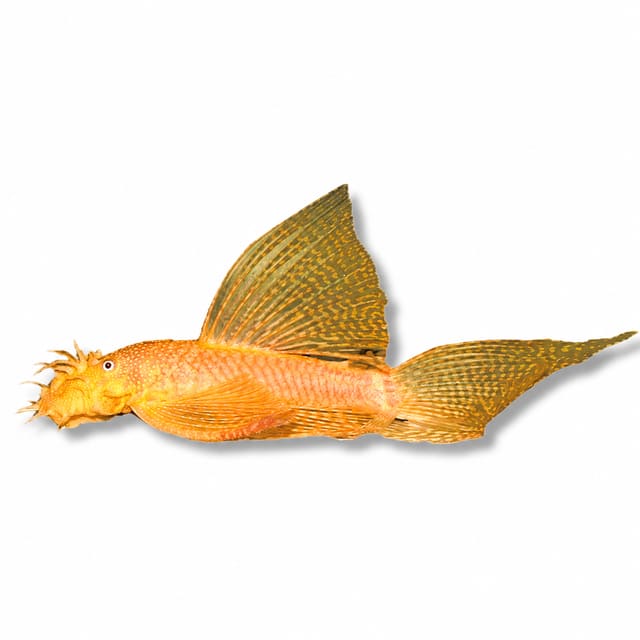
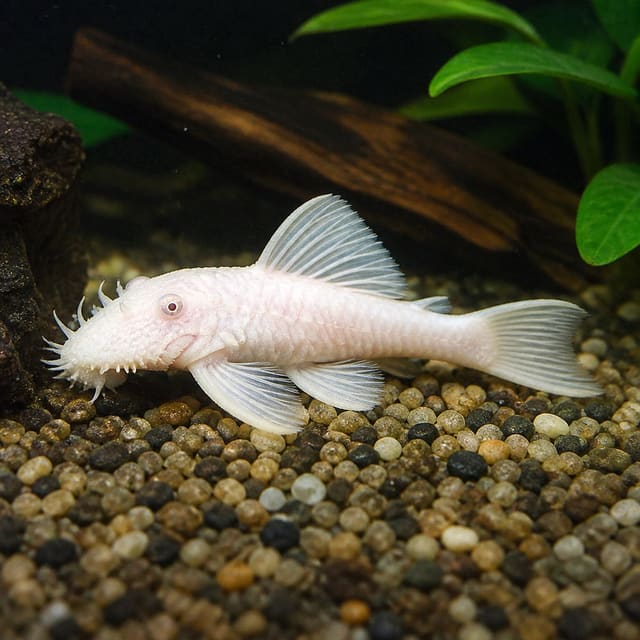
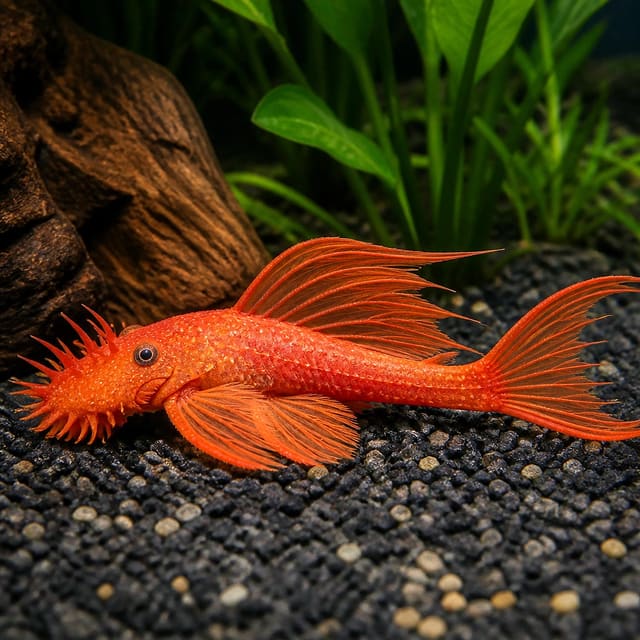
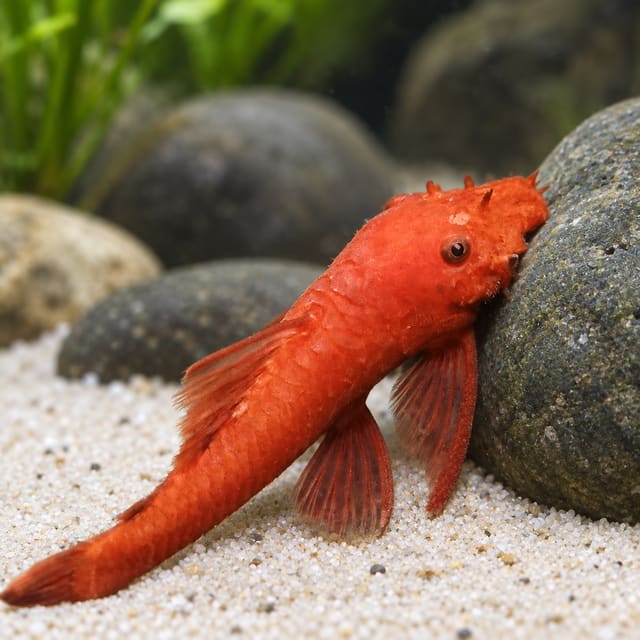
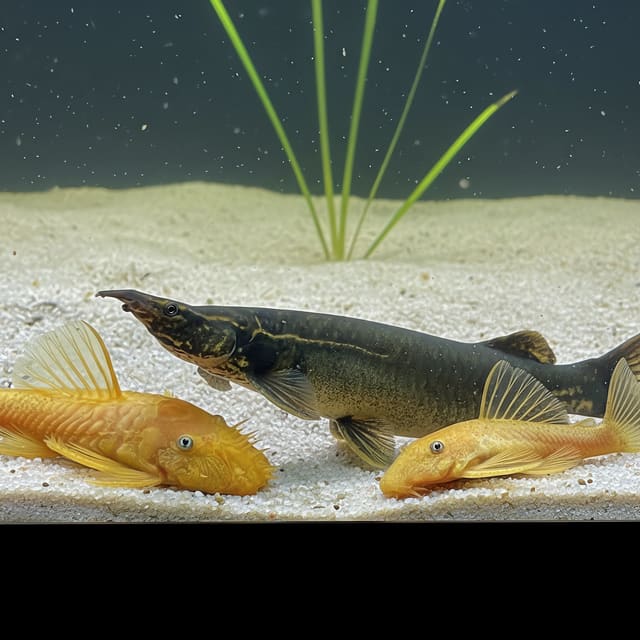
Gallery images have been digitally enhanced to improve image quality. Natural colour, pattern, size and maturity can vary between live animals.
Good care begins before the fish arrives. Mature the aquarium, confirm that the filter is processing waste, and make sure the permanent layout has enough usable bottom area for the adult fish. The RSPCA explains why a functioning biological filter matters: fish release toxic ammonia, bacteria convert it to nitrite and then to the less harmful nitrate. A clear aquarium is not automatically a cycled aquarium, and a quick algae film is not proof that a new setup can support a pleco.
The 3.5–4.5 cm and 5–6 cm labels describe two dispatch size bands. XL is a genuine third size label but does not provide a numerical adult measurement. None changes the same long-term species record of 15.8 cm SL. Before ordering, check the aquarium’s internal footprint after wood, rockwork and equipment have been placed. A nominal volume can hide a surprisingly narrow feeding area once decor occupies the bottom.
Plan from usable adult floor area rather than one universal litre figure, which would imply false precision for a fish recorded at 15.8 cm SL. Choose a footprint that lets the adult turn freely, reach several resting and feeding areas, and avoid constant conflict with other bottom fish. The filter must cope with the whole community’s waste, not just this fish. As the pleco grows, reassess access to caves, intake guards, maintenance routes and the space between heavy pieces of hardscape.
Set heavy wood and stones directly and securely so digging or routine maintenance cannot undermine them. A smooth sand or rounded fine gravel surface reduces the chance of abrasion. Leave open patches where food can be placed and found, as well as shaded areas where the fish can settle. A shelter should be large enough for the fish to enter and leave without becoming wedged; several differently oriented shelters are more useful than one crowded decorative cave.
FishBase reports Ancistrus hoplogenys from tropical fresh water and gives 25–28°C, pH 6.0–7.0 and 5–12 dGH. These are species-record environmental values, not a controlled aquarium optimum or proof that a sudden move anywhere within the range is safe. OATA’s broader bristlenose guidance gives 22–27°C and pH 6.0–8.0. The two sources have different scopes; keep them separate rather than blending them into a new range not stated by either source.
A practical starting screen is to keep the aquarium stable within a range supported for the fish and then compare the water in which the exact fish is being held. Use the water chemistry guide to understand temperature, pH, GH, ammonia, nitrite and nitrate, and the water matcher to compare measurements. Make any adjustment gradually. A pH value without GH, temperature, waste readings and recent history gives an incomplete picture.
| Measure | How to use it |
|---|---|
| Temperature | FishBase environmental record: 25–28°C. Verify with an independent thermometer and avoid abrupt changes. |
| pH | FishBase environmental record: 6.0–7.0. Stability and an appropriate acclimation plan matter more than chasing a decimal. |
| General hardness | FishBase environmental record: 5–12 dGH. Test the source and aquarium water rather than guessing from a postcode. |
| Ammonia and nitrite | Both should remain undetectable in a functioning mature aquarium. |
| Nitrate | Use the trend to guide maintenance and stocking; algae growth does not replace testing. |
Warm water holds less oxygen than cool water. Maintain surface movement and unobstructed filter flow, especially during hot weather. Watch how the fish rests and breathes as well as the test results. Repeated trips to the surface, rapid breathing, loss of balance or an unusual refusal to settle need an immediate water and equipment check. FishBase notes that the species is a facultative or obligate air breather; that biological record must not be used as an excuse for stale or oxygen-poor aquarium water.
If this is the first livestock for the setup, use the first tropical tank guide before selecting a delivery date. Confirm the cycle with repeated tests, not only elapsed time. Stock in stages so the biological filter is not asked to process a sudden jump in waste. Check the heater, thermometer, flow and lid before the fish travels.
Build a maintenance routine around observations. Test water regularly, siphon trapped waste from accessible areas and change an appropriate portion with conditioned, temperature-matched water. Inspect the filter intake and outlet for reduced flow. Rinse mature media in removed aquarium water or another dechlorinated method that protects the bacterial colony; replacing all media at once can remove the biological capacity the fish depends on.
A pleco can create concentrated waste beneath wood and inside caves. Move only what can be lifted safely and avoid dismantling the entire territory at every clean. Alternate cleaning areas when necessary, keep a clear route for a siphon and check behind hardscape. Secure heavy items again before returning the fish to the area. A clean front pane can coexist with a dirty, oxygen-poor pocket behind decor, so look beyond what is immediately visible.
OATA stresses that algae-grazing fish still require prepared feeds and that algae eaters are not substitutes for maintenance. Use an appropriately sized, complete sinking food as the nutritional foundation. Algae-based wafers or flakes and safely prepared vegetables may provide variety, but one vegetable or the aquarium’s biofilm is not a complete diet. Remove uneaten fresh food before it spoils and changes water quality.
Place food where the fish can reach it without crossing an aggressive neighbour’s territory. Feeding after the brightest period may help a shy individual, but confirm consumption instead of assuming a vanished wafer was eaten by the pleco. Midwater fish, snails and other bottom dwellers may reach it first. Observe the abdomen and general body condition from more than one angle. A persistently hollow profile, food ignored repeatedly or sudden weight loss calls for a husbandry and health review.
OATA’s general algae-eater sheet recognises that some species need extra time to graze. Apply that as broad group guidance rather than a rigid species trial. The form and hardness of sinking food change how long it remains available. Start with a measured amount, watch who consumes it, remove what degrades, and adjust to the individual, aquarium temperature and total community.
Wash vegetables thoroughly. Use aquarium-safe food clips or place food so it cannot disappear under inaccessible hardscape. Avoid collecting food from uncertain outdoor water and do not treat a protein-rich feed as a daily shortcut. If a fish will take only one item, first confirm water quality, competition, mouth-appropriate food size and the timing of the feeding opportunity.
Prepare the aquarium before dispatch: stable readings, a working heater if required, a secure layout and a quiet shelter. When the parcel arrives, follow the current arrival directions on the delivery page and order email. Avoid using a universal drip time or mixing transport water into the aquarium. Different journeys and water differences require the current arrival method, not a remembered routine from another species.
During the first week, note breathing, balance, fin position, resting location, response to food and waste production. A newly introduced pleco may choose cover, but it should not be written off as “just shy” if it breathes rapidly, cannot hold position, develops damage or never feeds. Test the water, check equipment and photograph changes. Separate equipment used for quarantine from the display aquarium, and seek a fish-experienced vet or knowledgeable aquatic professional when signs are persistent or severe.
Spots are part of this fish’s visible pattern, so assess changes against the individual rather than reacting to every pale mark. New raised spots, wounds, reddening, frayed fins, swelling, a hollow abdomen or altered breathing are reasons to inspect conditions closely. Do not choose salt, heat or medicine from one symptom. The same outward sign can have several causes, and unnecessary treatment can make water quality or stress worse.
Check the simplest risks first: ammonia, nitrite, temperature, recent maintenance, blocked flow, aggressive pursuit and whether food is actually reaching the fish. Keep a record of results and any recent additions. A mature spare aquarium is safer than an uncycled emergency container. Never release this fish, aquarium plants, pathogens or aquarium water outdoors.
Plants are optional for the fish’s identity but useful for shade, visual structure and water-quality observation. Choose species that tolerate the same water and secure them against accidental disturbance. Attach plants to wood or stone where appropriate and protect delicate roots. A pleco resting against a leaf is not proof that the plant supplies its diet.
Keep the lighting schedule suitable for the planted system and investigate nuisance algae through light duration, nutrients, maintenance and stocking. Extending the photoperiod to manufacture food often creates a larger water-quality problem without providing complete nutrition. Preserve some mature biofilm during routine cleaning while still removing trapped waste and spoiled food.
If a juvenile is temporarily housed in a smaller mature system, decide the transfer trigger before purchase. Use body growth, turning space, waste trends, shelter access and interaction with other bottom fish, not a vague promise to upgrade later. The permanent aquarium and filter should be mature before the juvenile has outgrown the temporary footprint.
Measure usable internal dimensions rather than the outside of the cabinet. Allow for wood, caves and equipment. Check that the adult can leave a shelter without scraping, that maintenance tools can reach feeding areas and that the floor does not become one continuous territory controlled by another fish.
A quarantine system should be mature, heated as required, covered and equipped with dedicated nets, siphons and containers. Bare glass can make observation and cleaning easier, but the fish still needs a secure smooth shelter and an appropriate grazing and feeding surface. Monitor appetite, waste, breathing and skin before combining water or equipment with the display aquarium.
Quarantine is not an excuse to use an uncycled container or skip daily checks. If treatment becomes necessary, identify the problem with qualified help and confirm that any product is appropriate for catfish and authorised for the intended UK use. Keep notes of dose, dates and test results instead of combining remedies or extending treatment by guesswork.
During warm weather, confirm temperature with an independent thermometer and increase attention to surface movement because warm water carries less dissolved oxygen. During cold periods, check that the heater can hold water steadily without creating a hot pocket beside the wood. Keep the aquarium away from direct sun, radiators and cold draughts.
After a power cut, filter stoppage or major maintenance, test rather than assuming the biological filter is unchanged. Restore circulation safely, watch breathing and reduce feeding if waste processing is uncertain. A battery air pump can be useful contingency equipment, but it does not replace a plan for heat, filtration and water testing.
The safest community plan starts with water and space, then considers behaviour. The Pearl Sucker Pleco is a demersal armoured catfish that uses the bottom and hardscape. It can share with peaceful fish occupying other levels when their temperature, pH and hardness requirements overlap and when the aquarium remains large enough after every species’ social needs are counted.
Choose calm companions that will not attack, swallow or repeatedly displace the pleco and that do not need incompatible water. Midwater fish can reduce direct competition, but the label “community fish” is not a guarantee. Check adult size, feeding speed, night-time behaviour and the whole group’s waste load. Observe actual interactions after introduction rather than trusting a generic compatibility list.
Other bottom dwellers need particular scrutiny. Two peaceful species can still compete when their preferred shelter and feeding zones overlap. Provide more feeding locations than dominant fish can control, and place them far enough apart to create genuinely separate routes. A fish that reaches every wafer first is not proof that the others have eaten. Watch all animals feed and adjust the layout or schedule if one is repeatedly excluded.
An Ancistrus may defend a favoured cave, particularly as it matures. The offer does not guarantee a male or female, so do not design the aquarium around an assumed sex. For more than one pleco, provide several shelters with broken lines of sight and enough floor space for an individual to leave without entering the next territory. Be ready to separate fish if pursuit is persistent, fins or skin are damaged, or one fish loses access to food.
Aggressive cichlids, predatory catfish and highly territorial bottom fish are poor choices. Avoid any companion large enough to swallow the pleco or strong enough to trap it in a cave. Very small shrimp or fry may be vulnerable around a medium omnivorous fish, so do not promise shrimp safety. Large hardscape must remain stable during territorial digging or feeding activity.
| Compatibility question | What to assess |
|---|---|
| Do the water needs overlap? | Compare temperature, pH and GH with the companion’s own reliable care information. |
| Is there enough bottom space? | Count adult footprints, shelters and feeding routes rather than relying on volume alone. |
| Can every fish eat? | Observe actual feeding after lights change and move food if one animal controls it. |
| Can a fish retreat? | Provide several shaded areas and visual breaks, plus a prepared separation plan. |
| Is predation possible? | Compare adult mouth and body size; do not assume armour makes a small pleco safe. |
Plants can provide shade and help organise territories, but they do not replace filtration. Secure newly planted stems because a grazing fish may dislodge them accidentally. Wood and hard surfaces increase grazing area and visual security. They are useful habitat features, not evidence that the aquarium has enough food.
Do not buy this fish as a solution to persistent algae. Investigate lighting duration, nutrient balance, feeding, water changes and stocking. The pleco’s welfare requires a complete diet whether or not algae is visible. It will also add to the biological load, so adding one can worsen the underlying problem if maintenance and filtration are already insufficient.
Rearranging a small part of the hardscape before introduction can prevent one established bottom fish from controlling every shelter, but retain mature surfaces and avoid destabilising heavy decor. Introduce only to a cycled aquarium, offer more than one refuge and observe after the room darkens. Check again at feeding time and the following morning.
Normal resting under cover differs from being forced into one corner. Look for repeated charges, blocked cave exits, skin damage, clamped fins or a fish missing meals. Act early: add a genuine sight break, change feeding positions or use the prepared mature separation space. Adding yet another fish rarely solves an established space conflict.
FishBase records a maximum of 15.8 cm standard length for a male or unsexed Ancistrus hoplogenys. Standard length excludes the tail. It is an adult species record, not a promised outcome for every fish, and it must not be confused with the smaller dispatch sizes.
Plan from usable adult floor area rather than one universal litre figure. Plan a mature aquarium with enough floor area for a 15.8 cm SL adult to turn, rest and feed, plus effective filtration, cover and room for every other bottom fish. Reassess the footprint as a juvenile grows.
A single fish is a sound starting point. Broader bristlenose guidance says these catfish may be kept alone, in pairs or small groups, but that is not a species-specific group requirement. More than one needs extra floor space, several separated shelters, distinct feeding points and a separation plan.
It suits a prepared keeper rather than a brand-new uncycled aquarium. The “moderate” store care label reflects its adult size, bottom-space needs, complete diet, waste load and the need to maintain stable, well-filtered water. A beginner who can meet those duties can keep it successfully.
Use an appropriate complete sinking food as the staple, with algae-based food and safely prepared vegetables as suitable variety. Visible algae and biofilm are not a complete diet. Confirm that the pleco, rather than faster tank mates, actually reaches the food, and remove fresh leftovers before they spoil.
FishBase reports 25–28°C, pH 6.0–7.0 and 5–12 dGH as environmental values for Ancistrus hoplogenys. They are not a complete aquarium optimum. Compare the source and aquarium water, keep conditions stable and change them gradually rather than chasing an isolated number.
It is not selected as a fin-nipping display fish, but an Ancistrus can defend a preferred cave or feeding area. Give it cover and usable floor space, watch interactions with other bottom dwellers, and separate animals if persistent pursuit, damage or feeding exclusion occurs.
Peaceful midwater fish with overlapping water needs can be considered when the aquarium has sufficient capacity. Avoid aggressive cichlids, predatory catfish and strongly territorial bottom competitors. Check the exact companion’s adult size, behaviour, group requirement and feeding speed before combining them.
Tropical Fish Co uses a licensed live-animal courier and sends the confirmed delivery date and tracking by email. Someone must be present to receive the parcel. For a Live Arrival Guarantee claim, record one continuous video from the still-sealed parcel through opening to the fish still in its sealed bag, and contact the store the same day.
The identity, distribution, environmental values and 15.8 cm SL maximum come from the FishBase species record for Ancistrus hoplogenys. FishBase reports a scientific record; it does not supply an aquarium volume, group size or sex guarantee.
The OATA tropical algae-eater care sheet supplies broad UK guidance on filtration, supplementary feeding, cover and bristlenose care. Its group-level figures are labelled as such rather than presented as species-specific experimental limits.
The RSPCA aquarium environment guidance explains biological filtration and the conversion of ammonia through nitrite to nitrate. The species summary gives a concise secondary overview of the loricariid identity and South American range.
For packing, receipt and claim steps, use Tropical Fish Co’s current delivery and Live Arrival Guarantee information. Check the current policy before delivery because its terms can change.
No reviews for this item yet. Bought one? Honest reviews only, good or bad.
What customers say about ordering from us
I have a small group of long finned mountain minnows. So was delighted to be able to order ten of this variety to increase the genetics in my tank . The ones I recieved are healthy but it’s to early to give a verdict on wether they are of a long finned type since they are small currently.
Gordon Walker · 23 Sept 2026
100% success travel and "installation". Pleased with quality of purchase. The Siamese fighter a bit "shy" so have not yet seen him at his best yet but looking good. Happy customer. GG
George E Garratt · 21 Sept 2026
Reviews of our shop, collected by Judge.me, an independent third-party review collector. Newest first.