Moderate
Bristlenose Pleco (Ancistrus sp.)
22–27°C · pH 6–8
From £3.51Some sizes on sale

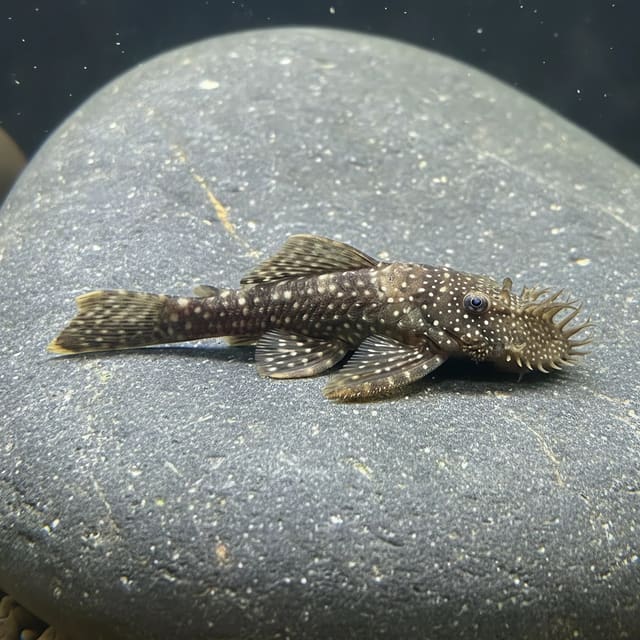
The Lemon Blue-Eye Bristlenose Pleco (Ancistrus sp. 4) is a loricariid catfish from a genus native to South America and Panama. It suits a filtered aquarium with cover and wood; OATA’s bristlenose group guidance gives about 15 cm, 22–27°C and pH 6.0–8.0. Sold individually at the 3 cm dispatch size.
Ancistrus sp. 4
The Lemon Blue-Eye Bristlenose Pleco (Ancistrus sp. 4) is a loricariid catfish from a genus native to South America and Panama. It suits a filtered aquarium with cover and wood; OATA’s bristlenose group guidance gives about 15 cm, 22–27°C and pH 6.0–8.0. Sold individually at the 3 cm dispatch size.
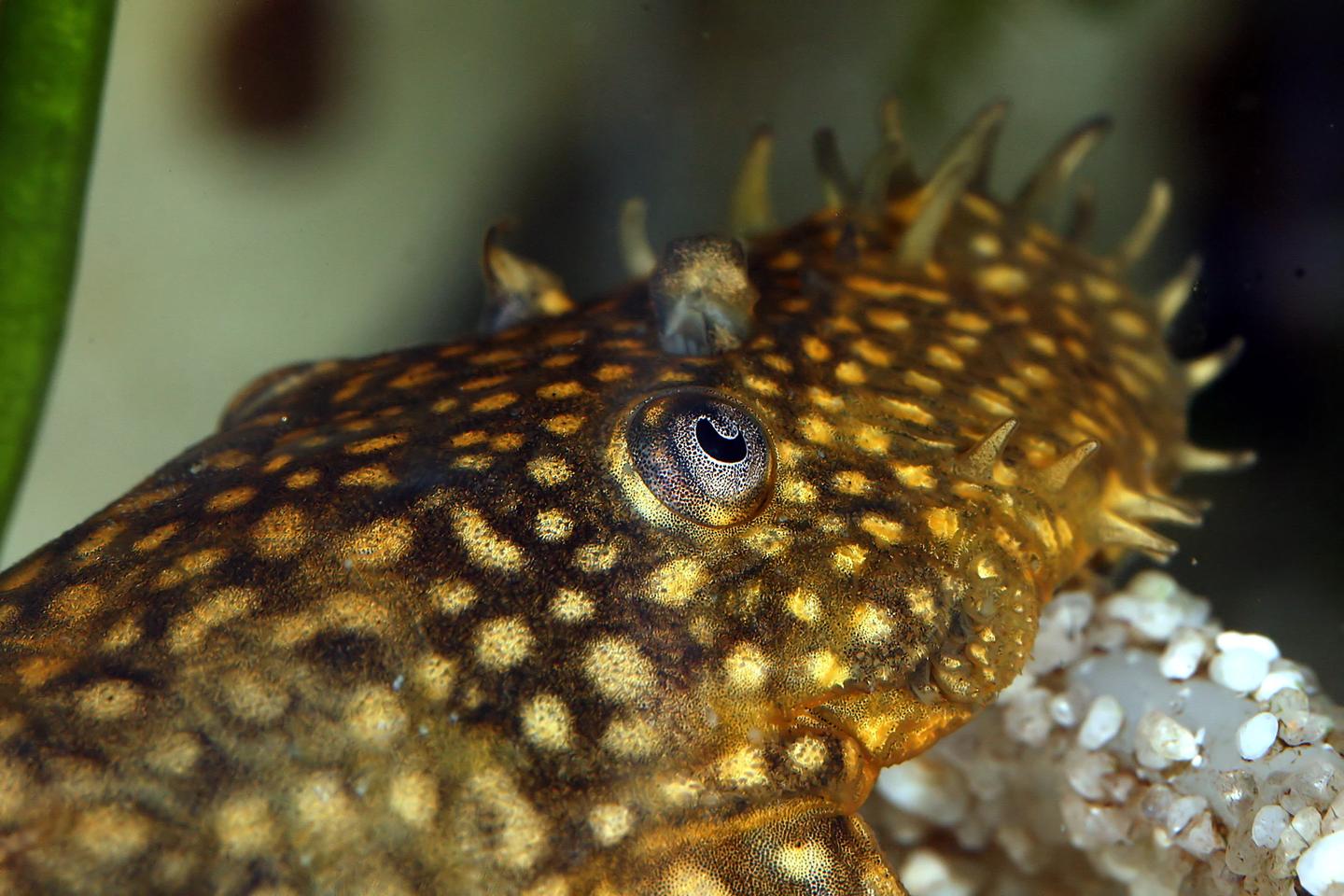
For one typical common bristlenose, start with a mature, filtered aquarium of at least 90 litres, useful floor area, wood and cover. OATA reports about 15 cm adult length, 22-27°C, pH 6-8 and 4-12 dGH. Confirm the exact trade identity before applying species-level claims.
Maintain these water conditions for optimal health and vibrant colors
This Lemon Blue-Eye Bristlenose Pleco is labelled Ancistrus sp. 4. It is a freshwater loricariid catfish from a genus native to South America and Panama, suited to a keeper prepared to provide filtration, deliberate feeding, cover, wood and long-term space. The accepted scientific classification places Ancistrus in the catfish family Loricariidae, but the label does not identify a named species.
L144 is a familiar trade label associated with this blue-eye form, but it is not a species name. Use Ancistrus sp. 4 when recording the fish in your own livestock notes, particularly if you keep several bristlenose forms. Clear labelling prevents a trade code from being mistaken for a formally identified species.
Wikipedia’s Ancistrus summary describes a genus of nocturnal freshwater catfish native to South America and Panama. Members of the genus are commonly called bushynose or bristlenose catfish in the aquarium trade. The word “pleco” is also widely used, although it can act as a catch-all name for several loricariid catfish rather than identifying one precise animal.
This fish suits a keeper prepared to provide a filtered aquarium, deliberate feeding, cover and long-term space. Its grazing behaviour can be useful, but it remains a living catfish with its own nutritional and water-quality needs. If you are comparing colour forms, browse the bristlenose pleco collection and judge each choice by its identity and care requirements rather than colour alone.
One purchase supplies one animal. The 3 cm measurement in the heading is the dispatch size attached to this offer, not the eventual adult planning length. Plan the permanent aquarium from the care-group planning figure rather than from the compact fish being sent.
Sex is guaranteed only when the selected option explicitly states male or female. This Lemon Blue-Eye Bristlenose Pleco listing has no sex-guaranteed option.
The exact species has not been identified, so the care advice here follows the genus Ancistrus and its care group.
That distinction matters if you hope to keep a pair or small group. Buying more than one animal does not select a particular sex ratio, so base the quantity on the aquarium’s capacity and OATA’s recommendation of one male per group rather than on an assumed pairing.
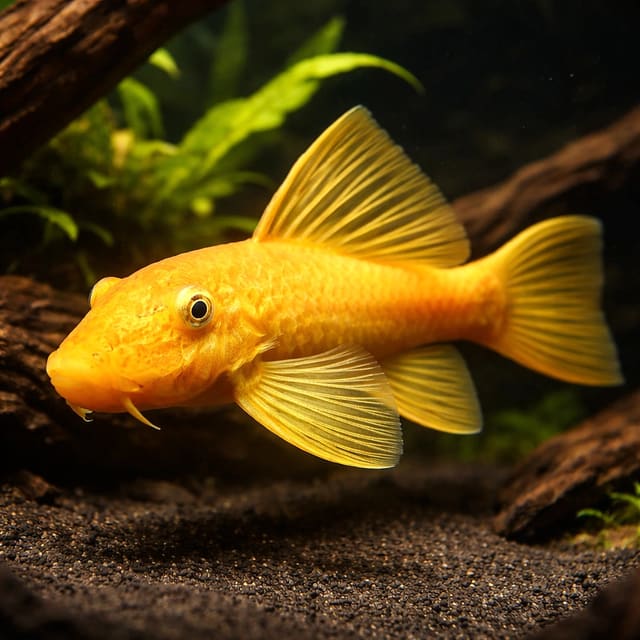
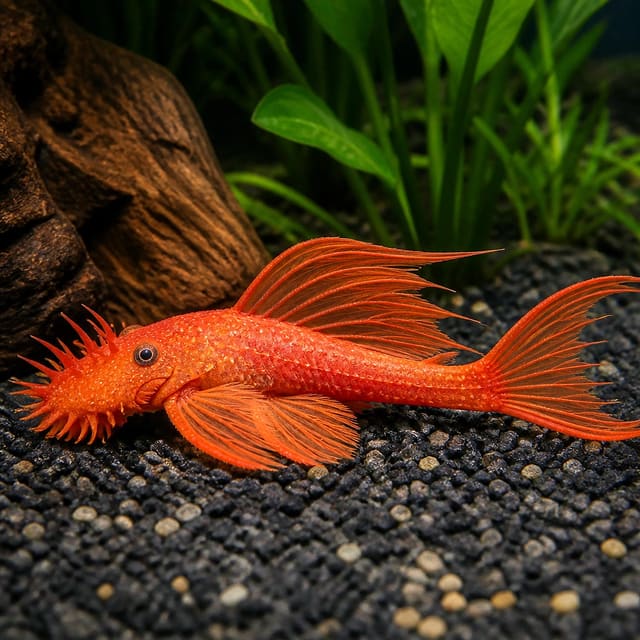
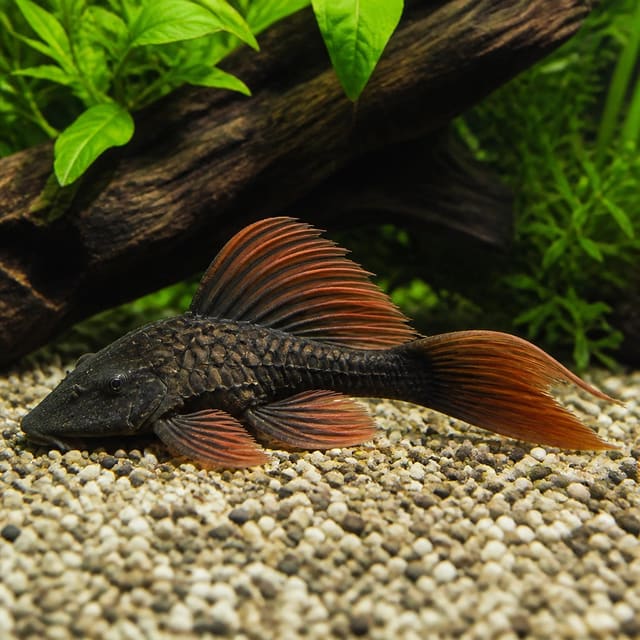
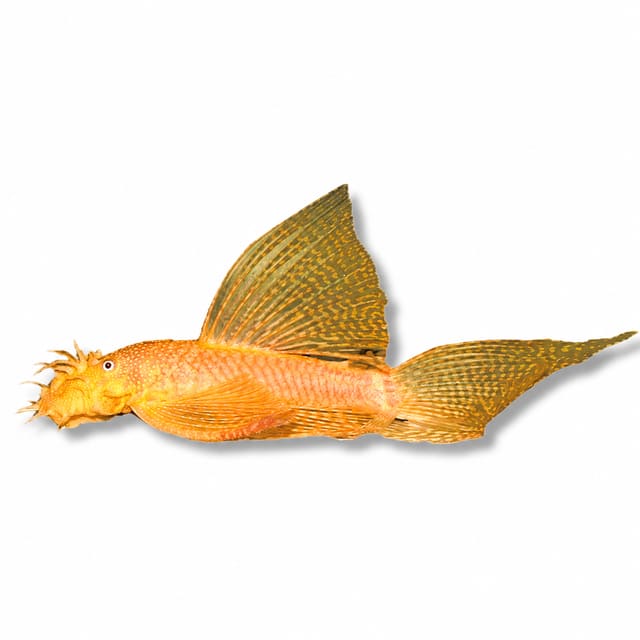
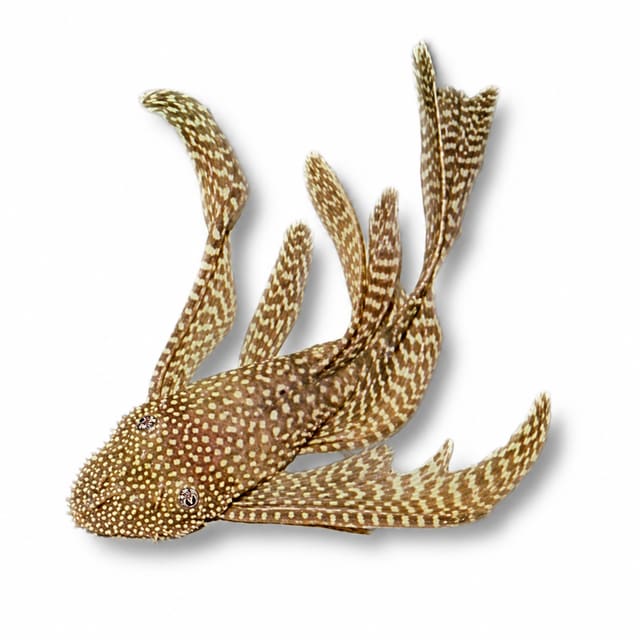
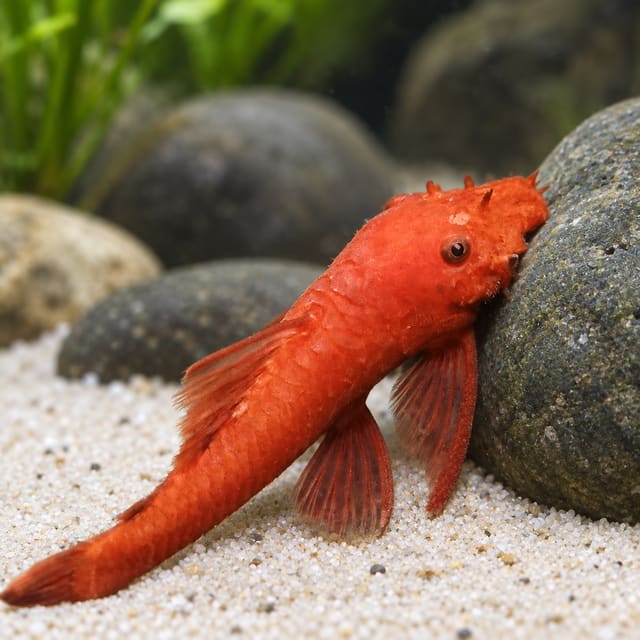
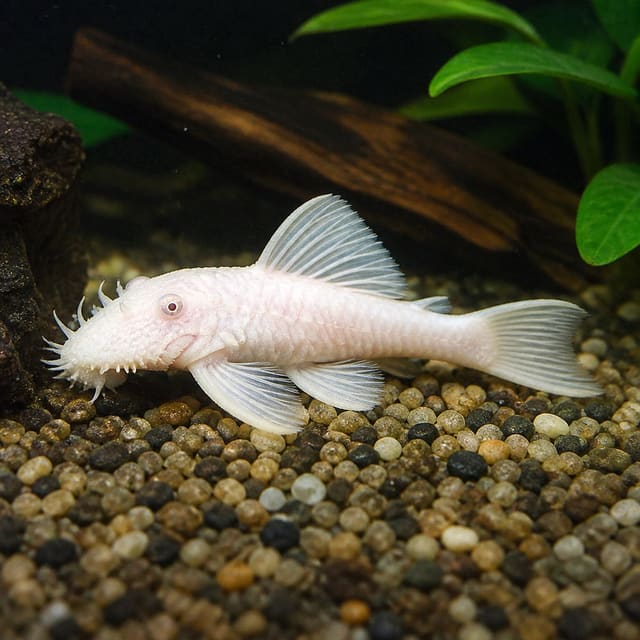
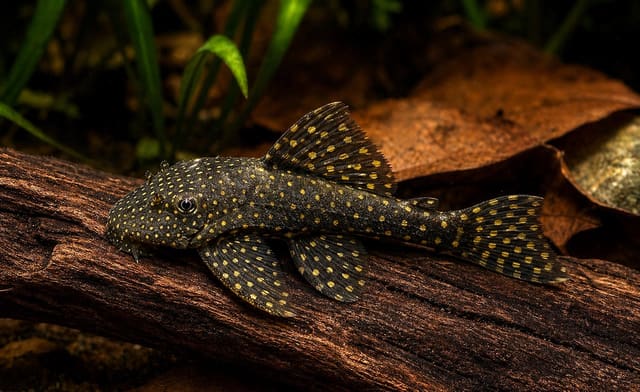
The gallery images are representative of this type of animal rather than photographs of the exact animal supplied, so colours can look slightly different from the live animal.
The gallery scene shows two yellow sucker-mouthed plecos beside a larger dark catfish.
| Decision | What to use |
|---|---|
| Purchase unit | One animal per purchase |
| Dispatch measurement | 3 cm |
| Long-term planning | OATA’s bristlenose group figure of about 15 cm |
| Sex planning | Do not assume a chosen sex or pair |
Plan around about 15 cm, 22–27°C and pH 6.0–8.0. OATA’s tropical algae-eater guidance gives these group planning figures for bristlenose catfish.
Use about 15 cm as the decisive space-planning figure. OATA recommends choosing as large an aquarium as reasonably possible because larger volumes generally provide more stable temperature and water quality. Assess the furnished aquarium by considering the fish, the other occupants, the filter and the space taken by wood and cover.
A filter is essential. Keep ammonia at zero mg per litre, nitrite at zero mg per litre and nitrate at no more than 20 mg per litre. Test the aquarium weekly so a clear-looking tank is never mistaken for one with suitable water chemistry.
| Suits | Not suited to |
|---|---|
| A filtered aquarium planned around about 15 cm | An aquarium chosen around the 3 cm dispatch size |
| 22–27°C and pH 6.0–8.0 | Water outside the OATA bristlenose group range |
| Generous cover and at least one piece of wood | A bare aquarium without suitable shelter or wood |
| Keepers who will supplement grazing with prepared food | A plan that expects algae grazing to replace feeding or maintenance |
These figures work together. An aquarium that matches the temperature but cannot accommodate the planning length, maintain the nitrogen-waste targets or provide secure cover is not ready for the addition.
Prepare the aquarium before the fish arrives. If this is your first setup, follow our guide to preparing and maturing a first tropical aquarium before adding livestock. Filling a tank and switching on a filter does not immediately create the established biological filtration needed to process fish waste.
RSPCA aquarium welfare guidance explains why a well-set-up and maintained filter is vital. Fish release toxic ammonia; beneficial bacteria in a working biological filter convert it to nitrite and then to the safer nitrate measured during routine testing. The filter therefore protects the fish through biological activity, not simply by making the water look clear.
Use aquarium gravel or sand and provide plenty of cover. Live plants are suitable for creating sheltered areas; where live plants are not used, plastic plants and appropriate ornaments such as model caves can serve the same purpose. Bristlenose catfish are secretive, so cover allows normal retreat rather than forcing the animal to remain exposed.
Include at least one piece of wood for grazing. Arrange the cover and wood so they do not consume every usable area available to a fish planned at about 15 cm. Space must be judged after the interior has been furnished, not from the aquarium’s empty dimensions.
A larger aquarium normally gives you more margin against rapid environmental change, but size never replaces filtration, testing or appropriate stocking. Treat all four as parts of the same preparation decision.
Judge the completed aquarium rather than the empty glass box. Wood, caves, plants and other occupants all use space, while every fish adds waste for the biological filter to process. If the furnished layout leaves little room for the planning figure or the filter is already struggling to hold the required readings, improve the setup before adding another animal.
Run this aquarium at 22–27°C and pH 6.0–8.0. Choose a steady working point inside those ranges that also suits every other occupant. The lowest and highest figures are boundaries for planning, not instructions to move the aquarium repeatedly from one end to the other.
Use our water-chemistry guide to understand the values being measured, then compare your readings with this fish’s working guidance using the aquarium water matcher. Record results rather than relying on appearance or memory.
| Test result | Required response |
|---|---|
| Ammonia above zero | Pause further stocking and correct the filtration or maintenance problem promptly. |
| Nitrite above zero | Treat it as a toxic-water warning and check biological filter performance. |
| Nitrate above 20 mg/L | Review stocking, feeding and the maintenance routine. |
| All three on target | Continue weekly testing and consistent maintenance. |
A clear aquarium can still contain dissolved ammonia, nitrite or nitrate. Weekly testing is the decision tool that shows whether the filter and maintenance routine are coping with the livestock and feeding load.
Persistent algae can also signal an underlying water-chemistry or maintenance issue. Adding an algae-grazing fish without checking the aquarium can increase the biological load while leaving the cause untouched. Test first, then examine maintenance and stocking before deciding whether this catfish is an appropriate addition.
Hardness still matters when assessing a mixed aquarium, even though the working figures here focus on temperature, pH and nitrogen waste. Measure the aquarium you actually maintain and select other animals whose stated requirements overlap, rather than altering water solely to accommodate an impulse purchase.
One test describes the water at that moment; a written sequence shows whether the aquarium is remaining stable. Record the date, temperature, pH, ammonia, nitrite and nitrate together. If nitrate repeatedly approaches the 20 mg/L limit or either toxic compound appears, review the biological load and maintenance before considering another fish.
Algae browsing does not provide a complete feeding plan. OATA recommends supplementing algae-grazing fish with prepared food such as algae-based wafers or flakes and, ideally, fresh vegetables such as cucumber. Keep supplementary food in the routine even when visible algae is present.
Offer a measured portion and watch how the fish uses it. Algal foods may need extra grazing time, so judge the portion by direct observation rather than leaving an unrestricted amount in the aquarium. Food left to break down releases toxic waste and works directly against the ammonia, nitrite and nitrate targets.
| Food choice | How to use it |
|---|---|
| Algae-based wafer | Use as a measured prepared supplement. |
| Algae-based flakes | Offer a controlled amount and check whether the fish reaches it. |
| Fresh cucumber | Wash thoroughly or choose organic produce before feeding. |
| Natural surface algae | Allow grazing, but continue supplementary feeding. |
| Wood | Provide at least one piece as a grazing surface and cover. |
Vegetables may carry residual pesticides that can harm fish or invertebrates. Wash them thoroughly before use, or choose organic produce. This simple preparation step applies whether the cucumber is intended for the bristlenose alone or shared with other grazing animals.
Adjust the next portion when food repeatedly remains uneaten. Adding more because the fish is hidden can allow waste to accumulate without showing whether the animal fed. A measured portion and direct observation give a clearer answer than leaving excess food in the aquarium.
Do not reduce feeding in an attempt to force the fish to clear persistent algae. That approach withholds an appropriate diet while leaving lighting, chemistry, maintenance or stocking issues unresolved. Feed the animal properly and manage algae as a separate aquarium-care problem.
In a shared aquarium, observe the route from food placement to grazing. If other occupants remove every prepared item before the bristlenose reaches it, change the placement or reassess the stocking arrangement rather than simply increasing the total amount. The useful result is a measured supplement reaching this fish without leaving surplus food to decay.
A reliable routine connects feeding, filtration, testing and stocking. Each task answers a different question: feeding checks whether the fish receives appropriate nutrition, filtration processes waste, testing shows whether that process is succeeding, and stocking determines how much work the system must perform.
Keep the biological filter operating and maintained. A loss of filter performance matters because the beneficial bacteria living within the system convert toxic ammonia through nitrite to nitrate. Do not judge filter performance by water clarity alone; use the weekly nitrogen-waste results.
Make changes for a measured reason. If nitrate rises, review the amount of food entering the aquarium, the number and eventual size of its occupants, and whether the normal maintenance routine is keeping pace. If ammonia or nitrite appears, treat the result promptly as a failure to meet the required zero reading.
When feeding response or normal behaviour changes, begin with the water tests because chemistry problems can affect the whole aquarium. If the change continues after the environment has been checked, contact us with the readings and a concise description of what has changed.
| Observation | Next decision |
|---|---|
| Food is repeatedly left | Reduce the portion and remove the excess. |
| Nitrate is rising | Review stocking, feeding and maintenance together. |
| Ammonia or nitrite appears | Pause additions and address biological filtration promptly. |
| Cover becomes inaccessible | Restore a secure retreat without crowding the planned adult space. |
Bristlenose catfish graze algae, but they are not substitutes for regular maintenance or suitable stocking. Buy this animal because you want to care for the catfish, not because the aquarium needs an automatic cleaning tool.
Persistent algae may indicate an underlying water-chemistry problem caused by incorrect maintenance. Adding another fish increases the livestock using the filtration system, so investigate the aquarium before treating a grazer as the solution. Weekly tests provide a practical starting point: ammonia and nitrite must be zero, while nitrate must remain at no more than 20 mg per litre.
| Observation | Decision |
|---|---|
| Algae keeps returning | Review water chemistry, maintenance and stocking rather than adding fish automatically. |
| The catfish grazes surfaces | Continue its measured supplementary feeding. |
| Prepared food remains | Reduce the next portion and prevent decomposing food from adding toxic waste. |
| Water tests move off target | Correct the aquarium problem before adding further livestock. |
| The aquarium lacks cover | Add plants or suitable ornaments and at least one piece of wood before purchase. |
This separation of decisions protects both the aquarium and the fish. Algae management focuses on the cause of excessive growth, while animal care focuses on nutrition, water quality, cover and planned space. One cannot replace the other.
A well-maintained aquarium may still contain natural grazing surfaces, and the fish can use them alongside its prepared diet. The presence of grazing behaviour does not show that the fish has received a complete meal, just as clean glass does not show that ammonia and nitrite are zero. Observe feeding and test water directly.
Use the algae problem as a prompt to examine the system in order. Test the water, review how much food enters the tank, consider the full stocking load and check whether maintenance is keeping pace. Add this catfish only when the aquarium also meets its needs for space, cover, wood and supplementary food.
Prepare the filtered aquarium and test its water before the delivery window. Someone must be present to receive live fish, so use the confirmed delivery date and tracking message to arrange attendance. Read the current delivery and Live Arrival Guarantee policy before the parcel is due.
Have the permanent setup ready before arrival. The arrival period is not the time to establish a filter, add missing cover or choose a working temperature.
For a Live Arrival Guarantee claim, contact us the same day with the order number and continuous unboxing video.
Acclimatisation reduces the abruptness of the transfer, but it does not compensate for unsuitable water, an unprepared biological filter or insufficient planned space. Complete those decisions before ordering.
Confirm that the filter continues to operate, the fish can enter cover and the temperature remains inside the working range. Keep the layout stable rather than rearranging wood and shelters to force the animal into view. At the next weekly test, record ammonia, nitrite and nitrate so the effect of the complete stocking load remains visible.
OATA says bristlenose catfish may be kept alone, in pairs or in small groups. A group is optional rather than a welfare requirement, so one animal is a valid choice when that arrangement best suits the aquarium.
For a group, it is usually best to keep only one male. Plan conservatively because this offer does not let you choose a guaranteed sex. Increasing the purchase quantity should therefore follow a space and stocking calculation, not an expectation that separate animals will form a particular pair or ratio.
| Plan | What to check |
|---|---|
| One animal | Planned space, 22–27°C water, pH 6.0–8.0, cover, wood and supplementary food. |
| A pair | Capacity for two fish and the possibility that the animals may be male and female. |
| Small group | Space and filtration for every fish, plus the recommendation to keep only one male. |
Males can be distinguished from females by bristles on the end of the nose, according to OATA’s group guidance. That biological feature does not create a sex promise for a 3 cm dispatch fish or allow a representative gallery image to determine what will be sent.
A male and female may breed in a community aquarium when a suitable cave or crevice is present, and free-swimming young may eventually be seen. Include that possibility in a pair or group decision rather than treating reproduction as guaranteed. The practical obligation is to ensure the aquarium can support the number of fish ordered and any change in stocking that follows.
Whichever social plan you choose, retain plenty of cover and at least one piece of wood. Group size does not replace the need for filtration, weekly testing and measured supplementary feeding.
For example, a purchase of three animals means planning filtration, furnished space, cover and feeding access for three fish against OATA’s bristlenose group figure of about 15 cm, even though each arrives at 3 cm. It does not mean a guaranteed trio or a chosen sex ratio. If the aquarium cannot support all three under that conservative assumption, choose one animal or revise the setup first.
OATA includes bristlenose catfish among algae grazers that can fit many community aquariums, but that is not a universal tank-mate guarantee. Compatibility remains case by case because the whole aquarium must work for every occupant.
| Check | Pass condition |
|---|---|
| Planned space | The furnished aquarium can accommodate a bristlenose planned against the group figure of about 15 cm alongside all other occupants. |
| Water overlap | Every occupant can be maintained within 22–27°C and pH 6.0–8.0. |
| Water quality | The filter and routine keep ammonia and nitrite at zero and nitrate at no more than 20 mg/L. |
| Cover | The catfish can use generous shelter and at least one piece of wood. |
| Food access | A measured algae-based supplement can be offered and observed being eaten. |
Do not approve a community merely because two animals share a broad temperature range. Dimensions, total biological load, use of cover and access to food can still make the arrangement unsuitable. Equally, the word “community” does not guarantee that a hidden bottom-dweller receives its share of a meal.
When planning multiple bristlenose catfish, add the one-male-per-group recommendation to those checks. A quantity based only on how small the dispatch fish looks can underestimate the space and filtration required as the animals grow.
For a stocking and compatibility assessment, contact us with the aquarium dimensions, measured temperature and pH, latest ammonia, nitrite and nitrate results, and the names and sizes of the intended companions. Those details allow a concrete whole-tank decision instead of a generic list of supposedly suitable fish.
A temperature match is not enough when the aquarium lacks space or the filter cannot maintain zero ammonia and nitrite. Good water readings are also not enough if the catfish cannot reach food or secure cover. Approve the addition only when all five checks work together in the furnished aquarium.
Use about 15 cm as a planning figure. OATA gives this figure for bristlenose catfish as group guidance for an animal identified only as Ancistrus sp. 4.
Choose as large a filtered aquarium as reasonably possible and plan its furnished space around the OATA bristlenose group figure of about 15 cm. Provide gravel or sand, generous cover and at least one piece of wood.
OATA’s bristlenose group guidance says they may be kept alone, in pairs or in small groups, with only one male per group usually best. This offer does not guarantee a selected sex.
It suits a keeper who can prepare biological filtration, test the water weekly and provide cover, wood and measured supplementary food. OATA’s bristlenose group guidance gives 22–27°C and pH 6.0–8.0.
Offer measured algae-based wafers or flakes and fresh cucumber that has been thoroughly washed or is organic. Continue supplementary feeding even when the fish grazes visible algae.
OATA’s bristlenose group guidance gives 22–27°C and pH 6.0–8.0. Test weekly, keep ammonia and nitrite at zero mg per litre, and keep nitrate at no more than 20 mg per litre.
Use a case-by-case community assessment rather than assuming compatibility. Check planned space, water overlap, filtration, cover and food access; OATA’s bristlenose group guidance says keeping only one male per group is usually best.
OATA places bristlenose catfish among algae grazers that can fit many community aquariums. Choose companions only when the furnished space, 22–27°C range, pH 6.0–8.0, filtration, cover and food access work for every occupant.
Start filming the sealed parcel before opening or floating the bag, then continue in one take as it is opened with the fish still inside the sealed bag. Someone must be present to receive it; float the bag for 20–30 minutes, acclimatise slowly and never pour the bag water into the aquarium.
No reviews for this item yet. Bought one? Honest reviews only, good or bad.
What customers say about ordering from us
I have a small group of long finned mountain minnows. So was delighted to be able to order ten of this variety to increase the genetics in my tank . The ones I recieved are healthy but it’s to early to give a verdict on wether they are of a long finned type since they are small currently.
Gordon Walker · 23 Sept 2026
100% success travel and "installation". Pleased with quality of purchase. The Siamese fighter a bit "shy" so have not yet seen him at his best yet but looking good. Happy customer. GG
George E Garratt · 21 Sept 2026
Reviews of our shop, collected by Judge.me, an independent third-party review collector. Newest first.