Moderate
Bristlenose Pleco (Ancistrus sp.)
22–27°C · pH 6–8
From £3.51Some sizes on sale
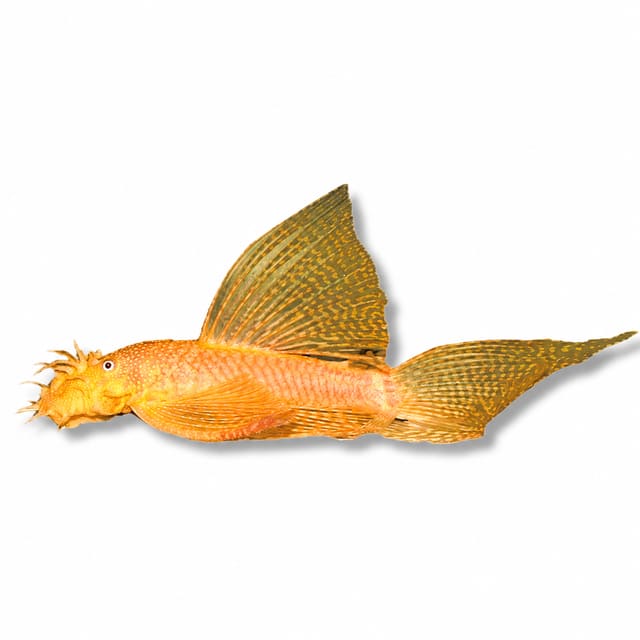
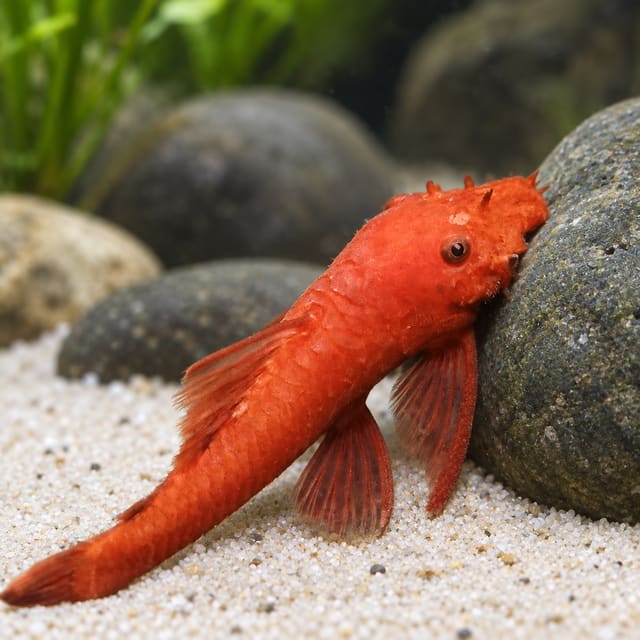
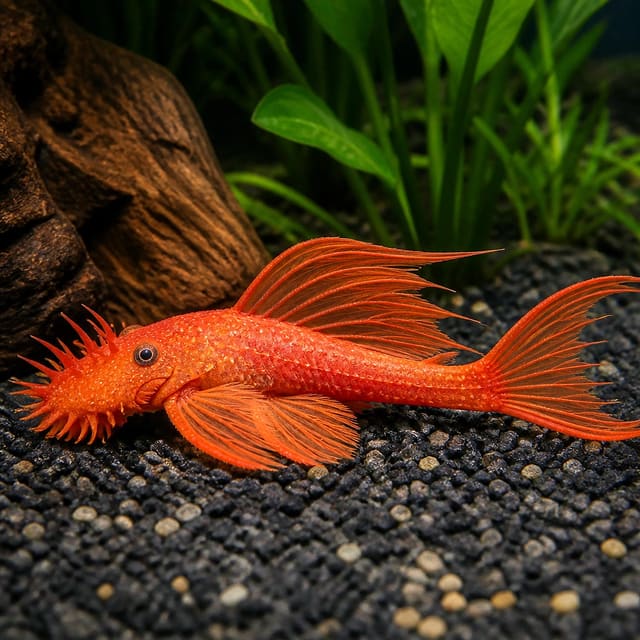
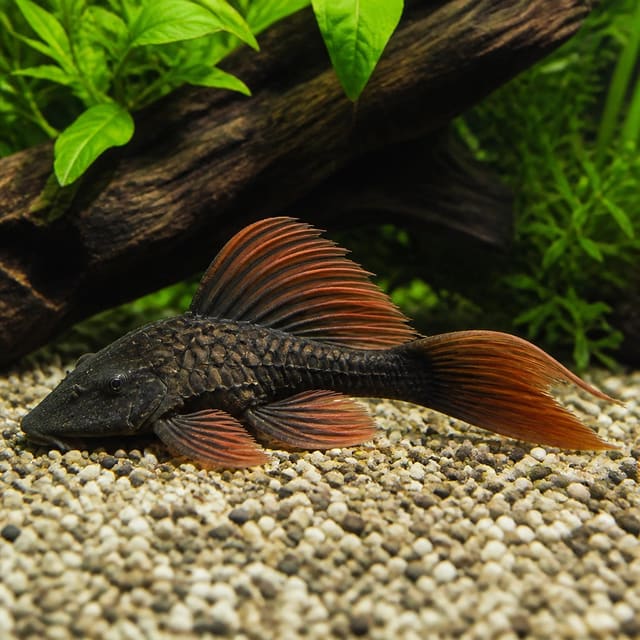
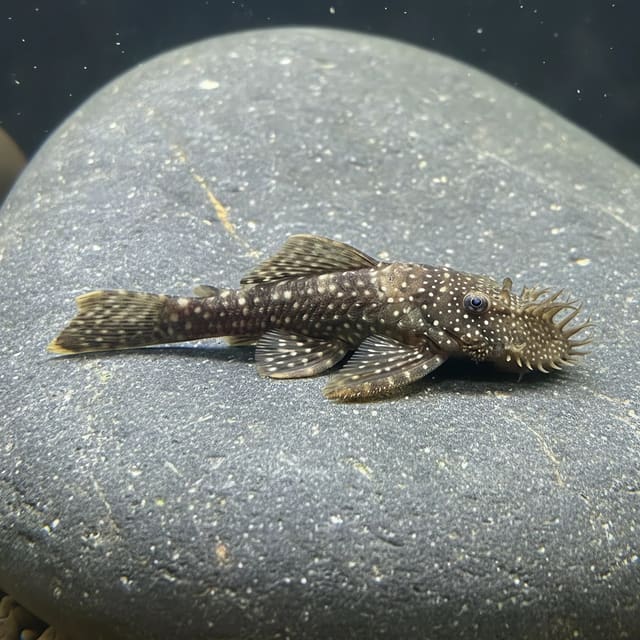
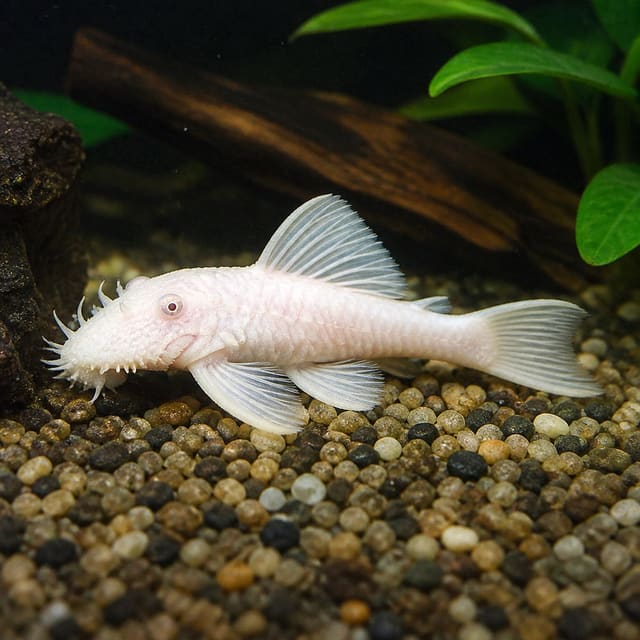
L59 Ancistrus Yellow Spot (Ancistrus sp.) is a bristlenose-type catfish for a mature tropical aquarium with wood, shelter and steady water quality. One purchase supplies one fish in the size selected; this is not a sexed offer.
Ancistrus sp.
L59 Ancistrus Yellow Spot (Ancistrus sp.) is a bristlenose-type catfish for a mature tropical aquarium with wood, shelter and steady water quality. One purchase supplies one fish in the size selected; this is not a sexed offer.
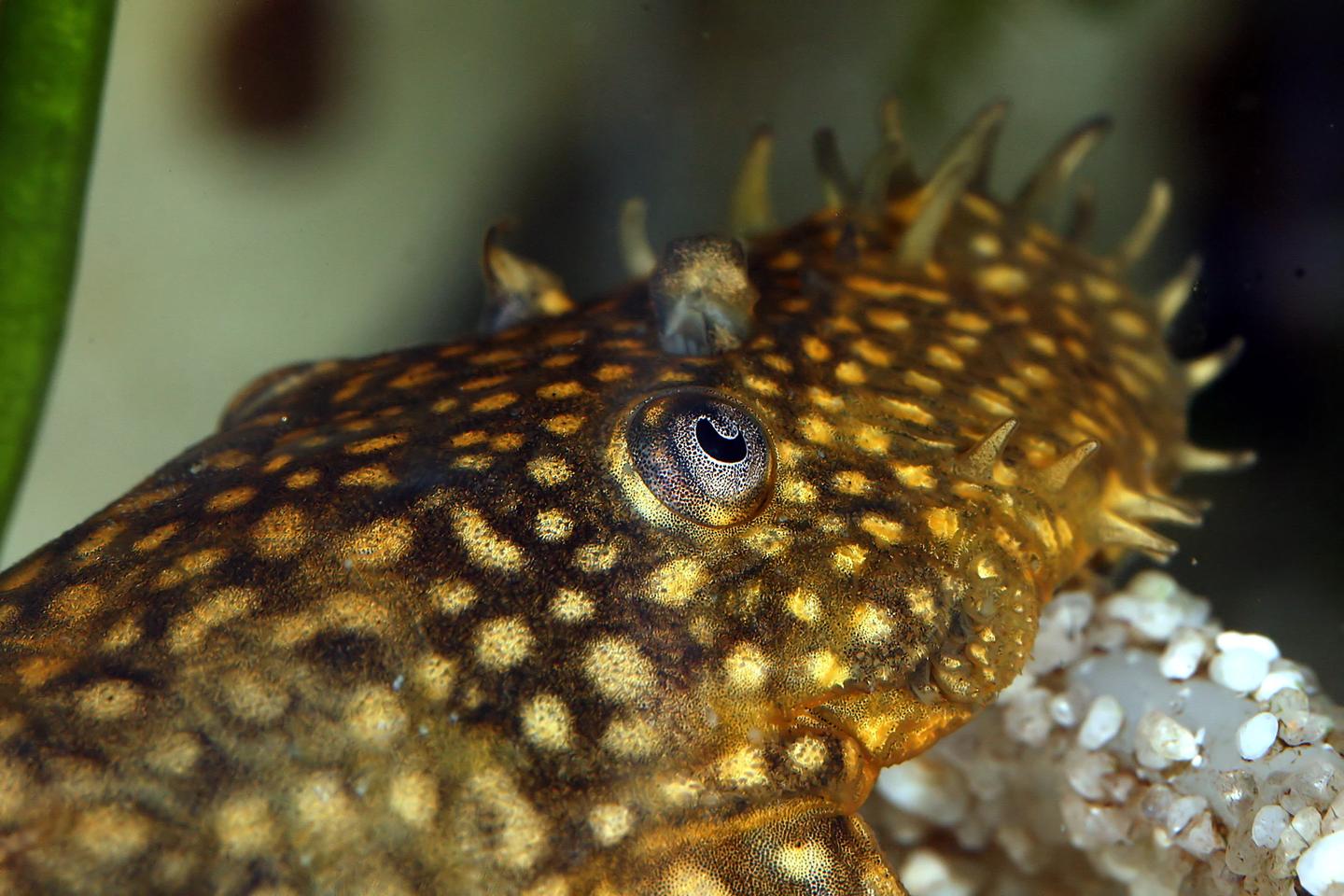
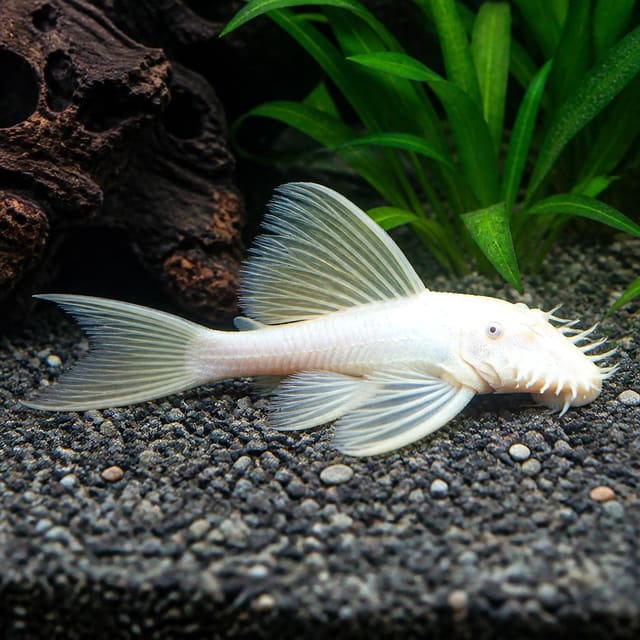
For one typical common bristlenose, start with a mature, filtered aquarium of at least 90 litres, useful floor area, wood and cover. OATA reports about 15 cm adult length, 22-27°C, pH 6-8 and 4-12 dGH. Confirm the exact trade identity before applying species-level claims.
Maintain these water conditions for optimal health and vibrant colors
L59 Ancistrus Yellow Spot (Ancistrus sp.) is a bristlenose-type catfish for a settled tropical aquarium with wood, shelter and room around the bottom. One purchase supplies one live fish in the size selected. The choices are 3–4 cm, 4–5 cm, 5–6 cm and XL; the selector shows which can actually be ordered. The size you select is the size supplied, not the adult size. Sex is guaranteed only when the selected option explicitly states male or female. This L59 Ancistrus Yellow Spot listing has no sex-guaranteed option. Choose it for the pleasure of keeping a secretive, wood-grazing catfish, with a proper feeding and maintenance plan already in place.
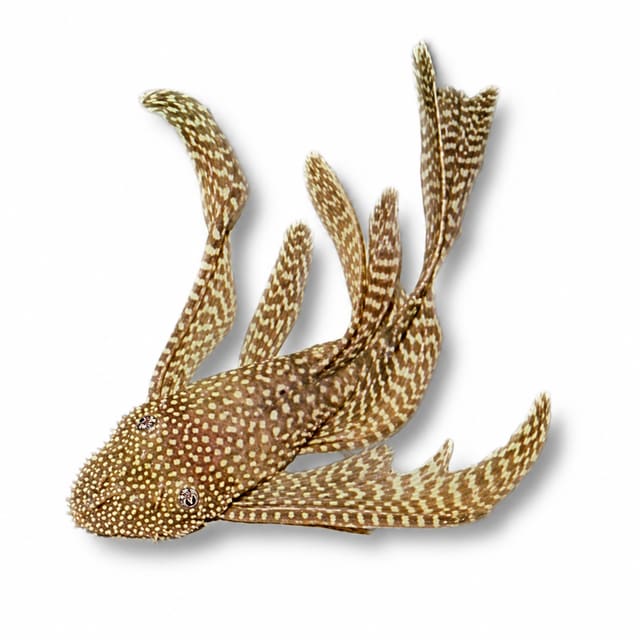
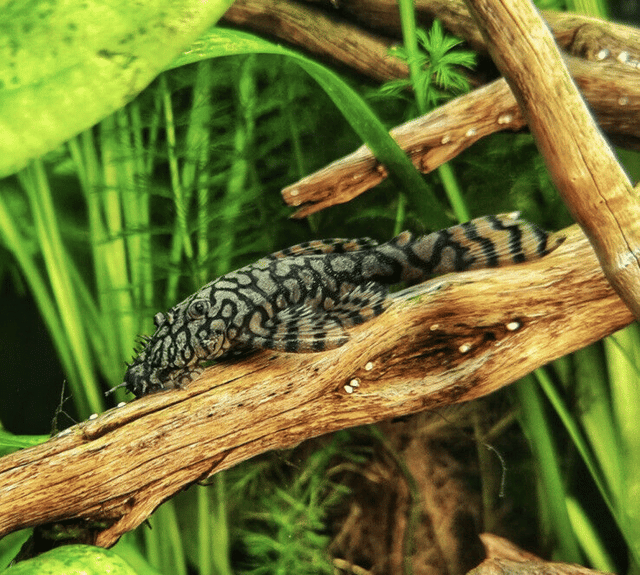
The name matters. The supplier identifies the animal as L59 Ancistrus sp. yellow spot, while the accepted taxonomy evidence establishes Ancistrus as a genus, not the species of these particular fish. The exact species has not been identified, so the care advice here follows the genus Ancistrus and its care group. L-numbers are useful trade identifiers, but a trade label and a photograph do not confirm a species, collection locality or sex. Keep that distinction in mind when comparing detailed species accounts with the fish offered here.
Ancistrus belongs to the loricariid catfish family. Bristlenose catfish typically spend much of the day close to cover and become easier to watch once the aquarium is calm. Wood, caves and shaded surfaces give this fish places to rest and forage; an open, brightly lit floor gives it few reasons to emerge. Expect an individual to choose favourite retreats rather than patrol the front glass continuously. Its spots and markings can be enjoyed without treating every photographed detail as a promise about the animal that arrives.
A juvenile can look small beside a community of midwater fish, but the aquarium must be planned for a grown bristlenose-type catfish. OATA's guidance for bristlenose catfish gives about 15 cm as a group-level adult length. That figure is a useful planning warning, not a verified maximum for an unidentified L59 species. Give the fish a tank with a generous floor area and enough room for its eventual shelter and feeding space. Avoid buying a 3–4 cm youngster on the assumption that its dispatch length is its final length.
This animal may browse algae and biofilm, but it is not a substitute for cleaning the aquarium. OATA explicitly warns that algae-grazing fish still need food and that persistent algae can reflect a maintenance or water-chemistry issue. Make a feeding routine, test water and remove waste as you would for any other catfish. A well-kept pleco can be a rewarding part of the aquarium; it cannot repair an immature filter or an overcrowded bottom layer.
Before choosing a size, consider the whole layout. Is the biological filter mature, with ammonia and nitrite under control? Is there a piece of wood and a refuge that a growing catfish can use? Can sinking food reach the bottom without being taken by faster fish? Can you clean beneath the hardscape without dismantling it every week? If those questions have practical answers, the L59 Yellow Spot is much easier to keep well. If they do not, prepare the habitat first.
The four sizes represent the supplied fish, not four different adult forms. The smaller grades need the same long-term planning as the larger ones and may be less conspicuous at first. XL is an unnumbered supplier grade, so there is no justified conversion of that label into an exact centimetre claim. Compare the live choices by their stated dispatch size and your aquarium's readiness; do not infer maturity, sex, temperament or a different species from a grade name.
For a calm introduction, have the aquarium ready before the fish is delivered: heater and filter running, water tested, wood and caves placed, and a shaded release area available. The fish may hide while it settles. Resist the temptation to move hardscape repeatedly to find it. Check that it has access to food, that its shelter is safe and that it is not being displaced by other bottom dwellers. A slow first day is more useful than trying to make a shy catfish visible immediately.
Start with a stable, filtered aquarium rather than a recently filled tank. The RSPCA explains that the biological filter supports bacteria which convert toxic ammonia to nitrite and then nitrate. This process needs time and a managed fish load. An L59 Yellow Spot will eat at the bottom, where uneaten food and trapped debris can accumulate, so filter performance and accessible cleaning space matter as much as the aquarium's visible décor. Test water regularly instead of assuming that clear water is safe.
For this unidentified Ancistrus, choose the aquarium by adult room, usable floor area and companions rather than relying on one claimed species minimum volume. OATA advises choosing as large an aquarium as practical because more water generally gives a more stable environment. Assess floor area, adult room, filtration, oxygenation and existing occupants together. A long tank with workable shelter and feeding space may serve a bottom-dweller better than a tall aquarium with the same litres and a crowded floor.
Place at least one piece of suitable aquarium wood where the fish can graze and shelter. OATA's bristlenose guidance specifically mentions cover and wood. Add stable caves or crevices with openings the fish can enter and leave without becoming trapped as it grows. Arrange them so water can circulate and you can remove detritus. A cave with a dark opening near a quiet feeding area is more useful than a decorative stack that collects waste. Do not wedge a growing pleco into a narrow ornament.
Choose a substrate that can be kept clean and that does not leave sharp, unstable edges around the fish's resting sites. Sand or smooth fine gravel can work when maintained well. Wood, rockwork and plants can divide the bottom into several sheltered areas. Leave routes between them so the catfish need not cross an entirely exposed open floor. Fix heavy stones securely before the fish is introduced; it may explore beneath objects, and loose pieces can shift during maintenance.
Live plants can provide cover and shade, but the fish's feeding and cleaning needs still set the layout. Plants attached to wood or rock leave more of the floor accessible than a dense tangle of roots and ornaments. If leaves are marked, consider the whole situation before assuming the catfish is a dedicated plant eater: check whether its prepared food reaches it, whether vegetables are offered, and whether leaves were already damaged. Do not use a plant claim to replace feeding observation.
OATA's tropical algae-eater sheet lists 22–27 °C and pH 6.0–8.0 for bristlenose catfish. These are broad bristlenose-group guidelines, not a measured optimum for this unresolved L59 species or a reason to chase every endpoint. Aim for steady, appropriate tropical conditions within the group guidance and compare them with the needs of existing fish. Use a reliable thermometer, test pH alongside ammonia and nitrite, and change water in a way that avoids abrupt swings. A sudden shift within a published interval can be harder on fish than a stable value near its middle.
The same OATA sheet states that ammonia and nitrite should be zero mg per litre. Treat any detectable result as a reason to investigate immediately: check the filter, the feeding load and the tank's maturity. It also warns against overfeeding because food left to break down adds toxic waste. The practical routine is to feed an amount the fish can take, remove vegetables before they spoil, and test again after changes in stocking or filter maintenance. Do not rely on a pleco to consume every remnant left by other fish.
Measure your tap and aquarium hardness, keep conditions stable and seek species-specific advice if your water is unusually hard or soft. Do not adopt a hardness figure written for a different algae-eating fish. The water chemistry guide explains what to test, and the water matcher can help compare your readings with stated guidance.
Use efficient filtration and keep the outlet moving the surface enough to support gas exchange. The evidence establishes the need for a filter and clean water, while the exact flow rate for this unnamed species is not documented. Provide areas of movement as well as quieter cover; watch where the fish actually rests and feeds. If it avoids the whole exposed bottom, improve shelter before assuming the solution is more current. Clean the filter according to its design without wiping out the biological colony through an abrupt full replacement.
OATA says algae-grazing fish need prepared food and ideally fresh vegetables. Offer a suitable sinking algae-based wafer or other plant-rich bottom food so the L59 Yellow Spot can eat after food reaches its level. A lit aquarium may show patches of algae and biofilm, but those surfaces vary from day to day and cannot be measured as a complete ration. Watch the fish's condition and feeding opportunity rather than treating visible algae as proof it has eaten enough.
Fresh cucumber is one vegetable example in the OATA guidance. Wash vegetables thoroughly because residues may harm fish or invertebrates. Give a modest portion that the catfish can reach, then remove uneaten material before it softens and fouls the water. A vegetable clip or safe placement near cover can help in a busy aquarium. Do not leave large pieces for days simply because a pleco may return to them; decomposition works against the clean water it needs.
Feed with competition in mind. Midwater fish may intercept a sinking tablet and other bottom dwellers may congregate at the same spot. Offer food close to shelter and observe discreetly after lights dim if the fish is shy. If you keep more than one bottom-feeder, make separate feeding points and check that the L59 has a chance to take food. Feeding more into the same crowded spot may increase waste while leaving the quiet fish hungry.
Wood and hard surfaces provide useful grazing opportunities, but a fish spending time on wood is not evidence that it eats nothing else. Maintain a varied, appropriate feeding routine and inspect the fish's body condition over time. Avoid an abrupt switch to rich foods or oversized portions. If a fish stops feeding, first check water and whether tank mates are displacing it; seek knowledgeable help for persistent problems rather than using treatment without a diagnosis.
Look for the fish during its normal active periods without tearing apart its refuge. Confirm that it can use its cave, that food is reaching it and that it moves normally when undisturbed. Compare its appearance across days rather than judging colour during one stressful introduction. The most useful observation is often the pattern: a fish that habitually grazes and rests in known places gives you a baseline for spotting a change.
Each week, test water, remove accumulated debris from accessible areas and make water changes appropriate to the aquarium's load. Inspect beneath vegetable clips, beside wood and at cave entrances, where fragments can collect. OATA advises regular testing and careful feeding; the RSPCA explains why filtration and the nitrogen cycle matter. A routine that leaves the filter functioning and prevents waste build-up is more valuable than waiting for the glass to look dirty.
When rearranging the aquarium, keep an escape path from each refuge and be alert to a fish resting inside wood or a cave. Move hardscape gently, especially if the catfish has made it a favourite hiding place. If you need to net it, avoid unnecessary chasing and protect its fins from snagging. These are practical handling precautions, not claims that every L59 individual will behave identically.
Many algae-eating fish look tempting during an algae outbreak. Investigate light, nutrients, maintenance and stocking before adding livestock for that reason alone. The L59 Yellow Spot brings its own adult space, food and waste load. If the aquarium is already near its practical limit, an algae brush and better maintenance are safer than adding a catfish with nowhere comfortable to live.
Complete the aquarium setup before dispatch: mature filter, stable temperature, tested water and shelters already in place. A newly delivered fish should not have to wait in its bag while a cave is bought or a heater is adjusted. The first tropical tank guide is useful if you are still establishing the system. Give the catfish a quiet introduction and avoid bright, repeated disturbance while it settles.
Tropical Fish Co's delivery and Live Arrival Guarantee policy gives the current packing, receipt and claim steps. Be available to receive live fish, open and inspect the parcel on arrival, and follow its acclimatisation guidance. The policy asks for a continuous video from the sealed parcel through the fish still in its bag for a Live Arrival Guarantee claim; that is claim evidence, separate from normal aquarium care. If something appears wrong, contact the shop the same day with the order number and the required evidence.
Once the fish is released, leave it near cover and check water and behaviour over the following days. Offer a small sinking feed where it can find it, then remove leftovers. A shy animal may use the aquarium at quiet times before it ventures out while people are nearby. Give it time, but do not let shyness conceal poor water, blocked shelter or competition for food.
Plan for change as the fish grows. A 3–4 cm animal will not use space in exactly the same way when larger. Check caves for safe clearance and reconsider the bottom layout as other occupants mature. Good long-term care is an ongoing match between the animal, the floor area, the filter and the group of fish around it.
A good habitat gives the catfish a choice between shade, grazing surfaces and an open route to food. Watch which parts of the tank it uses after the first settling period. If it only appears when all other fish have withdrawn, place a second feeding point closer to its refuge and check for competition. If it moves freely between wood and the floor, keep that route clear when plants grow or décor changes. Observation should guide small, reversible adjustments; there is no single arrangement of ornaments that suits every aquarium.
Keep water tests and maintenance notes simple enough to repeat. Record temperature, pH, ammonia and nitrite, especially after adding livestock or cleaning a filter. A stable pattern lets you recognise a real change. If ammonia or nitrite rises above zero, reduce feeding waste, review the biological filter and seek knowledgeable advice promptly. Do not respond by adding more algae-eating fish. The RSPCA’s explanation of the nitrogen cycle makes clear why a filter is part of the fish’s life-support system rather than an optional convenience.
Look at the whole bottom community when food is offered. The fastest fish to reach a wafer may not be the one that needs it. Watching briefly at a quiet time can show whether this pleco actually eats or merely approaches the area after it is empty. If needed, split a modest ration between sheltered locations. Clear away what remains, because repeated heavy feeds can turn an attempt to help one shy fish into deteriorating water for all of them.
As the fish grows, revisit both shelter and cleaning access. A cave that works for a juvenile may become too narrow, and a newly shaded corner may collect more waste than it did before. Move or replace an ornament carefully, with the fish’s resting place in mind. Keep a second refuge available so that maintenance does not leave it exposed. These small checks are particularly valuable when the original purchase size was only a few centimetres.
Finally, separate normal secretive behaviour from a problem. An Ancistrus may spend long periods under cover, especially in bright light, but it should still have an opportunity to feed and live in clean, stable water. A fish that cannot reach food, is repeatedly chased or appears altered from its usual behaviour deserves a closer check of the tank. Start with measurable water quality and the social layout before guessing at a disease or adding treatment.
OATA says bristlenose catfish may be kept alone, in pairs or in small groups, and that it is usually best to have one male per group. For this unsexed L59 offer, do not plan a guaranteed pair or assume a young fish's sex from its photograph or size. A single fish can use an aquarium with suitable cover. More than one calls for extra floor area, separate shelters, visual breaks and several feeding places. Observe the individuals as they mature and be ready to separate fish if access to shelter or food becomes contested.
Adult male bristlenose catfish can be protective of preferred caves. The group guidance supports that caution; it does not prove that every unsexed juvenile here will become territorial. A tank with one cramped cave can cause trouble even if the fish are otherwise compatible. Spread cover along the bottom, avoid forcing animals to pass through one narrow entrance, and watch whether a dominant fish blocks another's route to food.
Peaceful community conditions are a sensible starting point, but no named tetra, rasbora, cichlid or other species is universally safe with every individual and aquarium. Compare adult size, water needs, feeding style and temperament before adding companions. Midwater activity is less likely to crowd the catfish's floor space than a dense group of cave-using bottom fish, yet fast feeders can still take its sinking food. Compatibility is a continuing observation, not a permanent label.
Avoid a combination where large predatory fish can swallow or injure the pleco, or where aggressive bottom dwellers prevent it using shelter. Also avoid treating another pleco listing as an automatic companion. Two different names can still describe animals competing for the same wood, cave and evening feed. If you already keep a loricariid, assess the tank's usable bottom area and the established fish's behaviour before adding this one.
Plant cover, wood and a calm layout help a shy catfish coexist with active neighbours. Offer more than one shaded route so it can move without crossing an exposed territory. If you see repeated chasing, food theft or a fish trapped in a corner, adjust the stocking or layout. Adding extra food without solving the conflict can worsen water quality. A suitable community is one in which this individual can rest and eat consistently.
The bristlenose pleco collection is useful for comparing the kinds of fish on offer, but each alternative has its own identity and care needs. Make a buying comparison first; decide whether any two fish can share a tank only after checking their adult space, water and behaviour together.
OATA says bristlenose catfish as a group grow to about 15 cm. Plan space beyond the dispatch size; the exact adult length can vary because these trade fish are identified only to genus.
Choose a mature filtered aquarium with enough floor area for a grown bristlenose-type catfish, wood, shelter and the existing fish. OATA advises choosing as large a tank as practical for greater stability.
One can be kept alone. OATA's bristlenose guidance allows pairs or small groups but usually favours one male per group. This offer is unsexed, so allow extra room and separate caves and feeding places if keeping more than one.
It suits a keeper who can maintain a mature filter, test water and provide wood, shelter and sinking food. Establish the aquarium first; a new or unstable tank is a poor place to learn by adding a pleco.
Offer suitable sinking algae-based food and washed fresh vegetables such as cucumber. It may graze algae and biofilm, but OATA says algae-grazing fish still need supplementary feeding. Remove uneaten vegetables before they foul the water.
OATA's broad bristlenose guidance gives 22–27 °C and pH 6.0–8.0. These are group-level aquarium guidelines, not a species-specific optimum for this unidentified L59. Keep the water stable and test ammonia and nitrite, which should be zero mg per litre.
It is a bristlenose-type bottom dweller rather than a fish selected for fin nipping. OATA cautions that a group usually works best with one male, so provide separate refuges and watch for disputes over caves as fish mature.
Choose peaceful fish whose adult size, water needs and feeding behaviour fit the same aquarium, while keeping the bottom from becoming crowded. Reassess the mix as the catfish grows.
Tropical Fish Co says it hand-packs live fish in oxygenated bags and an insulated box, with a heat pack when conditions call for it, and uses a licensed live-animal courier. Follow the current delivery page for the confirmed date, receipt and Live Arrival Guarantee steps.
WoRMS establishes the accepted Ancistrus genus and family, without identifying these trade fish to species. The OATA tropical algae-eater care sheet supplies broad bristlenose care guidance. The RSPCA aquarium environment advice explains filtration and water stability. Tropical Fish Co delivery guidance covers packing, receipt and claims.
No reviews for this item yet. Bought one? Honest reviews only, good or bad.
What customers say about ordering from us
Easy website plenty of info on fish your buying great to pick a time slot
TRACEY DURRANT · 7 Oct 2026
Got some lovely fish thank you
Kevin Mackie · 7 Oct 2026
Reviews of our shop, collected by Judge.me, an independent third-party review collector. Newest first.