By Tropical Fish Co Editorial Team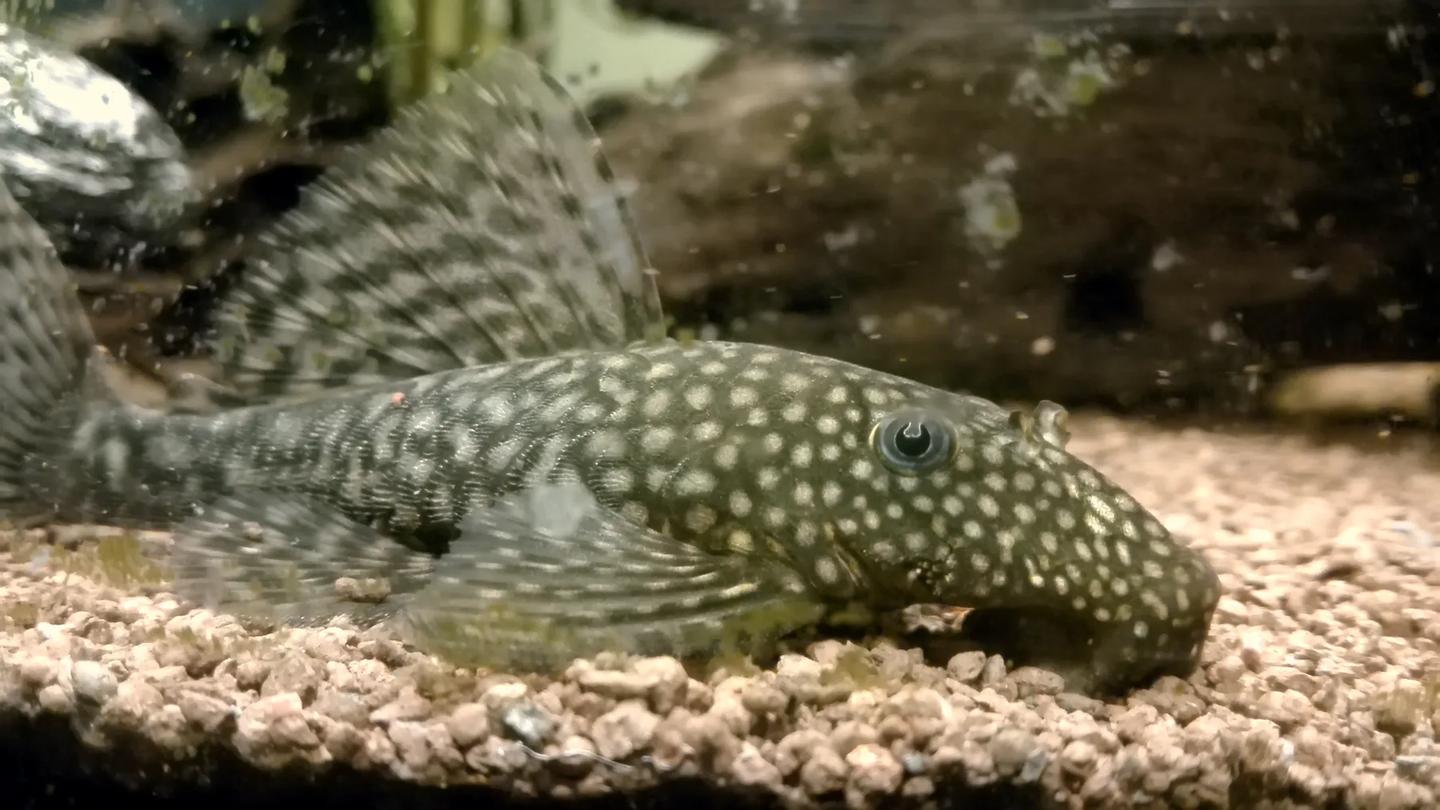
How big do bristlenose plecos get?
For a typical common bristlenose in a UK aquarium, plan for about 15 cm adult length. That is the practical figure in OATA's UK care guidance, and it is the safer number to use when deciding whether a small juvenile has a suitable long-term home[5].
You may also see 9.1 cm in scientific databases. FishBase records that maximum for verified Ancistrus cirrhosus as standard length, a measurement that stops at the base of the tail[2][3]. It is not a promise that every aquarium bristlenose will measure 9.1 cm from nose to tail tip.
The honest answer is therefore not one over-precise number. Use about 15 cm as the practical adult planning figure, keep the 9.1 cm scientific record attached to its exact species and measurement convention, and confirm the identity of the fish being offered.
Plan around 15 cm adult length. FishBase's 9.1 cm figure is standard length for true A. cirrhosus, with the tail excluded. A trade bristlenose may be an uncertain Ancistrus lineage, so neither figure is a ruler guarantee for an unverified individual.
Why do 9.1 cm and 15 cm both appear?
The numbers come from different kinds of evidence:
| Figure | Source and scope | What it can tell you | What it cannot tell you |
|---|---|---|---|
| About 15 cm | OATA practical UK care guidance for bristlenose catfish | A cautious adult planning figure for a home aquarium | The exact maximum, measurement convention or lineage of one shop fish |
| 9.1 cm SL | FishBase record for true Ancistrus cirrhosus | The published maximum standard length in that species record | Total length including the tail, or the size of every captive common bristlenose |
FishBase explains that a maximum-length field records the largest reported specimen, not an average size for every adult[4]. Its A. cirrhosus page also carries a taxonomic caution. This matters because a database maximum, an aquarium-care estimate and a seller's current size are three different facts.
The trade identity adds another boundary. Ancistrus cirrhosus is a valid species in Loricariidae, published from the Paraná basin[1]. But peer-reviewed work recovered five major lineages among sampled Paraná-basin Ancistrus, and specialist aquarium references treat the familiar captive common bristlenose identity cautiously[6][7]. An unvouchered brown, albino or longfin fish should not automatically be labelled as verified A. cirrhosus.
Standard length versus total length
Two fish described as “10 cm” may not have been measured in the same way.
| Measurement | Start | End | Includes tail fin? |
|---|---|---|---|
| Standard length (SL) | Front of the snout | Base of the tail / end of the caudal peduncle | No |
| Total length (TL) | Front of the snout | Furthest natural tip of the tail fin | Yes |
FishBase defines SL as snout to the end of the caudal peduncle, excluding the caudal fin[3]. Total length will therefore be longer on the same fish. There is no responsible fixed conversion for an unidentified bristlenose: tail shape, posture, damage and lineage can all affect the difference.
When reading a listing or asking a seller, request three separate facts:
- Current measured length and whether it is SL or TL.
- Likely adult length and the source behind that estimate.
- Scientific or trade identity, including any uncertainty.
That language is much more useful than “small”, “large” or “full grown”.
How to estimate your fish without handling it
Do not chase, net or straighten a fish merely to satisfy curiosity. A home estimate can be made while it is calm against the front or side glass:
- Wait until the body is side-on and reasonably straight, not curved around wood.
- Place a removable ruler or two small tape markers on the outside of the glass. Keep them in the same plane as the fish as closely as possible.
- Record snout-to-tail-base for SL and snout-to-tail-tip for approximate TL. Label which value you used.
- Repeat on another day instead of treating one photograph as exact.
Perspective makes a photograph unreliable when the fish is behind the scale, angled toward the camera or partly hidden. A product photo without a known scale cannot prove sale size or adult size. Track broad change over time; do not diagnose growth or health from one image.
Do bristlenose types and colours change the answer?
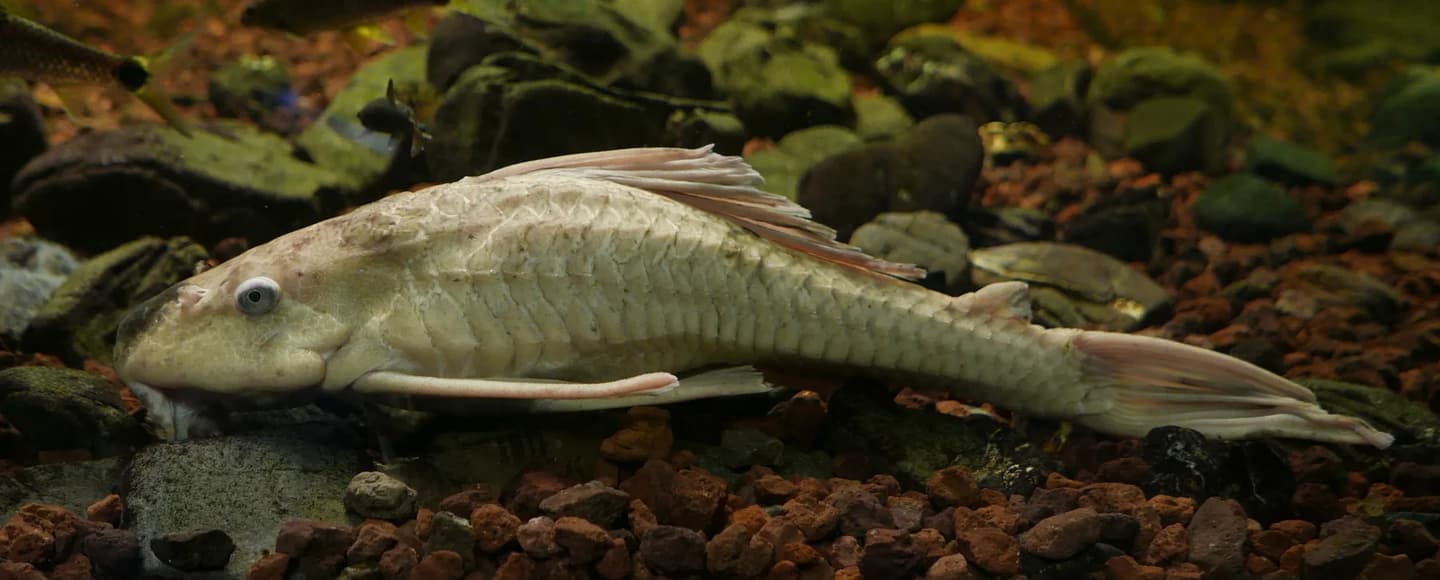
OATA notes that long-finned, albino and white bristlenose forms occur in the aquarium trade[5]. Those descriptions tell you about visible form, not a complete scientific identity. “Albino”, “super red”, “longfin”, “brown” and similar labels do not by themselves prove:
- exact species or ancestry;
- a sex-specific adult maximum;
- current age or mature status;
- identical care across every captive line;
- health, temperament or present availability.
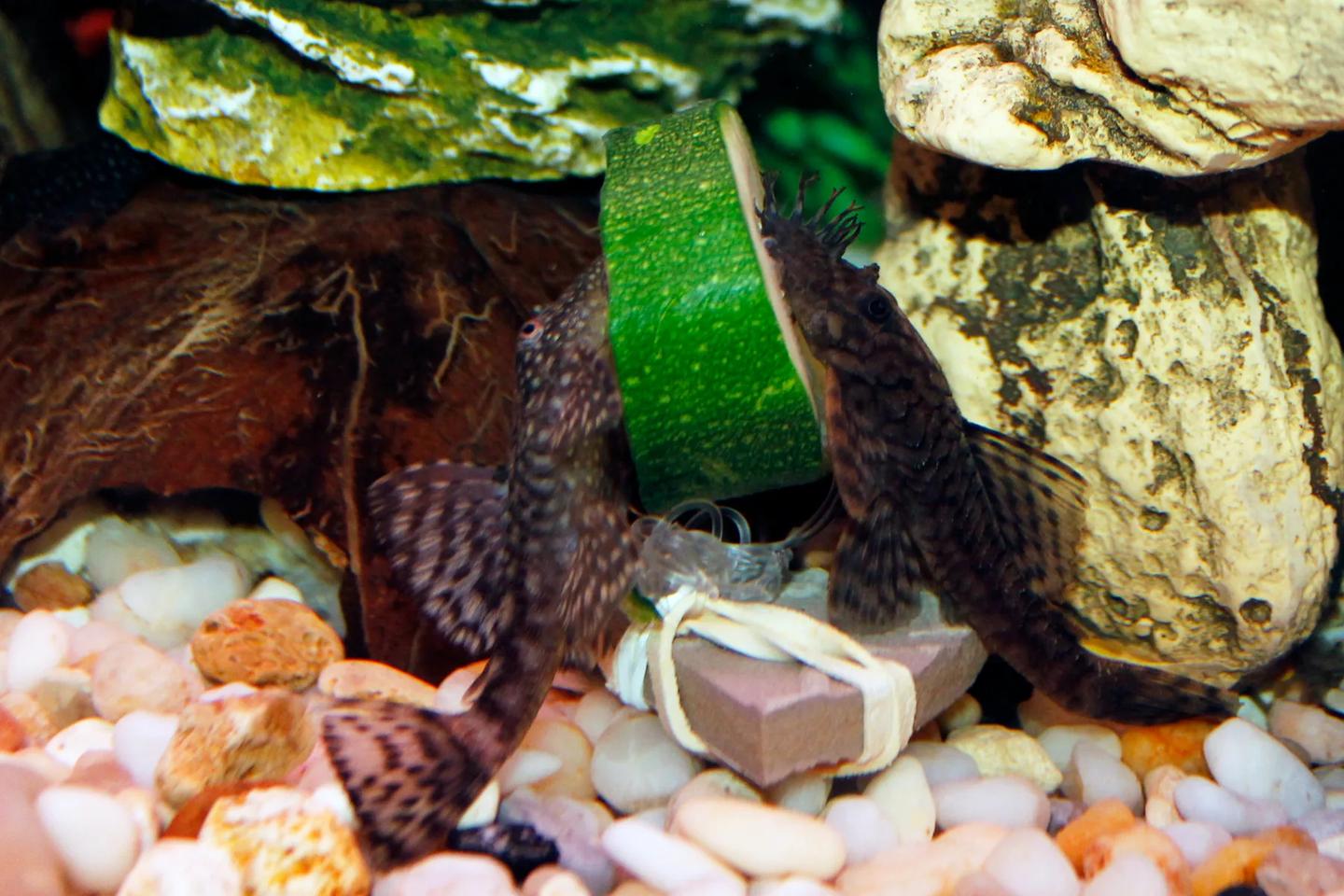
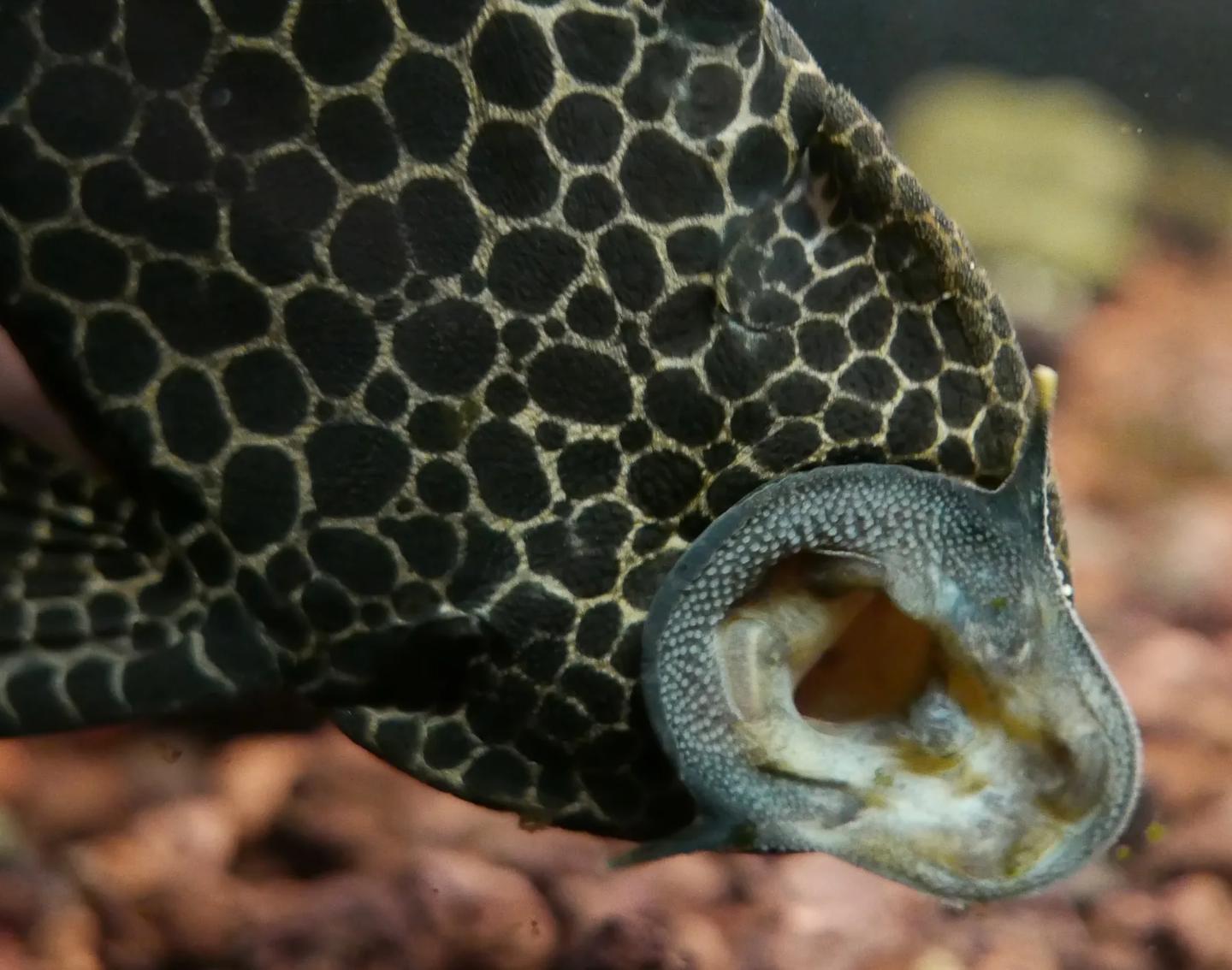
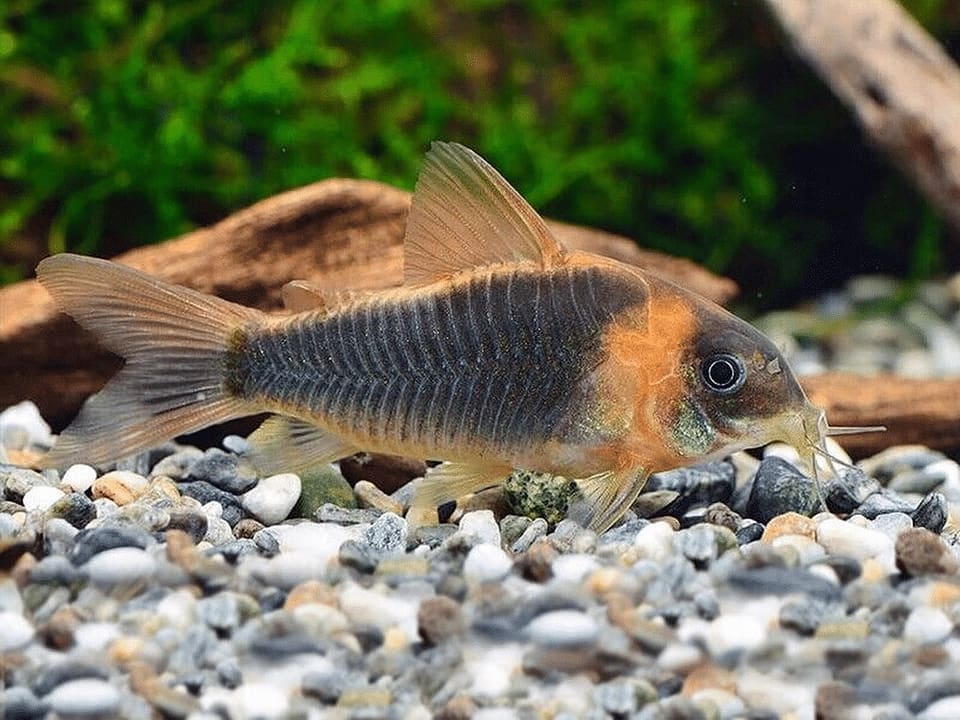
This is why the page's photographs are labelled cautiously. The pale fish illustrates an albino Ancistrus form; the pair illustrates visible bristle differences; the close-up illustrates the ventral mouth. None is used as a scale reference or a stock promise.
Google Images currently shows this URL for searches about types, colours, male fish and full-grown size. Literal alt text and source-limited captions help those images answer the visual question without pretending that appearance verifies biology.
Male versus female size and bristles
OATA says males can be distinguished by bristles on the end of the nose and recommends only one male per group as the usual starting point[5]. A mature male often has the most conspicuous branched tentacles, while a female may have fewer around the snout margin.
That is a clue, not an infallible certificate. A juvenile may not yet show the expected features, viewing angle can hide them, and lineage can affect appearance. The selected sources do not establish a universal rule that every male reaches a larger adult length than every female. Do not write a sex-specific size promise into a listing without evidence for that exact fish or lineage.
How fast do they grow, and when are they full grown?
The live UK mobile search results include claims that a bristlenose reaches full size by a fixed age. The authoritative sources selected for this page do not establish one dependable growth timetable for the mixed or uncertain Ancistrus lines in the aquarium trade.
Growth is not a calendar guarantee. Genetics, starting age, food access, water quality, temperature, disease history and aquarium conditions can all affect an individual. A fish that has stopped changing visibly may be mature, temporarily growing slowly or in poor condition; length alone does not diagnose the reason.
Use dated measurements taken the same way if you need a record. Avoid promises such as “fully grown in two years”, and do not infer an exact age from centimetres. If appetite, body condition, breathing or behaviour changes, test the aquarium system and seek qualified advice rather than trying to accelerate growth.
What tank size fits an adult bristlenose?
Tropical Fish Co's full Bristlenose Pleco care guide uses at least 90 litres with useful floor area as a cautious starting screen for one typical adult. It is a store welfare policy, not a controlled biological threshold. OATA supports the need for cover, wood, filtration and stable water but does not publish a universal minimum litre value for bristlenose[5].
A “20 gallon” answer is also ambiguous: US and imperial gallons are different volumes. More importantly, the label says nothing about the tank's footprint, maturity or existing load. Check:
- useful horizontal area around wood and refuges;
- a mature filter with ammonia and nitrite at zero;
- stable temperature and water chemistry;
- the adult size and waste of every tank mate;
- food access at the bottom;
- separate refuges and a separation plan if keeping more than one.
The RSPCA advises establishing filtration and checking the aquarium's biological maturity before adding fish[8]. A tall, recently filled aquarium does not become suitable merely because its nominal volume clears a number.
How many bristlenose plecos can live together?
OATA says bristlenose may be kept alone, in pairs or small groups, while usually limiting a group to one male[5]. This is not a litres-per-fish formula. Multiple fish need more mature capacity, several refuges, dependable feeding access and observation after maturity.
Start with one unless the aquarium has a deliberate multi-fish plan. Do not assume two juveniles will remain compatible, or that a larger volume guarantees peace around preferred caves. Have a cycled separation option before testing a pair or group.
Bristlenose versus “common pleco” size
“Pleco” is a loose aquarium-trade name, not one species. A small juvenile sold under a common-pleco label may belong to a different genus with a very different adult commitment. The size of the fish today does not resolve that identity.
Before buying, confirm Ancistrus and ask for any known lineage. If the seller cannot distinguish the fish from larger plecos, pause. The Common Pleco guide owns that comparison, while the Ancistrus guide will receive its own genus and L-number audit. This page remains narrowly responsible for bristlenose size and measurement.
Size checks before buying in the UK
Use this checklist even when the fish looks small in a photograph:
- Identity: the label says Ancistrus and makes uncertainty explicit.
- Current size: the seller gives a measured value and names SL or TL.
- Adult planning: your decision allows roughly 15 cm, not only the sale size.
- Tank: at least the 90-litre cautious screen for one typical adult, with useful floor area and mature filtration.
- Social plan: one male per group is the cautious default; extra fish have separate refuges and an exit plan.
- Evidence: colour, bristles or fin length are not being used as proof of exact species or final size.
- Commerce: the exact product page, not an evergreen guide, owns today's size, sex, price and availability.
When the educational checks pass, use the Bristlenose Pleco shop hub to see the current range. Product pages must be checked at the time of purchase; this page contains no SKU, price, availability, Product or Offer claim.
Evidence method, corrections and next steps
This guide separates practical UK planning from species-level database records. It does not convert 9.1 cm SL into a guessed total length, identify a photographed fish beyond its source label, publish a universal growth age or claim that a colour form has one guaranteed maximum.
The source set combines a taxonomic catalogue, FishBase data and measurement methods, peer-reviewed lineage research, UK trade guidance, a specialist identity reference and UK welfare guidance. Each source is used only for the claim it can support.
For temperature, water, feeding, wood, tank mates and health, continue to the evidence-bounded care guide. For live buying information, use the shop hub. Forms, email, feedback and newsletters are not leads or ecommerce conversions; commercial measurement is limited to add to cart, checkout, purchase and revenue.