Moderate
Bristlenose Pleco (Ancistrus sp.)
22–27°C · pH 6–8
From £3.51Some sizes on sale

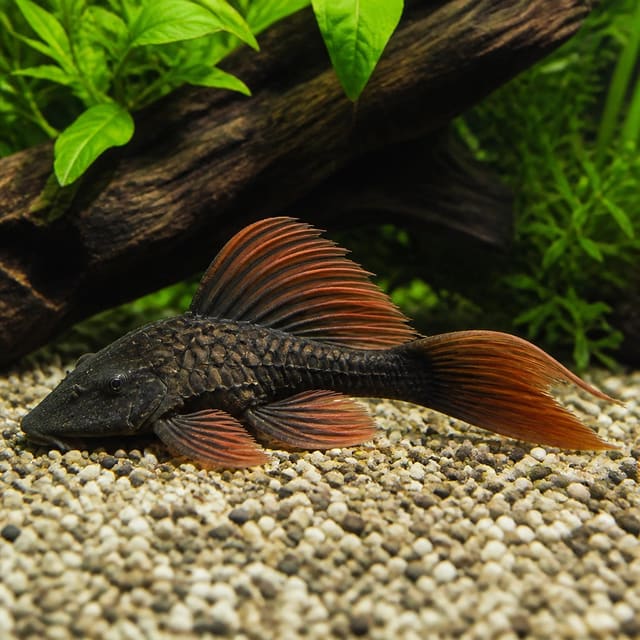
The Snow White Longfin Bristlenose Pleco (Ancistrus sp.) is a loricariid catfish from South America and Panama. It suits keepers prepared to provide filtration, cover, wood and supplemented grazing; OATA’s bristlenose guidance gives 22–27°C and pH 6.0–8.0. Sold individually in 3–4 cm, 4–5 cm, 5–6 cm and 6–8 cm dispatch sizes.
Ancistrus sp.
The Snow White Longfin Bristlenose Pleco (Ancistrus sp.) is a loricariid catfish from South America and Panama. It suits keepers prepared to provide filtration, cover, wood and supplemented grazing; OATA’s bristlenose guidance gives 22–27°C and pH 6.0–8.0. Sold individually in 3–4 cm, 4–5 cm, 5–6 cm and 6–8 cm dispatch sizes.
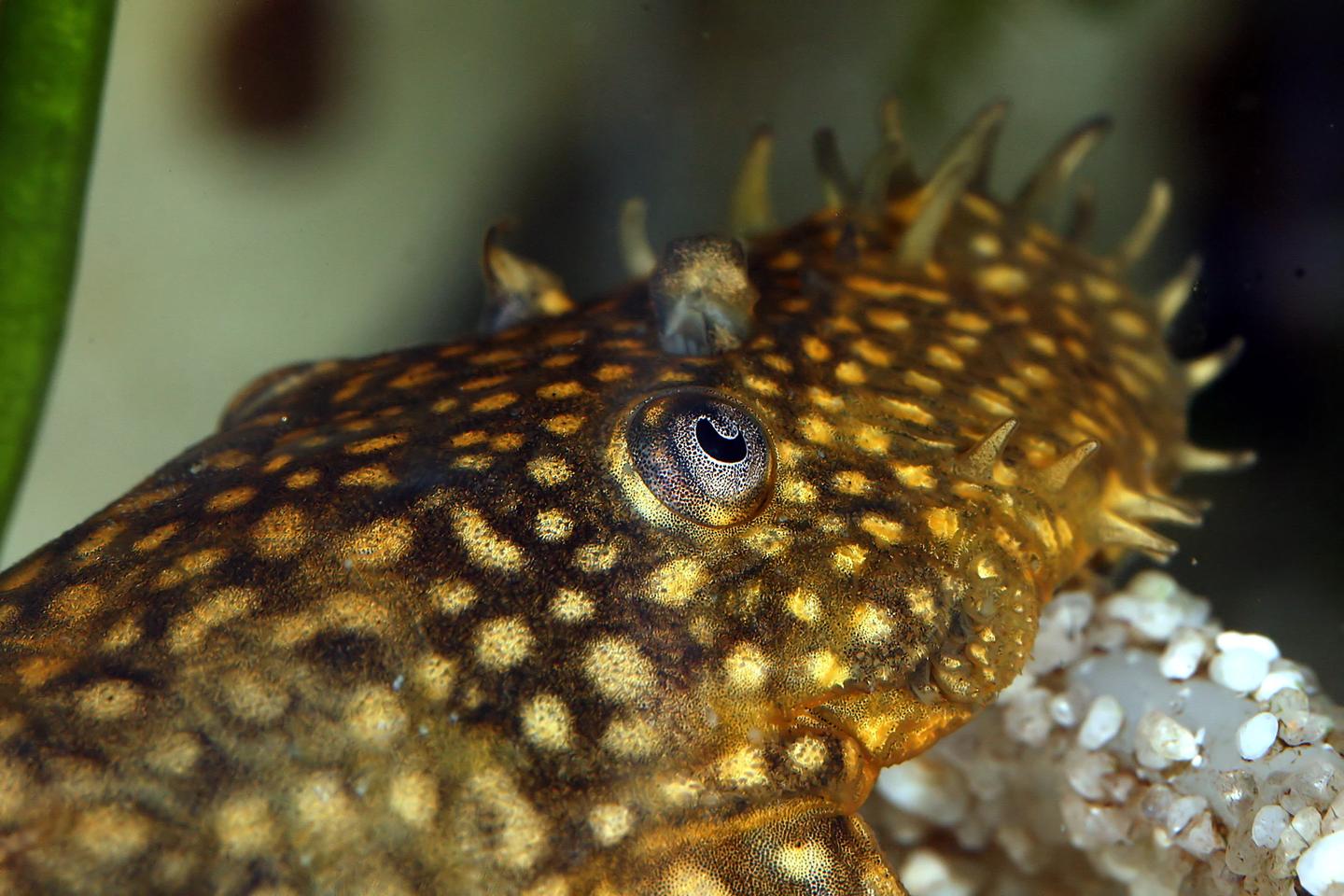
For one typical common bristlenose, start with a mature, filtered aquarium of at least 90 litres, useful floor area, wood and cover. OATA reports about 15 cm adult length, 22-27°C, pH 6-8 and 4-12 dGH. Confirm the exact trade identity before applying species-level claims.
Maintain these water conditions for optimal health and vibrant colors
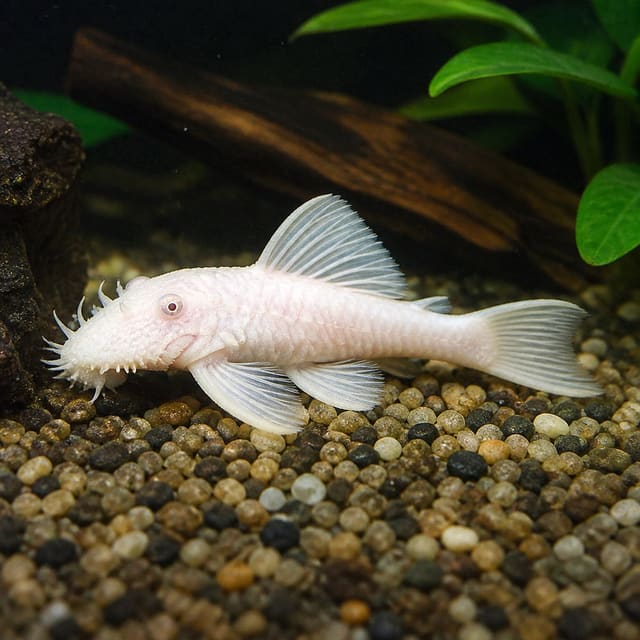
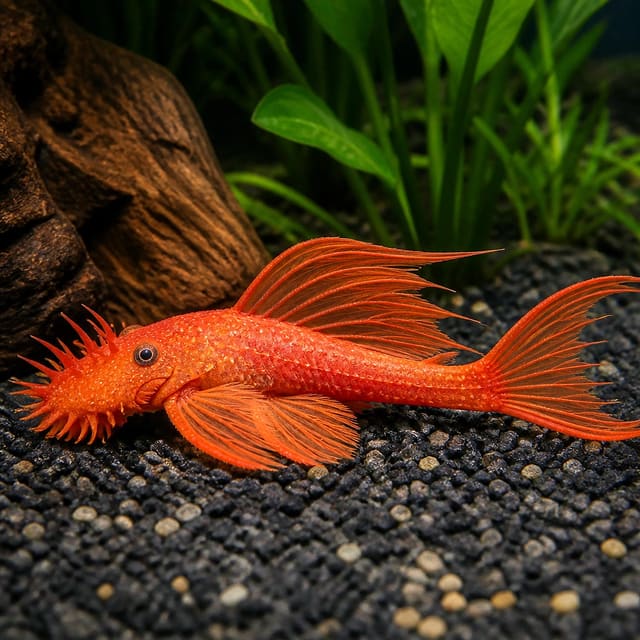
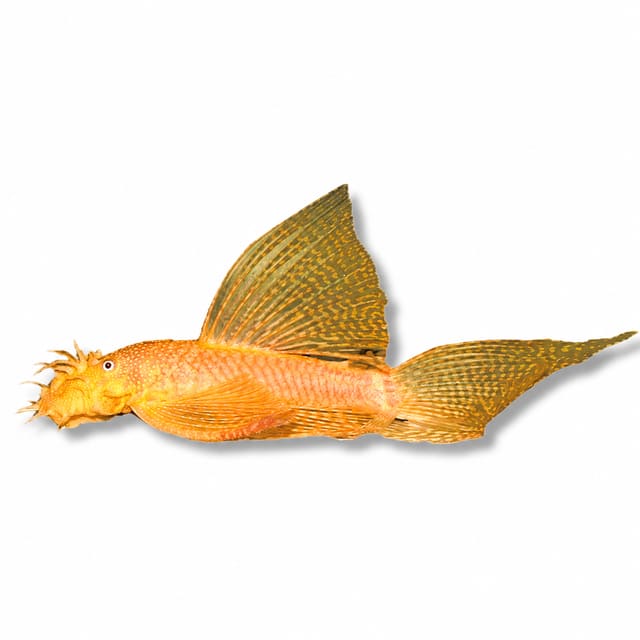
The Snow White Longfin Bristlenose Pleco is a pale, extended-fin form identified as Ancistrus sp., a loricariid catfish from South America and Panama. “Snow White” describes the creamy-white appearance associated with this form, while “Longfin” distinguishes its elongated fins. It suits keepers prepared to provide biological filtration, cover, wood, supplementary food and weekly water testing rather than relying on the fish to solve an algae problem.
The WoRMS taxonomy entry for Ancistrus places the genus in the armoured-catfish family Loricariidae and the order Siluriformes. The scientific label stops at the genus rather than naming a single species, so genus and care-group guidance form the basis for planning.
The Wikipedia summary for Ancistrus describes nocturnal freshwater fish native to South America and Panama. It also records bushynose catfish, bristlenose catfish and bristlenose pleco as aquarium names for members of the genus. “Pleco” is broad hobby shorthand, so Ancistrus sp. is the more useful identity when checking care.
Plan the aquarium around an adult bristlenose rather than around its dispatch measurement. The keeper should be ready to maintain a working filter, retain sheltered areas and feed the fish even when algae is visible. You can also browse the bristlenose pleco collection when comparing related forms.
One purchase supplies one animal in the size selected on the live selector. The named choices are 3–4 cm, 4–5 cm, 5–6 cm and 6–8 cm. Use the selector to make the size choice when ordering.
The size you select is the size supplied, not the adult size. Each label is a dispatch-size band. It guides the purchase while the aquarium itself is planned for a bristlenose growing to about 15 cm under OATA’s broad bristlenose guidance.
| Suits | Not suited to |
|---|---|
| Keepers prepared to maintain biological filtration and test water weekly | An unfiltered aquarium or one that has not been prepared before the fish arrives |
| A furnished aquarium with plenty of cover and at least one piece of wood | A bare plan without suitable cover or a grazing surface |
| Solitary care, a pair or a small group planned around OATA’s guidance | Using the fish as a substitute for maintenance or appropriate stocking |
| Water maintained at 22–27°C and pH 6.0–8.0 | Water outside the stated care-group range |
A larger dispatch label does not establish sex, age, maturity or breeding status. Choose a size because it fits your purchase preference and prepared aquarium, not because of an assumption about bristles, fin development or reproductive readiness.
Sex is guaranteed only when the selected option explicitly states male or female. This Snow White Longfin Bristlenose Pleco listing has no sex-guaranteed option.
The exact species has not been identified, so the care advice here follows the genus Ancistrus and its care group.
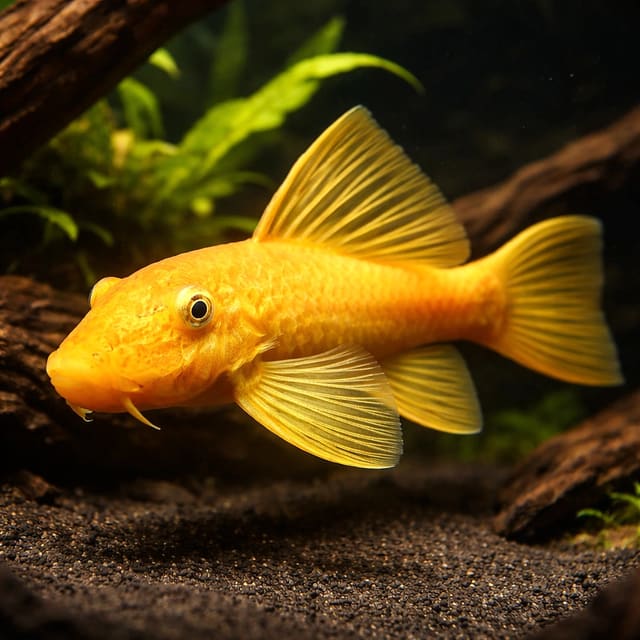
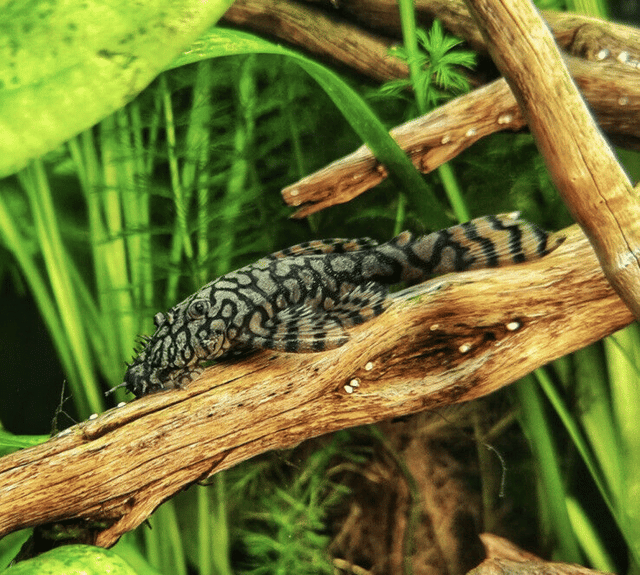
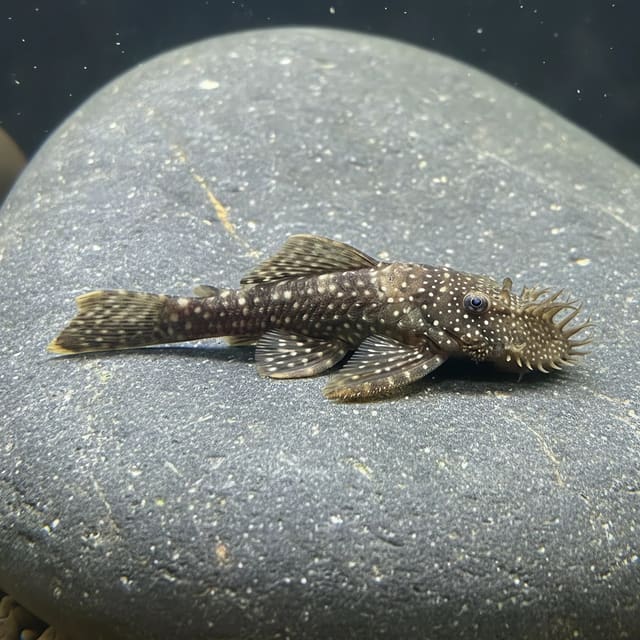
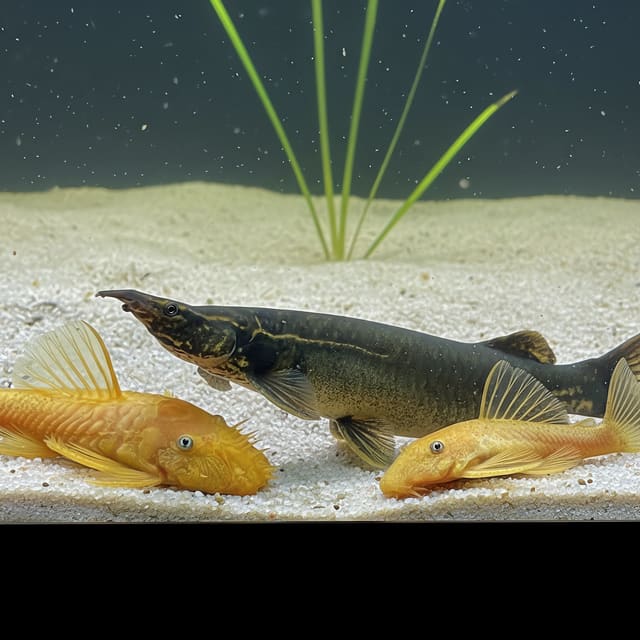
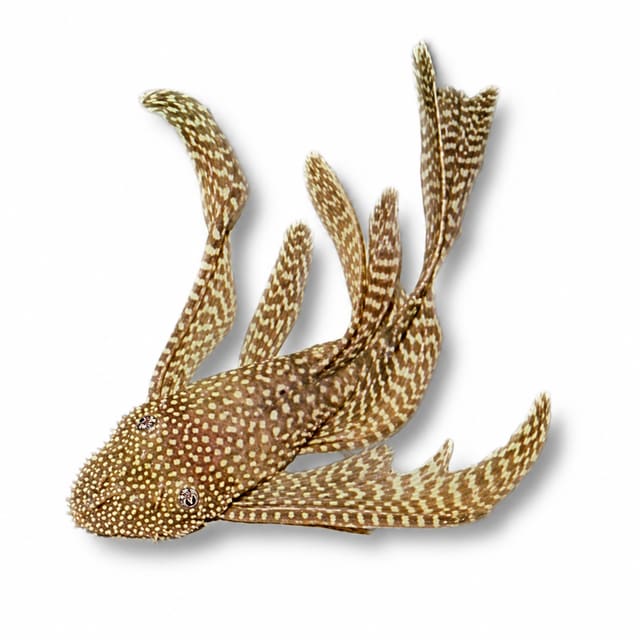
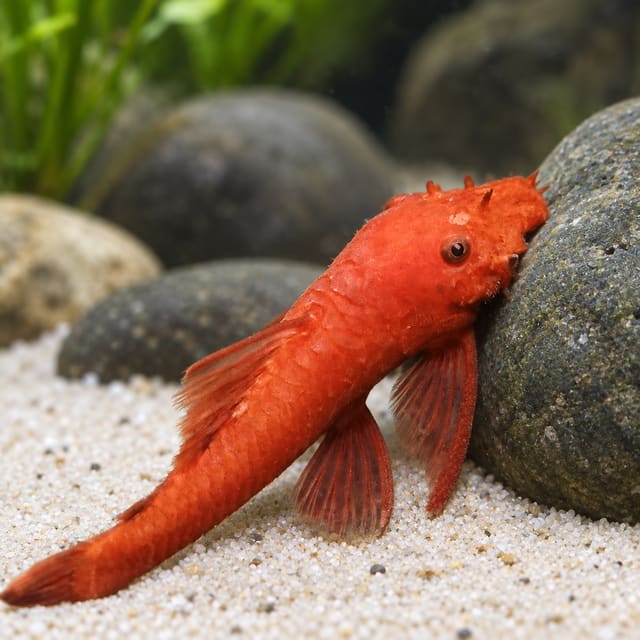
The gallery images are representative of this type of animal rather than photographs of the exact animal supplied, so colours can look slightly different from the live animal.
Quantity one is not a pair or group. If you intend to keep more than one bristlenose, make that social plan before choosing the purchase quantity because OATA allows solitary, paired and small-group arrangements and says it is usually best to keep just one male per group.
OATA’s tropical algae-eater guidance gives bristlenose catfish an adult size of about 15 cm, a temperature range of 22–27°C and pH 6.0–8.0. These are broad group-level values rather than a species-specific optimum for this unidentified Ancistrus.
Use about 15 cm as the planning length when judging whether the aquarium and its furnished interior are suitable. Wood, plants, caves and ornaments all occupy room, so assess the usable space remaining after the required cover has been placed. A tank that looks large while empty can offer much less usable room once it is furnished.
| Decision | Planning value |
|---|---|
| Adult length | About 15 cm |
| Temperature | 22–27°C |
| pH | 6.0–8.0 |
| Ammonia | 0 mg/l |
| Nitrite | 0 mg/l |
| Nitrate | Up to 20 mg/l |
Choose as large an aquarium as is reasonable for the intended stocking plan. OATA explains that larger aquariums generally provide more stable temperature and water quality. This matters when adding community fish or more than one bristlenose because every animal contributes to the stocking level and the filter’s workload.
There is no useful shortcut based on the dispatch size: every size choice leads back to the same adult plan. If the furnished aquarium cannot accommodate an animal of about 15 cm while retaining cover, wood and effective filtration, choose a fish with a smaller recorded adult size instead.
Bristlenose catfish are secretive and thrive with plenty of cover. Provide at least one piece of aquarium-safe wood as both shelter and a surface for grazing. Add a cave, crevice or suitable ornament that creates a sheltered retreat rather than leaving the aquarium open on every side.
Use aquarium gravel or sand for the substrate. Live plants are an ideal way to add cover; where live plants are not part of the layout, suitable artificial plants and ornaments can serve the same sheltering purpose. The aim is a furnished aquarium in which the fish can move between grazing surfaces and concealed resting places.
A cave or crevice can also become a breeding site when a male and female are kept together. Bristlenose catfish may breed in a community aquarium, and free-swimming fry may eventually be seen. Treat that as part of the decision to keep a pair or group, not as a guaranteed outcome.
Wood is valuable, but it is not a substitute for prepared food. Likewise, plants, ornaments and caves do not replace the need for a working filter. Each part of the setup has a separate job: cover supports secure behaviour, wood supplies a grazing surface, food supplies nutrition and filtration manages waste.
Every aquarium for this fish needs a well-set-up and maintained filter. The RSPCA’s aquarium filtration guidance explains why: fish release toxic ammonia, and a working biological filter houses beneficial bacteria that convert ammonia into nitrite and then nitrate. Ammonia and nitrite are both toxic, so the target for each is 0 mg/l.
Prepare and mature the aquarium before livestock enters it. Our first tropical aquarium guide explains how to organise that preparation. A tank containing water and decoration is not ready merely because it has been standing; the biological filter has to be established and the water values checked.
| Result | Action |
|---|---|
| Ammonia 0 mg/l | Continue to the nitrite check. |
| Ammonia above 0 mg/l | Do not add the fish until the biological filtration issue is resolved. |
| Nitrite 0 mg/l | Continue to temperature, pH and nitrate checks. |
| Nitrite above 0 mg/l | Do not add the fish until the result returns to zero. |
| Nitrate up to 20 mg/l | Keep monitoring it through the regular testing routine. |
Keep filtration running as an essential part of the aquarium rather than treating it as optional equipment for a lightly stocked tank. A bristlenose grazing on surfaces still eats prepared food and produces waste. Its algae-eating habit does not make the aquarium self-cleaning and does not reduce the requirement for biological filtration.
Match stocking to the aquarium and its established filter. Adding several animals at once increases the waste entering the system, while a larger aquarium generally gives more stable conditions. Use the measured ammonia, nitrite and nitrate values to decide whether the system is ready rather than judging readiness by clear-looking water.
Maintain the aquarium at 22–27°C and pH 6.0–8.0. Keep ammonia at 0 mg/l, nitrite at 0 mg/l and nitrate at no more than 20 mg/l. OATA’s bristlenose guidance supplies these care-group values, not a species-specific optimum for this unidentified Ancistrus.
Test water weekly. A regular schedule gives comparable results and helps you notice movement before a value passes its limit. Our water chemistry guide explains what the main aquarium measurements mean, while the water matcher lets you compare measured values with the stated range.
| Example reading | Decision |
|---|---|
| 24°C and pH 7.0 | Both values sit within the working range. |
| 22°C and pH 6.0 | Both are at the lower limits; keep them within the range. |
| 27°C and pH 8.0 | Both are at the upper limits; do not let them move beyond those limits. |
| 28°C | Bring the aquarium back within 22–27°C before adding the fish. |
| pH 8.2 | Bring the value back within pH 6.0–8.0 before adding the fish. |
| Nitrate above 20 mg/l | Correct the maintenance or stocking issue before adding livestock. |
Aim for a stable point within the stated limits instead of continually moving the aquarium between its lower and upper boundaries. Larger aquariums tend to maintain more stable temperature and water quality, which is one reason to choose generous capacity for a community plan.
Record the weekly results in a consistent format. The useful comparison is not simply whether the aquarium looks clean, but whether ammonia and nitrite remain at zero, nitrate stays within its limit, and temperature and pH remain within their ranges.
Bristlenose catfish graze algae, but algae in the aquarium is not a dependable complete diet. Supplement that grazing with prepared algae-based wafers or flakes and offer fresh vegetables such as cucumber. Aquarium-safe wood adds another useful grazing surface while also providing cover.
Offer a measured portion and watch how it is grazed. Distinguish deliberate grazing from food that is simply accumulating. Uneaten food breaks down and releases toxic waste; increasing the portion without checking consumption can therefore worsen water quality.
| What you observe | What to do |
|---|---|
| Visible aquarium algae | Continue the prepared-food routine; algae remains supplementary. |
| Very little visible algae | Continue prepared algae-based food rather than waiting for algae to grow. |
| Food being steadily grazed | Keep the next portion similar while continuing to observe. |
| Prepared food repeatedly left | Reduce the next portion to limit waste. |
| Cucumber being offered | Use organic cucumber or wash it thoroughly before feeding. |
| Several fish competing for food | Check that stocking and feeding allow the bristlenose to receive its portion. |
Washing vegetables matters because pesticide residues may harm fish or invertebrates. Buying organic produce is another option. Keep the preparation straightforward and do not assume that food intended for people is ready to enter an aquarium without washing.
The nocturnal nature of Ancistrus helps explain why a fish may spend daylight hours around cover and become easier to observe later. Observation is still important: confirm that the prepared ration is being grazed rather than assuming that disappeared food reached the bristlenose.
Do not add this fish as the sole remedy for an algae problem. Persistent algae can point to water-chemistry or maintenance issues, and an algae-eating fish cannot replace regular maintenance or suitable stocking levels. Feed the animal for its own needs while addressing algae through the aquarium’s wider care routine.
Make weekly water testing the fixed point of the maintenance routine. Check ammonia, nitrite, nitrate, temperature and pH against the working values, then respond to the result rather than relying on appearance alone. Clear water can still contain nitrogen waste, while visible algae may be signalling a chemistry or maintenance imbalance.
If ammonia or nitrite rises above zero, treat the result as a filtration or waste-management problem. If nitrate exceeds 20 mg/l, correct the maintenance or stocking issue. If algae persists, check the same chemistry, feeding and stocking decisions before considering another algae-grazing animal.
A single reading tells you whether a value is inside its limit; a sequence of readings shows whether the aquarium is moving towards that limit. Keep the day, temperature, pH, ammonia, nitrite and nitrate together so each weekly result can be compared with the previous one. If ammonia and nitrite remain at 0 mg/l and nitrate remains no more than 20 mg/l, continue the established routine while watching for change.
| Pattern | Maintenance decision |
|---|---|
| Stable readings within every limit | Keep the filter, testing, feeding and stocking routine consistent. |
| Ammonia or nitrite appears | Review biological filtration and waste entering the aquarium. |
| Nitrate moves towards 20 mg/l | Review maintenance, uneaten food and the stocking level before it exceeds the limit. |
| Persistent algae increases | Check water chemistry and maintenance rather than adding another fish as a remedy. |
| More animals are proposed | Consider the extra waste before changing the stocking plan. |
This comparison turns testing into an early decision tool. It also separates two issues that can look similar: algae on a surface is grazing material, while persistent algae may indicate a wider maintenance or chemistry problem. Continue feeding the bristlenose appropriately in either case, and use the measured results to guide the aquarium routine.
Keep the wood, cave, plants and other cover in the maintenance plan because they are functional parts of the habitat. The fish needs shelter even when those items make the aquarium look fuller. Reassess the remaining usable room whenever decoration or stocking changes, using about 15 cm as the adult planning length.
A marked change in appetite or general condition deserves prompt attention rather than an improvised treatment. Check the measured water values and filter first, then contact us about the health change if guidance is needed.
Complete the setup before the delivery day: establish the biological filter, place the wood and cover, and confirm that temperature, pH, ammonia, nitrite and nitrate meet the working values. Arrange for someone to receive the parcel because live fish must not be left unattended.
Follow our delivery and Live Arrival Guarantee policy when the fish arrives.
| Checkpoint | Action |
|---|---|
| Before arrival | Have someone ready to receive the parcel and prepare the filtered aquarium, wood and cover. |
| Before opening | Begin the continuous video with the parcel still sealed. |
| During acclimatisation | Float the bag for 20–30 minutes. |
| At release | Move the fish without adding bag water to the aquarium. |
| At feeding | Offer the planned ration and check whether it is grazed. |
| At the weekly check | Test the full water set and compare every result with its limit. |
The first month uses the same care standards as the long-term routine. Keep the filter working, retain plenty of cover and wood, provide prepared algae-based food, and test water weekly. Do not try to compensate for poor readings by adding an algae eater or more food.
Keep dispatch size and adult planning separate throughout this period. The selected label describes the animal at dispatch, while about 15 cm remains OATA’s bristlenose care-group planning figure for the furnished aquarium. Reassess space before adding companions, another bristlenose or substantial new decoration.
Bristlenose catfish may be kept alone, in a pair or in a small group under OATA’s care-group guidance. None of those arrangements is a schooling requirement. Choose the arrangement that fits the aquarium, its stocking level and your willingness to manage group composition and possible breeding.
For a group, OATA says it is usually best to keep just one male. A single animal avoids the need to plan the sex composition of a bristlenose group.
| Arrangement | Planning decision |
|---|---|
| One bristlenose | Provide the full adult aquarium plan, including cover, wood, filtration and supplementary food. |
| A pair | Use an aquarium and stocking plan suitable for two adults and account for possible breeding. |
| A small group | Choose a larger plan and usually keep just one male in the group. |
A male and female may breed in a community aquarium when a suitable cave or crevice is present, and free-swimming fry may eventually appear. This is a possibility rather than a guaranteed result. If fry would change the capacity or stocking of the aquarium, include that possibility when deciding whether a pair is appropriate.
Every animal in a pair or group still needs access to the essentials described for one bristlenose: a filtered aquarium, plenty of cover, wood for grazing and a supplemented diet. Increasing quantity does not turn algae into a complete food and does not reduce the need for weekly testing.
Make this social decision before purchase. The live size selector controls the dispatch measurement, while purchase quantity controls how many animals are supplied. Neither should be used as a shortcut for predicting group composition.
Bristlenose catfish can fit many community aquariums. Screen the complete plan by comparing adult sizes, water requirements, behaviour, stocking level, cover and whether every animal can receive suitable food. Individual interactions remain uncertain, so a shared water range alone is not enough.
| Question | Required decision |
|---|---|
| Do the water needs overlap? | Every proposed companion must fit 22–27°C and pH 6.0–8.0. |
| Will the adults fit? | Use about 15 cm for the bristlenose and the adult planning size for every companion. |
| Is the aquarium already heavily stocked? | Leave the stocking level appropriate for the aquarium and biological filter. |
| Does the layout retain cover? | Keep wood and sheltered areas in place after planning the community. |
| Can the bristlenose receive food? | Do not rely on algae, leftovers or food intended only for other fish. |
Consider how each proposed fish uses the furnished aquarium and whether the combination leaves the bristlenose able to use cover and graze its prepared food. Review the planned adult community rather than judging the combination only at dispatch size.
When another bristlenose is part of the plan, apply the social guidance as well as the community screen: they may live as a pair or small group, and OATA says it is usually best to keep just one male per group. Include the possibility of breeding when a male and female have a suitable cave or crevice.
Ask us for a stocking and compatibility assessment when you have the aquarium dimensions, measured water values, existing livestock and proposed additions ready. That allows the whole community to be considered instead of treating any named fish as automatically suitable.
Do not justify extra stocking by calling the bristlenose a cleaner. It grazes algae, but maintenance, filtration, testing and appropriate stocking remain the keeper’s responsibility.
OATA’s bristlenose care-group guidance gives about 15 cm as the adult planning length; this is not a species-specific optimum for the unidentified Ancistrus in this offer.
Choose as large an aquarium as is reasonable for the intended stocking plan, then furnish it with effective filtration, plenty of cover and at least one piece of wood. OATA advises that larger aquariums generally provide more stable temperature and water quality.
OATA’s bristlenose guidance says they can be kept alone, in a pair or in a small group, and it is usually best to keep just one male per group. Quantity one supplies one animal.
Choose it only if you are ready to establish biological filtration, test the water weekly, provide cover and wood, supplement its grazing and plan around an adult bristlenose of about 15 cm.
Offer prepared algae-based wafers or flakes and fresh vegetables such as organic or thoroughly washed cucumber. Aquarium algae is supplementary and does not replace prepared food.
OATA’s bristlenose care-group guidance gives 22–27°C and pH 6.0–8.0, with ammonia at 0 mg/l, nitrite at 0 mg/l and nitrate at no more than 20 mg/l.
Do not assume a particular interaction from the trade form alone. Screen every proposed community for adult size, water overlap, stocking level, use of cover and feeding access, and allow for uncertainty between individual fish.
Consider screened community fish whose adult size, water requirements and stocking impact fit the aquarium. OATA’s bristlenose guidance allows solitary, paired and small-group care, usually with one male per group, but it does not make every community combination suitable.
Start filming every delivery with the parcel still sealed, then open it in one continuous take and show the fish inside the sealed bag before anything is disturbed. Someone must be present to receive it; float the bag for 20–30 minutes before release and never pour the bag water into the aquarium.
No reviews for this item yet. Bought one? Honest reviews only, good or bad.
What customers say about ordering from us
I have a small group of long finned mountain minnows. So was delighted to be able to order ten of this variety to increase the genetics in my tank . The ones I recieved are healthy but it’s to early to give a verdict on wether they are of a long finned type since they are small currently.
Gordon Walker · 23 Sept 2026
100% success travel and "installation". Pleased with quality of purchase. The Siamese fighter a bit "shy" so have not yet seen him at his best yet but looking good. Happy customer. GG
George E Garratt · 21 Sept 2026
Reviews of our shop, collected by Judge.me, an independent third-party review collector. Newest first.