Moderate
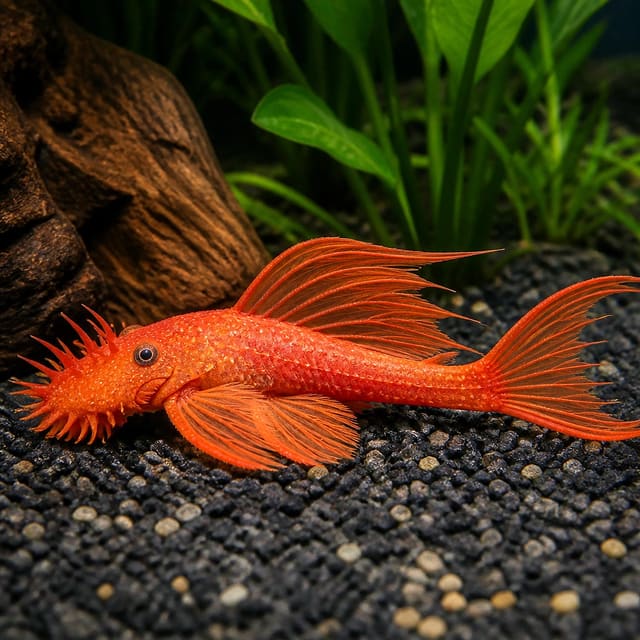
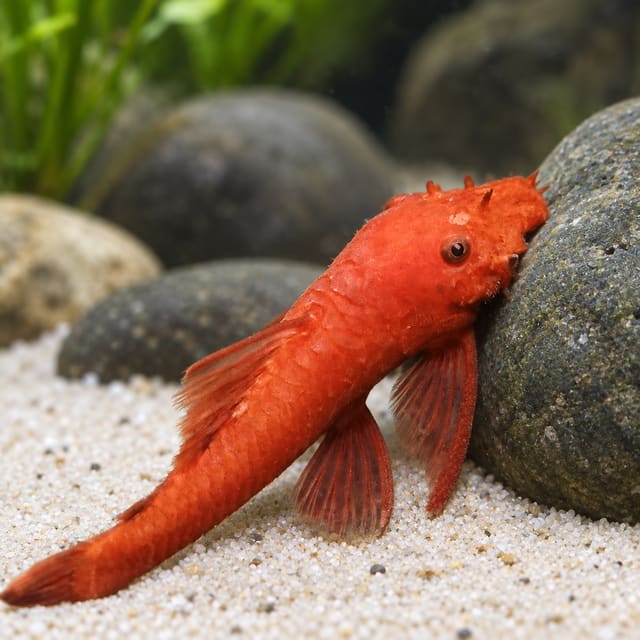
Super Red Bristlenose Pleco (Ancistrus sp.)
24–27°C · pH 6–7.5 · 90L
From £12.99Some sizes on sale

Rio Tocantins Bristlenose Pleco is supplied as the unresolved trade form Ancistrus sp. Rio Tocantins. Plan for about 12 cm total length in a mature 80 cm / approximately 100 L aquarium with oxygen-rich water, secure caves and deliberate plant-rich feeding. One unsexed fish is supplied per quantity when available; the gallery image is representative.
Ancistrus sp. Rio Tocantins
Confirm your email, then we’ll send an availability message for this exact item if it returns within 180 days.
This request is only for this product—no newsletter or other promotions. A mail-provider retry may very rarely duplicate the same availability message. Unconfirmed addresses are removed after 48 hours. See our privacy policy.
Rio Tocantins Bristlenose Pleco is supplied as the unresolved trade form Ancistrus sp. Rio Tocantins. Plan for about 12 cm total length in a mature 80 cm / approximately 100 L aquarium with oxygen-rich water, secure caves and deliberate plant-rich feeding. One unsexed fish is supplied per quantity when available; the gallery image is representative.
Maintain these water conditions for optimal health and vibrant colors
Rio Tocantins Bristlenose Pleco is the practical aquarium name used here for the trade-listed Ancistrus sp. "Rio Tocantins". It is a compact South American loricariid catfish intended for a mature tropical aquarium with clean, oxygen-rich water, secure caves and enough bottom area for an adult. our stock records juveniles at approximately 3-3.5 cm when that intake is available, but a small dispatch fish must still be planned around an adult of roughly 12 cm total length.
Current specialist literature associates one long-known Rio Tocantins aquarium form with the newer hobby code L529, but our supplier supplied neither that code nor a diagnostic reference photograph. We therefore keep the honest unresolved name Ancistrus sp. "Rio Tocantins" and do not guarantee L529, an exact collection locality, sex, lineage or described species.
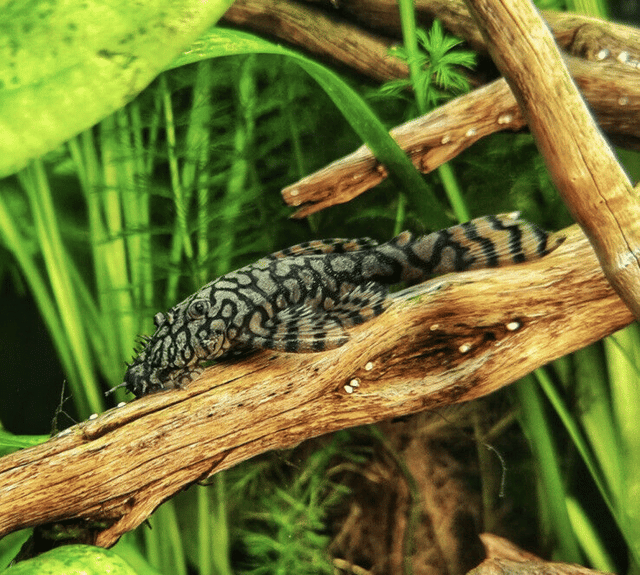
Each quantity represents one unsexed fish when live stock is available. The sole protected gallery image is a representative aquarium view created from the trade name, not a photograph of the exact fish or a diagnostic reference specimen. It is retained, but its spots, colour, fin pattern and body proportions must not be treated as a promise about the animal supplied.
| Care question | Evidence-led planning answer |
|---|---|
| Supplier identity | Ancistrus sp. "Rio Tocantins"; unresolved trade form |
| Family | Loricariidae, the armoured suckermouth catfishes |
| Possible modern hobby code | L529 is associated with one historic Rio Tocantins form, but is not guaranteed for this stock |
| Dispatch size | Our stock records approximately 3-3.5 cm; current live selector remains authoritative |
| Adult planning size | Approximately 12 cm total length |
| Minimum planning aquarium | At least 80 cm long and around 100 litres for one adult, with useful bottom area |
| Practical temperature | 24-27°C; stable, well-oxygenated water |
| Practical pH | Approximately 6.5-7.5, with stability prioritised over chasing a number |
| Diet | Mainly plant-rich sinking foods and vegetables, with modest varied supplementation; never tank algae alone |
| Temperament | Usually peaceful toward suitable mid-water fish; cave-territoriality is possible between similar catfish |
| Sale unit | One unsexed fish per quantity; no pair, sex or breeding status is promised |
| Care level | Moderate because identity, water quality, feeding, oxygenation and cave access require active management |
One quantity means one live, unsexed juvenile when inventory is available. It does not mean a pair, a breeding pair, a male, a female or the pictured fish. Ordering two does not create a guaranteed male-and-female combination, and juvenile Ancistrus normally cannot be sexed reliably from a sales label alone. The product option, live inventory and checkout determine what can be ordered at that moment.
The supplier's 3-3.5 cm figure is a dispatch-size record rather than an adult limit. Size can vary between consignments, so check the current selector and contact the team if an exact current measurement is essential. A responsible aquarium must be ready for the adult before the juvenile arrives. Use our tank volume calculator for actual water volume, then measure aquarium length and usable floor area separately.
The source record does not state wild-caught or captive-bred provenance. It also does not name a breeder, exporter, tributary or collection coordinates. "Rio Tocantins" is therefore treated as the supplied trade identity, not proof that the individual in an order was personally collected from a documented point in that basin. Buyers who need certified locality or breeding provenance should request evidence rather than infer it from the name.
Ancistrus is a genus within the family Loricariidae. Members of the genus are widely called bristlenose or bushynose plecos in the aquarium trade. The abbreviation "sp." means the evidence identifies this fish to the genus but does not provide a securely established species name. It is not a decorative extra and should not be silently replaced with whichever named Ancistrus looks similar in a photograph.
The Tocantins-Araguaia system contains multiple Ancistrus species and unresolved forms. A drainage name can narrow context, but it does not by itself diagnose a species. Scientific identification may depend on morphology, counts, osteology, type material, locality records and sometimes genetic evidence. None of that can be reconstructed from a supplier line or an image.
For customer-facing clarity, "Rio Tocantins Bristlenose Pleco" combines the supplied trade form with the familiar Ancistrus group name. It helps people find relevant care without pretending that this is a common domestic bristlenose strain. When comparing advice, keep the exact qualifier "Rio Tocantins" visible and reject sources that switch the subject to a common pleco, sailfin pleco, Siamese algae eater or an unrelated L-number.
The strongest statement supported for this stock is Ancistrus sp. "Rio Tocantins". A future our stock records with diagnostic imagery, exporter documentation or a confirmed hobby code could refine that identity. Until then, honest uncertainty is more useful than a confident but wrong species name.
In 2025, specialist author Ingo Seidel assigned the hobby code L529 to a long-kept Ancistrus form previously circulated as Ancistrus sp. "Rio Tocantins". Specialist summaries describe that L529 form as a roughly 12 cm fish with a grey-brown, somewhat broad and flattened body, fine dark vermiculation over the head and coarser markings toward the tail. That is valuable modern context for keepers researching the name.
An L-number is an aquarium-hobby code used to distinguish loricariids before or outside formal species descriptions. It is not the same thing as a scientific species name, and matching words on two sales lists does not prove that two consignments are identical. Our stock records for this product say only "Ancistrus / sp. Rio Tocantins" and provides no diagnostic photo. This page therefore explains the L529 association while stopping short of selling the fish as confirmed L529.
L519 is not an alternative code for the same fish. It belongs to the Rio Itenez form, represented separately in our catalogue as the L519 Rio Itenez Bristlenose Pleco.
| Name or code | What it means here | Can this listing guarantee it? |
|---|---|---|
| Ancistrus sp. "Rio Tocantins" | The exact supplier trade label, cleaned for readability | Yes |
| Rio Tocantins Bristlenose Pleco | Customer-friendly group name for the same unresolved trade form | Yes, with the identity caveat |
| L529 | Newer hobby code linked by specialists to one historic Rio Tocantins form | No; supplier diagnosis is insufficient |
| Rio Itenez form | A different Ancistrus trade form with its own code | No; explicitly excluded |
| A formally described species | A valid binomial established through taxonomic work | No species name is supported for this stock |
The one image is a protected 1024 x 1024 aquarium illustration created from the product's text-only trade name. It was not generated from a reference photograph, a museum specimen or the current sale fish. The image shows a plausible armoured suckermouth catfish in a naturalistic aquarium, but plausibility is not identification.
Do not use its yellow spotting, fin pattern, eye, head shape or apparent size to conclude that the stock is L529, another L-number, male, female or mature. The supplied animal may be plainer, more finely patterned, differently proportioned or temporarily darker or lighter after transport. Juvenile markings can also change with growth, lighting, background and condition.
The Rio Tocantins is a major South American drainage in Brazil. Scientific work records several valid Ancistrus species in the Tocantins-Araguaia basin, including restricted forms in upper and middle sections. That diversity is precisely why a basin label should encourage caution: many related fish can occur within a large river system, and similar aquarium trade names may conceal different lineages.
Specialist accounts of the aquarium form point to warm, flowing, oxygen-rich freshwater. In an aquarium, that supports mature biological filtration, reliable heating, good surface movement and low accumulation of organic waste. Wood, stone, roots and cave-like shelter can provide shade, grazing surfaces and physical separation. The aim is not to create a high-speed jet everywhere, but to prevent stagnant, dirty or oxygen-poor zones around a bottom-dwelling fish.
Habitat context does not establish the provenance of this sale fish. The current supplier data does not say whether it was bred in captivity or collected, and the name does not prove a specific tributary. It also does not make the fish suitable for an outdoor pond or unheated aquarium. This is planned as a tropical freshwater catfish with stable indoor conditions.
Plan for approximately 12 cm total length. This is a sensible adult figure for the specialist Rio Tocantins form described in aquarium literature, while recognising that the exact identity of the stock remains unresolved. Individual growth varies. A 3-3.5 cm juvenile can look tiny against a large tank, but its cave, feeding and waste needs increase as it matures.
For one adult, start with an aquarium at least 80 cm long and around 100 litres. This is a planning floor rather than a universal guarantee. A wide 100-litre aquarium with clear bottom routes, two secure retreats and mature filtration is more useful than a tall narrow tank with the same nominal volume. Substrate and decor reduce the actual water volume, while existing bottom dwellers reduce the usable territory.
More fish require additional floor area, cave choices, feeding stations and filtration capacity. Do not assume that two 12 cm fish need only twice the water volume: territorial geometry matters. A dominant adult that can see every cave entrance may exclude another fish even in a large aquarium. Break sight lines and ensure each animal can reach food without crossing a defended doorway.
Sketch the aquarium footprint, caves, wood, filter intake and feeding points before purchase. Mark the space already used by corys, loaches or other plecos. If there is only one desirable retreat and one food drop, the bottom zone is already functionally crowded.
A practical maintenance target is 24-27°C and approximately pH 6.5-7.5. Keepers should value stable, clean water over frequent adjustment to hit a decimal. Source water, acclimation history and tank mates all matter. Avoid abrupt temperature, pH or conductivity changes, particularly with a newly transported juvenile.
Ammonia and nitrite should remain at zero in a stocked aquarium. Monitor nitrate and the aquarium's broader waste pattern, then set water-change frequency from measured conditions rather than a copied calendar. Test more frequently after adding livestock, changing feeding, cleaning the filter, losing power or noticing altered breathing and appetite.
Oxygenation deserves special attention because the fish spends much of its time near surfaces and retreats where debris can collect. Warm water carries less dissolved oxygen. Use surface agitation, an appropriate filter return or supplementary aeration so gas exchange reaches the whole system. Inspect behind wood and inside caves for trapped waste; a vigorous outlet at one end does not guarantee good water inside a sheltered dead zone.
Maintain the filter without sterilising it. Rinse biological media in removed aquarium water when flow declines, preserve mature media and avoid replacing everything at once. A clogged filter can reduce both waste processing and circulation. A massively oversized current is not the answer either: provide strong system-level oxygenation with calmer resting areas.
| Water check | Practical target | Warning sign |
|---|---|---|
| Temperature | 24-27°C, steady | Rapid swings or unexplained heater variation |
| pH | Roughly 6.5-7.5 and stable | Frequent chemical correction causing oscillation |
| Ammonia / nitrite | Zero | Any detectable reading in an occupied aquarium |
| Gas exchange | Consistent surface movement and oxygenated bottom zones | Rapid breathing, surface distress or stagnant caves |
| Organic waste | Removed before it accumulates around food and retreats | Mulm pockets, sour odour, cloudy water or uneaten food |
A single fish should have at least two secure choices: for example, a smooth ceramic cave and a shaded gap beneath wood. This reduces the need to remain exposed when one site is disturbed during maintenance. A group needs at least one retreat per fish plus spares, with entrances facing different directions and visual barriers between them.
Caves must be stable, smooth and inspectable. Do not balance rock on loose substrate or create a narrow crevice from sharp material. A retreat should feel secure without becoming a trap for decomposing food. Check it during maintenance and ensure a fish can leave even if wood shifts slightly.
Driftwood provides shade, cover, natural surfaces and useful separation. Biofilm and soft growth on mature wood can support natural grazing behaviour. That does not prove that this fish can meet its nutritional needs by eating wood, nor does it replace prepared food. Choose aquarium-safe wood, secure it against rolling and leave a clear route around it.
Fine sand or smooth rounded gravel allows a bottom fish to rest and forage without sharp contact. The surface should be easy to siphon around feeding zones. Avoid deep pockets where vegetable pieces and wafers disappear. If heavy decor sits above substrate, support it from the tank base or another stable foundation.
Robust plants can add shade and improve visual separation. Epiphytes attached to wood or rock are less easily uprooted than delicate stems. Floating cover can soften bright light, but leave enough open surface for gas exchange. Plants do not replace filtration, and a planted aquarium can still accumulate waste beneath dense hardscape.
Ancistrus are often sold under the single label "algae eater", which can lead to underfeeding. Specialist guidance for the Rio Tocantins form recommends mainly plant-rich foods: suitable algae or spirulina wafers, sinking vegetable-based foods and vegetables such as courgette. Small amounts of more animal-rich food can add variety, but a heavy high-protein routine is not appropriate simply because the fish accepts it.
Read the complete food label. Product names do not guarantee balanced nutrition, and two green wafers can have very different ingredient profiles. Offer portions that the fish can access without dominant mid-water fish consuming everything first. Shy juveniles may feed more confidently after the main lights dim. Our pleco tablet listing is one possible prepared-food format, not a complete prescription for every meal.
Vegetables should be washed, prepared safely and removed before they spoil. Courgette is usually more useful than watery cucumber as a regular option, but variety remains important. Do not leave a large piece overnight without checking whether it is being eaten. Decaying food can damage water quality faster than a small fish can consume it.
Feed the animal, not the label. Watch the abdomen and overall condition over time. A deeply hollow belly, persistent refusal to feed or rapid weight loss deserves investigation. A constantly rounded abdomen can indicate overfeeding or another problem. Adjust quantity to the individual, temperature, tank competition and measured waste rather than following a rigid spoonful copied from another aquarium.
| Food role | Useful examples | Boundary |
|---|---|---|
| Plant-rich staple | Quality sinking Ancistrus or pleco food with suitable plant ingredients | Check composition; the word "algae" on a packet is not enough |
| Vegetable variety | Prepared courgette and other safe vegetables | Remove before decay; do not rely on cucumber alone |
| Natural grazing | Biofilm and soft growth on mature wood and rock | Supplementary, unpredictable and not a complete ration |
| Animal-rich addition | Small occasional portion in a varied plan | Avoid routine excess and monitor waste |
| Tank leftovers | Not a feeding strategy | Bottom dwellers need food that deliberately reaches them |
This fish may rasp soft algae and biofilm from accessible surfaces, especially while young. It cannot be guaranteed to eat a particular algae species, clear every surface or continue grazing at the same rate as it matures. Hard green spot algae, long filamentous growth, cyanobacteria and dirty substrate all have different causes and are not solved by adding one catfish.
Algae management begins with light duration and intensity, plant health, nutrient balance, feeding, water changes and manual removal. Livestock should be chosen because its adult care is suitable, not as equipment. An Ancistrus also produces waste, so adding one to an overloaded aquarium can make the underlying problem worse.
For broader comparisons, use our algae-eater collection and bristlenose care guide. Match every species to adult size, diet, temperature and social needs before thinking about which surface it may graze. No animal is a replacement for maintenance.
Do not buy this fish to correct an uncycled tank, persistent ammonia, excess light, overfeeding or neglected maintenance. Fix the cause first. Add livestock only after the aquarium is stable and suitable for that animal's complete life.
A settled Ancistrus often rests in shade, attaches to wood or stone and becomes more active around feeding time or after lights dim. Periods of stillness are normal for a bottom-oriented fish, but normal rest should not be confused with rapid breathing, loss of attachment, repeated surface distress or a refusal to eat.
It is generally peaceful toward compatible mid-water fish. Conflict is more likely with similar cave-using catfish, especially mature males in a limited footprint. Territoriality may appear as blocking a cave, short chases or excluding another fish from food. "Peaceful" never means that any number can share one small aquarium.
Provide visual barriers and feed in more than one place. If one animal remains thin while another controls the only retreat and wafer, the setup is not working even if no injury is visible. Reconfigure decor, increase resources or separate fish before chronic stress becomes a health problem.
Suitable companions are calm fish with overlapping temperature and water requirements that do not attack the catfish or monopolise every sinking food. Many tetras and rasboras can work because they use mid-water space. Compatibility is still species-specific: check adult size, aggression, diet and temperature rather than approving an entire group by common name.
Corydoras may be possible in a larger aquarium with smooth substrate, their proper social group and enough floor area for both types. Other plecos require more caution because they may compete directly for caves and food. Large predatory catfish, aggressive cichlids, persistent fin or body pickers and species needing very different water should be avoided.
Adult shrimp may coexist in some mature planted aquariums, but tiny shrimplets, eggs, moulting or weakened animals cannot be guaranteed safe around an opportunistic bottom feeder. A dedicated shrimp-breeding tank is safer when every young shrimp matters. Snails can also compete for prepared food and add to the waste load.
Browse the catfish and pleco collection to compare adult needs, not to build a crowded assortment. The L059 Pearl Sucker Pleco and Super Red Bristlenose Pleco are separate listings with different identities; their names or images should never be used interchangeably with this fish.
Mature male Ancistrus usually develop more prominent tentacles over the snout and head, while females may have fewer or shorter tentacles. That general difference becomes clearer with maturity, but it does not allow a supplier to guarantee the sex of a 3-3.5 cm juvenile. Body shape and bristles seen in an image establish nothing about the sale fish.
Ancistrus are cave spawners. A mature male typically occupies a suitable cave and cares for the eggs after spawning. That natural history explains the importance of secure retreats and why mature males can defend them. It does not mean that any two juveniles will become a compatible pair or breed in a community aquarium.
Breeding should be a planned project with correctly identified, mature, healthy fish, suitable caves, stable water and a home for the young. The present listing does not certify sex, pair bond, fertility or lineage. Do not use abrupt temperature changes copied from a breeding report in an occupied display tank; specialist breeding conditions are context-specific.
Cycle and mature the aquarium before ordering. Confirm zero ammonia and nitrite, stable temperature, an appropriate pH, secure decor and an available retreat. Arrange the delivery for a day when someone can receive the parcel promptly. Read the current delivery and Live Arrival Guarantee terms before checkout because eligibility, evidence windows and destinations can change.
On arrival, inspect the sealed bag and follow the instructions supplied with the order. Avoid exposing a dark transport bag to sudden bright light. The goal is a controlled transfer without chilling, overheating or adding transport water unnecessarily. Our fish acclimation guide explains the current house process.
A separate observation or quarantine system can protect an established community and make feeding easier to assess. It must be fully cycled, heated, covered and furnished with an inert refuge; an empty uncycled container is not quarantine. Use separate nets and siphons where practical and seek qualified aquatic-health advice before medication.
Fish must be feeding and behaving normally before sale under current welfare guidance. Once home, monitor respiration, attachment, posture, appetite and waste. Contact us promptly within the applicable claim window if there is an arrival concern, and use the livestock claims and returns guidance for the evidence required.
Prevention begins with stable water, deliberate food, adequate oxygen, low conflict and observation. A healthy settling fish should be able to attach, rest and move with control. It should gradually accept suitable food. Temporary hiding after transport can be normal, but prolonged refusal to feed or deteriorating body condition is not something to ignore.
Watch for a hollow abdomen, persistent rapid breathing, white spots, fuzzy growth, wounds, eroded fins, unusual swelling, loss of balance or inability to remain attached. These signs have many possible causes and cannot be diagnosed responsibly from a generic product page. Test water immediately, isolate where appropriate and contact an aquatic vet or competent fish-health professional.
Do not dose medication, salt or extreme heat simply because a symptom resembles an online photograph. Loricariids may respond differently to treatments, and a wrong diagnosis can compound stress. Record water results, temperature, recent additions, feeding, photographs and the timing of changes; that evidence helps a qualified adviser make a better decision.
A reliable species-specific lifespan for this exact unresolved stock is not established by the supplier evidence reviewed, so the former fixed ten-year promise is removed. Treat it as a long-term animal. Aquarium capacity, electricity, filtration, holiday care and rehoming options should remain workable for years rather than only while the fish is a small juvenile.
Never release an aquarium fish, eggs, plants, substrate or transport water into a pond, stream or drain. If circumstances change, contact an experienced retailer, aquarium society or suitable keeper. A tropical fish does not become environmentally harmless merely because local outdoor water is cooler than its preferred range.
Keep records of identity, purchase source and any later provenance evidence. If future stock is confirmed as L529 or another exact form, documentation matters for breeding and accurate sale. Mixing unresolved Ancistrus lines and distributing the young under a locality or L-number can create the same identity problem this page is correcting.
| Listing | Identity position | Choose it for | Do not assume |
|---|---|---|---|
| Rio Tocantins Bristlenose Pleco | Unresolved Ancistrus sp. trade form; possible L529 association not guaranteed | A specialist locality-named Ancistrus with transparent uncertainty | That the pattern proves L529 or sex |
| L519 Rio Itenez | Separate Rio Itenez trade form | Research specifically tied to that label | That the two locality names are synonyms |
| Super Red Bristlenose | Domestic colour-form trade listing | A red/orange bristlenose appearance | Rio Tocantins provenance |
| L059 Pearl Sucker | Listed as Ancistrus hoplogenys | Research tied to L059 and that species name | The same adult needs or pattern as this fish |
The right choice is the fish whose adult care and evidence match your aquarium. Colour and rarity should come after tank footprint, water, feeding and compatibility. For a wider comparison, visit the bristlenose pleco collection.
This product page remains active between stock intakes so the identity correction and care information stay available. The live inventory selector controls whether it can be added to the cart. Do not treat an active page, an old search result or this evergreen description as proof that a fish is physically ready to dispatch.
When eligible stock is available, the current Live Arrival Guarantee and livestock-delivery terms apply through the checkout and delivery guidance. First-time customers can use WELCOME10 for 10% off a first order where the current promotion terms accept the basket. The discount does not change animal suitability: prepare the aquarium before ordering and choose the fish only when its adult needs can be met.
No. The Rio Itenez fish is a separate Ancistrus trade form. It appeared here because old content from another listing was copied into this page. This product is supplied as Ancistrus sp. "Rio Tocantins".
No. L529 is useful research context, not a guaranteed identity for the fish offered here.
Use approximately 12 cm total length for aquarium planning. Individual size varies, and the supplier's 3-3.5 cm figure describes juveniles at dispatch rather than adults.
For one adult, start with an aquarium at least 80 cm long and around 100 litres, with mature filtration, strong gas exchange, useful bottom area and more than one retreat. Existing bottom fish may require a larger footprint.
A practical range is 24-27°C. Keep it stable and maintain good oxygenation, particularly near the warmer end. Tank mates must have a compatible range.
Do not chase an extreme number from an unrelated Ancistrus. A practical pH range is about 6.5-7.5 with stability and clean water prioritised. Acclimate carefully to the actual source and aquarium conditions.
No. It may graze soft growth and biofilm, but it needs deliberate plant-rich sinking food and suitable variety. Algae is unpredictable and cannot provide a complete measured ration.
Wood is strongly useful for shade, structure, separation and grazing surfaces. Include aquarium-safe wood where possible, but do not treat it as a complete food or let it create stagnant waste pockets.
Many calm mid-water species can work when adult size, temperature and water chemistry overlap. Check the exact tank mate rather than approving every tetra or rasbora by group name.
It can be possible in a larger aquarium with smooth substrate, enough floor area, the correct Corydoras group size and several feeding points. Do not crowd both into a minimum tank.
Mature males can defend caves. Multiple Ancistrus require a larger footprint, more retreats than fish, visual barriers and careful feeding observation. A single fish is a valid and often simpler choice.
The supplier-sized 3-3.5 cm juveniles are not sold as reliably sexed. Mature males generally develop more prominent head tentacles, but neither the trade label nor the image proves the sex of the fish supplied.
No. One quantity means one unsexed fish when available. Two quantities mean two unsexed fish, not a bonded or breeding pair.
No. It is a representative aquarium view made from the text-only trade name. It does not establish exact pattern, colour, sex, size, condition or L-number.
Our stock records do not say. This page makes neither claim. Ask for documented provenance if the source route is essential to your decision.
Shopify inventory controls orderability while an active canonical page preserves care and identity information between intakes. Check the live selector; the page does not promise availability or dispatch when inventory is zero.
Husbandry statements are bounded by the sources below and do not replace advice from an aquatic vet or competent fish-health professional.
No reviews for this item yet. Bought one? Honest reviews only, good or bad.
What customers say about ordering from us
I have a small group of long finned mountain minnows. So was delighted to be able to order ten of this variety to increase the genetics in my tank . The ones I recieved are healthy but it’s to early to give a verdict on wether they are of a long finned type since they are small currently.
Gordon Walker · 23 Sept 2026
100% success travel and "installation". Pleased with quality of purchase. The Siamese fighter a bit "shy" so have not yet seen him at his best yet but looking good. Happy customer. GG
George E Garratt · 21 Sept 2026
Reviews of our shop, collected by Judge.me, an independent third-party review collector. Newest first.