Kuhli Loach (Acanthophthalmus kuhli)
24–27°C · pH 6.5–6.5
£2.39
Doctor Fish (Garra rufa) is an active Western Asian cyprinid and aufwuchs grazer sold as one live fish in several dispatch sizes. It needs a mature, tightly covered river-style aquarium at least 120 × 45 cm, cool oxygen-rich water, a varied diet and enough room for a group of three to four or more.
Adult size is the maximum length this species reaches at full maturity (scientific sources). The livestock you receive will be younger and smaller — pick a size above for the actual shipping size. Product-photo provenance and any image-specific limitations are stated on the listing.
Garra rufa
Already 15% off. New customers can take 5% more with WELCOME5.
Shoaling fish: kept in a group they feel safer, stay calmer and show their best colour.
Minimum of 2 per order.
The same fish in packs. Each saving compares singles of the pack's own size.
10 for £29.99· £3.00 eachYou save £2.01
3 - 4 cm · vs £32.00 for 10 singles of this size
Doctor Fish (Garra rufa) is an active Western Asian cyprinid and aufwuchs grazer sold as one live fish in several dispatch sizes. It needs a mature, tightly covered river-style aquarium at least 120 × 45 cm, cool oxygen-rich water, a varied diet and enough room for a group of three to four or more.
Adult size is the maximum length this species reaches at full maturity (scientific sources). The livestock you receive will be younger and smaller — pick a size above for the actual shipping size. Product-photo provenance and any image-specific limitations are stated on the listing.
Maintain these water conditions for optimal health and vibrant colors
Doctor Fish (Garra rufa) is an active freshwater cyprinid from Western Asia. It spends much of its time moving over stone, wood and other firm surfaces, using a specialised lower mouth to browse aufwuchs: the living film of algae, microbes and fine organic material that develops underwater. This behaviour makes the fish fascinating in a mature river-style display, but it does not make it a substitute for aquarium maintenance or a complete answer to nuisance algae.
FishBase places the species in the Jordan, Orontes and Tigris–Euphrates basins, as well as some coastal rivers in southern Turkey and northern Syria. It records habitats including rivers, lakes, ponds and small muddy streams, with shelter among stones and vegetation. A home aquarium can translate those varied settings into useful functions: secure refuge, mature browsing surfaces, clean water, current, strong oxygenation and enough horizontal room to move.
The name “Doctor Fish” comes from the animal's association with warm pools and later spa use. Here it is ornamental aquarium livestock. Normal feeding and welfare come first: the fish should be watched grazing a mature river-style habitat, never deprived of food to encourage skin contact or presented as a treatment for people.
One purchase supplies one live fish at the chosen dispatch size. The recurring size choices run from 1 cm through 7–8 cm, with an additional XL choice; the live controls show which can be ordered and the price attached to each. The size you select is the size supplied, not the adult size. Every juvenile needs the same long-term aquarium plan. Sex is guaranteed only when the selected option explicitly states male or female. This Doctor Fish listing has no sex-guaranteed option.
FishBase records a maximum 14.1 cm total length for a male or unsexed fish. Seriously Fish gives 120 mm standard length. Total length includes the tail; standard length ends at the base of the caudal fin. These are not interchangeable measurements, so both remain labelled. For planning, allow for an adult around the FishBase maximum rather than treating a 1 cm or 3–4 cm dispatch fish as permanently small.
The species needs more than litres alone. Seriously Fish recommends an aquarium base of at least 120 × 45 cm, approximately 243 litres, and describes clean, highly oxygenated water with strong movement, mature biofilm and a tight cover because Garra can climb glass. It recommends three to four or more fish where space permits: a loose group can spread social attention, although a pecking order and short chases may still occur.
A useful long-term aquarium range from the species profile is 14–20°C, pH 6.0–8.0 and 1–15 dGH. FishBase records a broader environmental temperature of 15–28°C, but a tolerance record is not an invitation to keep the fish chronically at an extreme. Choose a stable point that fits the rest of the community, maintain vigorous gas exchange, and remember that warmer water holds less oxygen.
| Scientific name | Garra rufa |
|---|---|
| Family | Cyprinidae |
| What one quantity buys | One live fish at the chosen dispatch size |
| Recorded adult length | 14.1 cm TL male/unsexed in FishBase; 120 mm SL in Seriously Fish |
| Minimum base to consider | 120 × 45 cm, approximately 243 litres |
| Social plan | Three to four or more where space permits, with several grazing and feeding areas |
| Water | 14–20°C, pH 6.0–8.0 and 1–15 dGH for routine aquarium planning |
| Core environment | Mature, covered, clean and highly oxygenated, with current and calmer resting pockets |
| Diet | Omnivorous grazer: plant-rich sinking food plus suitable small animal foods |
| Suits | An experienced or well-prepared keeper who enjoys active river fish, understands cycling and can provide a 120 cm covered aquarium with strong oxygenation |
|---|---|
| Think twice | A new uncycled tank, a warm still-water community, a nano aquarium, an open top, or a setup that relies on one fish to remove all algae |
This is a store-assessed intermediate fish. The species is not described as inherently difficult when its needs are met, but the combination of adult footprint, cooler water, powerful circulation, mature grazing surfaces, escape prevention and social management asks more from the keeper than a conventional small community fish. A strong setup should be in place before the order, not promised as a later upgrade.
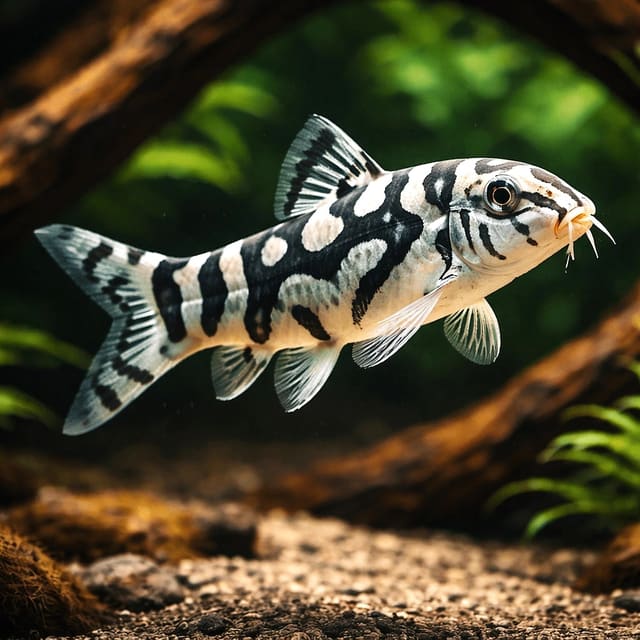
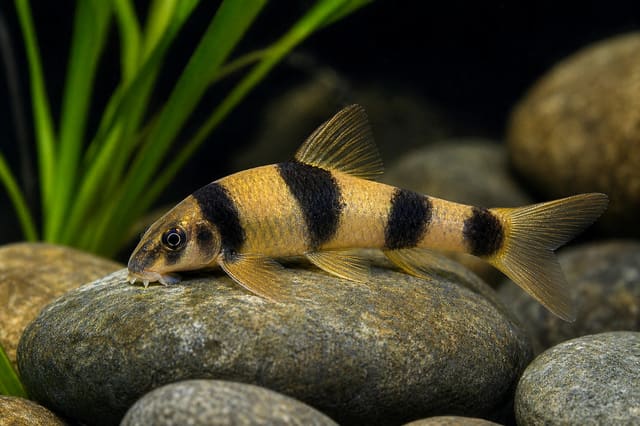
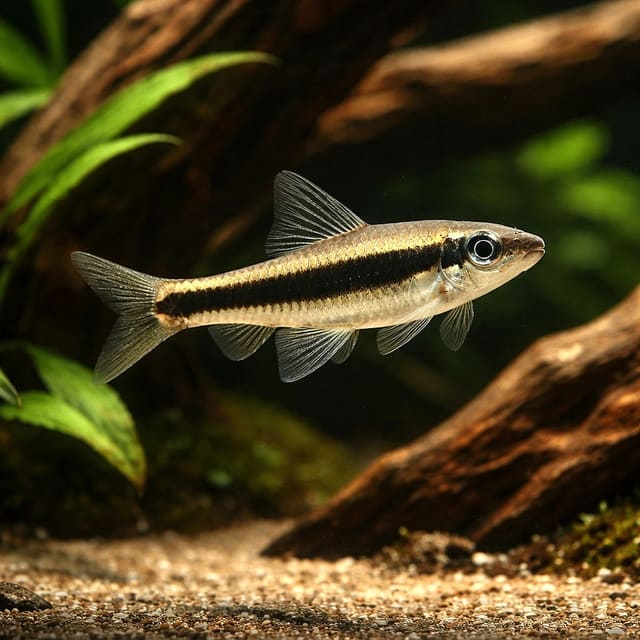
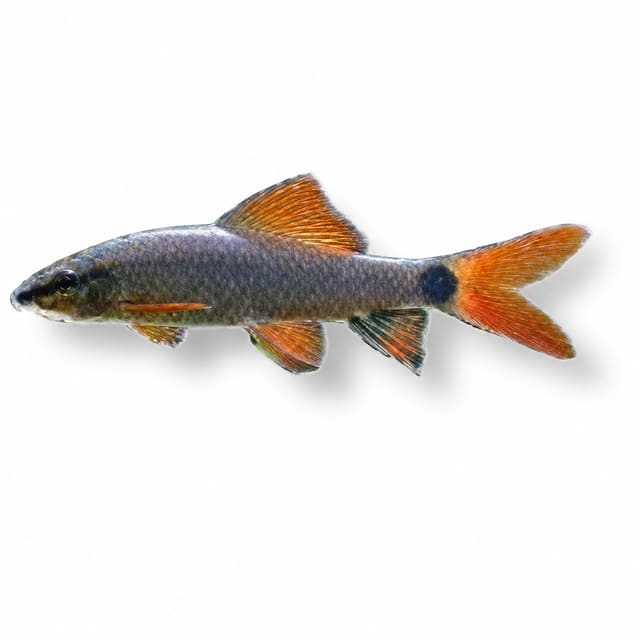
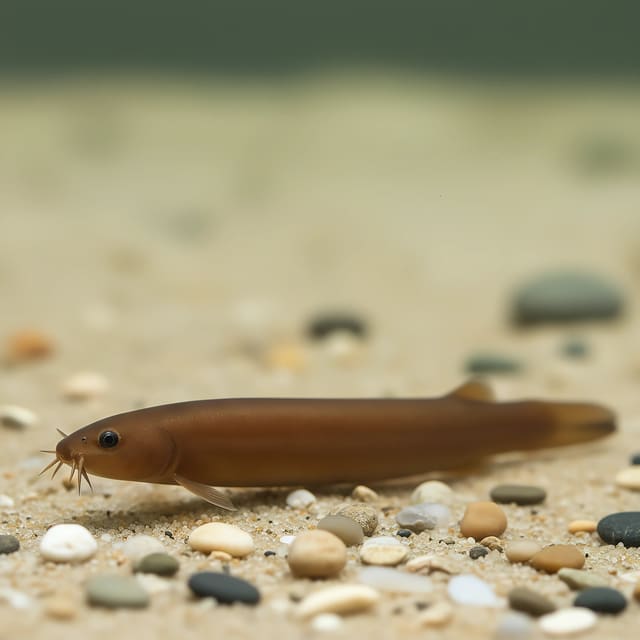
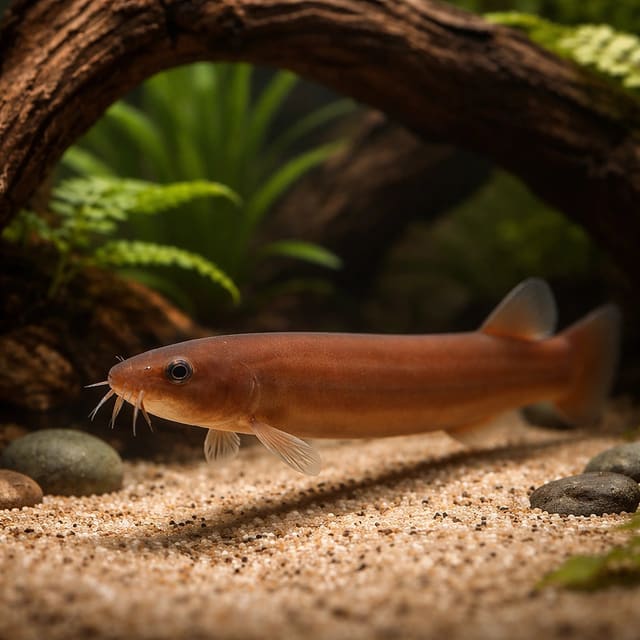
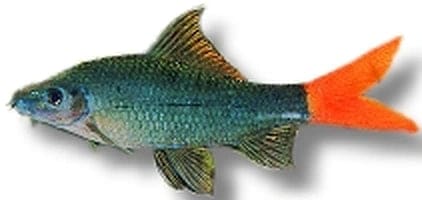
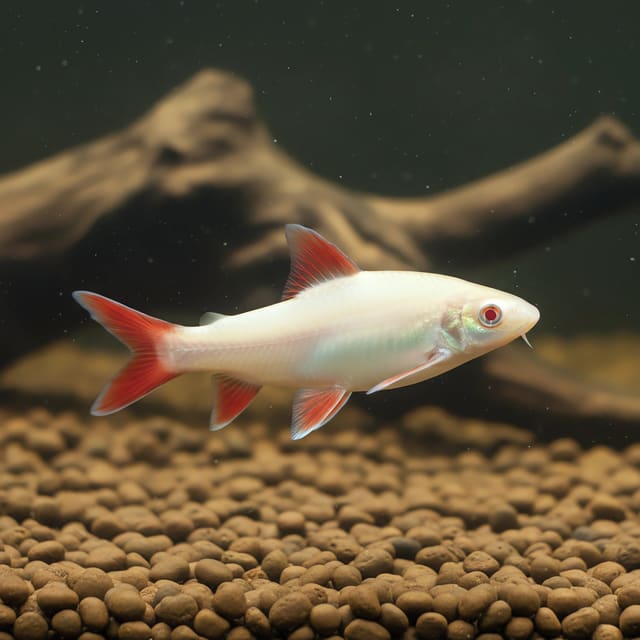
Gallery images have been digitally enhanced to improve image quality. Natural colour, pattern, size and maturity can vary between live animals. They show grey-brown fish in planted or clean-background scenes and are useful for visible form and setting. Treat every pictured fish as unsexed, and expect natural variation in shade, markings and proportions.
Doctor Fish are grouped commercially with loaches and algae eaters, although Garra rufa is a cyprinid rather than a loach. The loaches and oddballs collection is useful for browsing different bottom-oriented fish, but each species needs its own adult-size, temperature, oxygen, diet and social check.
Garra rufa belongs to the family Cyprinidae, and FishBase also gives the common name Red garra. The geographic description above concerns the species' native range, while the individual fish offered here has no stated captive locality. Colour or visual similarity alone cannot identify a particular wild population.
Seriously Fish emphasises the fast-flowing side of its ecology and recommends a stream-like aquarium. Combining shelter, mature browsing surfaces, current and excellent oxygenation gives the fish useful choices without requiring a literal reconstruction of one river.
FishBase records 14.1 cm total length for a male or unsexed fish. Seriously Fish gives 120 mm standard length. Those numbers measure different endpoints and should not be merged into a conversion. For aquarium planning, the FishBase total-length record is the clearest whole-fish maximum, while the 120 mm SL record explains why a profile may show a smaller-looking number without actually contradicting it.
A juvenile selected at 1 cm, 2–3 cm or 3–4 cm is still an adult-sized commitment. Small fish need suitably sized food and protection from powerful unguarded intakes, but placing them temporarily in a nano tank creates another move and another biological transition. The permanent 120 × 45 cm aquarium should already be mature, stable and safe for the smallest arrival.
Larger dispatch fish can compete more strongly at feeding time and make body condition easier to assess, yet they need the same final footprint. Size does not establish age, sex or temperament. Growth rate varies with genetics, temperature, diet, population density and earlier husbandry, so no honest listing can promise an exact date when a chosen fish will reach its adult dimensions.
Measure the aquarium itself rather than relying on a model name or nominal litre figure. Hardscape and substrate reduce water volume, and a tall tank can hold many litres without providing sufficient horizontal grazing area. A 120 cm length and 45 cm front-to-back base makes it possible to build current lanes, resting pockets and several feeding territories while retaining swimming room.
Start with a stable base of sand, fine rounded gravel and water-worn stones. Add broader flat rocks for grazing, aquarium-safe wood for shelter and a few upright pieces to divide sight lines. Make every stack secure. Doctor Fish are strong, busy animals, and unstable hardscape can shift during maintenance or a chase. Avoid sharp edges that could damage the mouth, belly or fins.
Keep the centre and front partly open so the group can move along the aquarium. Place some stones in the main flow and others at its edge. That creates a choice between active grazing and calmer rest without turning the whole tank into still water. A spray bar, strong internal filter or carefully guarded circulation pump can help distribute flow, but equipment should not create an intake hazard for the smallest size.
Seriously Fish says turnover should preferably exceed ten times the aquarium volume per hour and suggests additional powerheads and airstones when necessary. Manufacturer ratings are measured under ideal conditions; media, hose length and accumulated debris reduce actual performance. Judge the outcome by surface movement, oxygenation, even distribution and fish behaviour as well as the number on a box.
Use hardy plants attached to wood or rock if they fit the lighting and flow. Plants are optional for the fish, but they can create shelter and make current boundaries visible. Leave some hard surfaces exposed to light so biofilm can develop. Clean the viewing pane for enjoyment, then rotate which stones and wood are scrubbed so the group does not lose every mature browsing surface on the same day.
Lighting should serve the whole system. Seriously Fish notes that bright light encourages biofilm on solid surfaces, which gives the fish more to browse. Start with a consistent schedule that the plants and maintenance routine can support. If nuisance algae accelerates, shorten or reduce the light and review nutrients; do not strip every stone bare or leave the lamps on indefinitely in the hope of creating more food.
Think of hardscape as a renewable feeding landscape. New stone is relatively sterile, while mature stone carries a complex film. Keep some established pieces in place when changing the layout, and rotate any deep cleaning across weeks. When a decoration must be removed, replace its lost grazing area with another seasoned surface rather than changing all resources at once.
Position the aquarium where summer sun will not overheat it. Direct sunlight can raise temperature quickly and drive uneven algae growth, while a heavily shaded corner may make inspection difficult. A controlled aquarium light and a thermometer provide a more predictable balance. Leave enough clearance above the lid for ventilation and safe access without creating escape gaps.
A close-fitting lid is essential. Seriously Fish notes that the species can literally climb glass. Cover spaces around hoses, cables, airline and filter returns, and keep the water level far enough below the rim that wet glass does not lead directly to a gap. Check the lid after every maintenance session. A cable moved slightly can reopen an escape route that looked secure beforehand.
Doctor Fish should not be added to a biologically immature aquarium. The RSPCA explains why filtration matters: fish release toxic ammonia, beneficial bacteria convert it to toxic nitrite and then to safer nitrate. In normal operation, ammonia and nitrite should remain at zero. The grazing surfaces also become more useful as microbial films develop, so biological maturity serves both water quality and behaviour.
Running a filter for a few days is not proof of a cycle. Establish the aquarium using a valid cycling method and confirm its performance with liquid tests before ordering. The first tropical tank guide covers the basic sequence. Even though Garra rufa favours cooler water than many tropical community species, the same nitrogen-cycle principles apply.
A mature tank is not maintenance-free. Bacterial capacity follows the waste load, and adding several fish at once can exceed it. Plan the whole group with filter capacity in mind, feed carefully during the first weeks and test more often after each addition. Never use the absence of visible cloudiness as evidence that ammonia and nitrite are safe.
If a reading appears, confirm the test and take prompt corrective action appropriate to the level and livestock. Check for a stopped filter, dead animal, decaying food or recent over-cleaning. Protecting oxygenation is especially important because nitrifying bacteria and active river fish both depend on it. Seek experienced help when readings do not return to safe values.
Seriously Fish gives 14–20°C for aquarium maintenance and explicitly describes Garra rufa as not strictly tropical. FishBase reports 15–28°C as an environmental range. The broader record shows biological tolerance across habitats; it does not overturn the narrower specialist husbandry recommendation. For a permanent home, plan around the 14–20°C range unless a qualified source for the exact population justifies otherwise.
A centrally heated UK room may already sit within or above that range. Measure the aquarium through day and night and during summer, not just on a cool morning. A heater may be unnecessary in many rooms, but temperature stability still matters. If one is used to prevent cold dips, guard it from direct contact and set it from a separate thermometer rather than trusting the dial.
Warm water holds less oxygen. As room temperature rises, increase surface movement, clear filter intakes and watch for fast breathing, crowding near the outlet or loss of normal grazing. Avoid drastic cooling with ice or large cold-water additions. Gradual environmental management, safe room ventilation and adequate circulation are kinder than a sudden swing.
Tank mates must fit the same long-term temperature. A fish that tolerates 20°C briefly is not automatically suitable for permanent cool, fast-flowing conditions. Build the community around a shared routine range rather than the extreme ends printed across several care sheets.
The species husbandry profile gives pH 6.0–8.0 and 1–15 dGH. That spans moderately acidic to alkaline water and very soft to moderately hard conditions, but it is still a stability range, not a daily target to traverse. Test the prepared source water and established aquarium, then select a sensible stable point shared by all residents.
The aquarium water chemistry guide explains pH, hardness and nitrogen tests, while the water parameter matcher helps compare actual measurements with the stated range. Use measured values rather than assumptions about a postcode or a water-company average.
General hardness measures mainly calcium and magnesium ions; carbonate hardness relates to buffering. A sudden pH movement may indicate low buffering, a large source-water difference or an unstable intervention. Avoid repeatedly adding acids, alkalis or mineral powders without a repeatable preparation method. Fluctuation can be more stressful than a stable value away from the middle of the range.
When moving a fish between systems, gradual acclimation is particularly important if temperature, pH or mineral content differ. Match replacement water reasonably closely during routine maintenance. If the tap supply changes seasonally, record it and adjust the preparation process slowly rather than discovering the difference during a large water change.
High dissolved oxygen is central to this fish's setup. Surface agitation improves gas exchange, while water movement carries oxygen through the display and filter. An airstone adds useful circulation and surface disturbance; it does not oxygenate by bubbles simply dissolving all the way up. Position equipment so the whole aquarium benefits rather than creating one turbulent corner and several stagnant pockets.
Strong current should be structured. The fish ought to graze confidently in moving water, cross the aquarium without being tumbled, and rest behind wood or stone without struggling continuously. Observe small juveniles carefully because the same pump setting can be more demanding for them. Use intake guards that do not clog unnoticed.
Check flow at every maintenance session. A gradual decline is easy to miss. Plant leaves, snails, food and debris may obstruct the intake or spray bar, while an impeller can collect slime. Service mechanical parts according to the manufacturer without sterilising all biological media. Restore equipment and verify the outlet before walking away.
Power cuts require a simple plan. Keep biological media wet, avoid feeding during a prolonged outage and prioritise aeration when power is limited. A battery air pump can help where outages are recurrent. Once power returns, check that the filter restarts safely and that stagnant filter water has not been flushed into the aquarium without inspection.
Aufwuchs is a community of algae, microbes, tiny invertebrates and organic material on submerged surfaces. FishBase identifies it as the species' food in nature. That does not mean the fish is an obligate algae eater or that whatever grows on the front glass is nutritionally complete. Aquarium feeding should combine deliberate prepared foods with natural browsing.
Seriously Fish recommends good-quality sinking dried foods, with some containing a significant vegetable component, alongside suitable animal foods such as Artemia, bloodworm, Tubifex or chopped prawn. It also mentions occasional cucumber, melon, blanched spinach or courgette. Use these as a varied plan, not an invitation to leave large pieces decomposing overnight.
A plant-rich sinking wafer or granule makes a practical staple. Choose a particle size the smallest fish can handle. Supplement with modest portions of appropriate frozen or live foods, and occasionally offer a clean blanched vegetable. Wash produce, remove uneaten pieces before they soften badly and follow the prepared food's storage instructions.
Spread food among several points. Garra may form a pecking order, and one large wafer in one corner can be controlled by the boldest fish. Several smaller portions allow subordinate animals to feed while making it easier to observe every abdomen and appetite. Do not solve competition by overfeeding; uneaten food raises the waste burden and can damage the water quality all fish share.
Natural biofilm is valuable enrichment. Leave selected stones and wood unsanitised, rotate cleaning and avoid replacing all mature hardscape at once. Bright enough lighting can encourage a grazing film, but excessive lighting and nutrients can still drive nuisance algae. Correct the underlying balance rather than buying livestock as a cleaning appliance.
Monitor body condition from the side. A gently filled abdomen and steady interest in grazing are more useful than how polished the glass looks. Weight loss, a pinched belly or repeated exclusion from food calls for closer observation and targeted access. Sudden loss of appetite should prompt water tests and a health assessment before new foods are added randomly.
Seriously Fish describes the species as relatively peaceful with other fish needing similar conditions, but less tolerant of its own kind in small aquaria. It recommends three to four or more where space permits, noting that a group develops a noticeable pecking order and may direct less aggression towards unrelated tank mates than a solitary fish would towards similarly shaped fish.
A group recommendation only works with the stated footprint and structure. Three or four fish in a cramped tank cannot distribute pressure safely. Provide multiple grazing stones, feeding points, routes and resting pockets. Upright wood or stone can interrupt a direct view across the full length without reducing every open swimming lane.
Short chases around food or a favoured surface may be part of normal hierarchy. Look for the outcome. Every fish should return to grazing, feed regularly and use more than one part of the tank. Persistent cornering, torn fins, weight loss or one fish remaining hidden suggests the arrangement is failing.
Rearranging some hardscape can reset territorial focus, but do not destabilise the entire aquarium at once. Add feeding stations, confirm the tank is large enough and separate an aggressor or victim when welfare requires it. Adding more fish to an already full aquarium is not a safe automatic remedy.
Use nitrate trend, feeding load and stocking to set the water-change routine. A regular partial change is preferable to waiting for visible dirt and then replacing a very large volume. Dechlorinate replacement tap water and match its temperature and chemistry closely enough to avoid a sudden shift. Record test results so gradual change is visible.
Siphon loose waste from accessible areas while preserving selected biofilm. Lift one movable stone at a time rather than dismantling the complete habitat. Rinse reusable mechanical media in removed aquarium water when appropriate, and service biological media in stages. Never clean every surface and all filter media aggressively on the same day.
Inspect the lid, cable gaps, pump guards, spray bar and impeller. Check that wood remains stable and that no fish can become wedged behind equipment. Trim dead plant leaves before they decay. Count the group at feeding time and look at each fish from both sides when possible.
Reassess the adult stocking plan as juveniles grow. More biomass means more food, waste and oxygen demand. A community that appears lightly stocked at dispatch size can become crowded. Create a responsible rehoming or larger-tank plan before welfare deteriorates; never release aquarium livestock, plants or water into natural waterways.
Prepare the mature aquarium before delivery. Confirm zero ammonia and nitrite, the intended temperature, vigorous surface movement, guarded intakes and a completely secure lid. Keep necessary test kits and food ready. Do not wait until the fish is in the parcel to discover a cable gap or a stopped filter.
The delivery and Live Arrival Guarantee policy gives the current receiving and evidence conditions. Someone must be present, the parcel should be opened and inspected on arrival, and a claim requires same-day contact plus a continuous unboxing video showing the sealed parcel being opened and the fish still inside the sealed bag. The video documents the condition for a claim; it is not a biological care step.
Follow the supplied acclimation instructions and limit unnecessary handling. New Garra may become pale, hide, patrol the glass or investigate the lid after transport. Give them secure cover and stable oxygenated water. Offer a modest suitable food after settling and confirm that each fish can reach it.
A quarantine aquarium is useful only when it is mature, covered and able to provide the same cool, oxygen-rich conditions. A bare uncycled container is not safer merely because it is separate. Use dedicated nets and siphons, observe appetite and waste, and avoid preventative medication without a defined reason.
A healthy Doctor Fish is alert, holds position normally, grazes and accepts food. Colour can change with background, lighting and stress, so judge it alongside breathing, posture, fins and body condition. Learn each individual's normal place in the group; a social change can be an early warning.
Rapid breathing, crowding near the outlet, loss of grip, persistent isolation, clamped fins, white spots, reddened areas, flashing or weight loss deserve prompt investigation. Test ammonia, nitrite, nitrate, pH and temperature first and inspect circulation. When several fish change together, an environmental cause is particularly important to rule out.
Do not diagnose one disease from one photograph or combine medicines “just in case”. Treatments can affect filter bacteria, plants and invertebrates, and dosage depends on real water volume. Follow labelled directions for a defined condition and seek an aquatic veterinarian or experienced fish-health professional when signs are severe, uncertain or persistent.
Sexing is not needed for ordinary care. Seriously Fish notes that mature females are thicker-bodied and large males can develop tuberculated patches on the head and snout, but juveniles and unconditioned adults may not show those differences clearly. Body fullness can also reflect food or health. Treat every fish in this offer as unsexed.
Breeding is not a routine community expectation. The specialist profile describes wild spawning over gravel or rocks without parental care and notes uncertainty around some commercial production. That supports only a cautious biological note, not a home recipe. Focus first on a stable adult social group and normal grazing behaviour.
Seriously Fish describes Garra rufa as relatively peaceful and suitable alongside other species that require similar environmental conditions. That is conditional guidance, not a universal tank-mate list. A companion must fit the same cool routine temperature, vigorous oxygenation, current, adult footprint and active feeding environment.
Begin with temperature. Many familiar tropical fish are normally kept warmer than the 14–20°C specialist range given for Doctor Fish. A brief overlap at one edge of two charts does not prove a good permanent match. Choose residents whose preferred long-term range genuinely overlaps, then check pH, hardness and flow.
Next compare body size and feeding style. Doctor Fish are active lower-level grazers that may converge quickly on sinking food. A very timid or slow feeder could lose access even without overt attack. Fish using upper water and taking different foods may reduce direct competition. Research the exact species and choose by genuine environmental overlap rather than a generic community label.
Conspecific relationships need more attention than the word “peaceful” suggests. In small aquaria the species is not especially tolerant of its own kind. In suitable space, three to four or more can form a loose group and a visible pecking order. The goal is not to eliminate every chase; it is to prevent one fish being excluded from food or normal use of the aquarium.
Provide several flat stones, feeding positions and routes through the hardscape. Put some resources in the main current and some near its edge. A dominant individual should not be able to stand over the only wafer or the only sheltered surface. Observe at more than one feeding and at quiet times when hierarchy may look different.
A solitary fish is not automatically easier. Seriously Fish notes that a single individual can behave more aggressively towards similarly shaped fish. If the aquarium cannot support a proper Garra group, choose another species whose social plan fits rather than squeezing one fish into a marginal community.
Successful compatibility means every fish can use its normal area, feed, rest and maintain condition. Short investigation is different from repeated pursuit. Look for patterns: one resident hiding whenever the Garra emerge, damaged fins, lost weight, rapid breathing, or a fish confined to an unsuitable current pocket.
Introduce residents only when the filter has spare capacity. Rearrange a small part of the hardscape where territorial focus is strong, distribute food and observe for several days. Keep a separation plan available. Do not wait for severe injury before accepting that a theoretical overlap has failed in the actual aquarium.
Medication and invertebrate compatibility need separate checks. Some fish treatments are unsafe for snails or shrimp, and a high-flow cool aquarium may not suit every invertebrate even when pH overlaps. Research the exact animal rather than treating “algae eater” or “bottom fish” as a compatibility category.
The practical rule is simple: combine Doctor Fish only with robust freshwater animals whose routine temperature, oxygen, current, adult size and feeding access all match, while preserving enough floor area and grazing surfaces for the Garra group. Product alternatives shown elsewhere are browsing comparisons, not automatic tank mates.
FishBase records Garra rufa at a maximum 14.1 cm total length for a male or unsexed fish. Seriously Fish lists 120 mm standard length, which excludes the tail, so the measurements must stay labelled rather than being treated as a contradiction.
Seriously Fish recommends a base of at least 120 × 45 cm, approximately 243 litres. The horizontal footprint matters because the fish use hard surfaces, form social territories and need both current lanes and quieter resting pockets.
Seriously Fish recommends three to four or more where space permits. A suitable group needs a full-sized structured aquarium, several grazing and feeding areas and monitoring for a pecking order; adding fish to a cramped tank does not solve aggression.
It is an intermediate store assessment. A well-prepared keeper can succeed, but the fish needs a mature 120 cm covered aquarium, cool highly oxygenated water, strong circulation, measured water chemistry, a social plan and a complete diet.
Garra rufa grazes aufwuchs but is not an algae-only fish. Offer plant-rich sinking wafers or granules as a staple, varied with suitable small animal foods and occasional clean blanched vegetables, and feed at several points so subordinate fish can eat.
Seriously Fish gives 14–20°C, pH 6.0–8.0 and 1–15 dGH for aquarium maintenance. FishBase records broader environmental temperature tolerance, but stable long-term care should follow the narrower specialist range rather than an extreme.
Garra rufa is relatively peaceful towards other fish needing similar conditions, but it can be intolerant of its own kind in small aquaria and forms a pecking order. Focus on repeated pursuit, food exclusion, hiding, weight loss or damaged fins when judging the real group.
Consider robust freshwater fish whose routine cool temperature, strong oxygenation, current, adult size and feeding style genuinely overlap. Research each exact animal, leave ample food and floor space, and avoid warm or still-water specialists.
Tropical Fish Co hand-packs livestock in oxygenated bags, an insulated box and a heat pack when weather calls for it, then uses a tracked licensed live-animal courier. Someone must receive and inspect the parcel; a Live Arrival Guarantee claim requires same-day contact and a continuous unboxing video from sealed parcel to fish still in the sealed bag.
These references support the identity, labelled adult measurements and husbandry used here. The specialist aquarium range is kept separate from broader environmental tolerance, and group-level welfare advice is not presented as a species-specific optimum.
Individual fish vary in colour, markings and behaviour. The live product controls show orderable sizes, price and checkout information; permanent care should be planned before purchase.
No reviews for this item yet. Bought one? Honest reviews only, good or bad.
What customers say about ordering from us
Easy website plenty of info on fish your buying great to pick a time slot
TRACEY DURRANT · 7 Oct 2026
Got some lovely fish thank you
Kevin Mackie · 7 Oct 2026
Reviews of our shop, collected by Judge.me, an independent third-party review collector. Newest first.