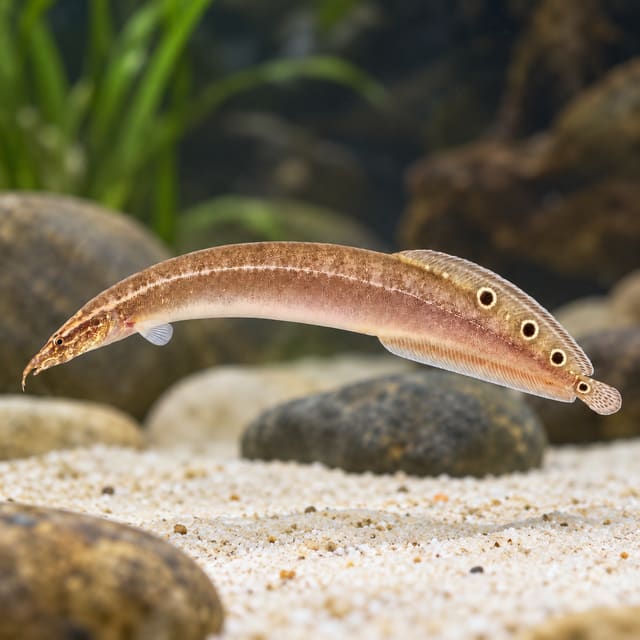
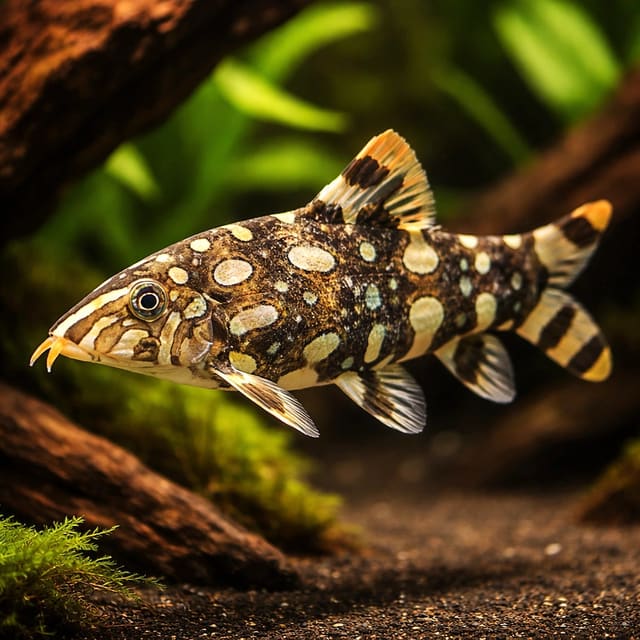
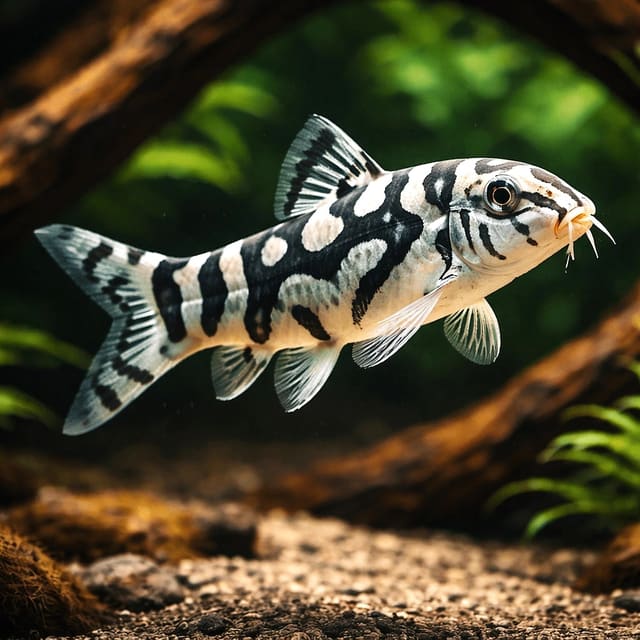
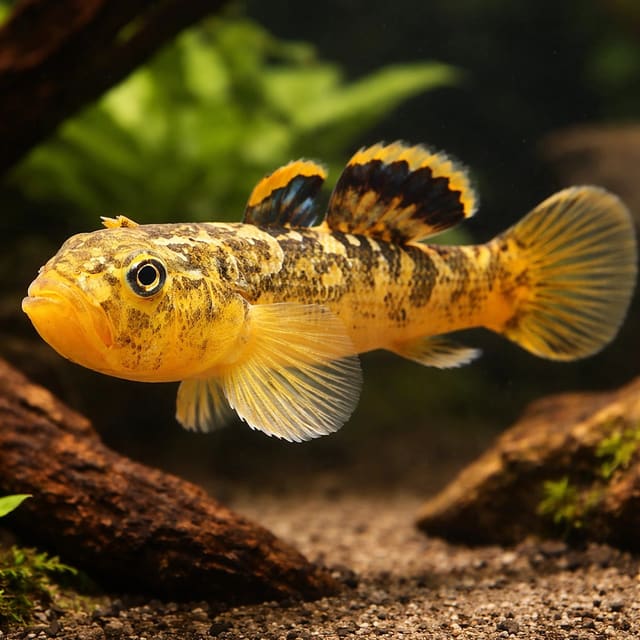
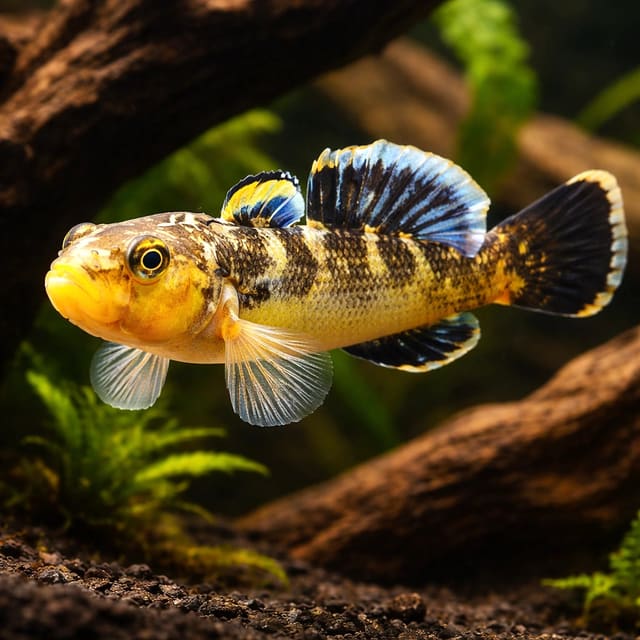
Frecklefin eel (Macrognathus aculeatus)
23–27°C · pH 6.5–7.5
£20.99

The Half-Banded Spiny Eel (Macrognathus circumcinctus) is a mastacembelid fish from the Mekong and Chao Phraya basins through south-eastern Thailand, the Malay Peninsula and Sumatra, with a recorded maximum of 28.6 cm. It suits intermediate keepers who can maintain 24–27°C, pH from 7.0 and hardness from 15 dGH while avoiding small fish and invertebrates that match its prey profile. Sold individually in 6 - 8 cm and 12 - 15 cm dispatch sizes.
Adult size is the maximum length this species reaches at full maturity (scientific sources). The livestock you receive will be younger and smaller — pick a size above for the actual shipping size. Product-photo provenance and any image-specific limitations are stated on the listing.
Macrognathus circumcinctus
The Half-Banded Spiny Eel (Macrognathus circumcinctus) is a mastacembelid fish from the Mekong and Chao Phraya basins through south-eastern Thailand, the Malay Peninsula and Sumatra, with a recorded maximum of 28.6 cm. It suits intermediate keepers who can maintain 24–27°C, pH from 7.0 and hardness from 15 dGH while avoiding small fish and invertebrates that match its prey profile. Sold individually in 6 - 8 cm and 12 - 15 cm dispatch sizes.
Adult size is the maximum length this species reaches at full maturity (scientific sources). The livestock you receive will be younger and smaller — pick a size above for the actual shipping size. Product-photo provenance and any image-specific limitations are stated on the listing.
Maintain these water conditions for optimal health and vibrant colors
The Half-Banded Spiny Eel (Macrognathus circumcinctus) is an eel-like freshwater fish in the Mastacembelidae family. It comes from the Mekong and Chao Phraya basins, south-eastern Thailand, the Malay Peninsula and Sumatra. FishBase records a maximum length of 28.6 cm and places the species in tropical freshwater at 24–27°C. This is an intermediate choice for a keeper prepared to plan around that adult length, maintain a mature biological filter and screen every companion for predation risk.
In nature, it occurs from streams and peat-influenced areas to medium and large rivers and flooded fields. It is demersal, so its activity is associated with the lower part of the water, and it feeds at night on invertebrates and small fishes. Those facts make the adult stocking plan, access to suitable meaty food and protection of potential prey more important than the length of the fish at dispatch.
Wikipedia describes Macrognathus as a genus of eel-like fishes in the family Mastacembelidae and order Synbranchiformes. Its long outline gives this fish an eel-like appearance, but aquarium decisions should be based on the requirements documented for this freshwater species rather than its body shape alone.
Choose this fish when you can make decisions around its eventual 28.6 cm maximum rather than treating it as a permanently small oddball. The intermediate store rating reflects the combination of adult-size planning, nocturnal feeding, potential predation and the need for stable, tested water. It is not a shortcut for deciding whether a particular aquarium is suitable: measured water, the complete stocking plan and the capacity of the filter still matter.
| Suits | Not suited to |
|---|---|
| Keepers planning around a recorded maximum of 28.6 cm | Aquariums chosen only around the dispatch length |
| Tropical freshwater maintained at 24–27°C | Systems that cannot hold the required temperature steadily |
| A mature aquarium with a maintained biological filter | Unfiltered or newly assembled aquariums |
| A feeding plan that reaches a nocturnal fish | Stocking where other fish prevent it reaching suitable food |
| Communities screened for prey risk and matching water needs | Small fish or invertebrates that match its recorded prey profile |
Adult length is only one part of the decision. Decorations and plants reduce usable water and swimming space, while every additional animal adds waste and creates another compatibility question. A larger body of water is generally more stable, but capacity must still be considered alongside filtration, water chemistry and the needs of every animal in the aquarium.
Do not use the sale unit as a social rule. One purchase supplies one fish, but the number to keep in one aquarium requires an individual assessment of adult space, water requirements and behaviour. The compatibility sections below provide the screening method without turning an uncertain social pattern into a fixed group number.
One purchase supplies one Half-Banded Spiny Eel. Use the live size selector to choose either “6 - 8 cm” or “12 - 15 cm”. These labels describe the fish’s dispatch length and do not change its recorded adult maximum or long-term care requirements. The size you select is the size supplied, not the adult size.
Choose between the two labels by checking the animals already in the aquarium, the physical layout and feeding access. Do not assume that one dispatch grade has a different temperament, sex or eventual size. Both must be assessed against the same 28.6 cm adult planning figure, 24–27°C temperature range and prey-based compatibility rule.
Sex is guaranteed only when the selected option explicitly states male or female. This Half-Banded Spiny Eel listing has no sex-guaranteed option.
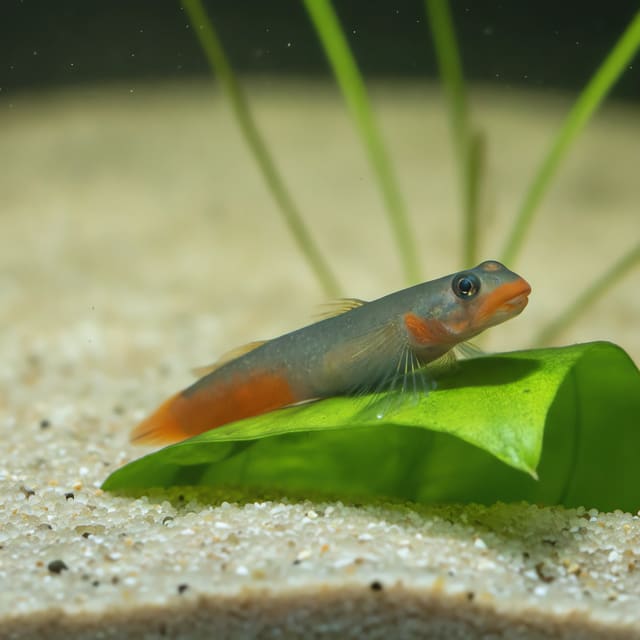
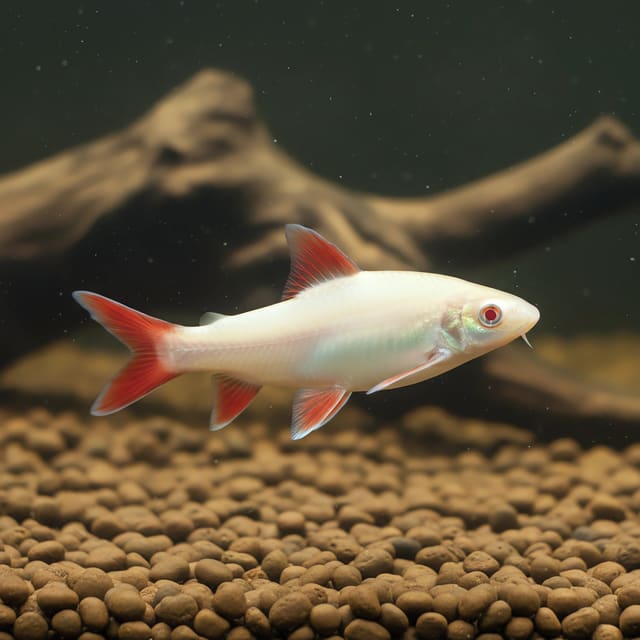
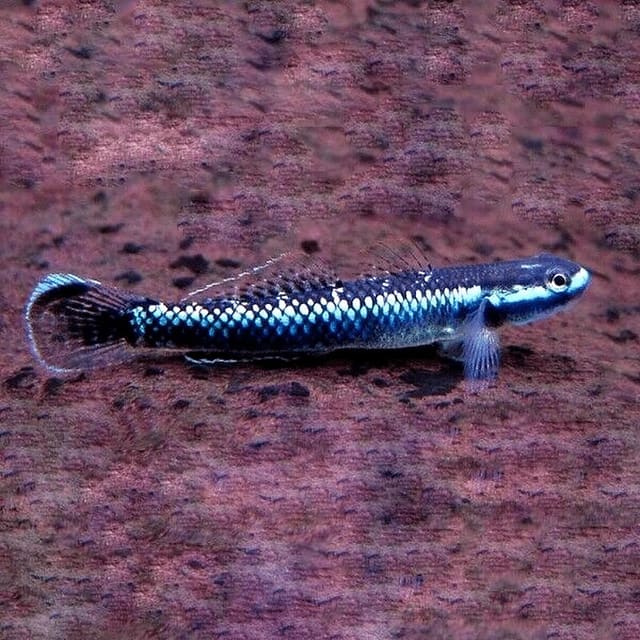
Some gallery images have been digitally enhanced to improve image quality. They show the listed type of animal rather than guaranteeing the exact markings of the individual supplied, so natural colour and pattern can vary.
If you are still deciding which kind of unusual freshwater fish fits the aquarium, browse the loaches and oddballs collection. Compare adult dimensions, water requirements, feeding biology and compatibility rather than choosing from appearance alone.
Keep the aquarium at 24–27°C. Use pH 7.0 and hardness 15 dGH as lower planning points, and maintain the selected values consistently. FishBase records these as environmental values for Macrognathus circumcinctus: temperature is bounded at 24–27°C, while pH is recorded from 7.0 and hardness from 15 dGH.
Measure the aquarium rather than relying on the tap-water label or an old test. Record temperature, pH, ammonia, nitrite and nitrate before deciding whether the system is ready. Our water chemistry guide explains what these measurements mean, while the water matcher helps compare the measured aquarium with the planning values.
For example, an aquarium at 25°C sits within the recorded temperature range. A system at 23°C or 28°C falls outside it and should be reassessed before stocking. Apply the same method to pH and hardness: test, compare with the recorded lower points and make the decision before the animal enters the aquarium.
Stability comes from preparation, adequate water volume, working equipment and regular checks. Position the aquarium away from direct sunlight, heat sources, draughts, loud noise and vibration. Place it on a flat, level stand able to bear the filled aquarium indefinitely.
Plan for a fish with a recorded maximum of 28.6 cm. Choose an aquarium that can accommodate that adult length together with every other resident, the filter and all intended decoration. A dispatch length of 6 - 8 cm or 12 - 15 cm must never be used as the final space requirement.
OATA’s freshwater aquarium guidance advises choosing an aquarium that can accommodate the selected fish when fully grown. It also explains that larger aquariums contain more water and tend to be more stable and less susceptible to changes in temperature and pH.
| Question | Decision |
|---|---|
| Can the aquarium accommodate a 28.6 cm fish? | Use the adult maximum, not the dispatch label. |
| What else occupies the system? | Include every fish, plant, ornament and item of equipment. |
| Can the filter process the total waste load? | Judge the complete stocking plan, not this fish in isolation. |
| Will the water remain stable? | Allow enough water volume for dependable temperature and chemistry. |
Decorations and live plants are useful forms of enrichment, but they occupy space and must be included in the calculation. Ornaments can create retreats, while live plants can help remove nitrate. Arrange every addition securely and leave enough usable water for the adult fish and its companions.
A litre figure alone cannot settle this decision because aquariums with the same stated capacity can contain very different stocks, equipment and amounts of decoration. Start with the adult maximum, then assess water volume, filtration and total stocking together. This approach prevents a temporary dispatch size from becoming the basis of a permanent aquarium.
Use a well-established and maintained biological filter. The RSPCA explains that fish release toxic ammonia, a working biological filter converts it to nitrite and then to the safer nitrate, and no fish should be kept without a properly set up filter.
OATA’s broad freshwater guidance, rather than a species-specific optimum, sets ammonia and nitrite at zero mg per litre. These are the readings required before adding the fish. Nitrate must also be measured and managed as part of the established maintenance routine.
The 24–48-hour settling period checks temperature and equipment; it is not a substitute for filter maturation. Use the first tropical tank guide to prepare the system and establish the biological filter before livestock arrives.
Stocking too quickly can leave too few nitrifying bacteria to process the added ammonia and nitrite. Treat every new fish as an increase in the biological load, even when its dispatch length is modest. The filter must support the entire aquarium as the animal grows and feeding increases.
Before making the final decision, record a zero reading for both ammonia and nitrite. If either is detectable, delay adding the fish and restore biological control first. Check that the aquarium remains at 24–27°C and that pH and hardness fit the plan at the same time.
Make appropriately sized meaty aquarium foods based on invertebrate or fish ingredients the main diet. FishBase records this species feeding at night on invertebrates and small fishes in nature, so its staple food should reflect that animal-based prey profile.
Offer food when you can observe whether this nocturnal fish finds and eats it. Evening observation is useful because it aligns the feeding opportunity with the recorded period of activity. The goal is not merely to place food in the aquarium, but to confirm that this individual reaches it before other residents consume it.
Dietary requirements vary between species and between feeding positions in the aquarium. This fish is recorded as demersal and nocturnal, so choose a presentation that reaches it in the lower part of the aquarium during its active period. Do not rely on food remaining unnoticed for a long period; leftovers contribute to ammonia and increase the work required from the biological filter.
Use the fish’s response to refine presentation, not to replace the documented prey profile. If it repeatedly fails to reach food, reassess the feeding time, the presence of competing residents and whether the chosen food reaches the area where the fish is active. A continuing decline in appetite belongs in the health-observation process, together with water testing and checks for changes in breathing, colour or behaviour.
Test water quality at least once a week, and test more often when the aquarium is being established or livestock has recently been added. Check temperature regularly, keep ammonia and nitrite at zero, and follow the nitrate trend rather than waiting for an obvious change in the fish.
Carry out partial water changes of up to 25% every week. Match replacement water to the correct temperature and treat it so it is safe for the fish before adding it. The appropriate frequency and amount can vary with aquarium size, stocking, feeding and the species kept, so use the test results and waste load to guide the routine within that limit.
A written log turns isolated readings into a useful pattern. A single temperature check confirms the moment; repeated readings show whether the aquarium reliably remains within 24–27°C. In the same way, a sequence of nitrate results shows whether the current maintenance routine is keeping pace with feeding and stocking.
Increase monitoring after a new animal is introduced because the filter must respond to additional waste and feeding. Do not add several planned residents at once simply because the initial ammonia and nitrite readings are zero. Gradual stocking gives the nitrifying bacteria time to increase as the biological load rises.
Prepare the mature aquarium and complete the water checks before the parcel arrives. Someone must be present to receive live fish, and the parcel must be opened and inspected on the day it arrives.
The unboxing video should be recorded for every arrival from the sealed parcel onward. Keep the order number with the recording. A continuous video showing the sealed parcel, the opening and the fish still inside the sealed bag is required for a Live Arrival Guarantee claim.
Before release, confirm that the aquarium is at 24–27°C and that ammonia and nitrite are zero. Those aquarium checks come from the freshwater maintenance guidance and belong alongside the established filtration routine.
Read the delivery and Live Arrival Guarantee policy for the full terms. After release, establish a baseline for swimming, breathing, colour and feeding, then compare later observations with that baseline.
Learn the individual fish’s normal behaviour and appearance, then act on changes rather than waiting for several signs to appear together. OATA highlights swimming, colour, temperament, breathing, external appearance, body condition and feeding as useful observation points for aquarium fish.
During the first week, establish what is normal for this individual while following the water-testing schedule already set out above. A change in behaviour can be linked to water quality, feeding access or compatibility, so check those practical factors together rather than treating one sign in isolation.
At the first meaningful change, test temperature, ammonia, nitrite, nitrate and pH. Correct any measurable husbandry problem within the established care plan and contact us for health guidance if concern continues. Do not begin a disease treatment from appearance alone, because the correct response depends on the actual condition and the aquarium’s measured water quality.
At the end of the first month, compare the log with the first-week baseline. Consistent temperature, zero ammonia and nitrite, dependable feeding access and stable behaviour show whether the daily and weekly routines are working together.
Avoid small fish and invertebrates that match the Half-Banded Spiny Eel’s recorded prey profile. FishBase records it feeding on invertebrates and small fishes at night, so a peaceful-looking daytime community does not remove the predation risk.
Beyond that clear avoid rule, treat compatibility as an aquarium-specific decision. OATA advises checking water type, temperature, flow requirements and behaviour because some species shoal while others are territorial or aggressive. Every proposed companion must also fit the available adult space and have reliable access to food.
| Check | Decision rule |
|---|---|
| Prey risk | Avoid small fish and invertebrates that fit the recorded diet. |
| Temperature | Use companions that can share 24–27°C. |
| pH and hardness | Compare their needs with pH from 7.0 and hardness from 15 dGH. |
| Adult space | Include the eel’s 28.6 cm maximum and every other adult animal. |
| Feeding access | Confirm each resident can reach suitable food. |
| Behaviour | Observe the actual combination and reassess harmful interactions. |
Do not label a fish as suitable merely because it shares one temperature value. A companion that fits 25°C can still fail the assessment through incompatible water chemistry, feeding competition, adult space or behaviour. Equally, a large body size does not by itself guarantee a successful combination.
Fin-nipping and interactions with other bottom-associated animals require observation in the actual aquarium. Use caution where behaviour is uncertain, establish a baseline immediately after introduction and reassess the combination if swimming, feeding, colour, breathing or temperament changes. Ask us for one stocking and compatibility assessment when you can provide the aquarium dimensions, measured water and complete resident list.
One purchase supplies one fish, but purchase quantity is not a group-size recommendation. Decide whether more than one Half-Banded Spiny Eel belongs in the aquarium only after assessing adult space, water conditions, filtration and observed behaviour.
Do not convert the species’ occurrence in rivers or flooded fields into an aquarium group rule. Natural distribution and habitat describe where the wild fish occurs; they do not decide how many should share a particular aquarium. Use the same individual compatibility screen for another member of the species as you would for any other proposed resident.
Introduce livestock gradually. Each addition increases ammonia production and feeding, so the beneficial bacterial population must increase with the biological load. Zero ammonia and nitrite before an addition remain essential, but they do not replace the adult-space and behaviour checks.
The safest decision is the one based on the aquarium that actually exists: its dimensions, water volume, measured chemistry, filter, decoration and complete stock. Reassess as animals grow, because a combination planned around dispatch lengths may no longer fit when the eel approaches its recorded maximum of 28.6 cm.
FishBase records a maximum length of 28.6 cm for the Half-Banded Spiny Eel. Use 28.6 cm for adult planning rather than the 6 - 8 cm or 12 - 15 cm dispatch length.
Choose an aquarium that accommodates a 28.6 cm adult together with every resident, the filter and all decoration. OATA advises planning for fully grown fish and notes that larger water volumes tend to be more stable.
Decide the number through an aquarium-specific assessment of adult space, filtration, feeding access and behaviour. One purchase supplies one fish, but that sale unit is not a social recommendation.
We rate it intermediate because the keeper must plan for a 28.6 cm adult, maintain 24–27°C in a mature filtered aquarium, provide suitable nocturnal feeding and screen out potential prey.
Make appropriately sized meaty aquarium foods based on invertebrate or fish ingredients the staple. FishBase records this nocturnal species feeding on invertebrates and small fishes in nature.
Keep this fish at 24–27°C. FishBase records its freshwater environment at pH from 7.0 and hardness from 15 dGH; measure these values and keep the selected conditions stable.
Treat it as a nocturnal predator because it eats invertebrates and small fishes. Fin-nipping behaviour is uncertain, so screen companions carefully and monitor swimming, feeding, colour, breathing and temperament.
Use only companions that match 24–27°C, the water plan, adult space, feeding access and behaviour requirements. Avoid small fish and invertebrates that fit this fish’s recorded prey profile.
Start filming the sealed parcel before opening it or floating the bag. Open it in one continuous take, show the fish inside the sealed bag, float the bag for 20–30 minutes, then release the fish without pouring bag water into the aquarium.
No reviews for this item yet. Bought one? Honest reviews only, good or bad.
What customers say about ordering from us
I have a small group of long finned mountain minnows. So was delighted to be able to order ten of this variety to increase the genetics in my tank . The ones I recieved are healthy but it’s to early to give a verdict on wether they are of a long finned type since they are small currently.
Gordon Walker · 23 Sept 2026
100% success travel and "installation". Pleased with quality of purchase. The Siamese fighter a bit "shy" so have not yet seen him at his best yet but looking good. Happy customer. GG
George E Garratt · 21 Sept 2026
Reviews of our shop, collected by Judge.me, an independent third-party review collector. Newest first.