−13%
Moderate
Half-Banded Spiny Eel (Macrognathus circumcinctus)
24–27°C
£17.39£19.99

A striking, slender bottom-dweller with bold zebra striping and a shy, burrowing nature that makes a unique centerpiece for a peaceful aquarium. Moderate care, peaceful. 24-28C, pH 6.5-7.5.
Adult size is the maximum length this species reaches at full maturity (scientific sources). The livestock you receive will be younger and smaller. Product-photo provenance and any image-specific limitations are stated on the listing.
Macrognathus zebrinus
Confirm your email, then we’ll send an availability message for this exact item if it returns within 180 days.
This request is only for this product—no newsletter or other promotions. A mail-provider retry may very rarely duplicate the same availability message. Unconfirmed addresses are removed after 48 hours. See our privacy policy.
A striking, slender bottom-dweller with bold zebra striping and a shy, burrowing nature that makes a unique centerpiece for a peaceful aquarium. Moderate care, peaceful. 24-28C, pH 6.5-7.5.
Adult size is the maximum length this species reaches at full maturity (scientific sources). The livestock you receive will be younger and smaller. Product-photo provenance and any image-specific limitations are stated on the listing.
Maintain these water conditions for optimal health and vibrant colors
Macrognathus zebrinus, known as the Zebra Spiny Eel, is a striking slender bottom-dweller with bold striping that brings unique character and fascinating burrowing behaviour to peaceful community aquariums. Available for sale UK through Tropical Fish Co, this Myanmar endemic reaches 6cm making it one of the smaller spiny eels suitable for moderate-sized tanks. The moderate care requirements and peaceful temperament make it accessible for aquarists with established aquariums seeking unusual bottom dwellers. The distinctive zebra striping and shy burrowing nature create captivating display when appropriate setup and tankmates are provided.
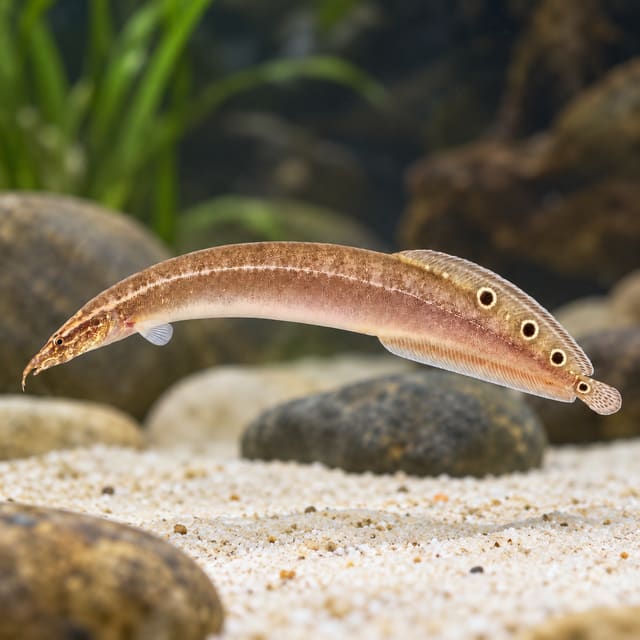
The Zebra Spiny Eel displays elongated serpentine body reaching 6cm, substantially smaller than many spiny eel relatives. The distinctive feature is bold zebra-like striping: alternating dark brown/black and cream/yellow bands running perpendicular to body axis creating striking pattern. Stripes continue onto the elongated dorsal fin running most of body length. The head is pointed with small dorsally-positioned eyes and terminal mouth containing small teeth for gripping prey. The characteristic isolated spines before the dorsal fin rays can be erected defensively, giving the family its common name. Pectoral fins are small, with locomotion relying on undulating body movements. The scaleless skin is covered in protective mucus layer and overall body is flexible, allowing navigation through tight spaces and burial in substrate.
Macrognathus zebrinus is endemic to freshwater river systems in Myanmar, particularly the Irrawaddy, Sittaung, and Salween rivers. These tropical waterways feature soft muddy or sandy substrates ideal for burrowing, with moderate flow and abundant aquatic vegetation or submerged wood providing cover. Water conditions include tropical warmth, neutral to slightly acidic pH, and moderate clarity with seasonal variations in turbidity. During daytime, eels burrow in soft substrate or hide within crevices and root tangles, emerging at dusk to hunt for small invertebrates, worms, and insect larvae. Seasonal monsoons bring dramatic water level increases, whilst dry seasons concentrate fish in permanent channels where they may burrow deeply if conditions deteriorate.
Provide a minimum 75-litre aquarium with exclusively soft fine sand substrate at depth of 5-8cm allowing natural burrowing behaviour. Coarse gravel or sharp substrate causes injury to the delicate body. Furnish generously with smooth caves, slate arrangements, PVC pipes, and smooth driftwood creating secure hiding places. Hardy plants with protected root systems may be included (Anubias, Java fern attached to wood), though substrate-rooted plants may be disrupted by burrowing. Subdued to moderate lighting with hiding places distributed throughout creates security for this naturally shy species. Efficient filtration maintaining good water quality is essential, though avoid creating excessive current. A tight-fitting secure lid is critical as spiny eels are notorious escape artists capable of squeezing through surprisingly small gaps.
Maintain stable temperatures between 24-28°C. Water should be neutral to slightly acidic with pH 6.5-7.5 and low to moderate hardness (5-12 dGH), matching their Myanmar river origins. Ammonia and nitrite must remain at zero, whilst nitrates should be kept below 20ppm through regular 25-30% weekly water changes. These spiny eels are reasonably hardy once established but sensitive to declining water quality—consistent maintenance is essential. Dissolved oxygen should be adequate through gentle surface agitation. The soft fine sand substrate requires careful maintenance to prevent waste accumulation within areas where eels burrow. Avoid sudden parameter changes which trigger stress—acclimatize new specimens slowly using drip method over several hours.
Macrognathus zebrinus is a carnivorous bottom feeder requiring meaty diet. In captivity, provide bloodworms, blackworms, earthworms (chopped for smaller individuals), brine shrimp, mysis shrimp, and other frozen or live meaty foods 3-4 times weekly. Many individuals can be trained to accept quality sinking carnivore pellets once acclimated, offering convenient nutrition. Feed during evening hours when nocturnal eels become active—target feeding near hiding places ensures they receive adequate nutrition without excessive competition from diurnal tankmates. Remove uneaten food after 15-20 minutes to prevent water quality degradation. Initially shy feeders may require patient observation to confirm adequate intake, though most become bolder once settled.
Zebra Spiny Eels are predominantly nocturnal, remaining buried in substrate or hidden in retreats during bright daylight hours. As dusk approaches, activity increases with eels emerging to patrol substrate searching for food using sensitive snout to detect prey in darkness. Burrowing is extensive—they can completely disappear beneath sand with only eyes and snout tip visible, or vanish entirely. Locomotion is graceful serpentine movement allowing navigation through tight spaces and décor. The peaceful temperament means they rarely show aggression except toward prey items, tolerating tankmates that don't threaten or harass them. They possess strong escape instinct, attempting to exit through any available gap when stressed, hence secure lid is non-negotiable. Defensive behaviour is minimal, typically consisting of rapid retreat to hiding rather than confrontation.
This peaceful spiny eel thrives alongside peaceful midwater fish that won't compete for bottom territories or harass the eel. Suitable companions include peaceful tetras, rasboras, peaceful barbs, and robust non-aggressive community fish occupying upper zones. Other non-aggressive bottom dwellers too large to be eaten (Corydoras, peaceful loaches) can coexist provided adequate floor space exists. Avoid very small fish under 2cm that might be consumed during nocturnal hunting, shrimp and small invertebrates which will be eaten, fin-nippers that might harass the eel, and aggressive territorial cichlids. Fast boisterous feeders may outcompete the shy eel during feeding—select calm tankmates and use target feeding to ensure adequate nutrition.
Captive breeding of Macrognathus zebrinus is uncommon in home aquaria with limited reliable documentation. The species' specialized requirements and poorly understood reproductive triggers make breeding challenging. Sexual dimorphism is subtle or absent, making sexing difficult. If breeding attempts are considered, provide large mature aquarium with excellent water quality, extensive hiding places for potential spawning sites, and condition fish with abundant varied live foods. Spawning likely requires environmental triggers mimicking seasonal monsoon patterns—temperature fluctuations, increased water flow, and possibly barometric pressure changes. Eggs and fry would require specialized care in separate rearing systems with microscopic live foods initially.
Tropical Fish Co supplies healthy, quarantined Macrognathus zebrinus specimens that have been carefully acclimated and are feeding confidently on frozen and prepared meaty foods. Each Zebra Spiny Eel is hand-selected for vibrant striping, good body condition, and intact skin, ensuring you receive robust eels ready to thrive in appropriate aquariums. Our experienced staff understand spiny eel requirements and can provide detailed guidance on substrate selection, escape-proofing, dietary needs, and compatible tankmates. With specialist packaging and tracked UK delivery, your new eel arrives safely in peak condition. We're committed to sustainable sourcing and work only with responsible suppliers who prioritize fish welfare and support conservation of Myanmar's threatened freshwater ecosystems.
No reviews for this item yet. Bought one? Honest reviews only, good or bad.
What customers say about ordering from us
I have a small group of long finned mountain minnows. So was delighted to be able to order ten of this variety to increase the genetics in my tank . The ones I recieved are healthy but it’s to early to give a verdict on wether they are of a long finned type since they are small currently.
Gordon Walker · 23 Sept 2026
100% success travel and "installation". Pleased with quality of purchase. The Siamese fighter a bit "shy" so have not yet seen him at his best yet but looking good. Happy customer. GG
George E Garratt · 21 Sept 2026
Reviews of our shop, collected by Judge.me, an independent third-party review collector. Newest first.