−13%
Moderate
Half-Banded Spiny Eel (Macrognathus circumcinctus)
24–27°C
£17.39£19.99

A large nocturnal Tire Track / Zig-Zag spiny eel for experienced keepers with a very spacious covered aquarium, soft sand and robust tankmates.
Adult size is the maximum length this species reaches at full maturity (scientific sources). The livestock you receive will be younger and smaller — pick a size above for the actual shipping size. Product-photo provenance and any image-specific limitations are stated on the listing.
Mastacembelus armatus
Confirm your email, then we’ll send an availability message for this exact item if it returns within 180 days.
This request is only for this product—no newsletter or other promotions. A mail-provider retry may very rarely duplicate the same availability message. Unconfirmed addresses are removed after 48 hours. See our privacy policy.
A large nocturnal Tire Track / Zig-Zag spiny eel for experienced keepers with a very spacious covered aquarium, soft sand and robust tankmates.
Adult size is the maximum length this species reaches at full maturity (scientific sources). The livestock you receive will be younger and smaller — pick a size above for the actual shipping size. Product-photo provenance and any image-specific limitations are stated on the listing.
Maintain these water conditions for optimal health and vibrant colors
Tire Track / Zig-Zag Eel is the large Asian spiny eel best anchored here as Mastacembelus armatus. It is also searched as Zig-Zag Eel, Zigzag Spiny Eel and Tire Track Eel, while our stock records for this SKU use the older or ambiguous trade wording Mastacembelus argus. That trade name is preserved as source context, but the care plan must be written for a large Mastacembelus armatus-type fish rather than for a small community oddball.
This is a specialist fish for experienced keepers with a long, secure aquarium. FishBase records Mastacembelus armatus to around 90 cm, and UK aquarium care references also treat it as a very large nocturnal bottom-dweller. Young stock looks manageable at 8-14 cm, but the long-term plan has to be built around adult size, floor space, soft substrate, escape prevention and tankmates that are far too large to swallow.
| Best for | Experienced keepers with a very large, covered oddball aquarium |
|---|---|
| Adult planning size | Up to about 90 cm, so do not plan from the purchase size alone |
| Key setup need | Soft sand, shaded hides, stable decor and a tight lid |
| Main risk | Small fish, shrimp and loose lid gaps become problems after dark |
The Tire Track and Zig-Zag names are used loosely in the aquarium trade, and similar large spiny eels can be confused when young. This page keeps the supplier wording Mastacembelus argus only so customers comparing invoices, bags or old labels understand the connection. The customer-facing identity, care facts and search anchor are kept on Mastacembelus armatus, the large Zig-Zag / Tire Track spiny eel.
| Customer-facing name | Tire Track / Zig-Zag Eel |
|---|---|
| Scientific anchor | Mastacembelus armatus |
| Supplier/trade bridge | Mastacembelus argus, retained as source label context only |
| Family | Mastacembelidae, the spiny eels |
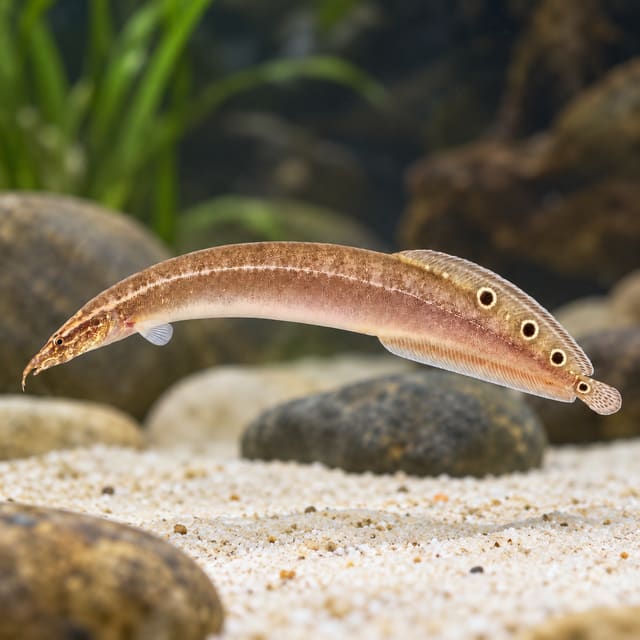
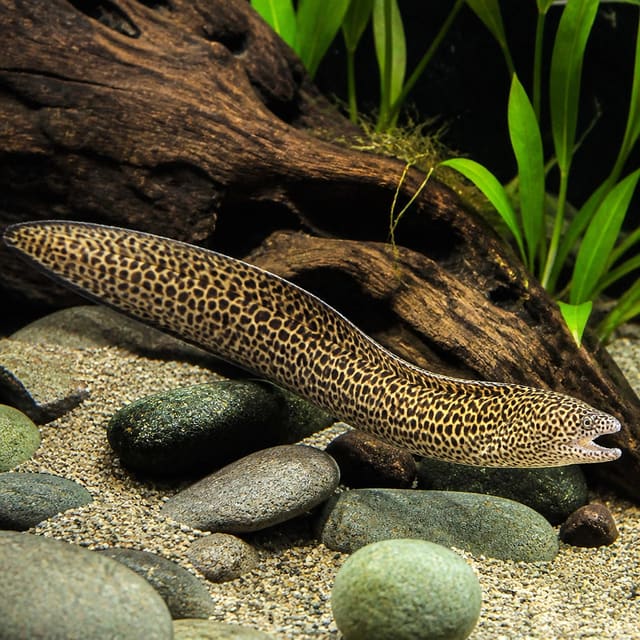
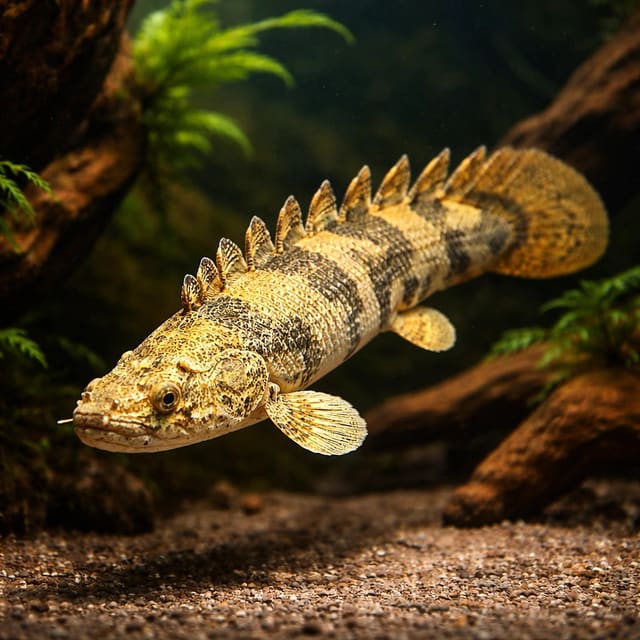
The source photo for SKU 9038 is important because it ties the page back to the real supplier line and supplied size. It should sit alongside the existing aquarium-scene images, not replace them. The current gallery views are useful for showing behaviour, cover, scale and display potential, but the exact source-style image gives shoppers a more grounded visual reference for this SKU.
FishBase describes Mastacembelus armatus from highland streams through lowland wetlands, including streams and rivers with sand, pebble or boulder substrate. It may also occur in still waters, coastal marshes, dry-zone tanks and flooded forest. That range explains why aquarium care should focus less on one decorative style and more on a secure bottom zone with clean water, smooth surfaces and places to disappear.
In nature these fish spend much of their time near the bottom and may rest partly buried in fine substrate. They are not open-water display fish. A bare bright aquarium leaves them exposed; a shaded layout with wood, smooth caves and stable rockwork lets the fish settle, feed and show more natural nocturnal behaviour.
Plan for a very spacious aquarium, with length and floor area just as important as litres. A practical long-term target is at least 500 litres for experienced keepers, with more space strongly preferred as the fish grows. The aquarium must be fully covered, including cable holes, filter returns, overflow gaps and any loose corners, because spiny eels can push through surprisingly small openings.
| Substrate | Soft sand or smooth fine gravel so the eel can rest and burrow safely |
|---|---|
| Cover | Large smooth pipes, caves, wood, roots and shaded plant cover |
| Decor safety | Stable structures that cannot collapse if the fish digs underneath |
| Lid | Escape-proof across every cable, pipe and filter gap |
Use stable tropical water and avoid sudden changes. Seriously Fish gives 24-28 C for aquarium care, and FishBase records a broader 22-28 C range. A steady everyday target around 24-27 C is sensible, with pH near neutral and moderate hardness. Some references discuss mild brackish tolerance, but this product should be kept and sold as a freshwater spiny eel unless the keeper already runs a planned brackish system.
| Temperature | 24-28 C for routine care; avoid rapid swings |
|---|---|
| pH | About 6.5-7.5, with stability more important than chasing a number |
| Hardness | Soft to moderately hard water is suitable if kept stable |
| Maintenance | Strong filtration, low waste buildup and regular water changes |
Tire Track / Zig-Zag Eels are nocturnal carnivores. Offer earthworms, chopped prawn, mussel, bloodworm, blackworm, krill and quality sinking carnivore foods. Many individuals feed most confidently after the lights dim, so target-feed in the evening and check that food reaches the eel rather than being taken by faster tankmates.
Do not rely on flakes or floating foods. A large spiny eel needs meaty foods, clean substrate and careful portion control. Uneaten food trapped under wood or in sand can quickly damage water quality, so feed deliberately and remove leftovers.
This species is best kept with robust, calm fish too large to fit in its mouth. It is not safe with small tetras, tiny rasboras, shrimp, fry or delicate bottom fish that will be outcompeted. It can be peaceful toward suitable tankmates, but it remains a predator and should be planned around adult mouth size, night feeding and bottom territory.
| Good candidates | Large peaceful midwater fish and robust bottom fish in a spacious setup |
|---|---|
| Avoid | Small fish, shrimp, fry, fin nippers and rough territorial fish |
| Same species | Only in very large aquariums with multiple hides and careful monitoring |
| Feeding issue | Fast tankmates may steal food before the eel emerges |
Expect a shy settling period. A new spiny eel may hide for long stretches, especially in bright light or in a busy aquarium. Low light, a tight lid, several secure hides and a quiet evening feeding routine help it settle. Once confident, it may appear at dusk, investigate the sand and learn the feeding schedule.
Never force the fish out of cover for viewing. The safest way to make it more visible is to make the aquarium feel safer: more shade, more cover, steady water and fewer aggressive feeding competitors.
Do not choose this fish for a small community aquarium, an uncovered tank, a shrimp setup, a delicate aquascape with loose stonework, or a tank where the keeper cannot provide meaty foods. The purchase size can be misleading; a 12-14 cm eel still belongs to a species that can become a very large, powerful bottom predator.
If you want a small, peaceful eel-like fish for a normal community tank, choose a smaller spiny eel species instead. SKU 9038 is for keepers who actively want a large oddball and can plan around its adult needs.
Livestock orders are packed around welfare, oxygen, temperature and route timing, then sent with a licensed live-animal courier when conditions are suitable. Eligible orders are covered by our Live Arrival Guarantee. Please have the aquarium covered, mature and ready before dispatch day, with the lights low and a secure hiding place available for release.
Acclimate slowly, release near cover and check the lid again after release. Many escape attempts happen during the first nights in a new aquarium, so treat the first week as a careful observation period.
In aquarium searches the names overlap, and this listing uses both because customers search both. The care here is anchored to the large Mastacembelus armatus profile.
It appears in the supplier source name for this SKU. It is kept as label history, not as the primary scientific anchor.
Yes. Any fish or shrimp small enough to swallow should be treated as unsafe, especially after dark.
Soft sand is strongly recommended because spiny eels rest on and partly bury in the substrate. Sharp gravel can damage the belly and skin.
This repair was checked against FishBase for adult size, range and bottom-dwelling habitat; Seriously Fish for specialist aquarium parameters and brackish-tolerance notes; Fishkeeper/Maidenhead for UK hobby care, 90 cm planning, nocturnal behaviour and muddy or sandy habitat; and our stock records for the exact supplied SKU label and source image.
No reviews for this item yet. Bought one? Honest reviews only, good or bad.
What customers say about ordering from us
I have a small group of long finned mountain minnows. So was delighted to be able to order ten of this variety to increase the genetics in my tank . The ones I recieved are healthy but it’s to early to give a verdict on wether they are of a long finned type since they are small currently.
Gordon Walker · 23 Sept 2026
100% success travel and "installation". Pleased with quality of purchase. The Siamese fighter a bit "shy" so have not yet seen him at his best yet but looking good. Happy customer. GG
George E Garratt · 21 Sept 2026
Reviews of our shop, collected by Judge.me, an independent third-party review collector. Newest first.