−10%
Advanced
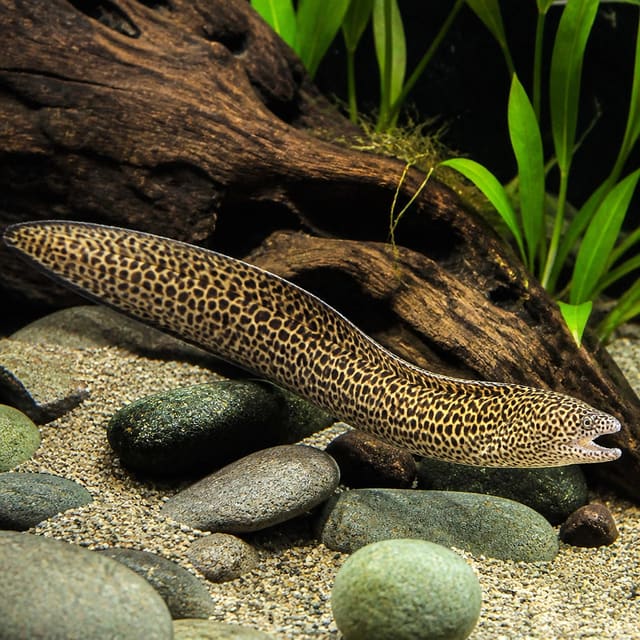
Freshwater Moray (Gymnothorax polyuranodon)
£107.99£119.99

A hardy but predatory brackish-water moray eel that needs a secure, species-appropriate setup and meaty foods. Expert care, aggressive. 22-28C, pH 6.5-8.0.
Adult size is the maximum length this species reaches at full maturity (scientific sources). The livestock you receive will be younger and smaller — pick a size above for the actual shipping size. Product-photo provenance and any image-specific limitations are stated on the listing.
Gymnothorax tile
Confirm your email, then we’ll send an availability message for this exact item if it returns within 180 days.
This request is only for this product—no newsletter or other promotions. A mail-provider retry may very rarely duplicate the same availability message. Unconfirmed addresses are removed after 48 hours. See our privacy policy.
A hardy but predatory brackish-water moray eel that needs a secure, species-appropriate setup and meaty foods. Expert care, aggressive. 22-28C, pH 6.5-8.0.
Adult size is the maximum length this species reaches at full maturity (scientific sources). The livestock you receive will be younger and smaller — pick a size above for the actual shipping size. Product-photo provenance and any image-specific limitations are stated on the listing.
Maintain these water conditions for optimal health and vibrant colors
Tropical fish UK aquarists seeking an unusual, predatory species will find the Indian mud moray (Gymnothorax tile) a compelling choice for specialist setups. This brackish-water eel originates from coastal estuaries, mangroves, and tidal rivers across the Indian Ocean and western Pacific, where it inhabits murky, low-visibility environments. Available for sale UK in sizes from 20-45cm, the species reaches a maximum length of approximately 40cm, making it more manageable than many marine moray species. Despite its common name suggesting freshwater habitat, Gymnothorax tile thrives best in brackish conditions with added marine salt, though it tolerates pure freshwater for limited periods. Expert-level care, a secure aquarium, and meaty carnivore diet are essential for long-term success with this fascinating but demanding eel.
The Indian mud moray displays a robust, elongated body typical of moray eels, with smooth, scaleless skin covered in protective mucus. Coloration varies from dark brown to olive-grey with irregular mottling or faint patterning that provides camouflage in murky, tannin-stained water. The head is broad and powerful, with a wide mouth filled with sharp, recurved teeth designed for gripping slippery prey. Small eyes sit well forward on the head, reflecting the species' reliance on chemical detection rather than vision for hunting. The dorsal fin runs continuously from just behind the head to the tail, merging with the caudal and anal fins to create a continuous fringe. Juveniles appear more uniform in color, while adults may develop darker or lighter patches depending on substrate and stress levels. The eel's muscular body allows powerful swimming and the ability to force its way through tight spaces or gaps in aquarium lids.
Gymnothorax tile inhabits brackish estuaries, tidal creeks, mangrove swamps, and coastal rivers where freshwater mixes with seawater. The species tolerates a wide salinity range, from nearly pure freshwater during monsoon floods to fully marine conditions in dry seasons. Natural habitats feature muddy or sandy substrates, submerged roots, rocky crevices, and abundant organic detritus. Water is typically warm, turbid, and low in visibility, conditions that favor the eel's ambush hunting strategy. During high tides, the moray ventures into intertidal zones and shallow coastal waters; during low tides, it retreats to deeper channels or burrows in mud. The species is nocturnal, spending daylight hours concealed in burrows or rock crevices and emerging at night to hunt fish, crustaceans, and mollusks.
A minimum 300-litre aquarium with a completely secure, tightly fitting, weighted lid is non-negotiable—Gymnothorax tile is an exceptionally skilled escape artist that will exploit even tiny gaps. Use fine sand or smooth gravel substrate and provide multiple hiding places using PVC tubes, ceramic caves, rounded rocks, and driftwood arranged to create secure, enclosed retreats. Avoid sharp edges or rough surfaces that could damage the eel's sensitive skin. Dim lighting suits this nocturnal species best, and subdued illumination encourages daytime activity. Filtration must be powerful enough to handle the heavy bioload produced by a carnivorous eel, but intake and outlet pipes should be covered or protected to prevent the eel from entering or being injured. Brackish conditions (specific gravity 1.005-1.015) are highly recommended for long-term health, though the species survives in pure freshwater. Gradually acclimate new specimens to your chosen salinity to avoid osmotic shock.
Expert Tip: Weight down the aquarium lid with bricks or heavy objects and seal all gaps. Indian mud morays can push lids open or squeeze through openings smaller than their body diameter.
Maintain tropical temperatures between 22-28°C, with 24-26°C representing optimal conditions. The species tolerates cooler temperatures but becomes sluggish and feeds less frequently. pH can range from 6.5-8.0, with neutral to slightly alkaline values (7.0-7.8) ideal, especially in brackish setups. Salinity should be maintained at specific gravity 1.005-1.015 for best results, though pure freshwater is tolerated. In brackish systems, use marine salt rather than aquarium/tonic salt to provide the correct mineral balance. Ammonia and nitrite must remain at zero, while nitrates should stay below 40 ppm through regular water changes of 25-30% weekly. Water hardness is less critical in brackish systems but should be moderate in freshwater setups. Ensure strong water circulation and surface agitation to maintain high dissolved oxygen levels.
As an obligate carnivore, Gymnothorax tile requires a varied diet of meaty foods including earthworms, prawns, mussels, squid, fish fillets, and occasional whole fish. Feed 2-3 times weekly rather than daily, as eels have slow metabolisms and overfeeding quickly degrades water quality. Use feeding tongs or place food near the eel's retreat to encourage feeding without hand contact—moray bites are painful and potentially dangerous due to bacteria in the mouth. Avoid relying exclusively on feeder fish, which provide poor nutrition and risk introducing parasites or disease. High-quality frozen seafood should form the dietary foundation. Newly acquired specimens may refuse food initially due to stress; patience and offering food during evening hours usually resolves this. Remove uneaten food after several hours to prevent fouling.
Indian mud morays are predominantly nocturnal, spending daylight hours hidden in caves, tubes, or burrowed into substrate. During the evening and night, they emerge to hunt, using their excellent sense of smell to locate prey in darkness or murky water. The species is solitary and aggressive, displaying typical moray behavior including gaping (opening and closing the mouth to circulate water over the gills, not a sign of aggression), exploring the aquarium with sinuous movements, and investigating crevices for food. Morays have poor eyesight and rely on chemical cues, so they may strike at anything that smells like food, including fingers during maintenance. Defensive behavior includes rapid retreat into hiding spots when startled or threatened. Once acclimated, many specimens become bold enough to emerge during feeding times, even in daylight.
Selecting tankmates for Gymnothorax tile is extremely challenging due to its predatory nature and tendency to consume anything small enough to swallow. Only very large, fast-moving, robust fish that occupy mid-water or surface zones stand any chance of cohabitation. Potential candidates include large scats, monos, or archerfish in brackish setups, though even these carry risk. Absolutely avoid small fish, shrimp, crabs, snails, slow-moving species, and long-finned fish. Most aquarists find that a species-only setup eliminates stress, reduces aggression, and allows the eel to be the undisputed centerpiece. Even large tankmates may be harassed or injured during nighttime feeding, so careful monitoring is essential if attempting a community tank.
Breeding Gymnothorax tile in home aquaria is not documented and is considered highly impractical. Like most moray eels, the species likely has a complex, pelagic reproductive strategy involving larval stages that drift in open water before metamorphosing. Captive breeding attempts are effectively unknown, and all specimens in the trade are wild-caught.
Tropical Fish Co supplies healthy, active Indian mud morays carefully selected for good body condition and feeding response. We provide comprehensive care guidance covering the essential requirements for housing, water chemistry (including brackish setup), feeding, and safety precautions. Our experienced team ensures all specimens are feeding well before dispatch and offers ongoing support to help you succeed with this demanding species. With reliable UK delivery using specialist livestock couriers, your eel arrives safely in insulated packaging with oxygen. We are committed to responsible fishkeeping and supply only to aquarists prepared for the challenges of keeping a large, predatory eel. Trust Tropical Fish Co for quality livestock and expert advice.
No reviews for this item yet. Bought one? Honest reviews only, good or bad.
What customers say about ordering from us
I have a small group of long finned mountain minnows. So was delighted to be able to order ten of this variety to increase the genetics in my tank . The ones I recieved are healthy but it’s to early to give a verdict on wether they are of a long finned type since they are small currently.
Gordon Walker · 23 Sept 2026
100% success travel and "installation". Pleased with quality of purchase. The Siamese fighter a bit "shy" so have not yet seen him at his best yet but looking good. Happy customer. GG
George E Garratt · 21 Sept 2026
Reviews of our shop, collected by Judge.me, an independent third-party review collector. Newest first.