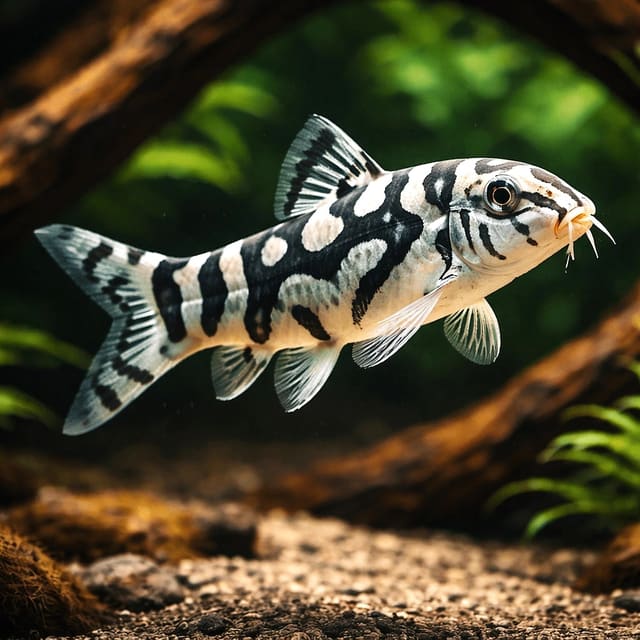
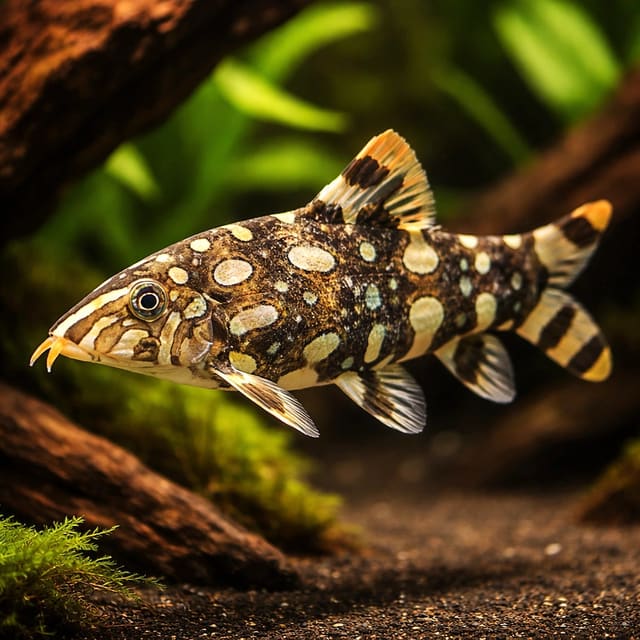
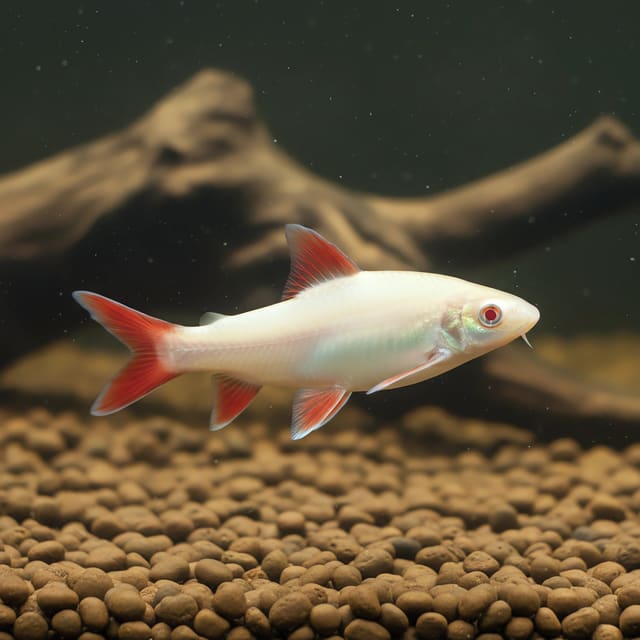
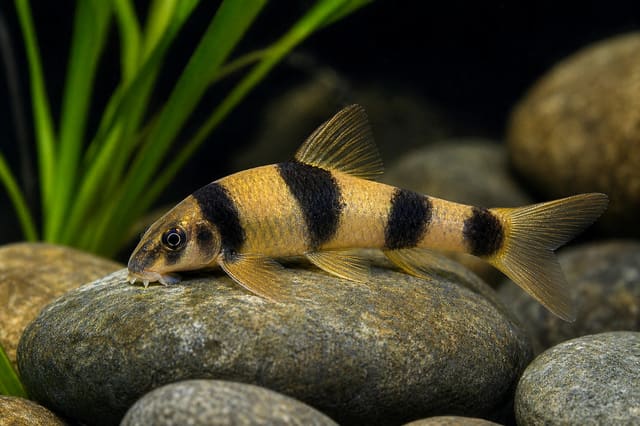
Kuhli Loach (Acanthophthalmus kuhli)
24–27°C · pH 6.5–6.5
£2.99
Photo coming soon
The size, price and care details on this page are for this listing.
Gold Chinese Algae Eater (Gyrinocheilus aymonieri) is a freshwater grazer for a large, mature aquarium, with territorial behaviour that can intensify as it grows. One live fish per purchase, with 4 cm and 6–7 cm size choices.
Gyrinocheilus aymonieri
Shoaling fish: kept in a group they feel safer, stay calmer and show their best colour.
Gold Chinese Algae Eater (Gyrinocheilus aymonieri) is a freshwater grazer for a large, mature aquarium, with territorial behaviour that can intensify as it grows. One live fish per purchase, with 4 cm and 6–7 cm size choices.
Maintain these water conditions for optimal health and vibrant colors
The Gold Chinese Algae Eater is the golden ornamental form of Gyrinocheilus aymonieri, a freshwater grazing fish with a much bigger future than its small shop size suggests. Its appeal is the combination of colour and purposeful activity: an animal that explores solid surfaces and browses the growth on them. Choose it because you want to keep this particular fish through adulthood, with room and a carefully planned community around it.
This is a fish for a substantial, established aquarium. As it grows, territory and access to food become important parts of its behaviour, and ordinary mixed community stocking can become difficult. A youngster that spends time quietly out of sight is not a reliable preview of an adult's tolerance. The practical reward comes from designing the aquarium around its needs early, then watching how it uses the space as it develops.
One purchase supplies one live fish of the selected size. There are two size choices: 4 cm and 6–7 cm. The size you select is the size supplied, not the adult size. Use the product's size choice to select the fish appropriate to your prepared accommodation, and assess long-term suitability before choosing a smaller youngster. The larger choice does not mean a different species or a different care requirement.
Sex is guaranteed only when the selected option explicitly states male or female. This Chinese algae eater gold listing has no sex-guaranteed option.
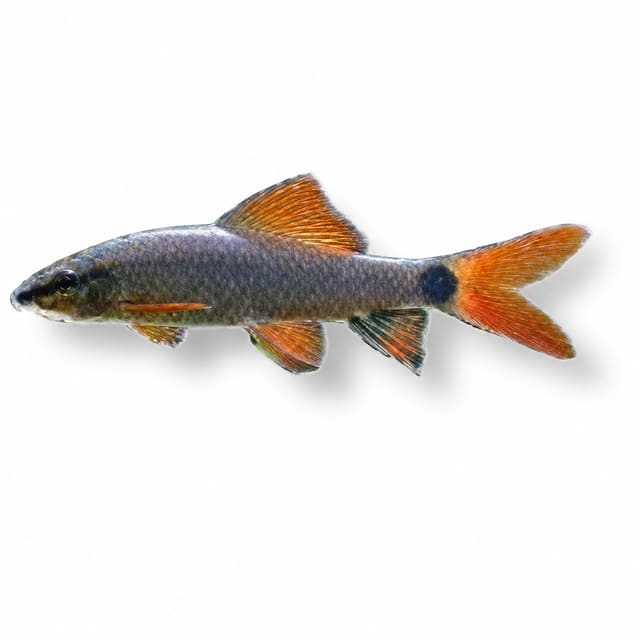
Please do not use this gallery image to identify the species or predict the exact animal supplied. Its identity has not been verified against the stock; the offer and care information refer to the animal named in this listing.
FishBase records 28 cm standard length for male or unsexed fish. Standard length excludes the tail fin, so this is not a 28 cm total-length promise. The important buying decision is the scale of accommodation: plan for a sizeable adult with a strong interest in the lower part of the aquarium, rather than treating the supplied length as the size it will remain.
Seriously Fish recommends a minimum aquarium base of 150 × 45 cm. Length and width give the fish room to move between feeding surfaces and shelter, and give other inhabitants routes that do not force them through its preferred patch. A tall tank with a small base does not provide the same usable space. There must also be room to arrange cover without filling the entire floor with decorations.
The best setting combines clean, oxygen-rich water, moderate movement, useful cover and a varied diet. This fish grazes, but it should still receive food deliberately. The presence of algae is not a feeding plan, and adding a grazer cannot replace testing, sensible stocking or aquarium maintenance. If persistent algae is the reason you are shopping, first work out what is driving that growth and whether the fish you are considering fits your aquarium independently of the algae problem.
For a comparison within the same kind of fish, see the black Chinese algae eater listing. Compare the forms as separate purchase choices; a different colour name is not a reason to assume that two will share space peacefully. The related products further down the page are other fish to research, not a list of companions to add alongside this one.
Keepers who enjoy planning a large display, observing territorial behaviour and managing feeding access are better placed to make a success of this fish than someone looking for a maintenance shortcut. Before ordering, know where the adult will live, how you will check its condition and what you will do if a tankmate is repeatedly chased. Those preparations make the difference between enjoying its character and having to improvise accommodation later.
Use the minimum 150 × 45 cm base recommended by Seriously Fish as the starting point for planning, then consider the floor area left after adding wood, rocks and equipment. An aquarium with generous external dimensions can still feel cramped if the entire bottom is packed with ornaments. Leave connected routes through the layout so the fish can travel between cover and grazing areas without repeatedly meeting a dead end.
Rounded rocks and water-worn boulders suit the species' association with flowing rivers. Driftwood roots and branches add shelter and break up long, open views across the aquarium. Place heavy pieces securely and make sure maintenance can be carried out without dismantling the structure every time. A useful layout provides somewhere to withdraw while still allowing you to see enough of the fish to check its condition.
Seriously Fish describes this species as relatively adaptable about decoration when sufficient cover is available. A river-style aquarium is therefore a useful design direction, not a demand to copy a particular wild river exactly. Work with aquarium-safe materials and the needs of all intended inhabitants. The fish needs functional shelter and space; a crowded imitation river is less useful than a simpler arrangement that provides both.
Plants can be included. Java fern, Bolbitis and Anubias are examples discussed in the species profile, particularly as plants attached to wood or rock. Position them so they contribute cover without blocking the main movement routes. This gives you the possibility of a planted display while retaining exposed surfaces on which the fish can browse. Plant choice should also fit your lighting and maintenance routine.
| Measure | Aquarium guidance |
|---|---|
| Temperature | 22–26°C |
| pH | 6.0–8.0 |
| General hardness | 2–20 dGH |
| Water movement | Moderate movement with high dissolved oxygen |
| Ammonia and nitrite | Zero in a properly functioning aquarium |
The temperature, pH and hardness range above comes from Seriously Fish's aquarium guidance. FishBase also describes environmental conditions in nature; those records should not be turned into instructions to run the aquarium at an extreme. Select a stable routine within the aquarium range that also suits any carefully chosen companions. A range is useful for judging suitability, not an invitation to move the water repeatedly from one end to the other.
Measure your source water and the aquarium before deciding whether changes are needed. General hardness and pH describe different aspects of water, so one does not substitute for the other. Our water chemistry guide explains the main tests and how to read them together. Keep a record of results so that a gradual change is easier to recognise than it would be from an isolated reading.
The water matcher can help you compare measured values with stated care guidance. Use that comparison alongside adult size, temperament, feeding and space. Two fish having overlapping temperature ranges is only one part of compatibility; it does not settle whether they can use the same aquarium comfortably.
A filter needs to support the breakdown of fish waste, not merely make the water look clear. Fish release ammonia, and uneaten food adds to the waste load. The RSPCA explains that a functioning biological filter converts ammonia to nitrite and then to nitrate. Both ammonia and nitrite are toxic. Clear water can still contain either, which is why testing belongs in the routine even when the display looks clean.
Start with an established biological filter before adding the fish. If you are preparing a new aquarium, the first tropical tank guide is a useful preparation step. Equipment running successfully and a filter being biologically ready are different milestones. Allow the aquarium to mature, verify its water quality and add livestock at a pace the filtration can support.
This species is associated with moving water and benefits from high dissolved oxygen. Arrange the outlet to circulate water through the aquarium while preserving sheltered places to rest. Check that water can move around the rockwork instead of leaving inaccessible pockets full of debris. You do not need a single fierce jet that pins every plant in one direction; the aim is useful circulation throughout the layout.
Keep filter inlets accessible, and inspect the flow as part of routine checks. A gradual reduction may be easier to notice when you know how the outlet normally looks. If flow has dropped, investigate the equipment and accumulated debris rather than assuming a quiet filter is working as before. Follow the filter manufacturer's maintenance instructions while protecting the biological filtration on which the fish depends.
The natural diet includes material browsed from surfaces, often called aufwuchs. This is more than a layer of green algae: it includes small organisms living within the growth. The species profile describes algae, small crustaceans and insect larvae as parts of this feeding pattern. In an aquarium, provide both plant-based foods and suitable smaller animal foods instead of expecting the fish to live from whatever happens to grow on the glass.
A useful menu can include a quality prepared food, fresh plant material and small live or frozen foods such as bloodworm, Daphnia or Artemia. Seriously Fish also lists shelled peas, cucumber, blanched courgette and spinach among plant additions. Offer variety in manageable portions, observe what is eaten, and remove leftovers before they break down. The right amount depends on the fish and the rest of the aquarium, not on a universal number of pellets.
Give food a route to the fish. If companions intercept everything before it reaches the lower area, adding more at the surface may mainly feed those companions and increase waste. Watch an actual feeding session and adjust where food is placed. A settled fish may rise into midwater to feed, but it should not have to compete successfully at the surface every time to receive a meal.
Wash vegetables thoroughly before offering them, as OATA advises for algae-grazing fish generally. Keep the preparation simple, use suitable unseasoned food and avoid leaving a large quantity in the aquarium because it looks like a long-lasting grazing station. Check consumption and condition rather than using the disappearance of algae as a measure of whether the fish has eaten enough.
There is no need to impose a sharp change from an algae diet in youth to an entirely different adult menu. Continue to provide a varied diet while adjusting portion size to the growing fish. Its changing behaviour and size may alter how you deliver food, but algae grazing does not make supplementary feeding optional, and adulthood does not justify withholding plant material.
Aquarium lighting can encourage growth on exposed surfaces that the fish will browse. Balance that opportunity with plant needs and your ability to manage the display. You can maintain clear viewing glass while allowing useful growth on selected rocks, provided those surfaces remain part of a clean and well-managed aquarium. There is no benefit in letting decaying food or heavy waste accumulate under the label of a natural feeding area.
OATA's advice on algae eaters makes a useful distinction: algae-grazing fish still need supplementary food, and they do not replace regular maintenance. If algae returns quickly after cleaning, review feeding, stocking and the overall routine. An animal should not be purchased to compensate for a problem that will continue after it arrives. Choose the fish because its lifetime needs fit the aquarium.
Check the fish, temperature and equipment as part of your normal daily observation. Look for a change from its usual pattern rather than expecting it to behave exactly the same at every moment. Note whether it can move between cover and food, whether any companion avoids a whole section of the tank, and whether feeding is shared as intended. These observations often tell you more than a quick glance at a spotless front pane.
Test water regularly and use the results to guide maintenance. OATA recommends regular testing, including at least weekly checks in its general care guidance. Test sooner when there is a change in appetite, behaviour or equipment performance. Keep aquarium tools ready so removing a small accumulation of waste is straightforward, rather than allowing a difficult corner to become a job you continually postpone.
Plan water changes around the actual aquarium, its inhabitants and test results. Prepare replacement water safely and avoid abrupt changes in temperature or chemistry. Fish, plants and biological filtration all benefit from a consistent routine. If the aquarium repeatedly develops a problem between maintenance sessions, adjust the routine or stocking plan rather than relying on a larger clean-up after conditions have deteriorated.
Arrange for someone to be present on the confirmed delivery day and have the prepared aquarium ready. Tropical Fish Co packs livestock in oxygen-filled bags within an insulated box, with a heat pack when conditions call for one, and uses a licensed live-animal courier. Read the current delivery and Live Arrival Guarantee policy before arrival so that the receiving arrangements and any claim requirements are clear.
Open and inspect the parcel on the day it arrives. For a Live Arrival Guarantee claim, the policy requires continuous unboxing video showing the sealed parcel being opened and the fish still in the sealed bag. This is evidence for a claim. Have that recording ready from the start, and contact the team the same day with the order number if anything is wrong.
Follow the supplied acclimatisation guidance and keep the initial environment calm. The store's policy describes floating the bag for 20–30 minutes to help equalise temperature and acclimatising slowly. Do not pour transport water into the aquarium. Once the fish is released, let it find shelter and observe without repeatedly rearranging the tank to make it visible.
Over subsequent observations, pay attention to both settling and the existing residents' reactions. A new fish needs access to cover and food without being driven into one corner, and the original occupants still need access to their own usable space. If there is sustained chasing or contact with another fish's flanks, address the combination promptly. Time alone is not a dependable solution to an unsuitable stocking arrangement.
Seriously Fish describes increasing territorial behaviour as this species grows. That matters when assessing an aquarium whose inhabitants seem to get along while they are small. Space, body size and established territories all change. Review the combination as the fish develops, and keep practical options available if an animal needs to be separated. A future rehoming hope is less useful than a clear adult stocking plan.
A fish does not have to cause a visible wound before the arrangement needs attention. Repeated displacement from food or shelter can make an aquarium unsuitable even when every fish appears intact. Watch who can cross the bottom, who gets to eat, and whether one animal is always waiting for another to leave. The lower part of the aquarium is a resource, not an empty area that can be stocked independently of the rest.
Take particular care with similar-looking fishes. The species profile specifically names Crossocheilus, Epalzeorhynchos and Garra as possible targets of strong aggression. A shared interest in algae or rockwork is therefore not a reason to combine them. Buying several different kinds of grazer can concentrate competition in the same limited part of the tank.
Other bottom-dwelling fish, including cichlids and most catfishes, are also poor default choices according to the profile. This species may harass them and can attach to the flanks of larger fish to feed on mucus. Size by itself does not make a companion safe. A large fish that spends time resting in the same area may still be vulnerable to repeated attention.
The loaches and oddballs collection contains animals with very different needs. Use it to explore possibilities, then assess each species individually. The Chinese algae eater belongs to Gyrinocheilidae rather than being a true loach, and a shared shop category does not make the fish in that category compatible.
Seriously Fish suggests robust, active cyprinids or characids for the upper levels where a community is attempted. This is a conditional direction for research, not an approval for every barb or tetra. Check the adult size, water requirements, activity and feeding behaviour of the exact species you are considering, along with whether the aquarium has enough room for all of them.
Look at the whole community rather than matching the algae eater to one fish at a time. A combination can fail through cumulative crowding or feeding competition even when each proposed pair looks reasonable. Keep clear upper-water swimming routes and avoid using additional inhabitants to try to distract a territorial fish from an already unsuitable companion.
The profile also suggests making the Chinese algae eater the final addition, which may reduce the opportunity for it to establish the entire aquarium as its own space before other fish arrive. Introduction order is only one consideration. It cannot guarantee peaceful behaviour or compensate for cramped dimensions, overlapping territories or incompatible water conditions.
For many keepers, maintaining one individual is the simpler way to manage the species. It avoids having to arrange a hierarchy among several large territorial fish. This is practical stocking advice, not a claim that the species must always be alone. A group is a specialist project with different space and observation demands.
The complete Seriously Fish profile advises at least six individuals if attempting a group, and stresses that a very large aquarium is needed. In smaller numbers, weaker fish can be singled out within the hierarchy. Do not interpret a photograph of two fish, a retail quantity or a spare corner in a large community as evidence that a pair is an appropriate compromise.
Anyone planning that group needs to consider feeding access and escape routes for every individual, not simply multiply the space needed for one. Several shelters are useful only if they remain accessible, and several feeding points are useful only if one fish cannot control all of them. Monitor the group's behaviour over time and be prepared to change the arrangement if persistent bullying develops.
FishBase records Gyrinocheilus aymonieri at 28 cm standard length for male or unsexed fish. Standard length excludes the tail fin. Plan for a substantial adult, and do not treat the size supplied as its eventual size.
Seriously Fish recommends a minimum base of 150 × 45 cm for Gyrinocheilus aymonieri. Usable length and width matter for movement, cover and territory. Groups require a very large aquarium beyond a routine single-fish arrangement.
A casual pair is not a good compromise for Gyrinocheilus aymonieri. Keeping one is simpler to manage. Seriously Fish advises at least six for a specialist group in a very large aquarium because smaller groups can leave weaker fish persistently targeted.
Gyrinocheilus aymonieri needs adult space, mature filtration, deliberate feeding and careful management of territorial behaviour. It is a demanding choice for someone still learning community stocking, even though a small youngster may look quiet.
Give Gyrinocheilus aymonieri a varied menu of prepared food, plant material and small live or frozen foods such as Daphnia, Artemia or bloodworm. Natural grazing supplements that menu. Watch the fish eat and remove leftovers instead of relying on algae alone.
For routine aquarium care, Seriously Fish gives 22–26°C, pH 6.0–8.0 and general hardness of 2–20 dGH. Keep conditions stable and assess any companions against the same water conditions as well as the available space.
Territorial behaviour can increase with age, especially towards similar-looking grazers and other bottom dwellers. It may also attach to larger fish's flanks. Repeated chasing, blocked feeding access or flank contact means the combination needs attention.
Robust, active upper-water cyprinids or characids are the conditional direction suggested by Seriously Fish. Research the exact species and its adult needs. Similar-looking grazers, bottom-dwelling cichlids and most catfishes are poor default companions.
Tropical Fish Co uses oxygen-filled bags, an insulated box and a licensed live-animal courier, with heat packs when conditions require them. Be present on the confirmed delivery day. A Live Arrival Guarantee claim requires same-day contact and continuous unboxing video showing the sealed parcel being opened and the fish still in its sealed bag.
FishBase: Gyrinocheilus aymonieri provides the species identity, river-basin distribution and the 28 cm standard-length record for male or unsexed fish. Standard length excludes the tail and should be read with that measurement scope.
Seriously Fish: species profile provides practical aquarium guidance on floor dimensions, routine water conditions, feeding and territorial behaviour. Its detailed group advice is for a deliberately planned, very large aquarium.
OATA: tropical algae eaters explains general feeding and maintenance responsibilities. RSPCA: a suitable fish environment explains the role of filtration and safe aquarium conditions. General care advice supports the routine around the species; it does not replace the species' adult space and behaviour requirements.
No reviews for this item yet. Bought one? Honest reviews only, good or bad.
What customers say about ordering from us
Easy website plenty of info on fish your buying great to pick a time slot
TRACEY DURRANT · 7 Oct 2026
Got some lovely fish thank you
Kevin Mackie · 7 Oct 2026
Reviews of our shop, collected by Judge.me, an independent third-party review collector. Newest first.