Easy
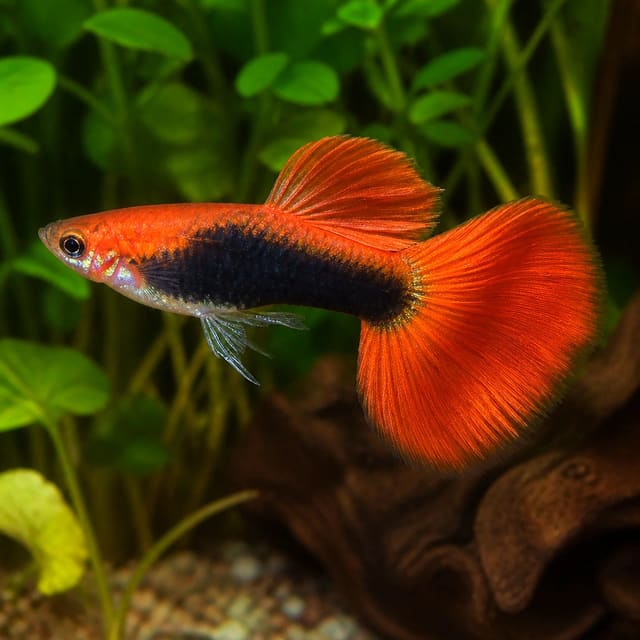
Blue Moscow Male Guppy (Poecilia reticulata)
22–28°C · pH 7–8 · 45L
£4.09
The Liberty Molly (Poecilia salvatoris) is a short-fin molly from El Salvador, sold as one fish per purchase. Plan a filtered aquarium of at least 45 litres for a small group of at least three, with 20–28°C, pH 7.0–8.0 and medium-hard water as molly-group guidance. Screen peaceful companions for the same water range.
Poecilia salvatoris
Shoaling fish: kept in a group they feel safer, stay calmer and show their best colour.
The Liberty Molly (Poecilia salvatoris) is a short-fin molly from El Salvador, sold as one fish per purchase. Plan a filtered aquarium of at least 45 litres for a small group of at least three, with 20–28°C, pH 7.0–8.0 and medium-hard water as molly-group guidance. Screen peaceful companions for the same water range.

Guppies are social livebearers suited to a prepared beginner, not a fish-per-litre formula. Use a mature filtered aquarium, tested neutral-to-alkaline mineral-bearing water, deliberate sex and population planning, open swimming room, cover and a separation option.
Maintain these water conditions for optimal health and vibrant colors
The Liberty Molly is Poecilia salvatoris, a freshwater member of the family Poeciliidae. FishBase places the species in El Salvador and describes it as tropical and benthopelagic. Those details identify the wild fish; aquarium decisions still need to be based on stable water, suitable group space and the needs of every animal sharing the tank.
A Wikipedia summary of the Liberty Molly identifies it as one of the short-fin mollies in the Poecilia sphenops complex. It was often treated as synonymous with P. sphenops, but its recognised species name is Poecilia salvatoris.
This molly suits a keeper prepared to maintain a mature biological filter, test the water every week and keep a companion group rather than a lone fish. Guppies and mollies are generally described as undemanding aquarium inhabitants, but that does not remove the need for zero ammonia, zero nitrite and controlled nitrate.
| Suits | Not suited to |
|---|---|
| A mature, filtered aquarium | An unfiltered aquarium |
| A small group of at least three | A lone-fish plan |
| Water kept at 20–28°C and pH 7.0–8.0 | Companions that need conflicting water conditions |
| A carefully planned peaceful community | A community without enough filtered space for every group |
Its peaceful molly-group temperament makes it a candidate for a carefully planned community, provided the other fish suit the same temperature, pH and hardness. Compatibility depends on the whole aquarium rather than a fixed list of names. If you are comparing related forms before deciding, browse the molly fish collection and compare their stated adult-space and water requirements.
One purchase supplies one animal. The dispatch grade for this offer is 3–6 cm; that measurement describes the fish sent rather than its final adult size. Plan the aquarium around the group and its longer-term space requirements.
Sex is guaranteed only when the selected option explicitly states male or female. This Liberty Molly listing has no sex-guaranteed option.
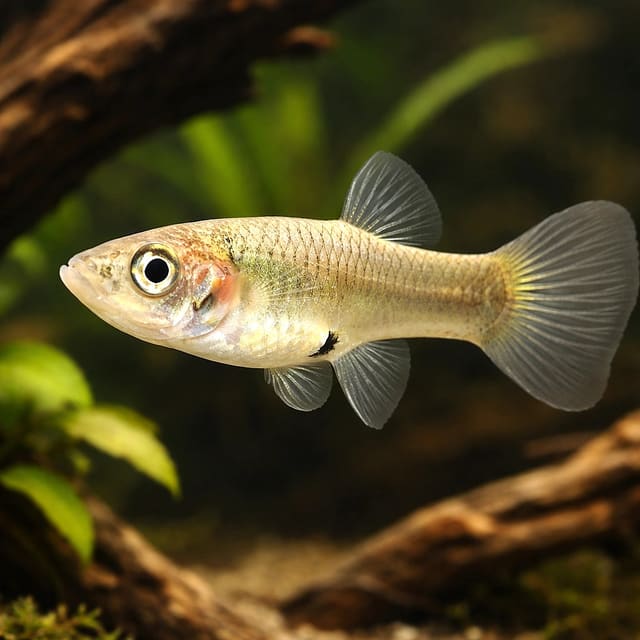
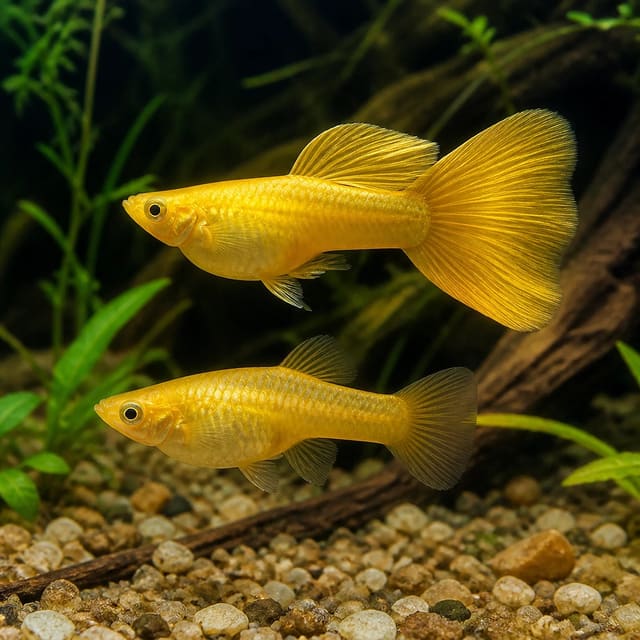
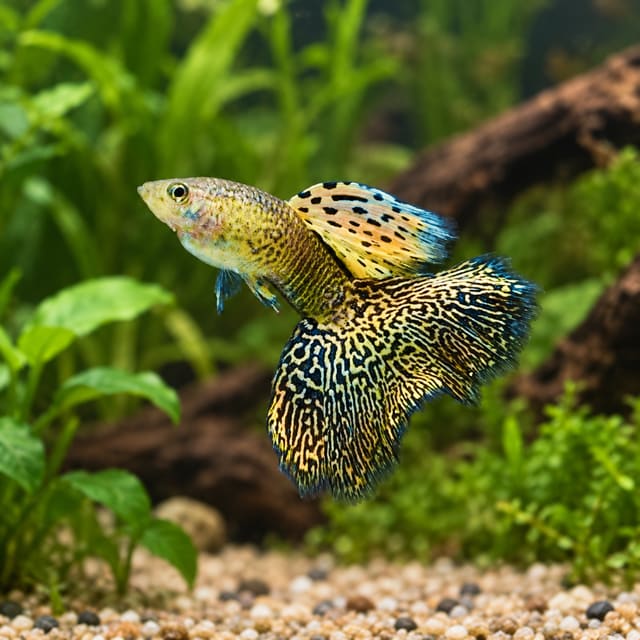
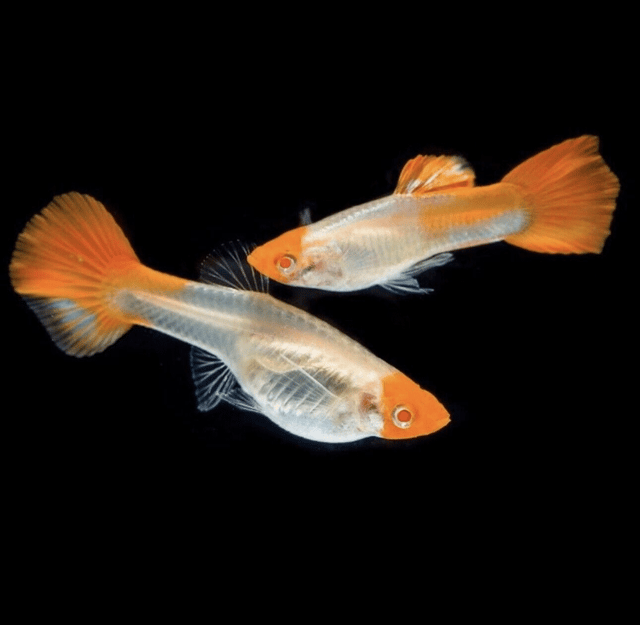
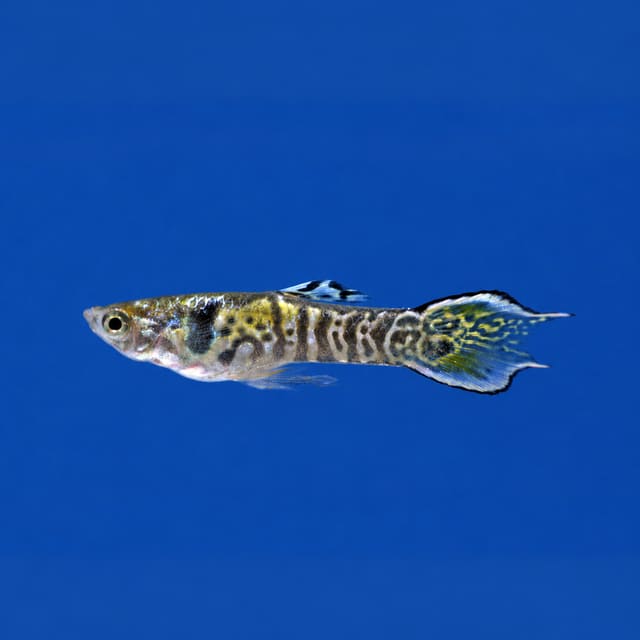
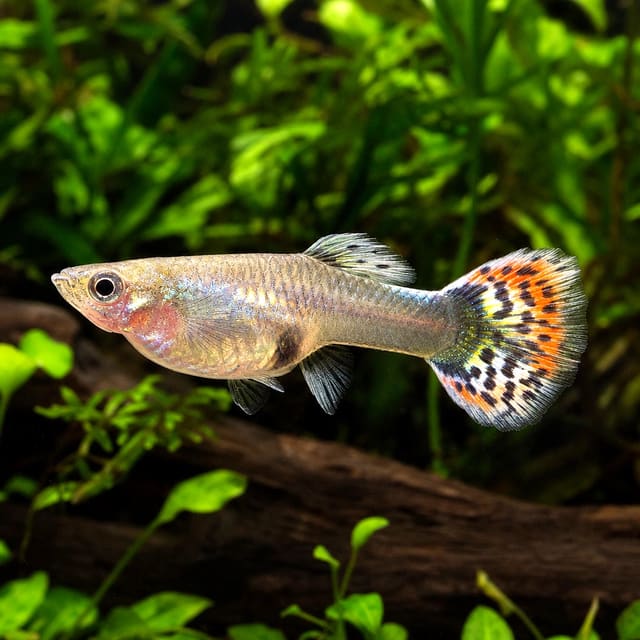
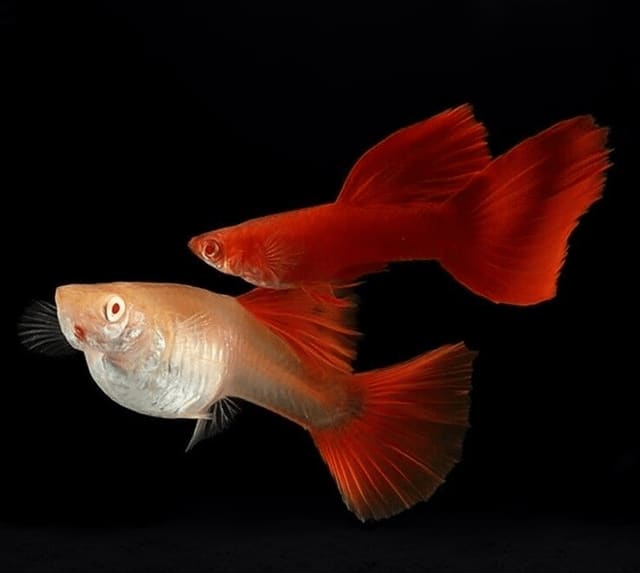
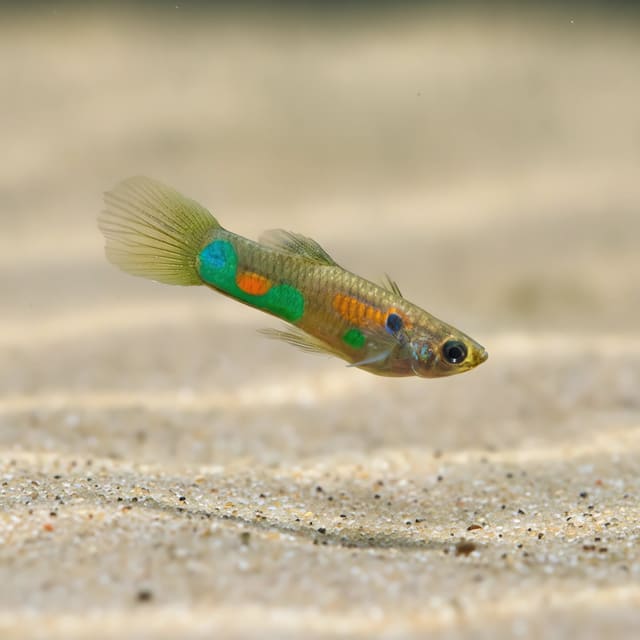
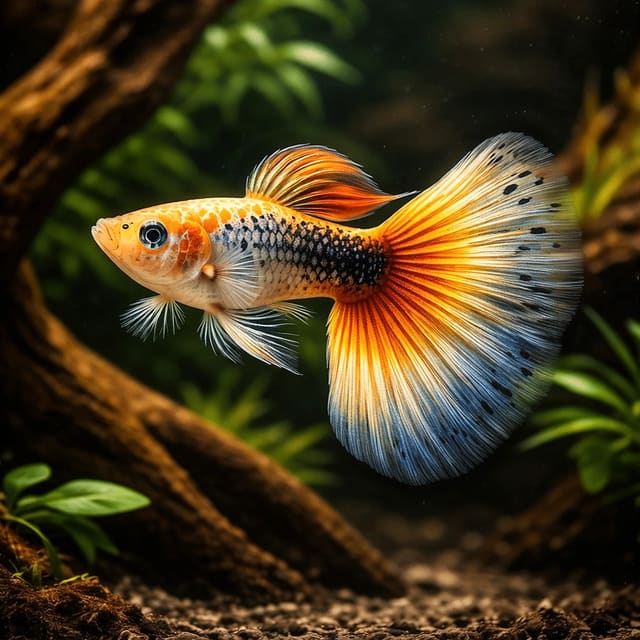
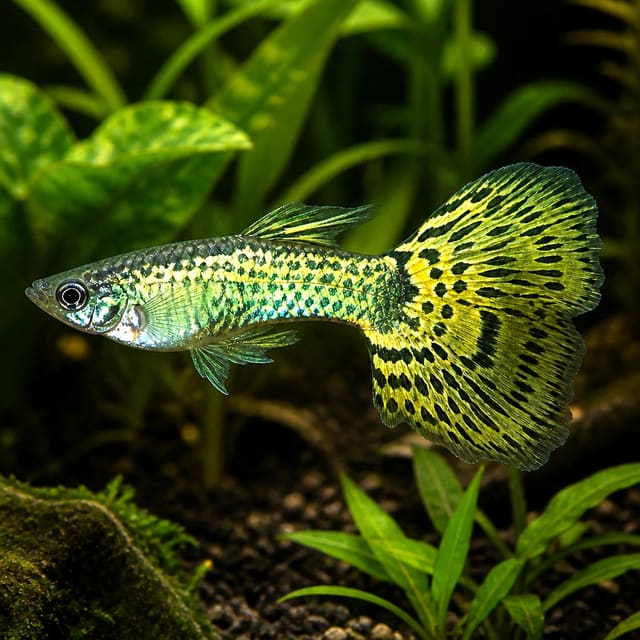
The pictured fish shows the metallic silver-gold appearance, dark-edged scales and spotted translucent fins visible in the gallery scene. The gallery images are representative of this type of animal rather than photographs of the exact animal supplied, so colours can look slightly different from the live animal.
Do not use the gallery to decide the sex, age or exact appearance of the fish supplied. Plan the social group without assuming that a particular photograph corresponds to the animal sent.
A fish within the 3–6 cm dispatch grade still needs an aquarium selected for a molly group rather than a container chosen around its arrival measurement. Allow swimming room, shelter and sufficient filtered volume for the complete stocking plan. If other fish will share the aquarium, include their eventual space and waste load before adding the Liberty Molly.
OATA’s guppy and molly guidance gives 20–28°C, pH 7.0–8.0, general hardness of 8–18°dH and carbonate hardness of 5–15°dKH for the group; these are broad aquarium values rather than a species-specific optimum. It also recommends at least 45 litres for a small group of the smaller forms and suggests keeping at least three for companionship.
| Decision | Planning point |
|---|---|
| Sold unit | One animal per purchase |
| Dispatch grade | 3–6 cm |
| Social plan | At least three |
| Small-group aquarium | At least 45 litres |
| Temperature | 20–28°C |
| pH | 7.0–8.0 |
| General hardness | 8–18°dH |
| Carbonate hardness | 5–15°dKH |
OATA notes that mollies stay below 10 cm, while sailfin mollies can reach approximately 15 cm. The Liberty Molly is identified as a short-fin molly, so the below-10 cm molly figure is the relevant group planning reference rather than the sailfin figure. Treat it as a space-planning guide, not as a guaranteed final measurement for an individual fish.
The 45-litre recommendation applies to a small group of smaller guppies or mollies. Increase the volume when the aquarium contains more groups or additional community fish. A larger volume also makes temperature and water quality more stable, but it still requires filtration, testing and maintenance.
Keep the aquarium between 20 and 28°C, with pH from 7.0 to 8.0, general hardness from 8 to 18°dH and carbonate hardness from 5 to 15°dKH. Choose a steady point within those ranges that also suits every other fish in the aquarium. Stability matters more than moving repeatedly between the lower and upper limits.
| Test | Action point |
|---|---|
| Ammonia | Keep at zero mg per litre |
| Nitrite | Keep at zero mg per litre |
| Nitrate | Do not exceed 20 mg per litre above the normal tap-water level |
| Temperature | Keep within 20–28°C |
| pH | Keep within 7.0–8.0 |
| General hardness | Keep within 8–18°dH |
| Carbonate hardness | Keep within 5–15°dKH |
Measure the aquarium rather than judging water by appearance. Our water chemistry guide explains what the main readings mean, while the water matcher lets you compare measured values with the working ranges above.
Do not use a higher pH, greater hardness or warmer temperature as a substitute for clean water. The chemistry range and the nitrogen-cycle readings are separate decisions, and both must be suitable at the same time.
A working filter is essential. The RSPCA’s aquarium welfare guidance explains that fish release toxic ammonia, which a biological filter processes first into nitrite and then into the safer nitrate. Beneficial bacteria perform that conversion, so the filter must be established and maintained rather than treated as a simple device for clearing visible debris.
Use a well-matured setup with suitable temperature and water chemistry. Test for zero ammonia and zero nitrite before adding fish. If this is your first setup, follow our first tropical aquarium guide while preparing and maturing the filter.
Add livestock slowly. Every additional fish and every increase in feeding adds waste, while the beneficial bacterial population needs time to adjust. Stocking too quickly can cause new tank syndrome, in which the filter bacteria cannot process the rising ammonia and nitrite.
A larger aquarium can provide more stable environmental conditions, but volume alone does not mature a filter. Confirm readiness with test results and build the population gradually.
Start with an aquarium of at least 45 litres for a small group of the smaller molly forms. Increase that volume when adding more fish or combining several groups. Space planning must cover the complete community, not only the 3–6 cm dispatch measurement of the first Liberty Molly.
The purpose of cover is to give fish places to shelter and to break up an otherwise open aquarium. It does not compensate for insufficient volume or unsuitable tank mates. Likewise, open swimming room does not replace the need for planted or decorated refuge.
A 45-litre aquarium is the starting recommendation for a small group, not a universal allowance for every combination of fish. Recalculate the plan before adding another social group, more mollies or any community companions. More fish mean more feeding and waste, so the filter’s capacity and the weekly maintenance burden increase alongside the stocking level.
Use the below-10 cm figure for non-sailfin mollies as a group planning reference when judging swimming room. Do not size the aquarium around the smallest fish on arrival. The goal is to avoid a later move caused by treating dispatch size as final size.
For example, a 45-litre aquarium planned for the initial small molly group should not automatically receive a second group simply because open water remains visible. First total the intended animals, check the space needs of every group and consider how the added daily food will affect waste production. Confirm that shelter remains usable without removing too much swimming room, and make sure the filter can stay accessible for weekly maintenance.
If the plan changes from a molly-only group to a mixed community, reassess the aquarium before buying the companions. Keep the 45-litre figure attached to the small molly group rather than treating it as a complete community allowance. Choose more volume when the combined plan needs it, then establish and test the filter before the extra livestock arrives.
Feed once a day, offering only what the fish consume within a few minutes. Use a good-quality flake or granule with a high algae content as the staple food. This follows the omnivorous feeding pattern used for guppies and mollies while keeping the routine simple enough to measure.
Small live or frozen foods such as daphnia, small bloodworm or tubifex can supplement the staple. These additions provide variety, but they do not replace the algae-rich flake or granule as the routine aquarium food.
| Food decision | Instruction |
|---|---|
| Daily staple | Quality flake or granule with high algae content |
| Supplement | Small live or frozen daphnia, bloodworm or tubifex |
| Frequency | Once a day |
| Portion | Only what is eaten within a few minutes |
Watch the feeding rather than adding an unmeasured amount and leaving the tank. If food remains after a few minutes, reduce the next portion. Uneaten food breaks down and releases waste, which can raise the burden on the biological filter and damage water quality.
When several fish share the aquarium, observe whether every animal reaches the food. A reduced appetite or loss of interest in feeding can be an early health warning, particularly when it occurs alongside changed swimming, breathing, colour or hiding. Check the water readings before changing the diet, because ammonia or nitrite can affect the whole group.
Do not add extra meals simply because the fish finish quickly. The stated routine is once daily within a few minutes; portion control protects water quality and gives you a consistent baseline for noticing a genuine change in appetite.
During the first week, feed at the same daily point when practical and watch the complete few-minute feeding period. Note whether the portion disappears cleanly, whether food reaches each fish and whether any pieces remain on the substrate. Reduce the next portion when food remains; do not compensate with a second meal later that day.
Compare appetite with swimming, breathing and hiding rather than interpreting feeding in isolation. If several fish lose interest together, test ammonia and nitrite and check the filter before offering a different food. Once the portion is consistently consumed without leftovers, keep that amount as the routine baseline and use the listed live or frozen foods only as small supplements.
Change 25% of the aquarium water at least once every week. Use a siphon to remove solid waste from the gravel where needed, and treat all replacement tap water with conditioner before adding it. Conditioner is required to remove harmful chlorine or chloramine.
Never rinse filter media under the tap. Chlorine or chloramine may kill part of the beneficial bacterial population established in the media. Rinse it lightly in water removed during the partial change, and clean it only when necessary rather than trying to make biological media look unused.
The weekly water test and water change serve different purposes. Testing reveals whether ammonia or nitrite is present and tracks nitrate; the partial change removes dissolved waste and refreshes the aquarium. Completing one does not replace the other.
If ammonia or nitrite appears, do not add more fish. Check the filter, review whether feeding has increased and continue testing after corrective maintenance. Nitrate should remain no more than 20 mg per litre above the normal tap-water level. Compare aquarium and tap-water results rather than relying on an isolated nitrate number.
A stable weekly record makes changes easier to recognise. Use the same tests and routine intervals so a rising reading reflects a real change in stocking, feeding or filtration rather than inconsistent monitoring.
Arrange for someone to receive the parcel because live fish must not be left unattended. Before opening the bag, check that the prepared aquarium is within 20–28°C and that ammonia and nitrite are zero.
The store’s delivery and Live Arrival Guarantee policy carries the current receiving instructions and claim requirements. Read it before the delivery date so someone can be present and the required arrival checks can be completed in the stated order.
OATA advises watching swimming, breathing, colour, condition and interest in food over the following days. Compare what you see with the fish’s usual behaviour and test the aquarium if anything changes.
Floating the bag does not correct an immature aquarium, unsuitable pH or measurable ammonia and nitrite. Complete the filter maturation, group-space planning and water testing before dispatch. The fish should move into a stable, filtered setup rather than an aquarium still being adjusted.
Do not add several further fish immediately after arrival. Increase stocking slowly so the biological filter has time to adapt to the added waste and feeding. Continue the normal once-daily feeding limit and weekly testing rather than increasing food to encourage a newly introduced fish.
If swimming or breathing changes, test the shared environment first and confirm that the filter remains operational. Avoid responding to a newly introduced fish by adding extra food or more livestock. Stable care makes it easier to distinguish a brief settling response from a change that needs further action.
Learn the group’s usual appearance and behaviour so a change is noticeable. Healthy fish should have clear, bright eyes, intact scales and undamaged fins, without ulcerations or bumps. Observation works best alongside regular water testing rather than as a replacement for it.
| Change seen | First action |
|---|---|
| Hanging at the surface | Test water and check filtration |
| Sitting on the bottom | Compare with usual swimming and test water |
| Erratic swimming | Check temperature, ammonia and nitrite |
| Darker or paler colour | Look for additional behaviour or water changes |
| More aggression or hiding | Review group pressure, cover and companions |
| Faster or slower gill movement | Test water promptly |
| White spots or fluffy growth | Record the change and seek health guidance |
| Fin or scale loss | Inspect the setup and observe interactions |
| Reduced food intake | Test water before changing the feeding routine |
When several fish change at once, test ammonia, nitrite, nitrate, temperature and pH promptly and confirm that the filter is operating. Water problems can affect the whole aquarium, so correcting the environment takes priority over guessing at a disease from one visible sign.
If a health change persists, test the water and contact us for further guidance. Record the readings and the changes in swimming, breathing, appearance and feeding so the next decision is based on concrete observations. Do not begin a treatment routine from appearance alone.
Mollies are generally peaceful and compatible with many other fish, but no named species is an automatic match. Judge each proposed companion against the aquarium’s temperature, pH, hardness, adult-space requirement, social needs and behaviour.
A temperature appearing in both species’ outer ranges is only the first test. The pH and hardness must also overlap, and the chosen values must be maintainable in your tap water and aquarium. A peaceful label cannot solve conflicting water requirements.
Allow cover as well as swimming room. Plants or suitable ornaments provide shelter, while open space reduces crowding. These features support a compatible plan but cannot turn insufficient volume into a suitable community.
Reject a proposed combination when the fish require conflicting water or when the complete group plan exceeds the aquarium’s capacity. When the ranges overlap, introduce livestock gradually and observe the actual interactions. Contact us for a stocking and compatibility assessment if you want the full community checked before ordering.
Plan at least three guppies or mollies because the group guidance says they require companionship. One purchase supplies one Liberty Molly, so the number ordered and the fish already present must together meet the intended social plan.
Where males and females are known, the suggested ratio is two females to each male to reduce stress on females and other inhabitants. Apply that ratio only when the sexes are known; do not infer sex from dispatch size, colour or the representative gallery.
Guppies and mollies are livebearers and give birth to live young. A mixed-sex plan can therefore increase the number of fish, so leave enough filtered space and avoid treating the starting headcount as permanent. Include that possible population increase when calculating space and filtration.
Confirm zero ammonia and zero nitrite before increasing the population. Add fish slowly because beneficial filter bacteria need to increase as stocking and feeding rise. Test after each stocking change and postpone the next addition if either toxic reading appears.
| Situation | Decision |
|---|---|
| Fewer than three mollies | Plan the remaining companionship requirement |
| Known mixed sexes | Use two females per male |
| Sexes not known | Do not build the plan around an assumed ratio |
| Community additions | Increase aquarium volume and filtration allowance as needed |
| Ammonia or nitrite detected | Pause stocking and correct water quality |
Watch the established group after every introduction. More aggression, hiding, altered swimming or reduced feeding signals that the social or environmental plan needs attention, even when the water values still test within range.
It is a short-fin molly species from El Salvador in the family Poeciliidae.
One purchase supplies one animal. Plan the final group separately.
The dispatch grade is 3–6 cm. This is the size sent, not an adult-size promise, so allow for growth when planning space.
OATA’s molly-group guidance recommends a mature, filtered aquarium of at least 45 litres for a small group, with substrate and plant or ornament cover; increase the volume as stocking grows.
OATA’s molly-group guidance suggests keeping at least three because these fish require companionship. Add fish gradually so the biological filter can adjust.
OATA’s molly-group guidance gives 20–28°C, pH 7.0–8.0, general hardness of 8–18°dH and carbonate hardness of 5–15°dKH; keep ammonia and nitrite at zero.
Feed an algae-rich quality flake or granule once daily, limited to what is eaten within a few minutes, with small live or frozen daphnia, bloodworm or tubifex for variety.
Start filming before opening the sealed parcel and continue without a break as it is opened, showing the fish still inside the sealed bag. Then float the bag for 20–30 minutes before release, keep bag water out of the aquarium and ensure someone receives the parcel.
Choose peaceful fish whose temperature, pH and hardness needs overlap, then assess adult space, social requirements and observed behaviour after introduction.
No reviews for this item yet. Bought one? Honest reviews only, good or bad.
What customers say about ordering from us
Easy website plenty of info on fish your buying great to pick a time slot
TRACEY DURRANT · 7 Oct 2026
Got some lovely fish thank you
Kevin Mackie · 7 Oct 2026
Reviews of our shop, collected by Judge.me, an independent third-party review collector. Newest first.