Easy
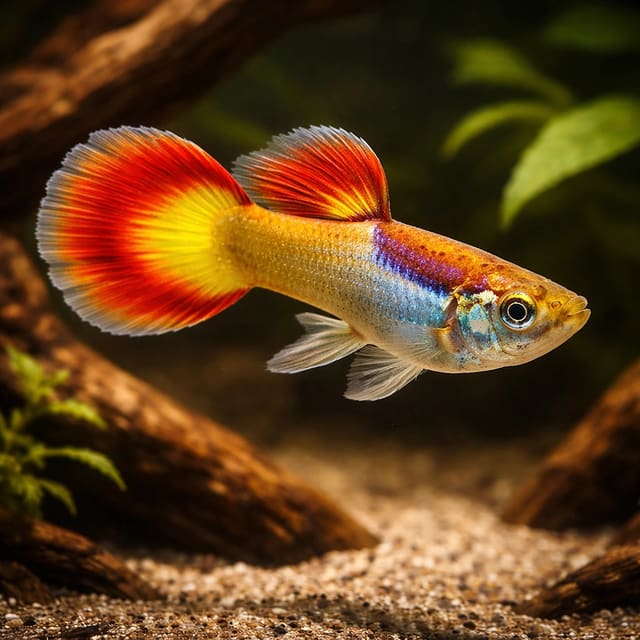
Sunset Blonde Male Guppy (Poecilia reticulata)
22–28°C · pH 7–8
£3.99
One male Green Cobra Guppy per quantity, supplied at approximately 3-4 cm. A colourful Poecilia reticulata strain for mature, hard-water community aquariums.
Adult size is the maximum length this species reaches at full maturity (scientific sources). The livestock you receive will be younger and smaller. Product-photo provenance and any image-specific limitations are stated on the listing.
Poecilia reticulata
Save when buying multiple fish. Each quantity is one fish; sex and pair formation are not guaranteed unless the selected variant explicitly states them.
Minimum of 2 per order.
One male Green Cobra Guppy per quantity, supplied at approximately 3-4 cm. A colourful Poecilia reticulata strain for mature, hard-water community aquariums.
Adult size is the maximum length this species reaches at full maturity (scientific sources). The livestock you receive will be younger and smaller. Product-photo provenance and any image-specific limitations are stated on the listing.
Guppies are social livebearers suited to a prepared beginner, not a fish-per-litre formula. Use a mature filtered aquarium, tested neutral-to-alkaline mineral-bearing water, deliberate sex and population planning, open swimming room, cover and a separation option.
Maintain these water conditions for optimal health and vibrant colors
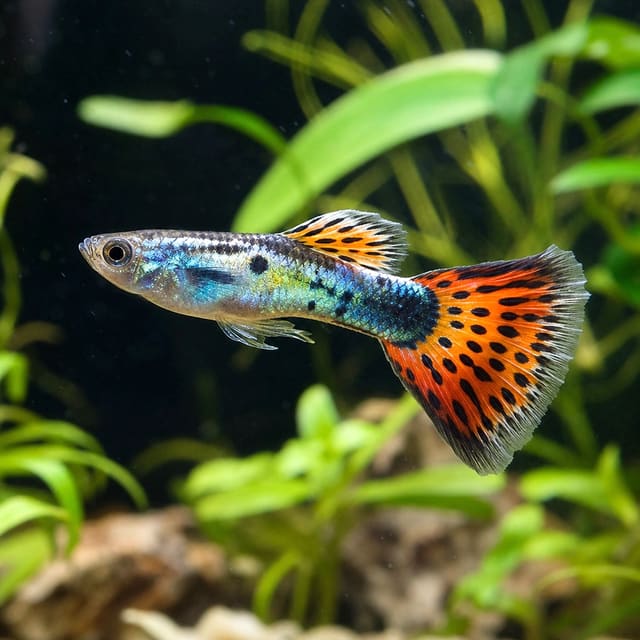
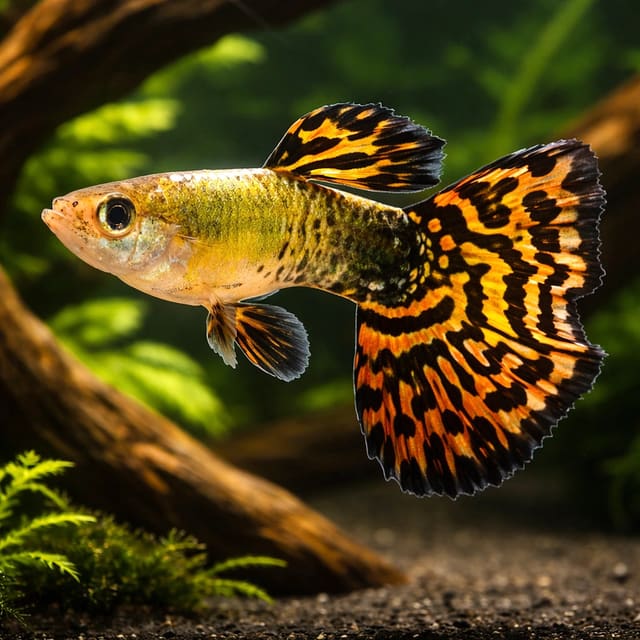
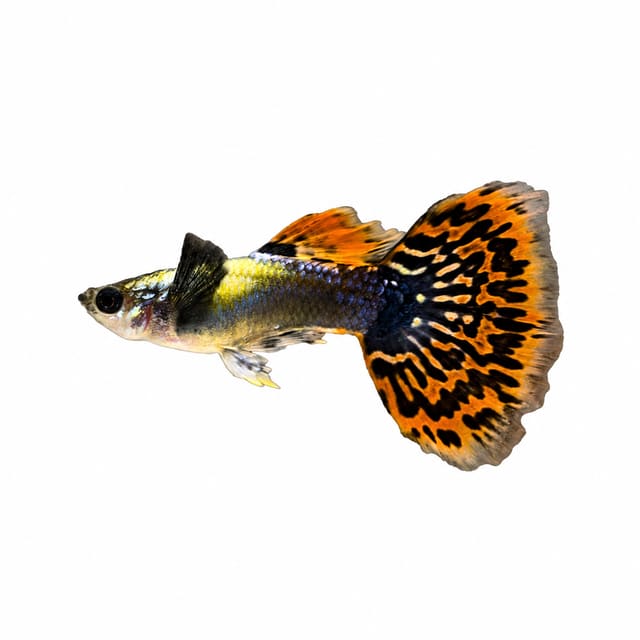
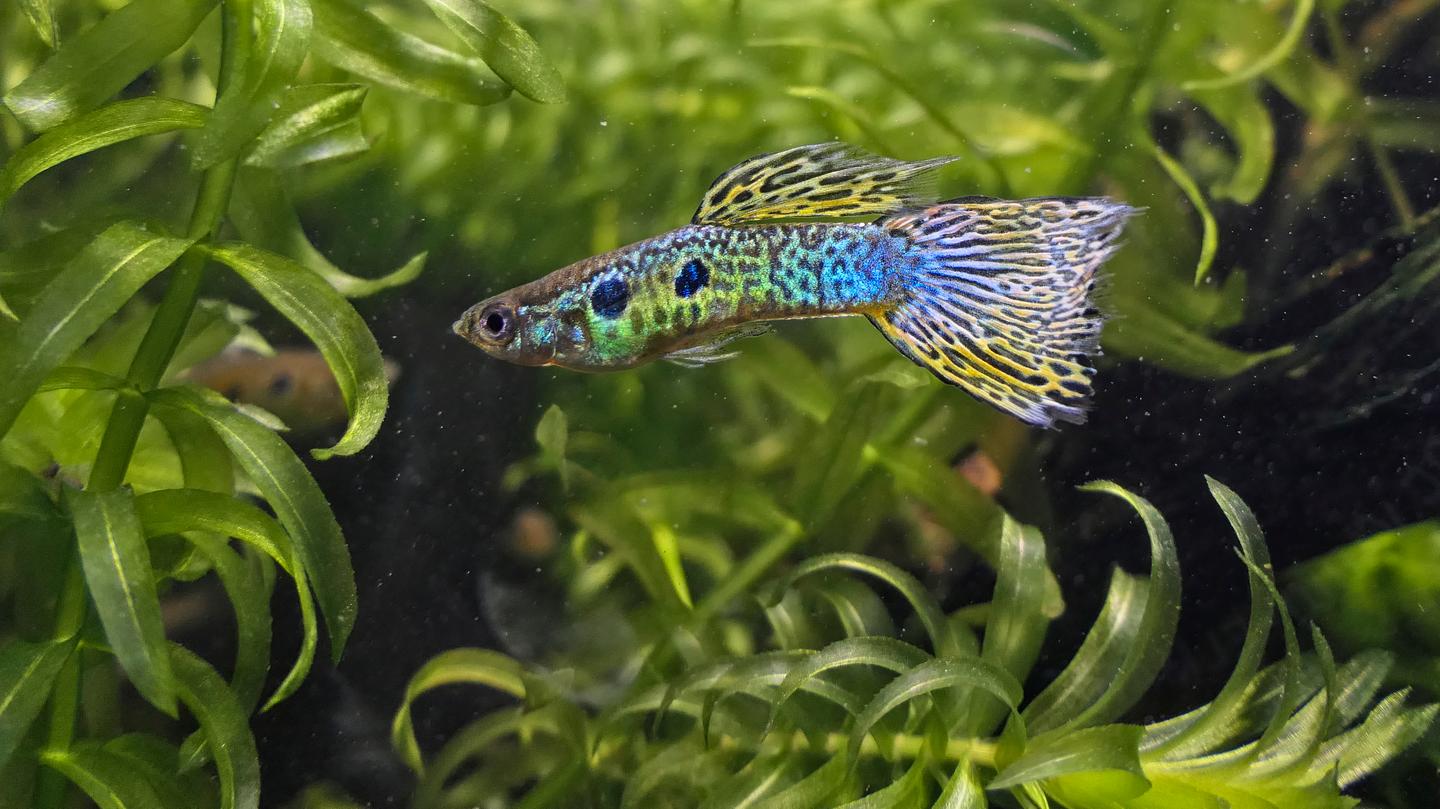
One quantity buys one male Green Cobra Guppy, currently supplied at approximately 3-4 cm. This is a selectively bred colour strain of Poecilia reticulata, recognised by its green-gold sheen, dark reticulated "cobra" pattern and broad patterned tail. It is an active, peaceful livebearer for a mature aquarium with stable, mineral-rich water.
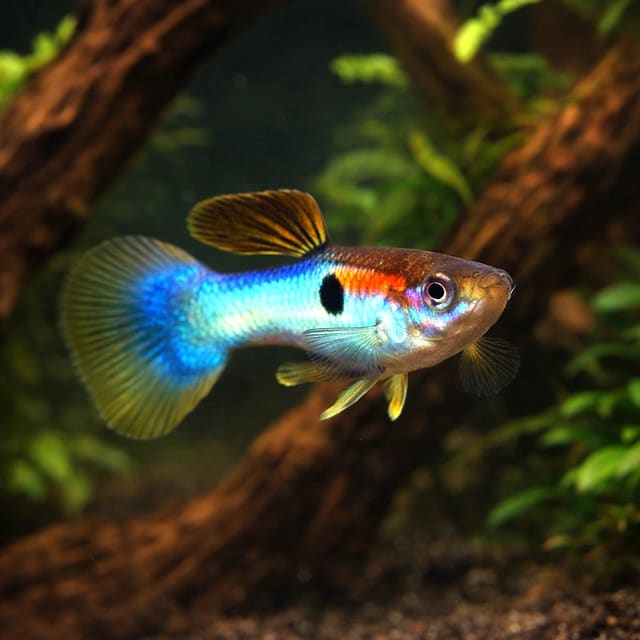
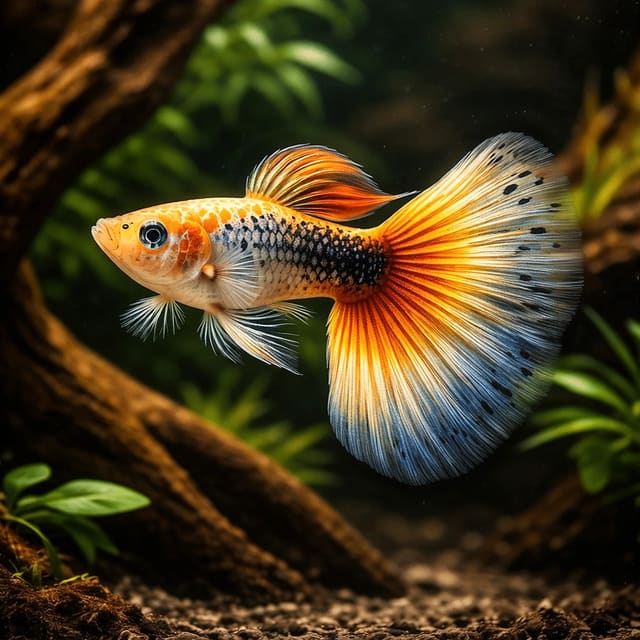
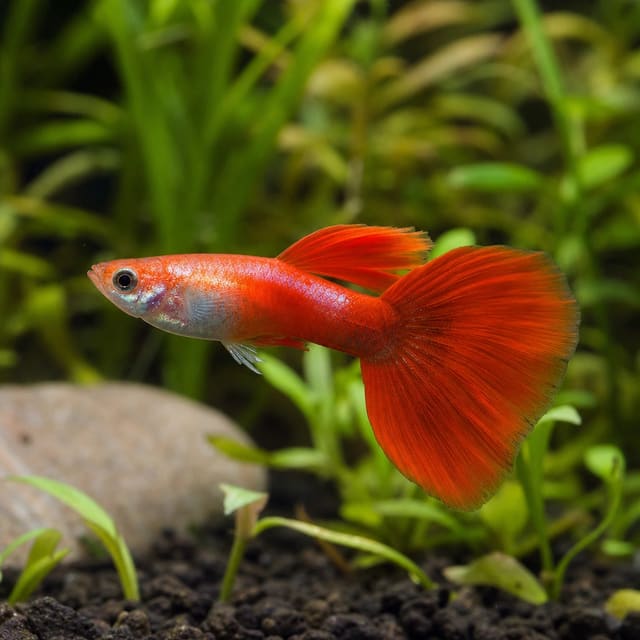
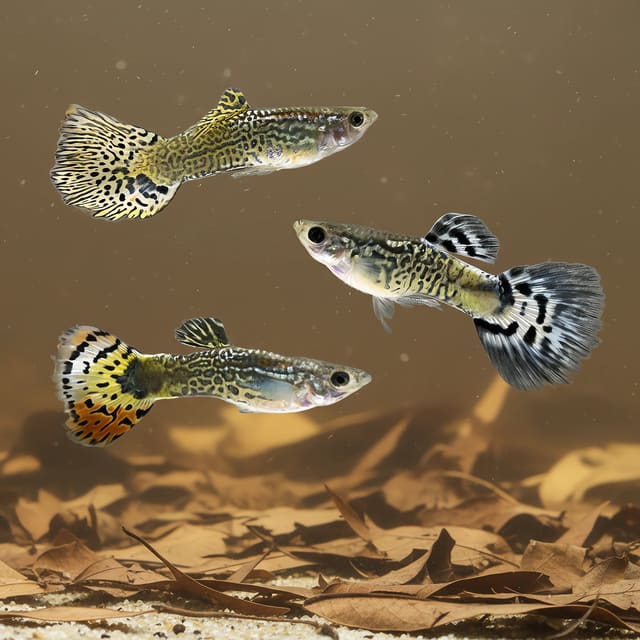
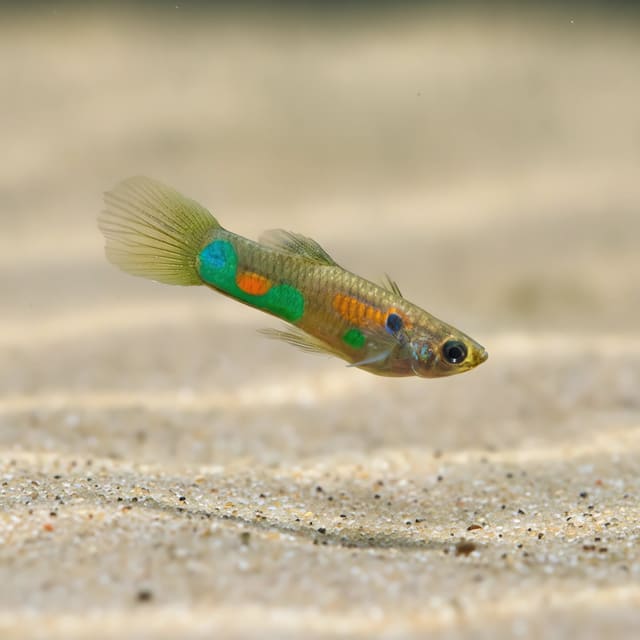
The listing is for a male fish, not a pair or breeding trio. Colour intensity, tail pattern and the balance of green, yellow and black vary naturally between individuals and can change with age, lighting and condition. The gallery image was created from a real reference photograph and represents the Green Cobra strain; it is not a photograph of the exact fish that will be selected for your order.
Green Cobra is a domestic guppy strain rather than a separate species. The scientific name is Poecilia reticulata; "Green Cobra" describes the selected colour and pattern. Male guppies are slimmer and more colourful than females, with an enlarged ornamental tail and a modified anal fin called a gonopodium.
The cobra name refers to the linked, scale-like markings across the body and fins. A well-settled male is constantly on the move, displaying to other guppies and exploring the upper and middle levels of the aquarium. Its large tail makes it visually distinctive, but also means it should not be housed with persistent fin nippers.
| Sale unit | One male fish per quantity; this is not a pair or trio. |
|---|---|
| Current size | Approximately 3-4 cm when supplied. |
| Adult size | About 5 cm for a male, with tail shape affecting the apparent total length. |
| Care level | Easy when the aquarium is mature and the water is stable, hard and neutral to alkaline. |
| Temperature | 24-28°C for the fish currently supplied; avoid rapid temperature changes. |
| pH | 6.8-8.0, with neutral to alkaline water preferred. |
| Hardness | Aim for mineral-rich water around 9-19 dGH and keep it consistent. |
| Aquarium | A mature, filtered aquarium at least 60 cm long for a social group or community. |
| Temperament | Peaceful, active and social; avoid aggressive or fin-nipping tank mates. |
| Diet | Omnivorous; use quality flakes or micro pellets plus varied frozen or live foods. |
Use an established biological filter and make sure ammonia and nitrite remain at zero before adding live fish. Guppies tolerate a useful range of conditions, but selectively bred fancy strains still do best when hardness, pH and temperature do not swing. If your tap water is very soft, test its GH and KH rather than assuming that a high pH alone provides enough minerals.
A 60 cm or longer aquarium gives a group room to move and makes temperature and waste levels easier to stabilise. Add live plants around the back and sides, including some floating cover, while leaving an open swimming lane. Gentle to moderate circulation is suitable; avoid a current so strong that a long-finned male has to fight it continuously. Fit a lid because guppies can jump.
Carry out regular partial water changes, match the new water's temperature, and avoid sudden shifts in hardness. Keep nitrate controlled and remove trapped waste from quiet areas. A Green Cobra male may be sold as an easy fish, but it should not be used to test an uncycled aquarium.
Guppies are social fish. Plan for a group rather than treating one male as a solitary display animal; a group of five or more gives more natural interaction when aquarium size and filtration allow. A male-only group can work well in a planted tank with enough room and visual breaks, although displaying and short chases are normal.
If males and females are mixed, keep at least two females for each male so attention is not focused on one female. This listing supplies a male only, so females must be selected separately. Mixed-sex groups breed readily, and females can store sperm, so make a realistic plan for fry before combining the sexes.
Do not confuse social stocking advice with the sale unit: increasing the basket quantity adds individual males, not pre-formed pairs or a guaranteed breeding group.
Choose peaceful fish that enjoy similar hard, neutral-to-alkaline water. Suitable companions can include other guppies, platies, some mollies, peaceful rainbowfish of an appropriate size, and bottom-dwelling species whose water requirements overlap. Shrimp may coexist with adults, but newborn shrimp and fish fry can be eaten.
Avoid tiger barbs and other habitual fin nippers, aggressive cichlids, large predatory fish, and tank mates that need distinctly soft, acidic water. Bettas are also a risky match because flowing fins and display behaviour can trigger aggression. Check the needs of every species rather than choosing companions by temperament labels alone.
Browse the livebearer and guppy collection to compare other strains, then match every fish by adult size, temperament and water requirements before stocking.
Offer a varied omnivorous diet. A quality tropical flake or small micro pellet can form the staple, supported by small frozen or live foods such as daphnia, Artemia and mosquito larvae. A food with some plant or algae content adds useful variety.
Feed small portions once or twice daily and watch the fish eat. The mouth is small and angled upwards, so fine floating or slow-sinking foods are easiest to take. Remove excess food rather than allowing it to decay; repeated overfeeding causes more problems than a carefully measured portion.
Green colour is often an iridescent effect rather than one flat shade. A newly arrived male may look paler after transport and usually shows better colour once settled in a calm aquarium. Pattern and fin shape remain individual, so natural variation is expected even within the same strain.
On arrival, check the bag and fish before opening it, equalise temperature, and acclimate gradually to the aquarium water. This matters especially when the transport water and home aquarium differ in pH or hardness. Keep lighting low for the first few hours, provide cover, and monitor breathing, posture, fins and appetite. Read the current delivery and Live Arrival Guarantee terms before the delivery day.
No reviews for this item yet. Bought one? Honest reviews only, good or bad.
What customers say about ordering from us
Easy website plenty of info on fish your buying great to pick a time slot
TRACEY DURRANT · 7 Oct 2026
Got some lovely fish thank you
Kevin Mackie · 7 Oct 2026
Reviews of our shop, collected by Judge.me, an independent third-party review collector. Newest first.