Easy
Blue Moscow Male Guppy (Poecilia reticulata)
22–28°C · pH 7–8 · 45L
£6.49
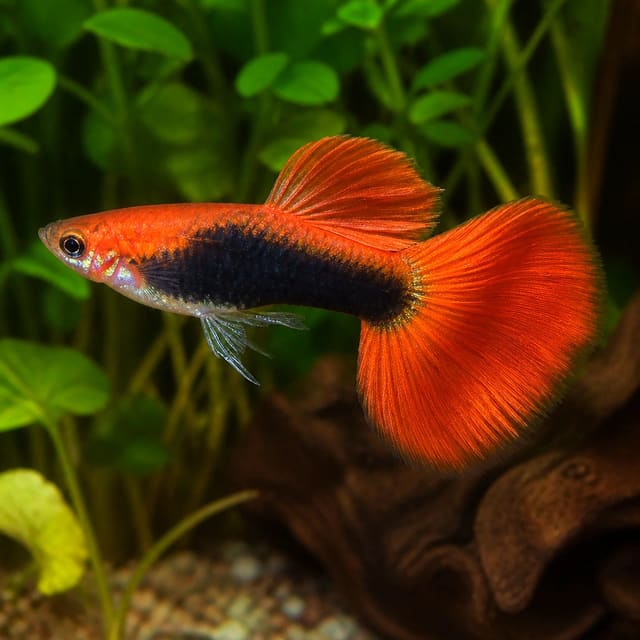
Neon Red Male Guppy (Poecilia reticulata) is one live male guppy with a 3–4 cm dispatch grade. Plan a mature, filtered aquarium at least 60 cm long, a social group of five or more where capacity allows, stable mineral-bearing water and peaceful companions that will not nip its fins.
Adult size is the maximum length this species reaches at full maturity (scientific sources). The livestock you receive will be younger and smaller. Product-photo provenance and any image-specific limitations are stated on the listing.
Poecilia reticulata
Shoaling fish: kept in a group they feel safer, stay calmer and show their best colour.
Minimum of 2 per order.
Neon Red Male Guppy (Poecilia reticulata) is one live male guppy with a 3–4 cm dispatch grade. Plan a mature, filtered aquarium at least 60 cm long, a social group of five or more where capacity allows, stable mineral-bearing water and peaceful companions that will not nip its fins.
Adult size is the maximum length this species reaches at full maturity (scientific sources). The livestock you receive will be younger and smaller. Product-photo provenance and any image-specific limitations are stated on the listing.

Guppies are social livebearers suited to a prepared beginner, not a fish-per-litre formula. Use a mature filtered aquarium, tested neutral-to-alkaline mineral-bearing water, deliberate sex and population planning, open swimming room, cover and a separation option.
Maintain these water conditions for optimal health and vibrant colors
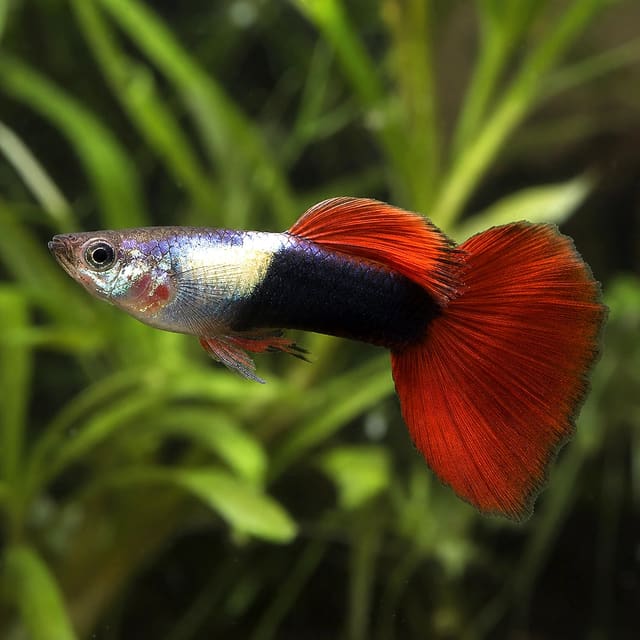
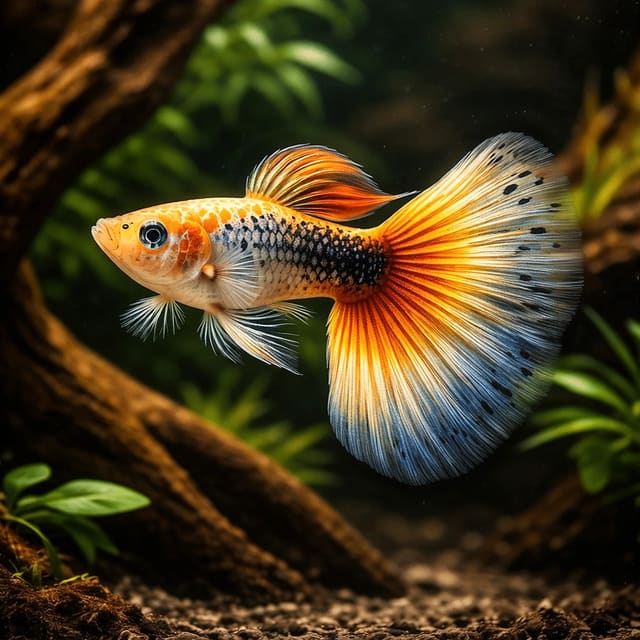
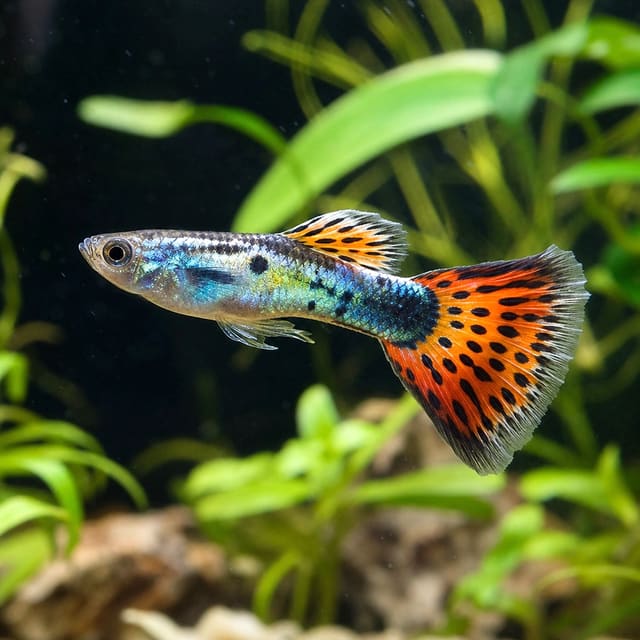
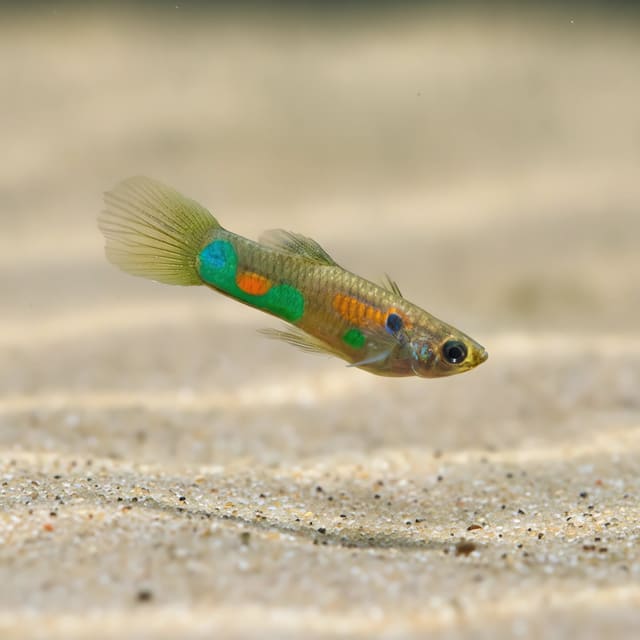
The Neon Red Male Guppy (Poecilia reticulata) is a selectively bred male livebearer chosen for its warm red colour and lively, always-on-the-move character. One purchase supplies one live male fish. The exact offer is sexed: this listing is for a male, rather than an unsexed guppy or a mixed pair. The supplier dispatch grade is 3–4 cm; that is the size range supplied, not a statement that the fish has finished growing. FishBase records 5 cm standard length for male or unsexed P. reticulata, while domestic tail length and shape vary.
This is a sociable freshwater fish for a mature, filtered aquarium, not a solitary ornament for a bowl. Tropical Fish Co uses a conservative starting plan of an aquarium at least 60 cm long and a group of five or more guppies where the sex plan, filtration, water tests and existing livestock allow. A male-only group avoids new mixed-sex mating, but males can still display and chase. A mixed-sex group brings a genuine fry and population-management commitment. Plan the whole group before buying the first fish.
| What is supplied? | One live Neon Red Male Guppy, sold as male |
|---|---|
| Dispatch grade | 3–4 cm; this is not adult size |
| Suits | A prepared beginner with a mature filtered aquarium, suitable mineral-bearing water and a social plan |
| Adult planning size | A specialist species profile gives 6 cm standard length; FishBase records 5 cm for male or unsexed fish, and fins can extend beyond standard length |
| House aquarium plan | At least 60 cm long for one small guppy group; assess footprint, filtration and existing livestock as well as litres |
| Social plan | Five or more guppies where capacity and sex planning allow |
| Routine shop range | 22–28°C; OATA’s broad guppy-and-molly guidance gives pH 7–8 and 8–18 dGH |
| Temperament | Generally peaceful, but long fins and persistent display make fin-nipping or rough tank mates unsuitable |
| Diet | An appropriately sized complete omnivore flake or granule, with safe compatible variety |
Sex is guaranteed only when the exact product or selected option explicitly states male or female. This Neon Red Male Guppy listing is sold as male.
Colour-form names such as Neon Red describe a selected aquarium appearance; they do not make this guppy a separate species. The accepted scientific name is Poecilia reticulata, a member of the family Poeciliidae. FishBase places the native range in northern South America and nearby islands, but the ornamental strains kept today have been shaped by captive selection. Expect natural variation in shade, fin outline, body proportions and maturity between live fish.
The best match is a keeper who can test the aquarium, maintain stable neutral-to-alkaline mineral-bearing water, offer open swimming room with cover, and intervene if chasing or fin damage develops. “Easy” is a retailer suitability label, not permission to use an immature aquarium. Ammonia and nitrite should be undetectable before the fish is introduced, and the group needs enough capacity for every member to feed and move away from unwanted attention.
Think of the purchase as one member of a planned display rather than a complete display by itself. If the aquarium will be male-only, allow for display and occasional pursuit between males. If females will be present, decide how fry would be housed and responsibly rehomed before mixing the sexes. Female guppies can retain sperm after earlier contact with a male, so a future female purchase can produce young even when no new mating is observed.
The dispatch grade and adult planning figure answer different questions. A 3–4 cm dispatch fish still needs an aquarium chosen for mature body size, extended fins and the complete social group. Seriously Fish gives 6 cm standard length for the species, while FishBase records 5 cm standard length for male or unsexed fish. Standard length stops at the base of the tail. Generous room for swimming and avoiding fin damage matters more than trying to turn either record into an exact tip-to-tip promise.
Use behaviour as an ongoing welfare check. A good match lets the guppy swim steadily, feed normally and hold open fins without being pinned by flow or pursued continuously. Hiding, surface gasping, clamped fins, sudden appetite loss or repeated exclusion from food calls for water testing and investigation. Having a mature separation option ready makes that response calmer and safer.
Before ordering, read the complete Guppy Care Guide and compare the plan with the fish already in the aquarium. The guppy collection helps with planning colour and sex combinations, but each product remains its own offer. Buying several individual fish does not automatically create a compatible group, pair or trio.
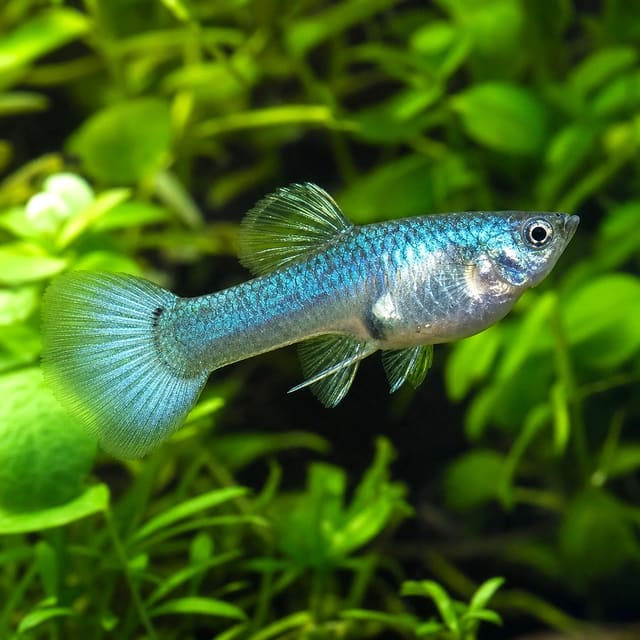
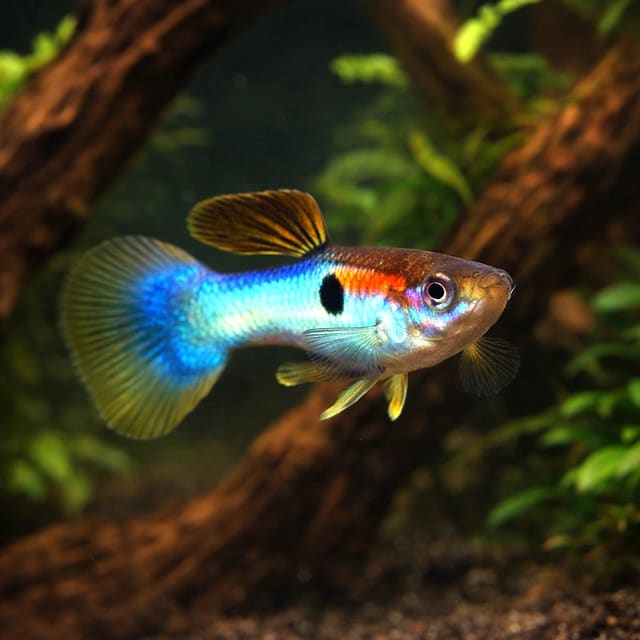
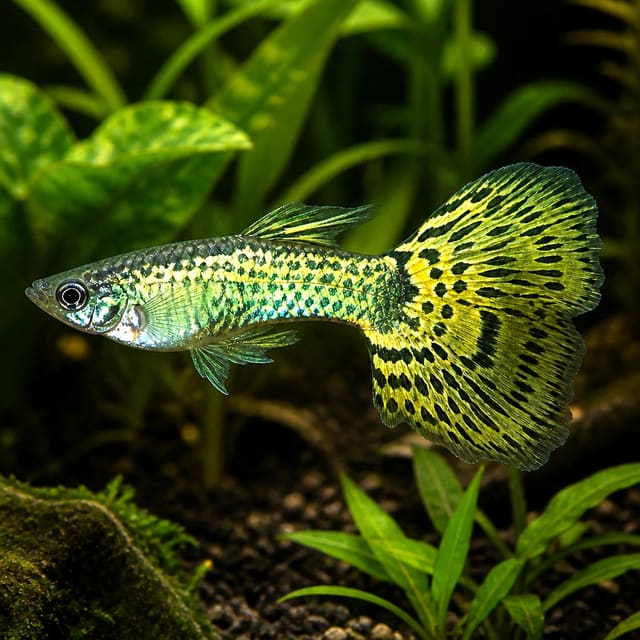
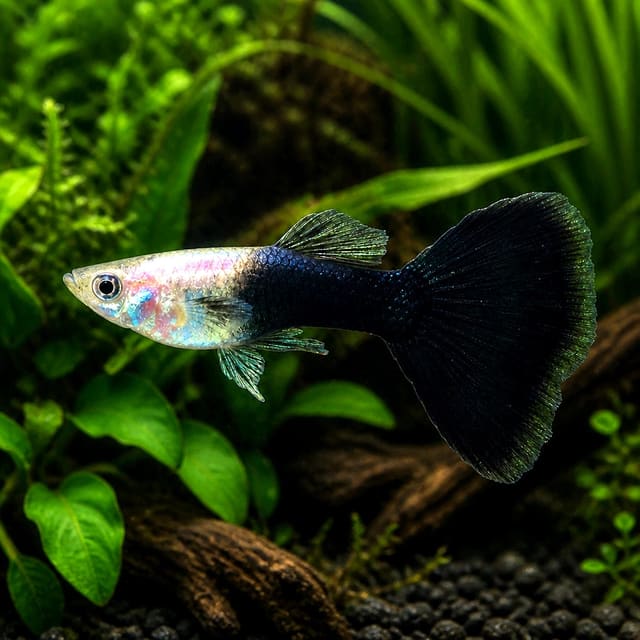
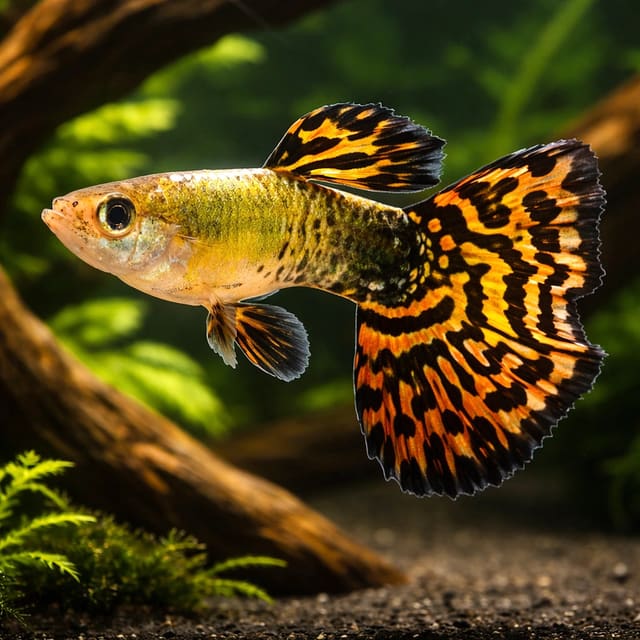
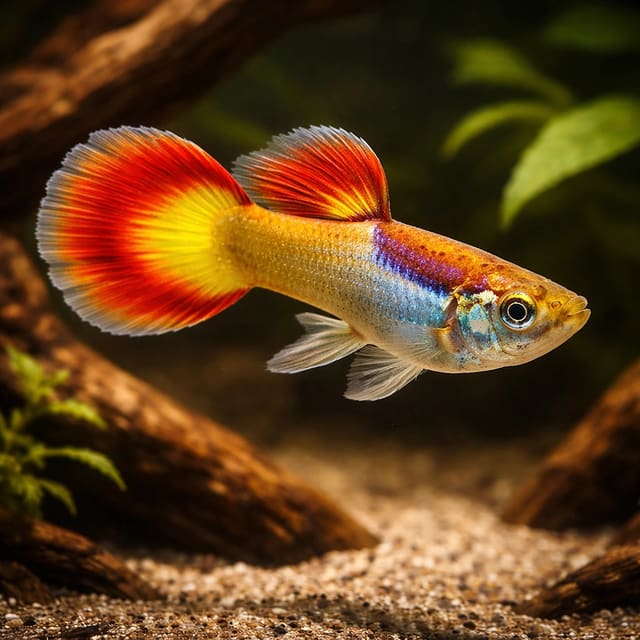
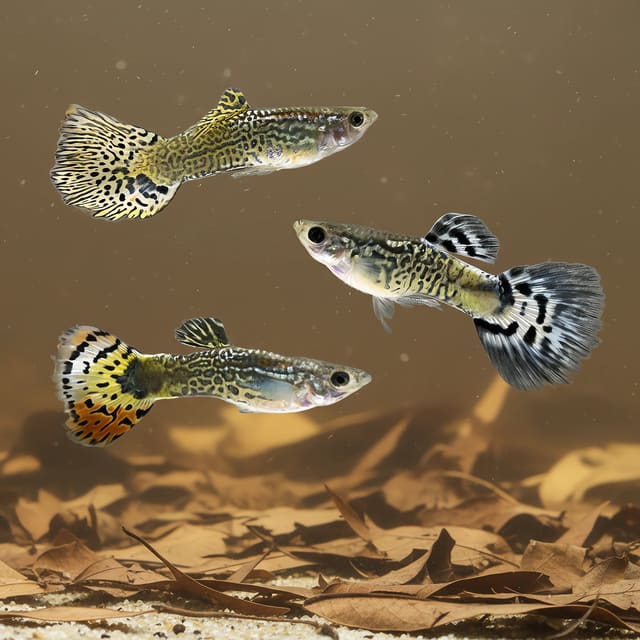
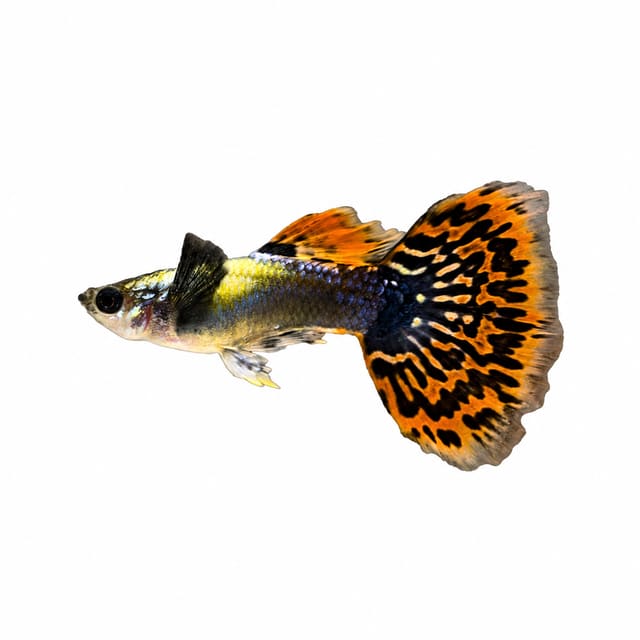
Gallery images have been digitally enhanced to improve image quality. Natural colour, pattern, size and maturity can vary between live animals.
A guppy aquarium is ready when its biological filter can process the waste produced by the intended livestock and repeated tests show stable, suitable water. A date written on the calendar does not prove that. The filter provides surfaces for bacteria that convert toxic ammonia to nitrite and then to the safer end product nitrate. Both ammonia and nitrite should remain at zero on an aquarium test before the Neon Red Male Guppy is added. If either is detectable, pause stocking and correct the cause rather than using the fish to finish cycling the system.
For a first setup, the first tropical aquarium guide explains maturation, filtration and staged stocking. Increase livestock gradually because feeding and respiration raise the load on the filter. Keep a written record of temperature, ammonia, nitrite, nitrate and pH so a change is visible early. A larger aquarium generally gives more room for dilution and choice of layout, but only sound maintenance and an established filter make it biologically dependable.
Tropical Fish Co’s conservative house screen is a mature aquarium at least 60 cm long for one small guppy group. Length matters because guppies use open horizontal space and social interactions are easier to escape when the footprint is generous. OATA gives 45 litres for a small group of smaller livebearers, while Seriously Fish lists a 45 × 30 cm base and about 41 litres for the species. Those values are useful context, but neither creates an automatic stocking allowance. Internal dimensions, mature filtration, water tests, decor, sex mix and existing animals decide whether a particular aquarium is suitable.
The routine store range for guppies is 22–28°C. OATA’s broader guppy-and-molly care sheet gives pH 7–8 and general hardness of 8–18 dGH. Seriously Fish gives a wider species profile of 17–28°C, pH 7–8.5 and 8–30 dGH. For everyday care, use stable water in the well-supported neutral-to-alkaline, mineral-bearing overlap rather than moving the fish towards an extreme. Wild environmental records and the broad limits survived by a species are not targets for a domestic aquarium.
Measure the water that will actually be used. UK tap-water chemistry varies by supply, can be blended, and may change. A current water-company report is helpful, but an aquarium test gives the value at the point of use. The water chemistry guide explains the relationship between pH, hardness and toxic nitrogen waste. The water matcher can compare measured values with the stated guidance; it cannot replace testing or acclimatisation.
Use a thermostatically controlled heater if the room cannot hold the aquarium within range, and verify the result with a separate aquarium thermometer. Match replacement water sensibly, dechlorinate it before it enters the aquarium, and avoid large abrupt changes in temperature or chemistry. Guppies occur across freshwater and brackish records, but that does not make routine salt addition necessary. Salt, mineral products or pH adjusters should have a measured purpose and must be suitable for every fish, invertebrate and plant sharing the aquarium.
A working filter is essential. The RSPCA aquarium environment guidance explains why biological filtration is central to processing ammonia and nitrite. Choose a flow that keeps the water moving and oxygenated without pinning long-finned fish against the current or preventing normal swimming. Protect an intake where small fish or fry could be drawn against it. Check for reduced flow, accumulated debris and unusual noise during routine observation. Filter capacity on a box is only a starting point; actual waste load, maintenance and water-test results show whether the system is coping.
OATA strongly recommends a partial water change of 25% at least once every week for guppies and mollies. Treat replacement tap water with an appropriate conditioner and use a siphon to remove settled waste where needed. Test at least weekly, and more often after a stocking change, illness concern or maintenance problem. Nitrate should not climb more than 20 mg/L above the normal tap-water level under OATA’s broad guidance. A consistent record is more useful than waiting for cloudiness or odour.
If filter media needs cleaning, rinse it lightly in aquarium water removed during a water change; do not run it under the tap. Protect the established biological filter during maintenance. If ammonia or nitrite appears, reduce feeding, test again, inspect the filter and seek informed help. A water change can lower an immediate concentration, but the underlying filtration or stocking problem still needs correction.
Give the group open water for normal movement, planted or structured areas that break sight lines, and a secure cover. Floating vegetation is often appreciated, while rooted or artificial planting can provide retreat. Decor should have smooth edges that will not catch enlarged domestic fins. Position hardscape so one fish cannot be cornered behind it and so the keeper can still observe feeding, breathing and body condition.
Flow should be steady rather than forceful. Watch the fish rather than assuming the filter setting is correct: repeated sheltering behind the same object, struggling in the current or being swept away from food are signs that the layout needs adjustment. Equally, a motionless surface and areas of trapped debris may show poor circulation. Plants help with structure, but they neither complete the nitrogen cycle nor create unlimited capacity.
A secure lid also reduces escape risk and slows evaporation. Leave access for feeding and maintenance without creating gaps around cables or pipework. Keep cleaning products, aerosols and untreated tools away from the water. Use dedicated aquarium equipment where possible so residues and pathogens are not carried between systems.
Use an appropriately sized, nutritionally complete omnivore flake or micro-granule as the staple. Add safe compatible variety, which can include suitable algal ingredients and small frozen or live aquarium foods from a biosecure supply. Wild guppies consume a mixed range that can include small invertebrates, algae and detrital material, but that ecological observation is not an instruction to collect food or debris outdoors.
Feed a portion the group can consume without leaving food to decay, then observe whether each fish gets access. A bright, assertive male may reach the food first while a chased or newly introduced fish hangs back. Distribute small food across more than one spot if that helps, while avoiding excess. Appetite is useful information: a sudden refusal to eat, difficulty swallowing or weight loss should prompt a water test and closer health check rather than an automatic extra portion.
Store food dry, cool and sealed, and discard it when it becomes stale. Match particle size to the mouth of the fish. Do not make one treat food the whole diet, and do not use feeding as a substitute for correcting stress or poor water. Fry require much smaller food and closer water-quality management; they should be planned for before any mixed-sex group is assembled.
This listing is explicitly for a male. In mature guppies, the most dependable sex character described by the care references is the anal fin: a male has a narrow modified anal fin called a gonopodium, whereas a female has a broader, more triangular anal fin. Colour alone is not sufficient because domesticated females can also carry strong colour. The product’s male offer rests on the exact trade identity, not on a customer being asked to sex a photograph.
Standard length is measured to the base of the tail rather than to the outer edge of the caudal fin. Seriously Fish lists 60 mm standard length for the species, while FishBase records 5 cm standard length for male or unsexed fish. Domestic males may carry extended finnage, so visible tip-to-tip length can be greater than the body measurement. Planning around the larger 6 cm species profile, plus room for fins and social movement, is more useful than trying to convert the 3–4 cm dispatch grade into a promised final measurement.
Fin shape also affects care. Watch that the male can hold its fins naturally, turn without catching decor and reach food without fighting a strong current. A split or frayed fin can have physical, social or health causes; test the water and observe interactions before assuming one diagnosis. Smooth furnishings, clean water and removal from persistent nipping are practical protections.
OATA says guppies can live several years in a mature setup with good water quality, but no responsible product page can promise an exact lifespan for one purchased fish. Age on arrival, genetics, prior conditions, disease exposure, nutrition, water quality and social stress all vary. Make the aquarium and rehoming plan as a continuing commitment rather than treating a short numerical lifespan as a limit.
Keep spare essentials available: dechlorinator, water tests, a suitable food, a working thermometer and a plan for heater or filter failure. A mature quarantine or separation aquarium is more useful than an emergency unfiltered tub. Check equipment during routine maintenance, but also watch the fish daily; behaviour often shows a problem before a weekly task is due.
Guppies reproduce readily when sexes mix. Capacity that looks generous for five adults can become inadequate after repeated broods. Decide in advance whether the display will be male-only, female-only or mixed, remembering that a female may store sperm from an earlier mating. Population planning is part of ordinary welfare, alongside filtration and water testing.
Prepare the aquarium, quarantine plan and testing equipment before dispatch. Read the current delivery and Live Arrival Guarantee policy because it is the authority for packing, postcode coverage, delivery arrangements and claim requirements. Be present to receive live fish and have a phone ready before the parcel is opened.
Transport is tiring, so keep the introduction calm and avoid crowding the fish with food or attention. The policy steps protect both animal welfare and any claim. They are also separate from longer-term quarantine: a dedicated, mature quarantine system helps prevent a new arrival from exposing an established community, while allowing closer observation. It needs biologically supported filtration, stable heat, hiding structure and its own equipment.
A settled guppy should swim steadily, breathe regularly, hold its fins naturally and feed consistently. Individual behaviour varies, so look for change: surface gasping, clamped or damaged fins, erratic swimming, loss of balance, spots, wounds, swelling, weight loss, unusual hiding or sudden appetite loss all deserve attention. These signs are not diagnoses.
Begin with objective checks of ammonia, nitrite, nitrate, temperature and pH. Inspect heater operation, filter flow, recent maintenance, feeding, new livestock and social pressure. Record when the change began and take clear photographs where useful. Isolate safely if appropriate, but do not move a sick fish into a cold, unfiltered container. Avoid choosing heat, salt or medication from one symptom because different causes can look alike and treatments can harm other livestock.
The RSPCA fish-health guidance advises water-quality-led observation and escalation for fish health concerns. OATA provides a UK fish-vet directory when qualified diagnosis is needed. A dedicated quarantine system and separate nets reduce transfer between aquariums. The MSD Veterinary Manual recommends at least 30 days of isolation for new aquarium fish, with longer periods where indicated; it is professional US guidance, so treatment products and legal directions must still be appropriate for the UK.
Guppies are social, and this Neon Red listing supplies a male. FishBase’s aquarium note gives a group of five or more; OATA’s broad sheet advises at least three, with two females per male in mixed-sex groups. Tropical Fish Co uses the more conservative five-or-more starting policy where the aquarium and sex plan allow. No number or ratio removes the need to observe the individuals.
A male-only group avoids producing new mixed-sex broods, but males may still display, chase and compete. Provide space and sight breaks, watch whether every fish can feed, and keep a cycled separation option. In a mixed-sex group, persistent male pursuit can pressure females and reproduction is likely. OATA’s ratio guidance is a starting point, not a guarantee of calm behaviour. Females can store sperm after previous mating, so even a female-only purchase history cannot promise that fry will never appear.
Poecilia reticulata is generally peaceful, but compatibility depends on the whole aquarium. Seriously Fish names other livebearers, rasboras, Corydoras, small loricariids and tetras as possible community companions. Each exact species must still overlap in water needs, remain safe at adult size and have enough space for its own social group. A name on that list is not a universal approval.
| Check | Question to answer |
|---|---|
| Water overlap | Can both species thrive in the same stable temperature, pH and hardness without living at the edge of either range? |
| Adult size | Could either animal swallow, injure or intimidate the other when fully grown? |
| Fin risk | Is the proposed companion known to nip, chase or fixate on long colourful fins? |
| Feeding | Can every fish reach suitable food without one group consistently losing out? |
| Space | Does the aquarium have room for both complete social groups and usable retreats? |
| Response | Is a mature separation aquarium available if behaviour changes? |
Avoid fin-nipping species such as tiger barbs and serpae tetras. Long flowing fins can attract attention, and repeated nipping causes injury even where water values overlap. Very large predatory fish are unsuitable because a guppy can become prey. A betta and guppy combination is not a dependable default: both are conspicuous, interactions vary by individual, and a larger planted aquarium cannot guarantee safety.
Small shrimp and young invertebrates may be eaten, while the phrase “adult shrimp” covers animals of very different size and behaviour. Assess the exact species and accept that reproduction outcomes may change. Snails also require a chemistry and medication check. Never use a product alternative as proof of compatibility; an alternative is simply another buying choice.
A male-only display can showcase several colours without creating new mixed-sex matings. It still needs a social and behaviour plan: males may display side by side, follow one another or focus attention on a weaker fish. Spread feeding, provide visual breaks and check fin condition. Adding another male to dilute chasing can increase the biological load and is not an automatic solution.
A mixed-sex group introduces courtship and likely reproduction. OATA’s two-females-per-male guidance aims to reduce pressure on females, but the aquarium still needs enough room, cover and observation. No ratio guarantees that every female can rest or feed. If the keeper cannot house or responsibly rehome fry, choose a deliberately managed single-sex display and retain a plan for the possibility of stored sperm in previously exposed females.
Do not use a single male as a temporary decoration while waiting to decide. Social planning, quarantine and capacity should exist before arrival. If this fish will join an existing male group, compare adult body and fin size, provide multiple routes around the layout and observe the introduction. If a mixed group is intended, count all adults and realistic fry capacity rather than counting only the new purchase.
Compatibility can fail without obvious fighting. Fast surface-feeding fish can take most of the food; bottom fish can lose access when waste and uneaten food accumulate; a timid animal can remain behind decor while looking physically intact. Observe the whole feeding sequence and the quieter minutes afterwards. A successful community lets each animal reach appropriate food and occupy normal space.
Use the aquarium’s actual internal footprint. A tall tank with the same nominal litres as a longer tank does not offer the same horizontal swimming room. Plants and wood reduce open volume while providing useful separation, so the layout must balance both needs. More litres can improve stability, but they do not cancel clashing water chemistry, predation or fin-nipping.
Quarantine protects compatibility as well as disease control. A new fish can arrive healthy-looking yet behave differently after it settles, and an established group can react to the newcomer. Observing separately gives time to confirm feeding and condition. When the fish joins the display, continue monitoring water tests because the filter must adapt to the increased waste load.
Observe the aquarium at feeding time and during ordinary swimming. One fish repeatedly hiding, being cornered, missing meals or showing torn fins is not a successful match. Rearranging decor can help break sight lines, but it does not add capacity or make an unsuitable species safe. Remove the source of harm using the prepared separation plan.
New fish can alter an established group. Add livestock gradually, test the water after the biological load changes, and check behaviour over more than the first few minutes. Peaceful fish still compete for food and preferred areas. Conversely, brief display is not automatically an emergency; the welfare test is whether every fish can feed, rest and move normally without persistent pursuit or damage.
Guppies are livebearers. If males and females share the aquarium, plan for fry before they appear. Dense planting can increase survival, which also increases the future demand on filtration and space. Adults or tank mates eating young is not a responsible population-management plan. Arrange suitable rehoming, a mature nursery and appropriately sized food in advance if young will be raised.
Do not release guppies, fry, plants, snails or aquarium water outdoors. P. reticulata has been introduced beyond its native range, and aquarium organisms can carry pathogens or disrupt wildlife. Rehome livestock responsibly and dispose of water where it cannot reach a pond, stream, surface-water drain or natural watercourse.
Seriously Fish gives 6 cm standard length for Poecilia reticulata, while FishBase records 5 cm standard length for male or unsexed fish. Standard length excludes the tail fin, so domestic fin shape can add visible length. The 3–4 cm stated for this fish is its supplier dispatch grade, not its adult maximum.
Tropical Fish Co uses a mature, filtered aquarium at least 60 cm long for one small guppy group. OATA gives 45 litres for a small group of smaller livebearers, but footprint, filtration, water tests, sex mix and existing livestock still decide whether an individual aquarium is suitable.
Guppies are social. FishBase gives an aquarium group of five or more, and that is the shop’s conservative starting policy where capacity and the sex plan allow. This listing supplies one male, so plan the rest of the group deliberately rather than assuming several purchases form a balanced group.
A Neon Red Male Guppy can suit a prepared beginner with a fully mature filter, stable tested water and a planned social group. The easy care label does not mean it can cycle a new aquarium or live alone in a bowl. Keep a separation option for chasing, illness or unexpected fry.
Use an appropriately sized, complete omnivore flake or micro-granule as the staple, with safe compatible variety such as suitable algal ingredients and small frozen or live aquarium foods. Feed portions the group can finish without leaving food to decay, and make sure quieter fish also get access.
The shop’s routine temperature range is 22–28°C. OATA’s broad guppy-and-molly guidance gives pH 7–8 and 8–18 dGH. Keep conditions stable within the suitable overlap, test the aquarium and source water, and make changes gradually rather than chasing the edges of a wider recorded range.
Poecilia reticulata is generally peaceful, but males can display and chase. Guppies are more often at risk from known fin-nippers; avoid species such as tiger barbs and serpae tetras. Intervene if any fish is persistently cornered, excluded from food or showing fin damage.
Quiet community fish such as suitable livebearers, rasboras, Corydoras, small loricariids and tetras can be considered when their exact water, adult-size, social and feeding needs overlap. Avoid fin-nippers and fish large enough to swallow a guppy. No species name removes the need to observe the actual group.
Tropical Fish Co hand-packs live fish in oxygenated bags inside an insulated box, using a heat pack when conditions call for it, and sends them with a licensed live-animal courier. Be present to receive the parcel. Before opening it, record a continuous unboxing video showing the sealed parcel and fish still in the bag; inspect promptly and follow the current delivery policy for arrival and any claim.
These references support the identity, aquarium guidance, welfare and delivery information used on this page. Aquarium values are presented with their original scope: a species record, specialist profile, broad trade-body sheet or store policy can answer different questions.
No reviews for this item yet. Bought one? Honest reviews only, good or bad.
What customers say about ordering from us
Easy website plenty of info on fish your buying great to pick a time slot
TRACEY DURRANT · 7 Oct 2026
Got some lovely fish thank you
Kevin Mackie · 7 Oct 2026
Reviews of our shop, collected by Judge.me, an independent third-party review collector. Newest first.