Easy
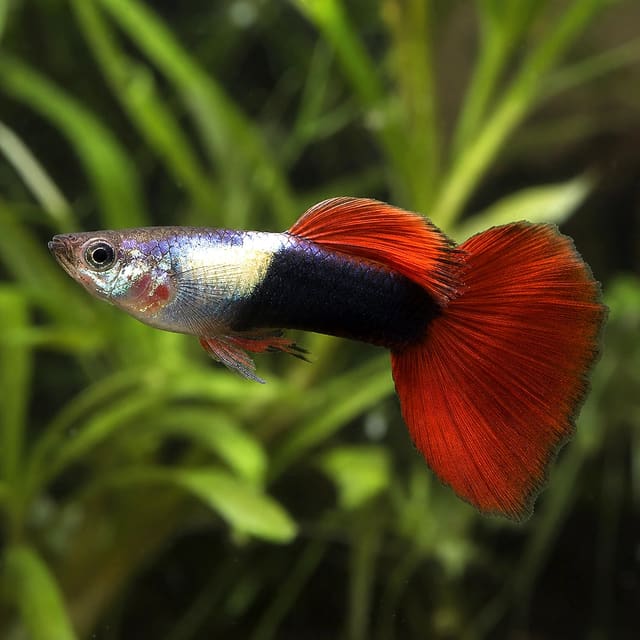
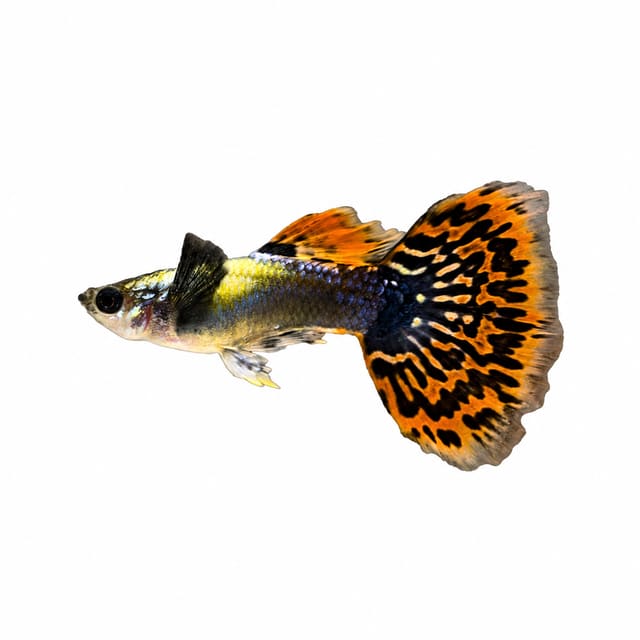
Neon Red Male Guppy (Poecilia reticulata)
22–28°C · pH 7–8
£3.99
One Black Male Guppy (Poecilia reticulata), supplied at approximately 3-4 cm. A peaceful, active livebearer for mature planted community aquariums with medium-hard, neutral-to-alkaline water; colour and finnage vary.
Adult size is the maximum length this species reaches at full maturity (scientific sources). The livestock you receive will be younger and smaller. Product-photo provenance and any image-specific limitations are stated on the listing.
Poecilia reticulata
Save when buying multiple fish. Each quantity is one fish; sex and pair formation are not guaranteed unless the selected variant explicitly states them.
Minimum of 2 per order.
One Black Male Guppy (Poecilia reticulata), supplied at approximately 3-4 cm. A peaceful, active livebearer for mature planted community aquariums with medium-hard, neutral-to-alkaline water; colour and finnage vary.
Adult size is the maximum length this species reaches at full maturity (scientific sources). The livestock you receive will be younger and smaller. Product-photo provenance and any image-specific limitations are stated on the listing.
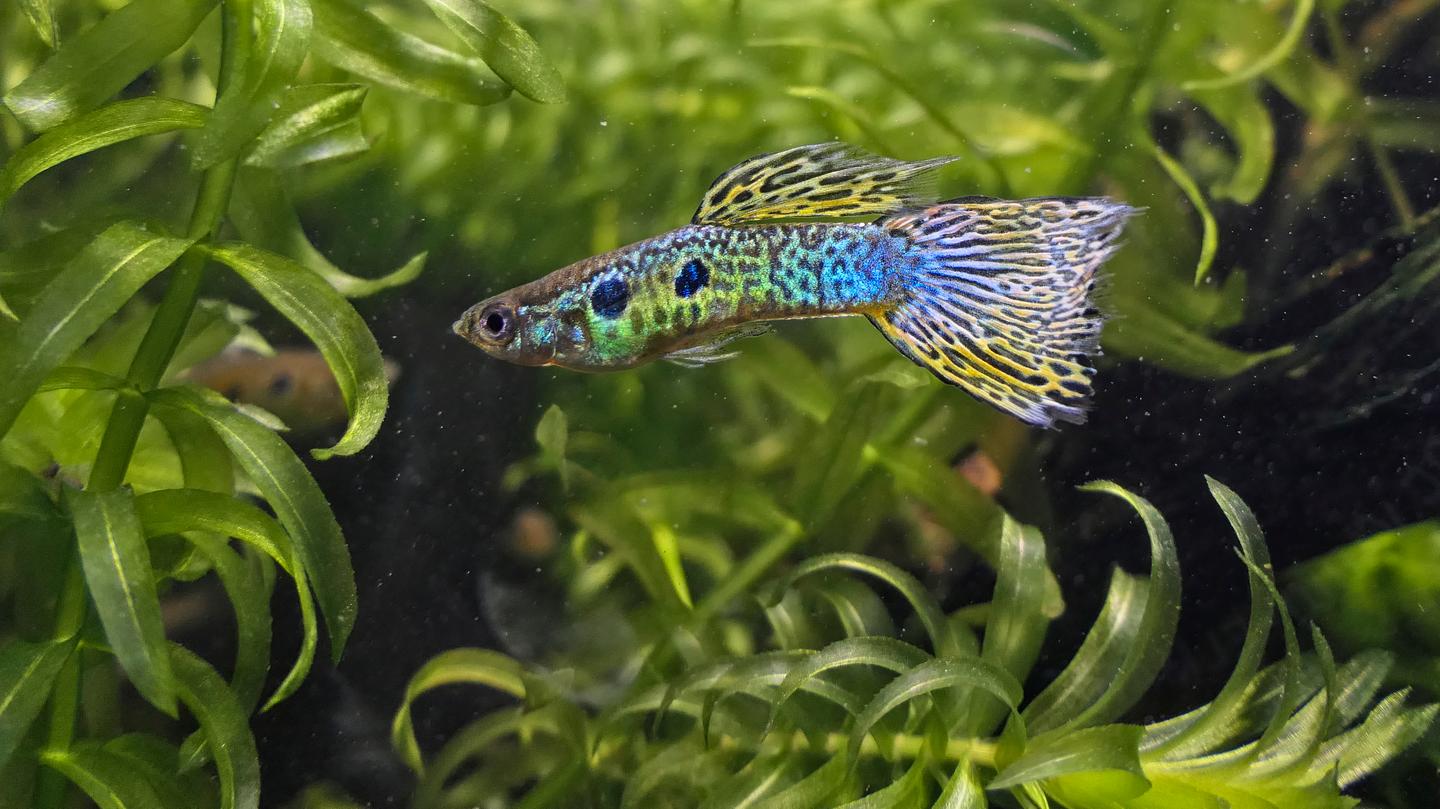
Guppies are social livebearers suited to a prepared beginner, not a fish-per-litre formula. Use a mature filtered aquarium, tested neutral-to-alkaline mineral-bearing water, deliberate sex and population planning, open swimming room, cover and a separation option.
Maintain these water conditions for optimal health and vibrant colors
Black Male Guppy (Poecilia reticulata) is a peaceful, active livebearer selected for a predominantly black body and dark flowing fins. It brings strong contrast to a planted community aquarium while retaining the familiar movement and sociable behaviour that make guppies such popular tropical fish.
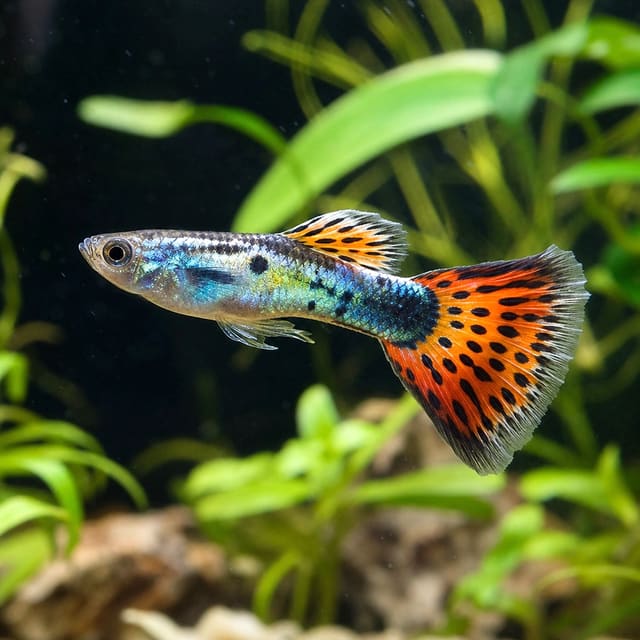
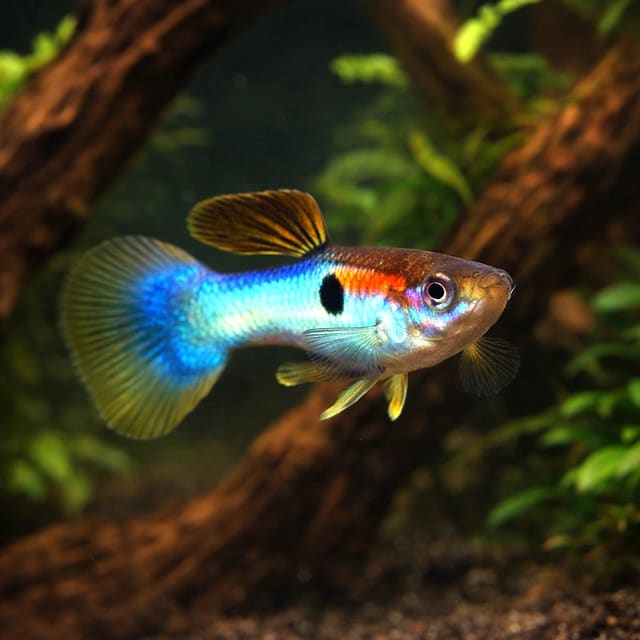
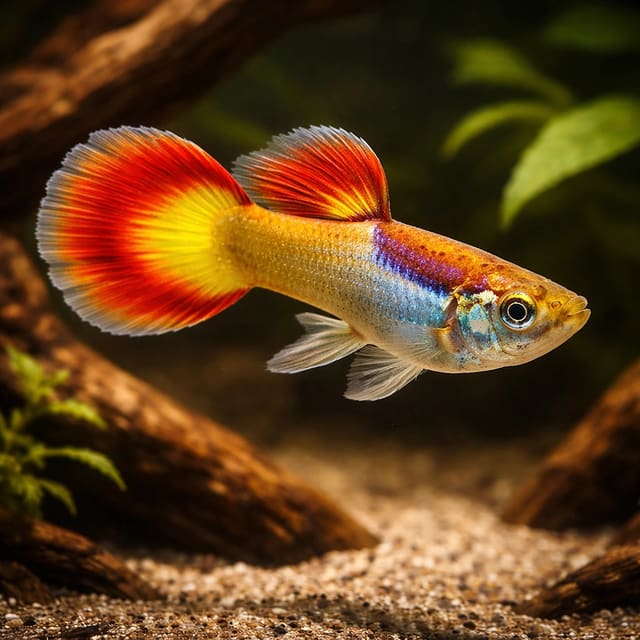
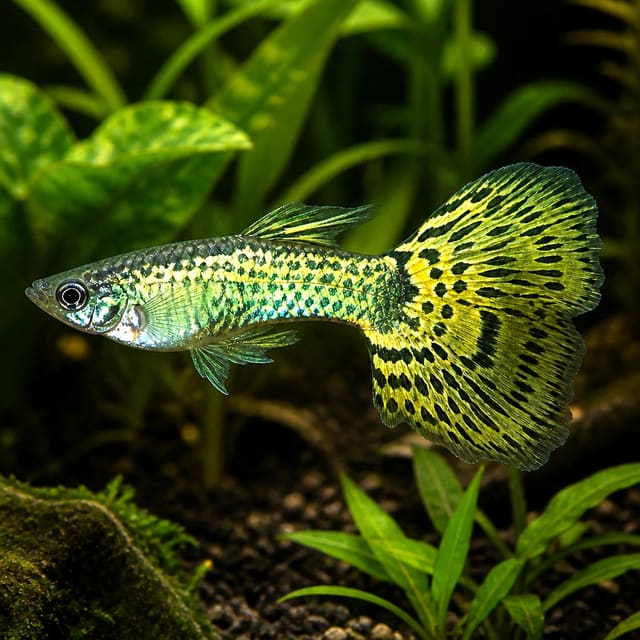
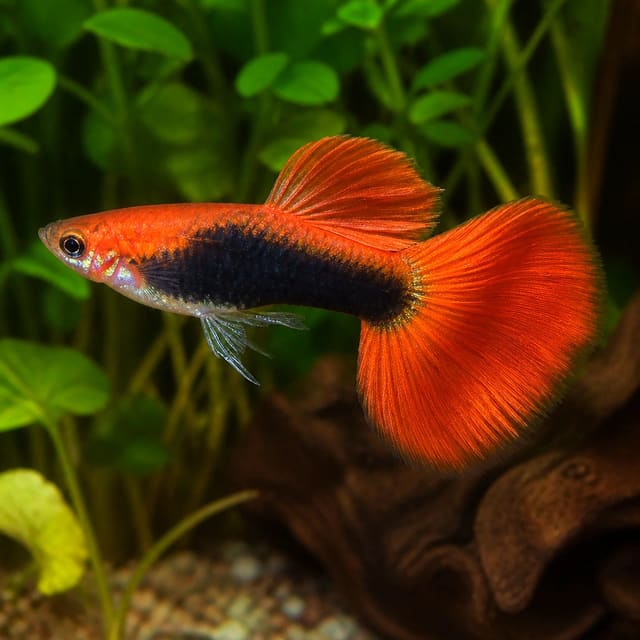
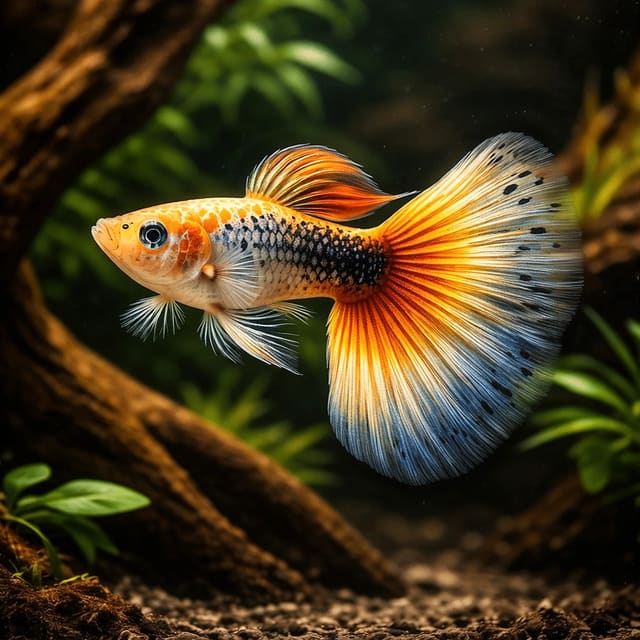
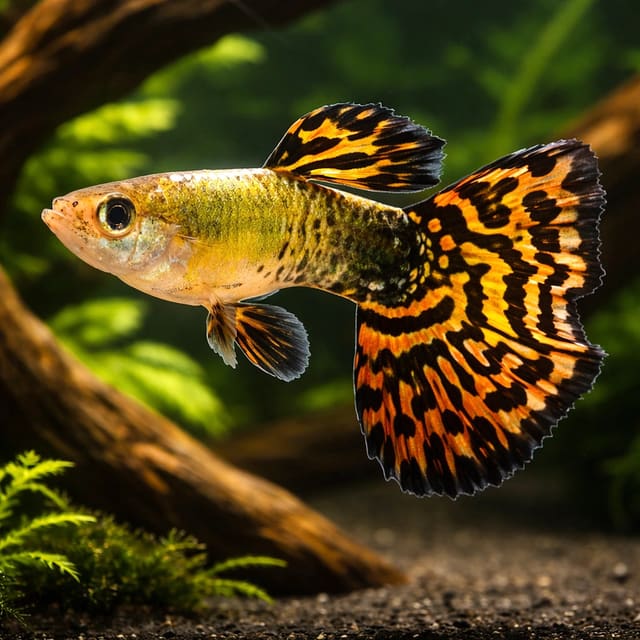
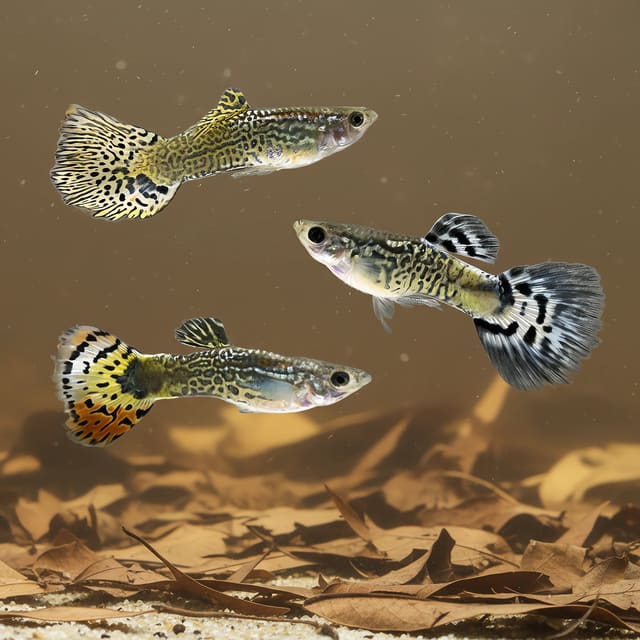
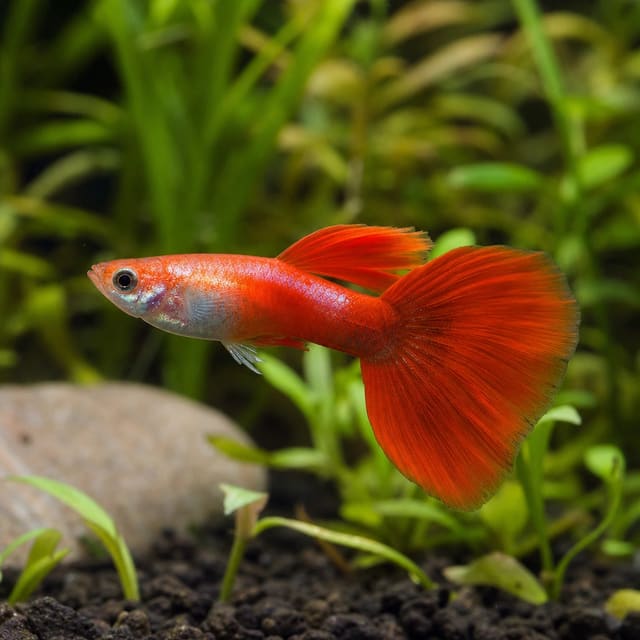
What you receive: each quantity is one male fish, supplied at approximately 3-4 cm. This is not a pair or a group. Colour coverage, sheen, fin shape and final size vary naturally between individual live fish, so the gallery image is representative rather than a photograph of the exact animal dispatched.
Strain note: the supplier identifies this line simply as a black male guppy. It is not source-verified as Black Moscow, Black Phantom, Black Cobra or another named strain. We keep that distinction clear so the fish you order is not sold under an invented variety name.
| Scientific name | Poecilia reticulata (Peters, 1859) |
|---|---|
| Common / trade name | Black Male Guppy |
| Sale unit | One male fish per quantity selected |
| Supplied size | Approximately 3-4 cm |
| Adult male size | About 5 cm; finnage and individual growth vary |
| Care level | Easy, provided the aquarium is mature, filtered and stable |
| Temperament | Peaceful and social; males may display or chase |
| Recommended group | At least three; FishBase notes aquarium groups of five or more |
| Mixed-sex ratio | At least two females for each male |
| Minimum aquarium | 45 litres for a small group; larger volumes are more stable |
| Temperature | 20-28°C, kept stable without sudden changes |
| pH | 7.0-8.0 |
| General hardness | 8-18 dGH; medium-hard water is preferred |
| Diet | Omnivore: quality flake or small granule plus varied small frozen/live foods |
| Expected lifespan | Often several years with stable water, diet and routine care |
The accepted scientific name for the guppy is Poecilia reticulata. “Male black” describes the sex and the supplier's colour line; it is not part of the scientific name. Traditional guppies are also a different species from the smaller Endler's livebearer, Poecilia wingei, even though the two can hybridise.
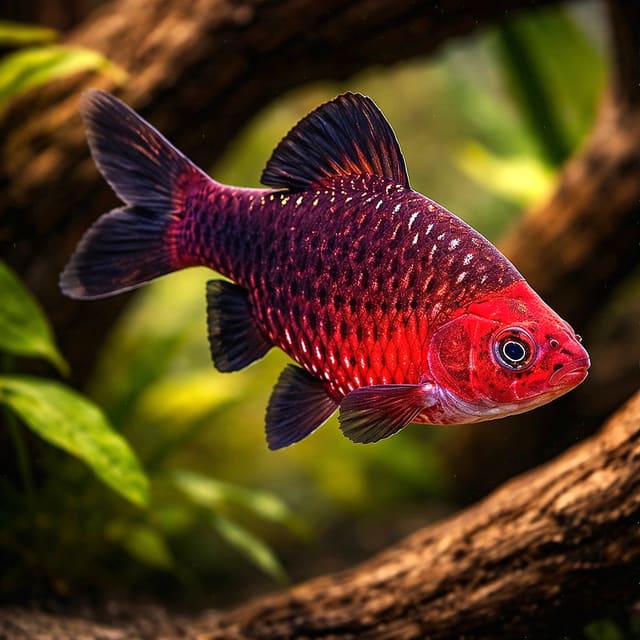
This listing is for a male. Mature males are usually smaller and more colourful than females and have a narrow modified anal fin called a gonopodium. The supplied fish is still developing at 3-4 cm, so black coverage and finnage can deepen or change as it settles and matures. The existing gallery image is an aquarium representation created from the reference photo; it is useful for recognising the line but should not be read as a guarantee of identical pattern placement.
If you are comparing black guppy varieties, use the source name rather than appearance alone. “Black Moscow” and “Black Phantom” are named trade strains with their own breeding histories. A dark body does not prove either identity, so this fish remains correctly labelled as a Black Male Guppy.
Use a mature, fully cycled aquarium with a reliable filter and heater. OATA recommends at least 45 litres for a small group of the smaller livebearers; a longer aquarium or a larger volume gives active males more swimming room and keeps temperature and water quality steadier. Browse the guppy collection when planning a compatible group rather than treating this fish as a solitary display animal.
Provide open swimming space alongside live plants or smooth artificial cover. Fine gravel or sand is suitable, and floating or tall plants create refuge without crowding the upper water. Keep the current gentle, particularly for males with broad fins, and avoid rough ornaments that can tear finnage. A secure lid is sensible because small livebearers can jump when startled.
Guppies are adaptable, but “easy care” does not mean they tolerate a new or unstable aquarium. Add livestock slowly so the biological filter can respond to the increased waste. Test ammonia, nitrite, nitrate, pH and hardness before purchase and after new fish are introduced.
A stable 20-28°C, pH 7.0-8.0 and 8-18 dGH suit the normal care range given by OATA and align with the neutral-to-alkaline, mineral-rich conditions described for the species. The supplier's own holding guidance is warm, so match the delivery water and your aquarium gradually rather than moving the fish abruptly between the ends of the range.
Ammonia and nitrite should always read zero. OATA advises keeping nitrate no more than 20 mg/l above the normal level in the source tap water. Test weekly, change approximately 25% of the water as required, and treat replacement tap water with a suitable conditioner. Rinse filter media gently in removed aquarium water rather than untreated tap water so useful bacteria are not destroyed.
Sudden changes in temperature, pH or mineral content are more stressful than a stable value within the recommended range. If your source water is very soft or acidic, plan how to raise and maintain hardness consistently before adding guppies rather than making large corrective changes after they arrive.
Guppies are omnivores. Use a quality tropical flake or small granule as the staple, ideally with some plant or algae content. Rotate small frozen or live foods such as daphnia, cyclops, brine shrimp or appropriately sized bloodworm to add variety and support condition. Their natural diet includes small invertebrates and detrital material, so a mixed menu is more suitable than relying on one rich food.
Offer only what the fish can finish within a few minutes. One measured daily feed can work well, or divide the same sensible amount into two very small feeds. Remove uneaten food and reduce the portion if it reaches the substrate, because excess feeding raises waste and can quickly destabilise a small aquarium.
This male is peaceful enough for many community aquariums, but guppies are social and active. OATA recommends at least three guppies and at least two females for each male. FishBase notes aquarium groups of five or more. Whichever group size you plan, first confirm that aquarium volume, filtration and existing stocking can support the full adult group.
For mixed sexes, keep at least two females for each male so attention is not concentrated on one female. This product supplies a male only; female guppies are selected separately. Mixed groups commonly produce fry, and females can continue producing broods after a previous mating, so plan population control before combining sexes.
Suitable companions are peaceful fish that share medium-hard, neutral-to-alkaline water and will not outcompete or nip at broad fins. Other guppies, compatible platies and suitably chosen peaceful community fish can work. Avoid aggressive or predatory fish, persistent fin nippers, very boisterous feeders and species that require consistently soft, acidic water. Match every tank mate by adult size, temperature, hardness, behaviour and feeding speed rather than by temperament label alone.
Do not mix guppies with Endler's livebearers if maintaining a pure line matters, because Poecilia reticulata and Poecilia wingei can cross.
Prepare and test the aquarium before dispatch day. On arrival, keep the transport bag away from bright light and sudden temperature changes. Use the live-fish acclimation timer to guide a gradual introduction, add as little transport water to the aquarium as practical, and keep the tank lights low while the fish settles.
During the first week, check breathing, posture, appetite, fin position and whether established tank mates are chasing the newcomer. Test water promptly if the fish hangs at the surface, clamps its fins, loses colour or stops feeding. Our Live Arrival Guarantee and delivery guidance explains the evidence and contact steps to follow if there is a problem on arrival.
One quantity includes one Black Male Guppy supplied at approximately 3-4 cm. It is not a pair or a multi-fish pack.
No named Moscow strain is guaranteed. The supplier identifies the fish simply as a black male Poecilia reticulata, so we do not add a more specific strain name without provenance.
Keep guppies as a group rather than alone. Five or more is a useful target where the aquarium and filter can support them; OATA gives three as a minimum. In mixed-sex groups, use at least two females for each male.
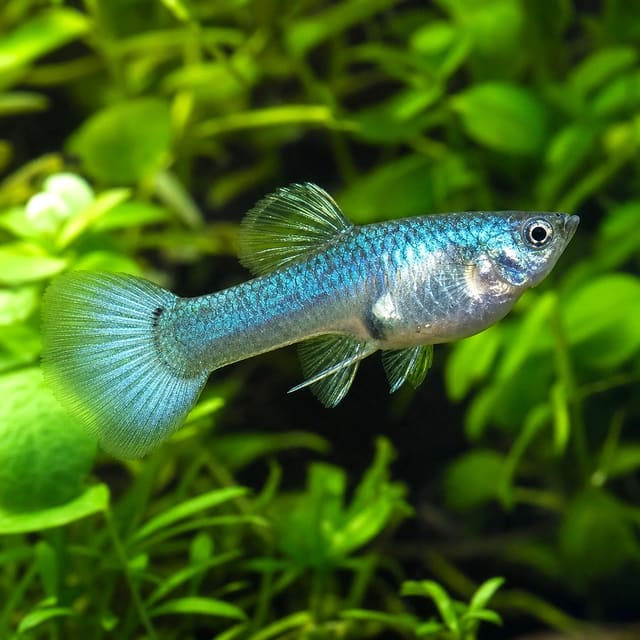
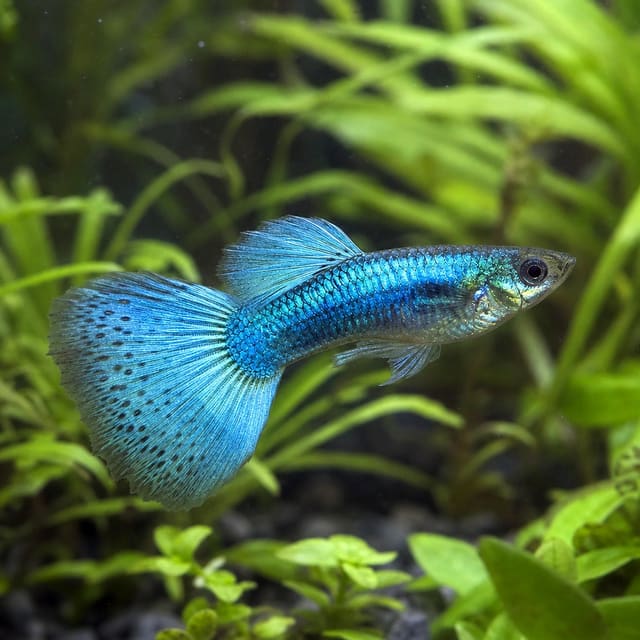
No two live fish are identical. The gallery image was based on the reference photo and represents the colour line, but black coverage, reflective colour and finnage vary between individuals.
Yes, when tank mates are peaceful, do not nip fins and share the same temperature, pH and hardness. Avoid predators, aggressive fish and soft-water specialists with incompatible requirements.
No reviews for this item yet. Bought one? Honest reviews only, good or bad.
What customers say about ordering from us
Easy website plenty of info on fish your buying great to pick a time slot
TRACEY DURRANT · 7 Oct 2026
Got some lovely fish thank you
Kevin Mackie · 7 Oct 2026
Reviews of our shop, collected by Judge.me, an independent third-party review collector. Newest first.